
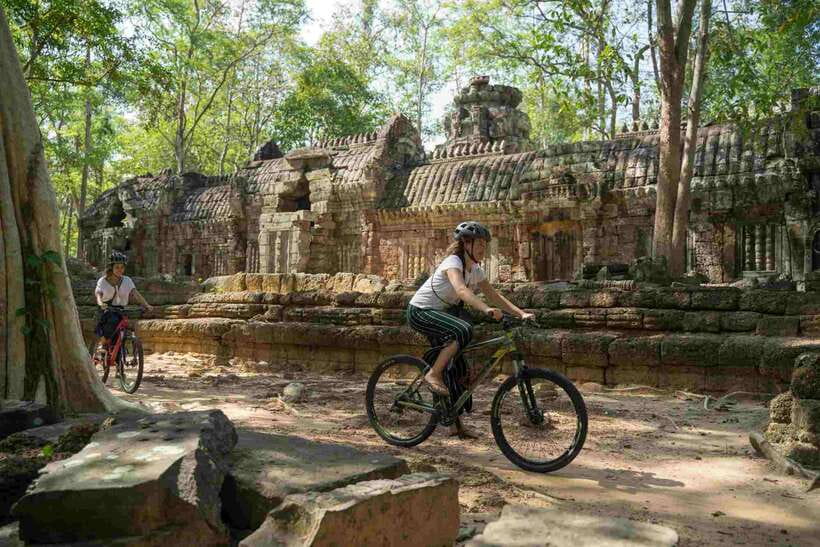
Reviewed · ANGKOR WAT TOURS
Siem Reap: Angkor Temples Off-Track Bicycle Tour
Angkor’s famous temples are best understood away from the tour-bus route, and this small-group bicycle tour takes you along jungle paths to quieter corners of the park. You’ll see major sites such as Bayon and Preah Khan, but also stop at peaceful Preah Palilay and rarely visited Ta Nei.
I like the mix of history and local benefit: your guide explains the Angkorian Empire and Khmer culture while the tour supports free education through KKO, the Khmer for Khmer Organisation. I also like the flexible, human scale. Groups are limited to seven, and guides adapt the pace, food, and timing to your needs. The drawback is simple: eight hours on a bicycle in Cambodian heat is not for anyone who cannot ride comfortably.
Key points to know before booking
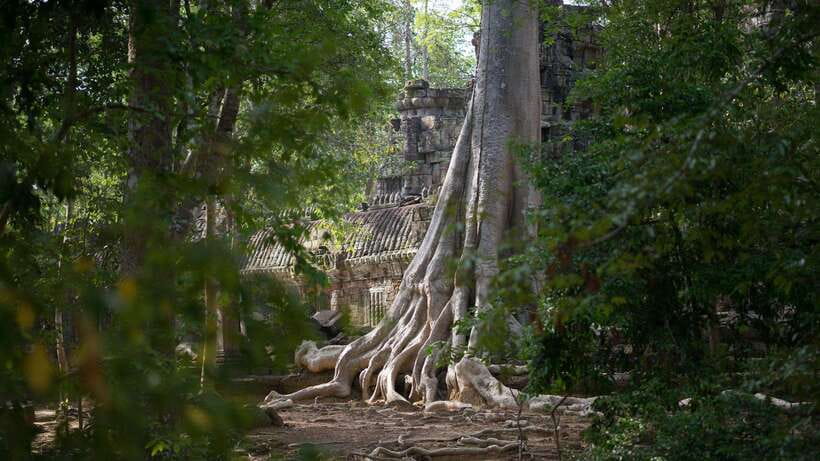
- Quiet jungle routes: Much of the riding uses smaller paths and off-road tracks away from the busiest temple approaches.
- A strong social purpose: Tour profits support KKO’s free education and vocational training programs for children in Siem Reap.
- Major and minor temples together: You visit Bayon and Preah Khan, then reach quieter sites including Ta Nei and Preah Palilay.
- Limited group size: With no more than seven participants, the guide can adjust the ride to the group.
- Lunch supports local businesses: The meal is served at a local restaurant in the jungle, with the tour also supporting local farms and vendors.
- Plan for a full day: The tour lasts eight hours, starts at 8:30 am, and requires a separate Angkor Pass.
Why this bicycle tour feels different from a standard Angkor day

A normal Angkor visit often means moving between the most famous temples by car or tuk-tuk, then walking through crowded courtyards. This tour changes the rhythm. You pedal between stops, pass through trees, and use smaller routes that make the park feel less like a string of monuments and more like a living archaeological area.
I like that the route does not skip the major sights. You still see the South Gate of Angkor Thom, Bayon, Preah Khan, Ta Keo, and Angkor Wat. But the day also makes room for places that are easy to miss when your schedule is built around the headline temples.
The group limit matters here. A maximum of seven people is small enough for the guide to respond to the group rather than simply follow a fixed script. The guide can slow down, answer questions, and adjust the ride for different levels of comfort. One of the clearest strengths of the experience is this personal approach. Guides speak English or Cambodian and are trained to discuss Cambodian culture and temple history.
You should still be realistic about the physical side. This is not a short sightseeing ride with a few token pedals between stops. It is an eight-hour day with off-road sections, heat, sun, and time spent getting on and off the bicycle. The tour is suitable only for people who can ride a bike. You are provided with quality bicycles, and the operator carries a first-aid kit and has an emergency plan, but basic cycling confidence remains essential.
More bike tours in Siem Reap:
- Siem Reap Countryside Bike Tour / E-Bike or Tuk Tuk
★ 5.0 · 935 reviews - Angkor Sunrise Bike Tour / E-Bike or Tuk Tuk
★ 5.0 · 615 reviews - Siem Reap: Bike the Angkor Temples – Full-Day 30km Tour
★ 5.0 · 463 reviews
Starting at Bayon Pastry School at 8:30 am
The tour begins at Bayon Pastry School in Siem Reap at 8:30 am. After a short introduction and an overview of the day, you set out toward Angkor Park.
This meeting point also gives the tour a clear connection to its education work. The organization behind the rides directs its profits to KKO, which provides free education and vocational training for children in Siem Reap. You can also arrange to visit the KKO school if you have extra time. That is a useful addition for anyone who wants to understand where the money goes instead of treating the social mission as a slogan on a booking page.
The early start is practical. It gives you a better chance of enjoying the first part of the ride before the strongest heat of the day. If waking early is difficult, tell the operator in advance. The tour can adjust the start time, and the team also says it can shorten or extend the tour according to your needs.
Wear clothing that meets the temple rules. Shorts, short skirts, and sleeveless shirts are not allowed. Bring sunscreen, insect repellent, and a camera. You will spend time on shaded jungle tracks, but shade is not the same as cool weather.
Angkor Wat’s wall and the first ride through the park
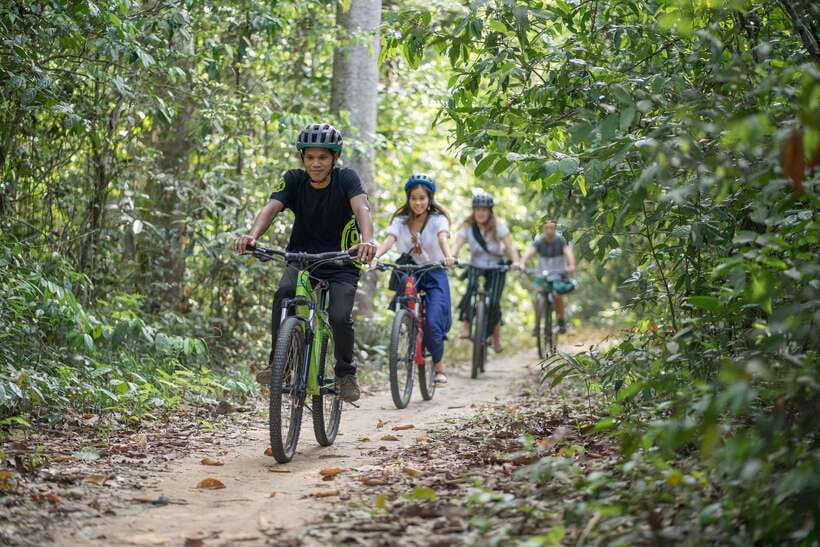
The route begins with the ride toward Angkor Park and an exploration of the wall of Angkor Wat. The main temple itself is listed as a photo stop later in the day, but this first section helps you see the scale of the Angkor complex from a less usual angle.
Cycling gives you time to notice the spaces between temples. You are not simply dropped at a gate, shown a building, and collected again. The road, trees, walls, and side paths become part of the experience. Your guide can add context about how the Angkorian Empire developed and how Khmer culture shaped the temples.
This is also where the bicycle format earns its keep. If your priority is to cover every major monument as quickly as possible, a vehicle is more efficient. If you want a slower day with movement, fresh air, and a closer view of the park’s quieter routes, cycling is the better match.
South Gate of Angkor Thom and Bayon

The ride continues through the jungle to the South Gate of Angkor Thom. This is one of the most recognizable entrances in the Angkor area, and it makes a strong transition from the quiet tracks into the walled city.
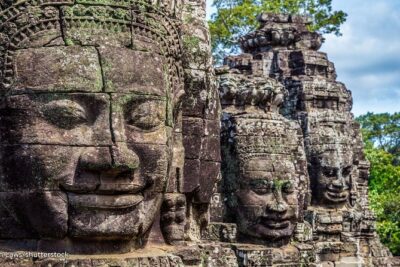
From there, you visit Bayon Temple, known for its large carved faces. Bayon is one of Angkor’s major attractions, so it is not a place you should expect to have entirely to yourself. The tour does not pretend otherwise. Instead, it places Bayon inside a wider route where quieter stops balance the busy one.
Your guide’s role is important here. Bayon can look like a maze of towers and narrow passages if you do not know what to look for. A good explanation helps connect the carvings, the temple plan, and the wider Khmer story. The supplied experience promises insight into the Angkorian Empire and Khmer culture, rather than only a list of construction dates.
If time allows, the guide may add a smaller temple within Angkor Thom, such as Preah Palilay. This flexible stop is one of the tour’s practical advantages. The exact day can respond to the group, the pace, and the time available rather than forcing every participant through the same rigid schedule.
More Angkor Wat tours in Siem Reap:
- Angkor Wat Sunrise or Sunset Tour with Guide from Siem Reap
★ 5.0 · 12,109 reviews - Siem Reap: Angkor Wat: Small-Group Sunrise or Sunset Tour
★ 5.0 · 9,444 reviews - Siem Reap: Angkor Wat 2-Day Tour with Sunrise and Sunset
★ 4.9 · 4,429 reviews - Siem Reap: Full-Day Angkor Wat Guided Tour with Sunset
★ 4.9 · 3,803 reviews
Preah Palilay and the village of Angkor Thom
Preah Palilay is a smaller temple within Angkor Thom, and it offers a quieter counterpoint to Bayon. The stop is particularly useful if you want more than the standard list of major monuments. You get a sense of how much remains beyond the best-known buildings.
The experience also includes the village of Angkor Thom. That adds a local dimension to a day that could otherwise focus only on royal temples and stone carvings. You are not just moving between archaeological sites. You also see the area where present-day life continues around the park.
The exact amount of time at this part of the route can vary. The description makes clear that Preah Palilay is visited if time permits, so you should not treat it as a guaranteed long stop. That is not necessarily a flaw. It means the guide can protect the main route and avoid rushing the entire group late in the afternoon.
Lunch at a local restaurant in the jungle
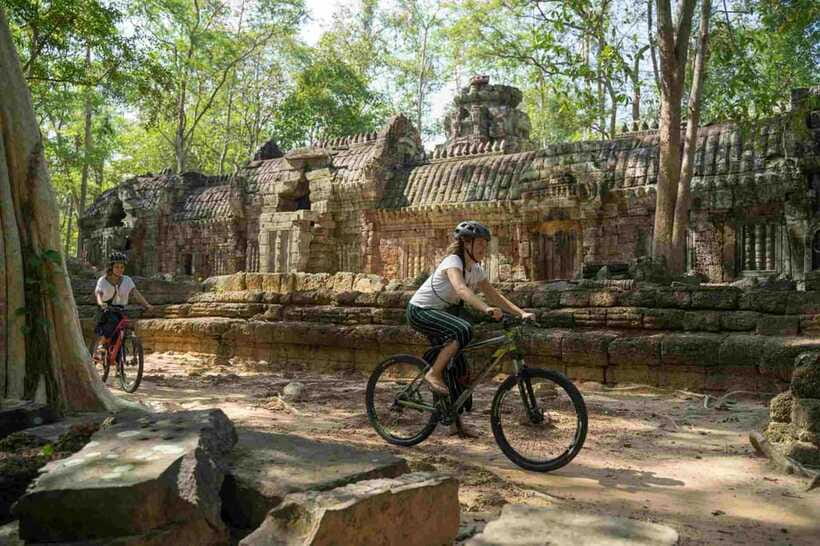
Lunch is included and takes place at a local restaurant in the jungle. This is a welcome pause after the morning ride, and it keeps the money spent during the day within the local economy.
The operator says it supports local restaurants, farms, and street vendors, so the lunch is part of the tour’s wider social model. The meal is not presented as a luxury dining experience. Think of it as a practical, local break in a setting that keeps you close to the route.
Food needs can be discussed before the tour. Vegan meals are possible, and the operator asks you to share special requirements in advance. This is worth doing when you book, rather than hoping the kitchen can solve everything at the last minute.
The lunch stop also divides the day well. You ride and explore in the morning, rest during the hottest part of the day, then return to the jungle paths for the afternoon temples. Even with a break, you should expect a full day rather than a relaxed half-day outing.
Preah Khan, a major temple with more breathing room
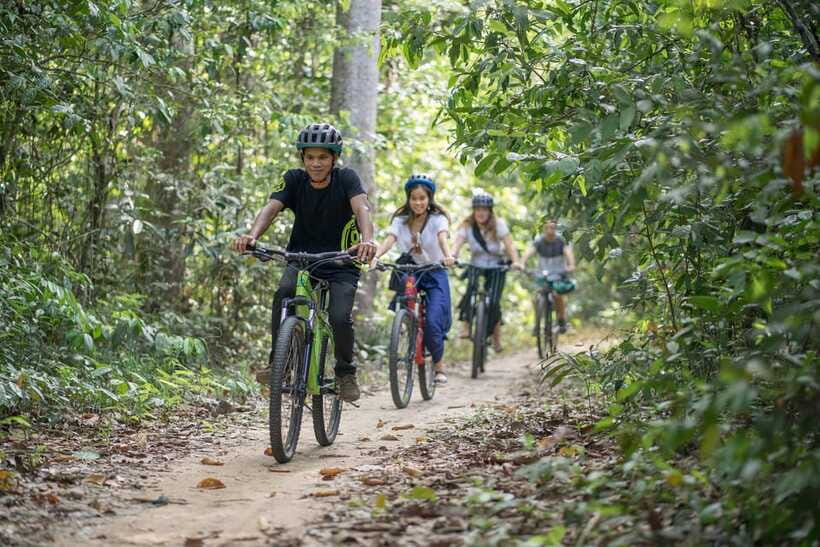
After lunch, the route continues through the jungle to Preah Khan. This is another important Angkor temple, but the tour description notes that it is generally less crowded than Bayon.
Preah Khan rewards unhurried exploration. The structure is large, and the combination of galleries, open areas, and trees gives you room to understand how the temple fits into the wider park. A bicycle tour works well here because the ride through the jungle creates a gradual approach rather than an abrupt arrival at a parking area.
You should expect some other visitors at Preah Khan. The appeal is not total solitude. The benefit is that it usually feels less compressed than the busiest sites, and the route gives you a chance to reach it without spending the entire day on the main tourist circuit.
This is also a good place to ask questions. Since the group is small, you can request more detail about the temple, Khmer culture, or the historical setting instead of simply following a guide from room to room.
Ta Nei, the quietest stop of the day
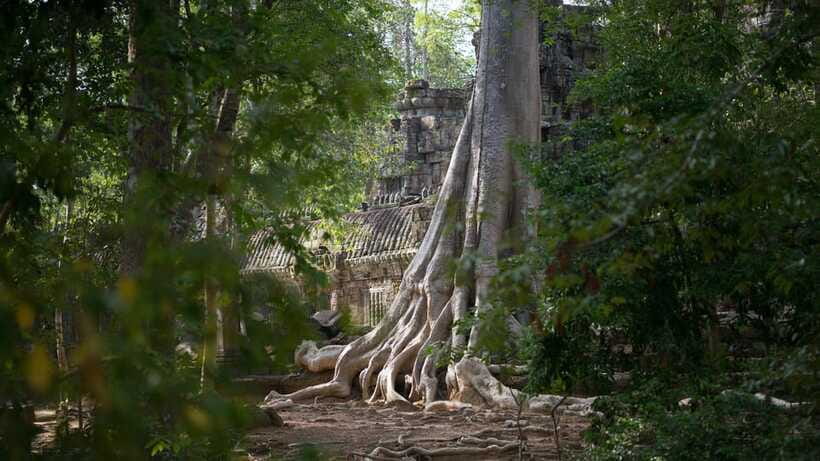
Ta Nei is described as the Ghost Temple because it is tucked away in the jungle and rarely visited by other tourists. Of all the stops, this may best express the purpose of the tour.
The temple is quiet, remote in feel, and reached by smaller paths. You get the sense of finding an old structure within the forest rather than arriving at a polished attraction. That atmosphere is the reward, but it also comes with a practical point: off-road cycling is part of the route, so you should be comfortable on uneven or less direct paths.
Ta Nei is likely to appeal most if you value atmosphere over famous names. It does not have the same recognition as Angkor Wat or Bayon, yet a peaceful stop can become more memorable than another crowded photo queue. Your guide can explain the site and its place within the Angkor area while you have the space to look around.
Bring insect repellent for this part of the day. It is listed among the recommended items, and the jungle setting makes it sensible.
Ta Keo and the return toward town
The final temple stop is Ta Keo. The tour then heads back toward Siem Reap and returns to Bayon Pastry School.
Ta Keo gives the day another change of scale and mood after the quieter Ta Nei. By this point, you will have visited large, famous monuments and smaller sites surrounded by trees. That range is one of the tour’s main strengths.
The return ride is also where the day’s length becomes most noticeable. If you enjoy cycling, the gradual movement back to town can be satisfying. If you are new to long rides, tired legs may make the last section feel less romantic than the first. The guide can adapt the pace, but you should still book this with a full day of riding in mind.
The final Angkor Wat photo stop is included in the route. Since the tour also explores the wall of Angkor Wat earlier, you get more than one angle on the park’s best-known monument without making it the only focus of the day.
What the $65 price really covers
At $65 per person, the tour is not the cheapest way to see Angkor. You must also buy the Angkor Pass, and travel insurance is not included. If your only goal is to reach the largest temples with the least effort, a basic transport arrangement may cost less.
The value is in what the price combines. You receive an eight-hour guided bicycle tour, a bicycle, lunch, a local guide, visits to major and smaller temples, jungle routes, and a direct contribution to education and vocational training through KKO. The tour also directs spending toward local restaurants, farms, and vendors.
I see the cost as strongest for people who would otherwise pay separately for a guide and transport but want a more active route. It is less compelling if you dislike bicycles, need a short sightseeing day, or are mainly interested in checking off Angkor Wat and Bayon.
The non-profit model adds a useful reason to choose this tour over a similar cycling trip, but it should not replace the usual questions about pace, fitness, food, and temple access. Here, the practical package and the social purpose support each other.
Who should book this Angkor cycling tour?
I would choose this experience if you want to see Angkor with fewer crowds, enjoy riding, and care about meeting local people and supporting a local education project. It suits couples, solo visitors, friends, and small groups who like a guide-led day but do not want a large coach tour.
It is also a good choice if you have already seen the main Angkor sites and want a different angle. Bayon, Preah Khan, Ta Keo, and Angkor Wat keep the day familiar, while Ta Nei, Preah Palilay, the village, and the jungle paths make it feel less standard.
I would think twice if you cannot ride a bicycle, dislike heat, or want a guaranteed slow schedule. The operator can adjust the tour, including the food, timing, and length, but it remains an active eight-hour outing.
The strongest praise for this experience centers on the guide’s patience, care, and ability to adjust to the group. That is exactly the quality you want on a long ride. The team’s safety plan and first-aid kit are reassuring, but your own preparation still matters: wear suitable temple clothing, use sunscreen, carry insect repellent, and be ready for a full day outdoors.
Should you book it?
Book this tour if you want quiet temples, a small group, and a useful local connection rather than the fastest possible Angkor checklist. The route gives you the major sights, but its real character comes from the jungle tracks, Ta Nei, Preah Palilay, the village, and the chance to support KKO’s education work.
Skip it if cycling is not comfortable for you or if you want a short, vehicle-based temple visit. For the right person, the $65 price is fair because it covers the guide, bicycle, lunch, and a full day of access to both famous and less visited parts of Angkor.
FAQ
Where does the tour begin?
Meet your guide at Bayon Pastry School in Siem Reap.
What time does the tour start?
The standard meeting time is 8:30 am. The operator says the start time can be adjusted if you discuss your needs in advance.
How long does the tour last?
The tour lasts eight hours and returns to Bayon Pastry School.
How many people are in the group?
The group is limited to seven participants.
Which languages are available?
The tour is offered in English and Cambodian.
Is lunch included?
Yes. Lunch at a local restaurant in the jungle is included.
Is the Angkor Pass included?
No. You need to purchase the Angkor Pass separately.
Do I need to bring a bicycle?
No. A quality bicycle is provided as part of the bicycle tour.
What should I bring?
Bring a camera, sunscreen, and insect repellent.
Can I request vegan food or a different tour length?
Yes. Vegan food, a shorter or longer tour, and other needs can be discussed with the operator in advance.
Just added around Siem Reap
- Ultimate Sunrise to Angkor Wat, Angkor Thom and Bayon Temple★ 5.0 · 3 reviews
- Full-Day Private Tour of Angkor Wat with Pick Up★ 5.0 · 12 reviews
- Trekking Tour at Phnom Kulen National Park from Siem Reap★ 5.0 · 3 reviews
- Twilight Tastes of Siem Reap Include Dinner★ 5.0 · 13 reviews
- Waterfall & River of 1000 Siva Linga- Kulen Mountain Private Tour★ 5.0 · 3 reviews
- Siem Reap City Tour with War Museum and Killing Field★ 5.0 · 27 reviews
- Private Day Trip to Angkor Temples with Expert Guide★ 5.0 · 4 reviews
- Private Two Days Siem Reap Temples Discovery Guided Tour★ 5.0 · 7 reviews
Angkor Wat Tours, compared.
Angkor Wat Sunrise or Sunset Tour with Guide from Siem Reap
Read our review →
Angkor Wat: Small-Group Sunrise or Sunset Tour
Read our review →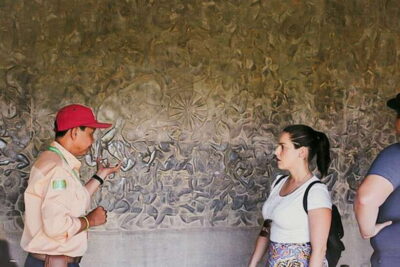
Angkor Wat 2-Day Tour with Sunrise and Sunset
Read our review →
Angkor Wat Sunrise tour with Small – Group and Guide tours
Read our review →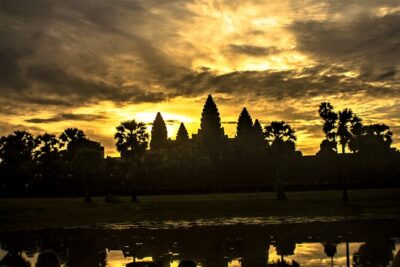
Angkor Wat Highlights and Sunrise Guided Tour from Siem Reap
Read our review →
Angkor Wat Sunset Small Group Tour with Lunch Included
Read our review →
Full-Day Angkor Wat Sunrise Private Tour with Guide from Siem Reap
Read our review →Browse the lists this tour appears in