
Reviewed · ANGKOR WAT SUNRISE TOURS
Angkor Sunrise Bike Tour / E-Bike or Tuk Tuk
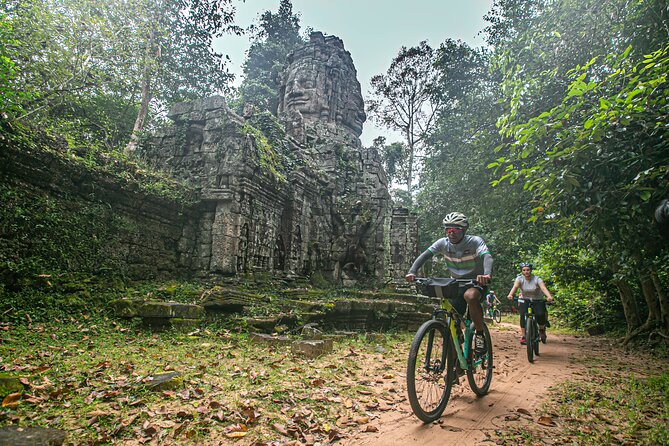
Angkor Wat at sunrise is only the opening act. After the sky brightens over the temple ponds, you trade the usual van route for quiet trails through forest and villages, cycling from one monumental site to the next. It is a fine way to see Angkor as more than a string of famous stone buildings.
I especially like the small groups, capped at six, and the care built into the day: hotel pickup, a support vehicle, water, fruit, snacks, breakfast, and lunch. Guides such as Son, Sotin, Rith, and Moni are praised for their temple knowledge, good pacing, and help with photos. The main catch is simple: the ride can be hot, sandy, and occasionally tricky, and the $60 price does not include the $37 Angkor pass.
Key points to know before booking
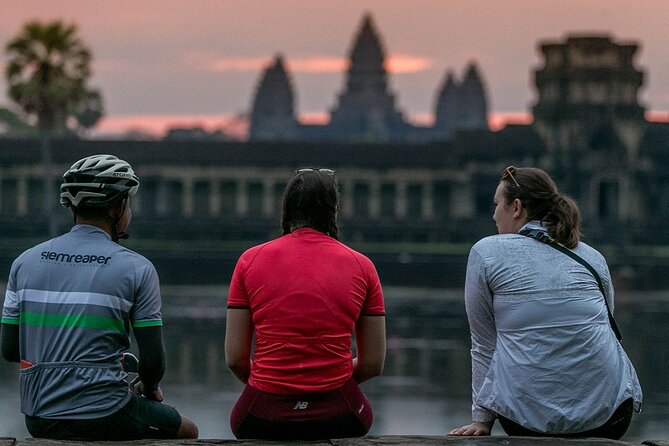
- Sunrise begins the day at Angkor Wat: You leave Siem Reap around 4:30 or 5:00 in the morning to reach the temple in time for the first light.
- The cycling covers about 20 to 25 kilometers: Most of the route is manageable, but sandy trails and light off-road sections require balance and confidence.
- You visit major temples and quieter routes: Bayon, Angkor Thom, Ta Prohm, and Srah Srang are combined with paths that vehicles cannot easily reach.
- A support vehicle follows the group: The tuk tuk or support vehicle carries supplies and can help if you need a break.
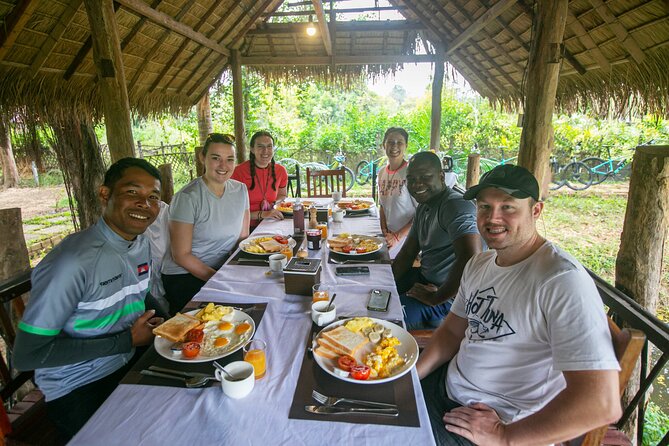
- Food is part of the day: Cambodian-style breakfast and lunch are included, along with bottled water, fruit, and snacks.
- You can choose an e-bike or tuk tuk option: The standard outing includes a mountain bike, while an e-bike is available when booked as that option.
Why cycling changes your Angkor Wat day
The Angkor complex is vast. You can cover the main temples by car or tuk tuk, but that often means moving from parking area to parking area with little sense of the space between them. On a bicycle, the gaps become part of the visit.
You follow back roads, narrow forest paths, and routes through the countryside around the monuments. That gives you glimpses of village life, trees, reservoirs, monkeys, and temple walls appearing through the greenery. I like this because Angkor feels less like a checklist and more like an ancient city spread across the land.
The day lasts about nine hours, with roughly 20 to 25 kilometers of riding. That is not a race. The pace is described as modest, and the terrain is largely flat, but heat and humidity matter more than the distance. You need a moderate level of fitness and enough confidence to handle a bike on uneven ground.
The standard equipment is a Trek mountain bike with front suspension, according to the detailed ride information, plus a helmet. That front suspension helps on dirt tracks, though it will not remove every challenge. Some sections are sandy, and a few narrow trails can feel technical if you are a nervous cyclist.
An e-bike is a practical upgrade for anyone who wants the freedom of cycling without making the ride the main physical test of the day. A tuk tuk option is also available when you book that version. Check the exact option carefully, since the inclusions differ depending on whether you choose a bicycle, e-bike, or tuk tuk experience.
More bike tours in Siem Reap:
- Siem Reap Countryside Bike Tour / E-Bike or Tuk Tuk
★ 5.0 · 935 reviews - Siem Reap: Bike the Angkor Temples – Full-Day 30km Tour
★ 5.0 · 463 reviews - Siem Reap Countryside Sunset Bike Tour / E-Bike or Tuk Tuk
★ 5.0 · 173 reviews
The 4:30 a.m. start and Angkor Wat sunrise
The day begins before dawn. Hotel pickup is offered in Siem Reap, with listed start times of 5:00 a.m. and pickup examples around 4:30 a.m. The exact timing depends on your hotel and the morning plan, but you should expect a very early alarm.
That early start earns its keep at Angkor Wat. You arrive in time to watch sunrise over the temple, then enter the complex with your guide. The sunrise itself depends on clouds and weather, so do not treat a perfect red sky as guaranteed. Even on a cloudy morning, the dim outline of the towers and the gradual change in light make a memorable beginning.
Your guide takes you to suitable viewing places and then helps you explore Angkor Wat. This is not just a quick photo stop. The first portion of the morning lasts about two hours, giving you time to see the temple and learn about its design and past.
One practical issue is breakfast timing. Several hours may pass between pickup and the morning meal, with breakfast often around 8:30 a.m. If you wake hungry, carry a small personal snack, even though fruit and other refreshments are supplied later. You will be glad you did.
You also need your Angkor entrance pass. It costs $37 for a one-day visit and is not included in the tour price. Buying it online in advance can save time. If you wait until the morning, the group may need to stop at the ticket office, which can cut into the sunrise and temple time.
Breakfast, bikes, and the first forest trails
After Angkor Wat, you have breakfast in the temple area before meeting your bike. This pause matters. You have been awake since the middle of the night, and the ride is still ahead.
The breakfast is described as Cambodian-style, with vegetarian food available if requested in advance. Tell the operator about dietary needs when you book. Coffee may not be included, so do not assume every drink at breakfast is covered by the tour price.
Once you are fitted with a bike and helmet, the route moves onto smaller tracks behind Angkor Wat. This is where the outing begins to feel different from a standard temple circuit. You leave the main roads and ride through village areas, forest, and unpaved paths.
The support vehicle follows the group. It carries water and snacks and provides reassurance if the heat catches up with you. Guides and drivers have also helped people who were unwell or struggling to continue, including arranging tuk tuk support between temples when needed.
That does not mean you can treat the ride as effortless. You should be comfortable riding for several hours and prepared to sweat. Bring clothing that dries quickly, sunscreen, and a positive attitude toward dust and uneven ground. The route is part of the appeal, but it is not a smooth city cycleway from start to finish.
Bayon and Angkor Thom by bike
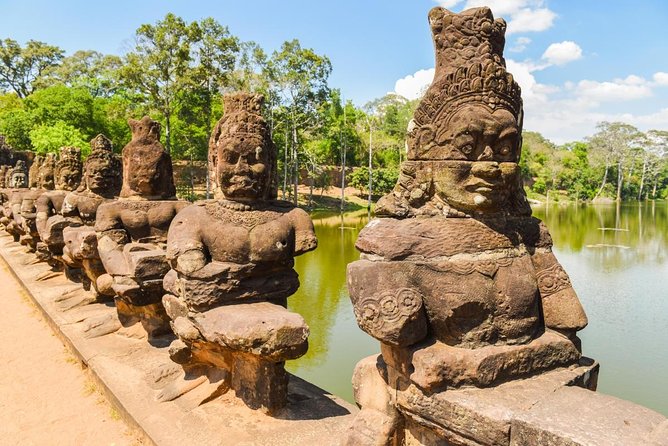
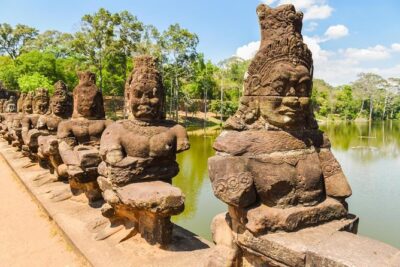
The next major temple area is Bayon, within Angkor Thom. Bayon is famous for its large carved faces, and it gives you a very different mood from Angkor Wat. Angkor Wat presents a grand, ordered approach, while Bayon feels more enclosed and intricate, with towers and carvings close around you.
Your guide explains the temple and points out useful photo angles. Guides including Son, Sotin, Rith, and Vong are praised for clear English, humor, historical detail, and attention to safety. The quality of the day depends heavily on the individual guide, and the available names suggest a strong local team, but you should still see the guide as part of the practical value of the booking, not just an escort.
The cycling between sites is as important as the stops. You may ride beside roads, through villages, and along dirt trails under the trees. The terrain is mainly level, but loose sand can make a simple stretch surprisingly hard. If you are not used to mountain biking, you may occasionally prefer to walk a short section rather than force the pedals.
The small group limit helps here. With no more than six people, the guide can keep an eye on different riding speeds and stop for water without turning the day into a large procession. Small groups also make temple explanations easier to hear and photo stops less hurried.
More tuk tuk tours in Siem Reap:
- Siem Reap: Angkor Wat Private Tuk-Tuk Tour
★ 4.9 · 2,222 reviews - Angkor Wat Private Tuk-Tuk Tour (sunrise Option) & more
★ 5.0 · 439 reviews - Old Siem Reap Sunset Food Tour by Tuk-tuk
★ 5.0 · 311 reviews - Siem Reap: Street Food Experience by Tuk-Tuk
★ 4.9 · 310 reviews
Ta Prohm and the jungle setting
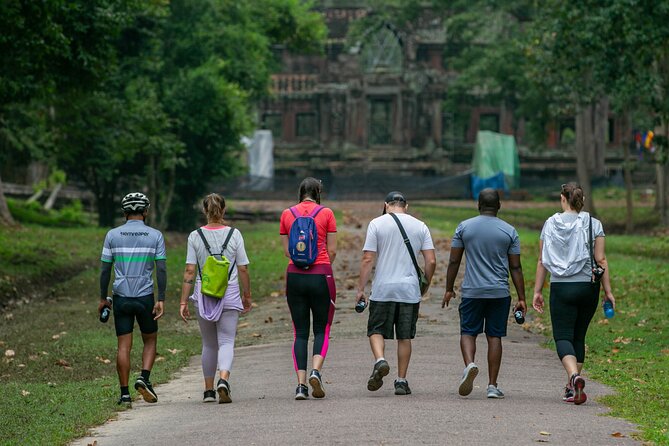
Ta Prohm is the temple many people associate with jungle-covered Angkor. Trees and vines have been left over much of the structure, giving the site a rough, atmospheric appearance that differs from restored sections elsewhere in the complex.
The visit is scheduled after Bayon and Angkor Thom, with about three hours allocated to this part of the route and temple sightseeing. That is a generous block of time, though the day includes cycling and stops rather than three continuous hours inside Ta Prohm.
The bike route adds context to the temple. You do not simply arrive at Ta Prohm in a vehicle, join the usual path, take photographs, and leave. You approach through the surrounding woodland and see how the monuments sit within the wider Angkor area.
You should still expect other people at Ta Prohm, especially around its most famous tree-covered corners. The cycling route can reduce the feeling of following a bus group, but it cannot make one of Cambodia’s best-known temples empty.
The temple ground and approach can be uneven. Wear shoes that are secure and comfortable, and remember that temple dress rules apply. Cambodia is conservative, and you need clothing that covers your shoulders and knees at Angkor Wat and the other principal temples.
Srah Srang lunch and the ride home
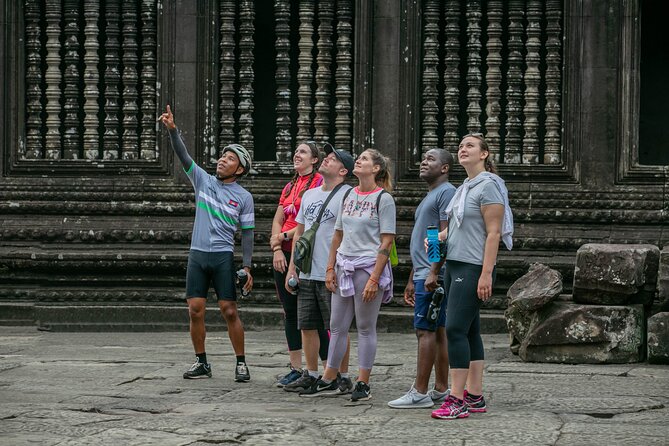
The final stop is Srah Srang, a large ancient reservoir. It is a pleasant place to slow down after the morning’s temple visits and several hours in the saddle. Lunch is served beside the water and includes a broad selection of Cambodian dishes.
Food is one of the stronger practical features of this outing. Breakfast and lunch are included, as are bottled water and snacks, with fresh fruit served during the ride. Vegetarian meals are available if requested ahead of time.
Do not assume that every drink is included. One complaint about the outing concerned coffee at breakfast and drinks at lunch, while the tour information specifically promises bottled water rather than unlimited restaurant beverages. If you want beer, coffee, or anything beyond the included meal and water, be ready to pay for it yourself.
After lunch, the support vehicle takes you back to your Siem Reap hotel. The vehicle is more than a transfer at the end. It follows the cycling group during the day and gives you a safety net in the heat, particularly if someone is tired, ill, or simply wants a break from the bike.
The listed Srah Srang stop lasts about an hour. In practice, the day has a full rhythm: early transport, sunrise, temple exploration, breakfast, riding, more temples, snack breaks, lunch, and return transfer. You should keep your evening light.
What the $60 price really covers
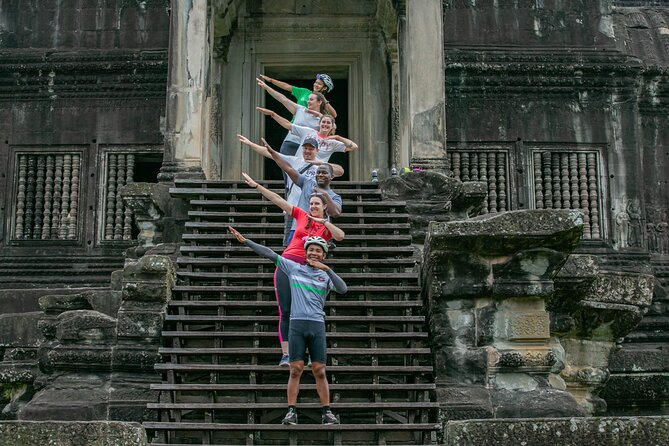
At $60 per person, the price is reasonable if you value a full day of support rather than only the bicycle. The cost includes hotel pickup and return, an English-speaking cycling guide, mountain bike and helmet, breakfast, lunch, bottled water, snacks, and a support vehicle.
The Angkor temple pass is extra at $37 for one day. That puts the basic total at $97 per person before personal purchases, and an e-bike upgrade may cost more depending on the selected booking option.
I see the value in the support vehicle and the small group. You are not left to find your own way between widely scattered temples, carry all your water, or solve transport problems if the heat becomes too much. The guide also adds real value by explaining the temples and helping with photos.
Still, the price will feel high if you mainly want sunrise and a quick temple visit. You are paying for a nine-hour guided experience, meals, equipment, and local transport. If you compare it with a simple tuk tuk hire, the tour may cost more, but the cycling routes and included support give you something different.
Who will enjoy this tour most
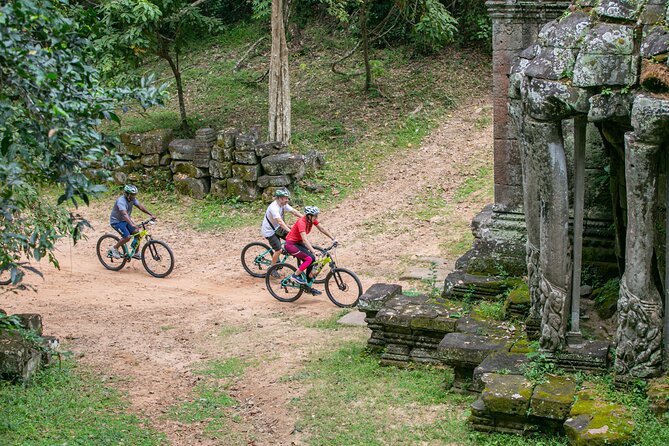
I would choose this experience if you like active sightseeing and want to see the spaces between Angkor’s headline temples. It suits confident recreational cyclists, people who enjoy small groups, and visitors who want a guide to explain the sites instead of simply dropping them at the entrance.
Families can also consider it. Children must be accompanied by an adult, and a family with children aged nine and eleven completed the route happily with guide Moni. Still, children need to be comfortable with the early start, tropical heat, and a long day that includes several hours on a bike.
An e-bike is the sensible choice if you are fit enough for a day out but uncertain about the distance. It can reduce the effort without removing the pleasure of moving through the forest and temple area.
I would hesitate to book the standard bike option if you dislike loose sand, narrow paths, or heavy heat. One rider with considerable cycling experience still found some sandy sections more difficult than expected. The tour description says moderate fitness, but you should read that as real physical activity, not a casual ride.
Small details that make the day work
The guides are repeatedly praised for warmth, temple knowledge, safety, and photography. Son is described as strong on both temple history and the surrounding area, while Sotin is praised for keeping the day informative and fun. Rith, Moni, Vong, and others are also associated with careful pacing and personal attention.
The drivers matter, too. The tuk tuk driver supplies water, helps during stops, and remains ready if a rider needs support. That quiet backup can make a major difference in Cambodia’s heat.
The route is also flexible enough to handle different needs. If one person is unwell but wants to continue, the support vehicle may help move that person between sites. You should not count on skipping the cycling entirely, but the setup is more forgiving than a self-guided bicycle rental.
The main weakness is communication about difficulty and extras. I would like the description to be clearer about sandy trails and the fact that drinks beyond bottled water are not included. Ask before setting out if you have questions about the exact bike, breakfast drinks, lunch beverages, or e-bike supplement.
Free cancellation is available up to 24 hours before the local start time. Changes or cancellations made inside that period are not refunded, so keep the early start in mind when making other plans.
Should you book the Angkor sunrise bike tour?
Book it if you want Angkor with movement, countryside, and local guidance, not just the four most famous temple photographs. The combination of sunrise, small-group cycling, major temples, meals, and a following support vehicle gives you a strong full-day experience.
Choose the e-bike or tuk tuk option if you are worried about heat or sandy paths. Choose the standard bicycle if you are comfortable riding 20 to 25 kilometers and want the most active version of the day.
I would skip it only if you want a relaxed vehicle tour, dislike very early mornings, or expect every trail to be smooth. For everyone else, this is a thoughtfully planned way to connect Angkor’s great temples with the villages, forest, and open spaces that a van window tends to hide.
FAQ
What time does the Angkor sunrise bike tour begin?
The listed start time is 5:00 a.m., with hotel pickup examples around 4:30 a.m. The exact pickup time depends on your Siem Reap hotel and the morning schedule.
Is the Angkor entrance fee included?
No. The one-day Angkor temple pass costs $37 and must be paid separately. Buying it online in advance may save time at the ticket office.
How far do you ride?
The total cycling distance is approximately 20 to 25 kilometers.
What temples are included?
The route includes Angkor Wat, Bayon, Ta Prohm, and Angkor Thom. It also ends at Srah Srang.
Is an e-bike available?
Yes. An e-bike is available when you book the e-bike option. A tuk tuk version is also offered.
Are meals included?
Yes. Cambodian-style breakfast and lunch are included. Bottled water, snacks, and fruit are also supplied.
Can I request vegetarian food?
Yes. Vegetarian food is available, but you should provide dietary requirements when booking.
How large is the group?
The tour has a maximum of six travelers. Children must be accompanied by an adult, and participants should have a moderate level of physical fitness.
More sunrise tours in Siem Reap
- Angkor Wat Sunrise or Sunset Tour with Guide from Siem Reap
★ 5.0 · 12,109 reviews - Siem Reap: Angkor Wat: Small-Group Sunrise or Sunset Tour
★ 5.0 · 9,444 reviews - Siem Reap: Angkor Wat 2-Day Tour with Sunrise and Sunset
★ 4.9 · 4,429 reviews - Angkor Wat Sunrise tour with Small – Group and Guide tours
★ 5.0 · 3,655 reviews
Just added around Siem Reap
- Ultimate Sunrise to Angkor Wat, Angkor Thom and Bayon Temple★ 5.0 · 3 reviews
- Full-Day Private Tour of Angkor Wat with Pick Up★ 5.0 · 12 reviews
- Trekking Tour at Phnom Kulen National Park from Siem Reap★ 5.0 · 3 reviews
- Twilight Tastes of Siem Reap Include Dinner★ 5.0 · 13 reviews
- Siem Reap City Tour with War Museum and Killing Field★ 5.0 · 27 reviews
- Private Day Trip to Angkor Temples with Expert Guide★ 5.0 · 4 reviews
- Waterfall & River of 1000 Siva Linga- Kulen Mountain Private Tour★ 5.0 · 3 reviews
- Ultimate Siem Reap Food Tour by Tuk Tuk – 20 Tastings, 8 Stops★ 5.0 · 13 reviews
Angkor Wat Sunrise Tours, compared.
Angkor Wat Sunrise or Sunset Tour with Guide from Siem Reap
Read our review →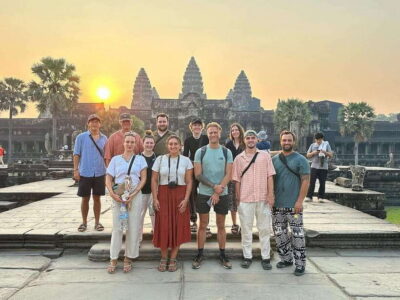
Angkor Wat: Small-Group Sunrise or Sunset Tour
Read our review →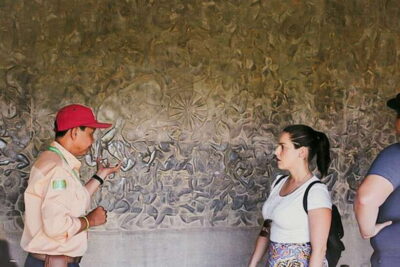
Angkor Wat 2-Day Tour with Sunrise and Sunset
Read our review →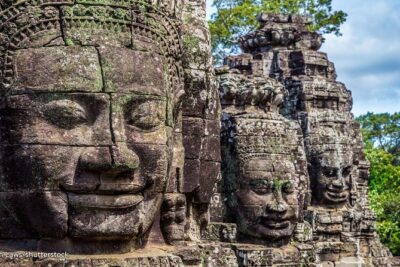
Angkor Wat Sunrise tour with Small – Group and Guide tours
Read our review →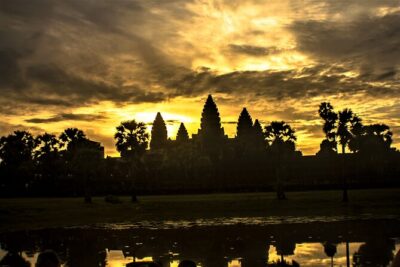
Angkor Wat Highlights and Sunrise Guided Tour from Siem Reap
Read our review →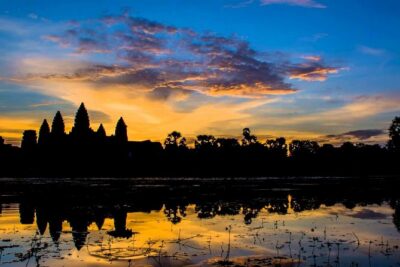
Full-Day Angkor Wat Sunrise Private Tour with Guide from Siem Reap
Read our review →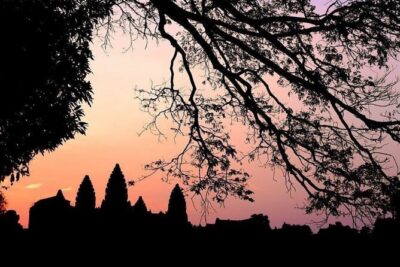
Angkor Wat Sunrise & 3 Main Temples with Breakfast – Small Group
Read our review →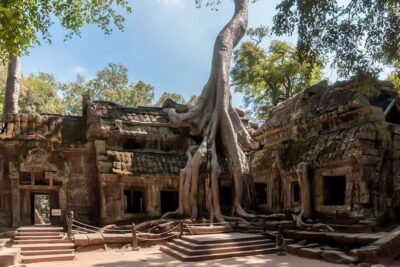
Angkor Wat Sunrise and Full-Day Sightseeing Tour
Read our review →Browse the lists this tour appears in