
Reviewed · ANGKOR WAT SUNRISE TOURS
Siem Reap: Angkor Wat 2-Day Tour with Sunrise and Sunset
Angkor Wat at sunrise is the hook, but the real strength of this tour is the sheer amount of Khmer history packed into two carefully planned days. You begin around 4:30am, visit the major temples while the air is cooler, then return the next afternoon for quieter ruins and a sunset finish. Eleven temples give you a solid introduction to the Angkor complex without leaving you to guess what you are looking at.
I like the combination of clear historical storytelling and practical help with photos, timing, and shade. Guides including Sary, Sok, Sam, Pheap, Nick, and Vone are repeatedly praised for explaining religious symbols and architectural details in plain English. I also like the cool minibus, cold water, and wet towels, small comforts that matter after hours of walking.
The catch is simple: these are long, hot days, and the early start is severe. The $34 price does not include the Angkor pass or meals, and the information says both wheelchair access and wheelchair unsuitability, so you should confirm accessibility before booking.
Key points at a glance
- Sunrise starts around 4:30am: You reach Angkor Wat before the heat and see the temple at dawn, though sunrise color depends on weather.
- Day one covers the headline sights: Angkor Wat, Ta Prohm, Bayon, Ta Keo, and Angkor Thom form a busy but rewarding introduction.
- Day two feels calmer: Preah Khan, Neak Pean, Ta Som, East Mebon, Pre Rup, and Phnom Bakheng bring more variety and, at times, fewer people.
- Guides add real value: Sary, Sok, Sam, Pheap, Nick, Vone, and others are praised for history, mythology, photography, and good pacing.
- Transport helps in the heat: Hotel pickup, an air-conditioned minibus, chilled water, and refreshing towels are included.
- The price is only part of the budget: At $34, the tour is inexpensive for two guided days, but you still pay separately for the temple pass and food.
Why two days works better than one
Angkor is not one temple. It is a huge archaeological park with monuments spread across a wide area, and the buildings can begin to blur together if you rush from one to the next. This tour separates the experience into a small tour on day one and a larger circuit on day two.
That division makes sense. Day one gives you the famous names and the basic story of the Khmer empire. Day two lets you look at different temple designs, hear how royal power and religion shaped the site, and spend more time among less familiar ruins.
You also receive the benefit of a three-day temple pass, although the organized tour uses two of those days. That leaves you with a useful third day if you want to rest, revisit a favorite temple, or hire a private tuk-tuk for further exploring. I would treat that extra day as a bonus, especially if the heat slows you down.
More multi-day trips from Siem Reap:
- Angkor 2-Day Sunset & Sunrise Small-Group Tour
★ 5.0 · 2,567 reviews - 2 Days Exclusive Temple Highlights with Sunset and Sunrise Tour
★ 5.0 · 1,157 reviews - Siem Reap: Angkor Sunrise 1- or 2-Day Guided Temples Tour
★ 4.9 · 1,132 reviews
Day one: Angkor Wat before breakfast
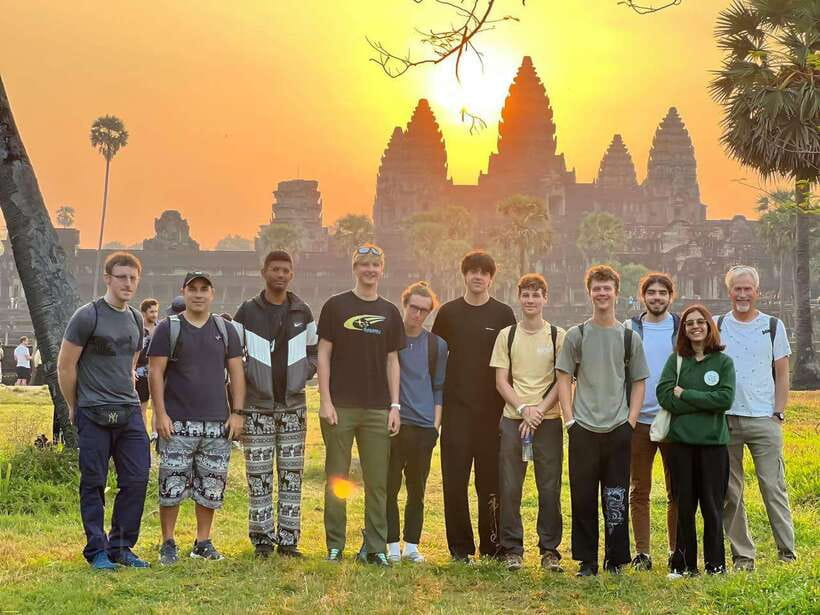
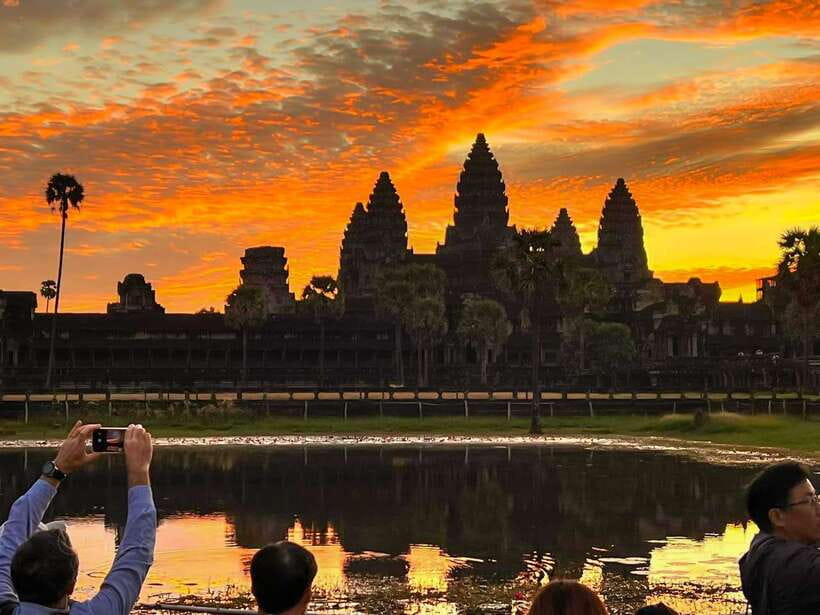
Pickup begins around 4:30am. You need to be ready at your hotel up to 30 minutes before the stated start time, so confirm the pickup details and provide the hotel address carefully. The early departure is not gentle, but it gets you to Angkor Wat before the worst heat and gives you the best chance of finding a good place for the sunrise view.
Sunrise itself is never guaranteed to deliver a glowing sky. Cloud can flatten the colors, as one visitor discovered, so keep your expectations sensible. The temple remains impressive in low morning light, and the guide can help you find a useful viewing position and take photographs.
After sunrise, you explore Angkor Wat itself. This is the right time to hear about the temple’s design, religious purpose, carvings, and place in Khmer history. A guide makes a large difference here because the scale can distract you from smaller details in the bas-reliefs and stonework.
The morning also offers a practical advantage. Walking around the galleries and courtyards is easier before the tropical heat builds. Still, you should wear comfortable clothing, apply sunscreen, bring sunglasses, and carry a charged phone for photos and tour communication.
Ta Prohm and the drama of the jungle
Ta Prohm is one of the park’s most memorable stops. Trees grow over and around the stonework, and the temple has become famous through its connection with the Tomb Raider film. That film connection attracts attention, but the site is not merely a movie backdrop.
Your guide can help you read the temple as a place of worship and royal construction rather than a collection of photogenic ruins. The roots, galleries, doorways, and carved figures show how nature and architecture now share the same space.
The operator says the group aims to arrive earlier than some other tours, which may help with photographs and movement through the temple. Do not expect solitude. Ta Prohm is one of Angkor’s best-known stops, and its narrow passages can still feel busy.
This is also a place where the pace matters. There are uneven surfaces and plenty of walking, so take the time you need. One guide, Heang, was especially praised for helping people with knee and foot problems manage the steps. That kind of attention is more useful than rushing to cover every corner.
Bayon, Ta Keo, and Angkor Thom
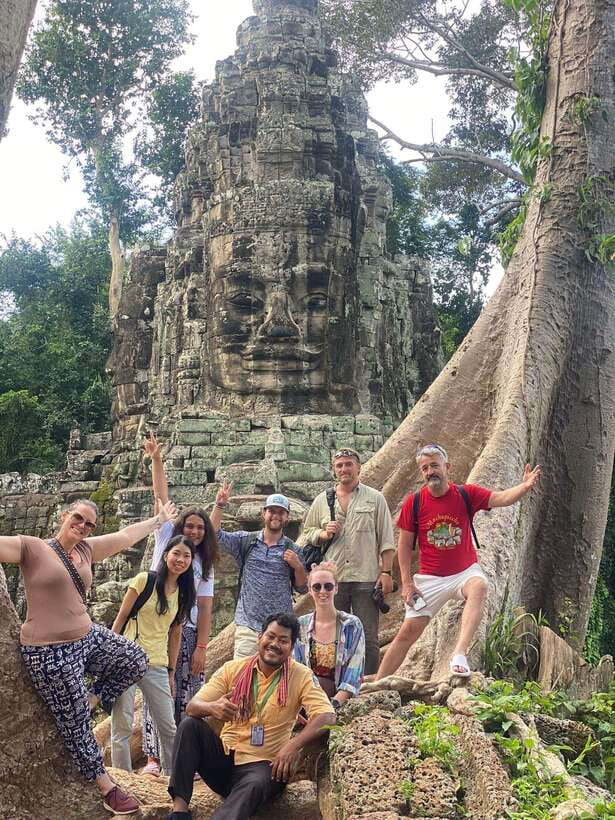
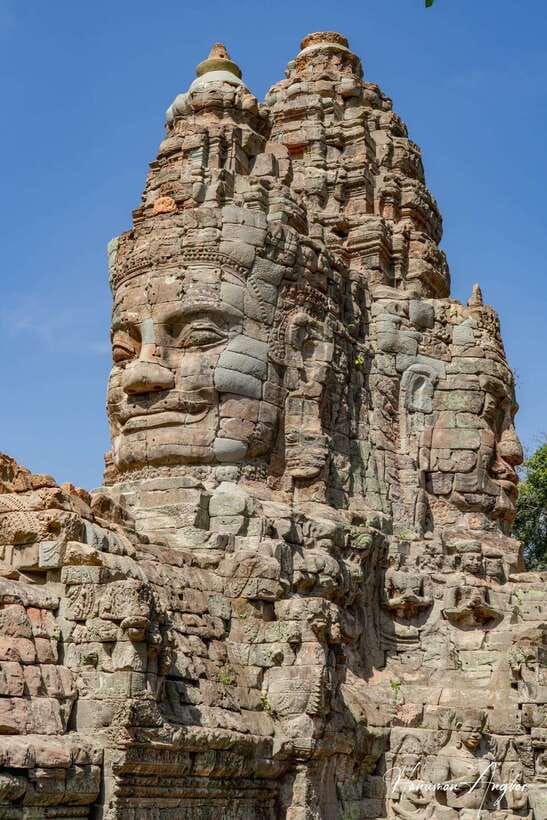
Bayon brings a different mood. Its large carved faces look out from the towers, creating one of Angkor’s most distinctive sights. The temple was built during the reign of Jayavarman VII and is described as the only Buddhist state temple and the last major temple built in the Angkor empire.
Your guide’s explanation is especially helpful here because the faces, galleries, and religious changes can otherwise feel confusing. Guides such as Sam and Vone are praised for explaining the connection between belief, royal authority, daily life, and temple design without turning the visit into a lecture.
Ta Keo is a mountain temple from the 10th century. You walk upward through the old stone structure, which means the visit involves stairs and effort. The reward is a strong sense of the temple’s vertical design, but this stop will be harder if your knees are weak or you dislike climbing in heat.
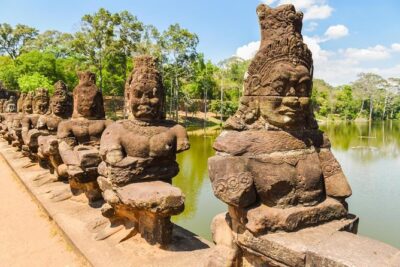
The day ends at the South Gate of Angkor Thom. A bridge lined with statues of gods and demons leads toward the gate, with two rows of figures holding the body of a seven-headed naga. It is a striking final image for the first day and a good place to connect the mythology you have heard with the architecture in front of you.
The schedule runs roughly from 4:30am to 1:00pm. You may return tired, dusty, and ready for a shower. That early finish is welcome because it gives you time to rest before the second day.
More sunset temple tours in Siem Reap:
- Angkor Wat Sunrise or Sunset Tour with Guide from Siem Reap
★ 5.0 · 12,109 reviews - Siem Reap: Angkor Wat: Small-Group Sunrise or Sunset Tour
★ 5.0 · 9,444 reviews - Angkor Wat Sunset Small Group Tour with Lunch Included
★ 5.0 · 3,059 reviews - Siem Reap: Angkor Wat Sunrise or Sunset Guided Tour
★ 4.9 · 2,123 reviews
Day two: the quieter grand circuit
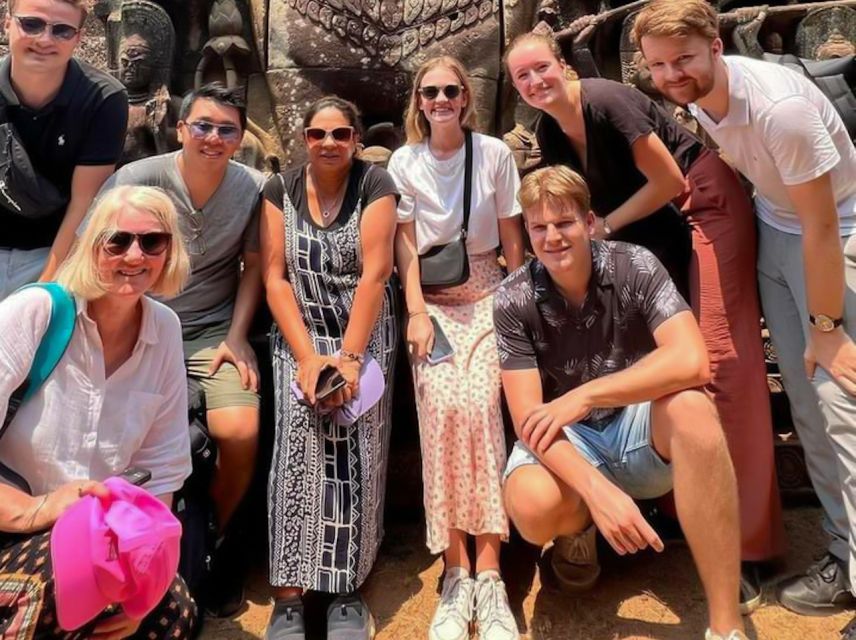
Day two starts later, around 10:30am, and runs until about 7:00pm. That timing is much easier on your body, though the afternoon remains hot. The route visits several temples that are less famous than Angkor Wat and Ta Prohm, and many people find this day more relaxed and rewarding.
Preah Khan is the largest temple on this circuit. It was built by King Jayavarman VII for his father and has a maze-like quality, with corridors, courtyards, carvings, and long sightlines through the stone. I like this stop because it gives you room to think about how large the Angkor religious and royal complex really was.
Neak Pean sits on an island surrounded by water. The water was used for bathing and health during the Angkor period. Compared with the huge temple compounds, Neak Pean is a more contained and unusual stop, and the surrounding water changes the feeling of the visit.
Ta Som is known for the large tree over its east gate. The temple also has many carved dancer figures with long hair and was built for the king’s sister. The tree makes for a memorable photograph, but your guide’s explanation gives the monument more meaning than the famous doorway alone.
East Mebon was once in the middle of a reservoir and was built for the ancestors as early as the 10th century. Its original setting is difficult to picture today, so listen for the explanation of how water shaped the Angkor capital. This is one reason a guide is worth having: the site’s former surroundings are no longer obvious from ground level.
Pre Rup was built by a king for himself. It is sometimes mistaken for a crematorium because of a stone structure resembling a coffin, but the supplied explanation identifies it as a place where Hindus meditated during the full moon. That detail is a useful reminder that temple ruins can be misunderstood when viewed only through modern assumptions.
Ending with Phnom Bakheng sunset
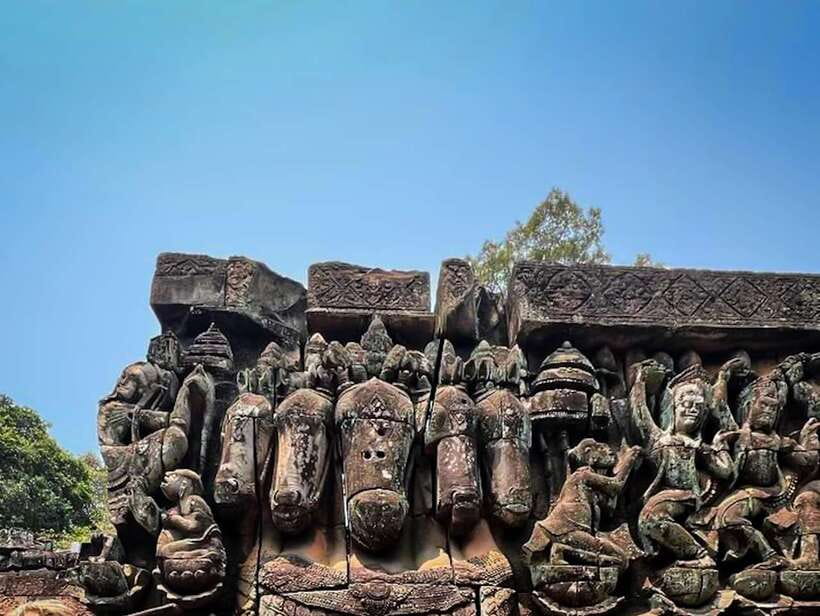
Phnom Bakheng sits on a hill, and its 33 towers represent the heavens. The climb gives the day a strong finish, though it also makes this one of the more physically demanding stops.
The itinerary describes a sunset ending around 7:00pm. As with sunrise, weather controls the colors. Even without a dramatic sky, the elevated setting gives you a different view from the enclosed temple courtyards visited earlier.
Pay attention to the schedule here. Sunset stops can become crowded, and the hill climb may feel tiring after a full afternoon. You should bring water, wear sensible shoes, and avoid treating the final viewpoint as a race. The experience is better if you arrive with enough energy to listen and look around.
What the guides add
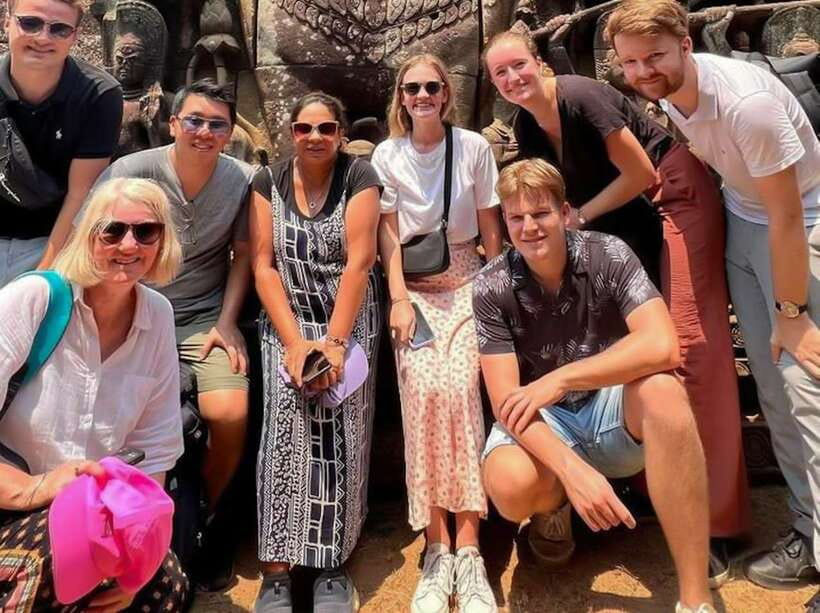
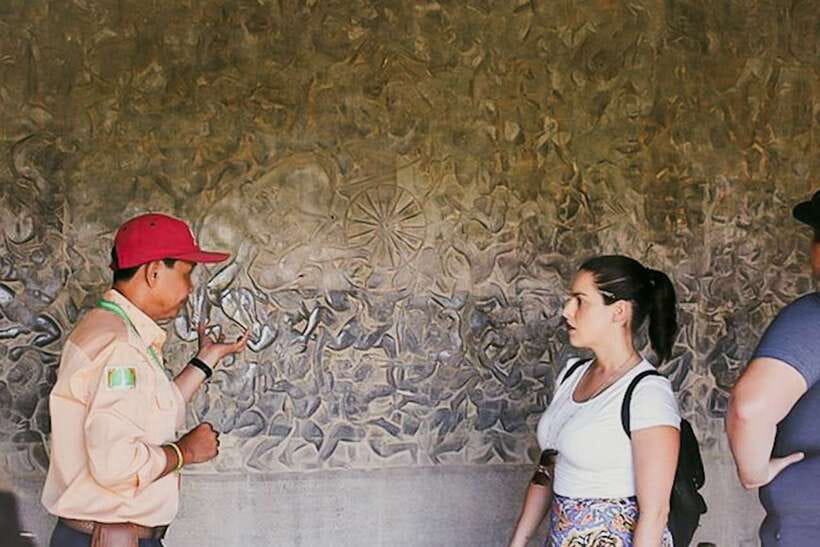
The guide is the main reason to choose this organized trip rather than simply hiring transport. Angkor’s carvings and buildings are impressive, but without context you may remember only a sequence of stone walls and photo stops.
Several guides are named in the booking information and recent feedback. Sary is praised for pointing out details that are easy to miss. Sok is described as clear, energetic, and attentive to the group. Sam is praised for explaining the religious setting and historical timelines. Pheap is known for humor, strong storytelling, and finding good viewpoints.
Nick, also called Kosal, is praised for keeping the schedule moving while explaining mythology in an entertaining way. Vone is noted for combining history with photography and for helping people get good group pictures. You may not receive one specific guide, but the pattern is clear: the company has several guides who bring more than memorized dates.
The strongest guides also adjust to the group. One guide slowed down for a nine-year-old who was struggling in the heat. Another helped people with sore knees and feet. Those details matter because two full temple days require patience, not just information.
Transport, breaks, and the real cost
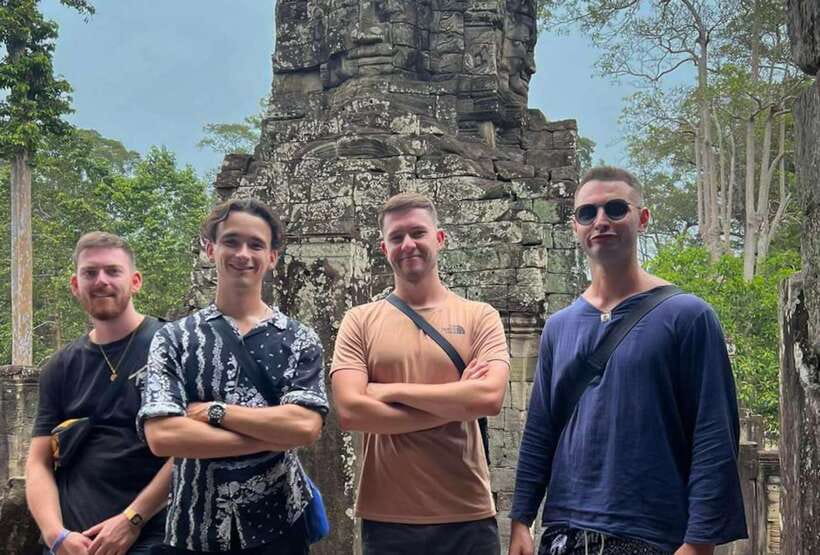
The tour costs $34 per person. For two days of organized transport, an English-speaking guide, hotel pickup and drop-off, and visits to 11 temples, that is strong value. The air-conditioned minibus is particularly useful because it gives you a cool break between walks.
Chilled bottled water and wet towels are included. They sound minor on paper, but after a hot temple circuit they become some of the most welcome parts of the day. The driver is also reported to keep the vehicle cool and supply water during the route.
Meals are not included. You will have food breaks, and the timing can vary. One person wished the lunch stop were shorter, while another appreciated stopping at local restaurants for Khmer food. If you prefer a tightly packed sightseeing day, meal breaks may feel long. If you need shade and a proper reset, you will be glad they are built in.
The Angkor Archaeological Park entry ticket is also separate. You must buy the temple pass yourself, either online through the Cambodian government’s Angkor Enterprise website or at the ticket office after pickup. Add that cost to your budget before deciding that $34 is the full price.
Who should book it?
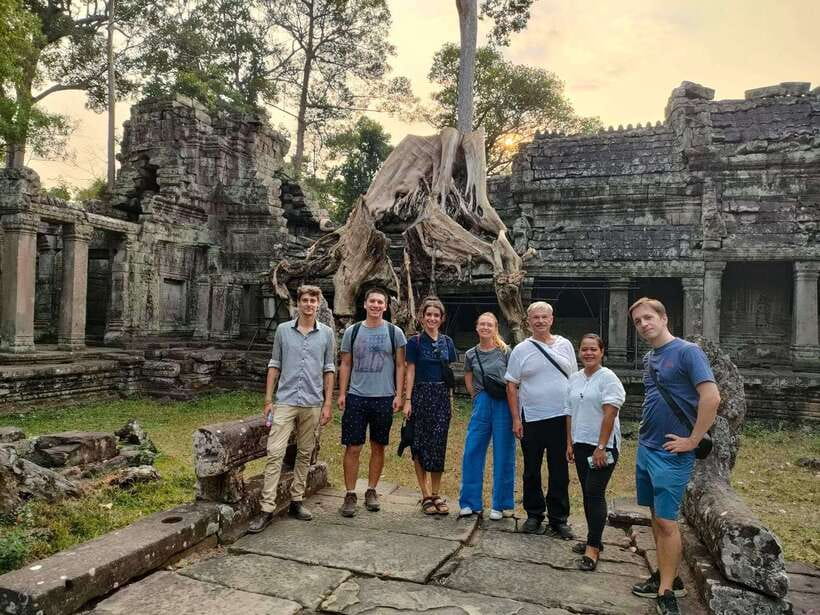
I would choose this tour if you want the main Angkor sights explained in English and prefer not to arrange transport, routes, and temple order yourself. It suits first-time visitors, solo visitors who want a small group, and anyone staying long enough to use a third day for rest or extra exploring.
It is also a good match if you care about photographs. Guides often know where to stand, help with group pictures, and time the route to avoid some of the heaviest crowding. The early arrival at Ta Prohm and careful sunrise positioning can make a real difference.
I would hesitate if you dislike early mornings, have limited stamina, or want to explore each temple at your own slow pace. The two days are full, the heat is serious, and several sites include uneven ground or steps. The information is also inconsistent about mobility: the activity is marked wheelchair accessible in one place but says it is not suitable for wheelchair users elsewhere. Contact the operator before paying if this affects you.
Cancellation is free up to 24 hours before the start, and you can reserve now and pay later. Those terms make it easier to fit the tour into a changing Siem Reap schedule, but they do not change the need to arrange the temple pass.
Should you book this Angkor Wat tour?
Book it if you want an efficient, well-supported introduction to Angkor for $34 plus the separate pass and meals. The standout features are the sunrise start, the wide range of temples, the cool vehicle, and guides such as Sary, Sok, Sam, Pheap, Nick, and Vone who add useful history and help with photographs.
Skip it if you need a gentle pace or complete independence. For most first-time visitors, though, the two-day plan gives you the right mix: famous monuments on day one, quieter and more varied temples on day two, and enough background to understand what you are seeing rather than simply collecting pictures.
FAQ
How much does the two-day Angkor tour cost?
The tour costs $34 per person. The Angkor Archaeological Park entry ticket and meals are not included.
How early does the sunrise day begin?
Day one begins at about 4:30am. You should be ready at your hotel up to 30 minutes before the stated pickup time.
Which temples are visited?
The tour visits 11 temples and sites, including Angkor Wat, Ta Prohm, Bayon, Ta Keo, the South Gate of Angkor Thom, Preah Khan, Neak Pean, Ta Som, East Mebon, Pre Rup, and Phnom Bakheng.
Is the Angkor temple pass included?
No. You must purchase the pass yourself online through the Angkor Enterprise website or at the ticket office after pickup.
Is transport included?
Yes. Hotel pickup and drop-off, an air-conditioned minibus, chilled bottled water, and refreshing wet towels are included.
Are meals included?
No. Meals are not included, although the tour includes occasional food and rest breaks.
Is an English-speaking guide provided?
Yes. The tour includes a live English-speaking guide. Guides may include Sary, Sok, Sam, Pheap, Nick, Vone, or another member of the guiding team.
Is the tour suitable for wheelchair users?
The information is conflicting. It identifies the activity as wheelchair accessible but also lists wheelchair users as unsuitable. Contact the provider before booking to confirm the vehicle, temple access, and walking conditions.
More Angkor Wat tours in Siem Reap
- Siem Reap: Full-Day Angkor Wat Guided Tour with Sunset
★ 4.9 · 3,803 reviews - Siem Reap: Angkor Wat Sunrise and Full-Day Sightseeing Tour
★ 4.9 · 2,828 reviews - Siem Reap: Angkor Wat Private Tuk-Tuk Tour
★ 4.9 · 2,222 reviews - Angkor Wat: Highlights and Sunrise Guided Tour
★ 4.9 · 1,586 reviews
More sunrise tours in Siem Reap
- Angkor Wat Sunrise tour with Small – Group and Guide tours
★ 5.0 · 3,655 reviews - Angkor Wat Highlights and Sunrise Guided Tour from Siem Reap
★ 5.0 · 3,213 reviews - Full-Day Angkor Wat Sunrise Private Tour with Guide from Siem Reap
★ 5.0 · 2,920 reviews - Angkor Wat Sunrise & 3 Main Temples with Breakfast – Small Group
★ 5.0 · 2,857 reviews
Just added around Siem Reap
- Ultimate Sunrise to Angkor Wat, Angkor Thom and Bayon Temple★ 5.0 · 3 reviews
- Full-Day Private Tour of Angkor Wat with Pick Up★ 5.0 · 12 reviews
- Trekking Tour at Phnom Kulen National Park from Siem Reap★ 5.0 · 3 reviews
- Twilight Tastes of Siem Reap Include Dinner★ 5.0 · 13 reviews
- Waterfall & River of 1000 Siva Linga- Kulen Mountain Private Tour★ 5.0 · 3 reviews
- Siem Reap City Tour with War Museum and Killing Field★ 5.0 · 27 reviews
- Private Day Trip to Angkor Temples with Expert Guide★ 5.0 · 4 reviews
- Private Two Days Siem Reap Temples Discovery Guided Tour★ 5.0 · 7 reviews
Angkor Wat Sunrise Tours, compared.
Angkor Wat Sunrise or Sunset Tour with Guide from Siem Reap
Read our review →
Angkor Wat: Small-Group Sunrise or Sunset Tour
Read our review →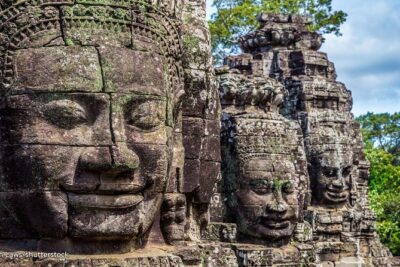
Angkor Wat Sunrise tour with Small – Group and Guide tours
Read our review →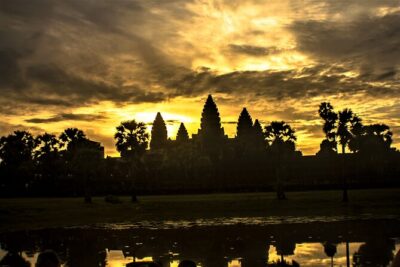
Angkor Wat Highlights and Sunrise Guided Tour from Siem Reap
Read our review →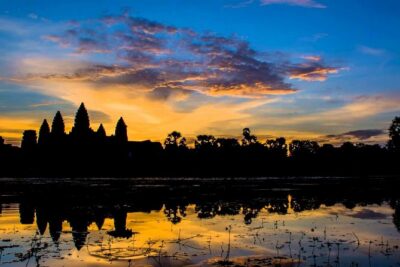
Full-Day Angkor Wat Sunrise Private Tour with Guide from Siem Reap
Read our review →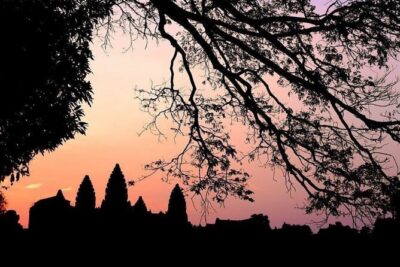
Angkor Wat Sunrise & 3 Main Temples with Breakfast – Small Group
Read our review →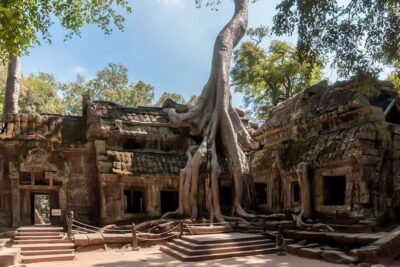
Angkor Wat Sunrise and Full-Day Sightseeing Tour
Read our review →
Angkor 2-Day Sunset & Sunrise Small-Group Tour
Read our review →Browse the lists this tour appears in