
Reviewed · SIEM REAP COUNTRYSIDE AND VILLAGE TOURS
Short Cycling at Countryside
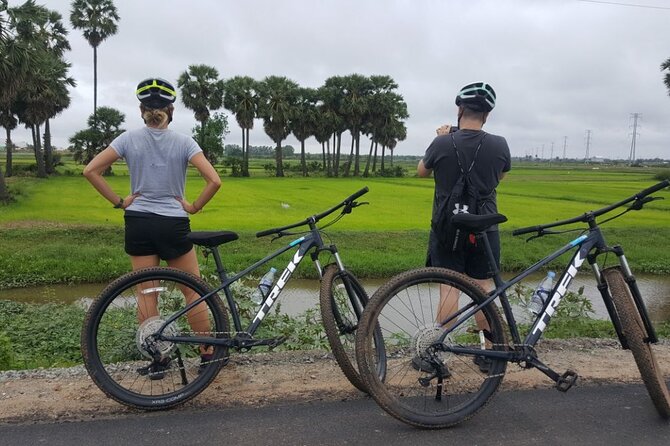
Siem Reap’s most rewarding views often begin where the town’s paved streets thin out. This 25km morning ride follows the river toward Chreav village, then rolls past rice fields, vegetable plots, livestock, village homes, a local market, and the quiet Arthvear pagoda. I like the chance to see ordinary rural life rather than another loop around the main temple zone. I also like the practical setup: clean Trek bikes, helmets, drinking water, and coconut water are included. The main drawback is that the ride begins in town, where traffic can feel untidy before you reach the calmer roads.
Guides including Bobo, Vannarath, and Kimmi have led this route, with stops adjusted when a worthwhile place appears, such as a lotus farm. You should be ready for a fairly active morning, even though the ride is described as manageable for most people. Hotel pickup is not included, so you must reach the Angkor Cycling Tour office on Taphul Road by 7:30 a.m.
Key points at a glance
- About 25km on mostly countryside roads: The ride is long enough to reach open fields and village life, but short enough to fit into one morning.
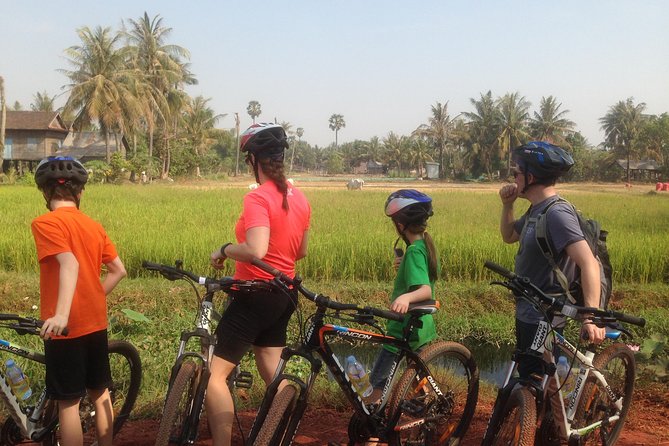
- Rice fields change with the seasons: Fields are usually green from May through October and golden from November through January.
- Local life is the main attraction: You may see farming, vegetable growing, hay stacking, cows, buffaloes, ducks, and birds.
- Food stops add local flavor: The route includes a market introduction and tastings of Khmer pastries and cookies.
- Arthvear pagoda offers a quiet pause: See old stupas, statues, and a 12th-century temple within the pagoda grounds.
- Good equipment is part of the value: Premium Trek mountain bikes, helmets, water, and coconut water are included for $30.
Leaving Siem Reap by bicycle
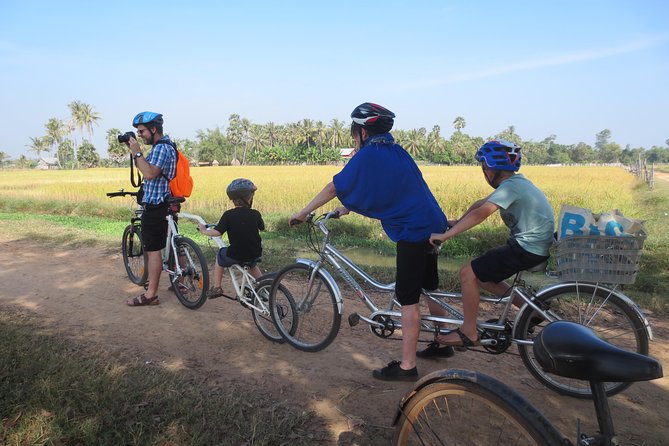
The ride begins at the Angkor Cycling Tour office on Taphul Road. After a short orientation, you set off along the Siem Reap River and away from the town center. That first stretch matters because it gives you a quick sense of how sharply the setting changes. Siem Reap is a busy base for temple trips, yet the countryside begins soon after the urban streets.
The route covers about 25km, mostly on countryside roads. That is not a tiny spin around town. You will spend several hours in the saddle, with stops that break up the distance and give the guide time to explain what you are seeing.
I would not book this as a sightseeing ride for someone who dislikes bicycles or wants constant roadside comfort. For most people who can manage a moderate morning ride, though, the distance makes sense. You reach places that are difficult to understand from a tuk-tuk window, while still returning to the office after roughly four hours.
The equipment helps. The tour provides a Trek mountain bike, helmet, and pure drinking water, with coconut water for a refreshing break. The bikes have been described as being in very good condition, and the team checks them before use. If fit matters to you, mention your needs when booking and make sure the bike feels right before leaving.
More bike tours in Siem Reap:
- Siem Reap Countryside Bike Tour / E-Bike or Tuk Tuk
★ 5.0 · 935 reviews - Angkor Sunrise Bike Tour / E-Bike or Tuk Tuk
★ 5.0 · 615 reviews - Siem Reap: Bike the Angkor Temples – Full-Day 30km Tour
★ 5.0 · 463 reviews
Rice fields, cows, and the farming year
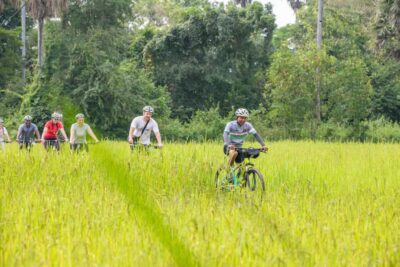
Once you are beyond central Siem Reap, the ride opens into broad paddy fields. From May to October, the rice is generally lush and green. From November through January, the fields often turn gold. That seasonal shift gives the same route a different feel depending on when you visit.
The fields are not simply a pretty background. Your guide can connect them to the farming cycle, vegetable cultivation, and the work needed to store hay. You might see villagers tending crops or stacking hay, and you may have a chance to speak with farmers about how rice is grown. The value here comes from the explanation. Without it, a rice field can look like a flat stretch of green or gold. With context, you begin to see the stages of work behind it.
Keep your camera ready, but do not treat every stop as a quick photo break. The route is at its best when you pause long enough to watch what is happening. Large herds of cows and buffaloes may be grazing near the fields, while ducks gather around waterways and birds pass overhead.
This is also where weather matters. The tour starts early, which helps with heat, but Cambodia can still be warm. Sunglasses, sunscreen, and a camera are specifically recommended. Carrying water is less of a concern because drinking water is included, though you should still dress for a sunny ride.
Chreav village and the details of daily life
The village section gives the ride its human focus. Rather than rushing from one major sight to another, you get a look at how people use the land around their homes. Vegetable plots, farming areas, paths between fields, and simple routines become the points of interest.
A good guide makes a big difference here. Bobo has been praised for answering broad questions about Cambodia as well as explaining the places along the route. Vannarath has also led the ride, and his tours have included clear explanations at different stops. The guide is not just there to steer you through the countryside. You should expect help understanding what you are seeing and why it matters locally.
The experience is not designed as a formal village visit with a fixed performance or staged demonstration. That is part of its appeal. You may see work in progress, meet farmers who are willing to explain rice cultivation, and observe daily activity at a natural pace. At the same time, the exact scenes will vary by season and by the day’s work. Do not book expecting a guaranteed photo of every farming task.
The route can also change in small ways. A guide may add a place of interest, such as a lotus farm, when conditions and timing allow. That flexibility is useful, though it means the morning is not a rigid checklist.
The market and Khmer snacks
The local market stop shifts the focus from farming to trade. You will be introduced to the way people buy and sell everyday goods, rather than being taken only to shops aimed at visitors. The market helps tie together the countryside you have just seen. Fields produce food, villagers work with it, and markets move it through the community.
You also get to taste local pastries and cookies, with an introduction to traditional Khmer flavors. This is a modest food stop, not a full meal, so you should eat breakfast before arriving. If you have dietary requirements, provide them at booking time. The tour provider specifically asks for that information.
Kimmi has led rides that included coffee and food-focused stops, though you should not assume every departure follows exactly the same sequence. The core experience described here includes a market visit and local pastry and cookie tastings.
The market is likely to be more interesting if you stay curious and respectful. Take photos only when appropriate, and let the guide explain unfamiliar foods instead of guessing. A short stop can tell you more about local habits than a polished restaurant designed for international visitors.
More countryside and village tours in Siem Reap:
- From Siem Reap: Kampong Phluk Floating Village Tour by Boat
★ 4.9 · 6,979 reviews - Kampong Phluk Floating Village Tour by Boat
★ 5.0 · 1,020 reviews - Siem Reap: Tonle Sap, Kampong Phluk & Floating Village Tour
★ 4.4 · 397 reviews - Siem Reap: Cambodian Pottery Class
★ 4.9 · 339 reviews
Arthvear pagoda and the old temple
Arthvear pagoda gives the ride a calm cultural pause. The site includes old stupas and statues, along with a 12th-century temple within the pagoda grounds. It is less familiar than the major Angkor sites, which makes it a useful contrast to the grand temple circuit.
You should not expect the scale or restoration of Angkor Wat. The appeal is quieter and more local. The pagoda offers time to look at Buddhist imagery, notice the atmosphere of the grounds, and consider how religious places remain part of everyday community life.
The description of a 12th-century temple inside an ancient pagoda is especially interesting for visitors who want more than a countryside ride. It gives the route a historical anchor without turning the morning into a full temple tour. Your guide can help explain the connection between the old structure and the current religious setting.
Wear clothing suitable for a religious site and be ready to behave quietly. The information provided does not set out a formal dress code, so the safest approach is respectful, modest clothing and attention to the guide’s instructions.
The return through rural Cambodia
After the pagoda, the route passes a 12th-century temple on the way back to town. The final section completes the contrast between open countryside and central Siem Reap. You finish back at the Angkor Cycling Tour meeting point, not at a separate drop-off location.
That return arrangement is simple, but it affects your planning. Since hotel pickup and drop-off are not included, allow time to reach the starting office in the morning and arrange your own onward transport after the ride. The meeting point is near public transportation, which helps, but the booking does not include a transfer.
Traffic deserves a practical warning. One cyclist found the main crossroads heading out of town unsettling because vehicles did not always follow traffic lights. The countryside section is the calmer part, but the opening and closing stretches can involve urban traffic. Stay close to the guide, follow instructions, and do not assume every vehicle will behave predictably.
The route is capped at 10 people. That is small enough for the guide to keep an eye on the group and answer questions without the feel of a large coach excursion. It also means the ride can remain fairly personal, especially when stopping at farms, markets, or religious sites.
What $30 gets you
At $30 per person, this is a strong value if you want several kinds of experience in one morning. You get a bicycle, helmet, English-speaking guide, drinking water, coconut water, countryside access, cultural explanations, a market visit, food tasting, and a pagoda stop. Renting a bicycle alone would not give you the same context or route planning.
The price is less compelling if your main goal is simply to pedal for an hour or reach a particular temple. This is a guided cultural ride, and much of its value comes from the explanations and the sequence of stops. You are paying for a route that connects agriculture, food, religion, and village life.
The quality of the bicycle matters over 25km. The supplied Trek bikes have been described as clean and well maintained, with helmets in good condition. That is a meaningful benefit in a hot climate, where a poorly adjusted bicycle can turn a pleasant outing into a tiring one.
The tour is booked an average of 125 days ahead, so planning early is sensible if your dates are fixed. Confirmation arrives at booking, and the mobile ticket makes the practical side easy. Free cancellation is available if you cancel at least 24 hours before the local start time. Changes or cancellations inside that window are not accepted for a refund.
Who will enjoy this ride most
I would recommend this to you if you want to see a quieter side of Siem Reap and are comfortable spending a morning on a bicycle. It suits visitors who have already seen, or plan to see, the major temples and want a different view of the area.
It is also a good fit for photographers. Rice fields, livestock, lotus farms, market life, old stupas, village roads, and birds provide varied subjects. The light is usually kinder early in the day, though conditions and scenery change with the season.
People interested in food and agriculture should get plenty from the route. The market and snacks are small parts of the morning, but the farming explanations give them a wider meaning. You are not just tasting a pastry. You are seeing how rural life, crops, trade, and meals connect.
I would think twice if you want air-conditioned transport, a short casual ride, or a tightly timed historical tour. The road surface is described as manageable, but the distance is still about 25km. Traffic near town can also be uncomfortable for a few minutes. Most people can participate, but you should be honest about your comfort on a bicycle before booking.
Practical preparation for a 7:30 start
Arrive at the Taphul Road office ready to ride. The tour starts at 7:30 a.m. and lasts about four hours, so plan breakfast beforehand. Bring sunscreen, sunglasses, and a camera, as the open fields offer little reason to leave those items behind.
Wear clothing that works for cycling and a religious site. The provider supplies a helmet, but you should still check that it fits securely. Tell the company about dietary requirements when booking, especially if you hope to sample the local pastries and cookies.
The tour ends where it begins. You are responsible for getting to the office and arranging your own transport afterward. A mobile ticket is provided, and the group size can reach 10 people.
Should you book Short Cycling at Countryside?
Book it if you want a well-priced, active morning that links rural scenery with real local context. The strongest parts are the well-kept Trek bikes, the English-speaking guides, the rice-field route, and the mix of market, food, farming, and religious stops.
Skip it if 25km sounds like too much, if you dislike cycling in town traffic, or if you want a major Angkor monument to be the centerpiece. For everyone else, this is a practical way to see how life continues beyond Siem Reap’s temple roads, with enough variety to make four hours pass quickly.
FAQ
Where does the cycling tour start?
It starts at the Angkor Cycling Tour office on Taphul Road in Krong Siem Reap, Cambodia.
What time does the tour begin?
The tour starts at 7:30 a.m.
How long is the experience?
The experience lasts approximately four hours.
How far do you cycle?
The ride is about 25km, mostly on countryside roads.
Is hotel pickup and drop-off included?
No. You must make your own way to the meeting point, and the activity ends back there.
What equipment and refreshments are included?
The tour includes an English-speaking guide, a Trek mountain bike, a helmet, pure drinking water, and refreshing coconut water.
What places are visited during the ride?
The route includes the Siem Reap River area, Chreav village, countryside fields, a local market, and Arthvear pagoda with old stupas, statues, and a 12th-century temple. The ride also passes a 12th-century temple on the return to town.
Can I cancel for a full refund?
Yes. You can cancel at least 24 hours before the local start time for a full refund. Cancellations or changes made less than 24 hours before the start are not accepted for a refund.
Just added around Siem Reap
- Ultimate Sunrise to Angkor Wat, Angkor Thom and Bayon Temple★ 5.0 · 3 reviews
- Trekking Tour at Phnom Kulen National Park from Siem Reap★ 5.0 · 3 reviews
- Twilight Tastes of Siem Reap Include Dinner★ 5.0 · 13 reviews
- Full-Day Private Tour of Angkor Wat with Pick Up★ 5.0 · 12 reviews
- Siem Reap City Tour with War Museum and Killing Field★ 5.0 · 27 reviews
- Private Day Trip to Angkor Temples with Expert Guide★ 5.0 · 4 reviews
- Waterfall & River of 1000 Siva Linga- Kulen Mountain Private Tour★ 5.0 · 3 reviews
- Private Two Days Siem Reap Temples Discovery Guided Tour★ 5.0 · 7 reviews
Siem Reap Countryside and Village Tours, compared.
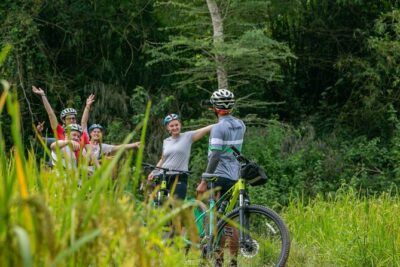
Siem Reap Countryside Bike Tour / E-Bike or Tuk Tuk
Read our review →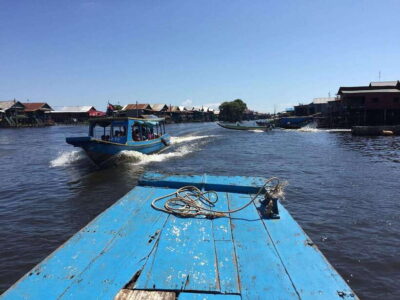
Tonle Sap, Kampong Phluk & Floating Village Tour
Read our review →
Siem Reap Lotus Silk Farm Discovery tour & Lake experience
Read our review →Browse the lists this tour appears in