
Reviewed · ANGKOR WAT TOURS
Angkor Wat Private Tour in a Tuk Tuk
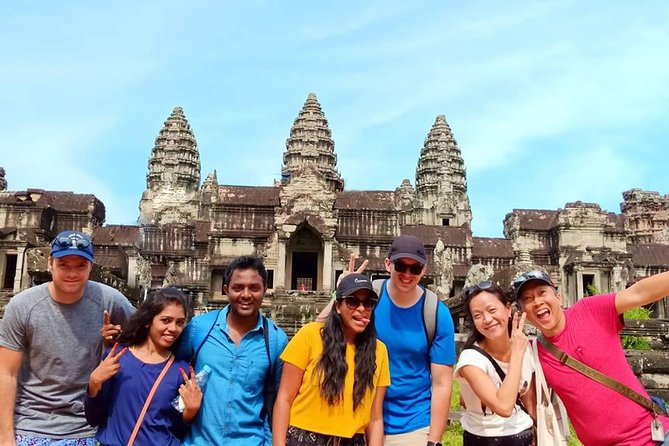
Angkor Wat is only part of the story. This private tuk-tuk tour also takes you to the giant stone faces of Bayon, the tree-wrapped ruins of Ta Prohm, and the old royal center of Angkor Thom. A local guide such as Soydy, Vantha, Phy, Long, or Voath Vinh may lead the day, depending on the booking.
I like the private format, since your group can move at its own pace and your guide can explain small details in carvings and inscriptions. I also like the practical setup: hotel pickup, return transport, a tuk-tuk for the long distances, and bottled water are included. The main drawback is the extra $37 Angkor National Park ticket, which brings the advertised $45 price to about $82 per person before food and drinks.
Key points to know before you book
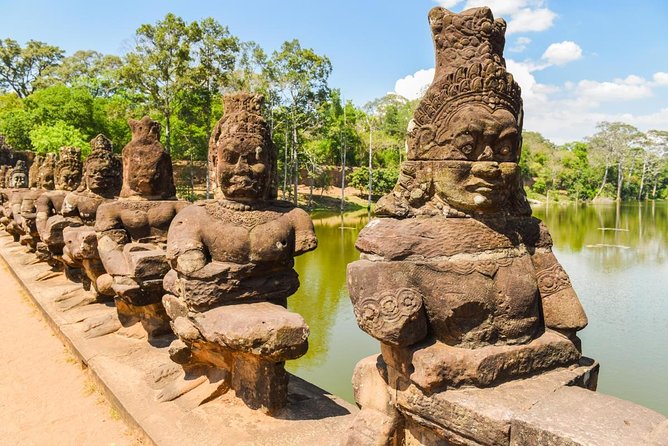
- A full temple circuit by tuk-tuk: Cover Angkor Thom, Bayon, the Elephant Terrace, Ta Prohm, and Angkor Wat without arranging separate transport.
- Private touring: Only your group participates, giving you more room to ask questions or adjust the pace.
- Strong guide focus: Guides including Soydy, Vantha, Phy, Long, Nak, and Voath Vinh are named in customer feedback for clear English and detailed explanations.
- Six to seven hours on site: The schedule includes about four and a half hours at the major temples, plus driving and pickup time.
- Extra park fee: The $37 Angkor National Park admission is not included in the tour price.
- Helpful for limited mobility: The tuk-tuk can take you close to monument entrances, reducing some walking, though the temples still involve uneven ground and steps.
Why a tuk-tuk works so well at Angkor
The Angkor Archaeological Park covers a wide area, and the temples are separated by roads and wooded stretches. A tuk-tuk is a sensible way to connect the sites. You get open-air views while moving, and the vehicle can use smaller routes that feel more personal than a large coach.
This is also a private activity, not a shared group outing. That matters at a site where the heat, walking, and sheer amount of information can wear you down. You can ask your guide to slow down, spend longer at a carving, or keep moving when your attention starts to fade.
The tour begins with an 8 a.m. pickup from your Siem Reap hotel. Hotel or airport pickup and drop-off are included, though the supplied details do not specify the airport transfer conditions or distance limits. Bottled water is provided, but food and other drinks are not, so plan for those separately.
The tuk-tuk offers shade and airflow, but it is still an open vehicle. Wear light clothing, bring sun protection, and keep water close. The day is long enough that comfortable shoes matter more than stylish ones.
More tuk tuk tours in Siem Reap:
- Siem Reap: Angkor Wat Private Tuk-Tuk Tour
★ 4.9 · 2,222 reviews - Siem Reap Countryside Bike Tour / E-Bike or Tuk Tuk
★ 5.0 · 935 reviews - Angkor Sunrise Bike Tour / E-Bike or Tuk Tuk
★ 5.0 · 615 reviews
Angkor Thom, the former royal center
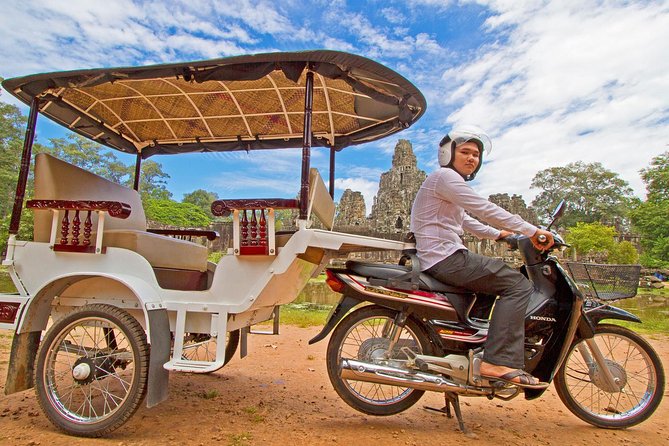
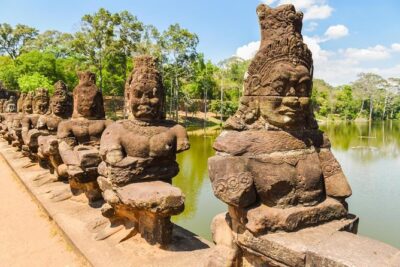
Your first major temple-area stop is Angkor Thom, the capital city built near the end of the 12th century under King Jayavarman VII. The visit is scheduled for about 40 minutes, enough to get a clear sense of the scale and purpose of the royal center.
Your guide can help connect the stone remains with the city that once occupied this space. The important point is that Angkor Thom was not simply one temple. It was a major Khmer capital, with ceremonial and royal functions spread across a broad area.
The time here is fairly short, so you should expect an introduction rather than a complete exploration. That is a reasonable trade-off in a one-day circuit, since Bayon and Angkor Wat receive longer visits. If you prefer to study one site at length, this fast pace may feel restrictive.
Bayon and its famous stone faces
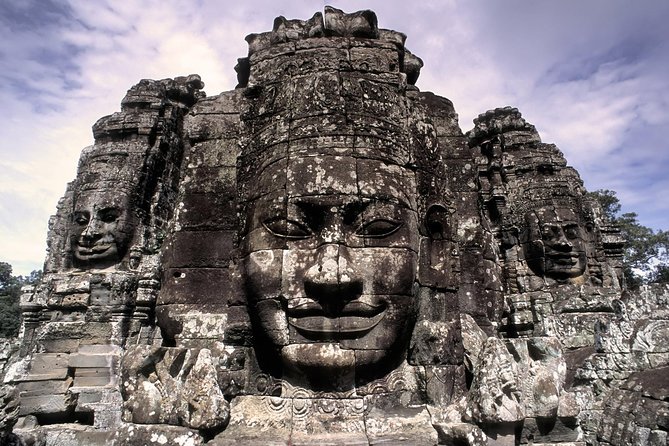
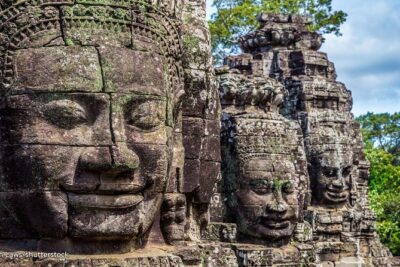
Bayon receives another 40 minutes. Built in the late 12th or early 13th century as the state temple of the Mahayana Buddhist King Jayavarman VII, it is known for towers carved with large serene faces.
Bayon can be confusing at first. Towers, galleries, and narrow passages overlap in a compact space. A good guide makes the visit easier by pointing out what you are seeing and explaining how the temple relates to Jayavarman VII and his Buddhist rule.
The strongest part of this tour is the explanation of details. Several guides associated with this experience, including Nak and Vantha, are described as speaking clear English and explaining inscriptions, decorations, and the purpose of major temples. That is valuable at Bayon, where the stone faces are memorable but the surrounding symbolism is easy to miss.
You have 40 minutes here, so listen closely and ask questions as you go. The temple rewards careful looking, but the schedule does not allow unlimited wandering.
The Elephant Terrace and the Leper King
The next stop lasts about 30 minutes and includes the Terrace of the Elephants and the Terrace of the Leper King. The Elephant Terrace served as a viewing platform where the king watched the victorious return of his army.
This is a shorter stop, but it adds useful context to the royal city. Instead of seeing only towers and enclosed shrines, you begin to understand how ceremonial displays, military processions, and royal power fit into Angkor Thom.
The carvings here are the reason to stay attentive. Your guide can help you notice the elephants and other details rather than treating the terrace as a quick photo stop. The Terrace of the Leper King adds another layer of carved figures and stonework.
Because the visit is only half an hour, expect an overview. If the area interests you greatly, you may wish for more time, but the short stop helps protect the longer visits later in the day.
More Angkor Wat tours in Siem Reap:
- Angkor Wat Sunrise or Sunset Tour with Guide from Siem Reap
★ 5.0 · 12,109 reviews - Siem Reap: Angkor Wat: Small-Group Sunrise or Sunset Tour
★ 5.0 · 9,444 reviews - Siem Reap: Angkor Wat 2-Day Tour with Sunrise and Sunset
★ 4.9 · 4,429 reviews - Siem Reap: Full-Day Angkor Wat Guided Tour with Sunset
★ 4.9 · 3,803 reviews
Ta Prohm, where trees meet stone
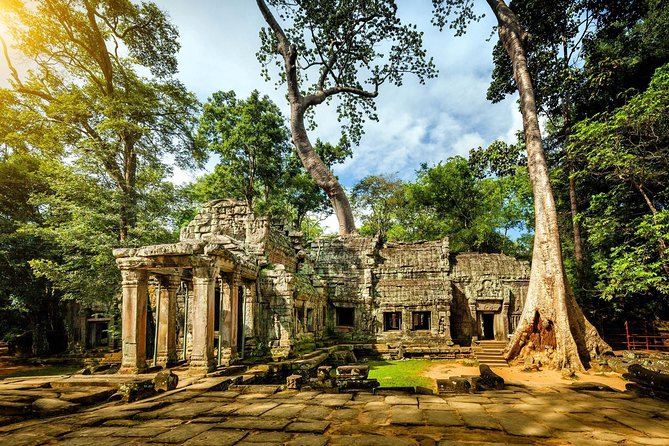
Ta Prohm receives about an hour, making it one of the most substantial stops before Angkor Wat. The temple was built from the mid-12th to early 13th century, around 1186, by Jayavarman VII and dedicated to his mother.
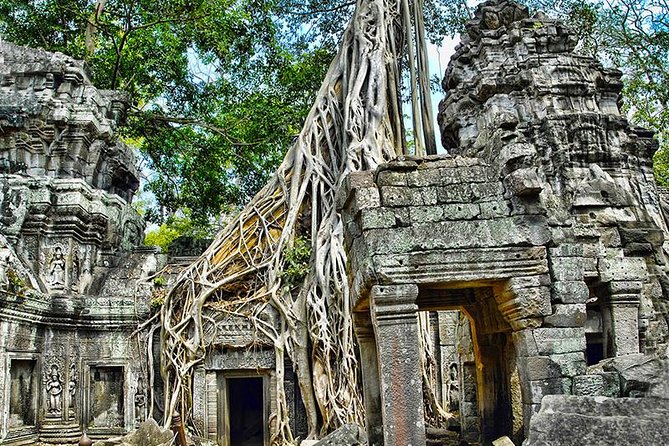
Ta Prohm is famous for its state of ruin, with trees and roots growing around sections of the temple. That setting gives the visit a different mood from Bayon or Angkor Wat. Here, you are looking at the meeting of architecture and nature, with damaged galleries and carved stone creating a more irregular route.
The extra time helps. You can look beyond the most photographed sections and notice the layout, doorways, and remaining carvings. Your guide can also explain the temple’s original purpose and its place in Jayavarman VII’s building program.
This is still an active archaeological site, so the ground may be uneven and access can vary. The supplied details do not promise a route suitable for every mobility level. The tuk-tuk can reduce the distance from the road, but you should still expect walking inside the temple.
Two hours at Angkor Wat
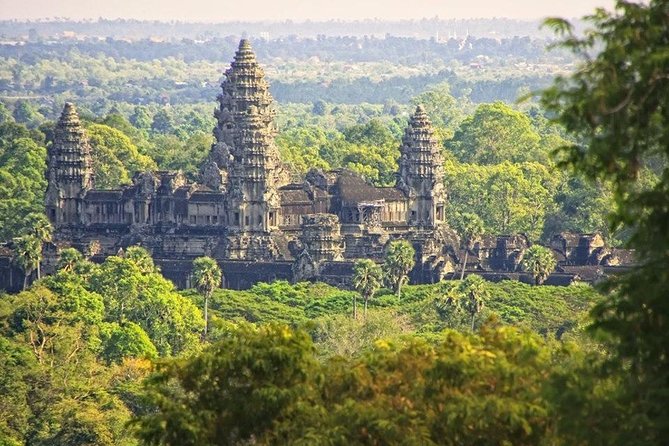
The tour saves its longest visit for Angkor Wat, with about two hours. Built in the early 12th century for King Suryavarman II, it served as his state temple and capital city. It was originally dedicated to the Hindu god Vishnu.
Angkor Wat is the best-preserved major temple in the park and the only one listed here with a specific Hindu origin. Its galleries and carvings provide the clearest setting for the tour’s lessons about Hindu legends. A guide can explain the stories shown in the reliefs rather than leaving you to guess at the scenes.
Two hours is a useful amount of time, but it can pass quickly. You will want to see the main galleries, examine the carvings, and take in the central structure. The exact sequence may depend on conditions at the temple and the guide’s approach.
Angkor Wat also demands more than a quick photograph. Give yourself time to look at the proportions, the repeated architectural patterns, and the way the monument unfolds as you move through it. The guide’s value is highest here if you want context rather than only transport.
What the guide adds to the day
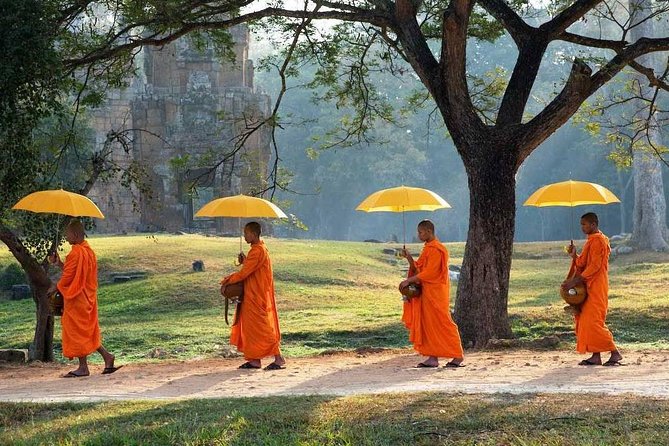
This tour includes a local, live English-speaking guide, and that is more important than the tuk-tuk itself. Angkor can be visually overwhelming. Without explanation, you may remember faces, towers, and tree roots but miss the political and religious ideas behind them.
The guide’s role is especially useful for Hindu legends, Buddhist symbolism, inscriptions, and the purpose of each temple. Guides named in customer feedback include Soydy, Vantha, Phy, Long, Voath Vinh, Phuy Phy, and Nak. Specific strengths attributed to them include clear English, punctuality, humor, and the ability to explain small decorative details.
You should still ask questions. If you want more information about religion, kingship, restoration, or the meaning of a carving, say so early in the day. A private tour gives you a better chance to shape the conversation than a large shared group.
One practical point is that the tour is a long day with a lot of information. One customer described it as very informative but tiring. That is a fair warning. Angkor is not a place to rush through, yet this route covers several major sites in a single outing.
Price, extra fees, and overall value
The tour costs $45 per person, but the Angkor National Park admission fee of $37 per person is separate. Your basic outing therefore comes to about $82 per person before meals and drinks.
That total is not the same as a $45 all-inclusive visit, so budget carefully. Still, the price includes a private tuk-tuk, a full-day vehicle, an English-speaking guide, hotel or airport pickup and drop-off, and bottled water. For a private experience covering the main temples, that is a reasonable package if you value explanation and convenience.
The value is strongest for first-time visitors who want the major sights organized in one day. You do not need to arrange separate transport between the temples, and you have a guide to make sense of what you are seeing.
The value is weaker if you already know Angkor well or prefer to spend a long time at one temple. The 6 to 7 hour schedule is efficient, but it is not designed for slow architectural study or extended photography at every stop.
Who should book this temple circuit?
I would choose this tour if you have limited time in Siem Reap and want the essential Angkor sites in one private outing. It suits couples, families, and small groups who prefer their own vehicle and a guide who can adjust explanations to their interests.
It can also work well for older visitors or anyone who needs to reduce unnecessary walking. One 82-year-old customer used a walking pole, and the guide and driver were able to bring the tuk-tuk close to the monuments to limit walking. That does not remove steps or uneven surfaces, but it can make the approach easier.
You may want a different plan if you dislike warm, open-air transport, need a highly flexible schedule, or want to explore far beyond the listed temples. The tour concentrates on the major Angkor Thom and Angkor Wat circuit rather than offering a broad selection of remote sites.
Free cancellation is available if you cancel at least 24 hours before the start time. Changes or cancellations inside that window are not accepted and are not refunded.
Should you book it?
Book this private tuk-tuk tour if you want a clear introduction to Angkor with the major temples, hotel transport, bottled water, and a live English-speaking guide in one package. The strongest reason to choose it is the guide-led interpretation, especially at Bayon, Ta Prohm, and Angkor Wat, where the carvings need context.
Before booking, add the $37 park ticket to the advertised price and prepare for a long day. If that total fits your budget and you want convenience over a slower, more specialized visit, this is a practical way to see the core Angkor temples.
FAQ
How long does the Angkor Wat private tuk-tuk tour last?
The experience lasts approximately 6 to 7 hours. Pickup begins at 8 a.m. from your hotel in Siem Reap.
What temples and sites are included?
The route includes Angkor Thom, Bayon Temple, the Terrace of the Elephants, the Terrace of the Leper King, Ta Prohm, and Angkor Wat.
Is hotel pickup included?
Yes. Hotel pickup and drop-off are included. Airport pickup and drop-off are also listed as included.
Is the Angkor National Park admission ticket included?
No. The Angkor National Park ticket costs $37 per person and must be paid separately.
Is this a private tour?
Yes. Only your group participates in the activity.
Is a guide included?
Yes. A local live English-speaking guide is included.
Are food and drinks included?
Bottled water is included during the tour. Food and other drinks are not included.
Just added around Siem Reap
- Ultimate Sunrise to Angkor Wat, Angkor Thom and Bayon Temple★ 5.0 · 3 reviews
- Full-Day Private Tour of Angkor Wat with Pick Up★ 5.0 · 12 reviews
- Trekking Tour at Phnom Kulen National Park from Siem Reap★ 5.0 · 3 reviews
- Twilight Tastes of Siem Reap Include Dinner★ 5.0 · 13 reviews
- Siem Reap City Tour with War Museum and Killing Field★ 5.0 · 27 reviews
- Private Day Trip to Angkor Temples with Expert Guide★ 5.0 · 4 reviews
- Waterfall & River of 1000 Siva Linga- Kulen Mountain Private Tour★ 5.0 · 3 reviews
- Private Two Days Siem Reap Temples Discovery Guided Tour★ 5.0 · 7 reviews
Angkor Wat Tours, compared.
Angkor Wat Sunrise or Sunset Tour with Guide from Siem Reap
Read our review →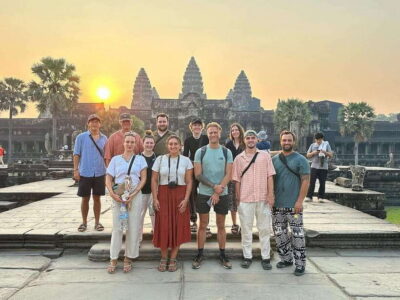
Angkor Wat: Small-Group Sunrise or Sunset Tour
Read our review →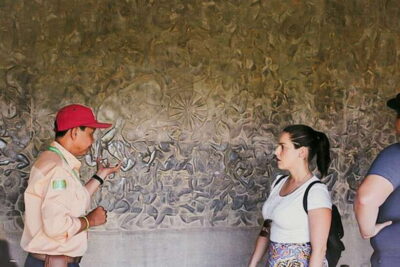
Angkor Wat 2-Day Tour with Sunrise and Sunset
Read our review →
Angkor Wat Sunrise tour with Small – Group and Guide tours
Read our review →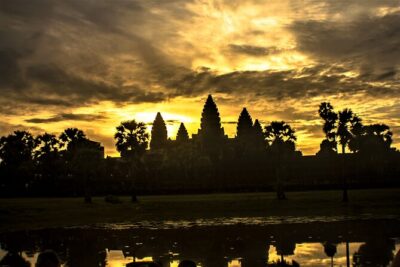
Angkor Wat Highlights and Sunrise Guided Tour from Siem Reap
Read our review →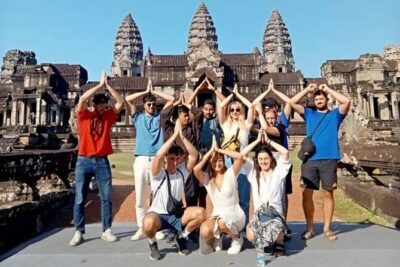
Angkor Wat Sunset Small Group Tour with Lunch Included
Read our review →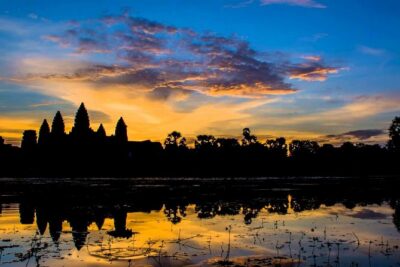
Full-Day Angkor Wat Sunrise Private Tour with Guide from Siem Reap
Read our review →Browse the lists this tour appears in