
Reviewed · ANGKOR WAT TOURS
Siem Reap: Bike the Angkor Temples – Full-Day 30km Tour
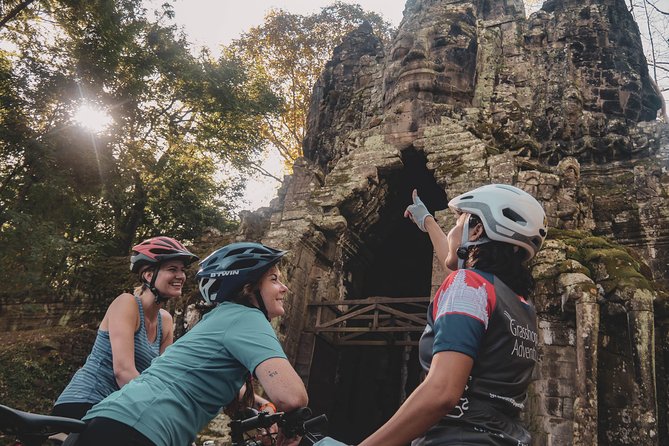
Angkor is enormous, and a bicycle lets you feel its scale in a way a car or bus cannot. This tour links Angkor Wat, Bayon, and Ta Prohm with forest paths, local roads, and village lanes, so the ride becomes part of the sightseeing rather than dead time between temples.
I like the small group size, capped at 10, and the care built into the day: fitted mountain bikes, helmets, cold water, fruit, a guide at the front and back, and help with the Angkor Pass. The drawback is simple: 25 to 30 kilometers in Cambodian heat is real exercise, and sandy or bumpy trails may test casual cyclists.
Key points to know before booking
- Three essential temples by bike: See Angkor Wat, Bayon, and Ta Prohm, plus Angkor Thom’s terraces and other ruins.
- Forest and village routes: The ride avoids some main roads and gives you glimpses of farms, homes, and rural life.
- Mostly flat, not always easy: Expect 15 to 18 miles, with some sand, uneven ground, and dirt trails.
- A guide-led history lesson: Guides including Chen, Moon, Wich, Mun, Pat, and Samnang Chan are praised for clear explanations and good care.
- Lunch is optional: The with-lunch choice includes a Khmer meal, while snacks, fruit, and bottled water are included.
- Temple pass costs extra: The tour is $35 per person, but the one-day Angkor Pass is an additional $37.
Why cycling changes the Angkor experience
Angkor Archaeological Park covers a vast area, roughly half the size of New York City. You need transport, but the choice of transport shapes the day. In a vehicle, you move efficiently from one famous monument to the next. On a bicycle, the space between temples becomes part of the story.
You ride beneath trees, through quiet sections of the park, and along roads near local homes and farm plots. The pace is slow enough to notice the sound and shade of the forest, but fast enough to cover the major sights in one day. You also enter the great gates of Angkor Thom under your own power, which gives those huge stone entrances a satisfying sense of scale.
I would not book this as a gentle sightseeing day. The route is mostly flat, and the cycling is described as leisurely, but distance, heat, and rough patches add up. A cyclist in moderate fitness should manage it better than someone who rarely rides. The tour is not designed around speed, so you stop often for photographs, temple visits, fruit, water, and lunch.
The group limit matters. With no more than 10 people, the guide can keep an eye on the pace and answer questions without turning every explanation into a public speech. A private option is also available if you want more control over stops and attention.
More bike tours in Siem Reap:
- Siem Reap Countryside Bike Tour / E-Bike or Tuk Tuk
★ 5.0 · 935 reviews - Angkor Sunrise Bike Tour / E-Bike or Tuk Tuk
★ 5.0 · 615 reviews - Siem Reap Countryside Sunset Bike Tour / E-Bike or Tuk Tuk
★ 5.0 · 173 reviews
Starting in Siem Reap at 7:30am
You make your own way to the meeting point at ផ្ទះគ្រូ Café in Siem Reap. The tour begins at 7:30am, which is useful for two reasons: you have a full day ahead, and the first cycling hours are cooler than the afternoon.
After introductions, you receive a mountain bike and helmet. The bikes are adjusted to your height, and the tour team gives a safety briefing before leaving. Several cyclists specifically appreciated that the bikes were well maintained and that staff helped fit them properly. There is also a guide or assistant positioned to support the group and help with safety.
You ride toward the park entrance, where the guide assists with buying the Angkor Pass. The pass is not included in the $35 tour price. A one-day pass costs $37, so your total before any extras is effectively $72 per person.
That price is fair for a full day with a bike, helmet, cycling guide, refreshments, and temple guiding. It is not the cheapest way to see Angkor, especially once you add the pass. But the cost covers more than transport. You are paying for route planning, a fitted bicycle, a small group, historical explanations, food if selected, and support on roads and trails that would be harder to navigate alone.
Angkor Wat: begin with the great monument
Angkor Wat is the first major stop. The temple was built in the 12th century and is famous for its towers, galleries, carved stonework, and scenes connected with the Hindu epic Ramayana.
The planned temple visit lasts about an hour, though the full experience includes the approach and cycling around the complex. Your guide explains what you are looking at instead of leaving you to sort out every carving and corridor by yourself. That context helps at Angkor Wat, where the scale can be overwhelming and details compete for your attention.
This is the iconic part of the day, and it comes early. That makes sense for a first visit, since you see the monument while you still have plenty of energy. The tradeoff is that the tour does not save Angkor Wat for the end as a grand finale. One cyclist specifically preferred the idea of finishing there. If you like building toward the biggest sight, the sequence may feel slightly out of order.
After exploring, you continue toward Angkor Thom. This section uses the main road at times, with enormous stone figures and expressive divinities and demons lining the approach. The ride gives you a better feel for the old city’s size than a quick vehicle transfer would.
Bayon and Angkor Thom’s stone faces
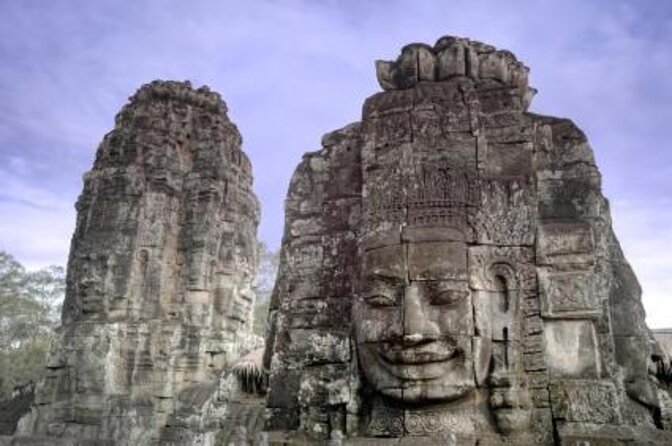
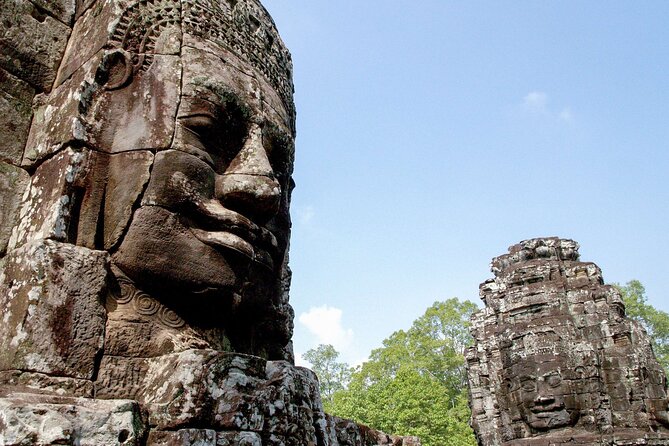
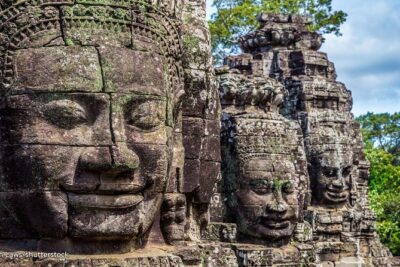
Bayon is one of Angkor’s most memorable temples. Its towers carry the serene faces of bodhisattvas, and the effect changes as you move around the structure. From one angle, the faces seem distant. From another, they appear to watch the paths below.
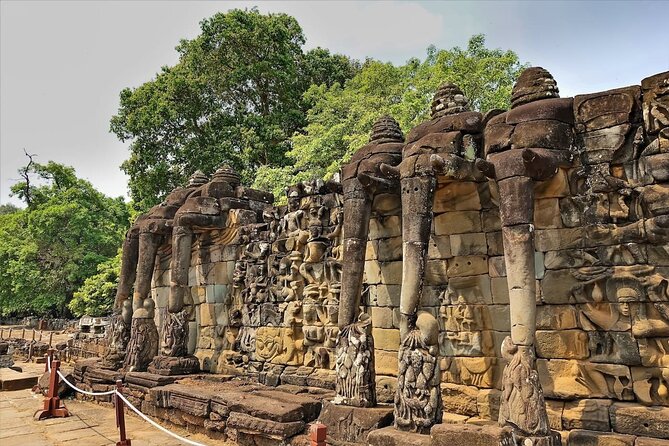
Your guide leads the group through Bayon and explains the site’s place within Angkor Thom. You also see the Elephant Terrace, the Terrace of the Leper King, and the Royal Enclosure. These stops broaden the day beyond the three headline temples and help show how Angkor functioned as a large royal city rather than a collection of isolated ruins.
The cycling between Angkor Thom’s monuments is mostly gentle, but the heat remains a factor. Keep drinking before you feel thirsty. Bottled water is supplied throughout the ride, and fruit or snacks are provided at a useful point in the day. One cyclist noted that the fruit stop arrived just before an energy slump. That kind of timing matters more than it sounds on a hot 30-kilometer ride.
The guides receive especially strong praise for connecting temple details with Cambodian culture and national history. Chen, Moon, Wich, Mun, Pat, and Samnang Chan are among the guides named in the feedback, though your guide will depend on the departure. The best part of the guiding is not simply a list of dates. It is having someone point out what deserves your attention and answer questions while you walk.
More Angkor Wat tours in Siem Reap:
- Angkor Wat Sunrise or Sunset Tour with Guide from Siem Reap
★ 5.0 · 12,109 reviews - Siem Reap: Angkor Wat: Small-Group Sunrise or Sunset Tour
★ 5.0 · 9,444 reviews - Siem Reap: Angkor Wat 2-Day Tour with Sunrise and Sunset
★ 4.9 · 4,429 reviews - Siem Reap: Full-Day Angkor Wat Guided Tour with Sunset
★ 4.9 · 3,803 reviews
Lunch near the temples at Srah Srang
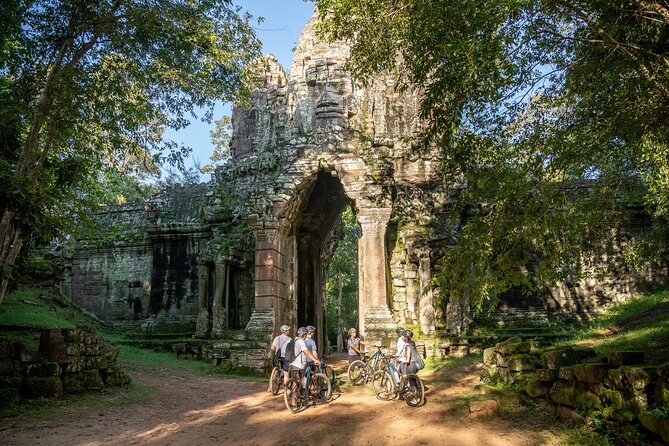
The itinerary allows about two hours around Srah Srang for lunch, snacks, and a break. If you select the lunch option, a Khmer meal is arranged in advance. Food is not an afterthought here. Several cyclists singled out the meal as generous, tasty, and well managed, with enough choice to suit different appetites.
Lunch matters because this is the point when the heat and distance begin to show. You can eat, refill, slow down, and prepare for the afternoon rather than rushing straight from one ruin to the next. Vegetarian or other dietary needs should be provided when booking.
If you choose the option without lunch, the supplied information confirms snacks, fruit, and bottled water, but not a full meal. I would check the exact booking choice carefully and carry some extra cash for food or drinks if needed. The tour description also notes that refreshments are included, while lunch depends on the option selected.
Srah Srang adds a calmer pause to a busy temple day. It is less about another famous architectural centerpiece and more about giving the route breathing room. You get time to sit, eat, and hear about local culture before returning to the monuments.
Ta Prohm: the atmospheric afternoon stop
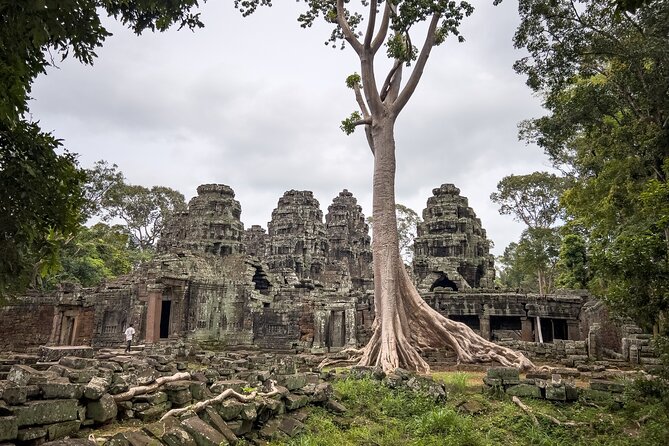
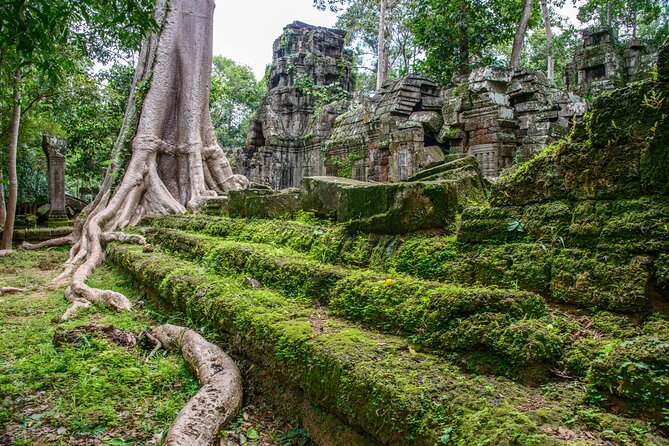
Ta Prohm is the afternoon highlight. Tall trees and thick roots push through the stonework, creating the setting many people associate with Angkor’s jungle ruins. Moss, broken walls, and tangled roots make this temple feel different from the ordered galleries of Angkor Wat.
The planned visit lasts about an hour. Your guide explains the site’s stories and symbols, then gives you time to walk and take photographs. The temple can be uneven underfoot, so comfortable shoes are more useful than fashionable ones. You will already have been cycling for several hours by this point, which makes the Ta Prohm stop both rewarding and physically demanding.
The ride into this area is one of the tour’s strongest features. Instead of staying on broad roads for the entire day, you may use forest tracks and smaller paths. One detailed account described the route as a mix of asphalt, sand, wooded trails, and bumpy ground. That is exactly the distinction to keep in mind: the route is not technically extreme, but it is not smooth pavement all day.
The word leisurely should be read as a pace, not a promise that the day requires little effort. You stop often, but the total distance remains substantial. If your knees are sensitive or you are unused to cycling on loose surfaces, the final stretch may feel long.
The ride home through villages and forest
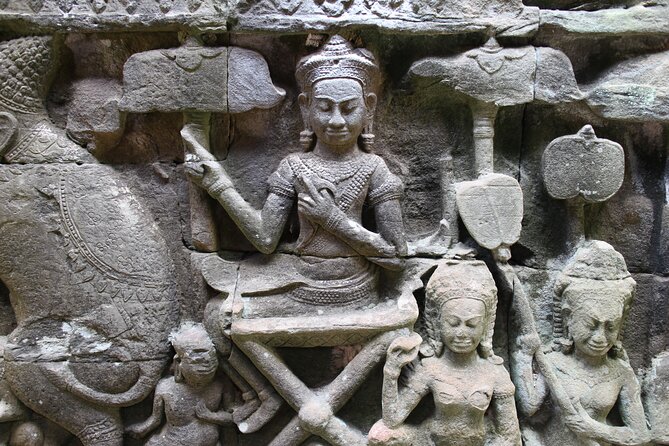
After Ta Prohm, the group begins the return toward Siem Reap. The route passes through small villages and rural areas, giving you a view of everyday life beyond the temple core. You may see homes, farm areas, and local roads that are easy to miss from a car.
This is the part I value most for travelers who want more than the standard Angkor checklist. The temples are the reason to book, but the countryside makes the day feel connected to present-day Cambodia. You are not simply moving between monuments. You are seeing how the park sits beside living communities.
The tour ends back at the café meeting point. The published duration is about eight and a half hours, beginning at 7:30am, though the exact return time can depend on the group, conditions, and time spent at the temples. The description places the return in the afternoon, while the overall booking duration allows for a long day. Plan nothing demanding afterward.
A cold coconut drink and, in some accounts, a cold towel are provided at the finish. Some cyclists also appreciated being able to keep the water bottle. These are small touches, but they make sense after a hot ride.
How hard is the 30-kilometer route?
You should be comfortable riding for several hours before booking. The route covers about 25 to 30 kilometers, or 15 to 18 miles, on mostly flat roads and paths. It is not a hill-climbing challenge, but flat does not mean effortless in Cambodia’s heat.
The more difficult sections are the dirt trails, sand, and uneven forest roads. A few cyclists described the route as easy overall but cautioned that loose or bumpy stretches could cause tired legs and sore knees. The tour suits an active beginner more than a complete beginner. If you can ride confidently in ordinary traffic and handle an unpaved surface, you are better prepared.
Wear practical cycling clothing and sturdy shoes. Bring sunscreen and a hat. Temple rules require shoulders and upper arms to be covered, and pants or shorts must reach at least the knee. See-through or sleeveless shirts are not allowed inside the temples.
Child seats can be requested, but they accommodate a child weighing up to 14 kilograms. Most people can take part, and service animals are allowed. Still, the distance and heat make this a better choice for active adults, older children, and families used to full days outdoors than for very young children.
Small-group value, guiding, and safety
The tour’s strongest repeated feature is the human support. Guides are praised for history, humor, patience, and safety. The cycling staff use hand signals, explain the pace, and may position one guide at the front and another at the back. That setup is reassuring when the route shifts between public roads, forest tracks, and temple paths.
You are not being trained for a race. The pace is set for the group, and the guide stops for photographs, temple walks, water, and food. A small group also makes it easier to ask about Cambodian culture, temple design, or details you might otherwise miss.
The experience is still weather dependent in practical terms. Temperatures around 35 degrees Celsius have made the day feel demanding, even for people who enjoyed it greatly. Water is supplied, but you should arrive ready to drink often, protect yourself from the sun, and accept that the final kilometers may be tiring.
The tour has a 99 percent recommendation rate and a 4.9 rating from 464 reviews, which points to unusually consistent satisfaction. The pattern is clear: people value the guides, the route away from main roads, the well-kept bikes, the food, and the sense of seeing more than they would from a vehicle. The less enthusiastic feedback focuses mainly on duration and challenging trail sections, not on poor organization.
Should you book this Angkor bike tour?
Book it if you want Angkor to feel like a place, not just a sequence of famous photographs. You will see the major temples, but you will also pass through forest, villages, and quieter roads with a guide who can explain what you are seeing.
Skip it if you want air conditioning, short walks, or a quick temple circuit. The $35 price is attractive, but the Angkor Pass adds $37, and the day demands moderate fitness. For active visitors, first-time Angkor explorers, families with older children, and anyone who prefers local roads to a standard vehicle tour, this is a strong-value way to spend a day.
Book the lunch option if you want the day handled from start to finish. Choose the private upgrade if you care about a more personal pace. Otherwise, the small group offers a good balance of cost, support, and freedom, especially with a maximum of 10 people.
FAQ
What time does the tour start?
The tour starts at 7:30am at ផ្ទះគ្រូ Café in Siem Reap. You make your own way to the meeting point.
How far do you cycle?
The ride covers approximately 25 to 30 kilometers, or 15 to 18 miles. The route is mostly flat but includes some dirt, sandy, and bumpy trails.
Which temples are included?
The route includes Angkor Wat, Bayon, Ta Prohm, and parts of Angkor Thom such as the Terrace of the Leper King, the Terrace of the Elephant, and the Royal Enclosure. Srah Srang is also included as a lunch and refreshment stop.
Is lunch included?
Lunch is included only if you select the with-lunch option. Snacks, fruit, and bottled water are included for the tour.
Is the Angkor Pass included in the price?
No. The Angkor Pass is purchased separately. A single-day pass costs $37.
How many people are in the group?
The tour has a maximum of 10 travelers. A private tour upgrade is also available.
What should I wear to the temples?
You must wear clothing that covers the shoulders and upper arms. Pants and shorts must reach at least the knee, and sleeveless or see-through shirts are not permitted.
Can I cancel for a full refund?
Yes. You can cancel at least 24 hours before the experience starts for a full refund. Cancellations or changes made less than 24 hours before the start time are not refundable or accepted.
Just added around Siem Reap
- Ultimate Sunrise to Angkor Wat, Angkor Thom and Bayon Temple★ 5.0 · 3 reviews
- Full-Day Private Tour of Angkor Wat with Pick Up★ 5.0 · 12 reviews
- Trekking Tour at Phnom Kulen National Park from Siem Reap★ 5.0 · 3 reviews
- Twilight Tastes of Siem Reap Include Dinner★ 5.0 · 13 reviews
- Siem Reap City Tour with War Museum and Killing Field★ 5.0 · 27 reviews
- Private Day Trip to Angkor Temples with Expert Guide★ 5.0 · 4 reviews
- Waterfall & River of 1000 Siva Linga- Kulen Mountain Private Tour★ 5.0 · 3 reviews
- Private Two Days Siem Reap Temples Discovery Guided Tour★ 5.0 · 7 reviews
Angkor Wat Tours, compared.
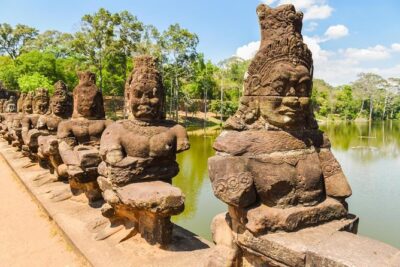
Angkor Wat Sunrise or Sunset Tour with Guide from Siem Reap
Read our review →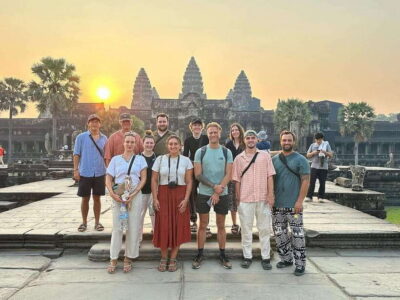
Angkor Wat: Small-Group Sunrise or Sunset Tour
Read our review →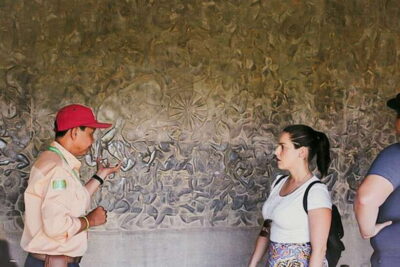
Angkor Wat 2-Day Tour with Sunrise and Sunset
Read our review →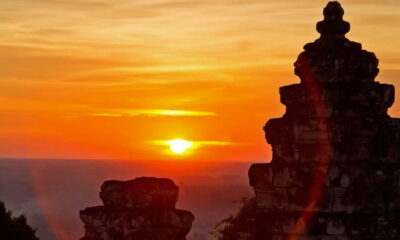
Angkor Wat Sunrise tour with Small – Group and Guide tours
Read our review →
Angkor Wat Highlights and Sunrise Guided Tour from Siem Reap
Read our review →
Angkor Wat Sunset Small Group Tour with Lunch Included
Read our review →
Full-Day Angkor Wat Sunrise Private Tour with Guide from Siem Reap
Read our review →Browse the lists this tour appears in