
Reviewed · ANGKOR CYCLING TOURS
Angkor Cycling Tour
Angkor is best understood at a slower pace, and this 35 km cycling route gives you that chance. You pedal beside the Angkor Wat moat, ride forest tracks near Bakheng Hill, cross the old wall of Angkor Thom, and reach temple sites that feel far removed from the main road.
I like the balance of nature and monuments, especially the birdwatching stop at Jayatataka Baray. I also like the practical setup: a mountain bike, helmet, guide, lunch, water, snacks, spare parts, first aid, and tuk tuk transfers are included. The main consideration is the heat and distance. Seven hours and 35 km require reasonable fitness, even though the route is rated medium and most of the ride is manageable.
Key points to know
- Ride 70% off-road: Forest tracks, single trails, and countryside paths provide the adventure, while paved roads make up the easier sections.
- See Angkor beyond Angkor Wat: The route includes Angkor Thom’s wall, Ghost Gate, Bayon, Ta Nie, Ta Prohm, and the Angkor Wat moat.
- Stop for wildlife at Jayatataka Baray: Bring patience for birds, butterflies, monkeys, and the possibility of freshwater otters.
- Expect a full seven-hour day: The tour starts at 7:45 AM, covers about 35 km, and returns to Siem Reap by bike and transfer.
- Lunch and gear are covered: You receive a mountain bike, helmet, water, snacks, fruit, a local lunch, and free tuk tuk transport.
- Bring temple-appropriate clothing: Shorts work for cycling, but carry spare clothing for temple visits and wear closed-toe shoes.
Why cycling changes the Angkor experience
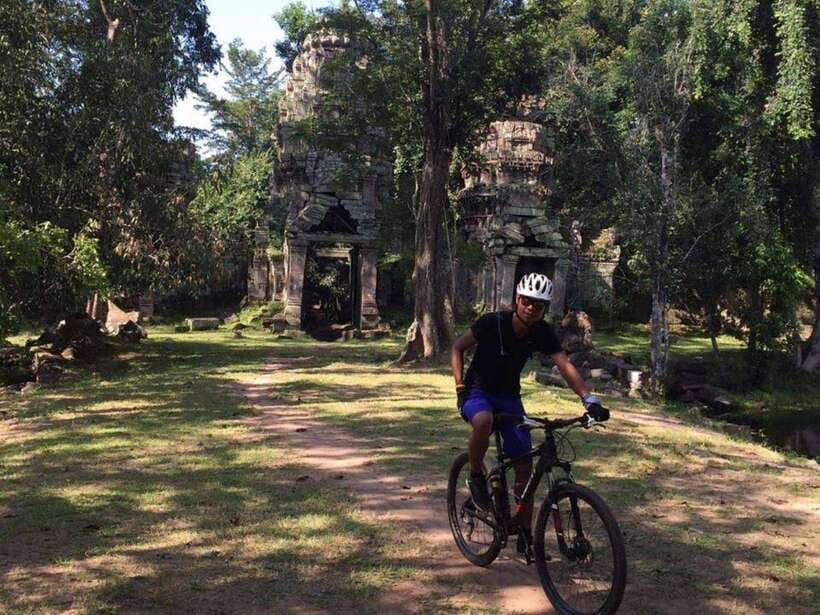
The usual way to see Angkor is from a car or tuk tuk, moving between the famous monuments on paved roads. This ride gives you a different rhythm. You hear the tires, feel the shade change under the trees, and notice canals, forest paths, and small stretches of countryside that are easy to miss from a vehicle.
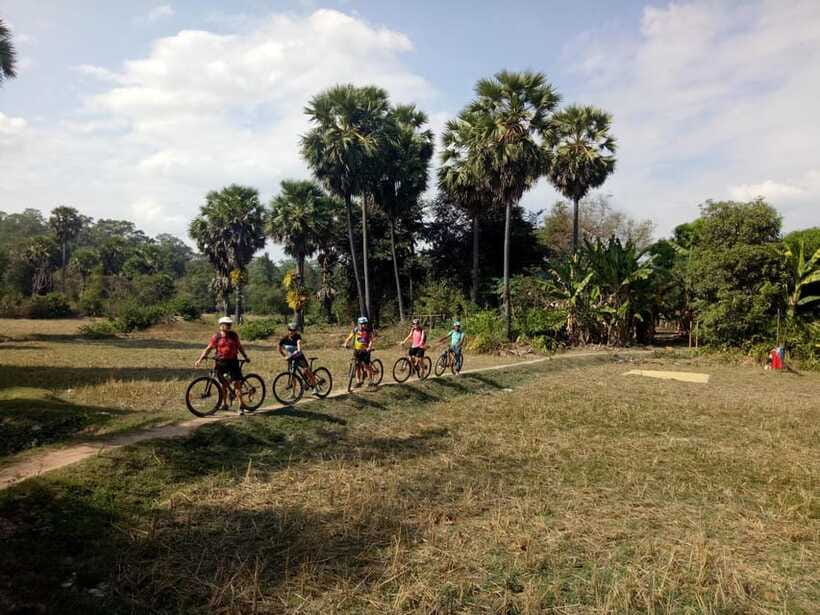
The route is not a race. It combines smooth bike lanes and paved roads with rougher tracks through the forest. That makes it a good fit if you want some physical challenge without signing up for an extreme mountain-bike day.
The most useful figure is the 70 percent off-road split. You should expect roots, uneven ground, and narrow forest paths, but the route also includes 30 percent paved riding for recovery. The terrain is described as medium, and one detailed account of the day found most of the ride easy, with only a few moderate sections.
You do need to take the distance seriously. Thirty-five kilometres under the Cambodian sun can feel longer than the number suggests. Carry water, use sunscreen, and avoid loose clothing that can catch on the bike or branches.
More bike tours in Siem Reap:
- Siem Reap Countryside Bike Tour / E-Bike or Tuk Tuk
★ 5.0 · 935 reviews - Angkor Sunrise Bike Tour / E-Bike or Tuk Tuk
★ 5.0 · 615 reviews - Siem Reap: Bike the Angkor Temples – Full-Day 30km Tour
★ 5.0 · 463 reviews
7:45 AM pickup and the ride toward Angkor Wat
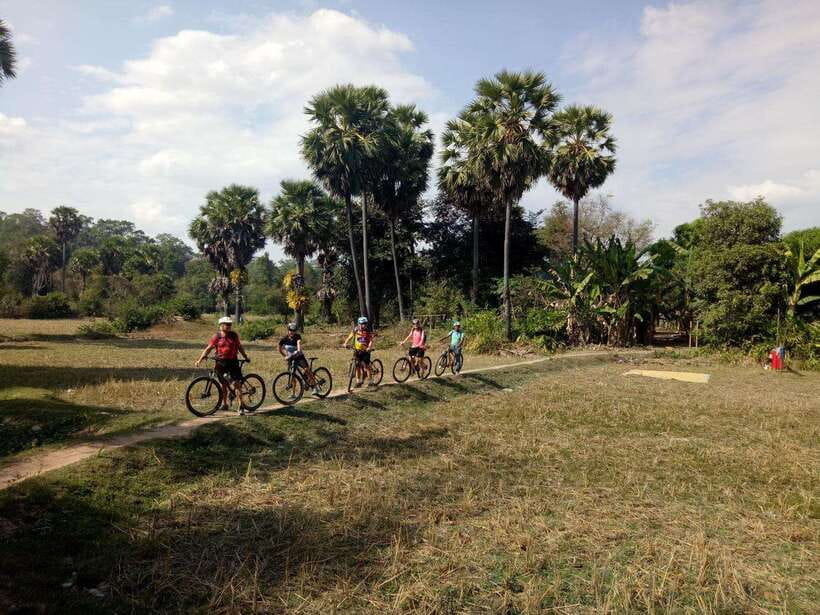
Pickup is available from hotels, apartments, and Airbnb lobbies in Siem Reap city, with the vehicle arriving about 15 minutes before the stated start. Transport is by tuk tuk or minivan, depending on the size of the group.
At the shop, you receive a quick bike fitting. Mountain bikes are available in all sizes, and helmets are included. The guide then leads you toward Angkor Wat, first passing through the Siem Reap River area before the route turns toward the forest tracks of the Angkor complex.
This opening section helps you get used to the bike before the more adventurous parts begin. It also sets the tone for the day: the ride is not simply a list of temple stops, but a way of moving through the wider Angkor area.
The operator provides spare bike parts and a first aid kit. That is reassuring on a route with so much off-road riding, though you should still tell the guide early if the bike feels poorly adjusted.
Two hours at Angkor Wat
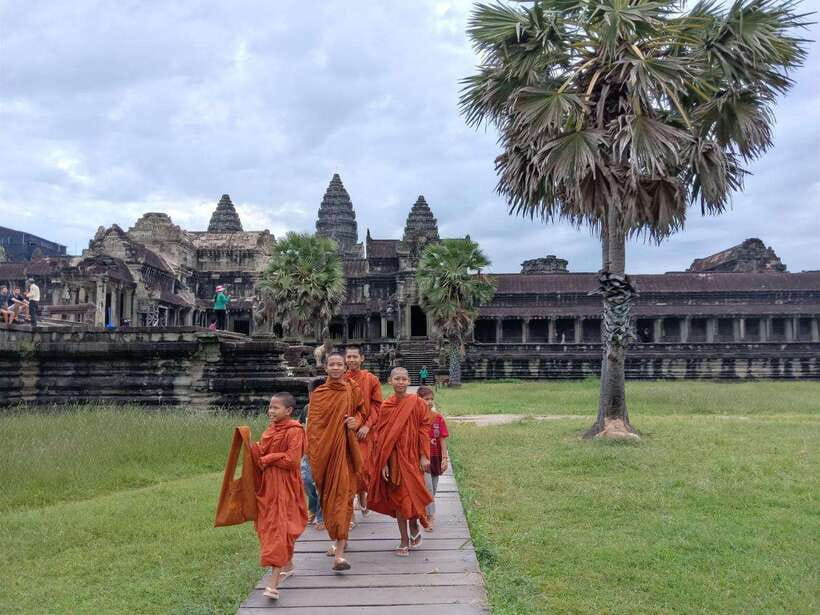
Angkor Wat is the grand opening stop, and you spend about two hours exploring it with the guide. The temple is the best-known monument in Cambodia for good reason: its scale, towers, galleries, and carved scenes demand time rather than a hurried photo stop.
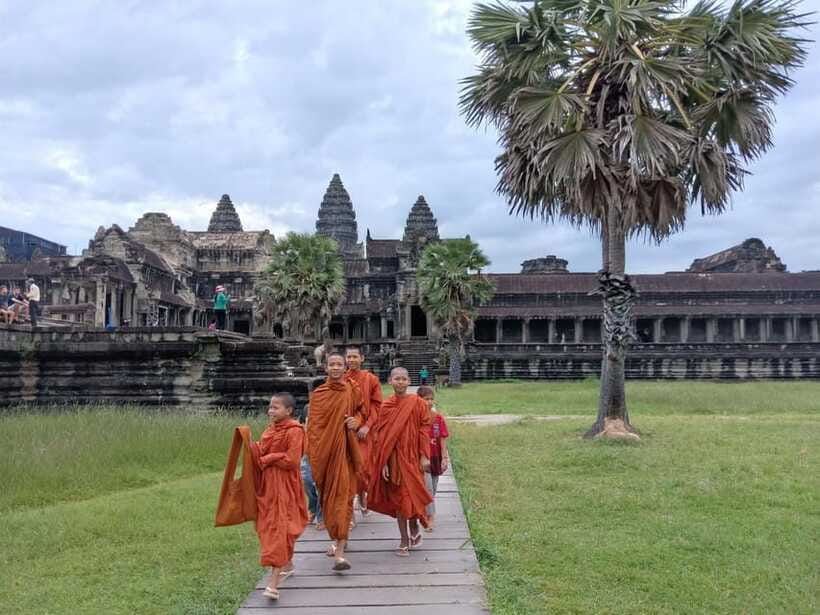
The bicycle approach is part of the pleasure. You ride along the ancient moat, surrounded by trees and open views, before switching from saddle to walking shoes inside the temple grounds. The change from quiet cycling to monumental stonework is one of the strongest features of the day.
The guide provides the stories and points out details as you explore. Since you are visiting a sacred site, dress with care. Shorts are fine during the ride, but carry a spare layer or longer clothing for temple visits. Closed-toe shoes are required for the activity, and sunglasses and sunscreen are sensible in the open sections.
Your temple pass is not included in the $65 price. You must arrange that separately, so include its cost when comparing this tour with other Angkor options. The pass is the one unavoidable extra for entering the temples.
Bakheng Hill, the South Gate, and Angkor Thom’s wall
After Angkor Wat, the route follows the Angkor moat and moves toward the forest tracks around Bakheng Hill. This is where the ride feels most different from a standard temple circuit. You leave the main flow of vehicles and use off-road paths under the trees.
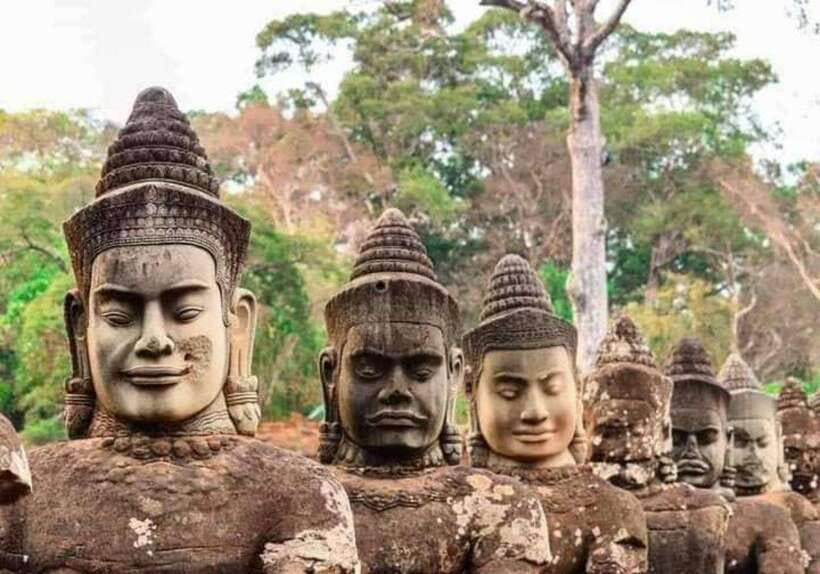
The route then enters Angkor Thom through the South Gate. From there, you cycle on top of the ancient city wall. That is an unusual experience, even in a place full of unusual experiences. You are not only looking at an old fortification from ground level; you are riding along part of it.
The wall section may be a highlight for anyone who enjoys combining movement with archaeology. It also requires attention. Ancient surfaces and forest tracks are not as smooth as a paved cycle path, so watch the ground and follow the guide’s pace.
At Ghost Gate, you stop for photographs and stories. The name gives the place a slightly mysterious character, but the real value is the setting and the chance to pause before the next major monument.
A different sort of day out around Siem Reap:
- Angkor Wat Sunrise or Sunset Tour with Guide from Siem Reap
★ 5.0 · 12,109 reviews - Siem Reap: Angkor Wat: Small-Group Sunrise or Sunset Tour
★ 5.0 · 9,444 reviews - From Siem Reap: Kampong Phluk Floating Village Tour by Boat
★ 4.9 · 6,979 reviews - Sunset tour of Kampong Phluk stilts home village on the Tonle Sap
★ 5.0 · 4,865 reviews
Bayon’s stone faces and lunch by the Elephant Terrace
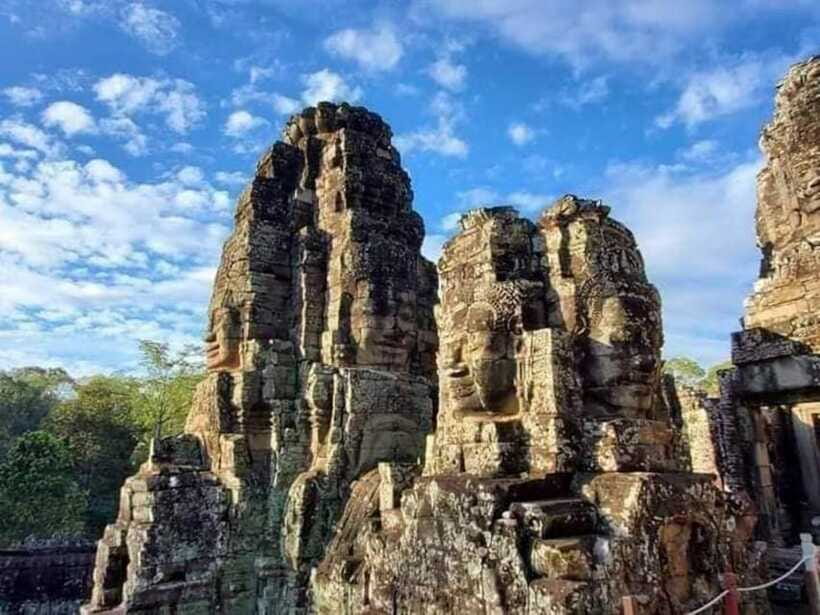
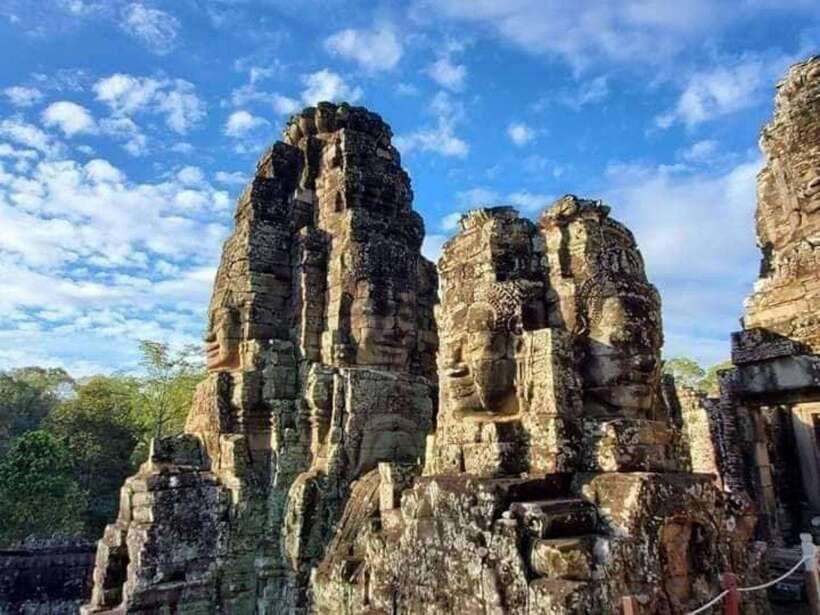
Bayon is only about one kilometre from Ghost Gate. Its stone faces appear above the towers with calm, enigmatic smiles, creating one of the most memorable sights in the Angkor complex.
You will want time here for both the broad view and the close details. The faces are easy to recognize, but the temple becomes more interesting when you look at how the towers crowd together and how the carvings sit within the larger structure.
After Bayon, you cycle a short distance to the Elephant Terrace for lunch. A local restaurant in front of the terrace serves the meal, along with seasonal fruit and Khmer specialties. Water and snacks are also provided during the temple breaks.
This stop matters because it gives you a real pause in the middle of the day. You are not expected to pedal continuously through the heat. The setting also keeps lunch connected to the places you have come to see, rather than sending you far away from the route.
The exact menu is not specified, so do not book this expecting a particular dish. Think of it as a practical local meal with a view and a welcome chance to recharge.
Ta Nie, a forest temple with fewer distractions
The ride continues away from the central monuments toward Ta Nie. Compared with Angkor Wat, Bayon, and Ta Prohm, Ta Nie is a quieter stop. Its appeal is not size. It is the sense of reaching a sanctuary partly claimed by the forest.
This is where the off-road design earns its place. You do not simply arrive at a famous monument by vehicle, take a few pictures, and leave. You approach through the trees, with the ride itself forming part of the visit.
Ta Nie also gives the guide room to explain the wider Angkorian civilization beyond the headline sites. The route includes single tracks described as traces of a lost Angkorian world hidden in the forest. You should expect a more subdued stop, but that quiet is exactly what makes it useful after the larger temples.
Jayatataka Baray and the best wildlife pause
Jayatataka Baray is the natural counterpoint to the temples. The stop is planned for birdwatching, so slow down and look toward the water and trees rather than treating it as another quick photograph.
Possible sightings include cranes, egrets, lesser whistling ducks, kingfishers, butterflies, and monkeys. Freshwater otters have also been seen playing in the river, though wildlife is never guaranteed. The right approach is to enjoy the pause even if the most elusive animals stay out of sight.
I especially like this part of the route because it changes what Angkor means for a few minutes. The monuments are not isolated objects in a museum-like setting. They sit within a living environment with water, forest, birds, and small creatures moving around them.
A peaceful tree nursery garden is also part of the day’s photographic appeal. It offers a softer, greener break after the harder stone surfaces of Bayon and the other temples.
Ta Prohm and the final 12 kilometres
Ta Prohm is the final major temple, and it is the stop most people already know from film and photographs. Large tree roots press around the stone walls, creating the famous meeting of jungle and architecture.
The challenge here is expectation. Ta Prohm is a major attraction, so it may feel more heavily visited than Ta Nie. Still, the trees and ruins are powerful in person, and arriving by bicycle gives the visit a satisfying place within the day’s larger story.
After Ta Prohm, the return covers about 12 kilometres along winding single tracks and smoother bike lanes toward town. This final stretch lets you settle into the ride after the temple visits, though tired legs may make the distance feel significant.
The day ends with a blend of cycling and the included tuk tuk transfer arrangements, depending on the exact route and group logistics. Drop-off is available in Siem Reap Province or Krong Siem Reap.
What the $65 price really covers
At $65 per person, the tour offers more than bike rental. The price includes the mountain bike, helmet, English or Spanish-speaking guide, local lunch, water, snacks, seasonal fruit, spare bike parts, a first aid kit, and free tuk tuk transfers.
That package has real value if you want a guide and support rather than simply hiring a bicycle. A full day of transport, food, and route planning would otherwise require several separate arrangements.
The temple pass is the important extra cost. Travel insurance and personal expenses are also excluded. Compare the total price, not just the headline figure, but the included lunch, equipment, and support make this a fair option for an active Angkor day.
The small sample of published feedback is consistently positive about the guide’s patience, personal approach, and organization. One detailed account describes the ride as mostly easy with a few moderate parts, while another highlights the mix of adventure, culture, and nature. Those points match the structure of the route: the guide is not an optional extra, but central to making the day work.
Who should book this ride
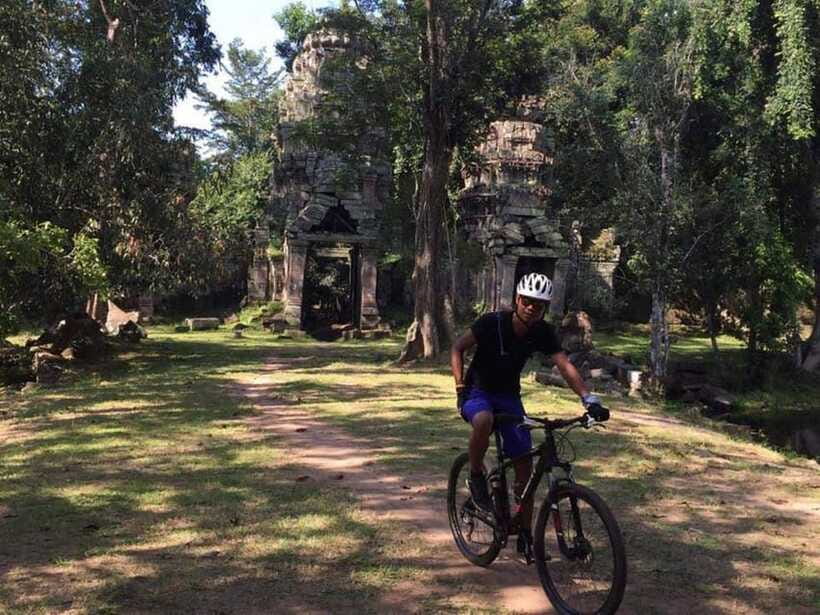
I would choose this tour if you want to see Angkor actively and prefer a quieter pace between the major sites. It suits people who enjoy forest tracks, modest physical effort, wildlife watching, and the chance to reach the monuments under their own power.
It is also a good choice if you want more than Angkor Wat and Ta Prohm. The wall of Angkor Thom, Ghost Gate, Ta Nie, Jayatataka Baray, and the Bakheng Hill tracks give the day a wider range than a standard temple loop.
You should think twice if you dislike heat, uneven paths, or long days outdoors. Pregnant women are specifically advised not to join. Loose clothing is not allowed, and closed-toe shoes are required.
Plan to wear light, breathable clothing for the ride, then use your spare clothing for temple visits. Sunscreen, sunglasses, and plenty of water will make the day more comfortable.
Should you book the Angkor Cycling Tour?
Book it if you want a full-day Angkor adventure with reliable practical support and a route that mixes famous monuments with quieter forest riding. The strongest reasons are the 70 percent off-road design, the ride along Angkor Thom’s wall, the wildlife stop at Jayatataka Baray, and the guide-led temple visits.
Skip it if you want a short, easy sightseeing circuit with little exercise. The $65 cost is reasonable for the equipment, meals, transfers, and guide, but you still pay separately for the temple pass and must be ready for 35 kilometres in the Cambodian heat.
For an active visitor with moderate fitness, this is a thoughtful way to experience Angkor beyond the main road, with enough structure to feel supported and enough rough track to keep the day interesting.
FAQ
How long is the Angkor Cycling Tour?
The tour lasts seven hours, beginning at 7:45 AM. The cycling route covers about 35 kilometres.
How much of the route is off road?
About 70 percent of the route uses off-road trails through forest and countryside. The remaining 30 percent uses paved roads and smoother bike lanes.
Is the temple pass included?
No. The Angkor temple pass is required but is not included in the tour price.
What is included in the $65 price?
The price includes a mountain bike, helmet, English or Spanish-speaking guide, lunch at a local restaurant, water, snacks, seasonal fruit, a first aid kit, spare bike parts, and free tuk tuk transfers.
What should I wear and bring?
Wear closed-toe shoes and light, breathable clothing. Shorts are suitable for cycling, but bring spare clothing for temple visits. Sunscreen and sunglasses are recommended.
Is the tour suitable for pregnant women?
No. The activity is not suitable for pregnant women.
Can I cancel or pay later?
You can cancel up to 24 hours in advance for a full refund. You can also reserve now and pay later.
Just added around Siem Reap
- Ultimate Sunrise to Angkor Wat, Angkor Thom and Bayon Temple★ 5.0 · 3 reviews
- Full-Day Private Tour of Angkor Wat with Pick Up★ 5.0 · 12 reviews
- Trekking Tour at Phnom Kulen National Park from Siem Reap★ 5.0 · 3 reviews
- Twilight Tastes of Siem Reap Include Dinner★ 5.0 · 13 reviews
- Waterfall & River of 1000 Siva Linga- Kulen Mountain Private Tour★ 5.0 · 3 reviews
- Siem Reap City Tour with War Museum and Killing Field★ 5.0 · 27 reviews
- Private Day Trip to Angkor Temples with Expert Guide★ 5.0 · 4 reviews
- Private Two Days Siem Reap Temples Discovery Guided Tour★ 5.0 · 7 reviews
Angkor Cycling Tours, compared.
Siem Reap Countryside Bike Tour / E-Bike or Tuk Tuk
Read our review →
Siem Reap Countryside Sunset Bike Tour / E-Bike or Tuk Tuk
Read our review →
Siem Reap Countryside Guided Tour by Bike and E-Bike Private Tour
Read our review →
Cycle the Angkor Backroads with lunch / E-Bike or Tuk Tuk
Read our review →
Browse the lists this tour appears in