
Reviewed · SIEM REAP COUNTRYSIDE AND VILLAGE TOURS
Banteay Chhmar Temple & Silk Farm Private Day Trip from Siem Reap
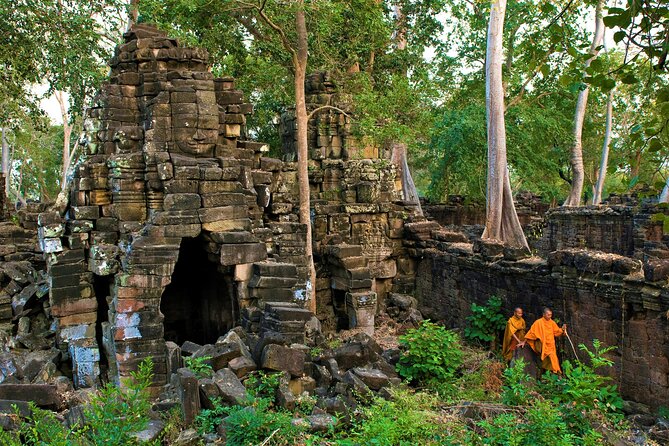
Banteay Chhmar is the reason to take this trip. About three hours from Siem Reap, this vast Angkorian temple complex gives you collapsed galleries, jungle-framed ruins, and carved walls without the crowds found around Angkor Wat. I like the sense of discovery, and I like that the day adds a working silk farm and two lesser-known cultural stops.
The drawback is simple: the drive is long, and the temple visit takes much of the day. If you want a relaxed morning or several major Angkor sites in one outing, this is not the right choice. If you want a remote, substantial temple and a look at Cambodia beyond the main circuit, it is a strong use of a full day.
Key points
- Banteay Chhmar takes center stage: Allow about five hours to see this large and partly ruined temple complex properly.
- The three-hour road journey is part of the experience: You pass villages and open countryside on the way to a very different Cambodia.
- Banteay Toap adds another quiet temple: The site is linked to the idea of a Fortress of the Army and sits beside a water reservoir.
- The silk farm shows the complete process: You can see mulberry cultivation, silkworm care, dyeing, and weaving.
- Private transport keeps the day flexible: Hotel pickup, an air-conditioned SUV or van, and a guide are included.
- Guiding can make or break the visit: Guides named Leap and Danut have been praised for clear temple explanations, while driver Art has been noted for smooth, careful driving.
Why Banteay Chhmar is worth three hours on the road
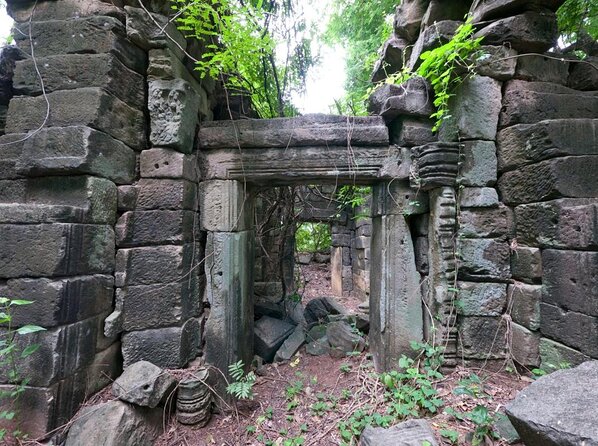
Banteay Chhmar was one of the largest building projects ordered by Jayavarman VII, constructed late in his reign in a politically sensitive part of the Khmer Empire. Its scale matters. This is not a quick roadside ruin that you see in twenty minutes before moving on.
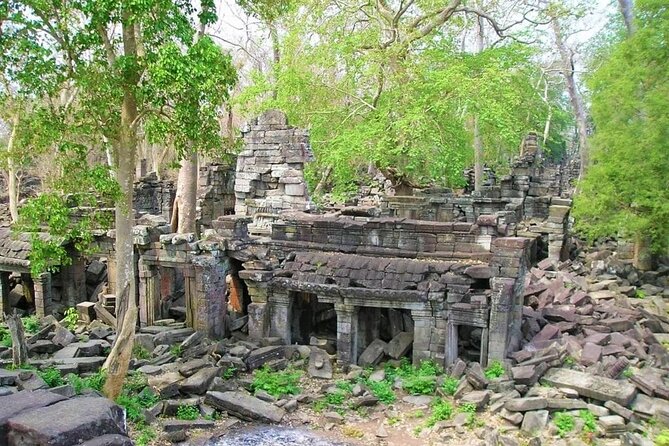
You get broad galleries, stone carvings, collapsed sections, and a forest setting that feels far removed from Siem Reap. The architecture also shows signs of hurried construction, which gives the site a rougher, less polished character than the most famous Angkor monuments.
I like that contrast. The main Angkor temples can feel grand and carefully staged. Banteay Chhmar feels more exposed and unfinished, with the damage and vegetation left as part of the experience. You have more space to focus on the carvings and the shape of the ruins rather than simply following a crowd.
The distance also changes the rhythm of the day. The road takes roughly three hours each way, so you should treat the journey as part of the outing, not as an annoying gap between attractions. The route passes through Cambodian villages and countryside, giving you a view of daily life that you will not get by staying near central Siem Reap.
More countryside and village tours in Siem Reap:
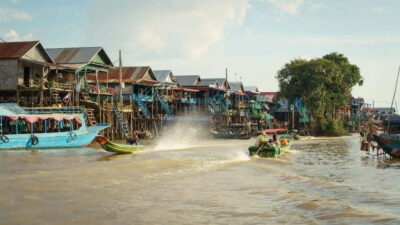
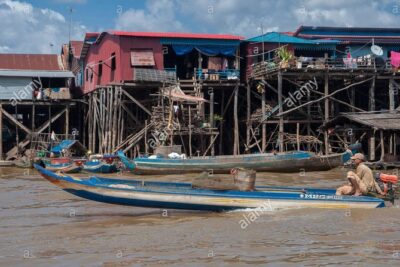
- From Siem Reap: Kampong Phluk Floating Village Tour by Boat
★ 4.9 · 6,979 reviews - Kampong Phluk Floating Village Tour by Boat
★ 5.0 · 1,020 reviews - Siem Reap Countryside Bike Tour / E-Bike or Tuk Tuk
★ 5.0 · 935 reviews
What five hours at Banteay Chhmar can give you
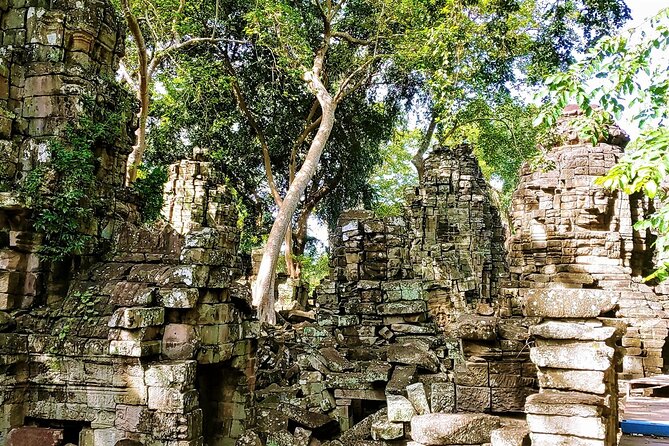
The planned five-hour stop is the heart of the tour. That amount of time is useful because Banteay Chhmar is extensive, and rushing through it would miss the point.
Your English-speaking guide can explain the carvings, the temple’s connection to Jayavarman VII, and the signs of haste in its construction. A strong guide helps you read the walls instead of seeing them as a blur of stone figures. Leap has been singled out for clear explanations, friendliness, and even an eye for taking photographs. Danut has also been praised for explaining both the temple and wider Cambodian culture.
You should expect a site with collapsed galleries and uneven ruins rather than a fully restored monument. That is part of the appeal, but it also means you need to be comfortable walking around an ancient complex in a less polished setting. The supplied information says most people can participate, though it does not provide a detailed accessibility assessment.
The carvings are a major reason to come. One past account compared the style to Bayon, which is useful if you have already visited Angkor. You can expect a different setting and a quieter visit, while still seeing the expressive faces and stone decoration associated with the late Angkor period.
Do not expect Banteay Chhmar to replace Angkor Wat. It is less complete and less immediately grand. Instead, it adds another side of Khmer architecture: remote, weathered, and closely tied to the region around it.
Banteay Toap, the Fortress of the Army
After Banteay Chhmar, the trip continues to Banteay Toap, whose name is thought to mean Fortress of the Army. It was built during the same period as Banteay Chhmar and is believed to honor Khmer soldiers.
The two-hour visit gives you a second temple experience without returning to the busy Angkor circuit. Banteay Toap is set beside a water reservoir, so the surroundings feel open and calm after the enclosed galleries of Banteay Chhmar.
I like the way this stop broadens the story. Banteay Chhmar is the main attraction, but Banteay Toap shows that the region was not built around one monument alone. The sites formed part of a wider political and military world during the later Khmer period.
The limitation is that Banteay Toap may feel less immediately impressive if you have just spent several hours at a much larger complex. Its value comes from the setting and the connection between the two temples. Your guide’s explanation will be especially helpful here, since the site’s meaning is not as obvious as its stonework.
A working silk farm, from mulberry trees to finished cloth
The one-hour stop at the Angkor Silk Farm changes the subject from ancient stone to living craft. You see the production process from the start: mulberry trees are cultivated, silkworms are nurtured, silk is dyed, and the threads are woven into finished textiles.
This is a useful addition because it connects the day to Cambodia’s present, not just its past. Temple visits can sometimes become a parade of dates and carvings. At the farm, you see a traditional skill as a practical process with many stages.
Give yourself time to notice the labor involved. Silk does not appear as a finished scarf or fabric without careful work at every step. The stop can also help you understand why Cambodian textiles matter as cultural objects rather than simple souvenirs.
The visit lasts about an hour, so it is an introduction rather than a full workshop. The information does not say that you weave your own silk or take part in production. You should expect to see and learn about the process, with any purchases handled separately.
A different sort of day out around Siem Reap:
- Angkor Wat Sunrise or Sunset Tour with Guide from Siem Reap
★ 5.0 · 12,109 reviews - Siem Reap: Angkor Wat: Small-Group Sunrise or Sunset Tour
★ 5.0 · 9,444 reviews - Sunset tour of Kampong Phluk stilts home village on the Tonle Sap
★ 5.0 · 4,865 reviews - Siem Reap: Angkor Wat 2-Day Tour with Sunrise and Sunset
★ 4.9 · 4,429 reviews
West Baray and Svay Romiet Pagoda
West Baray is a giant reservoir from the Khmer Empire, measuring about eight kilometers long and 2.1 kilometers wide. Its original purpose is still not fully clear, and the early idea that it was simply used for irrigation has been questioned.
The scheduled stop lasts about thirty minutes. That is enough for a short look and some context, but not a long visit. The reservoir gives you a sense of the scale of Khmer engineering, even though the tour does not promise an extended walk or detailed water-management study.
The next half-hour stop is Svay Romiet Pagoda, located directly beside West Baray. Local people visit the pagoda on an ancestor’s anniversary or someone’s birthday as a way of showing respect. That detail makes the stop more than another architectural photo opportunity. It points to how religious places remain part of family life.
These two brief stops are best seen as pauses that add local and historical context. They will not suit you if you want every minute devoted to major temple ruins. They will suit you if you appreciate a day that connects ancient infrastructure, modern religious practice, and rural Cambodia.
Private transport and the value of the $137.75 price
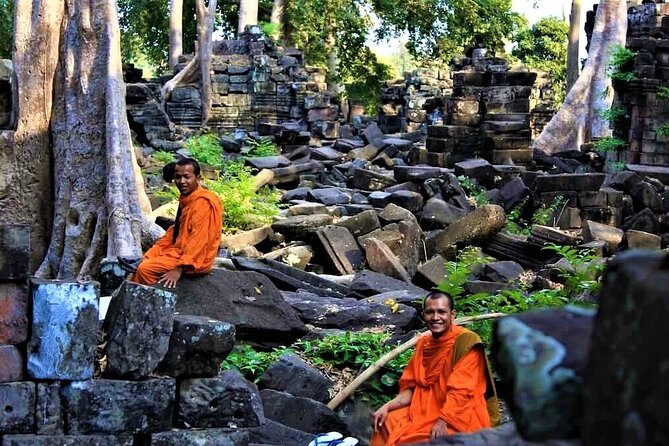
The tour costs $137.75 per person and includes hotel pickup and drop-off, a professional English-speaking licensed guide, entrance fees, private transfers, service charges, and current government VAT. Transport is provided in a private air-conditioned SUV or van.
The price makes more sense for two or more people sharing the experience than for a solo visitor, though the listed rate is per person. A private vehicle matters on a long day. You are not waiting for a large group at each stop, and you can stay with your own guide throughout the outing.
You still need to budget for lunch. Meals are available at local restaurants, with vegetarian and non-vegetarian choices, and dishes generally cost $3 to $10. Tips for the guide and driver are also not included.
For value, compare this with the effort of arranging a distant temple visit yourself. The tour gathers transport, admission, a guide, and several stops into one day. Its weakness is that the price does not include food, and a single person pays a relatively high amount for a private vehicle.
The driving is another part of the value calculation. Art, one driver named in the feedback, was praised for safe, smooth driving and making good time. That matters on a route where you spend many hours in the vehicle. You should still book this because you want Banteay Chhmar specifically, not because you are seeking the cheapest temple outing from Siem Reap.
The guide can shape the whole day
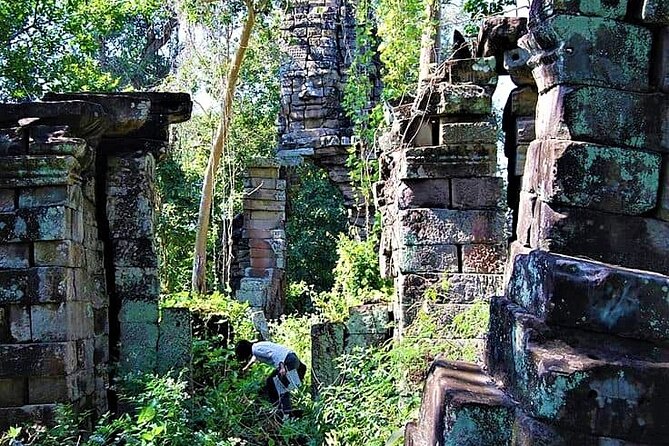
The guide is not just there to point out the entrance. At Banteay Chhmar, the carvings and broken galleries need explanation, especially if you want to understand how the temple fits into Jayavarman VII’s reign.
Leap has been praised for being friendly, attentive, well-informed, and good at taking photographs. Danut has been credited with showing the temple clearly while also explaining Cambodia more broadly. Those names give you a useful practical question to ask when booking: can one of these guides accompany your group?
No guide assignment is guaranteed in the information provided, so I would not book on the assumption that you will receive a particular person. Still, the comments about Leap, Danut, and Art point to the features that matter most: clear English, a good grasp of the sculptures, patience, and careful driving.
Because this is a private tour, you can ask for more temple detail, more cultural explanation, or a slower pace within the limits of the day. That is a real advantage over a fixed group excursion, especially at a place as large as Banteay Chhmar.
Who should book this remote temple day
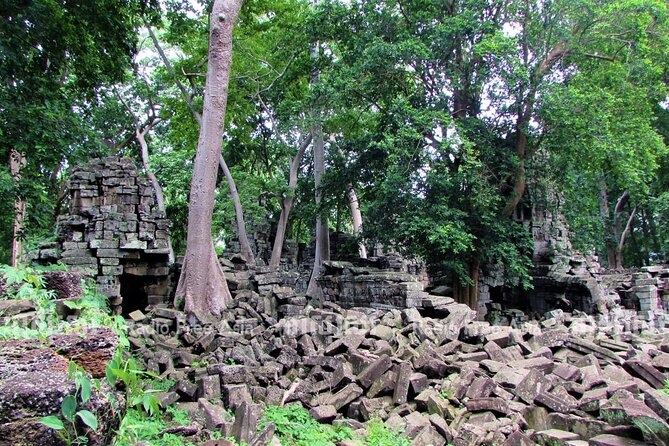
I would choose this experience if you have already seen the main Angkor temples and want something quieter and less predictable. It also suits temple fans who enjoy damaged structures, carved stone, and the feeling of reaching a place that sits outside the usual Siem Reap route.
It works well for couples, families, and small groups that value private transport. Most people can participate, and the vehicle is air-conditioned, which is useful on a long Cambodian day. Lunch options include vegetarian and non-vegetarian dishes, so you can eat at a local restaurant without arranging a meal in advance.
I would think twice if you have only one day in Siem Reap and have not yet visited Angkor Wat, Bayon, and the main temple circuit. Banteay Chhmar is special, but the long drive means you give up time that could be spent seeing the area’s best-known monuments.
I would also hesitate if you dislike long road journeys or prefer a short list of highly restored sites. Banteay Chhmar is remote and partly collapsed. Its appeal comes from age, scale, setting, and atmosphere rather than polished restoration.
The tour is booked an average of 136 days ahead, which suggests that you should plan early if the date matters to you. Confirmation is provided at booking, and free cancellation is available up to 24 hours before the start time. Changes or cancellations made inside that period are not refunded, and the experience requires a minimum number of participants.
Should you book the Banteay Chhmar day trip?
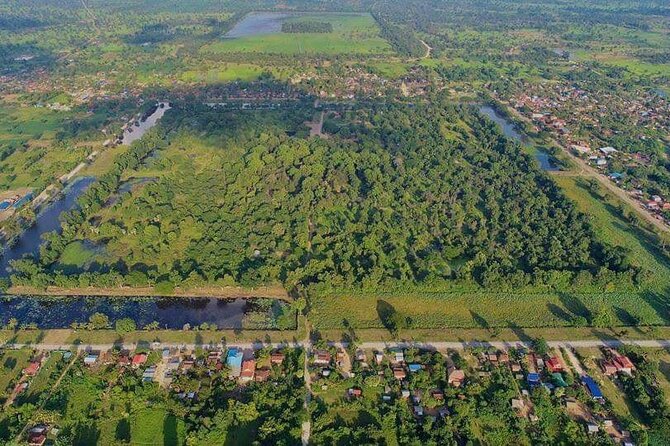
Book it if you want a full day beyond the standard Angkor route, especially if quiet ruins, carved galleries, and rural Cambodia appeal to you. The combination of Banteay Chhmar and Banteay Toap gives the day a strong historical focus, while the silk farm and pagoda keep it connected to Cambodian life today.
Skip it for now if your priority is Angkor Wat, a short sightseeing day, or the lowest possible price. The three-hour drive each way is a real commitment.
For the right visitor, the distance is the point. You trade convenience for space, time, and a temple experience that feels markedly different from Siem Reap’s busy core.
FAQ
How long does the Banteay Chhmar day trip last?
The experience lasts about eight to nine hours, including visits to the temples, silk farm, West Baray, and Svay Romiet Pagoda.
How far is Banteay Chhmar from Siem Reap?
The journey to Banteay Chhmar takes about three hours by road from Siem Reap.
Is hotel pickup included?
Yes. Pickup and drop-off at your hotel are included. You need to provide the hotel name when booking.
Is this a private tour?
Yes. Only your group participates in the private activity.
What transport is provided?
Transfers are provided in a private, air-conditioned luxury SUV or van.
Are entrance fees included?
Yes. Entrance fees for the tour sites are included in the price.
Is lunch included?
No. Lunch is at your own expense. Local restaurants offer vegetarian and non-vegetarian options, with dishes priced at about $3 to $10.
Can I cancel for a full refund?
Yes, if you cancel at least 24 hours before the experience start time. Cancellations made less than 24 hours before the start are not refunded.
Just added around Siem Reap
- Ultimate Sunrise to Angkor Wat, Angkor Thom and Bayon Temple★ 5.0 · 3 reviews
- Full-Day Private Tour of Angkor Wat with Pick Up★ 5.0 · 12 reviews
- Trekking Tour at Phnom Kulen National Park from Siem Reap★ 5.0 · 3 reviews
- Twilight Tastes of Siem Reap Include Dinner★ 5.0 · 13 reviews
- Siem Reap City Tour with War Museum and Killing Field★ 5.0 · 27 reviews
- Private Day Trip to Angkor Temples with Expert Guide★ 5.0 · 4 reviews
- Waterfall & River of 1000 Siva Linga- Kulen Mountain Private Tour★ 5.0 · 3 reviews
- Ultimate Siem Reap Food Tour by Tuk Tuk – 20 Tastings, 8 Stops★ 5.0 · 13 reviews
Siem Reap Countryside and Village Tours, compared.
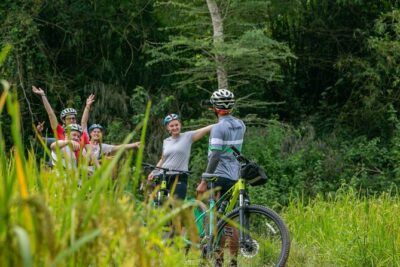
Siem Reap Countryside Bike Tour / E-Bike or Tuk Tuk
Read our review →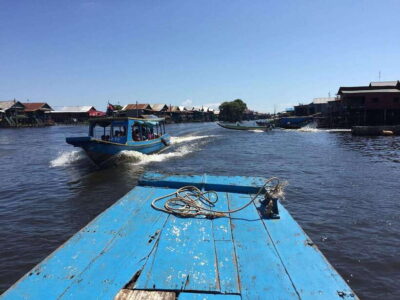
Tonle Sap, Kampong Phluk & Floating Village Tour
Read our review →
Siem Reap Lotus Silk Farm Discovery tour & Lake experience
Read our review →Browse the lists this tour appears in