
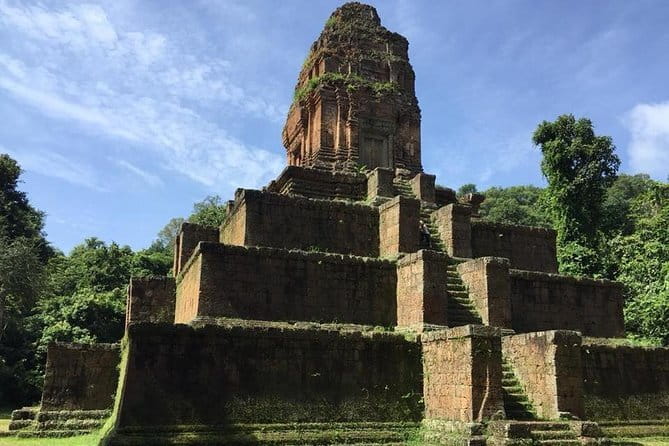
Reviewed · ANGKOR WAT TOURS
Two Day Angkor Temples Tours
Angkor is too large for a rushed one-day visit. This two-day private tour gives you time for the grand monuments and the smaller temples that explain how the whole complex fits together. You move from pink sandstone carvings at Banteay Srei to jungle-wrapped Ta Prohm, with a guide helping the stones make sense.
I like the flexible guiding and the excellent mix of famous and lesser-known sites. I also like the practical comfort of a private, air-conditioned vehicle, plus the chance to work with guides such as Borey, Kim, Bunleat, or Kimhoeun, who are praised for history, photography, and clear English. The main catch is that the Angkor admission ticket is not included, and the schedule is full.
Key points at a glance
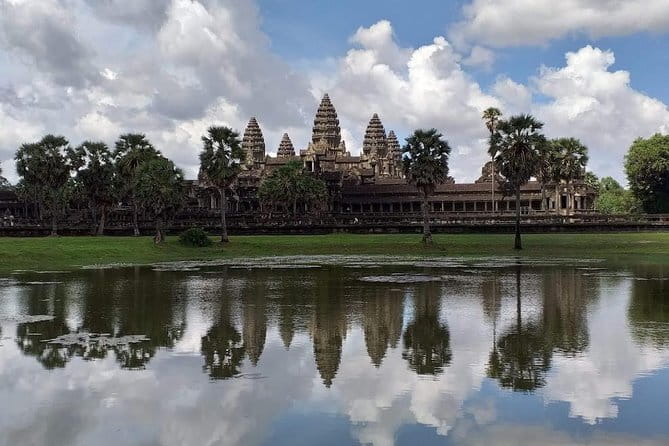
- Two full days cover both major monuments and quieter temples, from Angkor Wat and Bayon to Ta Som and Eastern Mebon.
- Private touring lets you adjust the pace, especially useful if you want more time for photographs or detailed explanations.
- Borey, Kim, Bunleat, and Kimhoeun are named guide options associated with the experience.
- Air-conditioned transport matters in Cambodia’s heat, especially on long temple days.
- The listed price is $102.57 per person, but you must budget separately for Angkor admission and GST.
- The schedule suits visitors with moderate fitness, since temple grounds involve walking and uneven stone surfaces.
Why two days works better than a quick Angkor visit
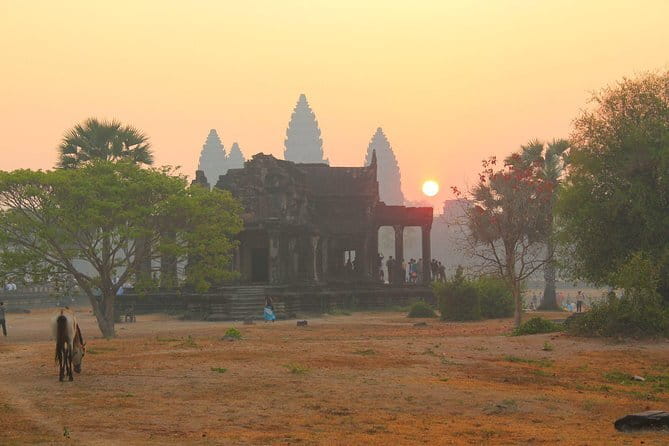
A first look at Angkor can feel overwhelming. The monuments are spread across a large area, and each has a different purpose, design, and mood. One day lets you see the headline sites, but it can also leave you rushing from one famous ruin to the next.
This plan uses the first day for temples outside the tightest central circuit. Banteay Srei is farther out and needs its own outing, while Banteay Samre, Preah Khan, Neak Pean, Ta Som, Eastern Mebon, and Pre Rup create a long but varied route.
The second day focuses on the essential trio of Angkor Wat, Angkor Thom, and Ta Prohm, with Phnom Bakheng included as a brief stop. That division makes sense. You get the grand scale on one day and the more scattered, exploratory sites on the other.
The tour is private, so only your group participates. That is a real advantage here. You can ask Borey, Kim, Bunleat, or Kimhoeun to slow down for a carving, spend more time on photography, or explain the difference between Hindu and Buddhist imagery. Several guides connected with this tour are also described as flexible with schedules and responsive to questions before the visit.
More Angkor Wat tours in Siem Reap:
- Angkor Wat Sunrise or Sunset Tour with Guide from Siem Reap
★ 5.0 · 12,109 reviews - Siem Reap: Angkor Wat: Small-Group Sunrise or Sunset Tour
★ 5.0 · 9,444 reviews - Siem Reap: Angkor Wat 2-Day Tour with Sunrise and Sunset
★ 4.9 · 4,429 reviews
Day one: pink sandstone, sacred corridors, and temple mountains
Banteay Srei: the finest carvings on the route
Banteay Srei is a small Hindu temple dedicated to Shiva, built in the 10th century. Its pinkish sandstone gives it a warm color that differs from the gray stone at many larger Angkor sites.
The scale is intimate, but the carving is remarkably fine. This is the place to look closely at doorways, lintels, and figures rather than simply taking in a huge complex. You have about an hour here, which should give you enough time to walk around the main areas and listen to an explanation of the stories in the stone.
The admission ticket is not included, and the temple requires a separate journey from the central Angkor monuments. Still, I think it earns its place on the first day. If detailed sculpture interests you, Banteay Srei may be one of the most rewarding stops on the entire tour.
Banteay Samre: a quieter Vishnu temple
Banteay Samre dates from the 12th century, the same broad period as Angkor Wat, and was built under Suryavarman II for Vishnu. It has a more enclosed, fortress-like feel than Banteay Srei, with strong galleries and a sense of order in its layout.
You get roughly an hour here. That is enough to appreciate the structure without turning the visit into a hurried photo stop. The temple is described as being in fairly good preservation, which helps you read the design and imagine how its courtyards once worked.
I like this pairing with Banteay Srei. The first temple is prized for delicate carving and pink stone; the second gives you a broader feel for monumental planning. Together, they make the long first section of the day worthwhile.
More multi-day trips from Siem Reap:
- Angkor 2-Day Sunset & Sunrise Small-Group Tour
★ 5.0 · 2,567 reviews - 2 Days Exclusive Temple Highlights with Sunset and Sunrise Tour
★ 5.0 · 1,157 reviews - Siem Reap: Angkor Sunrise 1- or 2-Day Guided Temples Tour
★ 4.9 · 1,132 reviews - 2 Days Guided Historical Tour in Angkor
★ 5.0 · 855 reviews
Preah Khan: a maze with room to wander
Preah Khan means Sacred Sword, and it is one of the larger complexes at Angkor. Give yourself time to notice the contrast between its vaulted corridors, carved doorways, and weathered stonework. The route can feel like a maze, which is part of its appeal.
You have about an hour here. That is not excessive, since Preah Khan rewards slow walking. A strong guide can help you understand what you are seeing instead of leaving you with a series of pretty walls and disconnected names.
Preah Khan is often treated as a companion to Ta Prohm, but the atmosphere is different. Ta Prohm is famous for trees and dramatic ruin. Preah Khan offers more corridors, carvings, and architectural layers. It also tends to feel a little less pressured than the best-known central sites, though conditions can vary.
Neak Pean: a small temple on an artificial island
Neak Pean is one of the most unusual stops. This Buddhist temple sits on an artificial island in the middle of a man-made lake connected with Jayatataka, also called the North Baray.
The visit lasts about 40 minutes. That is a sensible amount of time because the temple itself is petite, while the approach and water setting provide much of the interest. You get a change of pace after the long corridors of Preah Khan.
Do not expect another massive monument here. Neak Pean is valuable for its setting and design rather than its size. Your guide can explain how water and religious symbolism shaped the site, making this short stop more meaningful than a quick photograph might suggest.
Ta Som: a compact ruin with a memorable gate
Ta Som was built in the late 12th century under Jayavarman VII and is considered a satellite temple of Preah Khan. The complex is small, with about 30 minutes planned for the visit.
That short time is appropriate. You can see the main structure, study the carvings, and look for the large head at the eastern gate. Ta Som works well as a quick stop between larger monuments, especially if you enjoy details but do not need another long temple walk.
This is also where a private guide helps. If you are moving quickly, it is easy to miss the feature that makes the temple memorable. Ask your guide to point out the eastern gate before you leave.
Eastern Mebon: a former island temple now on dry ground
Eastern Mebon was built by Rajendravarman II in the 10th century. It once stood on an island in the Eastern Baray, a large water reservoir. Today, the water is gone, so the temple sits on dry ground.
The planned visit is about 50 minutes. This is enough time to appreciate the temple’s elevated form and to understand how different the setting once was. The missing water is not a minor detail. It changes the way you read the monument and shows how closely Angkor’s temples were tied to water management.
Pre Rup: a strong finish to the first day
Pre Rup, about one kilometer south of Eastern Mebon, was also built under Rajendravarman II in the 10th century. It is a pyramid-shaped temple mountain with three tiers, giving it a bold, upward design.
The stop lasts roughly 40 minutes. After a full day, that is a manageable finish. The structure is direct and powerful, and the upper levels give you a useful sense of the temple-mountain idea that shaped much of Angkorian architecture.
Day one is long, but the range is excellent. You see fine carving, a former island temple, a water-centered religious site, long corridors, and two pyramid temples. The drawback is simple: seven stops require energy. Wear practical shoes, drink plenty of water, and tell your guide if you need a slower pace.
Day two: Angkor Wat, the great city, and Ta Prohm
Angkor Wat: give the centerpiece its due
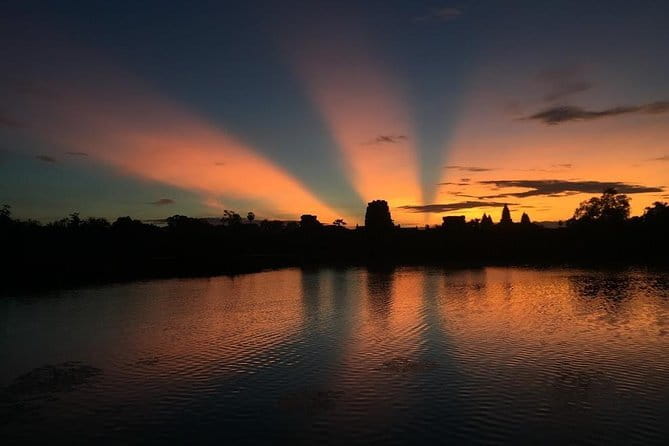
Angkor Wat was built by Suryavarman II in the 12th century as a Hindu temple dedicated to Vishnu. It is the largest and most famous monument in the complex, and the tour allows about two hours here.
That time gives you a useful first look, though you may still wish you had longer. Angkor Wat is not one single view. You need time for the overall layout, galleries, towers, carvings, and the shift from outer spaces to the central sanctuary.
A guide such as Borey is especially useful here if you want more than an architectural visit. The guiding style associated with this experience includes Hindu and Buddhist context, temple history, and help finding good photo positions. You can also ask for a clearer explanation of how Angkor Wat relates to the wider Angkorian world.
The ticket is not included, so check the current admission arrangements before setting out. The meeting point is listed at Angkor Enterprise on Apsara Road in Siem Reap.
Phnom Bakheng: a very brief look
Phnom Bakheng was built by Yasovarman I in the early 10th century and is often described as the first temple mountain in the Angkor area. It has five tiers and seven levels of towers.
The planned stop is listed as one minute, so treat this as a brief orientation or photo pause, not a full temple visit. If Phnom Bakheng is important to you, ask your guide how much time is realistically available. The schedule gives far more attention to Angkor Wat, Angkor Thom, and Ta Prohm.
Angkor Thom: enter the last great city
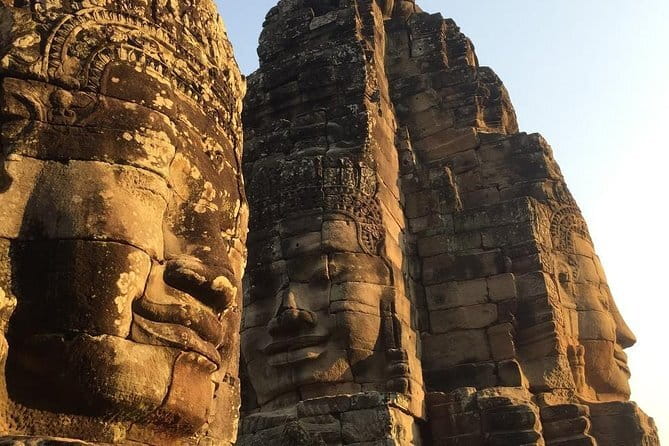
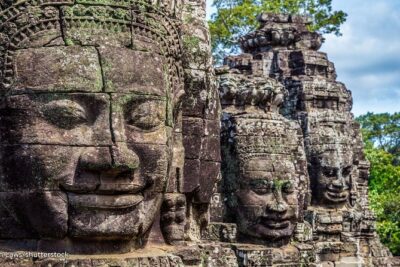
Angkor Thom means Great City and was the last capital of Angkor. It was built by Jayavarman VII, with the Bayon at its center. The two-hour visit lets you explore more than a single monument.
This is one of the tour’s most useful blocks of time. Angkor Thom is a city complex, not just a temple, and a guide can help you see how the gates, walls, roads, and central monuments relate to each other.
The scale can be hard to grasp on your own. The tour description places the city’s peak population at up to one million people in the surrounding region, a figure that gives you a sense of its importance, though the modern visitor sees only the surviving stone core.
Use this stop to ask questions. The guides connected with the tour are praised for explaining both Angkorian history and more recent Cambodian history. That wider context can make the ruins feel less isolated from the country you are visiting today.
Ta Prohm: the atmospheric favorite
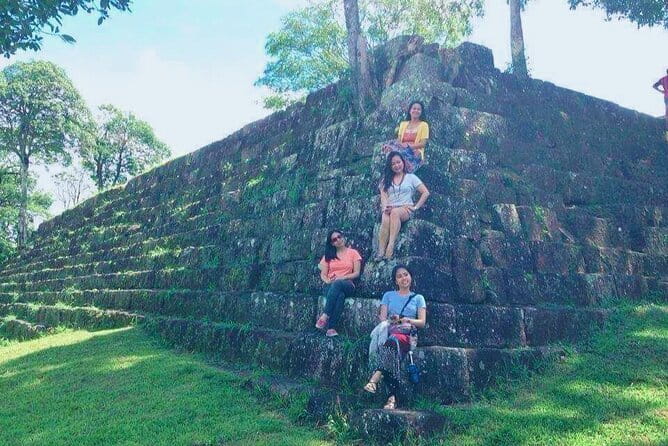
Ta Prohm is the most immediately dramatic ruin on the route. Built under Jayavarman VII, it is known for trees and roots growing through the stone, giving the site a powerful sense of age and abandonment.
The planned visit lasts an hour. That is enough to see the main features without making the day too heavy, though photographers may want more time. One of the useful qualities of a private tour is the ability to say when you want to linger.
Ta Prohm is also a good test of the guide’s flexibility. Borey is specifically associated with adjusting the plan after noticing that a family enjoyed this temple. That kind of response is valuable. A fixed schedule can cover the sites, but an attentive guide can shape the day around what actually interests you.
Guides, transport, and the value of the price
The listed cost is $102.57 per person. For two days of private touring with an air-conditioned vehicle, that can be good value, particularly if you are sharing the cost with family or friends. Group discounts are offered, and the private format means you are not being moved according to a large bus group’s timetable.
The price does not include Angkor admission or GST. That matters when you compare the total cost with other options. You should also confirm the pickup details, since pickup is offered but the listed ticket redemption point is Angkor Enterprise on Apsara Road.
The vehicle is more than a minor comfort. These are long days in a hot climate, and returning to air conditioning between sites can preserve your energy for the monuments themselves. The tour is best for people with moderate physical fitness, since you will spend much of the day walking through temple grounds.
Guide quality is the central reason to choose this experience. Borey is associated with strong English, local family ties to Siem Reap, photography advice, and careful responses to questions. Kim is praised for explaining both temple history and Cambodia’s more recent past. Bunleat is associated with detailed explanations that may extend visits beyond the planned time, while Kimhoeun is described as caring and responsive.
Those names matter because the exact guide can shape the day. If you have a preference, ask when booking. A guide who likes detailed history may suit you if you want long explanations. If your priority is photography, tell the company early so the pace and stops can reflect that.
Who should book this two-day plan?
I would choose this tour if you are staying in Siem Reap for at least two days and want a private overview without arranging every temple yourself. It suits first-time visitors who want the essential monuments but also care about Banteay Srei, Preah Khan, Neak Pean, and the other less famous sites.
It is also a good match for families and small groups. You can discuss the pace, request help with photographs, and avoid being tied to strangers. The vehicle, flexible guiding, and air conditioning add practical value when the days become tiring.
I would think twice if you dislike full sightseeing days or prefer to study one temple at great length. The first day has seven stops, and the second day still covers four major places. You may need to ask for adjustments if your priority is slow photography or extended archaeological discussion.
Free cancellation is available up to 24 hours before the start time. Cancellations within 24 hours are not refunded, and poor weather may lead to a new date or a full refund.
Should you book it?
Book this tour if you want broad coverage, private transport, and a guide who can add historical and cultural meaning to the stones. The strongest parts are the carefully mixed itinerary, the named guide options, and the ability to adjust the experience to your interests.
Before paying, confirm the guide, pickup arrangement, Angkor admission cost, and GST. If you do that and accept the busy schedule, $102.57 per person offers a practical way to see a great deal of Angkor in two well-planned days.
FAQ
How long is the Angkor temples tour?
The experience lasts approximately two days.
Is this a private tour?
Yes. Only your group participates in the activity.
Is hotel pickup available?
Pickup is offered. The listed ticket redemption point is Angkor Enterprise on Apsara Road in Siem Reap, so confirm the exact pickup arrangement when booking.
Is transportation included?
An air-conditioned vehicle is included.
Are Angkor admission tickets included?
No. Admission tickets are not included for the listed temple stops.
Which temples are visited on day one?
Day one includes Banteay Srei, Banteay Samre, Preah Khan, Neak Pean, Ta Som, Eastern Mebon, and Pre Rup.
Which temples are visited on day two?
Day two includes Angkor Wat, Phnom Bakheng, Angkor Thom, and Ta Prohm.
What level of fitness is needed?
A moderate level of physical fitness is recommended. The tour involves walking through temple complexes and visiting historic structures.
Can I cancel for a refund?
You can cancel up to 24 hours before the experience start time for a full refund. Cancellations or changes made within 24 hours are not accepted for a refund.
Just added around Siem Reap
- Ultimate Sunrise to Angkor Wat, Angkor Thom and Bayon Temple★ 5.0 · 3 reviews
- Full-Day Private Tour of Angkor Wat with Pick Up★ 5.0 · 12 reviews
- Trekking Tour at Phnom Kulen National Park from Siem Reap★ 5.0 · 3 reviews
- Twilight Tastes of Siem Reap Include Dinner★ 5.0 · 13 reviews
- Siem Reap City Tour with War Museum and Killing Field★ 5.0 · 27 reviews
- Private Day Trip to Angkor Temples with Expert Guide★ 5.0 · 4 reviews
- Waterfall & River of 1000 Siva Linga- Kulen Mountain Private Tour★ 5.0 · 3 reviews
- Private Two Days Siem Reap Temples Discovery Guided Tour★ 5.0 · 7 reviews
Angkor Wat Tours, compared.
Angkor Wat Sunrise or Sunset Tour with Guide from Siem Reap
Read our review →
Angkor Wat: Small-Group Sunrise or Sunset Tour
Read our review →
Angkor Wat 2-Day Tour with Sunrise and Sunset
Read our review →
Angkor Wat Sunrise tour with Small – Group and Guide tours
Read our review →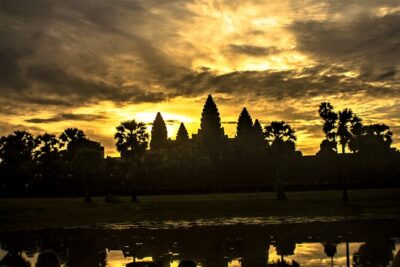
Angkor Wat Highlights and Sunrise Guided Tour from Siem Reap
Read our review →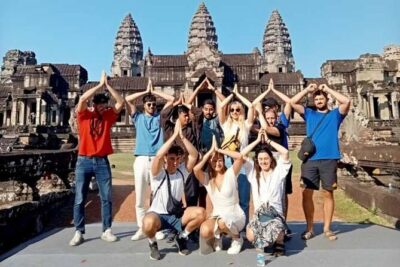
Angkor Wat Sunset Small Group Tour with Lunch Included
Read our review →
Full-Day Angkor Wat Sunrise Private Tour with Guide from Siem Reap
Read our review →Browse the lists this tour appears in