
Reviewed · ANGKOR WAT TOURS
Special Three Days Angkor Tour
Angkor Wat is only the beginning. This three-day private tour gives you time for the headline temples, the quieter eastern ruins, the finely carved Banteay Srei, the old Roluos capital, and Tonle Sap. It is a useful way to see far more than you could manage on a rushed one-day circuit.
I like the private format, since your group can move at its own pace and adjust the day when children, older family members, or temple fatigue enters the picture. I also like the local guide service, particularly when you are booked with Dara, whose calm manner, clear English, patience, and flexibility have been praised repeatedly.
The main drawback is the extra cost of temple admission and meals. The $70 price covers the air-conditioned vehicle, cool drinks, and licensed English-speaking guide, but not the Angkor pass or food. The three days are also full, with eight hours on the first two days and six hours on the last.
Key points at a glance
- Three days cover much more than Angkor Wat: You visit the main Angkor circuit, remote temples, Banteay Srei, Roluos, and Tonle Sap.
- Dara is the named guide: He is described as patient, gentle, flexible, and good with young children.
- A private car makes the schedule adaptable: Your group alone takes part, with pickup and return in Siem Reap.
- Day one combines the essential monuments: Angkor Wat, Ta Prohm, Bayon, Angkor Thom, and a sunset stop form a strong first day.
- Banteay Srei is the artistic highlight: Its carefully preserved carvings reward the long drive northeast.
- Admission is not included: Budget separately for temple tickets, meals, and any optional additions agreed with the guide.
Why three days makes sense at Angkor
Angkor is not one temple beside one town. It is a huge archaeological area with monuments spread across roads and forest, plus important sites farther from the central park. A short visit can cover Angkor Wat and Bayon, but it leaves little room for Roluos, Banteay Srei, Preah Khan, or Tonle Sap.
This plan gives you roughly 22 hours of touring over three days. That is still active, but it is less punishing than trying to force every major site into a single long day. You can also use the private arrangement to slow down, take breaks, or change the order of stops.
The tour is led by a local licensed English-speaking guide. That matters at Angkor because the stones alone do not explain the city. A good guide can help you understand why a temple was built, what its carvings show, and how one complex differs from another.
Dara is the guide most closely associated with this experience. His strongest qualities are not theatrical storytelling or a packed script. They are patience, reliability, calm communication, and a willingness to adjust the plan. That combination is especially helpful for families with toddlers or young children, and for anyone who needs a slower pace.
More multi-day trips from Siem Reap:
- Siem Reap: Angkor Wat 2-Day Tour with Sunrise and Sunset
★ 4.9 · 4,429 reviews - Angkor 2-Day Sunset & Sunrise Small-Group Tour
★ 5.0 · 2,567 reviews - 2 Days Exclusive Temple Highlights with Sunset and Sunrise Tour
★ 5.0 · 1,157 reviews
Day one: Angkor Wat, Ta Prohm, and Angkor Thom
The first morning begins at Angkor Wat, the enormous religious monument that gives the region its name. It is the essential visit, but it deserves more than a quick photograph from the entrance causeway.
Angkor Wat works best when you have time to study its long galleries, towers, courtyards, and carved scenes. The scale can be hard to grasp at first. A guide helps you read the building as a planned religious center rather than a collection of dramatic walls.
Expect walking, steps, and uneven stone. The tour description calls for a moderate level of physical fitness, so you should be comfortable spending several hours on your feet in a hot outdoor setting. Bring practical clothing and footwear suitable for temple grounds, although the supplied information does not set out a specific dress code.
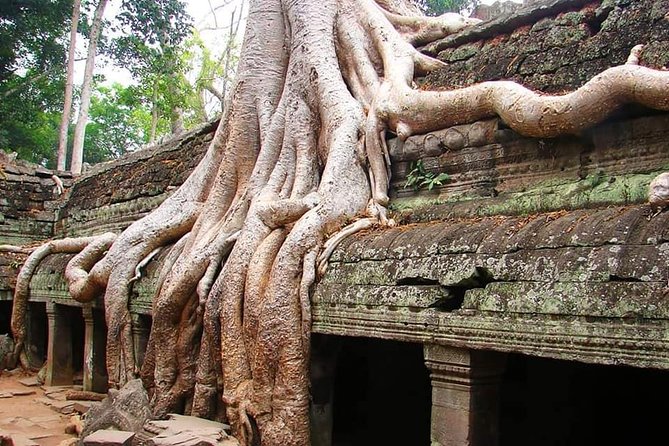
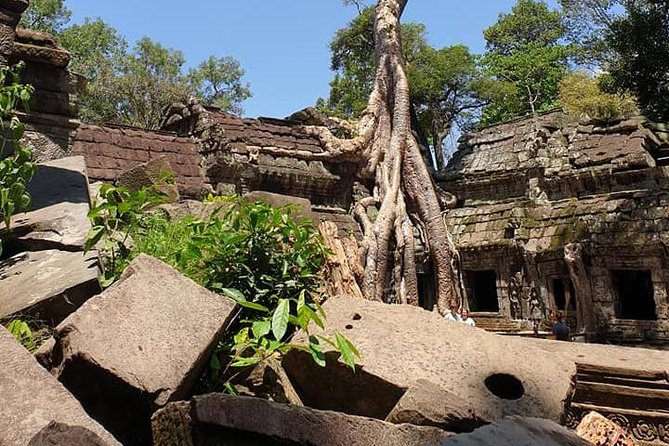
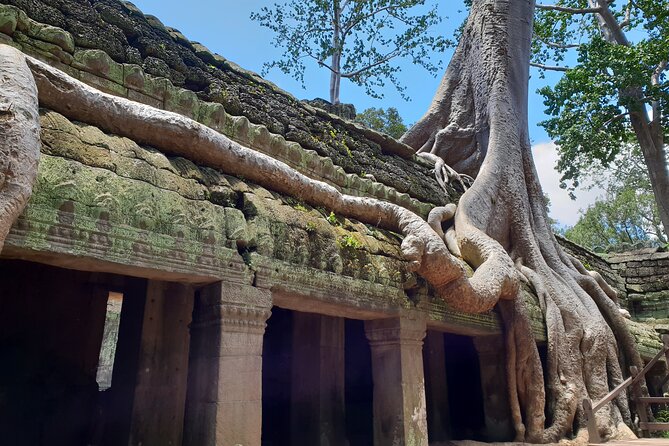
Ta Prohm follows, often called the jungle temple. Its appeal comes from the way trees and masonry meet, with roots curling over walls and doorways. It has a more enclosed, atmospheric feel than Angkor Wat, but it can also be crowded and congested around the best-known views.
After a morning at the two major temples, the itinerary moves to Angkor Thom, the walled royal city. This is not a single monument. It is a large compound containing several important stops, so the afternoon offers variety rather than another visit to one enormous temple.
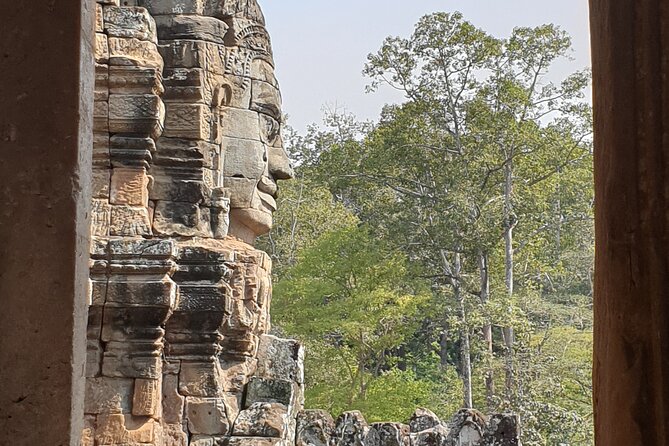
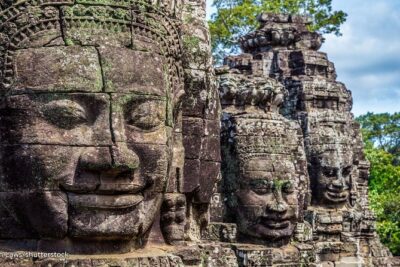
Bayon is the star. Its stone faces appear on towers throughout the central temple, creating a memorable maze of galleries and narrow passages. The faces are easy to recognize, but the structure is less straightforward than Angkor Wat, which is another reason a guide is useful.
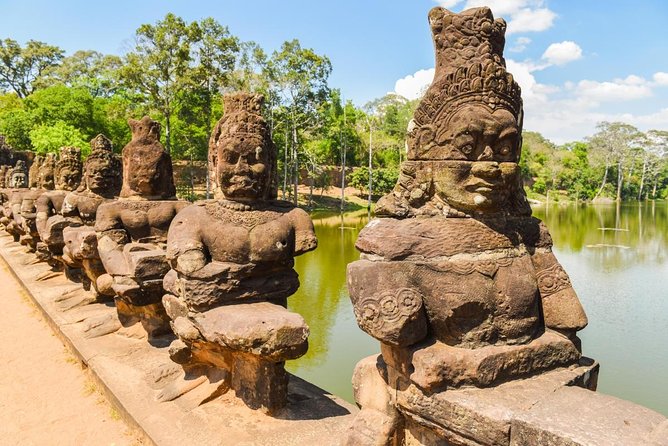
You also visit the Terrace of the Elephants and the Terrace of the Leper King. These long carved platforms once formed part of the royal center and are best understood as pieces of a wider urban complex. Baphuon adds another large temple structure, while Phimean Akas gives the afternoon another layer of royal architecture.
The day ends with a sunset stop at a point of interest chosen with the guide. The wording allows flexibility, but it does not promise one fixed sunset location. That is a small advantage: conditions, crowds, and your energy can shape the choice.
Day one is the most concentrated part of the tour. Angkor Wat and Ta Prohm are major attractions, while Angkor Thom adds several sites in one area. You should expect a full day, not a relaxed half-day outing.
Day two: Banteay Srei and the eastern temples
Day two reaches Banteay Srei, about 40 kilometers northeast of Angkor. The drive takes time, but this temple earns its place on the schedule.
Banteay Srei is smaller than Angkor Wat and less imposing in scale. Its strength is its detailed carving, which is among the best preserved in the Angkor area. The pinkish stone and fine decoration create a different visual experience from the massive galleries and towers of day one.
The long drive is also useful because it takes you away from the busiest central route. A brief stop at a local village is included on the return journey. The information does not specify the exact activity or length of this stop, so treat it as a short look at local life rather than a formal village tour.
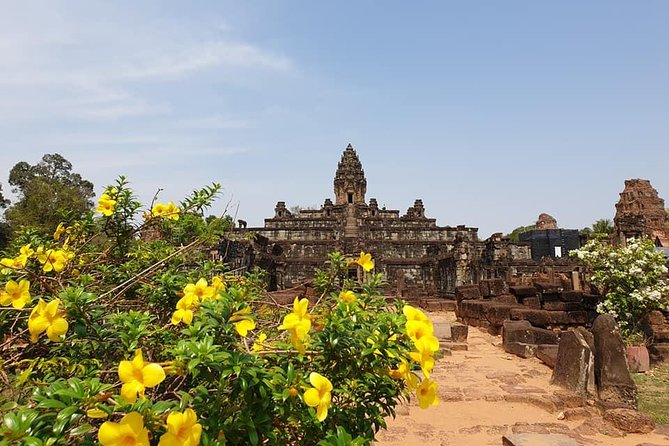
The afternoon returns to the eastern temples. Pre Rup is a large brick and laterite temple with a strong, stepped profile. It is a good place to compare the form of an older temple mountain with the more elaborate stonework seen elsewhere.
East Mebon was built on an island in a reservoir that has since changed dramatically. Today, its setting is easier to read as part of an ancient water system than as an isolated monument. That broader view helps you see Angkor as an engineered city, not only a collection of sacred buildings.
Ta Som is a smaller and more intimate stop. It often feels less demanding than the major complexes, though its size does not mean you should rush. The carved entrances and trees around the structure give it a distinct character.
Preah Khan closes the scheduled temple route. It is a large, layered complex with long corridors, courtyards, and a sense of gradual discovery as you move inward. After Angkor Wat and Angkor Thom, it provides a fitting contrast because it feels more spread out and less immediately monumental.
Day two is valuable for balance. Banteay Srei gives you delicate carving and a rural drive, while the afternoon brings four different temple settings. The drawback is distance and repetition. By this point you will have seen many towers, doorways, carvings, and stone platforms, so a guide who can explain differences is important.
Day three: Roluos, duck eggs, and Tonle Sap
The final day is shorter, at about six hours, and begins with the Roluos group roughly 15 kilometers east of Siem Reap. Roluos is associated with one of the earliest ancient capitals in the Angkor area.
The scheduled temples are Bakong, Preah Ko, and Lolei. Bakong is the largest and most imposing of the three, with a stepped central structure that helps you understand the early temple mountain design. Preah Ko is known for its early temple layout and carved towers, while Lolei offers another view of the first period of Khmer temple building.
These sites do not have the same fame as Angkor Wat or Ta Prohm. That is precisely their value. They give you historical context and a quieter change of pace after two days in the central archaeological park.
The itinerary also includes an unusual local stop described as a place selling duck eggs and hatching ducklings. The information does not promise a particular demonstration or amount of time there, so you should regard it as a brief local encounter, not a major attraction. Still, it is the sort of ordinary working detail that can make the final day feel less like a chain of monuments.
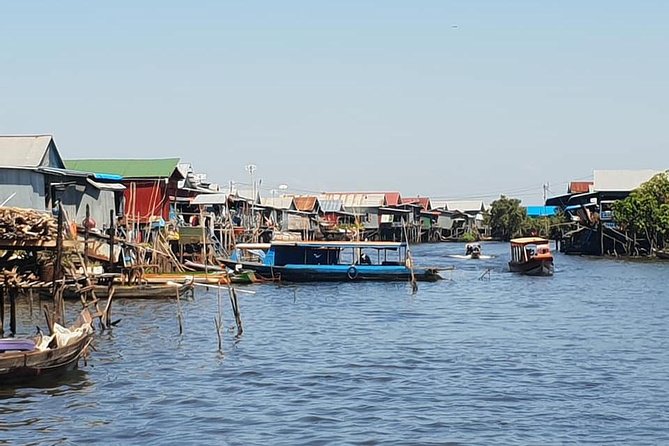
The day continues toward Tonle Sap, the great lake south of Siem Reap. The supplied plan identifies it as the largest lake in Southeast Asia, but it does not specify the exact village, boat arrangement, or length of time on the water. Ask for those details before departure if Tonle Sap is a priority for you.
This uncertainty is worth noting. The temple portions are clearly listed, while the lake visit is described more generally. You may want to confirm whether the day includes a boat ride, a lakeside visit, or both, and if any related charge is separate.
More Angkor Wat tours in Siem Reap:
- Angkor Wat Sunrise or Sunset Tour with Guide from Siem Reap
★ 5.0 · 12,109 reviews - Siem Reap: Angkor Wat: Small-Group Sunrise or Sunset Tour
★ 5.0 · 9,444 reviews - Siem Reap: Full-Day Angkor Wat Guided Tour with Sunset
★ 4.9 · 3,803 reviews - Angkor Wat Sunrise tour with Small – Group and Guide tours
★ 5.0 · 3,655 reviews
What the private vehicle changes
The air-conditioned vehicle is more than a comfort item. Siem Reap can be hot, and the first two days involve long hours outside. A cool car between temples gives you a place to recover, store belongings, and reset before the next stop.
Pickup is offered in Siem Reap, and the activity ends back at the meeting point. The listed starting point is Krong Siem Reap, and the tour is private, so only your group participates.
Private touring is especially useful when your group has mixed energy levels. Families can make room for a tired child, older visitors can avoid being hurried, and couples can spend longer at a favorite temple. Several guest accounts describe Dara as accommodating with children and flexible enough to adjust the order or length of the day.
The tradeoff is that flexibility works best when you communicate clearly. Tell the guide if Banteay Srei, Tonle Sap, photography, early starts, or a slower temple pace matters most to you. The advertised schedule is full, so adding extra stops can make an already long day harder.
Price, tickets, and what you receive
The advertised price is $70. Since the information does not specify whether that amount is per person or for the private group, confirm the final pricing basis before paying.
For that price, you receive an air-conditioned vehicle, cool drinks, and a local licensed English-speaking guide. For three days of private transport and guiding, this can be strong value, especially if you are splitting the cost among several people.
Temple admission is not included. You also pay for meals. The exact entrance price is not supplied here, and it can depend on the pass required for the sites you visit, so budget for admission separately rather than treating $70 as the complete trip cost.
The absence of included meals gives you some control, but it also means the daily total is not fixed. Ask where meal stops are planned and how much time is allowed if you want to manage spending or dietary needs.
Who will get the most from this tour
I would choose this tour if you want the major Angkor sites but do not want to stop there. The combination of Angkor Wat, Angkor Thom, Ta Prohm, Banteay Srei, the eastern temples, Roluos, and Tonle Sap gives you a broad first visit to the Siem Reap area.
It also suits families. The private setup, flexible guide, clean vehicle, and positive comments about Dara with children are useful advantages. The schedule remains active, though, so parents should be honest about how much walking and heat their children can handle.
It is a good match for visitors who want a guide rather than a driver only. The value depends on the explanations and local help as much as on the car. If you prefer to explore every temple alone and move quickly, you may find the guided structure less necessary.
It is less suitable if you only have one free day, want a slow holiday, or dislike long drives. Banteay Srei and Roluos are worthwhile, but they extend the touring area beyond the central Angkor group.
Confirmation is provided at booking. The activity requires a minimum number of participants, and cancellation is free up to 24 hours before the start time. Changes or cancellations inside that window are not accepted for a refund.
Should you book the Special Three Days Angkor Tour?
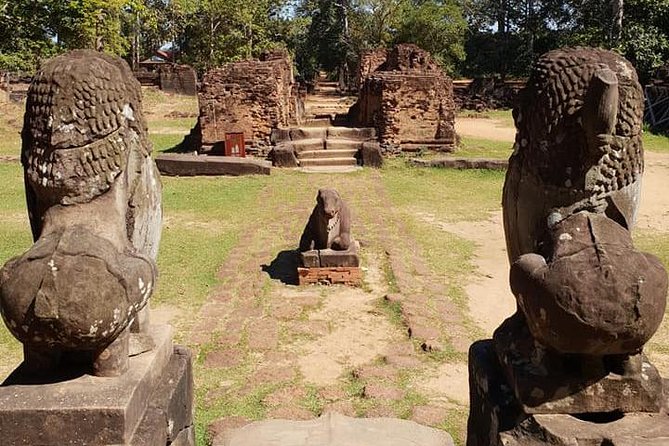
Book it if you want a wide Angkor experience with private transport, a local English-speaking guide, and enough time for the temples beyond the famous postcard stops. The strongest reason to choose it is the mix of sites: monumental Angkor Wat, atmospheric Ta Prohm, carved Banteay Srei, early Roluos temples, and a Tonle Sap visit.
I would confirm two points before booking: whether the $70 price is per person or per private group, and exactly what the Tonle Sap portion includes. Also budget for tickets and meals.
If you have children, older relatives, or a group that values patience over speed, Dara is an especially sensible guide choice. If your priority is a tightly timed, luxury-style program with every meal and admission covered, this is not that kind of tour.
FAQ
Is temple admission included in the $70 price?
No. Entrance temple tickets are not included, so you need to pay for them separately.
Are meals included?
No. Meals are not included in the tour price.
What is included?
The tour includes an air-conditioned vehicle, cool drinks, and a local licensed English-speaking guide.
Is this a private tour?
Yes. Only your group participates in the activity.
How long is each day?
The first and second days last about eight hours each. The third day lasts about six hours.
Does the tour include pickup and return?
Pickup is offered in Siem Reap, and the activity ends back at the meeting point.
Just added around Siem Reap
- Ultimate Sunrise to Angkor Wat, Angkor Thom and Bayon Temple★ 5.0 · 3 reviews
- Full-Day Private Tour of Angkor Wat with Pick Up★ 5.0 · 12 reviews
- Trekking Tour at Phnom Kulen National Park from Siem Reap★ 5.0 · 3 reviews
- Twilight Tastes of Siem Reap Include Dinner★ 5.0 · 13 reviews
- Siem Reap City Tour with War Museum and Killing Field★ 5.0 · 27 reviews
- Private Day Trip to Angkor Temples with Expert Guide★ 5.0 · 4 reviews
- Waterfall & River of 1000 Siva Linga- Kulen Mountain Private Tour★ 5.0 · 3 reviews
- Private Two Days Siem Reap Temples Discovery Guided Tour★ 5.0 · 7 reviews
Angkor Wat Tours, compared.
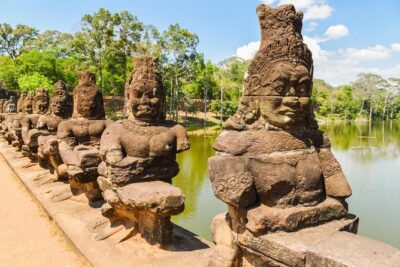
Angkor Wat Sunrise or Sunset Tour with Guide from Siem Reap
Read our review →
Angkor Wat: Small-Group Sunrise or Sunset Tour
Read our review →
Angkor Wat 2-Day Tour with Sunrise and Sunset
Read our review →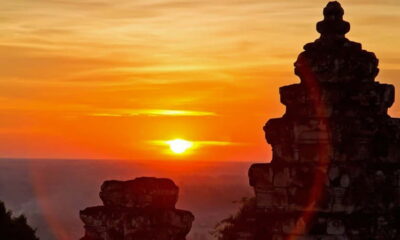
Angkor Wat Sunrise tour with Small – Group and Guide tours
Read our review →
Angkor Wat Highlights and Sunrise Guided Tour from Siem Reap
Read our review →
Angkor Wat Sunset Small Group Tour with Lunch Included
Read our review →
Full-Day Angkor Wat Sunrise Private Tour with Guide from Siem Reap
Read our review →Browse the lists this tour appears in