
Reviewed · ANGKOR SUNSET TOURS
Small-Group Full Day Angkor wat Guide tour with Sun set
Angkor Wat is only the beginning. This full-day outing takes you through the Khmer Empire’s grandest religious and royal sites, from Angkor Wat’s sandstone galleries to Bayon’s calm stone faces and Ta Prohm’s tree-covered ruins. I like the way the route mixes famous temples with different moods, and I like having a guide explain the carvings, faiths, and royal stories. The drawback is simple: eight to ten hours of walking in Cambodia’s heat can feel long, and the schedule may leave limited time for lingering over photographs.
I especially like the air-conditioned minivan, regular drinking water, and hotel pickup, which make a low-cost group tour far easier to manage. Guides such as Vone, Kosal, Nick, Rith, and Mr John are praised for clear explanations, humor, patient answers, and help with photographs. Just remember that the $14 tour price does not include the $37 one-day Angkor Pass or lunch.
Key points at a glance
- Six major temple stops: Angkor Wat, Ta Prohm, Ta Keo, Bayon, Angkor Thom, and Phnom Bakheng form a strong first-day introduction.
- A guide adds real value: You get explanations of Hindu and Buddhist traditions, temple design, royal power, and carved scenes that are easy to miss alone.
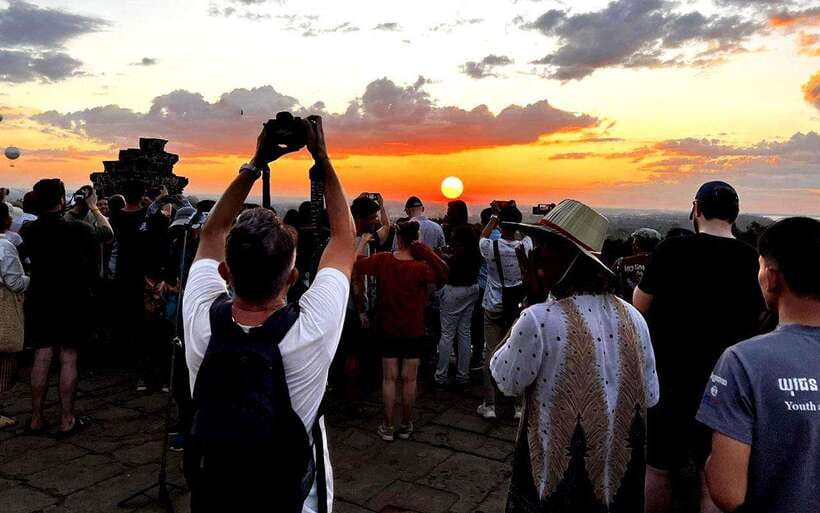
- Sunset finishes the day: Phnom Bakheng provides a final hilltop stop and views across the temple zone.
- Transport keeps the day manageable: Hotel pickup, an air-conditioned vehicle, cool water, and wet towels help between long walks.
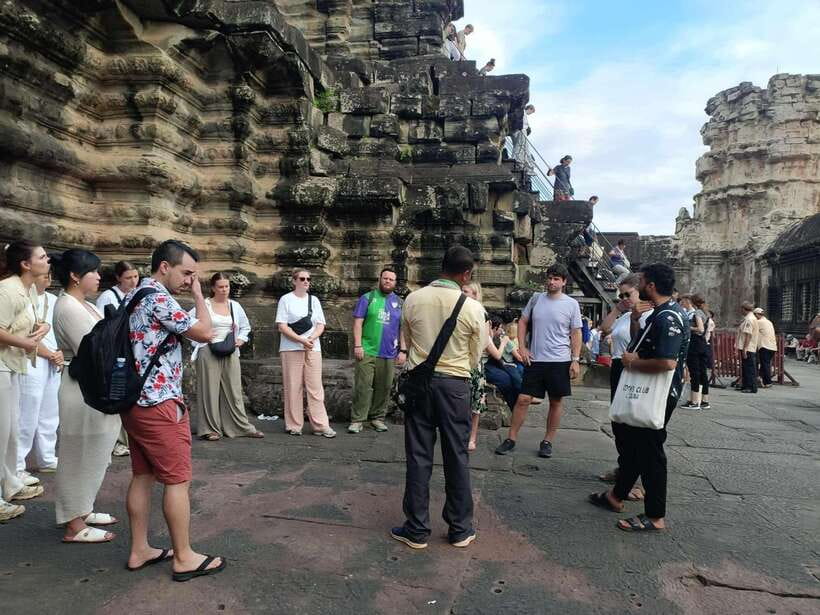
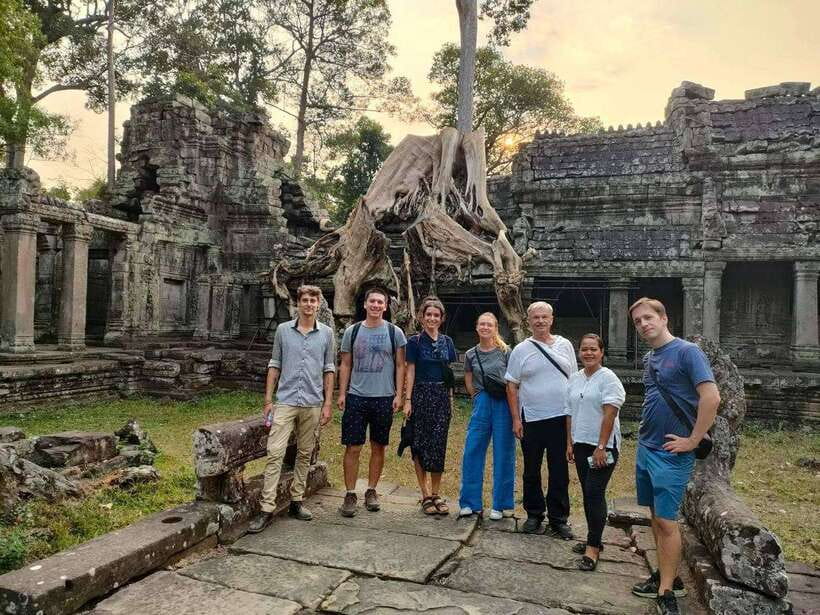
- Expect a social group outing: Small groups can be as compact as six people, while one reported group had 15.
- Dress and pace matter: Cover your shoulders and knees, wear good walking shoes, and be ready for heat, stairs, and a full day outdoors.
What the $14 price really covers
At $14 per person, this is an unusually inexpensive way to see the main Angkor circuit with transport and an English-speaking guide. The headline price is not the full cost, though. Add the required $37 one-day Angkor Pass, plus your own lunch, and the practical total becomes about $51 before food.
That is still good value if you have only one day in Siem Reap or want someone else to handle the temple sequence. You get pickup and drop-off in Krong Siem Reap, an air-conditioned minivan or coach, a guide, a driver, water, and wet towels. You are paying less for a private, slow-paced visit and more for an efficient introduction to the area.
The low price also explains the group format. The group may be small, but it is not guaranteed to be tiny. A six-person outing will feel quite personal, while a group of around 15 requires more patience at temple entrances and during explanations. A private option is available separately if you want to set the pace yourself.
More sunset temple tours in Siem Reap:
- Angkor Wat Sunrise or Sunset Tour with Guide from Siem Reap
★ 5.0 · 12,109 reviews - Siem Reap: Angkor Wat: Small-Group Sunrise or Sunset Tour
★ 5.0 · 9,444 reviews - Siem Reap: Angkor Wat 2-Day Tour with Sunrise and Sunset
★ 4.9 · 4,429 reviews
Pickup from Siem Reap and the ride to Angkor
Pickup starts in Krong Siem Reap, and you should be ready 30 minutes before the scheduled departure. The first coach ride is listed at about 45 minutes, giving you a useful transition from town to the temple zone.
The transport matters more than it may seem. Angkor’s sites are spread out, and you will repeatedly move between shaded vehicle time and exposed stone courtyards. An air-conditioned vehicle gives your legs and body a chance to recover. Water and wet towels are small additions, but they are especially welcome during the hotter months.
One practical wrinkle is that the vehicle may not be the same from the moment you leave your hotel. One account describes a tuk-tuk pickup followed by a transfer to the tour bus. Do not worry if the initial pickup is not a coach, but make sure you know the meeting point and have your phone available.
Angkor Wat: start with the Khmer Empire’s great monument
The first major stop is Angkor Wat, with roughly two hours and ten minutes set aside for a guided visit. That is enough time for the main approach, outer galleries, bas-reliefs, and central temple areas, though not enough to inspect every carved panel at leisure.
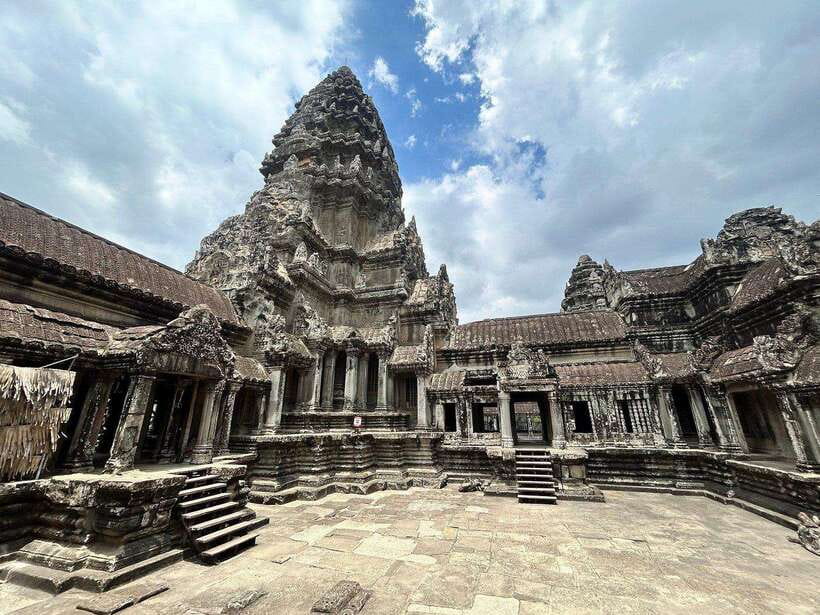
You cross the broad moat and pass through the outer wall before reaching the long galleries. The temple was built in the 12th century under the Khmer Empire and began as a Hindu monument before later use within a Buddhist setting. Your guide can help connect the architecture to those religious ideas, rather than leaving you to see only towers and stone corridors.
Pay attention to the bas-reliefs. They tell stories of gods, kings, battles, and epic mythology across long sandstone walls. Without help, it is easy to walk past them as decoration. A guide such as Sam Vone, Rith, or Mr John can point out what the scenes represent and explain how the temple’s layout reflects Khmer beliefs.
The main limitation is time. If photography is important to you, tell your guide early that you need a few extra minutes at key views. One account praised the guide’s photo help but also noted that explanations sometimes led quickly into the next area. A group schedule has to keep moving, especially with several temples still ahead.
Ta Prohm and the jungle-lined walk
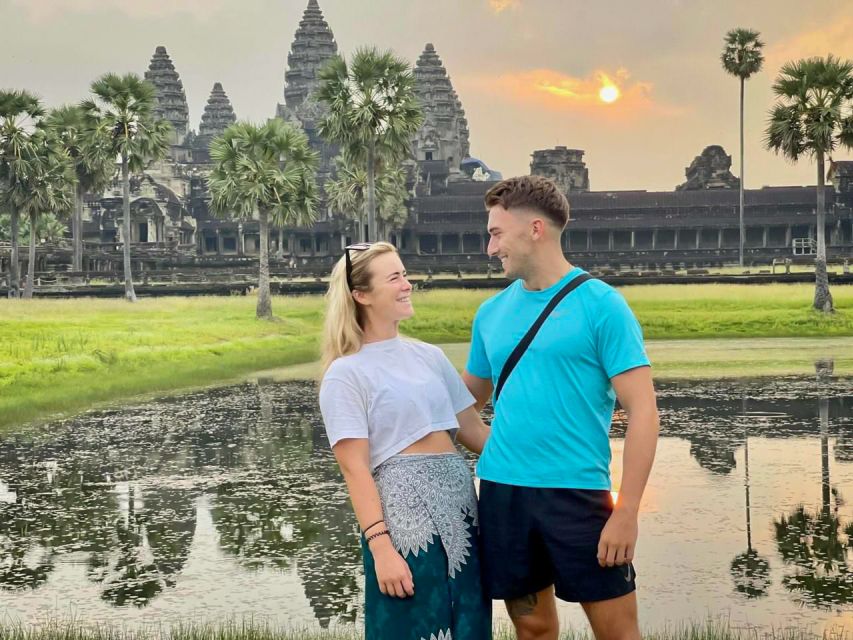
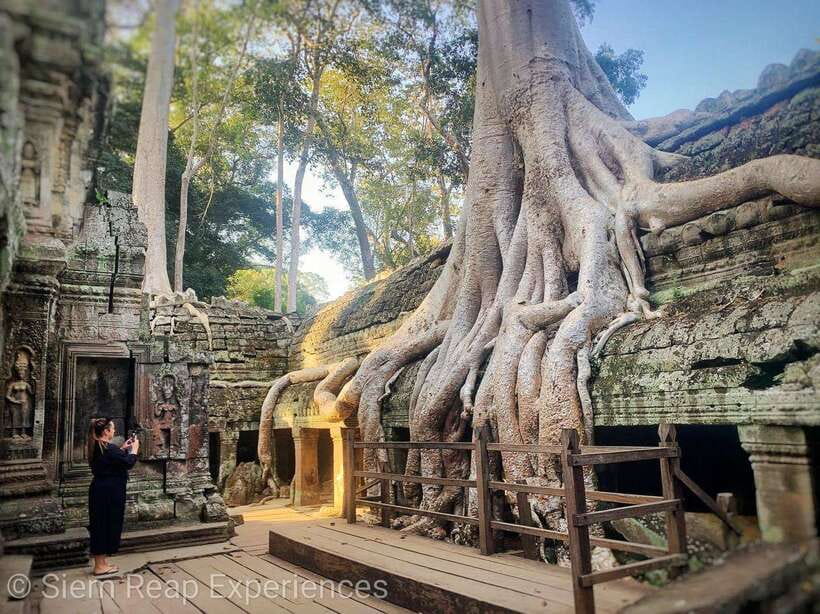
Ta Prohm brings a sharp change of mood. Instead of Angkor Wat’s formal scale, you walk along paths lined by trees toward ruins where large roots and branches spread over towers and walls.
The trees are not merely a scenic backdrop. They show how the temple has been shaped by centuries of growth, weather, and conservation. You can see stone corridors interrupted by roots, doorways framed by vegetation, and sections that feel more enclosed than the open courts of Angkor Wat.
The planned visit lasts about 90 minutes. That gives you time to walk through the main areas, hear the story of the temple, and take photographs, but the paths can feel crowded. Stay close enough to hear your guide, then use the free moments to look carefully at the carved doorways and collapsed sections.
Ta Prohm is often the stop people remember most clearly because its setting feels so different. I would not rush this section. If you have a strong interest in photography, ask where you can pause safely without blocking the group.
More Angkor Wat tours in Siem Reap:
- Siem Reap: Full-Day Angkor Wat Guided Tour with Sunset
★ 4.9 · 3,803 reviews - Angkor Wat Sunrise tour with Small – Group and Guide tours
★ 5.0 · 3,655 reviews - Angkor Wat Highlights and Sunrise Guided Tour from Siem Reap
★ 5.0 · 3,213 reviews - Angkor Wat Sunset Small Group Tour with Lunch Included
★ 5.0 · 3,059 reviews
Lunch near Banteay Kdei, at your own cost
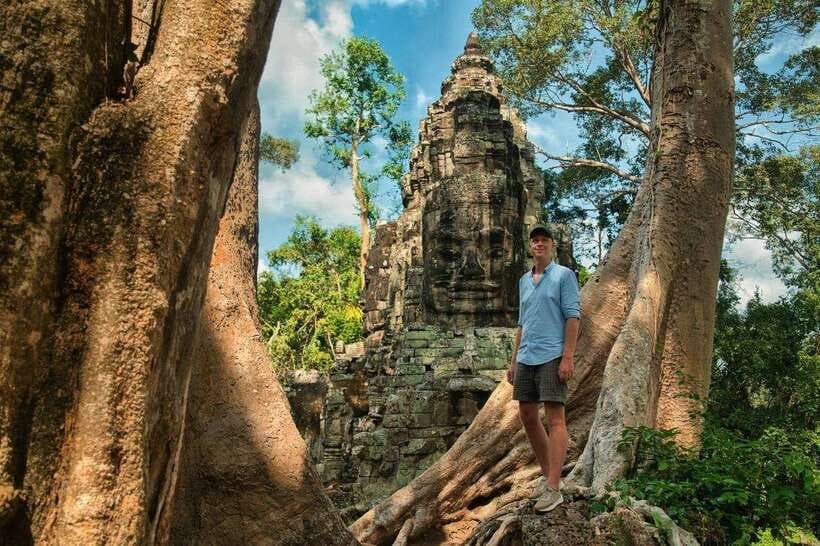
The schedule places lunch at Banteay Kdei for about an hour after Ta Prohm. Lunch is not included, so bring cash for the meal and any drinks beyond the supplied water.
This break has a useful purpose. By this point you have already spent several hours walking through stone complexes, and a proper pause can make the afternoon far more enjoyable. Do not treat the lunch stop as wasted temple time. It is your chance to eat, cool down, and reset before the more exposed afternoon sites.
Banteay Kdei is listed as the lunch location rather than a separate guided temple stop. The six headline temple visits are Angkor Wat, Angkor Thom, Bayon, Ta Keo, Ta Prohm, and Phnom Bakheng. If Banteay Kdei itself is a priority, ask the guide whether the schedule allows any sightseeing there.
Ta Keo: a stark pyramid of sandstone
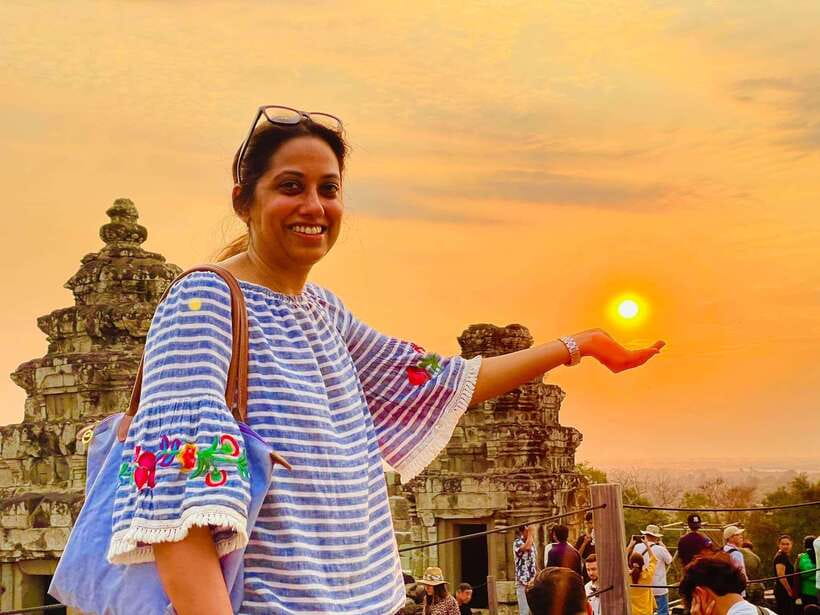
After lunch, the route continues to Ta Keo, with about an hour for sightseeing and walking. This towering pyramid temple is known for its massive sandstone form and unfinished state.
Ta Keo is valuable because it strips the decoration back. At some temples, the eye is pulled toward carvings and tree roots. Here, the bulk and height of the structure do more of the work. You get a clearer sense of how Khmer architects used rising terraces and steep levels to create a sacred mountain effect.
The stop may feel physically demanding after lunch. Wear shoes with a firm sole, and take care on uneven paths and steps. The description also refers to lesser routes connecting the temple area, giving the walk a more exploratory feel, but do not expect a private archaeological expedition. You remain on a planned group route and should follow your guide’s directions.
Angkor Thom and the stone faces of Bayon
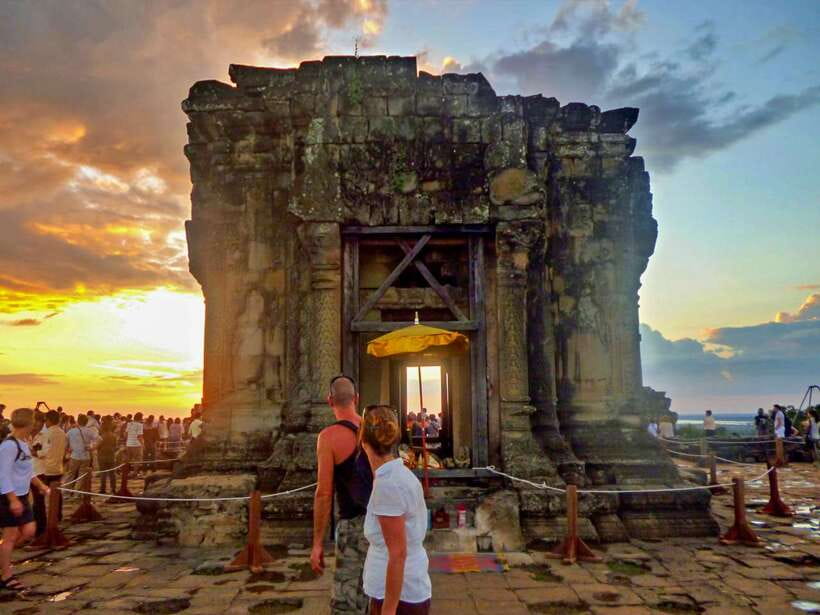
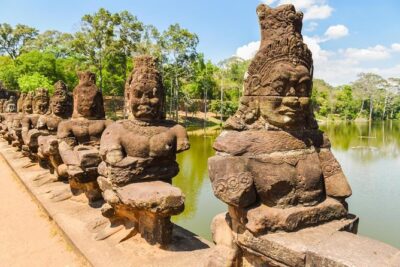
Angkor Thom was the final and grandest capital of the Khmer Empire. The approach begins at the southern gate, where rows of stone figures line the causeway. Gods and demons pull at a naga, creating a striking entrance that is easy to understand even before the guide explains its meaning.
The figures are one of the day’s best arrival moments. They give the gate a sense of ceremony and make clear that you are entering more than a single temple. Angkor Thom was a vast royal city, and the gate helps you picture the power and order behind it.
Inside, the main guided stop is Bayon, scheduled for about 90 minutes. Bayon is famous for its serene faces carved into the central towers. Faces look out from different heights and angles, giving the temple an unusual human presence.
Your guide can help explain the religious and royal ideas behind the temple, including the shift between Hindu and Buddhist traditions across Angkor’s long life. The upper terrace offers the closest views of the faces, but the stone surfaces and steps require care. Do not hurry past the lower galleries, either. The carvings there add daily life, battles, and court scenes to the more mysterious upper towers.
Bayon is often the point where a guide earns the fee. A good explanation turns an unusual pile of stone faces into a carefully planned statement about kingship and faith. Guides such as Kosal, Nick, Sayon, and Rith are praised for answering questions and keeping the tone light during a long day.
Phnom Bakheng sunset and the final view
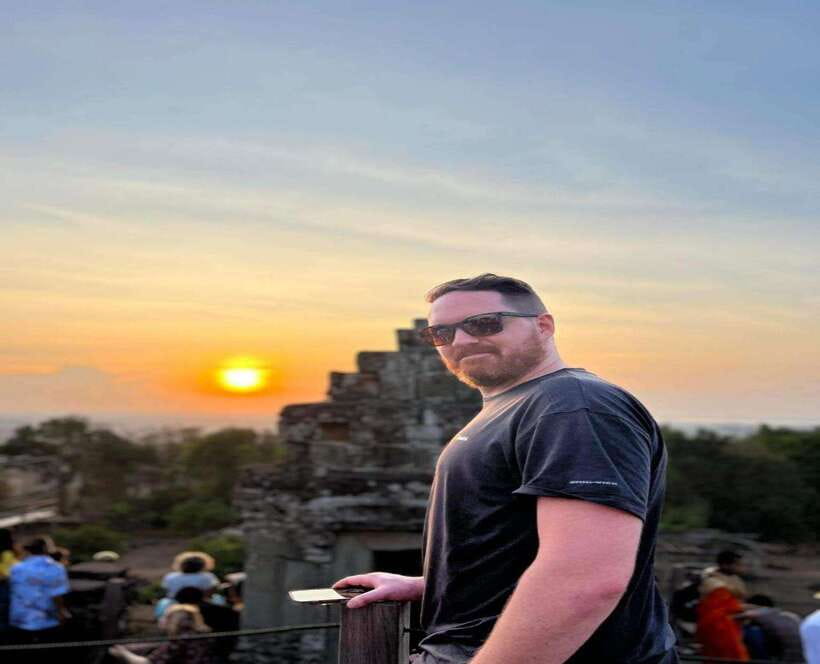
The final stop is Phnom Bakheng, a hill temple with a view over the surrounding temple area. The visit lasts about an hour and is intended to end with sunset.
This is a fitting finish because the day moves from detailed interiors and carved stories to a wider view. After walking through several royal and religious sites, you can look back across the temple zone and gain a sense of its scale.
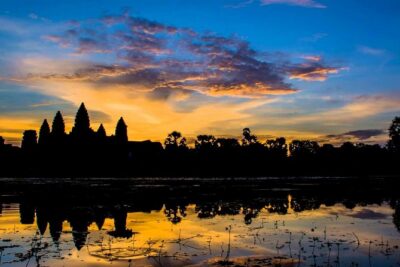
Sunset conditions are never guaranteed, and the stop can feel tiring after eight hours on the move. Still, the late timing gives you a different atmosphere from the morning visits. One useful tip is to think of Phnom Bakheng as a bonus view rather than the sole reason to book the tour. The temples earlier in the day are the main event.
The route then returns to Siem Reap, with drop-off at your hotel or a requested stop in the city. The final return ride is listed at about 40 minutes, though the full day is advertised as eight to ten hours.
How the guides shape the experience
The strongest feature of this tour is the guide. The names assigned vary, so you may meet Vone, Kosal, Nick, Rith, Mr John, Coco, Sayon, Sary, Heang, or another member of the team.
The most useful guides do three things well: explain the religious symbols, keep the group moving, and leave enough quiet time for you to look around. Several guides are also praised for humor and for taking photographs, which helps break up a serious day of dates, dynasties, and stonework.
English ability can vary. One person found it occasionally difficult to understand the guide’s English, though the guide was happy to repeat information. If you miss a point, ask again. The guides are there to answer questions, and repeated questions are better than silently losing the thread.
The best tip is to tell your guide what interests you. Ask for more detail on religion, architecture, photography, or daily life. The tour covers a lot, so a small request can make the explanations feel more relevant to you.
Heat, clothing, and the walking load
You should plan for a hot outdoor day. Bring sunglasses, sunscreen, a sun hat, insect repellent, a camera, and comfortable walking shoes. The dress code requires covered shoulders and knees, so avoid clothing that leaves either exposed when you enter the sacred areas.
Water is provided throughout the day, and the vehicle offers air conditioning between stops. Even so, many courtyards have little shade, and temple stone can hold the heat. Take advantage of the lunch break and every chance to sit for a few minutes.
This is not a suitable activity for babies under one year. Non-folding wheelchairs are not permitted, and alcohol and drugs are prohibited. If you have mobility concerns, ask the operator before booking, since the route includes uneven paths, temple steps, and extended walking.
Who should book this Angkor tour?
I would choose this tour for a first visit to Siem Reap when I wanted to see the major temples in one organized day. It is especially useful if you want historical and religious context instead of simply being dropped at each site.
It also suits solo visitors and couples who like the social ease of a small group. You get transport, a guide, and a clear route without paying the much higher cost of a private full-day arrangement.
I would choose the private option if you want to linger at one temple, photograph at your own pace, avoid a group schedule, or focus on a particular subject. I would also consider a multi-day Angkor Pass if you have more time. One sensible plan is to use this tour for the main circuit, then return independently to the temples you liked best and visit other sites on later days.
Final verdict: excellent first-day value, with a demanding pace
This is a strong-value introduction to Angkor. For the tour fee, you receive transport, hotel pickup, a live English-speaking guide, water, and a sunset stop across a well-chosen group of major temples.
The main trade-off is pace. You will see a great deal, but you will not have unlimited time at every carving, gallery, or photo point. Add the $37 temple pass and your own lunch to the advertised price, dress for the heat, and arrive ready to walk.
Book it if you want an efficient, informative first day and appreciate a guide who can mix temple facts with humor. Skip it in favor of a private or slower plan if your priority is quiet photography, long pauses, or a highly customized route.
FAQ
Does the $14 price include the Angkor Pass?
No. The one-day Angkor Pass costs an additional $37 and is payable on the day of the activity.
Is lunch included?
No. Lunch is taken near Banteay Kdei and must be paid for separately.
How long does the tour last?
The tour lasts about eight to ten hours, including transportation between Siem Reap and the temples.
Which temples are included?
The main stops are Angkor Wat, Angkor Thom, Bayon, Ta Keo, Ta Prohm, and Phnom Bakheng. Banteay Kdei is listed as the lunch stop.
Is hotel pickup provided?
Yes. Pickup and drop-off are provided in Krong Siem Reap. You should be ready 30 minutes before the scheduled start.
What should I wear to the temples?
Your shoulders and knees must be covered. Comfortable walking shoes, sunscreen, sunglasses, insect repellent, and a sun hat are recommended.
Just added around Siem Reap
- Ultimate Sunrise to Angkor Wat, Angkor Thom and Bayon Temple★ 5.0 · 3 reviews
- Full-Day Private Tour of Angkor Wat with Pick Up★ 5.0 · 12 reviews
- Trekking Tour at Phnom Kulen National Park from Siem Reap★ 5.0 · 3 reviews
- Twilight Tastes of Siem Reap Include Dinner★ 5.0 · 13 reviews
- Siem Reap City Tour with War Museum and Killing Field★ 5.0 · 27 reviews
- Private Day Trip to Angkor Temples with Expert Guide★ 5.0 · 4 reviews
- Waterfall & River of 1000 Siva Linga- Kulen Mountain Private Tour★ 5.0 · 3 reviews
- Private Two Days Siem Reap Temples Discovery Guided Tour★ 5.0 · 7 reviews
Angkor Sunset Tours, compared.
Angkor Wat Sunrise or Sunset Tour with Guide from Siem Reap
Read our review →
Angkor Wat: Small-Group Sunrise or Sunset Tour
Read our review →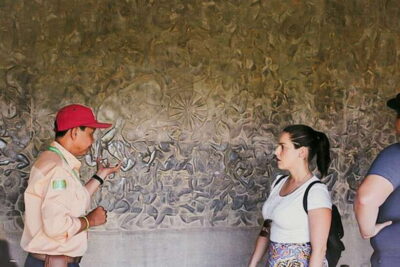
Angkor Wat 2-Day Tour with Sunrise and Sunset
Read our review →
Angkor Wat Sunset Small Group Tour with Lunch Included
Read our review →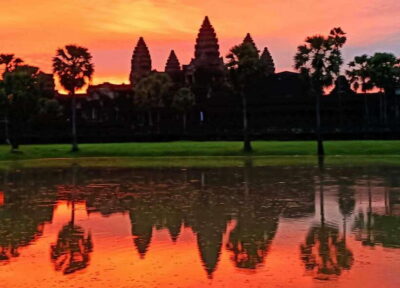
2 Days Exclusive Temple Highlights with Sunset and Sunrise Tour
Read our review →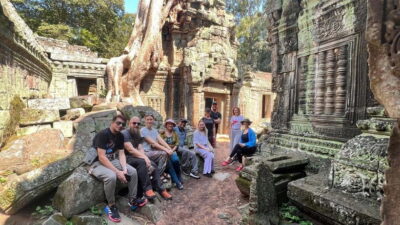
2-Day Temple Highlights Sunrise and Sunset Option
Read our review →Browse the lists this tour appears in