Reviewed · ANGKOR WAT TOURS
Siem Reap: Angkor Wat Tour Explore The Most Iconic Temples
Angkor Wat at sunrise is the headline, but the best part of this day is the mix of famous and quieter temples. You’ll see the grand galleries of Angkor Wat, then move through the tree-covered ruins of Ta Prohm and the calm corridors of Banteay Kdei. The private transport also means you can take your time rather than follow a large group.
I like the simple comfort of cold water and jasmine-scented towels, especially after walking over hot stone. I also like the drivers’ practical help. Ray was praised for finding the meeting point exactly, while Chamrong and Lay were noted for waiting outside temples and helping with directions. The drawback is the pace: seven listed stops in eight hours can leave little time to linger, and the temple pass and meals cost extra.
Key points at a glance
- Sunrise at Angkor Wat: Begin early at the western entrance and watch the temple towers reflect in the moat before the main crowds gather.
- Private transport for up to two people: The $24 price covers the group, not each person, making it especially good value for a pair.
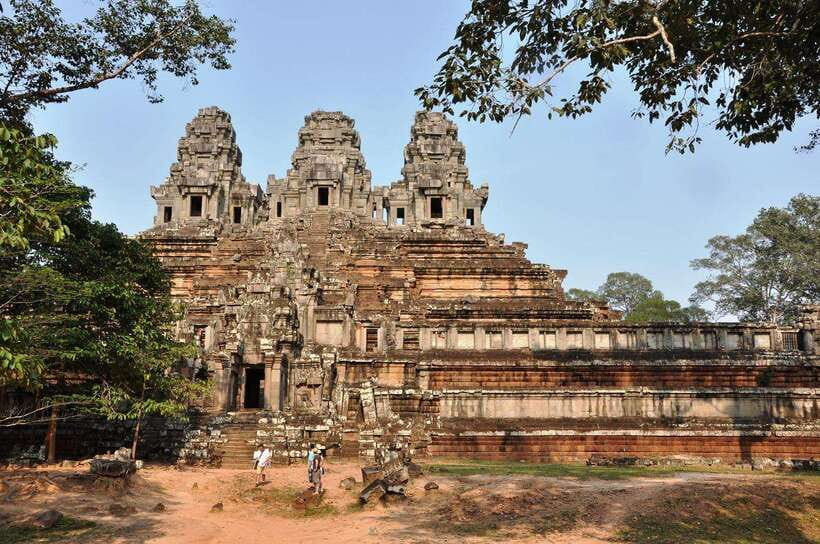
- A useful temple mix: You get Angkor Wat and Ta Prohm, plus quieter Banteay Kdei and the unfinished Ta Keo.
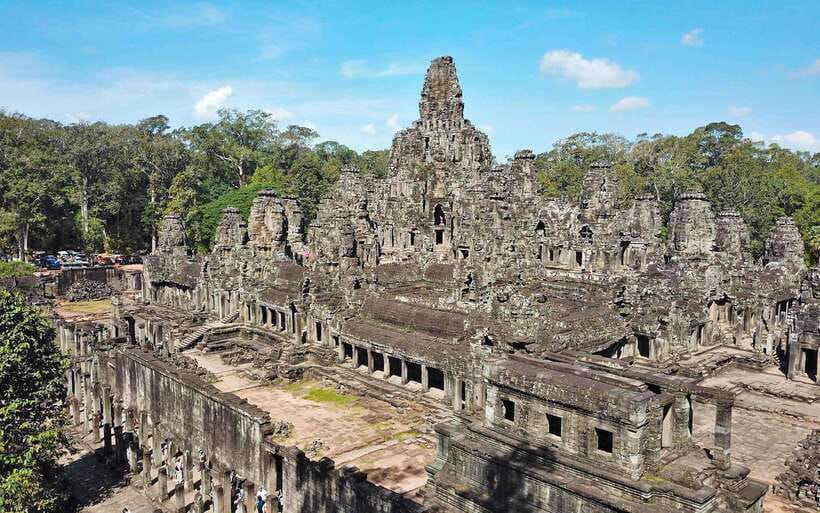
- Bayon’s stone faces: See the famous 54 towers, with four serene faces carved on each tower.
- Comfort in the heat: Hotel pickup, unlimited bottled water, and cool towels are included.
- Bring modest clothing: Your shoulders and knees must be covered, and comfortable walking shoes matter on uneven temple ground.
What this Angkor temple day is really like
This is a long, temple-heavy day built around private transport rather than a formal lecture tour. Your driver collects you at your Siem Reap hotel or accommodation, takes you to buy the required Angkor Temple Pass, and then moves you between the sites.
The listed price is $24 per private group of up to two people. That is strong value if you are sharing the ride with one companion. It does not include the Angkor pass or meals, so keep extra money ready for those costs. The pass is compulsory and must be bought separately.
The standard tour lasts eight hours. If you choose the sunrise option, expect an early pickup. The exact pickup time depends on the season and the chosen start time, but the point is simple: this is not a sleep-in morning. You will reach Angkor Wat before the daytime heat and before the busiest part of the morning.
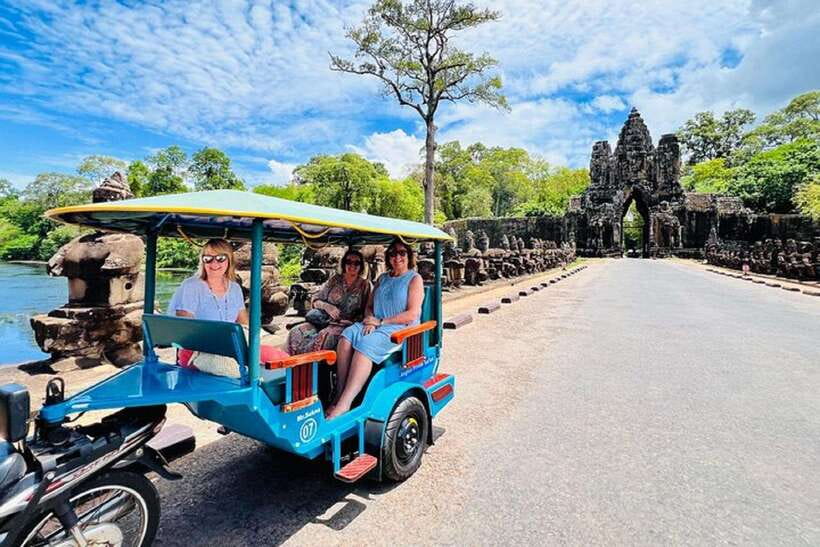
The transport may be a tuk-tuk or another private vehicle, depending on the arrangement. The tuk-tuk is pleasant in hot weather because moving air takes the edge off the heat. A car offers more shelter, but the information supplied does not promise one specific vehicle type.
Your English-speaking driver is an important part of the experience. Some drivers mainly provide transport and timing help, while others offer more information at the temples. Chamrong, Lay, Soka, Ray, Danny, Lai, and Paul were all praised by name for being reliable, friendly, or helpful. Still, you should not assume that every booking includes a full licensed historical guide. If detailed interpretation is your top priority, ask what level of guiding comes with your chosen booking.
More Angkor Wat tours in Siem Reap:
- Angkor Wat Sunrise or Sunset Tour with Guide from Siem Reap
★ 5.0 · 12,109 reviews - Siem Reap: Angkor Wat: Small-Group Sunrise or Sunset Tour
★ 5.0 · 9,444 reviews - Siem Reap: Angkor Wat 2-Day Tour with Sunrise and Sunset
★ 4.9 · 4,429 reviews
Sunrise at Angkor Wat before the heat
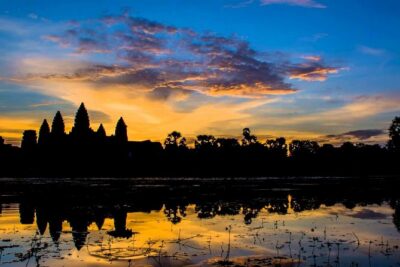
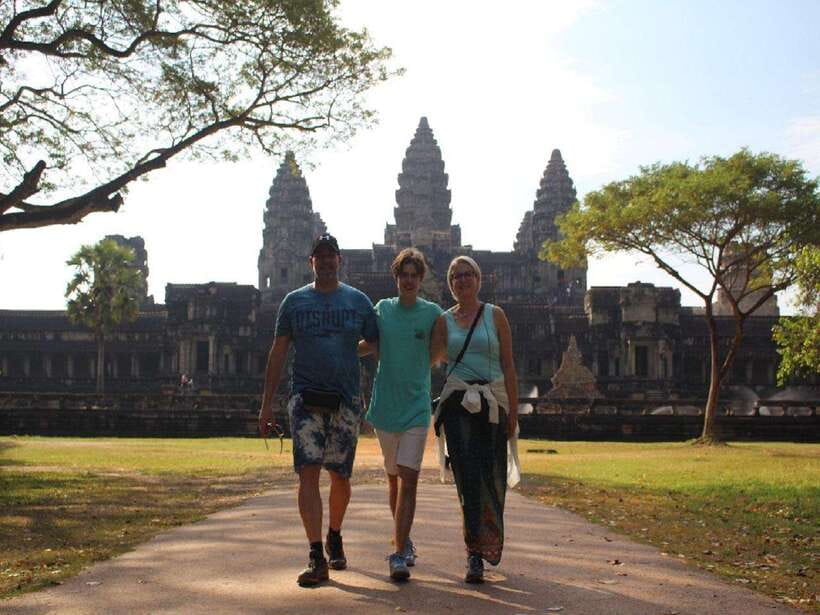
The day begins at Angkor Wat, Cambodia’s best-known monument and the world’s largest religious monument. At sunrise, you watch the dark outline of the five central towers gradually brighten over the moat. Reflections can appear in the water, though the exact effect depends on weather and the position you find along the western approach.
The early start has two clear benefits. First, the light is softer for photographs. Second, you get some breathing room before the main daytime crowds arrive. Do not expect complete solitude. Angkor Wat at sunrise is popular, and many people will have the same idea.
The western entrance is described as a little-visited approach for this experience. That can help you get your bearings before heading toward the main viewing area. Your driver will not remain beside you through every gallery, so agree on where to meet after the sunrise portion.
After the sky brightens, you explore inside the temple. Angkor Wat began as a Hindu temple dedicated to Vishnu and later became a Buddhist site. Its galleries hold detailed bas-reliefs linked to Hindu mythology, while the central sanctuary gives the complex its powerful vertical shape.
Allow time to look up and around. The outside view is only part of Angkor Wat. The long galleries, carved walls, courtyards, and stairways explain why this stop can easily absorb several hours on its own. The tradeoff is that a long visit here reduces time at the later temples, so keep an eye on the schedule.
Banteay Kdei, a quieter pause among the ruins
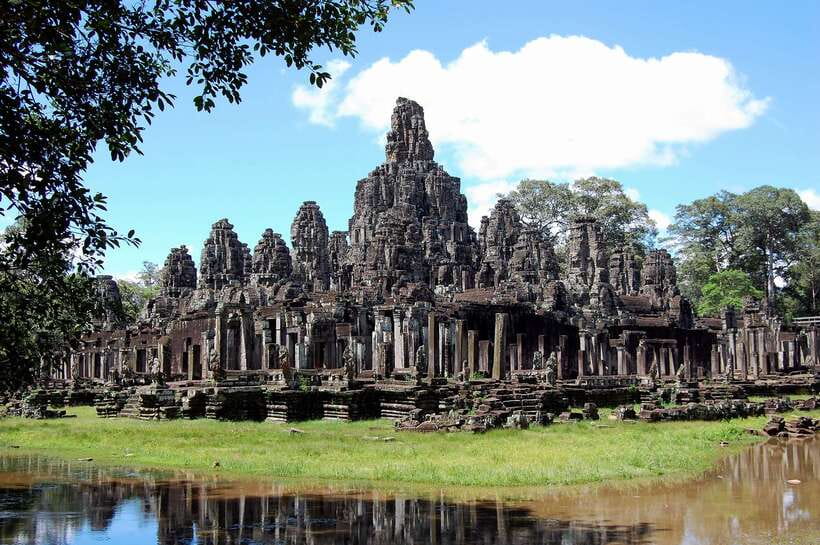
Banteay Kdei means Citadel of Chambers, and the name fits its maze of corridors and enclosed spaces. Built in the late 12th century as a Buddhist monastery, it has a more subdued feel than Angkor Wat.
I like this stop because it gives you a change of rhythm. After the scale and formal layout of Angkor Wat, Banteay Kdei feels more intimate. Its partial ruins create quiet, shadowed passages and a sense that you are seeing a monument in an unfinished chapter of its life.
You will find carvings and distinctive architectural details, but the appeal is less about one famous view and more about wandering through the chambers. It is also a useful place to slow down and take photographs without giving every minute to the most crowded monuments.
Do not expect the same level of restoration or grandeur found at Angkor Wat. Some areas are in ruins, and the uneven ground requires care. That is part of the character of the place, but it also means sturdy shoes are more useful than sandals with thin soles.
Ta Prohm and the trees over the stone
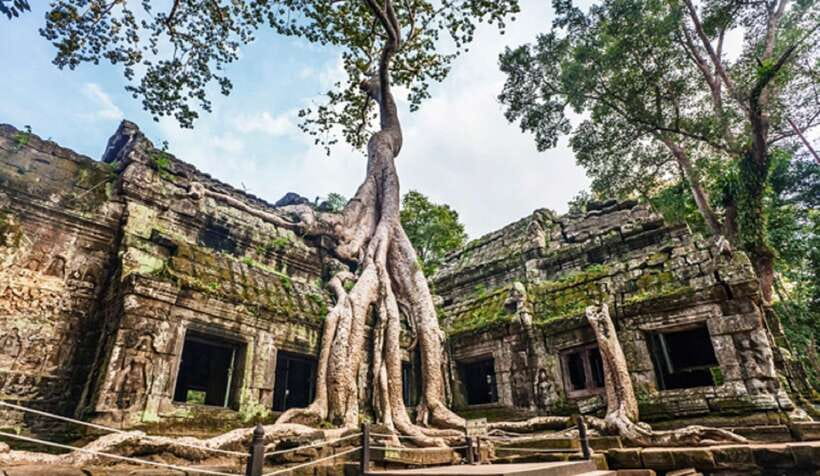
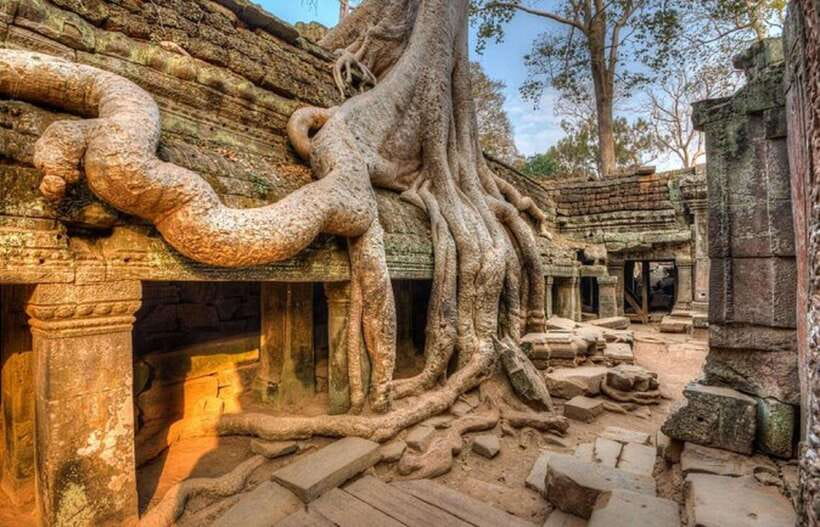
Ta Prohm is the most instantly recognizable stop after Angkor Wat. Giant tree roots push over walls, doorways, and galleries, creating the jungle-temple appearance that made this place famous in Tomb Raider.
The temple is a striking lesson in how nature and architecture can meet. The roots are not decoration added for visitors. They are part of the reason Ta Prohm was left largely unrestored, allowing trees and broken stone to share the same space.
You will want photos here, especially around the root-covered sections. Your driver or guide can point you toward the main sights and wait outside while you walk through the complex. One useful bit of advice is to watch for monkeys, which have been seen around the temple area. Give them space and keep food secured.
Ta Prohm can be crowded, particularly around its most famous tree roots. Patience helps. The temple is not a quick roadside photo stop. You need to walk, pause, and sometimes wait for a clear view.
A different sort of day out around Siem Reap:
- From Siem Reap: Kampong Phluk Floating Village Tour by Boat
★ 4.9 · 6,979 reviews - Sunset tour of Kampong Phluk stilts home village on the Tonle Sap
★ 5.0 · 4,865 reviews - Siem Reap: Full-Day Angkor Wat Guided Tour with Sunset
★ 4.9 · 3,803 reviews - Angkor Wat Sunrise tour with Small – Group and Guide tours
★ 5.0 · 3,655 reviews
Ta Keo, the unfinished mountain temple
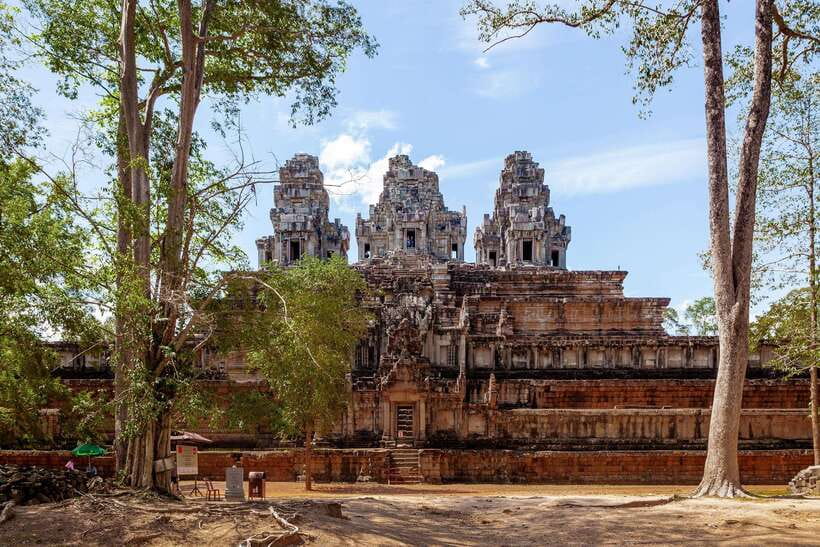
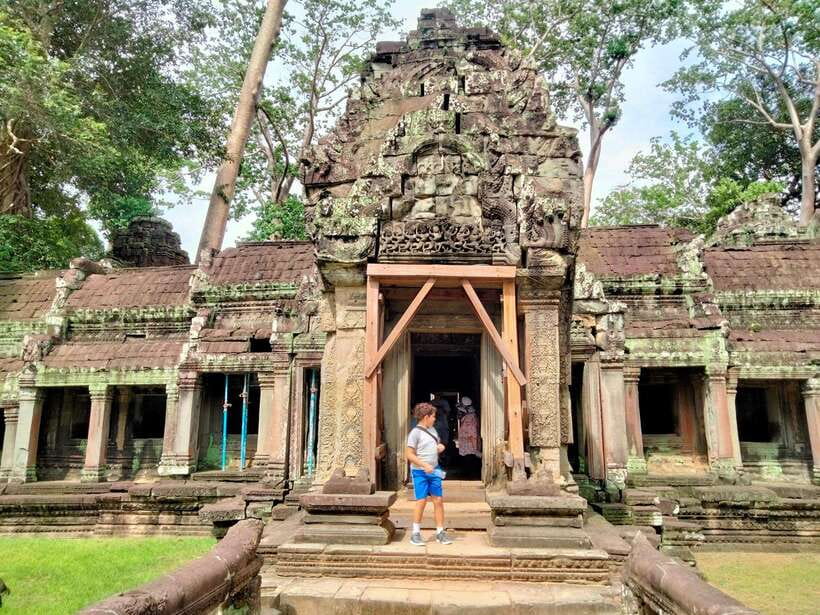
Ta Keo offers a different kind of story. Built during the late 10th and early 11th centuries by King Jayavarman V and continued by later rulers, it was never fully completed.
That unfinished state changes the way you see it. Instead of polished carvings covering every surface, you notice the structure itself: steep levels, massive stone blocks, and a strong, almost fortress-like form. It is a good reminder that Angkor was not created in one smooth burst of construction.
The climb and uneven stone make Ta Keo more demanding than a flat corridor temple. Take your time and use care on the steps. If you have limited mobility, this stop may be uncomfortable, since the whole site is not wheelchair accessible and the temple terrain is uneven.
Ta Keo may not provide the lush tree-root photographs of Ta Prohm or the famous faces of Bayon. Its value is architectural. You are looking at a temple that reveals its construction more plainly because the decorative work was never finished.
Bayon and its many calm stone faces
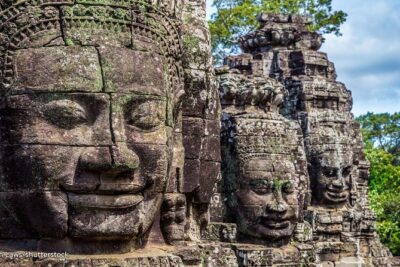
Bayon sits at the center of Angkor Thom and is one of the day’s essential stops. Its 54 towers carry four large stone faces each, traditionally associated with Avalokiteshvara. From different angles, the faces seem to watch over the temple with a calm, almost mysterious expression.
The number is part of the impact: more than 200 faces in total. Yet Bayon is not just a monument for counting towers. Its lower galleries contain carvings of daily life and historical battles, giving you scenes that feel more immediate than grand religious symbols alone.
The temple can be confusing to navigate. Towers, passages, and carved walls crowd together, so a driver or guide who gives clear meeting instructions is useful. Soka was praised for waiting at each temple, and that kind of arrangement matters here. You do not want to wonder where your transport has gone after emerging from a maze of stone.
Bayon is close to the end of the main temple sequence, so you may already be tired. Drink water before entering and take regular breaks. The central location within Angkor Thom makes this a natural point to pause before continuing to the South Gate.
The South Gate of Angkor Thom
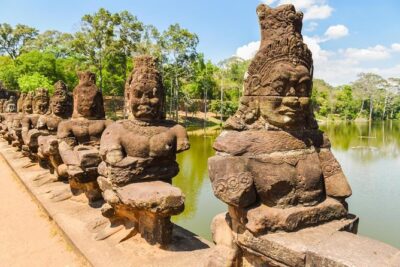
Tonle Om Gate, also called the South Gate of Angkor Thom, provides one of the day’s best wide views. The approach crosses a causeway lined with statues of gods and demons, creating a dramatic entrance into the ancient city.
The gate is topped by four large stone faces, echoing the imagery of Bayon. This connection helps you understand that the monuments are not isolated attractions. They belong to a larger city plan, with ceremonial entrances leading toward the central temple.
This is a short stop compared with Angkor Wat or Ta Prohm, but it is worth including. The causeway gives you a strong photograph and a final look at the scale of Angkor Thom before the return to Siem Reap.
Your day may finish here, or the schedule may be adjusted by your driver. The supplied plan also identifies Phnom Bakheng as a sunset point, but the detailed sunrise itinerary finishes at the South Gate. Do not assume sunset at Phnom Bakheng is part of the same eight-hour route unless it is specifically included in your selected option.
Why the private format is useful
A private group changes the feel of the day. You do not have to wait for a bus full of strangers at every temple, and you can ask for directions or a short pause when needed. For two people, the $24 group price is particularly attractive.
The transport also gives you a place to return to between walks. Angkor’s heat can be tiring, especially after climbing steps and crossing exposed courtyards. Bottled water is unlimited, and the cool towels are a small but welcome touch. One booking specifically appreciated the jasmine scent on the towels, while several others praised the regular water and refreshment service.
The main limitation is that private transport does not automatically mean private guiding in the fullest sense. Your English-speaking driver can provide directions, timing, and practical help. Some drivers, including Chamrong, were also praised for explaining the sites and offering local tips. The depth of historical explanation may vary.
That is not a problem if you mainly want reliable transport and a flexible day. It matters more if you want a detailed account of Khmer art, religion, dates, and symbolism at every stop. In that case, confirm the guide arrangement before paying.
What to wear and carry
Dress for a hot, active day and remember the temple rules. Your shoulders and knees must be covered. Loose, lightweight clothing is practical, but it still needs to provide the required coverage.
Wear comfortable walking shoes. You will cross uneven stone, walk through partially ruined corridors, and handle steps at Ta Keo and other temples. Flip-flops may be easy to pack, but they are not the best choice for this route.
Bring:
- Sunglasses
- Sunscreen
- Cash
- A phone or camera
- Water, although more is supplied during the tour
Alcohol and drugs are not allowed, and pets cannot join the activity. The tour is not suitable for babies under one year or people over 95 years old. The sites are not wheelchair accessible because of uneven temple terrain.
Timing, cost, and the real value
Eight hours sounds generous, but this is an ambitious route. You are covering Angkor Wat, Banteay Kdei, Ta Prohm, Ta Keo, Bayon, and the South Gate, with transport between each stop. The sunrise option adds an early start but gives you cooler temperatures and better morning light.
The $24 cost covers a private group of up to two people, hotel pickup and drop-off, round-trip transport, unlimited bottled water, and cool towels. It does not cover the temple pass or meals. The value is strongest for a couple or two friends who want a driver without paying for a large private vehicle alone.
I would not choose this route if you prefer to spend an entire morning studying Angkor Wat in detail. I would choose it if you want a broad first look at the major temples and appreciate having someone handle the driving, meeting points, and route.
The cancellation policy is also useful for uncertain plans: you can cancel up to 24 hours in advance for a full refund, and you can reserve now and pay later. Availability and starting times should still be checked when booking.
Who should book this tour
You should consider it if you have one full day in Siem Reap and want to see the main Angkor sights without arranging transport yourself. It suits couples, friends, and first-time visitors who value an early start, private movement between sites, and practical help in the heat.
It is less suitable if you want a slow, highly academic temple study or if you dislike early mornings and long walking days. The route is busy by design. You see more sites, but each stop receives less time than it would on a shorter, custom itinerary.
For most first visits, I like the balance. Angkor Wat gives you scale, Banteay Kdei gives you quiet, Ta Prohm supplies the memorable roots, Ta Keo shows unfinished stonework, and Bayon delivers the famous faces. Add dependable transport, water, and cool towels, and the $24 group price makes sense, provided you budget separately for the temple pass and food.
FAQ
Is the Angkor Temple Pass included?
No. You must purchase a valid Angkor Temple Pass separately, and its cost is not included in the tour price.
Does the tour include hotel pickup and drop-off?
Yes. Private pickup and drop-off at your hotel or accommodation are included. The pickup time is approximately five minutes before departure, and a message is sent one day before the tour.
Is sunrise included in every option?
Sunrise is included when you book the sunrise option. That version begins with an early pickup and visits Angkor Wat before continuing through the temple route.
How many people can join for $24?
The $24 price covers one private group of up to two people.
What is included during transport?
The tour includes private round-trip transportation, unlimited bottled water, and a cool towel. Transport may be by tuk-tuk or another private vehicle, depending on the arrangement.
What should I wear to the temples?
Your shoulders and knees must be covered. Comfortable walking shoes are recommended because the temple grounds include uneven terrain and steps.
Just added around Siem Reap
- Ultimate Sunrise to Angkor Wat, Angkor Thom and Bayon Temple★ 5.0 · 3 reviews
- Full-Day Private Tour of Angkor Wat with Pick Up★ 5.0 · 12 reviews
- Trekking Tour at Phnom Kulen National Park from Siem Reap★ 5.0 · 3 reviews
- Twilight Tastes of Siem Reap Include Dinner★ 5.0 · 13 reviews
- Siem Reap City Tour with War Museum and Killing Field★ 5.0 · 27 reviews
- Private Day Trip to Angkor Temples with Expert Guide★ 5.0 · 4 reviews
- Waterfall & River of 1000 Siva Linga- Kulen Mountain Private Tour★ 5.0 · 3 reviews
- Private Two Days Siem Reap Temples Discovery Guided Tour★ 5.0 · 7 reviews
Angkor Wat Tours, compared.
Angkor Wat Sunrise or Sunset Tour with Guide from Siem Reap
Read our review →
Angkor Wat: Small-Group Sunrise or Sunset Tour
Read our review →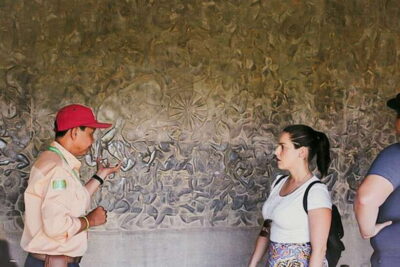
Angkor Wat 2-Day Tour with Sunrise and Sunset
Read our review →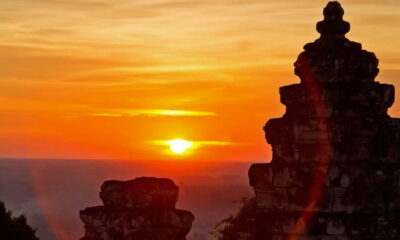
Angkor Wat Sunrise tour with Small – Group and Guide tours
Read our review →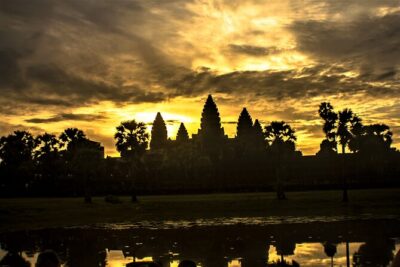
Angkor Wat Highlights and Sunrise Guided Tour from Siem Reap
Read our review →
Angkor Wat Sunset Small Group Tour with Lunch Included
Read our review →