
Reviewed · ANGKOR WAT SUNRISE TOURS
Siem Reap: Angkor Wat Sunrise and Best Temples Tour
Angkor Wat at sunrise is the great draw here. You leave Siem Reap before dawn, enter the temple while it is still dark, and find your way past cloisters and long bas-reliefs before the sky begins to brighten. The eastern entrance gives the opening a quieter feel, though you should bring a torch for the dark corridors.
I like the way this tour combines the famous sights with less-visited Ta Nei, and I like the practical care built into the day: air-conditioned transport, cold water, and a cool towel after temple walks. Guides such as Kiss, Sok, Mr Bun, and Chan Dara have been praised for clear English, cultural insight, and help with photos.
The main drawback is the early start and the fixed pace. Sunrise attracts plenty of people, so arriving early is important if you want a clear view. You also need to budget another $37 for the Angkor Pass, and breakfast is not included.
Key points to know before booking
- Sunrise begins the day at Angkor Wat, with entry from the eastern side and time to see the temple interiors afterward.
- The $26 price does not include the $37 Angkor Pass, which is payable on the day.
- Ta Nei adds a quieter temple stop to the better-known Angkor Wat, Bayon, and Ta Prohm.
- The tour lasts about eight hours, with roughly 40 minutes of driving in the air-conditioned van.
- Cold water and cool towels matter in Cambodia’s heat, especially after walking across exposed temple grounds.
- You need comfortable shoes and covered shoulders and knees, and the tour is not suitable for wheelchair users.
Sunrise at Angkor Wat requires an early start
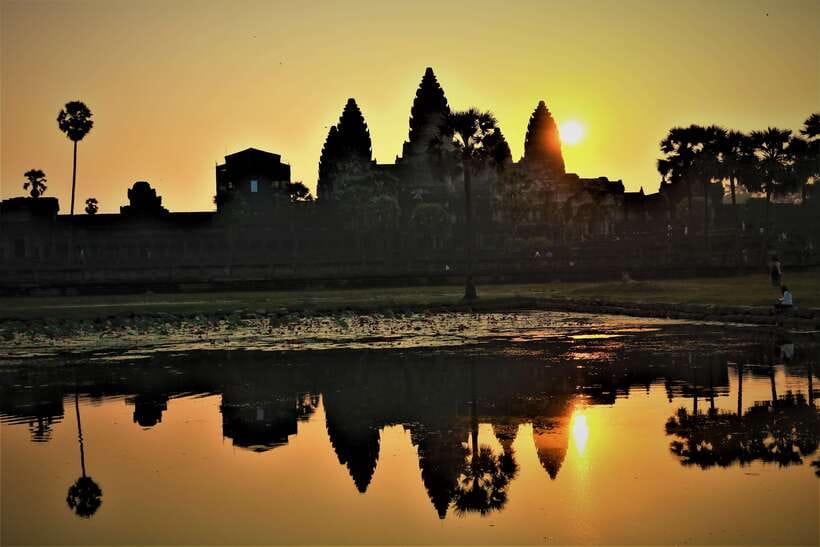
This is not a lazy morning tour. You will be collected before dawn, with hotel pickup included, and driven for about 40 minutes toward Angkor Wat. Ask your hotel for a wake-up call the night before. It is a small detail, but missing the pickup would mean missing the main event.
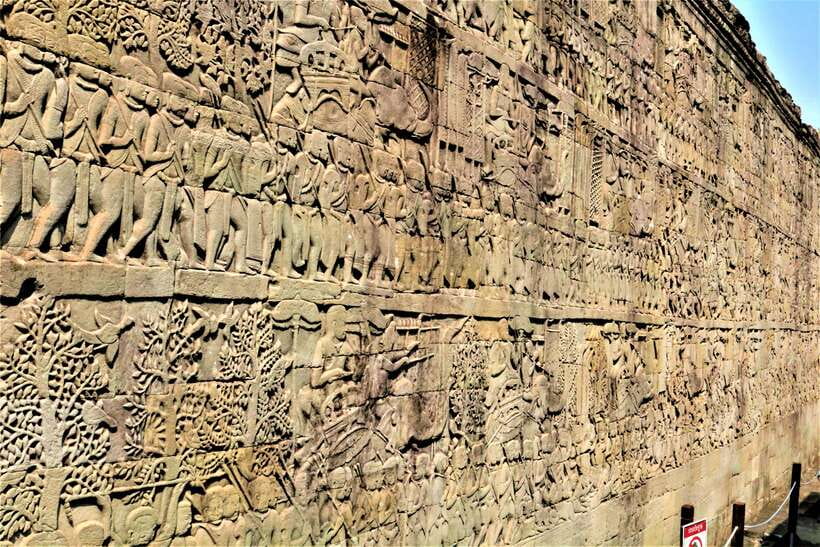
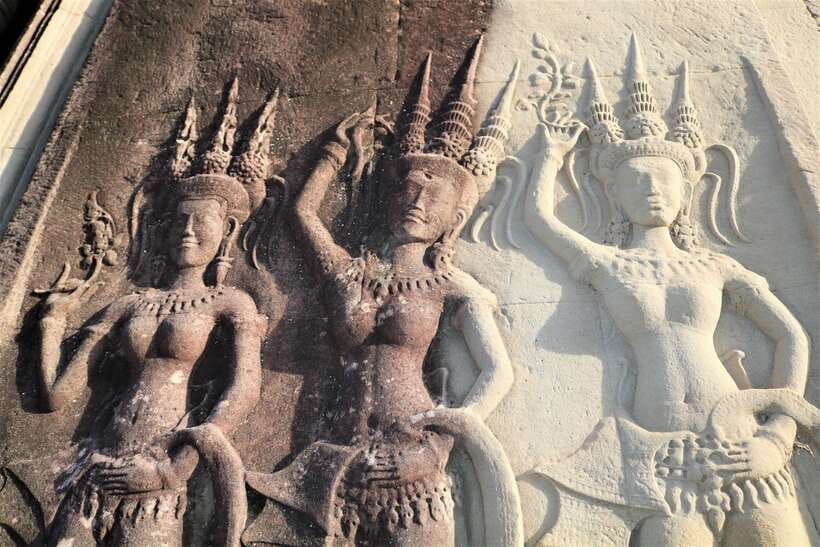
Bring a torch or use your phone light as you enter from the eastern side. The great temple is not simply a postcard view from across the water. In the dark, you move through cloistered corridors and past the long bas-relief carvings, then make your way toward a sunrise viewing area.
The sunrise itself is weather-dependent. On a clear morning, the temple towers take shape as the sky changes color behind them. On a cloudy morning, the light may be softer and less dramatic, but Angkor Wat still makes a powerful first stop.
Do not assume that arriving at the advertised start time guarantees a front-row view. One person found that the area was already crowded and that an early arrival was needed for the best position. That is useful advice: arrive with enough time to walk in, get oriented, and settle before the horizon brightens.
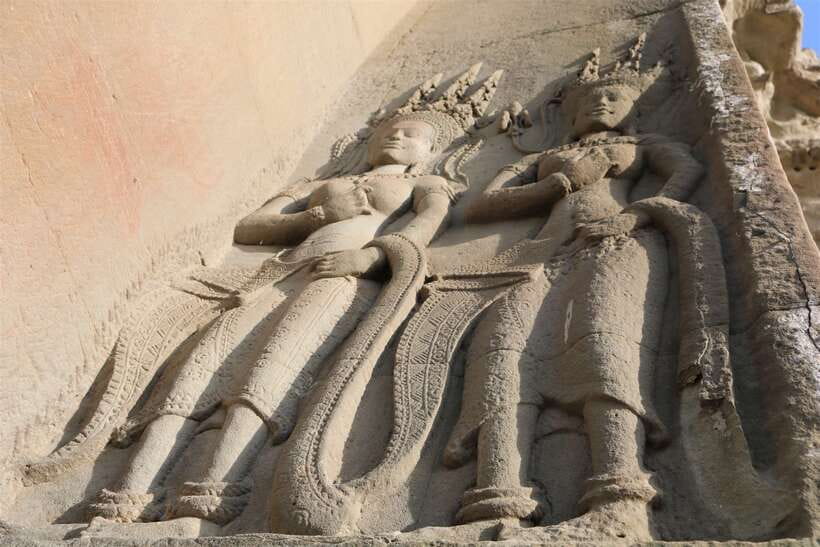
After sunrise, your guide takes you inside Angkor Wat. This is where the tour earns its keep. The carvings and galleries are easier to understand when someone points out what you are seeing, rather than leaving you to wander from one stone wall to the next.
The bas-reliefs cover long stretches of the temple and reward slow attention. You will not have unlimited time for every photograph, so listen to the guide’s timing. One Spanish-speaking participant found that stopping too long for pictures made it harder to see all the temples. The guide still helped with excellent photos, but the lesson is clear: take a few good pictures, then keep moving.
More sunrise tours in Siem Reap:
- Angkor Wat Sunrise or Sunset Tour with Guide from Siem Reap
★ 5.0 · 12,109 reviews - Siem Reap: Angkor Wat: Small-Group Sunrise or Sunset Tour
★ 5.0 · 9,444 reviews - Siem Reap: Angkor Wat 2-Day Tour with Sunrise and Sunset
★ 4.9 · 4,429 reviews
Breakfast at Srah Srang gives you a useful pause
The morning break is at Srah Srang, where you have about an hour for breakfast and a rest. Meals are not included, so bring cash or order locally. If your hotel supplies breakfast, ask for a packed meal before leaving.
This stop is not just a meal break. It gives you time to cool down, use facilities, and recover before more walking. That matters because Angkor’s temples involve uneven stone, open courtyards, stairs, and long stretches without shade.
The tour includes mineral water and a cool towel. That may sound minor when you are booking, but it becomes valuable once the heat builds. One full-day participant noted that the driver greeted the group with cold face cloths and ice-cold water whenever they returned to the van. You should still carry sunscreen, a sun hat, and insect repellent.
Angkor Thom and the Southern Gate explain Khmer power
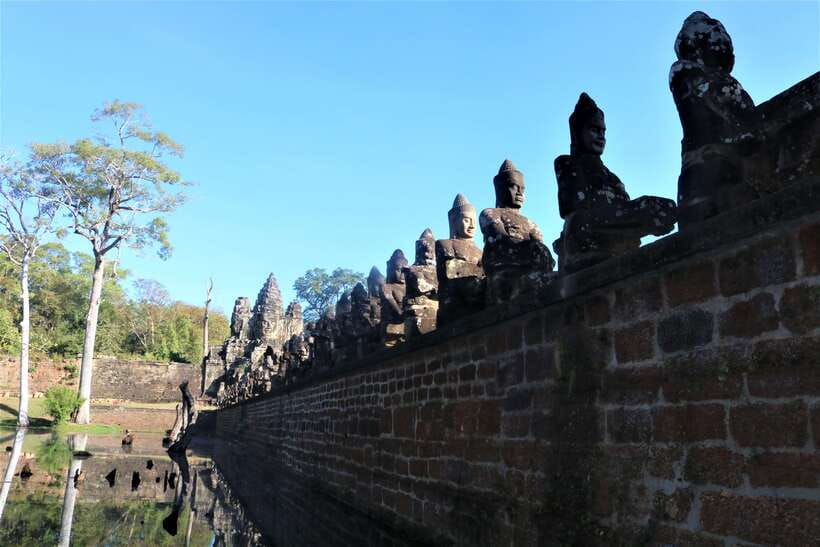
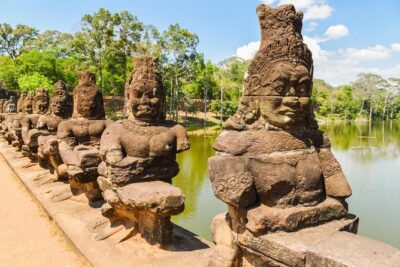
The next major area is Angkor Thom, the fortified city that followed the great temple visit. You approach through the Southern Gate, flanked by 54 stone figures on each side. Gods line one side and demons the other, creating a striking entrance even before you reach the central temples.
This is a good place to pay attention to your guide. The gate is not only a grand photo stop. The paired figures and the wide approach reflect religious ideas and the scale of the Khmer Empire. With a guide, the stone figures become part of a larger story rather than a row of weathered statues.
The tour continues to the Bayon, one of Angkor’s most memorable buildings. Its central towers carry more than 200 enormous carved faces. These faces appear from different angles as you walk around the temple, so do not rush through the first courtyard. Look up, then step back and let the towers line up in front of you.
Bayon can feel confusing without help because the structure has layers of galleries, narrow passages, and changing viewpoints. A strong guide can show you the main details and explain the architecture without burying you in dates. Guides on this experience have been praised for answering questions about Cambodian culture, language, politics, and daily life as well as temple design.
Angkor Thom also includes the Terrace of the Leper King and the Terrace of Elephants. These are shorter visits, but they add a sense of how the city was used and displayed. The Terrace of Elephants is especially effective when your guide explains its role within the wider royal center.
Ta Nei offers a quieter stone temple
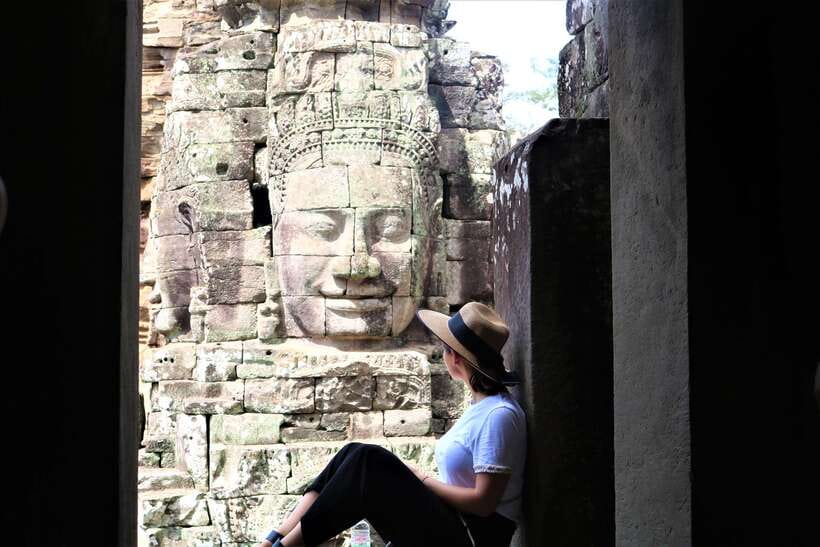
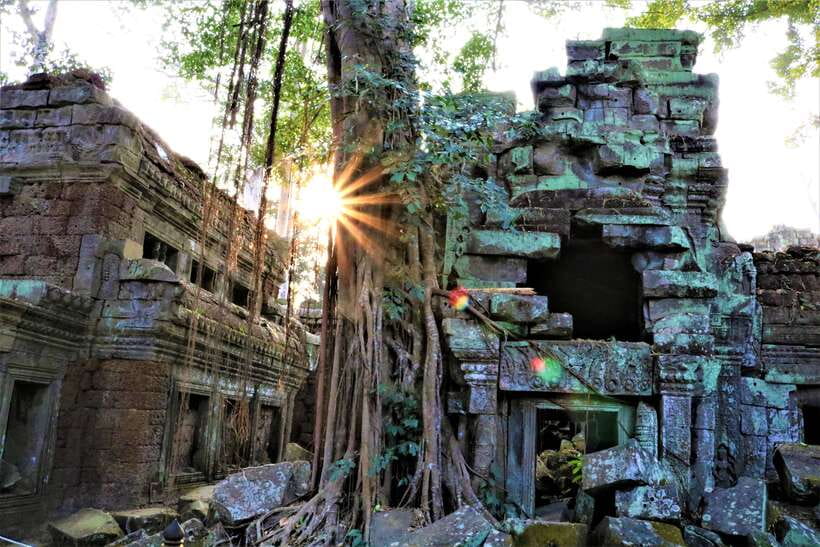
Ta Nei is a late 12th-century temple within Angkor and one of the less familiar names on this route. It does not carry the same instant fame as Angkor Wat or Ta Prohm, which is part of its appeal.
The temple gives you a chance to see stonework in a more subdued setting. You can concentrate on the structure, the carved details, and the way the forest has pressed close to the ruins. Since the tour also includes the major headline temples, Ta Nei provides a useful change of mood.
Do not expect a polished attraction with every route clearly marked. The appeal is the sense of a shrine that has remained quieter and more remote than the biggest stops. Your guide’s explanation is important here because the site may not communicate its purpose as quickly as Bayon or Angkor Wat.
More Angkor Wat tours in Siem Reap:
- Siem Reap: Full-Day Angkor Wat Guided Tour with Sunset
★ 4.9 · 3,803 reviews - Angkor Wat Sunrise tour with Small – Group and Guide tours
★ 5.0 · 3,655 reviews - Angkor Wat Highlights and Sunrise Guided Tour from Siem Reap
★ 5.0 · 3,213 reviews - Angkor Wat Sunset Small Group Tour with Lunch Included
★ 5.0 · 3,059 reviews
Ta Prohm is the atmospheric favorite
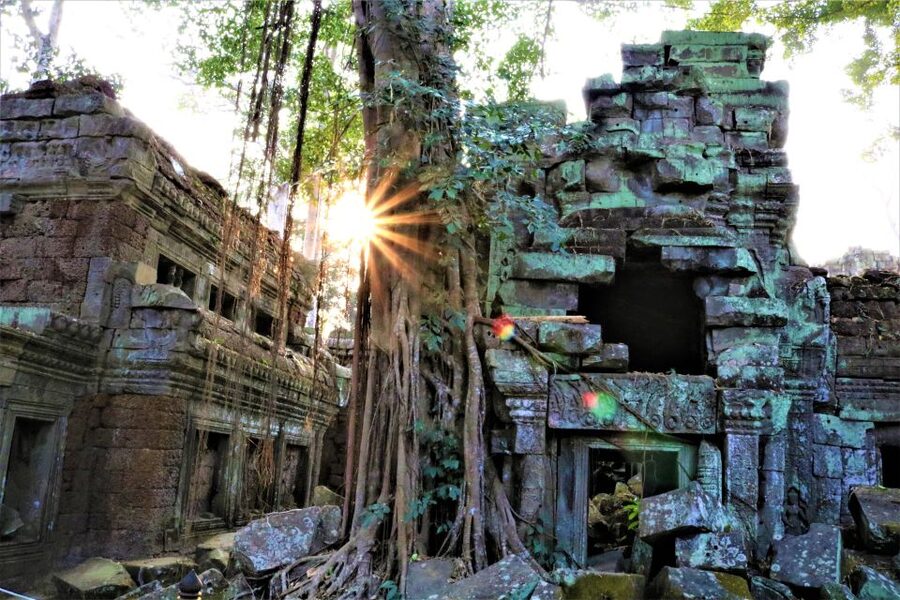
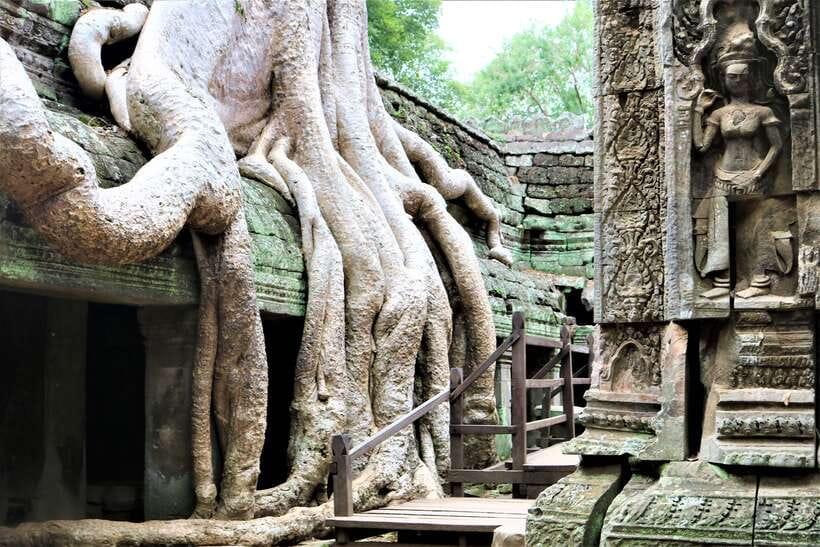
Ta Prohm is the temple many people recognize from photographs and the film Tomb Raider. Its fame comes from the trees growing through and around the stonework, but the temple is more than a dramatic backdrop.
The site was once home to 2,740 monks, which gives the ruins a human scale. You are looking at a former religious community, not just a collection of jungle-covered walls. The roots and collapsed galleries create memorable views, but they also make some areas crowded and difficult to move through.
This is where you should keep your camera ready without letting photography take over. The intertwined roots, doorways, and broken galleries make strong pictures, yet the most interesting moments often come from noticing how the trees have become part of the structure.
The tour allows a guided visit, a photo stop, and time to walk. Comfortable shoes are essential. Short skirts are not allowed, and clothing should cover your shoulders and knees at all sacred places. Loose, light clothing that meets those rules is the sensible choice.
The tour’s hot-weather planning helps here. Air-conditioned transport gives you a break between sites, while water and cool towels make the return to the van more comfortable. One guide was praised for spotting when the group needed shade and adjusting the rhythm of the day. That sort of judgment matters more than a memorized list of temple dates.
You may also encounter monkeys around the temple areas. They are part of the setting, not a promised feature, so keep your belongings secure and do not treat them as a planned attraction.
The guides make the difference
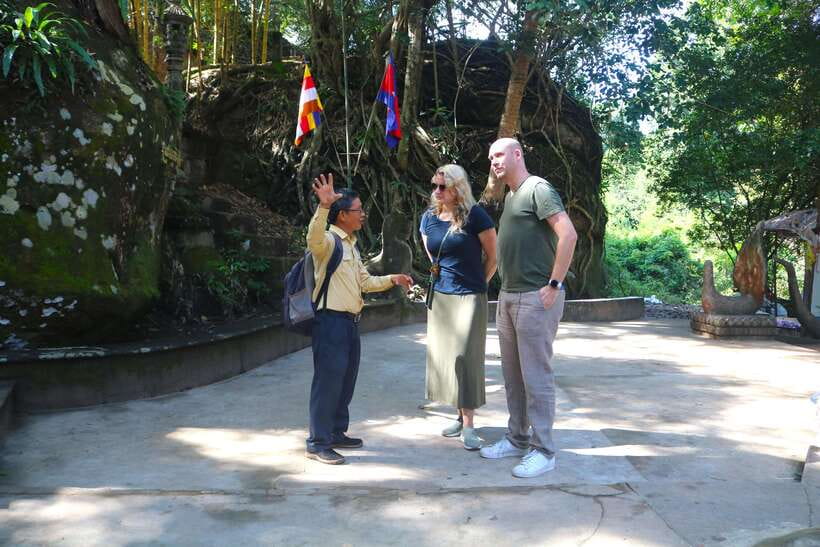
The temples are extraordinary on their own, but the guide determines how much you understand. This tour offers live guiding in English or Spanish, and the strongest guide reports point to clear explanations, good English, cultural context, and a friendly manner.
Kiss was praised for bringing the history to life, helping with photos, and keeping the group cheerful through the early morning. Sok was valued for answering broad questions about Cambodia, from language to politics. Mr Bun was singled out for explaining why buildings were designed in certain ways and for noticing what interested different people in the group. Chan Dara was described as helpful and well informed during the full day.
You are not guaranteed a particular guide, so treat those names as examples of the service style you may receive, not as a promise. The group format also matters. A small group of about half a dozen was described as comfortable, with enough guidance and enough free time to look around independently.
A shared tour is the better value if you enjoy company and do not need to set the pace. A private option gives you more control, but the supplied details do not state the private-tour price. If you care strongly about spending extra time at one temple, ask about timing before booking.
What the $26 price really covers
At $26 per person, the tour is priced well for an eight-hour day with hotel pickup, an air-conditioned vehicle, a licensed guide, water, and a cool towel. The price is not the whole cost, though.
Add the $37 one-day Angkor Pass per person. Visa cards are accepted for that charge, and it is payable on the day. Meals are separate, including the breakfast stop at Srah Srang.
Once you add the pass and food, this becomes a more substantial day budget, but the temple ticket is a required cost for visiting Angkor rather than an unnecessary tour add-on. The tour remains good value if you want transport and interpretation without arranging several separate rides.
The eight-hour length also gives you better value than a short sunrise-only visit. You see the main temple, the royal city, Bayon, Ta Nei, and Ta Prohm in one organized day. The tradeoff is that the schedule is full, and you will need to manage your photo stops.
Who should book this Angkor temple day
I would choose this tour if you have one full day for Angkor and want the major sights explained by a local guide. It suits first-time visitors who want context, photographers who value sunrise and help with pictures, and anyone who prefers not to negotiate transport between widely separated temple areas.
It also works well for people who want a shared group with a manageable pace. The built-in breaks, van transfers, water, and cool towels are useful in the heat.
I would be more cautious if you dislike pre-dawn starts, need a slow walking pace, or want long stretches alone at each temple. The tour is not suitable for wheelchair users, and the combination of dark corridors, uneven stone, walking, and heat requires reasonable mobility.
Wear comfortable walking shoes, sunscreen, a hat, insect repellent, and clothing that covers your shoulders and knees. Carry cash for breakfast and other personal costs. Most important, arrive ready to move. This is a full day, not a casual morning stroll.
FAQ
What is included in the $26 tour price?
The price includes a licensed English-speaking guide, an air-conditioned vehicle, hotel pickup and drop-off, the listed sightseeing, mineral water, and a cool towel. Meals and the Angkor Pass are not included.
How much is the Angkor Pass?
The one-day Angkor Pass costs $37 per person and is payable on the day of the activity. Visa cards are accepted.
Does the tour include breakfast?
No. There is a breakfast stop at Srah Srang, but breakfast is not included. You can request a breakfast pack from your hotel or order at a local restaurant after sunrise.
What languages are available?
The tour offers live guiding in English and Spanish.
What should I wear to the temples?
Wear comfortable walking shoes and clothing that covers your shoulders and knees. Short skirts are not allowed at the sacred sites.
Is this tour suitable for wheelchair users?
No. The activity is not suitable for wheelchair users.
Should you book it?
Book this tour if you want the essential Angkor sights in one carefully arranged day, with sunrise at Angkor Wat as the centerpiece. The strongest reasons are the useful route, the mix of major and quieter temples, the guide support, and the practical transport details.
Skip it if you want a late start or a very flexible private schedule. For most first-time visitors to Siem Reap, though, the $26 tour is a sensible starting point, as long as you add the $37 temple pass, prepare for the early alarm, and accept that the best sunrise views require getting there early.
Just added around Siem Reap
- Ultimate Sunrise to Angkor Wat, Angkor Thom and Bayon Temple★ 5.0 · 3 reviews
- Trekking Tour at Phnom Kulen National Park from Siem Reap★ 5.0 · 3 reviews
- Twilight Tastes of Siem Reap Include Dinner★ 5.0 · 13 reviews
- Full-Day Private Tour of Angkor Wat with Pick Up★ 5.0 · 12 reviews
- Siem Reap City Tour with War Museum and Killing Field★ 5.0 · 27 reviews
- Private Day Trip to Angkor Temples with Expert Guide★ 5.0 · 4 reviews
- Waterfall & River of 1000 Siva Linga- Kulen Mountain Private Tour★ 5.0 · 3 reviews
- Private Two Days Siem Reap Temples Discovery Guided Tour★ 5.0 · 7 reviews
Angkor Wat Sunrise Tours, compared.
Angkor Wat Sunrise or Sunset Tour with Guide from Siem Reap
Read our review →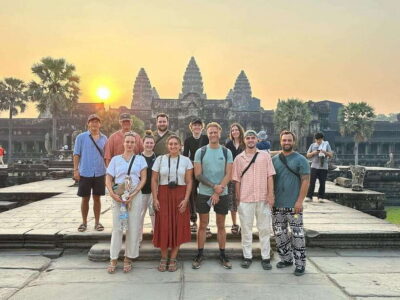
Angkor Wat: Small-Group Sunrise or Sunset Tour
Read our review →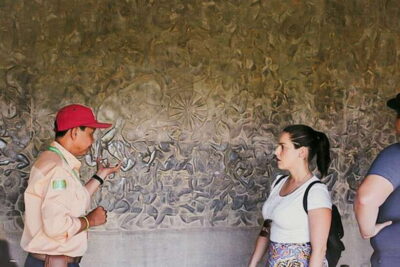
Angkor Wat 2-Day Tour with Sunrise and Sunset
Read our review →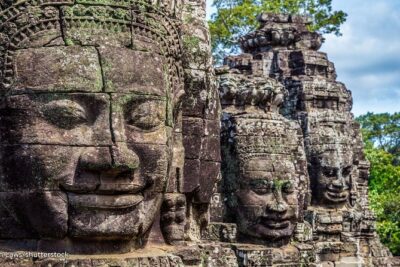
Angkor Wat Sunrise tour with Small – Group and Guide tours
Read our review →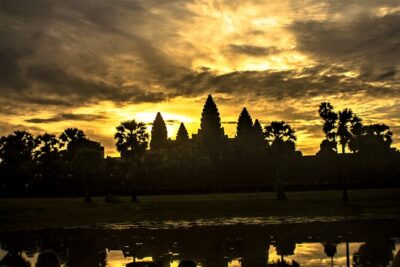
Angkor Wat Highlights and Sunrise Guided Tour from Siem Reap
Read our review →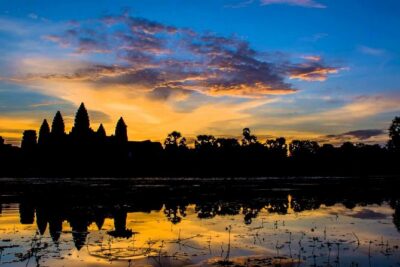
Full-Day Angkor Wat Sunrise Private Tour with Guide from Siem Reap
Read our review →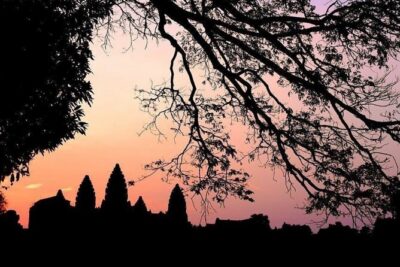
Angkor Wat Sunrise & 3 Main Temples with Breakfast – Small Group
Read our review →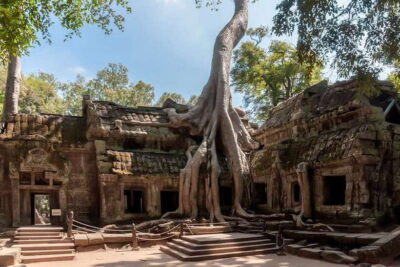
Angkor Wat Sunrise and Full-Day Sightseeing Tour
Read our review →Browse the lists this tour appears in