
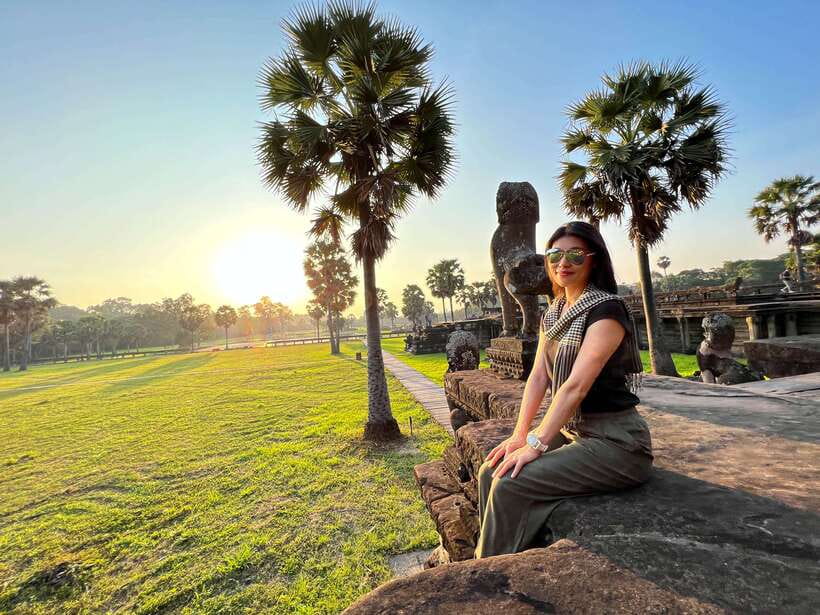
Reviewed · ANGKOR WAT TOURS
Siem Reap: Angkor Wat Small-Group Day Tour and Sunset
Angkor Wat is only one part of this full day. You also enter the old royal city of Angkor Thom, meet the many stone faces of Bayon, walk beneath the roots at Ta Prohm, and finish above the trees at Phnom Bakheng for sunset. I like the way the route mixes famous monuments with a visit to Preah Dak village, where palm sugar and palm cakes are made.
I also like the practical care built into the day. Guides such as Mony, Sam, David, Saroun, Makara, and Veasna have been singled out for clear explanations, humor, and help with photographs. The driver returns with cold water and chilled towels, a small luxury that matters in Cambodia’s heat.
The trade-off is simple: this is a long, active day. You will walk, climb, and spend hours outside, sometimes in temperatures around 37 C. The final climb at Bakheng can feel tiring, and children under 10 and people over 70 are not considered suitable for this small-group tour.
Key points at a glance
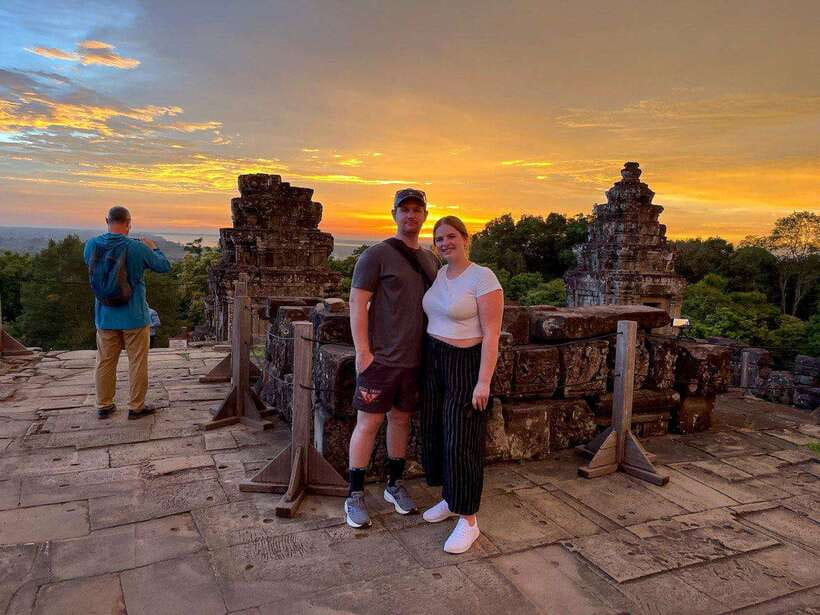
- Angkor Thom comes early: See Bayon, Baphuon, the Terraces of Elephants and Leper King, Phimeanakas, and the former royal area.
- Ta Prohm keeps its jungle character: Huge tree roots press over the old stones, creating one of Angkor’s most memorable settings.
- Angkor Wat gets a full visit: Learn about its Vishnu dedication, carved walls, moat, towers, and Khmer design.
- Preah Dak adds local life: Watch palm sugar and palm cake being made in an authentic village setting.
- Refreshments are unusually useful: Air-conditioned transport, drinking water, and cold towels help take the edge off the heat.
- The price is low, but the pass costs extra: The tour is $28 per person, with a separate Angkor temple pass costing $37.
A full day that puts the temples in context
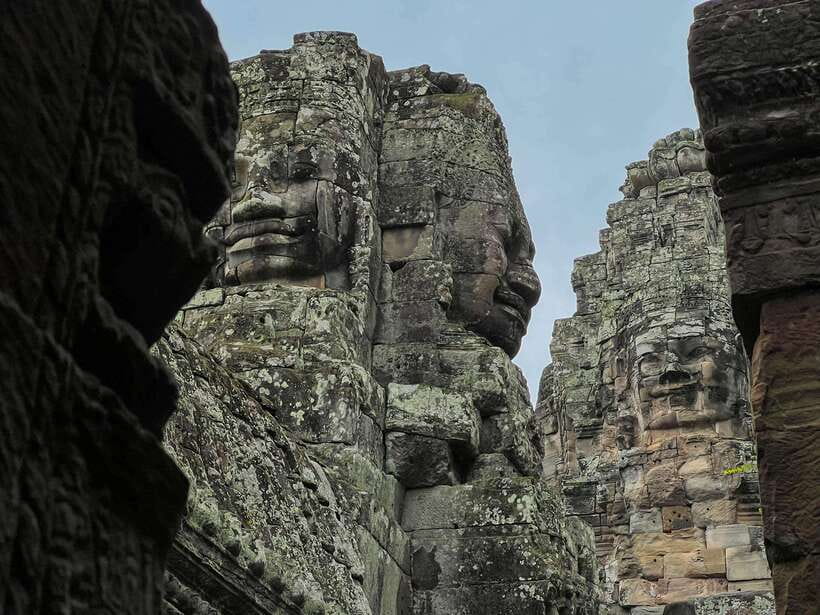
This tour works best if you want to see the main Angkor sights in one organized sweep. A guide gives you the story behind the carvings and buildings, while a driver handles the roads between the widely spread temples.
Pickup takes place at your hotel between 8:00 and 8:30 a.m. You should wait in the lobby about 10 minutes early. The group option is limited to 14 people, though a private option is also available. Several people have ended up in very small groups, including one group of only five, which makes it easier to hear the guide and move at your own pace.
The price is $28 per person, including the guide, driver, air-conditioned minivan or minibus, hotel pickup and drop-off, lunch, water, and towels. You must add the Angkor pass, listed at $37 per person. Even with that extra cost, this is a strong value if you want transportation, explanations, and lunch rather than arranging each part yourself.
More Angkor Wat tours in Siem Reap:
- Angkor Wat Sunrise or Sunset Tour with Guide from Siem Reap
★ 5.0 · 12,109 reviews - Siem Reap: Angkor Wat: Small-Group Sunrise or Sunset Tour
★ 5.0 · 9,444 reviews - Siem Reap: Angkor Wat 2-Day Tour with Sunrise and Sunset
★ 4.9 · 4,429 reviews
Entering Angkor Thom through the South Gate
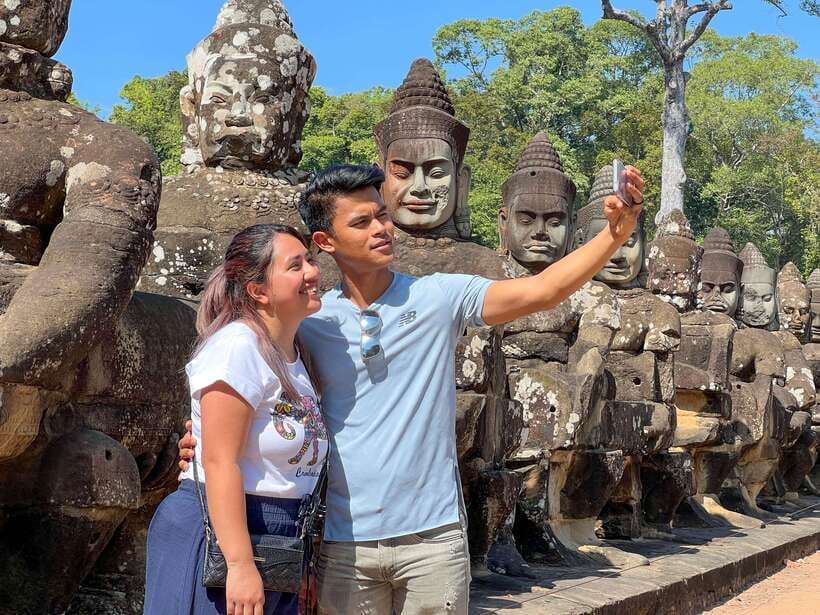
The first major stop is Angkor Thom, the fortified Great Royal City built in the 12th century by King Jayavarman VII. The South Gate gives you an immediate sense of the scale and drama of the site.
At the entrance, rows of large stone figures line the approach. The gate includes an imposing image of Avalokiteshvara, a Buddhist figure associated with compassion. Its appearance in Tomb Raider gives it a bit of film fame, but the gate is more interesting when you look beyond the movie connection and consider it as a formal entrance to a royal city.
Your guide can help you read the religious symbols and explain how the city fitted into the wider Khmer kingdom. This is one reason a guided visit is useful. Without background, you might simply see a gate and a long causeway. With a good explanation, the entrance becomes part of a carefully planned sacred and political center.
Bayon and the faces of Angkor Thom
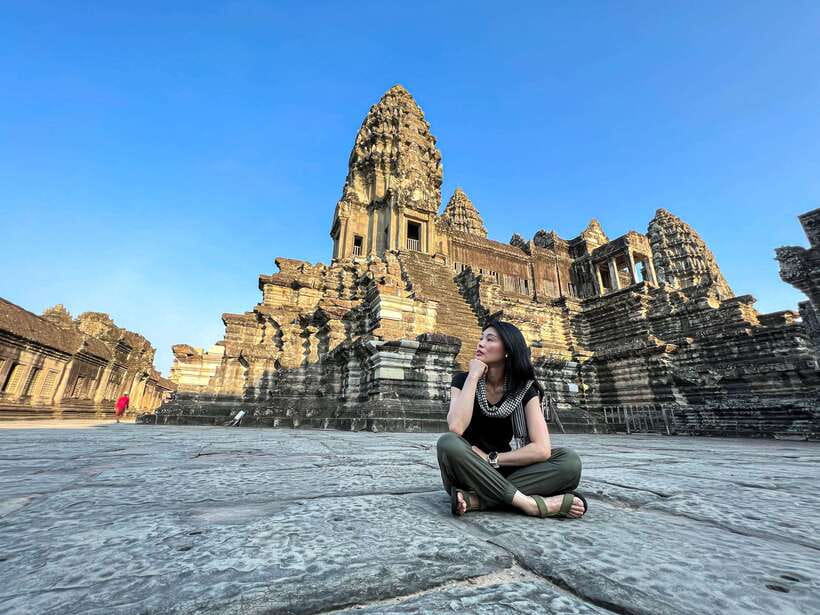
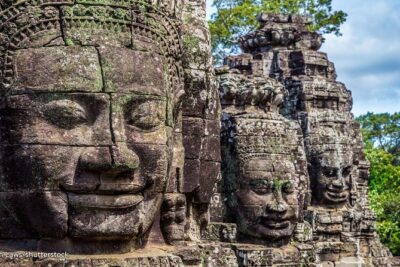
Bayon is the emotional center of the Angkor Thom visit. Its towers carry huge carved faces, often described as serene, watchful, or compassionate. The design is Buddhist in character and very different from the Hindu focus of Angkor Wat.
The temple is not always easy to understand at first glance. It has layers of galleries, towers, narrow passages, and carved surfaces. Stay close to your guide here, since the strongest part of the visit is learning what the faces and reliefs represent rather than simply taking a picture at the first tower.
The guides on this tour are often praised for their historical explanations and for making the carvings easier to follow. Mony, Sam, David, Saroun, and others have been noted for combining solid information with humor. That tone helps during a long day, especially when the heat begins to drain your attention.
Baphuon, the terraces, and the royal quarter
The route through Angkor Thom continues to Baphuon, a large Hindu temple often described as the biggest Hindu temple within the city. Its raised form gives you a different view of the complex and requires more walking and steps.
You also visit the Terrace of the Elephants and the Terrace of the Leper King. These were ceremonial spaces linked to the royal center. The elephant carvings are the obvious attraction, but the terraces matter because they show how Angkor Thom functioned as more than a group of isolated shrines.
Phimeanakas and the former Royal Palace area add another layer to the visit. Not every structure survives in the same dramatic condition as Bayon or Ta Prohm, so this section may feel less immediately spectacular. I still find it useful because it fills in the civic side of Angkor Thom. You are not just seeing temples. You are tracing the remains of a city built for rulers, court life, ceremony, and worship.
More evening and after-dark trips in Siem Reap:
- Sunset tour of Kampong Phluk stilts home village on the Tonle Sap
★ 5.0 · 4,865 reviews - Siem Reap: Full-Day Angkor Wat Guided Tour with Sunset
★ 4.9 · 3,803 reviews - Angkor Wat Sunset Small Group Tour with Lunch Included
★ 5.0 · 3,059 reviews - Angkor 2-Day Sunset & Sunrise Small-Group Tour
★ 5.0 · 2,567 reviews
Ta Prohm and the power of the jungle
Ta Prohm is the stop many people picture before arriving in Cambodia. The temple was left largely in its original state, with trees and enormous roots pressing across the stone buildings. It was also used as a setting for Tomb Raider, which brought the site worldwide attention.
The film connection is fun, but the real appeal is the tension between architecture and nature. Roots wrap around walls, narrow corridors open into courtyards, and broken stones make the temple feel less restored than Angkor Wat.
This is another place where comfortable shoes matter. The ground can be uneven, and the day already includes plenty of walking. Wear shoes you can use confidently on stone paths, and keep your camera ready, since guides including Makara and Veasna have been praised for finding good photo spots.
Ta Prohm can also be one of the more crowded stops. A guide who manages the timing well can help you avoid the worst periods, though no schedule can make a famous temple empty. The tour’s route is arranged to spread out the major stops rather than leaving every highlight to the hottest part of the afternoon.
Lunch, palm sugar, and Preah Dak village
Lunch is served at a local restaurant and includes a vegetarian option if you request it in advance. The meal is a practical break rather than a long culinary event. After a morning of temples, sitting down, eating, and drinking water is exactly what your body needs.
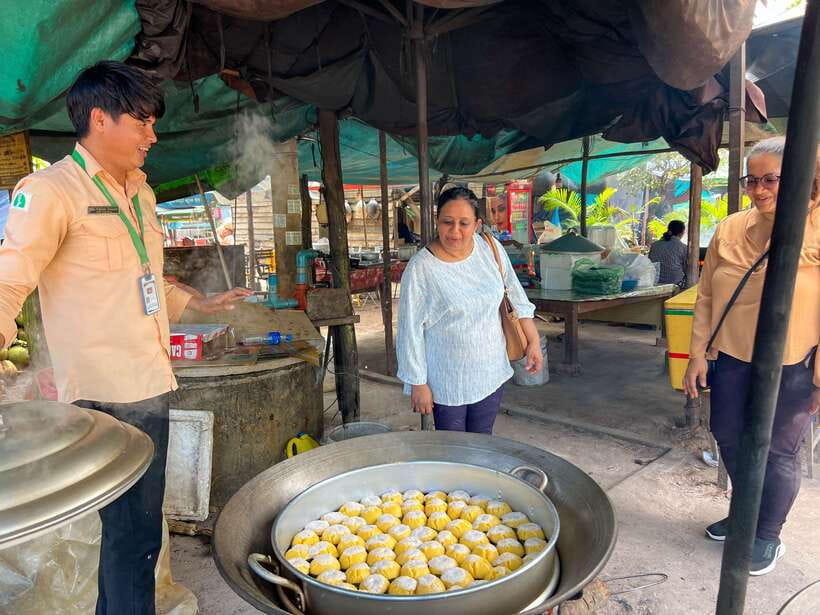
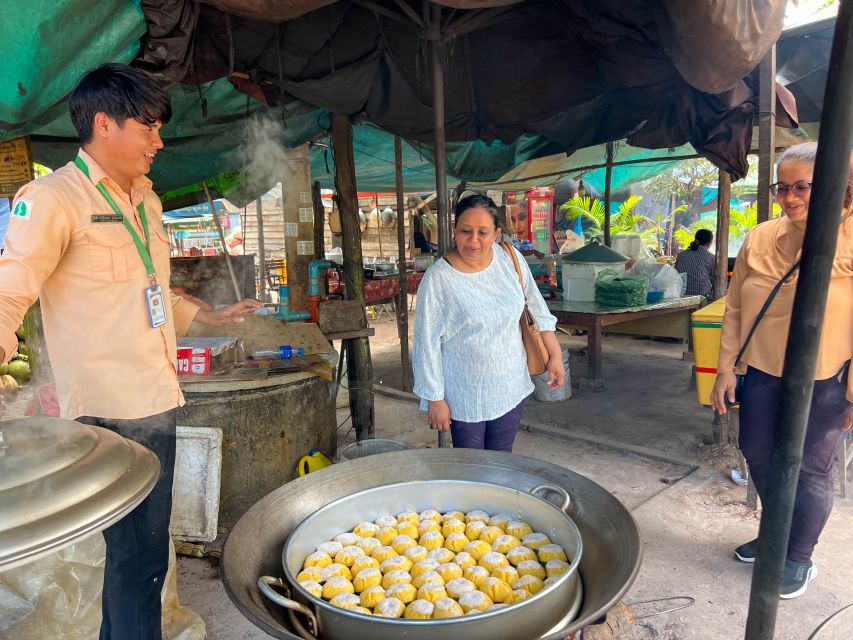
The next stop gives the day a welcome change of pace. At Preah Dak village, you can see how local people make palm cake and palm sugar. This is a more grounded experience than another monument, because it connects the region’s food traditions with everyday work.
I like this part of the route because it keeps the day from becoming a procession of carved stones. It also gives you something specific to look for later in Cambodia’s markets. The visit is not presented as a large performance or elaborate workshop. Expect a simple look at local production.
Angkor Wat in the afternoon
Angkor Wat is the largest and most famous stop, and the afternoon visit gives you time to take in its scale. Built by King Suryavarman II and dedicated to the Hindu god Vishnu, it was designed as both a temple and a statement of royal power.
The approach across the moat is part of the experience. The water, long galleries, central towers, and broad stone causeways create a sense of order that differs from the compressed, root-covered rooms of Ta Prohm.
Inside, the walls carry extensive carvings and bas-reliefs. Your guide can explain scenes, deities, and details that are easy to miss when you are focused on the overall view. The longest bas-relief in the world is one of the site’s major artistic features, but you need patience to appreciate it. Do not rush past the galleries simply to reach the central towers.
The five towers are familiar from Cambodia’s national flag, yet the real building is more powerful than the symbol. From higher points, you can see how the temple relates to the surrounding forest and moat. The climb and stone surfaces can be tiring, so take your time and keep water with you.
The afternoon timing is useful for people who do not want to begin before dawn. You will not get a sunrise visit on this schedule, but you do get a full day that begins at a manageable hour and ends with sunset.
Phnom Bakheng and the final climb
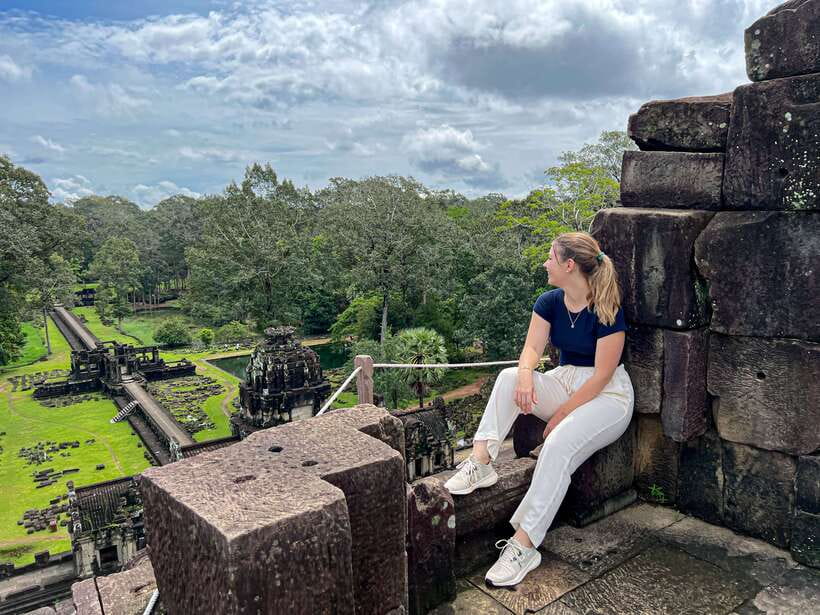
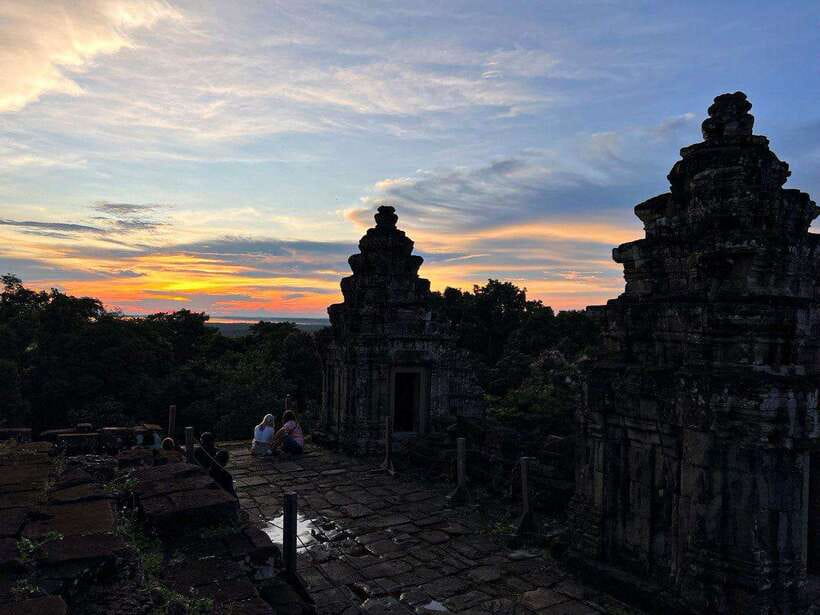
The last major event is the climb up Bakheng mountain, usually called Phnom Bakheng, to watch the sunset. This gives the day a strong finish, but it also comes after hours on your feet.
The climb is not the place to spend your final energy racing ahead. Bring water, wear reliable shoes, and expect the approach to feel more demanding because of the heat and accumulated walking. The view from above reaches over the dense forest, giving you a broad closing picture after a day spent among enclosed temple galleries.
Sunset conditions are never guaranteed. Clouds, haze, and the number of people at the site can affect the view. Still, the setting gives you a chance to pause and look back over the scale of the Angkor area before returning to Siem Reap.
Guides, drivers, and the small-group difference
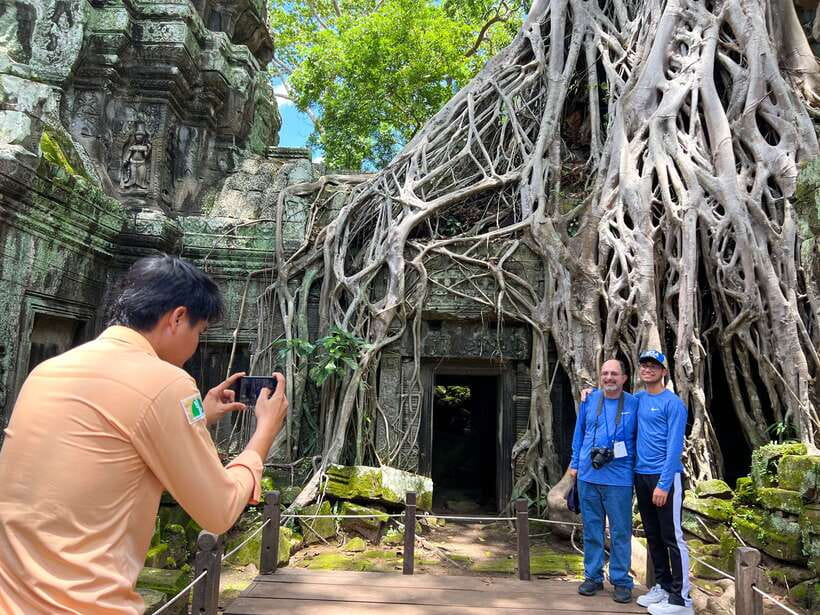
The strongest part of this experience is the human service. Guides named in the feedback include Mony, Sam, David, Saroun, Makara, Veasna, Sean, Raman, Sian, and others. Their praised qualities are consistent: clear English, temple knowledge, patience, a friendly manner, and help with photographs.
Do not expect every guide to have the same personality. That is normal with a rotating guiding team. What you can reasonably expect is an English-speaking guide assigned to explain the sites and keep the day moving.
The drivers also contribute more than simple transport. Names such as Mr. Kim, Mr. Theara, Mr. E, Sophat, Chann, and Tha appear in the tour’s feedback, with particular attention given to safe driving and thoughtful service. Returning to an air-conditioned vehicle with cold water and a chilled towel after each temple visit is a genuine advantage in Cambodia’s heat.
A group capped at 14 is small enough for questions, though a private tour is better if you want complete control over timing. The small-group format offers a useful middle ground between the cost of a private guide and the impersonal feel of a large coach.
What to bring and what to wear
Treat this as an outdoor walking day, not a gentle sightseeing ride. Pack sunglasses, a sun hat, sunscreen, insect repellent, and an umbrella. Bring a camera if you want photographs of the faces at Bayon, the roots at Ta Prohm, and the sunset view.
Your knees and shoulders must be covered at the temples. Short skirts and very short clothing are not allowed, so choose light, breathable clothes that still meet the dress rules.
Comfortable shoes are essential. One person specifically advised wearing very comfortable shoes, and that is sound guidance. You will walk over stone, climb at several temples, and tackle the final rise at Bakheng.
Children under 10 are not suitable for the small-group option, and the tour is not considered suitable for people over 70. The 10-hour duration, heat, steps, and distance between sites explain those limits.
Should you book this Angkor tour?
I would choose this tour if you have one full day in Siem Reap and want the major temples explained rather than simply photographed. The $28 tour price is attractive, though you must budget another $37 for the Angkor pass.
Book it if you value an English-speaking guide, cold towels, air-conditioned transport, lunch, and a route that includes both famous temples and Preah Dak village. It is especially suitable for first-time visitors who want help understanding the carvings and the larger story of Angkor.
Choose a private option if you dislike fixed schedules or want long photo stops. Choose another plan if you need a slow pace, dislike heat, or cannot manage uneven ground and climbing. For most active adults, this is a well-priced and thoughtfully arranged introduction to Angkor, with enough local life to keep the day from becoming a temple checklist.
FAQ
How long does the tour last?
The tour lasts about 10 hours. Hotel pickup is scheduled between 8:00 and 8:30 a.m., followed by visits to the temples, Preah Dak village, and Phnom Bakheng before returning to your hotel.
Is the Angkor temple pass included?
No. The Angkor pass costs US$37 per person and must be purchased separately. You can buy the pass online before the tour.
What is included in the tour price?
The $28 price includes an English-speaking guide, driver, air-conditioned minivan or minibus, hotel pickup and drop-off, lunch, drinking water, and towels.
Is lunch suitable for vegetarians?
Yes. A vegetarian option is available, but you should tell the operator in advance.
How large is the small group?
The small-group option is limited to 14 participants. Private tours are also available.
What should I wear at the temples?
Your knees and shoulders must be covered. Short skirts and very short clothing are not allowed. Comfortable shoes are strongly recommended because the day involves substantial walking and some climbing.
Is the tour suitable for children and older adults?
Children under 10 are not considered suitable for the small-group option. The tour is also listed as unsuitable for people over 70 because of the long day, heat, walking, and climbs.
Just added around Siem Reap
- Ultimate Sunrise to Angkor Wat, Angkor Thom and Bayon Temple★ 5.0 · 3 reviews
- Full-Day Private Tour of Angkor Wat with Pick Up★ 5.0 · 12 reviews
- Trekking Tour at Phnom Kulen National Park from Siem Reap★ 5.0 · 3 reviews
- Twilight Tastes of Siem Reap Include Dinner★ 5.0 · 13 reviews
- Siem Reap City Tour with War Museum and Killing Field★ 5.0 · 27 reviews
- Private Day Trip to Angkor Temples with Expert Guide★ 5.0 · 4 reviews
- Waterfall & River of 1000 Siva Linga- Kulen Mountain Private Tour★ 5.0 · 3 reviews
- Private Two Days Siem Reap Temples Discovery Guided Tour★ 5.0 · 7 reviews
Angkor Wat Tours, compared.
Angkor Wat Sunrise or Sunset Tour with Guide from Siem Reap
Read our review →
Angkor Wat: Small-Group Sunrise or Sunset Tour
Read our review →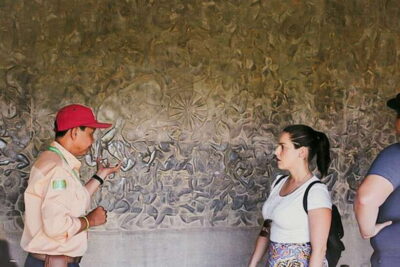
Angkor Wat 2-Day Tour with Sunrise and Sunset
Read our review →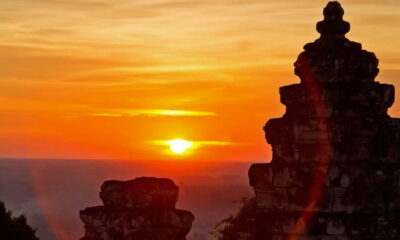
Angkor Wat Sunrise tour with Small – Group and Guide tours
Read our review →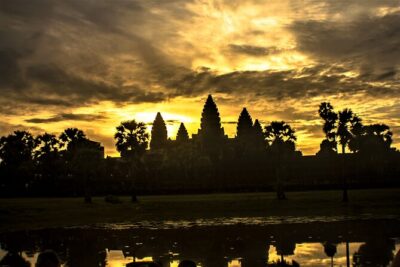
Angkor Wat Highlights and Sunrise Guided Tour from Siem Reap
Read our review →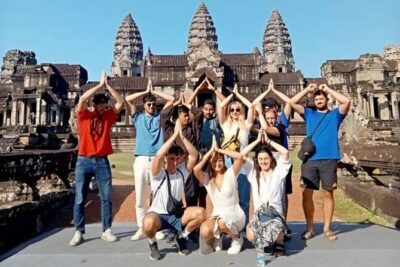
Angkor Wat Sunset Small Group Tour with Lunch Included
Read our review →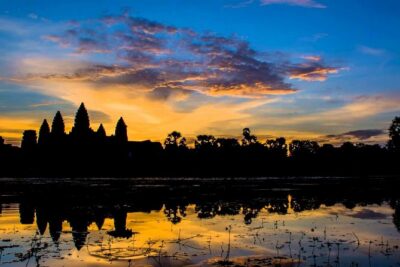
Full-Day Angkor Wat Sunrise Private Tour with Guide from Siem Reap
Read our review →Browse the lists this tour appears in