Reviewed · ANGKOR WAT TOURS
Shared day tour with Spanish-speaking guide at Angkor Temple.
Angkor’s great temples are best understood as a connected story, not a string of pretty stone buildings. This 8-hour tour gives you that story in a sensible order, from the fortified city of Angkor Thom to the forest-framed Ta Prohm and finally the huge centerpiece, Angkor Wat.
I like two things here: the small group of up to nine keeps the day more personal than a big coach tour, and the Spanish-language option makes the carved scenes and royal symbolism easier to follow. A possible drawback is the packed schedule. You visit several major sites in one day, so you will see a lot, but you may want more time at each temple.
Key points to know before booking
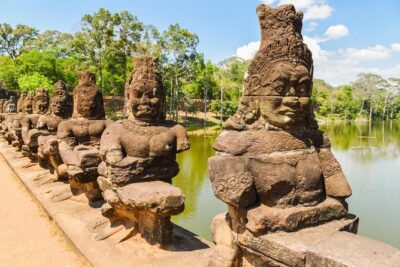
- Angkor Thom comes first: Enter through the South Gate, with its long causeway of gods, demons, and a giant naga.
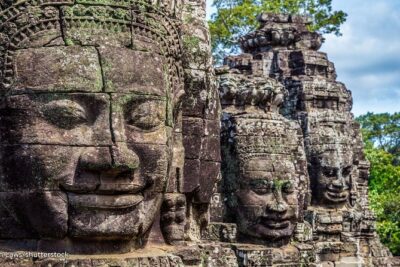
- Bayon is the visual star: Its enormous carved faces are among the most memorable sights in the Angkor complex.
- Ta Prohm changes the mood: Jungle growth and half-untouched ruins give this stop a wilder feel.
- Angkor Wat takes the afternoon: The final temple is vast, finely balanced, and large enough to require a steady pace.
- Spanish is available: Live guiding is offered in Spanish, Portuguese, and English. Guide Sem has been specifically praised for detailed explanations.
- The format is compact: You pay $50 per person for an 8-hour shared tour with a maximum of nine participants.
Why this one-day Angkor route works
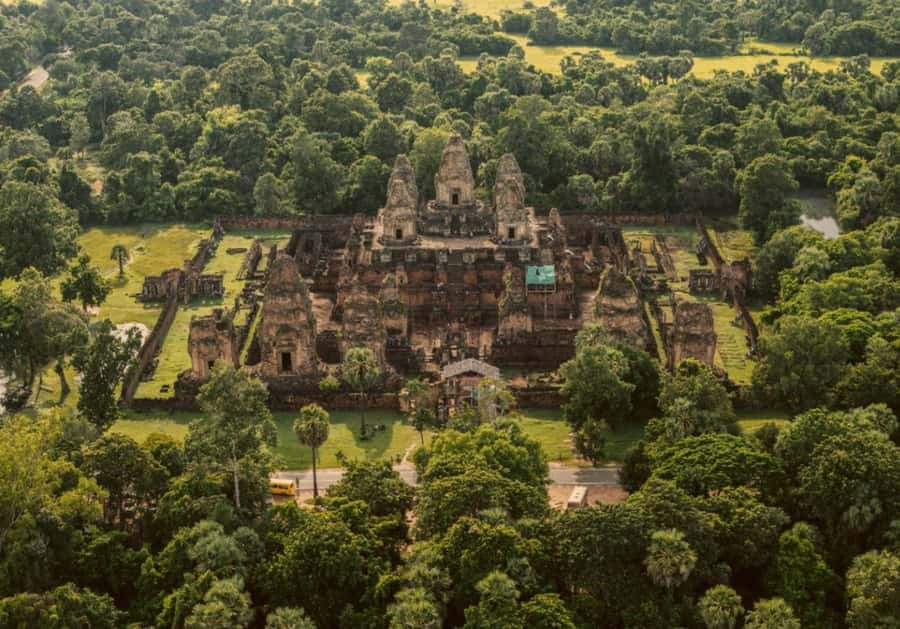
If you have only one full day for Angkor, the route covers the essential sights without scattering your time across lesser-known temples. You move through the old capital of Angkor Thom, see Bayon’s famous faces, walk along two ceremonial terraces, visit Ta Prohm, then finish at Angkor Wat.
That sequence also gives the day a useful rhythm. Angkor Thom introduces the scale of the old city. Bayon brings you close to its carved stone faces. The terraces show how royal display extended beyond the temples themselves. Ta Prohm offers a more tangled and atmospheric setting. Angkor Wat then provides the grand finale.
I appreciate that this is a shared tour rather than a private outing. The price is $50 per person, and the group is limited to nine. That is a fair middle ground if you want a guide but do not need the control or higher cost of a private tour.
The tradeoff is time. Angkor Thom covers 10 square kilometers, while Angkor Wat alone covers 81 hectares. You are not signing up for a slow archaeological study. You are choosing a guided overview of the major monuments, with enough explanation to make the stones meaningful.
More Angkor Wat tours in Siem Reap:
- Angkor Wat Sunrise or Sunset Tour with Guide from Siem Reap
★ 5.0 · 12,109 reviews - Siem Reap: Angkor Wat: Small-Group Sunrise or Sunset Tour
★ 5.0 · 9,444 reviews - Siem Reap: Angkor Wat 2-Day Tour with Sunrise and Sunset
★ 4.9 · 4,429 reviews
Entering Angkor Thom through the South Gate
The morning begins with pickup at your hotel in Siem Reap. The first major stop is Angkor Thom, the fortified ancient capital that covers about 10 square kilometers.
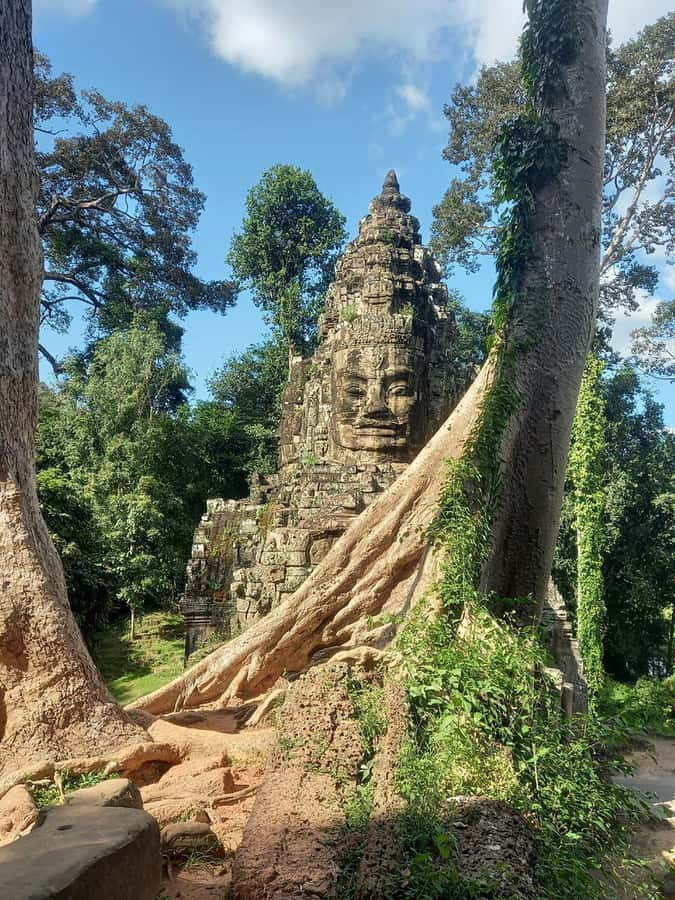
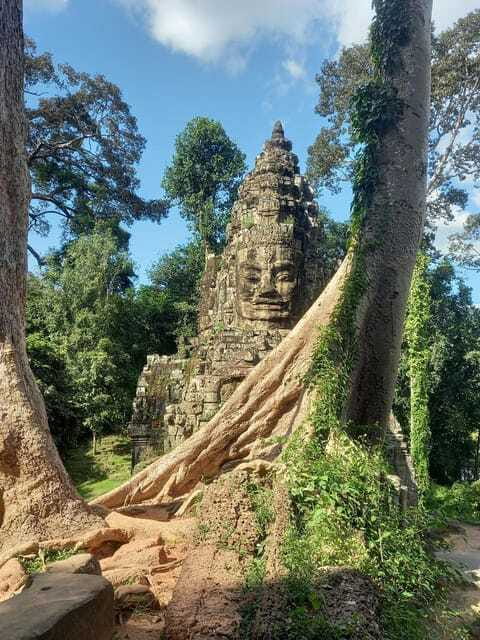
The approach through the South Gate is one of the day’s strongest visual moments. A causeway crosses toward the gate, lined with statues of gods and demons. Each side holds a giant naga, the many-headed serpent that appears often in Southeast Asian religious art.
This entrance gives you more than a photo stop. It introduces the scale and ambition of Angkor Thom before you reach its central temples. The rows of figures create a formal approach, while the fortified gate hints at the city’s importance.
You should pay attention to the contrast between the causeway and the jungle around it. The stone figures are arranged with purpose, but time and weather have softened their details. A guide can help you understand why the gods, demons, and naga belong together in this setting.
Because the group is small, you should be able to hear the guide without the strain that often comes with a large tour. Still, the exact amount of time at the gate is not specified, so expect the guide to keep the group moving toward Bayon.
Bayon and its enormous carved faces
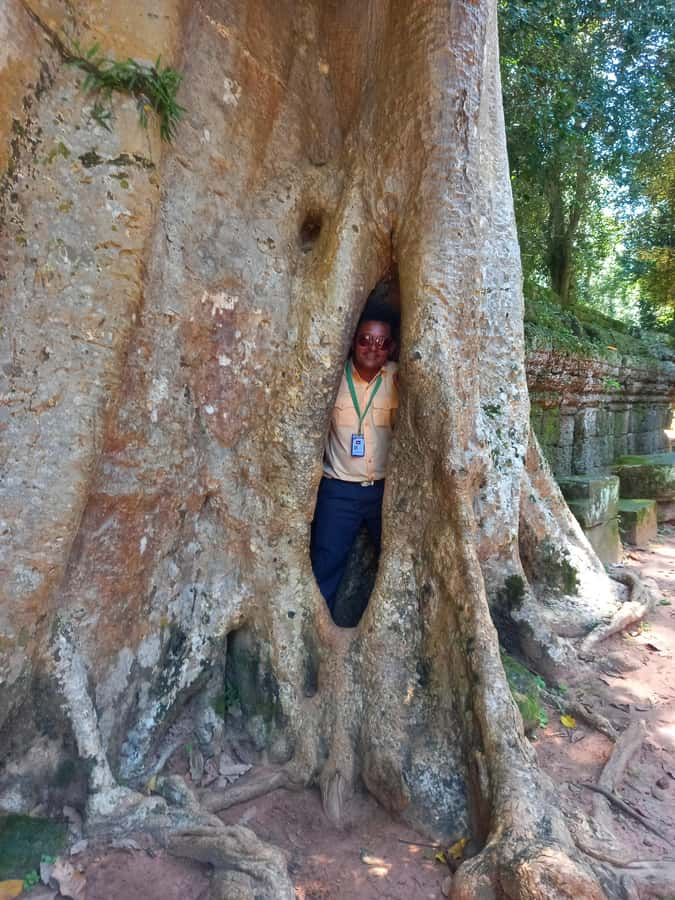
Inside Angkor Thom, you visit Bayon, the temple famous for its huge carved faces. This is likely to be the most immediately memorable temple of the morning.
The faces appear from different angles as you move around the structure. Their expressions are calm and difficult to read, which gives Bayon its strange, almost watchful character. The effect is different from the broad symmetry of Angkor Wat. Bayon feels more enclosed and intricate.
This is where a live guide earns the $50 price. Without explanation, you can admire the faces and take photographs. With a guide, you can ask what you are looking at and connect the temple to the wider story of Angkor Thom.
The Spanish-language option matters here. Carved temples can be hard to interpret when the details are presented only in short labels or quick commentary. A Spanish-speaking guide can explain the setting in your own language, and guide Sem has been singled out for explaining the temples in detail.
Allow yourself a moment to look up and around rather than focusing only on the most famous face. Bayon rewards slow attention, but this one-day schedule means the guide will eventually move the group on. If you want to photograph every angle or study each carving closely, the pace may feel brisk.
The Elephant and Leper King terraces
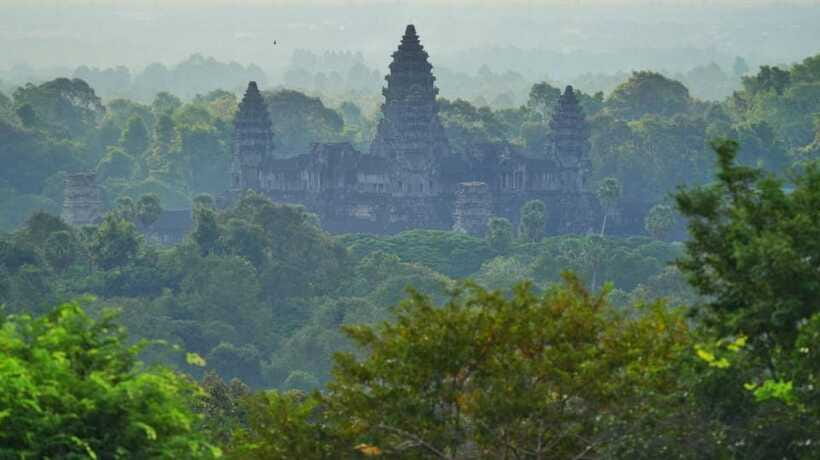
The next stops are the Terrace of the Elephants and the Terrace of the Leper Kings. These are not enclosed temple interiors, so they provide a change of pace after Bayon.
The Terrace of the Elephants is known for its elephant carvings and its role as a long ceremonial platform. The scale helps you picture royal processions and public display in the old capital. It is a place where the city’s power was meant to be seen.
The Terrace of the Leper Kings brings a different kind of detail. Its carved surfaces reward a closer look, especially if your guide points out scenes and figures that are easy to miss while walking past.
These stops are valuable because they broaden your idea of Angkor. The complex is not just a collection of isolated sanctuaries. It also includes gates, roads, platforms, courtyards, and public spaces that formed part of a large royal city.
You should expect shorter visits here than at the major temples. That is not a flaw, but it is part of the tour’s design. The terraces add context to the morning, while Bayon and Angkor Wat receive more attention.
More guided tours in Siem Reap:
- Siem Reap: Full-Day Angkor Wat Guided Tour with Sunset
★ 4.9 · 3,803 reviews - Angkor Wat Sunrise tour with Small – Group and Guide tours
★ 5.0 · 3,655 reviews - Angkor Wat Highlights and Sunrise Guided Tour from Siem Reap
★ 5.0 · 3,213 reviews - Full-Day Angkor Wat Sunrise Private Tour with Guide from Siem Reap
★ 5.0 · 2,920 reviews
Ta Prohm, where stone meets the jungle
Ta Prohm is the day’s change in mood. Instead of the open ceremonial feeling of the terraces, you enter a temple associated with jungle growth and a relatively untouched appearance since its discovery.
The appeal is the tension between structure and nature. Stone galleries, doorways, and courtyards appear amid trees and roots. The temple feels less orderly than Angkor Wat and less compact than Bayon.
You may find Ta Prohm especially rewarding if you like ruins that show the effects of time. Its beauty is not based only on perfect symmetry. Broken sections, tree growth, and narrow passages create a more unsettled experience.
That setting also makes Ta Prohm a popular stop, so a small group helps. Nine people are easier to move through the temple than a large crowd. The group still has to follow the day’s schedule, and the tour does not promise a long private visit, but the limited size is useful here.
Bring a jacket as suggested, especially if your morning starts cool or you are sensitive to changing temperatures. Carry drinks too. The tour lasts eight hours, and the temple grounds are extensive. Internet access and a GPS or map are also listed among the useful items to bring, though the guide provides the main direction during the outing.
Angkor Wat fills the afternoon
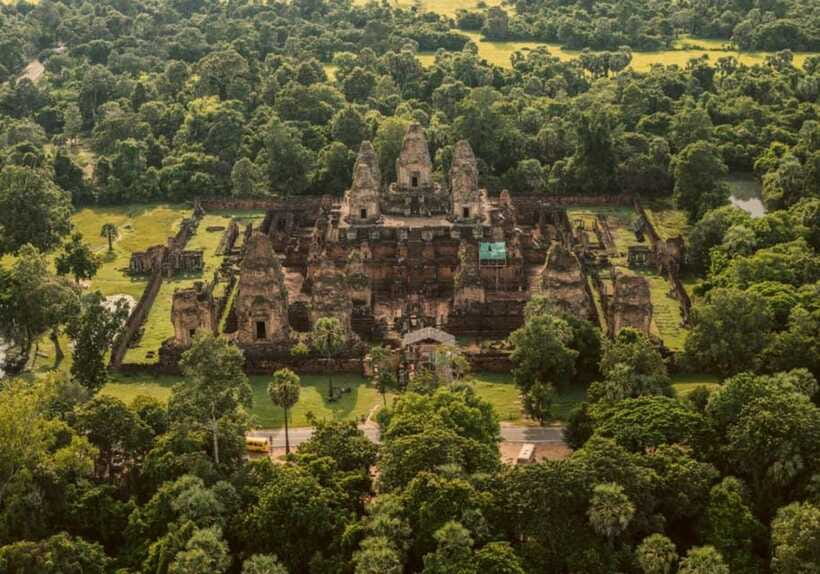
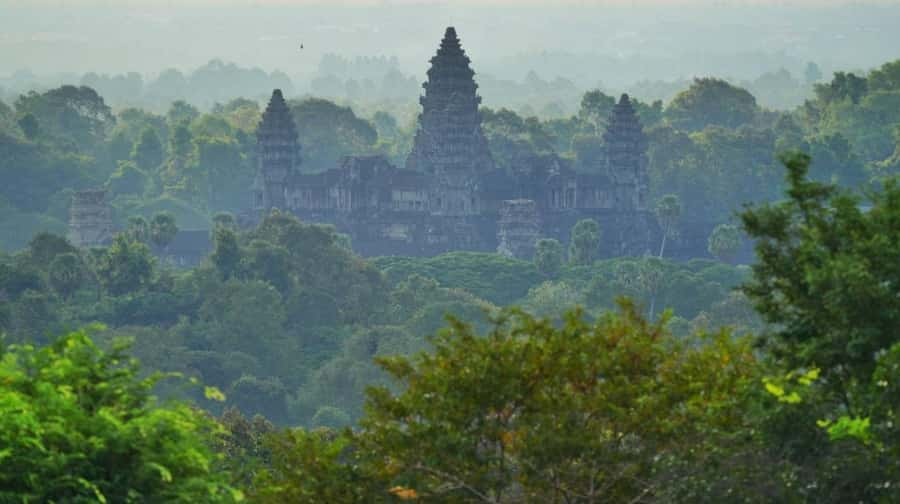
After the morning temples, the tour reaches Angkor Wat, the most famous monument on the Angkor plain. The afternoon placement makes it the day’s final major sight and gives you time to appreciate its size after seeing the smaller details of Bayon and Ta Prohm.
Angkor Wat covers 81 hectares, about the size of Beijing’s Imperial Palace complex. That comparison helps explain why this is not a quick walk around one building. You move through a large temple complex with broad approaches, galleries, courtyards, and carefully arranged architectural levels.
Its strength is balance. The composition, proportions, and sculptural detail work together, creating a monument that feels planned from a great distance and rewarding up close. After the more tangled character of Ta Prohm, Angkor Wat can feel controlled and monumental.
Take time to look beyond the central towers. The long galleries and sculpted surfaces are a major part of the experience. A guide can point out details that might otherwise blur together, especially when you are seeing the temple late in a full day.
The drawback is simple: fatigue. By the afternoon, you have already visited several large sites. Drink regularly and keep your expectations realistic. You will see Angkor Wat, but the schedule is designed to cover the major areas rather than give you unlimited time for quiet study.
What the Spanish-speaking guide adds
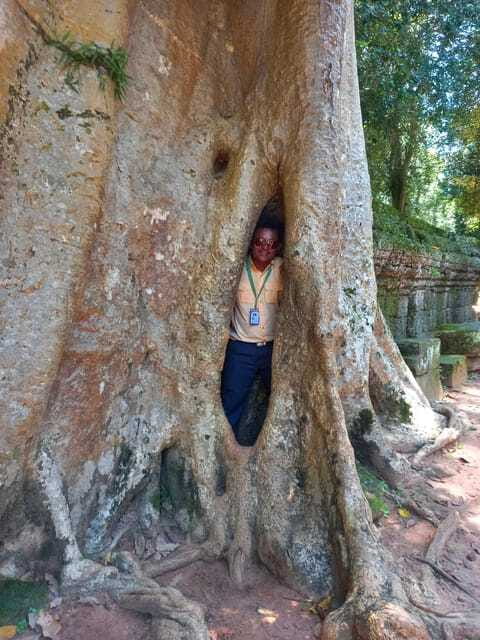
The guide is not just a translator. At Angkor, the setting can be confusing because temples, terraces, gates, and courtyards often look similar at first glance. A good explanation helps you understand why each stop matters and how the pieces relate to the old capital.
Spanish, Portuguese, and English are offered as live guide languages. The Spanish option is particularly useful if you want to discuss what you are seeing rather than simply follow a route. You can ask questions about the carvings, the temple layouts, and the symbols along the way.
One Spanish booking specifically praised guide Sem for explaining everything in detail. You should not assume Sem will lead every departure, but the feedback gives you a useful sense of the kind of guide service to look for: clear interpretation, not just directions from one monument to the next.
Some content may appear in its original language. If a particular explanation matters to you, ask the guide to repeat or clarify it. A small group makes that request easier than it would be on a large bus.
Is $50 good value for eight hours?
At $50 per person, this tour sits in the practical middle of Angkor day trips. You receive hotel pickup, an eight-hour guided route, a live guide, and a group capped at nine participants.
The value is strongest if you want the major temples explained in one day. Paying for a guide makes more sense at Angkor than at a site where signs tell the whole story. Bayon, the terraces, Ta Prohm, and Angkor Wat each have a different character, and the guide helps you notice those differences.
The shared format keeps the cost lower than a private tour. It also means you give up some control. You cannot decide to spend most of the afternoon at Bayon or skip a stop because the group follows a set route.
The price does not list every possible extra cost, so check the final booking details carefully for anything not included. Based on the information provided, the clearest value is the combination of a small group and a full day at the main Angkor sites.
Practical points for a smoother day
Wear clothing that keeps you comfortable for a long day among large temple grounds. A jacket is specifically recommended, and drinks are important for an eight-hour outing.
Bring internet access and a GPS or map as listed. These tools can help you stay connected and understand where you are, although the guide leads the group between stops. A pen is also suggested, useful if you like to note temple names or details while the explanations are fresh.
Pets are not allowed. The experience is also listed as unsuitable for people over 331 pounds, or 150 kilograms.
You can cancel up to 24 hours before the tour for a full refund. The reserve-now, pay-later option lets you hold a place without paying at the time of booking, which is helpful when your Siem Reap plans are still shifting.
Who should choose this Angkor tour?
I would choose this tour if you have one day, want the major monuments, and prefer to hear explanations in Spanish, Portuguese, or English. It suits first-time visitors who want a clear route instead of working out Angkor’s huge layout alone.
It also fits solo travelers and couples who like the social ease of a small shared group. The limit of nine keeps the experience more manageable while preserving the lower price of a group outing.
You may want another format if you prefer sunrise or sunset photography, a private pace, or two full days among the temples. Those goals require more flexibility than this fixed eight-hour route promises.
Should you book it?
Book this tour if your priority is a well-rounded first day at Angkor with a live Spanish-speaking guide and a small group. The route covers the essential monuments, and the guide support is especially useful at Bayon and Angkor Wat, where there is far more to see than the famous photo spots.
Skip it if you already know the temples well or want to linger for hours at one site. For most first-time visitors with limited time in Siem Reap, though, the $50 price buys a practical introduction to Angkor’s gates, faces, terraces, jungle ruins, and grandest temple.
FAQ
How much does the Angkor temple tour cost?
The tour costs $50 per person.
How long does the tour last?
The tour lasts eight hours.
Does the tour include hotel pickup?
Yes. The day begins with pickup at your hotel in Siem Reap.
Which temples and sites are included?
The route includes Angkor Thom, the South Gate, Bayon, the Terrace of the Elephants, the Terrace of the Leper Kings, Ta Prohm, and Angkor Wat.
What languages are available?
Live guiding is available in Spanish, Portuguese, and English.
How large is the group?
This is a small-group tour limited to nine participants.
Is there a Spanish-speaking guide?
Yes. Spanish is one of the available live guide languages. Guide Sem has been specifically praised for detailed explanations on one departure.
Can I reserve now and pay later?
Yes. You can reserve a place and pay nothing today.
What is the cancellation policy?
You can cancel up to 24 hours in advance for a full refund.
What should I bring?
Bring drinks, a jacket, internet access, a GPS or map, and a pen. Pets are not allowed.
Just added around Siem Reap
- Ultimate Sunrise to Angkor Wat, Angkor Thom and Bayon Temple★ 5.0 · 3 reviews
- Full-Day Private Tour of Angkor Wat with Pick Up★ 5.0 · 12 reviews
- Trekking Tour at Phnom Kulen National Park from Siem Reap★ 5.0 · 3 reviews
- Twilight Tastes of Siem Reap Include Dinner★ 5.0 · 13 reviews
- Private Day Trip to Angkor Temples with Expert Guide★ 5.0 · 4 reviews
- Waterfall & River of 1000 Siva Linga- Kulen Mountain Private Tour★ 5.0 · 3 reviews
- Siem Reap City Tour with War Museum and Killing Field★ 5.0 · 27 reviews
- Private Two Days Siem Reap Temples Discovery Guided Tour★ 5.0 · 7 reviews
Angkor Wat Tours, compared.
Angkor Wat Sunrise or Sunset Tour with Guide from Siem Reap
Read our review →
Angkor Wat: Small-Group Sunrise or Sunset Tour
Read our review →
Angkor Wat 2-Day Tour with Sunrise and Sunset
Read our review →
Angkor Wat Sunrise tour with Small – Group and Guide tours
Read our review →
Angkor Wat Highlights and Sunrise Guided Tour from Siem Reap
Read our review →
Angkor Wat Sunset Small Group Tour with Lunch Included
Read our review →