
Reviewed · ANGKOR WAT TOURS
Private Tour: (Avoid Crowds & Heat) 2-Day Angkor Temples
The best feature here is the private routing. Instead of treating Angkor Wat as a one-stop photo errand, this two-day plan gives you time for remote temples, grand city ruins, and a small jungle shrine. Guides such as Tay, Sopheara, Viet, Kim, and Tai have been associated with especially strong visits, with clear explanations and smart timing around crowds.
I like the split between the quieter outer temples on day one and the major sights on day two. I also like the air-conditioned private vehicle, cold drinks, snacks, and hotel pickup. The catch is that the Angkor park ticket costs extra, and the long temple days include stairs, uneven ground, and plenty of walking.
Key points to know before booking
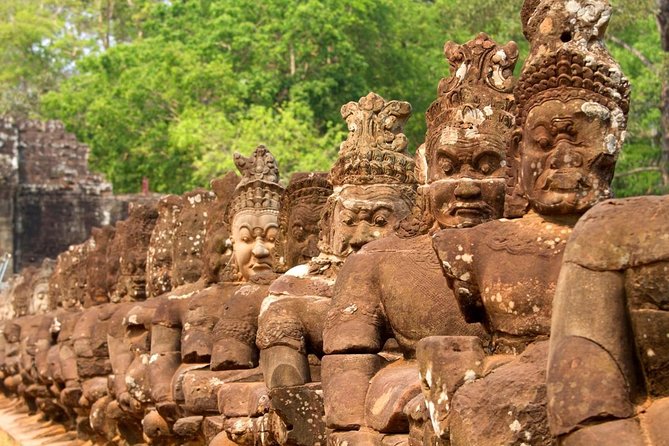
- Banteay Srei brings the finest carving: Its pink sandstone detail makes the drive north worthwhile.
- Day one avoids the usual headline sights: Preah Khan, Neak Pean, Banteay Samre, and Pre Rup give you a calmer start.
- Day two covers the essential Angkor set: Angkor Wat, Angkor Thom, Bayon, Baphuon, and Ta Prohm form the core.
- Ta Nei adds a quiet jungle stop: This small Buddhist temple is included mainly for its peaceful setting.
- Your guide shapes the experience: The strongest feedback centers on guides who manage timing, explain Khmer culture, and adjust the route.
- The advertised cost is not the full cost: The tour is $62, while the required Angkor entrance pass is listed separately at $62 per person for a two or three-day visit.
Why two days works better than one
Angkor is not one temple. It is a huge archaeological park with monuments from several centuries, different rulers, and different religious traditions. A rushed day can give you Angkor Wat and a handful of blurry memories. Two days let you see the famous places without giving up the less crowded ruins that explain how large the Khmer capital once was.
This plan also uses the days sensibly. Day one heads toward Banteay Srei and then works through the so-called Big Loop, including Preah Khan and Neak Pean. Day two focuses on the central Angkor complex, where the scale and drama increase sharply.
Because this is a private tour, only your group takes part. That matters at temples. You can ask your guide to spend longer on a carved doorway, shorten a stop that has lost your interest, or change the order when a site feels too busy. The itinerary is set, but a private vehicle gives it some breathing room.
The tour begins around 7:30 a.m. from your Siem Reap hotel, with pickup and return included. That early start is useful in Cambodia’s heat, although you should still expect warm conditions, stairs, and exposed paths.
More multi-day trips from Siem Reap:
- Siem Reap: Angkor Wat 2-Day Tour with Sunrise and Sunset
★ 4.9 · 4,429 reviews - Angkor 2-Day Sunset & Sunrise Small-Group Tour
★ 5.0 · 2,567 reviews - 2 Days Exclusive Temple Highlights with Sunset and Sunrise Tour
★ 5.0 · 1,157 reviews
Day one: pink sandstone and the Big Loop
Banteay Srei and its small-scale detail
Banteay Srei is more than 20 kilometers north of Angkor and dates from the second half of the 10th century. Its name is often translated as Citadel of Beauty, a fitting description for a temple famous for fine carvings in pink sandstone.
The scale is smaller than Angkor Wat, but the decoration is remarkably detailed. Your guide can help you read the scenes and patterns rather than reducing the stop to a quick circuit around the walls. One hour is a sensible amount of time for looking closely and taking photographs.
The trade-off is the drive. Banteay Srei sits outside the main Angkor cluster, so reaching it takes time. I think that distance pays off if you care about stonework and early Khmer design. If your priority is only the largest monuments, you may find the road less appealing.
Banteay Samre in a quiet setting
Banteay Samre receives about 45 minutes on this tour. It was built in the first half of the 12th century, and its tower design has similarities to Angkor Wat.
The setting feels more isolated than the central monuments. That makes it a useful contrast after Banteay Srei. You can look at the layout and towers without the same sense of constant movement found at the best-known sites.
This is a good place to let your guide explain how temple styles changed over time. The visit is not as visually overwhelming as Angkor Wat or Bayon, but that is part of its value. It gives you a quieter architectural stop instead of one more famous name on a checklist.
More Angkor Wat tours in Siem Reap:
- Angkor Wat Sunrise or Sunset Tour with Guide from Siem Reap
★ 5.0 · 12,109 reviews - Siem Reap: Angkor Wat: Small-Group Sunrise or Sunset Tour
★ 5.0 · 9,444 reviews - Siem Reap: Full-Day Angkor Wat Guided Tour with Sunset
★ 4.9 · 3,803 reviews - Angkor Wat Sunrise tour with Small – Group and Guide tours
★ 5.0 · 3,655 reviews
Pre Rup and the colors of laterite, brick, and sandstone
Pre Rup dates from the middle of the 10th century. Its name means turning the body, a reference connected with funerary tradition. The temple is notable for the way laterite, brick, and sandstone work together.
You have about 30 minutes here, enough to see the main structure and hear the basic story. The climb can be demanding, especially in hot weather, so take your time on the steps. The short visit keeps the day moving, but you should not expect a long, leisurely exploration.
Preah Khan, a temple that was also a city
Preah Khan was built by Jayavarman VII in the late 12th century as a Buddhist university and city. It has the atmospheric, tree-covered feel many people associate with Ta Prohm, but it offers its own architectural details, including a distinctive two-story building with round columns.
The one-hour visit gives you time to walk beyond the first dramatic entrance. This is one of the day’s most rewarding stops because it combines scale, religious purpose, and signs of how a large working complex was organized.
I would pay close attention here. A guide can point out the difference between a temple built mainly for worship and a place that also served educational and civic roles. Without that context, Preah Khan can look like another attractive ruin. With it, the site becomes easier to understand.
Neak Pean and the pond
Neak Pean takes about 30 minutes. Built by Jayavarman VII in the late 12th century, it was connected with healing. The central monument rises from a pond, creating one of the more unusual views in the Angkor area.
The symbolism matters as much as the structure. Water, purity, and healing are part of the way this site was conceived. You will not spend hours here, and the walkway and pond setting make it a different sort of stop from the enclosed corridors at Preah Khan.
Day one is full, so the private car is important. Air conditioning gives you a break between ruins, while snacks, refreshments, and cool towels help keep the day manageable. The small comforts are not luxurious extras. In Angkor’s heat, they affect how much attention you have left for the final temple.
Day two: Angkor Wat, royal city, and jungle ruins
Angkor Wat deserves the longest look
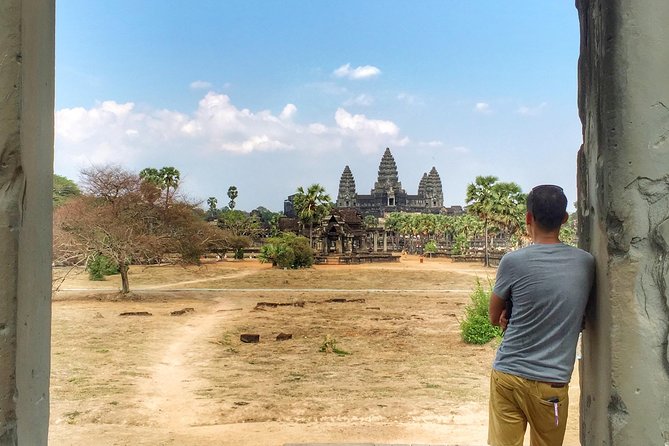
The second day opens with Angkor Wat, the world’s largest religious monument. Two hours is a reasonable minimum for the main galleries, towers, bas-reliefs, and central approach.
The great mistake here is rushing straight to the most famous view and leaving. Give yourself time to notice the scale of the outer galleries and the carved scenes. Your guide can explain the religious ideas and historical setting, then leave you room to look without constant commentary.
Angkor Wat is also the part of the day most affected by crowds and heat. Tell your guide on day one if you want a sunrise or sunset visit on the following day. This is offered at no extra charge, but the timing should be discussed in advance so the day can be arranged properly.
Two hours may feel short if you want every corridor. It is long enough for a first visit, though, especially when the tour still has Angkor Thom and Ta Prohm ahead.
Angkor Thom shows the scale of the Khmer capital
Angkor Thom is not a single temple. It was a large walled capital containing several monuments, including Bayon, Phimeanakas, Baphuon, the Terrace of the Elephants, the Terrace of the Leper King, and other smaller sites.
The tour allows about two hours here. That time is well used because Angkor Thom gives you the wider setting for the monuments. You are not just looking at isolated ruins. You are moving through the remains of a royal city.
The main challenge is deciding how much to see. Bayon alone can absorb your attention, especially with its towers and carved faces. Baphuon brings a different shape and a more pronounced climb. The terraces help explain royal ceremony and public display.
You should wear shoes with a firm sole and expect steps. This is not a difficult mountain walk, but the surfaces are uneven and the stone can be hot. A private guide can adjust the pace if your group needs more time at one section.
Bayon and Baphuon bring different kinds of drama
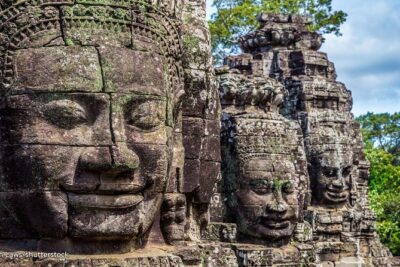
Bayon is likely to be one of the day’s strongest stops. Its towers, carved faces, narrow passages, and changing views reward slow movement. The temple can feel confusing at first, so a good guide is especially useful here.
Baphuon offers a more open structure and a different climb. Together, Bayon and Baphuon show that Angkor Thom is not repetitive. Each monument has its own mood, design, and purpose.
The tour description groups these sites within the Angkor Thom visit rather than assigning a separate time to each. That is sensible, but it means the exact balance depends on your guide and your interests. Tell the guide early if Bayon’s carvings matter more to you than covering every named structure.
Ta Prohm and the trees among the stones
Ta Prohm is the most romantic stop on the second day. Strangler figs and silk-cotton trees grow through the ruins, creating the famous meeting of roots and stone. The temple is also known for its connection with film, which has made it one of Angkor’s most recognizable places.
You have about an hour here. That allows time for the main paths, carved doorways, and tree-covered sections. The popularity of Ta Prohm can make it busy, so the guide’s route and timing matter. The tour is designed to avoid crowds when possible, but no private operator can make a famous temple empty.
I like that Ta Prohm follows the larger Angkor Thom visit. After seeing a royal city and major state monuments, you get a site where nature appears to have taken over. The contrast helps keep the two-day program from feeling like a string of similar stone buildings.
Ta Nei is small, quiet, and worth the detour
Ta Nei is a Buddhist temple from the late 12th century, built during the reign of Jayavarman VII. The stop lasts about 30 minutes and is included specifically as a way to get away from the larger crowds.
Do not expect the scale of Angkor Wat. Ta Nei works because it is modest and quiet. It gives you time to look at a smaller temple without the pressure that comes with the major sites.
For me, this is an important final note to the day. The great monuments explain the power of the Khmer Empire. Ta Nei offers a more personal, less staged encounter with the ruins. The road or path may feel less polished than at the major temples, so practical shoes help.
Guides, comfort, and the value of a private car
The guide is the key variable in this experience. The names associated with past bookings include Tay, Sopheara, Viet, Kim, and Tai. The strongest guide experiences center on clear English, strong knowledge of Khmer culture and architecture, patient answers, and the ability to change the route to reduce crowd exposure.
Do not hesitate to state your priorities at the start. You may want more time for carvings, fewer stairs, a slower pace, or the best possible timing at Angkor Wat. A private tour works best when you treat the guide as a partner rather than simply following the printed schedule.
The vehicle is air-conditioned and private, with hotel pickup and drop-off in Siem Reap. Snacks and refreshments are included. One particularly useful comfort mentioned for this operation is cold water and lemongrass-scented cool towels.
The tour is listed at $62 for two days, before the park pass. The required Angkor entrance ticket is listed separately at $62 per person for a two or three-day visit. That makes the real cost higher than the headline tour price, but the tour still offers solid value if you want a licensed guide, private transport, and a full route without arranging each transfer yourself.
A group discount may be available, though the exact amount is not given. Since this is a private activity, the price may make more sense when shared among several people.
Who should book this Angkor itinerary?
I would choose this tour if you are visiting Cambodia for the first time and want both the famous temples and the less crowded outer circuit. It suits people who like historical explanation, photography, architecture, and a full schedule.
It is also a good fit if you value control. You can ask for a sunrise or sunset visit, discuss the order of stops, and spend more time where your interest is strongest.
Think twice if you dislike early starts, hot weather, stairs, or long days in the open air. One booking specifically notes that the temples involve plenty of climbing. The tour is private, but private does not mean effortless.
Free cancellation is available if you cancel at least 24 hours before the start time. Changes or cancellations inside that window are not accepted for a refund.
Should you book this two-day Angkor tour?
Book it if you want a serious first look at Angkor and prefer a private guide over a basic driver service. The route covers the essential monuments while adding Banteay Srei, Banteay Samre, Pre Rup, Preah Khan, Neak Pean, and Ta Nei. That range gives you a better sense of the Khmer temple world than a one-day highlights run.
Before paying, budget for the separate $62 park pass and confirm that your group is comfortable with stairs and long walks. Then tell the guide your priorities on day one, especially if sunrise, sunset, detailed carving, or crowd avoidance matters most. For many first-time visitors, that combination of depth, flexibility, and practical comfort makes the two-day format the wiser choice.
FAQ
Is the Angkor entrance ticket included?
No. The Angkor entrance pass is not included. The listed cost is $62 per person for a two or three-day visit.
How much does the tour cost?
The tour price is listed as $62. You must add the separate Angkor entrance ticket to calculate the full cost.
How long does the experience last?
The tour lasts approximately two days, with a 7:30 a.m. start time.
Is hotel pickup included?
Yes. Pickup and drop-off at hotels in Siem Reap are included.
Is this a private tour?
Yes. Only your group participates in the activity.
What transportation is provided?
Transport is provided in a private air-conditioned vehicle.
Is a guide included?
Yes. A professional licensed guide is included.
Can I request sunrise or sunset?
Yes. You should tell your guide on day one if you would like sunrise or sunset on the following day. This request is complimentary.
Can I cancel for a full refund?
Yes, if you cancel at least 24 hours before the experience start time. Cancellations or changes made less than 24 hours before the start time are not refunded or accepted.
Just added around Siem Reap
- Ultimate Sunrise to Angkor Wat, Angkor Thom and Bayon Temple★ 5.0 · 3 reviews
- Full-Day Private Tour of Angkor Wat with Pick Up★ 5.0 · 12 reviews
- Trekking Tour at Phnom Kulen National Park from Siem Reap★ 5.0 · 3 reviews
- Twilight Tastes of Siem Reap Include Dinner★ 5.0 · 13 reviews
- Siem Reap City Tour with War Museum and Killing Field★ 5.0 · 27 reviews
- Private Day Trip to Angkor Temples with Expert Guide★ 5.0 · 4 reviews
- Waterfall & River of 1000 Siva Linga- Kulen Mountain Private Tour★ 5.0 · 3 reviews
- Private Two Days Siem Reap Temples Discovery Guided Tour★ 5.0 · 7 reviews
Angkor Wat Tours, compared.
Angkor Wat Sunrise or Sunset Tour with Guide from Siem Reap
Read our review →
Angkor Wat: Small-Group Sunrise or Sunset Tour
Read our review →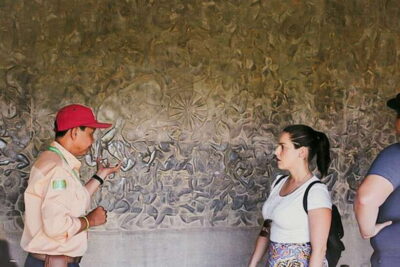
Angkor Wat 2-Day Tour with Sunrise and Sunset
Read our review →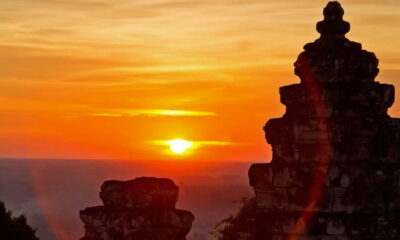
Angkor Wat Sunrise tour with Small – Group and Guide tours
Read our review →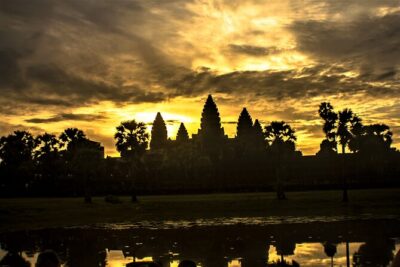
Angkor Wat Highlights and Sunrise Guided Tour from Siem Reap
Read our review →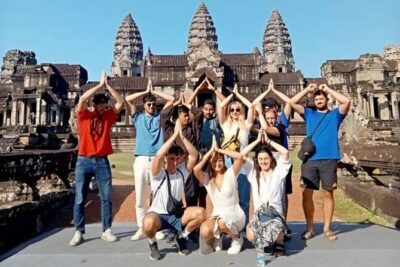
Angkor Wat Sunset Small Group Tour with Lunch Included
Read our review →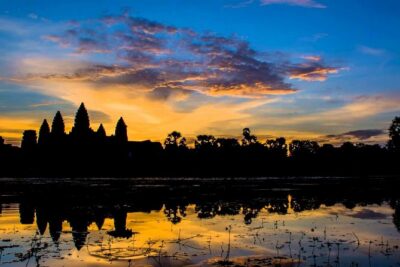
Full-Day Angkor Wat Sunrise Private Tour with Guide from Siem Reap
Read our review →Browse the lists this tour appears in