
Reviewed · ANGKOR WAT TOURS
Private Siem Reap 3 Day Tour Discover All Highlight Angkor Temple
Angkor Wat at sunrise is only the beginning here. This private three-day route takes you from the great temple complex to the older Roluos temples, Tonle Sap communities, quiet ruins, local handicrafts, and the carved pink sandstone of Banteay Srei.
I like the private vehicle and flexible pace, especially with an air-conditioned Toyota Highlander, cold bottled water, and iced towels available through the day. I also like the range: you get major monuments such as Angkor Wat and Bayon, but also Wat Bo, Satcha, palm sugar producers, and the Tonle Sap area.
The main consideration is the schedule. A few listed stop lengths are clearly incorrect, including seven and a half hours at Banteay Kdei and more than a day at a palm sugar stop. Confirm the daily timing with Cambodia Travel & Tours before you go.
Key points to know before booking
- Three full days cover far more than the usual Angkor circuit, from Roluos and Tonle Sap to Banteay Srei and Preah Khan.
- Sunrise at Angkor Wat is built into Day 2, followed by a return to your hotel for breakfast before the temple visits continue.
- Your private guide and driver can adjust the pace, which matters on hot days and when one temple has captured your attention.
- The Angkor Pass is not included, and the tour also excludes lunch, dinner, and tips.
- Cold water, fresh towels, and air conditioning are practical comforts, not minor extras in Cambodia’s heat.
- The floating village outing is a private cruise, with the boat cost included in the tour price.
What $253.65 buys you over three days
At $253.65 per person, this is not a budget tuk-tuk day. You are paying for a private three-day service, hotel pickup and return, a licensed English-speaking guide, private air-conditioned transport, and the floating village cruise.
The value improves if you are traveling with a partner, family, or small group because the experience is private rather than shared. Group discounts are offered, though the exact saving is not specified. You should also set aside money for the Angkor Pass, meals, and tips.
Lunch is at your own expense. Local restaurants offer vegetarian and non-vegetarian dishes, with prices listed at roughly $3 to $10 per dish. That gives you some control over spending, but the tour price is not the full cost of the three days.
The biggest value is time. Finding all these temples and the Tonle Sap area by yourself would require separate transport planning, route choices, ticket handling, and local knowledge. With a guide and driver, you can focus on the monuments rather than negotiating every transfer.
The private format also matters because Angkor can be tiring. You can ask to spend longer at a favorite temple, shorten a stop that is not holding your attention, or take a break in the vehicle. The itinerary is broad, so that flexibility is useful.
More multi-day trips from Siem Reap:
- Siem Reap: Angkor Wat 2-Day Tour with Sunrise and Sunset
★ 4.9 · 4,429 reviews - Angkor 2-Day Sunset & Sunrise Small-Group Tour
★ 5.0 · 2,567 reviews - 2 Days Exclusive Temple Highlights with Sunset and Sunrise Tour
★ 5.0 · 1,157 reviews
Day 1: Roluos temples, Tonle Sap, and Siem Reap’s local side
The first morning begins outside the central Angkor circuit at the Roluos group. These temples belong to an earlier Khmer capital called Hariharalaya, now known as Roluos. They help you see how temple design developed before the grand scale of Angkor Wat.
Preah Ko, 30 minutes
Preah Ko means Sacred Bull. The Shiva temple is positioned between Lolei and Bakong, and its name comes from the bull figures associated with Shiva.
A half-hour is enough for a first look, photographs, and a short explanation from your guide. The temple is smaller and less overwhelming than Angkor Wat, which makes it useful early in the visit. You can pay closer attention to the layout, towers, and surviving details without being swallowed by a huge complex.
Bakong, one hour
Bakong is the key stop in Roluos. Built under King Indravarman I and consecrated in 881, it became a model for the Khmer temple pyramid. Its central structure rises in clear stepped levels, making the basic idea behind later state temples easier to understand.
Give yourself time here. Bakong is not simply an old ruin to tick off. It helps explain the shape and purpose of later monuments across the Angkor area. The central pyramid, surrounding enclosure, and broad setting also give you a change from the dense stone corridors found in the larger temples.
More Angkor Wat tours in Siem Reap:
- Angkor Wat Sunrise or Sunset Tour with Guide from Siem Reap
★ 5.0 · 12,109 reviews - Siem Reap: Angkor Wat: Small-Group Sunrise or Sunset Tour
★ 5.0 · 9,444 reviews - Siem Reap: Full-Day Angkor Wat Guided Tour with Sunset
★ 4.9 · 3,803 reviews - Angkor Wat Sunrise tour with Small – Group and Guide tours
★ 5.0 · 3,655 reviews
Lolei, 30 minutes
Lolei is the smallest and youngest of the three main Roluos temples. It is less visually dramatic than Bakong, but the three-stop sequence works well because you see the group in historical order and can compare their scale.
Half an hour should be enough unless you have a particular interest in early Khmer architecture. If you prefer a slower visit, this is one place where a private tour gives you room to ask for extra time.
Kampong Phluk and Tonle Sap
The schedule names Kampong Phluk Floating Village, while the general tour description also refers to the Tonle Sap area. The outing lasts about three hours and includes a private cruise.
This is a useful counterpoint to the stone temples. The Tonle Sap supports more than three million people and provides more than 75 percent of Cambodia’s annual inland fish catch, according to the supplied tour information. Your guide can help connect the lake to everyday life, fishing, transport, and settlement patterns.
Do not expect another temple stop here. The point is the lake community and its changing relationship with water. The tour describes residents with family connections to the floating villages across three or four generations, so this part offers a look at Cambodian life beyond the monument zone.
The village name deserves confirmation before booking. Kampong Phluk and Kampong Khleang are different places, and the information provided uses both names in different sections. Ask exactly which village and boat route you will visit.
Wat Bo and Satcha
Back in Siem Reap, Wat Bo gives you a city-based cultural stop. It is one of the town’s oldest temples and has late nineteenth-century wall paintings. An hour here lets you shift from monumental architecture to a working religious site with painted interiors.
Satcha, the Cambodian Handicraft Center, is another hour-long stop. The center supports local artisans and combines traditional skills with contemporary design. This is more useful than a generic souvenir shop because you can see Cambodian craft presented as an active trade rather than only as a historical subject.
You may want to budget for purchases, but there is no requirement to buy. The stop works best if you are interested in local production, design, and the people who make the objects.
Day 2: Angkor Wat at sunrise and the face towers of Angkor Thom
Day 2 is the demanding temple day. It begins early with sunrise at Angkor Wat, then continues through Angkor Thom, Ta Prohm, Banteay Kdei, and Ta Nei.
Angkor Wat before breakfast
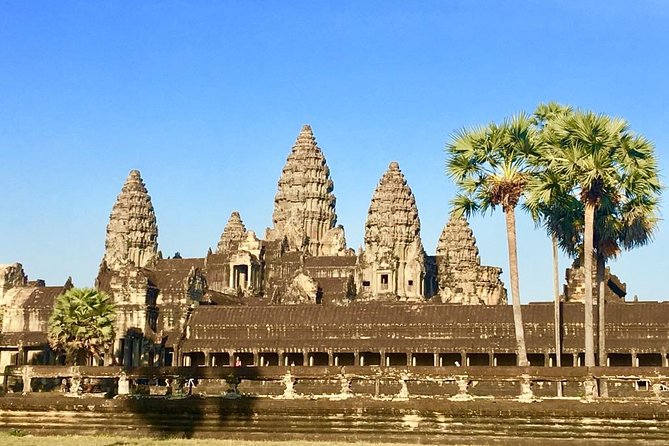
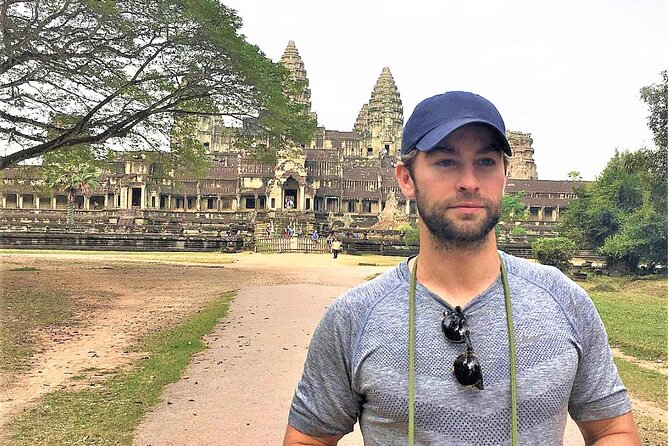
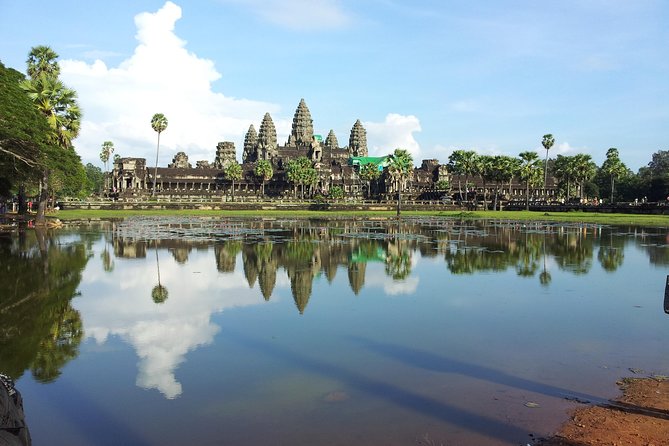
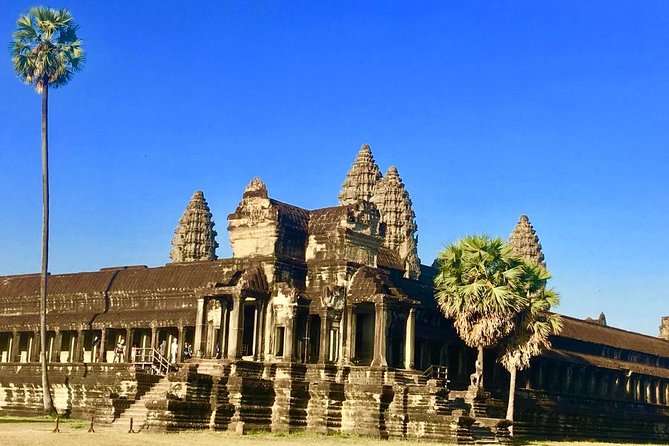
The plan is to see sunrise at Angkor Wat, explore the temple, and return to your hotel for breakfast. The stop is scheduled for about three hours, not counting the transfer and breakfast break.
Sunrise adds atmosphere, but it also means an early start and a long day ahead. Keep your expectations practical: weather can affect the view, and the point of the early visit is not only the sky. Angkor Wat itself deserves time for its galleries, towers, courtyards, and carved scenes.
The Angkor Pass is not included. Your guide will assist you in purchasing it at the entrance to Angkor Park before the temple visits begin. Since the pass covers the temples in this itinerary, keep it safe throughout the three days.
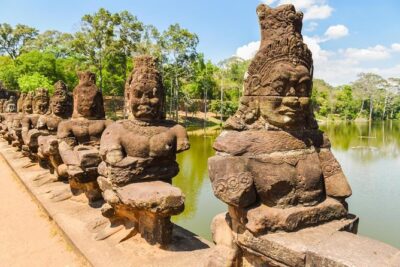
Angkor Thom’s South Gate
The South Gate is the most familiar entrance to Angkor Thom. The approach gives you a strong sense of arrival, with the road leading toward the walled city and the monuments inside.
The stop is listed at 30 minutes. That is enough for the gate, bridge, and photographs, but not for a long explanation of every detail. If crowds or traffic slow the entrance, your guide may need to adjust the timing elsewhere.
Bayon and its stone faces
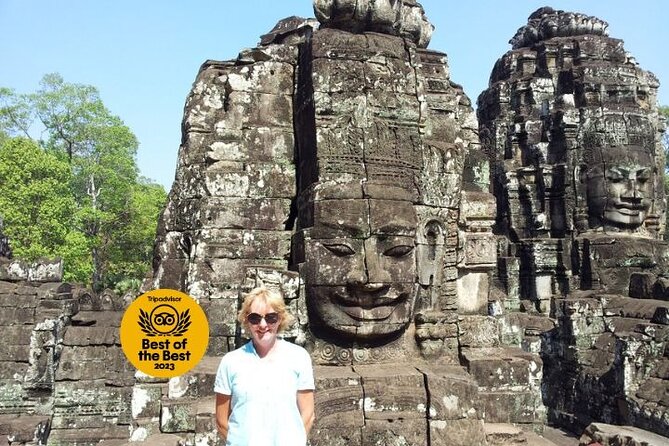
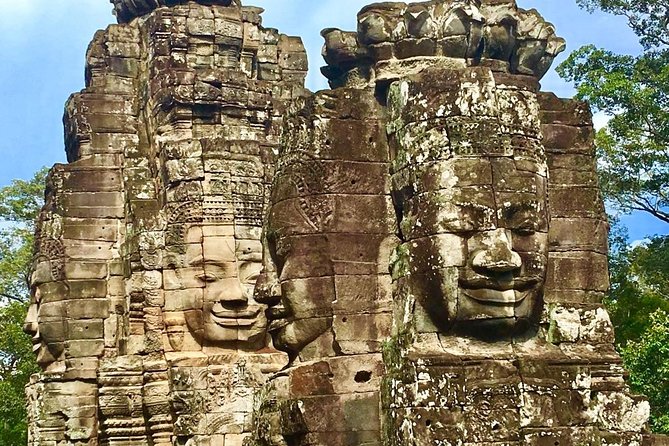
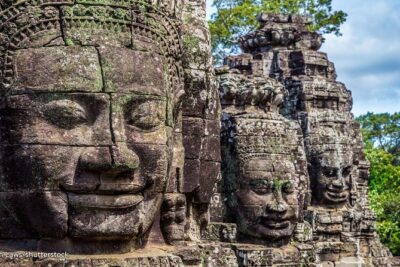
Bayon sits at the center of Angkor Thom and is one of the most memorable monuments in Cambodia. Its towers carry the famous serene stone faces, and the close quarters make the temple feel very different from the broad, formal layout of Angkor Wat.
Allow the full hour. Look up, down, and across the galleries rather than only searching for the best-known face tower. The enclosed passages can be confusing, which is where a guide earns their place by helping you understand the plan and the layers of construction.
Baphuon and Phimeanakas
Baphuon was completed around 1060 under King Udayadityavarman II and served as a state temple dedicated to Shiva. Its raised form and long approach give you a sense of how royal temples were designed to dominate their surroundings.
Phimeanakas is older in origin, though later kings changed it. It is largely built from laterite and sits near the former Royal Palace area. The stop is shorter, at about 30 minutes, so treat it as part of the wider Angkor Thom story rather than a separate major visit.
The Terraces of the Elephants and Leper King
The Terrace of the Elephants formed much of the western edge of Angkor Thom’s Royal Square. It is a long ceremonial platform, and the carvings make more sense when you imagine it as a place connected with royal display and public events.
The Terrace of the Leper King lies immediately north. It is worth studying rather than rushing past, especially for the detailed carvings on the walls. Each terrace is listed at 45 minutes, giving you enough time to walk, listen, and take photographs without turning the visit into a sprint.
Ta Prohm and Banteay Kdei
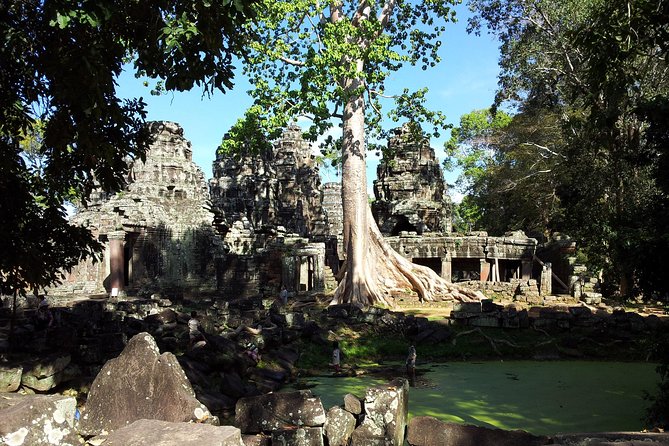
Ta Prohm is the famous jungle temple, known for trees growing through and around the masonry. It is one of the most recognizable stops in the Angkor area, but it can also be crowded and visually busy.
The scheduled hour is a sensible minimum. Move slowly through the corridors and watch your footing. The appeal is the meeting of stone and vegetation, but uneven surfaces and narrow passages mean you should not treat it as a quick photo stop.
Banteay Kdei is another temple associated with King Jayavarman VII. The supplied schedule gives it seven and a half hours, which is almost certainly a timing error in the program. You should ask the operator how long the actual stop will be, especially since the total day already includes many major monuments.
Ta Nei is a smaller late twelfth-century temple dedicated to the Buddha. It sits near the northwest corner of the East Baray and offers a quieter contrast to Ta Prohm and Bayon. The listed 40 minutes should give you a brief look before the day ends.
Day 3: Banteay Srei, local sugar, and the eastern temples
The third day reaches farther from the central Angkor group. It combines Banteay Srei and Banteay Samre with palm sugar production, Preah Khan, Neak Pean, Pre Rup, and East Mebon.
Banteay Srei’s detailed carvings
Banteay Srei is often remembered as the most delicate temple in the Angkor area. Its pink sandstone and finely carved decoration reward close looking, especially after the larger scale of Angkor Wat and Bayon.
The visit lasts about two hours. That is appropriate because the temple’s appeal is in the details, not its size. You will have time to examine the lintels, doorways, and decorative figures rather than simply walk around the outer walls.
It is also one of the longer drives from the central temples, so this is an important reason to choose a three-day tour instead of trying to squeeze every major site into one day.
Banteay Samre and palm sugar
Banteay Samre is an early twelfth-century Hindu temple linked with the reigns of Suryavarman II and Yasovarman II. Its enclosed form and careful stonework make it a strong companion to Banteay Srei.
The palm sugar producer group offers a different kind of stop. You can see local produce and learn about the work involved in making sugar, including the stove area. It is listed as an included stop, but the stated duration of one day and six hours cannot be correct. Confirm the real timing so you know how much of Day 3 remains for the temples.
Preah Khan and Neak Pean
Preah Khan was dedicated in 1191 to the father of King Jayavarman VII. It is a large temple complex with long passages, courtyards, and a layered plan that rewards a careful walk.
The listed duration is only two minutes, another obvious error. Do not accept that timing as a realistic visit. Ask the operator for the intended length, since Preah Khan needs far more than a quick roadside pause.
Neak Pean is unusual in Khmer architecture. It was built on an artificial island in a large reservoir, and its layout differs sharply from the classic temple mountain form. The listed hour allows you to appreciate the approach and the water-centered design.
Pre Rup and East Mebon
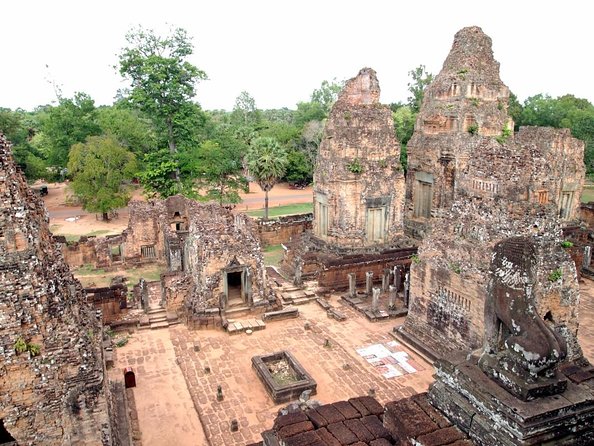
Pre Rup dates from 961 and was the major legacy of King Rajendravarman II. Its brick and laterite structure gives you another variation on Angkor architecture, and the upper levels offer a strong sense of the temple’s raised design.
East Mebon was built on an artificial island in the now-dry East Baray. The reservoir is gone, but the temple’s original position explains why it was built where it is. The 50-minute visit should be enough for a thoughtful final stop, particularly if your guide explains how water management shaped the Khmer capital.
The private transport and guide service
All transfers use a private air-conditioned vehicle. The vehicle described in the supplied experience is a clean Toyota Highlander, and the service includes cold bottled water and cool fresh towels throughout the trip.
Those details matter more than they might sound. Three days of temple touring means repeated walks in heat, dust, and direct sun. A cool vehicle between sites lets you recover, while a damp towel and water make the next monument easier to face.
The English-speaking guide is licensed, but a guide name is not provided in advance. One review identifies the private driver as Ree, who used a clean, safe Toyota Highlander, though you should not assume Ree will be assigned to every booking. Ask for the guide and driver names after confirmation if that matters to you.
Who should book this three-day route
I would choose this tour if you want to see the major Angkor temples but also care about local culture and the countryside. It suits first-time visitors who prefer one organized plan, families who value private transport, and couples who want more control than a fixed group departure provides.
It is also a good fit if you dislike changing hotels or arranging separate day trips. Hotel pickup and drop-off in Siem Reap keep the logistics simple.
I would hesitate if you want a slow, specialist study of only a few temples. The route covers a lot of ground, and the three days contain several major sites. You may need to accept shorter visits at some stops, or ask the guide to remove one or two lesser priorities.
The program is not designed around luxury meals or elaborate extras. Lunch is separate, tips are separate, and the Angkor Pass is separate. Its strength is the private transport, guide support, broad coverage, and ability to adjust the day.
Practical booking advice
Confirmation is provided at booking, and pickup requires your Siem Reap hotel name. Most people can take part, and the experience is private for your group only.
The tour offers free cancellation up to 24 hours before the start time. Changes or cancellations inside that 24-hour period are not accepted for a refund, with cut-off times based on local time.
Before paying, ask three questions: Which floating village will we visit, Kampong Phluk or Kampong Khleang? What are the correct times for Banteay Kdei, the palm sugar stop, and Preah Khan? Will the private guide and driver be confirmed by name?
Should you book it?
Book this tour if you want a broad, private introduction to Siem Reap with Angkor Wat at sunrise, the major Angkor Thom monuments, Banteay Srei, Roluos, Tonle Sap, and several less-famous stops.
The $253.65 price can be good value for a small group because transport, guide service, water, towels, and the private lake cruise are included. Just budget separately for the Angkor Pass, meals, and tips, and clarify the obvious timing errors before departure.
If you want flexibility, comfort, and a serious amount of sightseeing in three days, this is a strong choice. If you prefer a slow temple study, book fewer sites with a custom plan instead.
FAQ
Is the Angkor Pass included?
No. The Angkor Pass is not included. Your guide will assist you with purchasing it at the entrance to Angkor Park.
Are meals included?
No. Lunches are available at local restaurants but cost extra. Vegetarian and non-vegetarian dishes are listed at approximately $3 to $10 per dish.
Is hotel pickup included?
Yes. Private hotel pickup and drop-off in Siem Reap are included. You need to provide your hotel name for pickup arrangements.
Is the floating village cruise included?
Yes. A private cruise to visit the floating village on Tonle Sap Lake is included.
Is this a shared group tour?
No. This is a private activity, and only your own group participates.
What happens if I need to cancel?
You can receive a full refund if you cancel at least 24 hours before the experience start time. Cancellations and changes made less than 24 hours before the start time are not accepted for a refund.
Just added around Siem Reap
- Ultimate Sunrise to Angkor Wat, Angkor Thom and Bayon Temple★ 5.0 · 3 reviews
- Full-Day Private Tour of Angkor Wat with Pick Up★ 5.0 · 12 reviews
- Trekking Tour at Phnom Kulen National Park from Siem Reap★ 5.0 · 3 reviews
- Twilight Tastes of Siem Reap Include Dinner★ 5.0 · 13 reviews
- Siem Reap City Tour with War Museum and Killing Field★ 5.0 · 27 reviews
- Private Day Trip to Angkor Temples with Expert Guide★ 5.0 · 4 reviews
- Waterfall & River of 1000 Siva Linga- Kulen Mountain Private Tour★ 5.0 · 3 reviews
- Private Two Days Siem Reap Temples Discovery Guided Tour★ 5.0 · 7 reviews
Angkor Wat Tours, compared.
Angkor Wat Sunrise or Sunset Tour with Guide from Siem Reap
Read our review →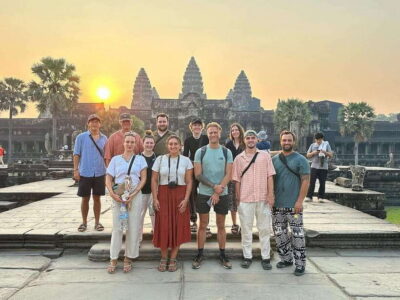
Angkor Wat: Small-Group Sunrise or Sunset Tour
Read our review →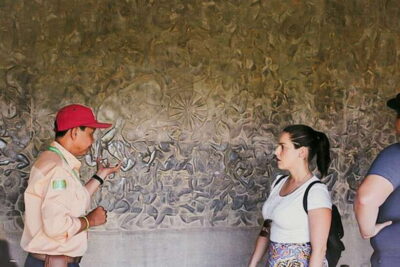
Angkor Wat 2-Day Tour with Sunrise and Sunset
Read our review →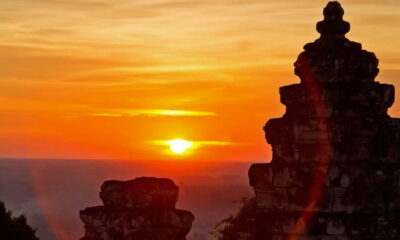
Angkor Wat Sunrise tour with Small – Group and Guide tours
Read our review →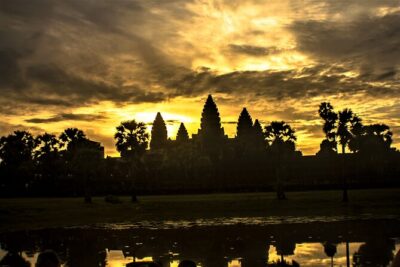
Angkor Wat Highlights and Sunrise Guided Tour from Siem Reap
Read our review →
Angkor Wat Sunset Small Group Tour with Lunch Included
Read our review →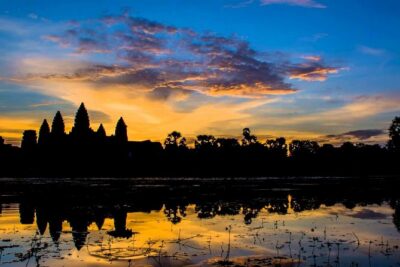
Full-Day Angkor Wat Sunrise Private Tour with Guide from Siem Reap
Read our review →Browse the lists this tour appears in