
Reviewed · ANGKOR WAT TOURS
Angkor Wat Bike Tour with Lunch Included
The best part of this Angkor Wat bike tour is the way it links the major temples by bicycle rather than treating them as quick stops from a vehicle. You get Angkor Wat, Bayon, Ta Nei, and Ta Prohm in one full day, with an English-speaking guide to explain what you are seeing.
I like the small-group format, listed as two to seven people, and the stop at Ta Nei, a quieter ruined temple reached along a jungle trail. Lunch, bottled water, hotel pickup, and the bicycle are included too. The main catch is physical: eight hours of cycling in Cambodia’s heat is more demanding than a standard temple tour, and your temple pass is extra.
Key points to know before booking
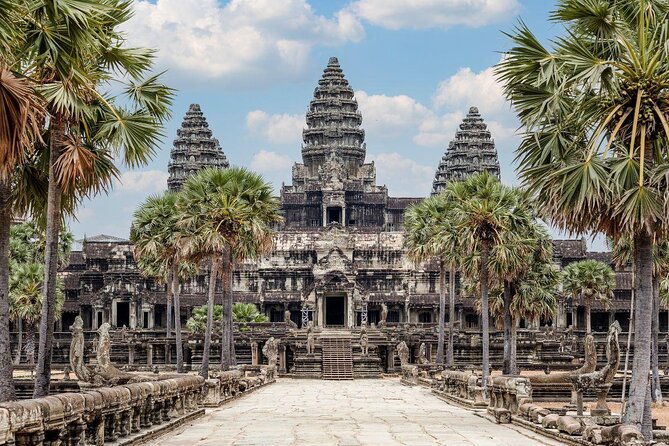
- Four very different temples in one day: Angkor Wat, Bayon, Ta Nei, and Ta Prohm each offer a different view of Khmer architecture.
- A bicycle changes the pace: You move between sites under your own power, with more time to notice the forest and roads around the temples.
- Ta Nei adds a quieter stop: This ruined jungle temple is included as a break from the better-known monuments.
- Lunch and equipment are included: You receive a modern giant bike, bottled water, transportation, hotel pickup, and lunch.
- Small groups are the strong point: The tour is described as operating with two to seven people, though another booking note lists a maximum of ten, so confirm the group size.
- Temple admission is not included: You need to buy your temple ticket separately at the start of the day.
Four temples, one long cycling day
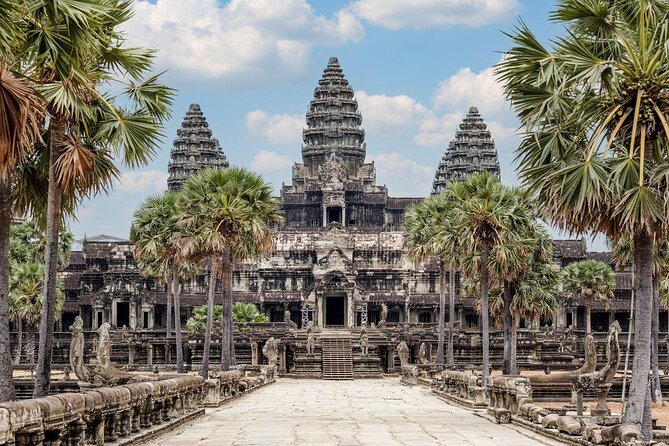
This is a full-day introduction to the Angkor complex, not a short ride with one famous photo stop. The schedule runs for about eight hours, beginning with hotel pickup at approximately 7:30 a.m. The stated meeting time is 8:30 a.m., so you should confirm your exact pickup time after booking.
The route focuses on four sites. Angkor Wat supplies the grand opening. Bayon gives you the strange, memorable faces of Angkor Thom. Ta Nei provides a quieter look at a ruined temple in the trees. Ta Prohm finishes the day with the famous roots gripping its stone buildings.
That mix is well judged. You see the most important monument, the great state temple of Jayavarman VII, a less-visited ruin, and the atmospheric temple made famous by its trees. You will not see every major site in the Angkor area, but the day has a clear theme and avoids turning the tour into a rushed checklist.
Cycling also changes how the day feels. You are not simply being carried from entrance to entrance. You have a more direct sense of distance and setting, though you should expect the heat and effort to matter. This is best for someone comfortable spending much of a day on a bicycle.
More Angkor Wat tours in Siem Reap:
- Angkor Wat Sunrise or Sunset Tour with Guide from Siem Reap
★ 5.0 · 12,109 reviews - Siem Reap: Angkor Wat: Small-Group Sunrise or Sunset Tour
★ 5.0 · 9,444 reviews - Siem Reap: Angkor Wat 2-Day Tour with Sunrise and Sunset
★ 4.9 · 4,429 reviews
Starting at Angkor Wat around 7:30 a.m.
Pickup is offered from your hotel in Siem Reap. The morning begins at the ticket booth, where you buy the temple pass if the tour operator has not already handled that step for you. Admission is not part of the $40 price, so set aside time and money for the pass.
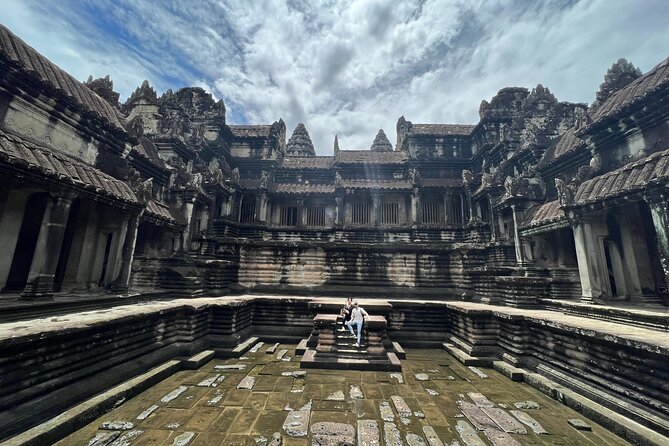
Angkor Wat is scheduled for about two hours. That gives your guide enough time to explain the temple and its place in the Khmer Empire, while you take in the scale of the site. The monument is the main reason many people come to Siem Reap, and starting here makes sense before moving into Angkor Thom.
A bicycle tour can be especially useful at Angkor Wat because the temple is large and the surrounding setting matters. You are not only looking at towers and galleries. The approach, the water, the broad grounds, and the relationship between the outer walls and central sanctuary all help explain the design.
Two hours is useful, but not unlimited. If you want a slow examination of every carved panel, this schedule may feel tight. If you want a clear introduction with time to see the main parts, it is a reasonable amount of time.
Bayon and the stone faces of Angkor Thom
Next, the ride continues to the south gate of Angkor Thom and then to Bayon Temple. The scheduled visit lasts about an hour and a half, making it one of the longer stops of the day.
Bayon was the state temple of Jayavarman VII, a Mahayana Buddhist king. Its most striking feature is the collection of large stone faces associated with Avalokiteshvara. The faces appear from different levels and angles, so the temple rewards slow movement and close attention.
This is where a guide can add real value. Bayon can look confusing at first, with towers, galleries, and faces packed into a compact area. An English-speaking guide can help you understand that the unusual layout is part of the monument’s character rather than a mistake in the design.
The visit also gives you historical contrast. Angkor Wat and Bayon do not communicate the same religious or royal message. You move from the grand, orderly scale of Angkor Wat to a more enclosed and visually complex temple built under Jayavarman VII.
The practical issue is fatigue. By this point, you have already spent time cycling and walking. The long Bayon stop is worthwhile, but take the chance to drink water and keep your pace steady. Bottled water is included, which is useful on a day when small comforts matter.
Ta Nei offers a quieter hour in the trees
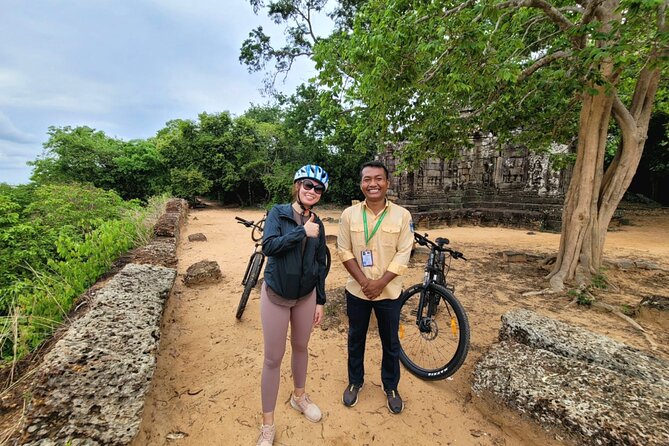
Ta Nei is scheduled for one hour and is described as a ruined temple along a jungle trail. It is included as a less-visited stop, away from the most famous Angkor monuments.
Do not expect Ta Nei to compete with Angkor Wat in scale. Its value is different. The ruined stone and forest setting let you see how an older temple can feel when the focus is not on grand courtyards or packed sightseeing routes. The stop includes time to rest and enjoy local fresh fruit.
This is one of the most appealing parts of the route for me. The major temples are essential, but a smaller ruin can give you breathing room and a better sense of the wider Angkor area. You get a change in mood, not just another large structure.
At the same time, the word jungle should not make you expect a long wilderness ride. The information provided does not give exact trail conditions or cycling distance. You should simply be ready for a less polished setting and ask the operator about the route if uneven ground is a concern.
The fresh fruit stop is a small but welcome detail. It breaks up the temple routine and gives the day a local touch without adding another formal attraction.
More lunch stops in Siem Reap:
- Angkor Wat Sunset Small Group Tour with Lunch Included
★ 5.0 · 3,059 reviews - Kulen Waterfall Join-in Tour (local Picnic lunch)
★ 5.0 · 2,434 reviews - Kulen Mountain: Small-Group Tour and Picnic lunch
★ 4.9 · 1,802 reviews - Phnom Kulen Waterfall & the Sacred 1000 Lingas (with Lunch)
★ 4.8 · 974 reviews
Ta Prohm closes the temple circuit
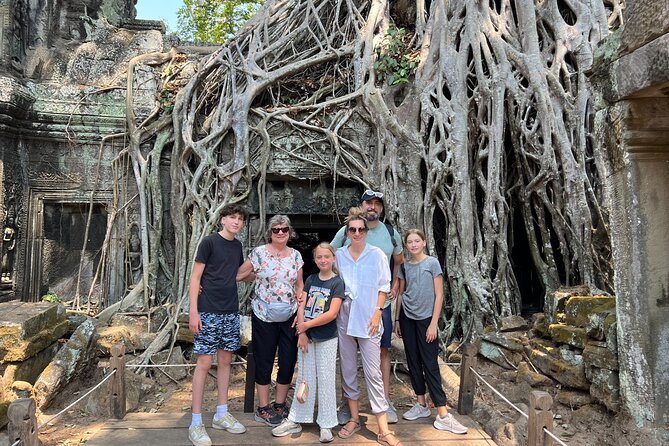
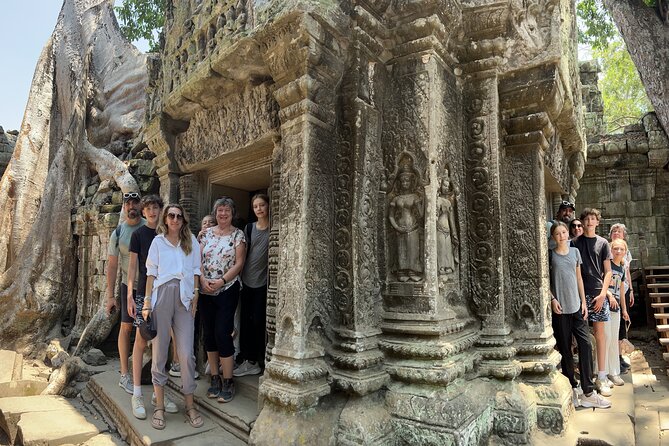
The last listed temple is Ta Prohm, with about one hour set aside for the visit. This is the temple where kapok trees clasp the stone structures with large roots, creating the image many people associate with Angkor’s ruins.
Ta Prohm has a different appeal from both Angkor Wat and Bayon. Angkor Wat shows control and scale. Bayon feels dense and expressive. Ta Prohm shows the tension between built stone and the forest around it. Its partly ruined appearance is central to the experience.
One hour is enough to see the main atmosphere and key areas, but it will not allow an unhurried look at every carving. Since this is the final stop, your energy level may shape the visit. The bike ride, heat, and walking can add up, so keep some reserve for Ta Prohm rather than using all your strength early in the day.
The sequence works well because Ta Prohm provides a strong final impression. You finish with roots, broken walls, and a setting that feels markedly different from the formal grandeur of the morning.
What the $40 price includes, and what it does not
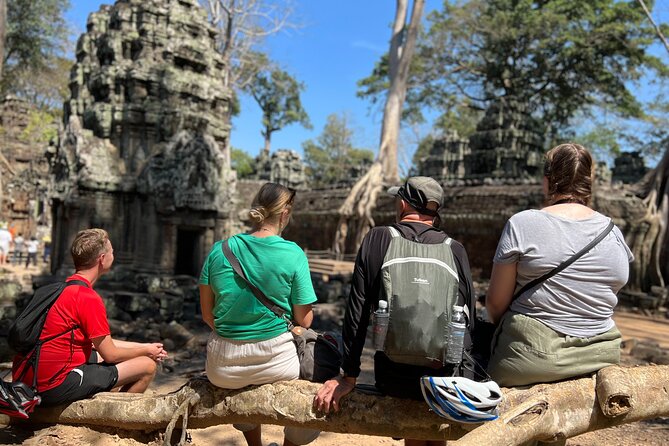
At $40 per person, the tour bundles several useful services: an English-speaking guide, a modern giant bike, bottled water, hotel pickup and drop-off, transportation, and lunch.
That is a fair value if you want one organized day rather than arranging each piece separately. The guide is important because the temples are not just scenic ruins. The buildings connect to royal power, religion, and the growth of the Khmer Empire. A guided explanation can turn a series of stone structures into a more understandable story.
Lunch is another practical advantage. You do not need to stop the sightseeing day to arrange a meal on your own, and the schedule includes food at a local restaurant. The exact restaurant and menu are not specified, so do not book this expecting a particular dish or dining style.
The temple pass is not included. Personal expenses, tips, and breakfast are also separate. Breakfast matters because pickup is early and the tour does not provide it. Eat beforehand or arrange breakfast through your hotel.
The tour also includes transportation, though the details of how transportation fits with the bicycle route are not fully stated. Pickup and drop-off are included, which is the important point for most people staying in Siem Reap.
Small groups make the guide more useful
The tour is described as having a minimum of two and a maximum of seven people. Another booking detail lists a maximum of ten, so you should confirm the expected group size before you pay if that point matters to you.
A small group is a major advantage on a bicycle tour. You can usually stay closer to the guide, ask questions, and avoid the stop-and-start feel of a large party. It also makes the cycling portion easier to manage.
Private tours are available for groups of four or more, with custom itineraries arranged by contacting the operator. That option could suit families or friends who want to adjust the balance between major temples and quieter sites.
The tour has a five out of five rating from 20 reviews, with 100 percent recommending it. The strongest praise centers on the local guide, cycling through Angkor Wat, Ta Prohm, and Bayon, and learning about the temples while riding. The experience is clearly being sold on the combination of local guidance and active sightseeing, not just transport.
No guide name is provided, so you cannot request a particular guide based on the information available. You can expect an English-speaking guide, but not a named specialist.
Is cycling the right way for you to see Angkor?

You should choose this tour if you want to be active and like the idea of seeing the temple area at a slower, more direct pace. It suits couples, friends, and small groups who would rather cycle than spend the whole day in a vehicle.
It can also work well for someone visiting Angkor for the first time. The route covers the essential headline sites, while Ta Nei keeps the day from becoming a simple greatest-hits circuit.
The main drawback is exertion. The tour lasts about eight hours, and Cambodia can be hot. You should be comfortable riding for much of the day, walking through large temple areas, and managing your energy. If you want the easiest possible sightseeing day, a vehicle-based tour may be a better fit.
The route may also be less suitable if you have limited mobility or do not feel safe on a bicycle. The supplied information says most people can participate, but it does not provide detailed accessibility information or describe the exact bikes beyond calling them modern giant bikes.
Practical details to settle before departure
Confirmation is received at booking, and the tour offers a mobile ticket. Pickup is available, but the listed times need clarification: the itinerary says pickup is approximately 7:30 a.m., while the meeting information gives an 8:30 a.m. start.
Ask the operator to confirm:
- Your exact hotel pickup time
- The final group size
- How the ticket-booth stop works
- The bicycle route and expected riding conditions
- Where lunch is served
- Whether transportation is used at any part of the day
The experience requires good weather. If poor weather causes cancellation, you are offered another date or a full refund. You can cancel for a full refund up to 24 hours before the start time. Cancellations or changes made less than 24 hours before departure are not refunded or accepted.
Should you book the Angkor Wat bike tour?
Book it if you want active temple sightseeing, a small group, and a full day that combines the famous monuments with a quieter stop at Ta Nei. The included lunch, bike, water, guide, and hotel transfers make the $40 price useful, provided you remember that the temple pass is extra.
Think twice if you dislike heat, long days, or cycling on an itinerary with several walking stops. The best reason to choose this tour is not simply convenience. It is the chance to connect the temples by bicycle and to see Angkor as a large ancient city rather than a string of isolated entrances.
FAQ
What is included in the Angkor Wat bike tour?
The tour includes an English-speaking guide, a modern giant bike, bottled water, hotel pickup and drop-off, transportation, and lunch.
Is the temple pass included?
No. The temple pass is not included in the $40 price. The itinerary includes a stop at the ticket booth so you can buy the pass.
How long does the tour last?
The tour lasts approximately eight hours.
What temples are visited?
The route includes Angkor Wat, Bayon Temple, Ta Nei Temple, and Ta Prohm.
What time does the tour start?
Pickup is listed at approximately 7:30 a.m., while the meeting information lists an 8:30 a.m. start. Confirm your exact pickup and start time after booking.
How large is the tour group?
The tour description gives a minimum of two and a maximum of seven people. Another booking note lists a maximum of ten, so confirm the final group size with the operator.
Can I cancel for a refund?
Yes. You can cancel up to 24 hours before the experience starts for a full refund. If poor weather causes the operator to cancel, you are offered another date or a full refund.
Just added around Siem Reap
- Ultimate Sunrise to Angkor Wat, Angkor Thom and Bayon Temple★ 5.0 · 3 reviews
- Twilight Tastes of Siem Reap Include Dinner★ 5.0 · 13 reviews
- Full-Day Private Tour of Angkor Wat with Pick Up★ 5.0 · 12 reviews
- Trekking Tour at Phnom Kulen National Park from Siem Reap★ 5.0 · 3 reviews
- Siem Reap City Tour with War Museum and Killing Field★ 5.0 · 27 reviews
- Private Day Trip to Angkor Temples with Expert Guide★ 5.0 · 4 reviews
- Waterfall & River of 1000 Siva Linga- Kulen Mountain Private Tour★ 5.0 · 3 reviews
- Private Two Days Siem Reap Temples Discovery Guided Tour★ 5.0 · 7 reviews
Angkor Wat Tours, compared.
Angkor Wat Sunrise or Sunset Tour with Guide from Siem Reap
Read our review →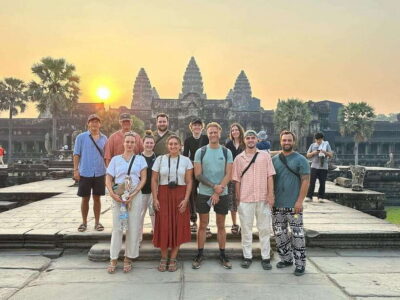
Angkor Wat: Small-Group Sunrise or Sunset Tour
Read our review →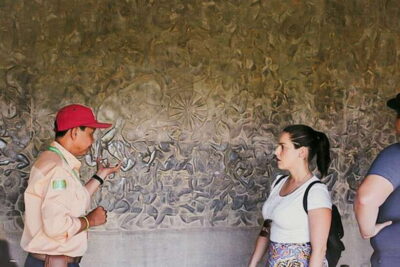
Angkor Wat 2-Day Tour with Sunrise and Sunset
Read our review →
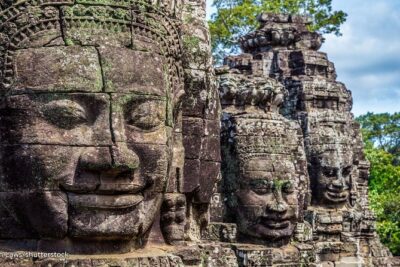
Angkor Wat Sunrise tour with Small – Group and Guide tours
Read our review →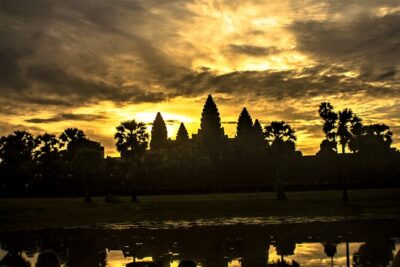
Angkor Wat Highlights and Sunrise Guided Tour from Siem Reap
Read our review →
Angkor Wat Sunset Small Group Tour with Lunch Included
Read our review →
Full-Day Angkor Wat Sunrise Private Tour with Guide from Siem Reap
Read our review →Browse the lists this tour appears in