
Reviewed · ANGKOR SUNSET TOURS
Angkor Highlights and Sunset Tour
Angkor Wat is only the beginning here. This nine-hour temple circuit moves from the grand galleries of Angkor Wat to Bayon’s calm stone faces, Ta Prohm’s tree-wrapped ruins, and a sunset climb at Phnom Bakheng. You get a useful story for each place, not just a ride between monuments.
I like the personal feel created by an English-speaking guide who can answer questions, and I like the small practical touches: chilled bottled water and fresh towels in the vehicle. Guide Tann is also noted for taking excellent photos and video clips, a welcome bonus at sites where it is easy to lose track of who is holding the camera.
The main catch is cost clarity. The tour is $27, but the Angkor entrance pass costs another $37, and lunch is not included. You should also expect a full, warm day with a late return after the sunset stop.
Key points at a glance
- Five major Angkor sites: Angkor Wat, Angkor Thom, Bayon, Ta Prohm, and Preah Khan are all included.
- Sunset at Phnom Bakheng: Finish with a walk up the hill and views over the jungle canopy and distant temple spires.
- Guide-led sightseeing: An English-speaking local guide explains carvings, royal ceremonies, temple design, and Khmer history.
- Useful comfort touches: Air-conditioned transport, hotel pickup, bottled water, and towels are provided.
- Good photo help: Guide Tann is specifically noted for taking photos and short video clips.
- Real total cost: Add the $37 temple entrance fee and pay separately for breakfast, lunch, and drinks.
Why this makes a strong first day at Angkor
This tour gives you the classic Angkor route in one long sweep. You see the monuments most people hope to visit, but the order also creates a sensible arc: Angkor Wat first, the royal city of Angkor Thom next, jungle-covered ruins after lunch, and a high viewpoint at the end.
I like this approach for a first visit because the temples are not interchangeable. Angkor Wat shows the scale and order of Khmer architecture. Bayon feels more mysterious and human, with its repeated faces. Ta Prohm offers the dramatic image of stone meeting giant roots. Preah Khan adds another large ruin with a quieter feel.
The guide matters here. Angkor is a place where a row of carved figures can look like decoration until someone explains what you are seeing. The guide will point out symbolic architecture, tell you why certain spaces mattered, and help connect the temples to the Khmer Empire. You can also ask questions as you go, which makes the day feel less like a scripted bus stop.
The tour is described as a group experience, but the chance to ask questions gives it a more personal quality. Group size is not specified, so I would not book this expecting a fully private tour. Still, an attentive guide can make a major difference, especially at Angkor Wat and Bayon, where there is a great deal to take in.
More sunset temple tours in Siem Reap:
- Angkor Wat Sunrise or Sunset Tour with Guide from Siem Reap
★ 5.0 · 12,109 reviews - Siem Reap: Angkor Wat: Small-Group Sunrise or Sunset Tour
★ 5.0 · 9,444 reviews - Siem Reap: Angkor Wat 2-Day Tour with Sunrise and Sunset
★ 4.9 · 4,429 reviews
Angkor Wat, two hours with the empire’s great showpiece
Your morning begins with about two hours at Angkor Wat, the largest and most complete temple in the Angkor complex. This is the place to slow down and let the scale register. Long galleries, towers, courtyards, and detailed carvings give the guide plenty to explain.
I appreciate the two-hour allowance. Angkor Wat is too large for a quick photo stop, and a rushed visit would leave you with little sense of how the parts fit together. You can hear about the meaning behind the architecture while moving through the galleries and courtyards, then pause for photographs and questions.
The practical drawback is that two hours still cannot cover every corner. You will get a strong introduction rather than a total inspection. If one carving or gallery captures your attention, you may need to accept that the schedule keeps moving.
The pickup window is 8:30 to 9:00 in the morning, with pickup at your hotel lobby in Krong Siem Reap. Be ready before the agreed time. A late start would put pressure on the later stops, especially the sunset climb.
Angkor Thom and the Terrace of the Elephants
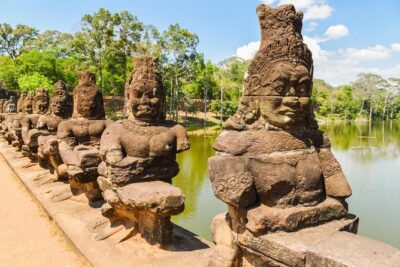
The tour then moves into Angkor Thom, the last capital of the Khmer Empire. The itinerary gives about 15 minutes to the city entrance, where you pass through the impressive Victory Gate and see giant stone faces and rows of guardian statues.
Fifteen minutes is brief, so think of this as an introduction to the gate rather than a full exploration of Angkor Thom’s walls and entrances. The guide can provide the context while you take in the scale of the approach. The gate is one of those places where a short stop still works because the architecture makes an immediate impression.
Inside the ancient city, you visit the Terrace of the Elephants for about 20 minutes. This 350-meter platform was used for royal ceremonies and public events, and its detailed carvings help explain how grand civic life once unfolded here.
The terrace is long and open, so the guide’s explanation is especially useful. Without context, you might simply see a carved stone wall. With the story of ceremonies and royal display, the platform becomes part of a much larger picture of power and public life.
Again, the timing is efficient rather than leisurely. You will see the key features, but you should not expect a long independent walk along the full terrace.
Bayon’s stone faces and a useful hour to look closely
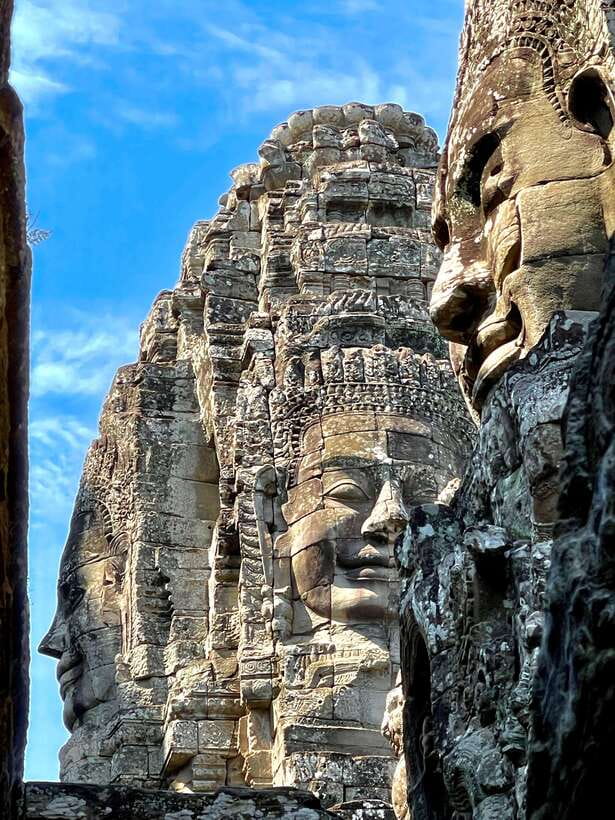
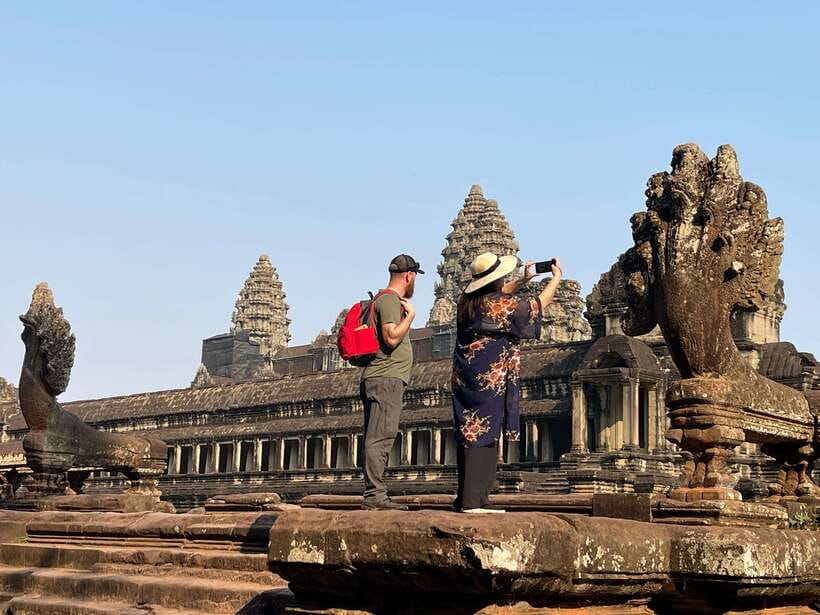
Bayon receives about an hour, which gives this stop more breathing room. The temple is famous for its 54 towers, each topped with four serene faces. The repeated faces create a visual puzzle: from many angles, they seem to watch over the paths and courtyards.
This is one of the best places to have a guide. The design is unusual, and the temple can feel confusing as you move among its towers. Your guide will explain the importance of the temple and help you notice details that might otherwise blur together.
I would use the hour to alternate between close inspection and a few moments simply looking up. Bayon is not only about one famous image. The towers, passageways, carvings, and changing views work together, and the slower pace lets you see more than the standard photo.
The site can also feel visually crowded because so many towers compete for your attention. A guide helps impose order on the visit. You may not remember every historical detail, but you should leave understanding why Bayon feels so different from Angkor Wat.
More Angkor Wat tours in Siem Reap:
- Siem Reap: Full-Day Angkor Wat Guided Tour with Sunset
★ 4.9 · 3,803 reviews - Angkor Wat Sunrise tour with Small – Group and Guide tours
★ 5.0 · 3,655 reviews - Angkor Wat Highlights and Sunrise Guided Tour from Siem Reap
★ 5.0 · 3,213 reviews - Angkor Wat Sunset Small Group Tour with Lunch Included
★ 5.0 · 3,059 reviews
Lunch at a local restaurant
Lunch lasts about an hour at a local restaurant. Food and drinks are not included, so bring money for this stop. Breakfast is also your responsibility, which matters because pickup is in the morning and the first major visit lasts two hours.
The lunch break gives you a needed pause before the afternoon temples. After several hours of walking in the heat, sitting down is not wasted time. It helps you return to the ruins with enough energy for Ta Prohm, Preah Khan, and the final hill walk.
The exact restaurant and menu are not specified, so I would avoid planning around a particular dish or price. Treat the hour as a practical meal stop rather than a featured culinary experience.
Ta Prohm, where roots take over the ruins
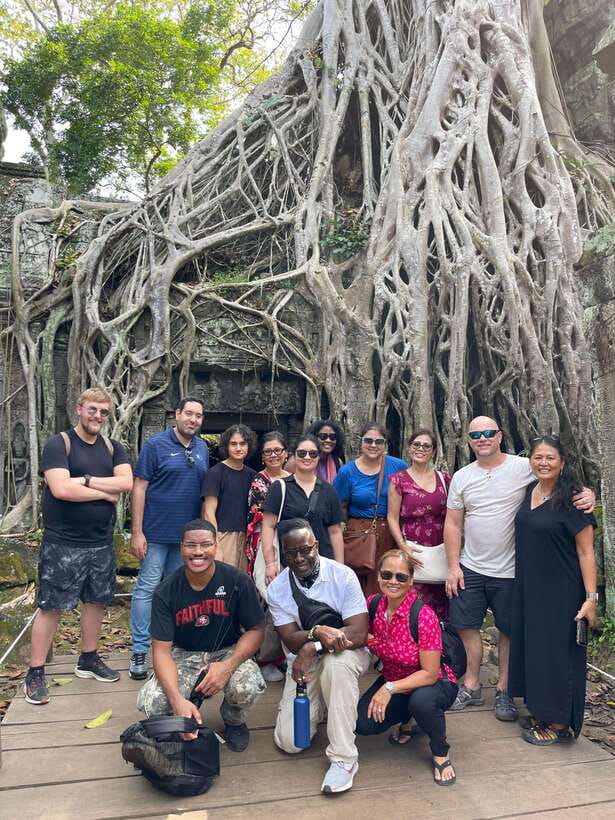
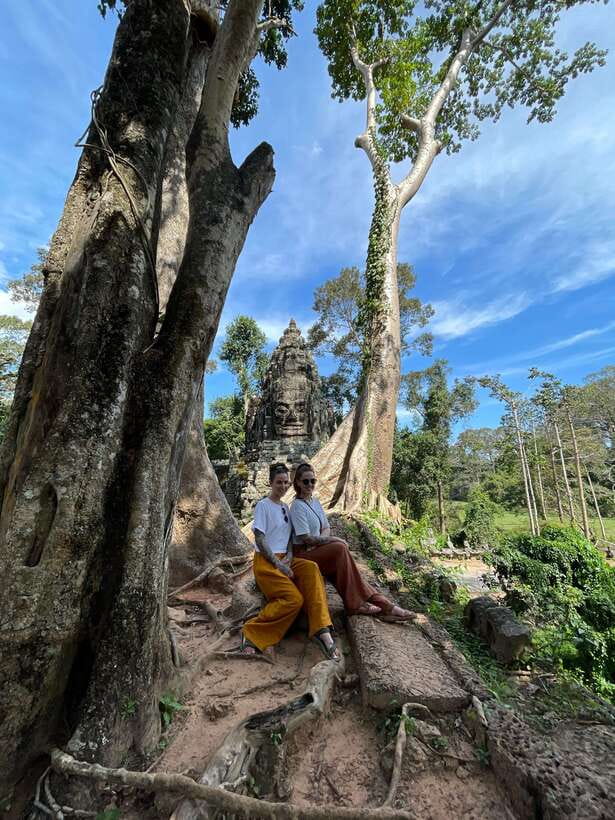
After lunch, you spend about an hour at Ta Prohm. This is the temple most closely associated with the film Tomb Raider, but its appeal does not depend on the movie. Enormous tree roots wind through the stone structures, making the site look as if the forest is slowly reclaiming the buildings.
Ta Prohm offers a sharp contrast with Angkor Wat’s formal design. Here, broken walls, doorways, roots, and shadow create a more atmospheric visit. The guide can explain what you are seeing, but you will also want time to stop and study the way the trees and stone have become part of the same scene.
An hour is enough for a solid visit, though the site rewards a slow pace. The photo opportunities are obvious, and this is where Tann’s photo and video skills can be especially useful if he is your guide. You can ask him to help capture the scale of the roots and the temple rather than leaving with only another standard portrait.
Ta Prohm is also one of the busiest-feeling stops in the route, though the supplied information does not give crowd levels or visit conditions. The main practical point is to stay with the schedule. It is easy to spend too long photographing one doorway and then feel rushed later.
Preah Khan, a longer and quieter final temple visit
Preah Khan follows Ta Prohm, with about 70 minutes set aside for exploration. This is a valuable addition because the tour does not stop after the most famous jungle temple. You get another substantial ruin where you can keep comparing styles, layouts, and states of preservation.
The longer visit gives you room to listen, walk, and take photographs without the same tight timing as Angkor Thom’s entrance or the Terrace of the Elephants. Your guide can continue the story of the Angkor period and explain features that make Preah Khan distinct.
The supplied details do not specify individual buildings or carvings at Preah Khan, so I would treat this as a guided exploration rather than arrive with a fixed checklist. The value is in seeing another major site and understanding that Angkor is a whole network of temples, not just the four or five images most often used in brochures.
By this point, you may be feeling the length of the day. That is the tradeoff for covering so much ground. If you prefer a slow, single-temple visit, this schedule will feel packed. If you want a broad first look at Angkor, the variety is a major strength.
Phnom Bakheng and the sunset finish
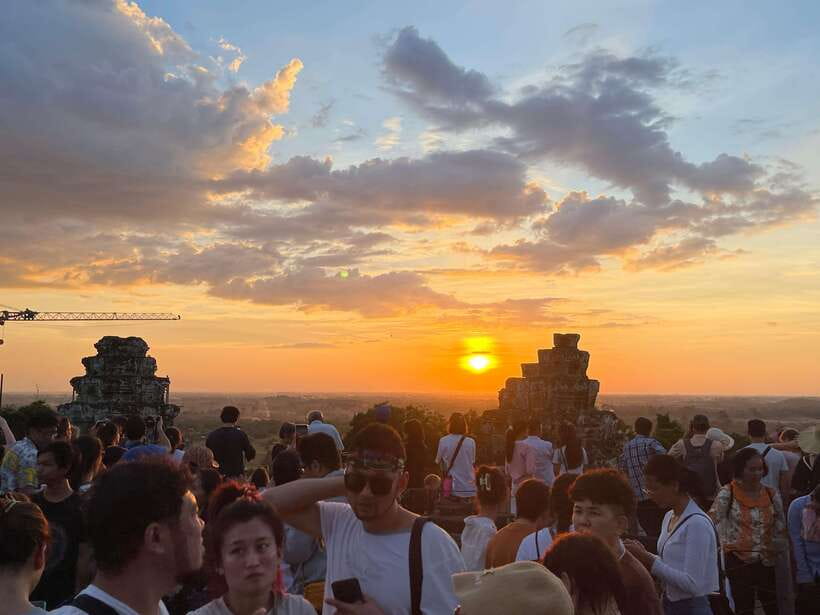
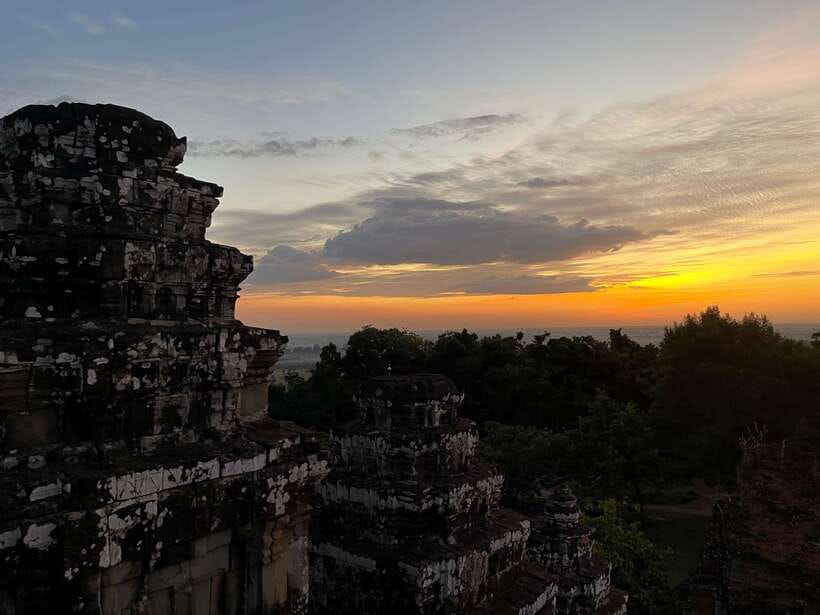
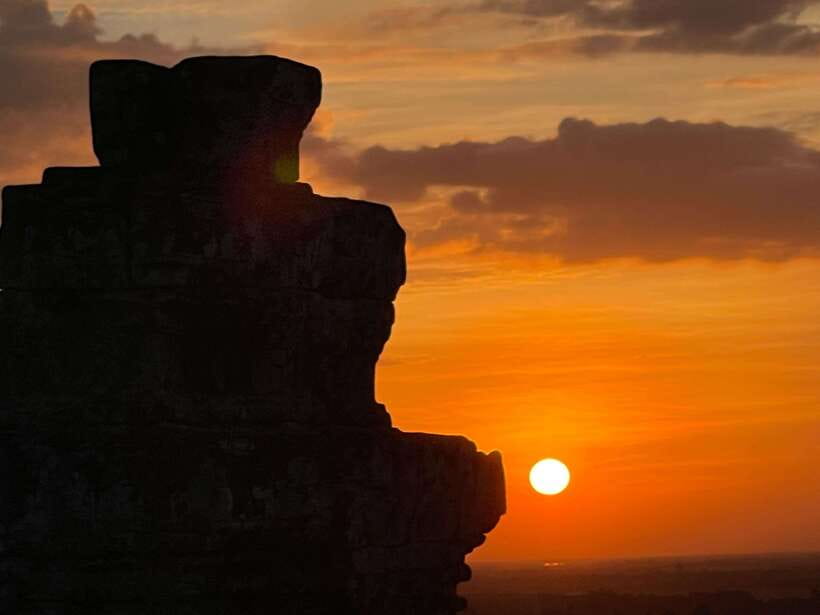
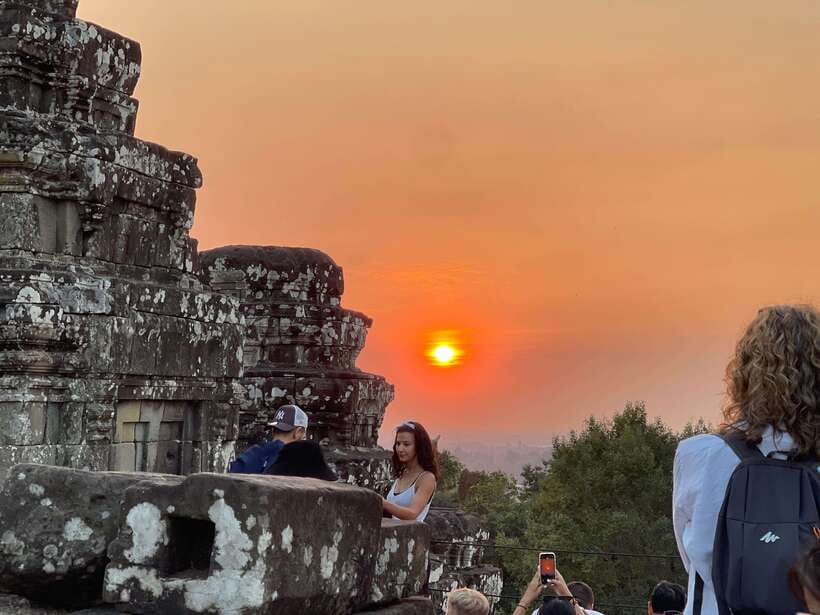
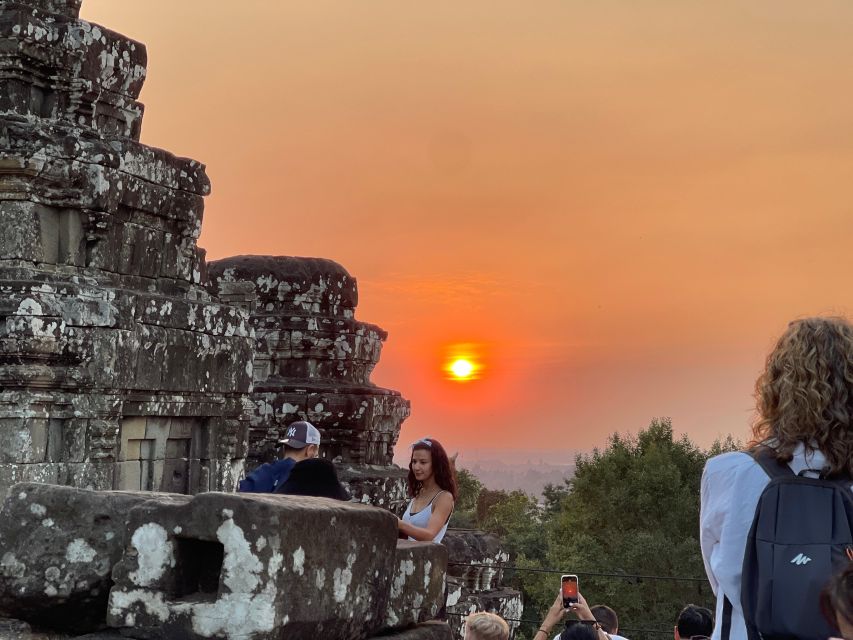
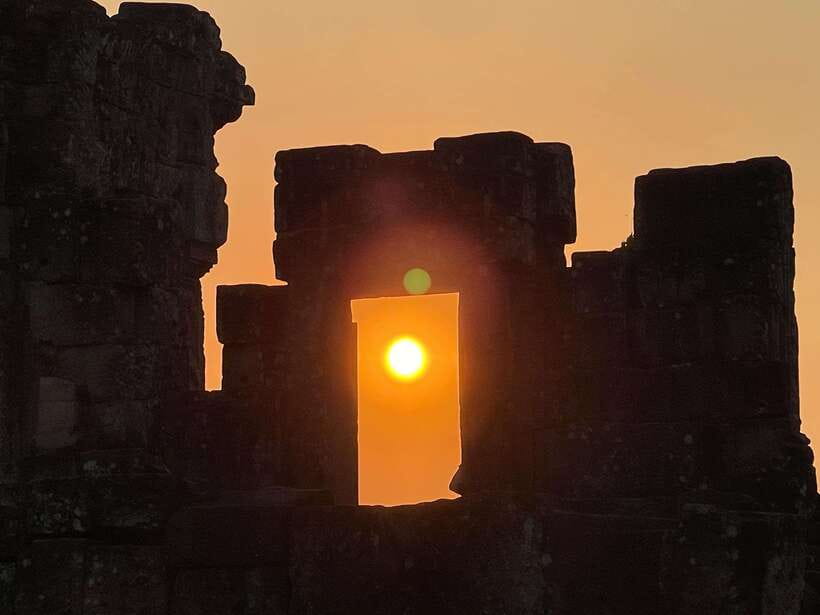
The final stop is Phnom Bakheng, with about 90 minutes for the visit and sunset. You walk to the top of the mountain and look over the jungle canopy toward distant temple spires.
Ending here gives the day a clear finish. Instead of returning to town immediately after the last ruin, you get time to step back and see the setting around Angkor. The view is the reward for saving some energy after a long circuit.
You should think of this as a walk uphill, not a roadside viewpoint. The information provided does not state the walking distance or the physical difficulty, so the safest advice is to pace yourself and keep water nearby. The tour provides bottled water, and the air-conditioned vehicle offers a welcome break before or after the climb.
Sunset timing can make this the least flexible part of the day. The tour needs to arrive in time for the light, and the 90-minute visit may include the walk, viewing time, and descent. Do not count on a long, unhurried stop at every earlier temple if you want to enjoy this ending without pressure.
What the $27 price really covers
At $27 per person, the tour is priced as a low-cost way to arrange transport and guiding for a full day at Angkor. The price includes an English-speaking professional guide, an air-conditioned vehicle, hotel pickup and drop-off in the city, bottled water, towels, and the listed sightseeing.
The important extra is the temple pass. Entrance fees cost $37 per person and cover all the temples on this route. Add your own breakfast, lunch, and drinks, and the total cost is notably higher than the advertised tour price.
Even so, the value is easy to understand. You are paying for a nine-hour route that covers the major sites without arranging separate transport between each one. The guide also adds value by explaining the carvings and architecture, answering questions, and potentially helping with photos and video.
The fresh towels and cold mineral water are small details, but they matter in a hot temple day. One particularly positive account praised the driver for taking care of these touches. I would not choose the tour on towels alone, but I would be glad to have them after walking through several large complexes.
Guide, vehicle, and the personal feel
The tour includes an English-speaking guide and an air-conditioned vehicle. The guide and driver pick you up at your hotel lobby and return you to Krong Siem Reap at the end of the day.
Guide Tann is specifically associated with this experience and is described as friendly, well-informed, and good at taking photos and video clips. You should confirm the assigned guide if having Tann matters to you, since guide assignment is not guaranteed in the supplied details.
The photo help is more than a novelty. Angkor has wide courtyards, tall towers, dark galleries, and dramatic roots. A guide who knows how to frame photos can save you time and give you more than a quick snapshot taken at arm’s length.
The group size is not provided. You should expect a guided shared experience unless your booking confirms otherwise. The chance to ask questions helps, but the pace may still be set by the whole group.
Who should book this Angkor day?
I would choose this tour if you have one main day for Angkor and want to cover the classic sights in a practical order. It suits first-time visitors who want an English explanation, hotel pickup, air-conditioned transport, and help with photos.
It also works well for people who value variety. You move from formal temple design to royal terraces, Bayon’s faces, jungle-covered stone, another major ruin, and a sunset view. Few stops feel alike.
I would think twice if you dislike early starts, long days, or scheduled sightseeing. The route covers a lot, and lunch, walking, heat, and the Bakheng climb add up. It is also not the best match if you want to linger at one temple for hours or explore at your own pace.
Book only after adding the $37 entrance fee to the $27 tour price. Then decide if the full amount still fits your budget. If it does, the combination of major temples, guide support, transport, and sunset makes this a strong value for a first Angkor visit.
FAQ
How long does the Angkor Highlights and Sunset Tour last?
The tour lasts nine hours. Pickup is scheduled between 8:30 and 9:00 am, with return to Krong Siem Reap after the sunset visit.
Which temples are included?
The route includes Angkor Wat, Angkor Thom, Bayon Temple, the Terrace of the Elephants, Ta Prohm, Preah Khan, and Phnom Bakheng.
Is the Angkor entrance fee included?
No. The temple entrance fee costs $37 per person and covers all the temples included in the route.
Is lunch included?
No. Breakfast, lunch, and drinks are not included. The schedule allows one hour for lunch at a local restaurant.
Is hotel pickup provided?
Yes. Pickup and drop-off at city hotels are included. The guide and driver collect you from the hotel lobby.
What language does the guide speak?
The live tour guide speaks English.
Just added around Siem Reap
- Ultimate Sunrise to Angkor Wat, Angkor Thom and Bayon Temple★ 5.0 · 3 reviews
- Full-Day Private Tour of Angkor Wat with Pick Up★ 5.0 · 12 reviews
- Trekking Tour at Phnom Kulen National Park from Siem Reap★ 5.0 · 3 reviews
- Twilight Tastes of Siem Reap Include Dinner★ 5.0 · 13 reviews
- Siem Reap City Tour with War Museum and Killing Field★ 5.0 · 27 reviews
- Private Day Trip to Angkor Temples with Expert Guide★ 5.0 · 4 reviews
- Waterfall & River of 1000 Siva Linga- Kulen Mountain Private Tour★ 5.0 · 3 reviews
- Private Two Days Siem Reap Temples Discovery Guided Tour★ 5.0 · 7 reviews
Angkor Sunset Tours, compared.
Angkor Wat Sunrise or Sunset Tour with Guide from Siem Reap
Read our review →
Angkor Wat: Small-Group Sunrise or Sunset Tour
Read our review →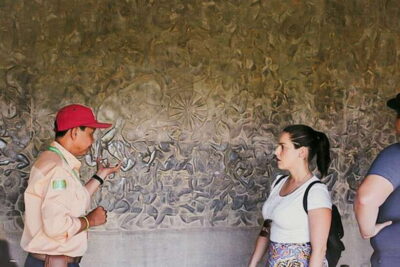
Angkor Wat 2-Day Tour with Sunrise and Sunset
Read our review →
Angkor Wat Sunset Small Group Tour with Lunch Included
Read our review →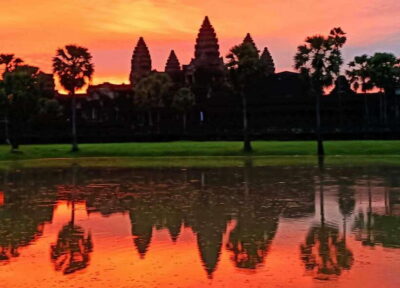
2 Days Exclusive Temple Highlights with Sunset and Sunrise Tour
Read our review →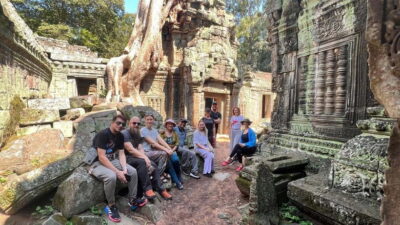
2-Day Temple Highlights Sunrise and Sunset Option
Read our review →Browse the lists this tour appears in