
Reviewed · BANTEAY SREI TEMPLE TOURS
Grand Circuit with Banteay Srei and Banteay Samre Tour
The most rewarding part of this tour is its focus on quieter Angkor temples rather than the usual headline stops. You move from the long corridors of Preah Khan to the pink sandstone carvings of Banteay Srei, then finish among the laterite towers of Pre Rup. It gives you a fuller sense of how varied Khmer temple design can be.
I like the wide variety of sites and the fact that the tour is private to your own group. I also like the practical setup: air-conditioned transport, an English-speaking guide, bottled water, and time to stop in villages on the road to Banteay Srei. The main catch is cost and pace: the $59 tour price does not include the $37 Angkor Pass, lunch, or drinks, and seven temples in 8 to 9 hours means some visits are brisk.
Key points to know
- Banteay Srei is the visual prize: Its small scale and finely cut pink sandstone carvings make it unlike the larger Angkor temples.
- Seven temples fill the day: You visit Preah Khan, Ta Som, Neak Pean, East Mebon, Banteay Srei, Banteay Samre, and Pre Rup.
- The Angkor Pass costs extra: Budget $37 per person for a one-day pass if you do not already have one.
- The tour is private: Only your group participates, even though group discounts are offered.
- Guides and drivers are named: Pheng and Chen are mentioned as guides, with Mai noted as a driver in the tour company’s feedback.
- Modest clothing is required: Cover your shoulders and thighs, or temple entry may be refused.
Why this Grand Circuit route is worth your day
Many first visits to Angkor concentrate on Angkor Wat, Bayon, and Ta Prohm. This tour takes a different line through the complex and beyond it, giving you more time with temples that feel less crowded and less familiar.
The route is especially good if you have already seen the main monuments or want a second day that adds variety rather than repeating the best-known sites. You get Buddhist and Hindu temples, large royal foundations, small decorative sanctuaries, reservoirs, causeways, and towers. That range makes the day feel like a survey of Khmer architecture rather than a single grand photo stop.
You should expect roughly 8 to 9 hours in total. That is a full day, but the schedule has a sensible rhythm. Preah Khan receives about two hours, Banteay Srei about two hours, and several smaller sites take 30 to 45 minutes. You will have enough time to look around, though not enough to linger at every carving.
The tour includes an English-speaking guide, air-conditioned car, minivan, or minibus, and bottles of drinking water. Pickup is offered. Since the activity is private, you can enjoy the day with your own party rather than being folded into a large coach group.
More Banteay Srei tours in Siem Reap:
- Full-Day Banteay Srei & 4 Temples – Grand Tours Join-in Tour
★ 5.0 · 1,155 reviews - Siem Reap Tour: Angkor Wat Sunrise, Bayon, Ta Prohm, Banteay Srei
★ 5.0 · 931 reviews - 2-Day Angkor Wat With Small, Big Circuit and Banteay Srei Tour
★ 5.0 · 545 reviews
Preah Khan gives the morning real substance
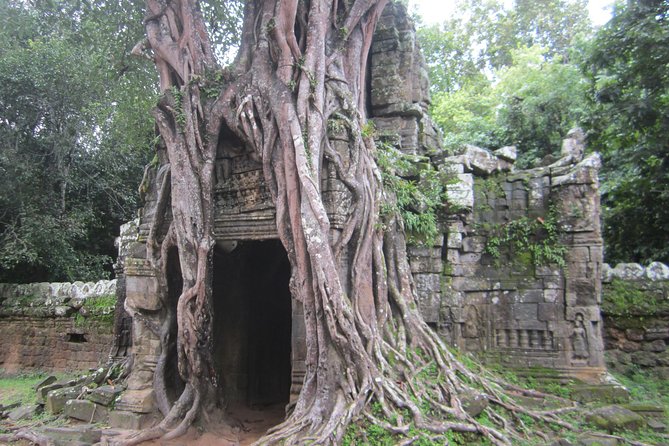
Preah Khan is a strong opening stop. Built in the 12th century by King Jayavarman VII and dedicated to his late father, it translates as Royal Sword. The temple lies about 1 kilometer north of Angkor Thom and is one of the larger sites on this route.
Allow around two hours here. That longer visit matters because Preah Khan is not a single tower you can understand in ten minutes. You move through an extended complex of galleries and courtyards, with the remains of the old structure spreading around you.
I would listen closely to the guide at this stop. The scale can be confusing without context, and the connection to Jayavarman VII gives the site a useful place in the story of the Khmer kings. Guides named Pheng and Chen have been associated with this tour, and the company places strong emphasis on explaining Khmer rulers, religion, and local life.
The drawback is that a large temple can make you feel as if you are always walking toward one more doorway. Wear sensible footwear and keep some water at hand. The tour provides bottled water, but you still need to manage your own pace in the heat.
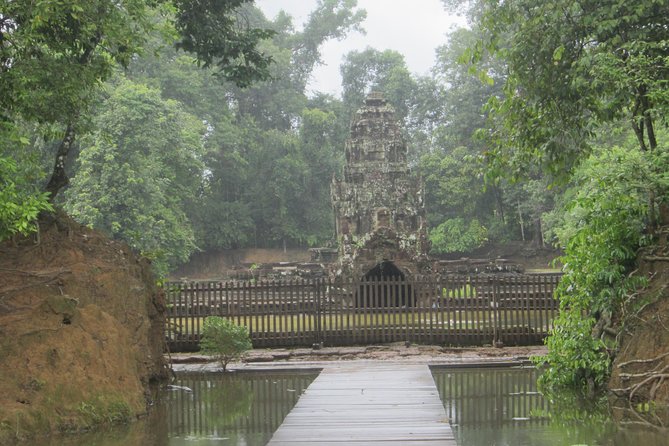
Neak Pean turns water into temple design
Neak Pean is a short but unusual stop. It is a 12th-century Buddhist temple built on a man-made island, and its name means Entwined Serpents.
You have about 45 minutes here. That is usually enough to reach the temple, see its setting, and hear why water mattered to the design. The approach and island setting give Neak Pean a different feel from the enclosed corridors of Preah Khan.
This is one of the places where a guide adds real value. The monument is compact, and the meaning is not always obvious from the remaining stonework. Ask your guide to explain the relationship between the island, the surrounding water, and the temple’s Buddhist purpose.
Do not expect another giant complex. Neak Pean is more about layout and setting than long exploration. It works well in this itinerary because it breaks up the larger temple visits.
Ta Som keeps the scale small and personal
Ta Som, also built by Jayavarman VII in the 12th century, receives about 30 minutes. That makes it one of the quickest stops, but its smaller scale gives the schedule some balance.
You can see the basic form of another Jayavarman VII temple without committing another two hours to a large compound. The visit is useful as a contrast with Preah Khan. Here, the interest comes from the compact plan and the quieter mood rather than sheer size.
Thirty minutes will pass quickly if you are taking photographs or listening to a detailed explanation. Keep an eye on the meeting time so this short stop does not cut into Banteay Srei later in the day.
More small and grand circuit tours in Siem Reap:
- Full-Day ‘Big Tour’ with Sunset at Phnom Bakheng
★ 5.0 · 341 reviews - Private sunrise ‘small tour’ of Angkor Wat with car or van & Guide
★ 5.0 · 179 reviews - Siem Reap: Banteay Srei and Grand Circuit Heritage Tour
★ 4.9 · 163 reviews - Banteay Srei and Grand Circuit Heritage Tour from Siem Reap
★ 5.0 · 142 reviews
East Mebon brings out the elephants
East Mebon is a 10th-century temple and a good example of early Khmer architecture. The visit lasts about 30 minutes.
One detail worth watching for is the elephant imagery. The tour company’s feedback specifically highlights the elephants at East Mebon, so this is a good place to slow down and look at the sculpture rather than simply photographing the central towers.
East Mebon also helps you see a change in architectural style. The itinerary moves from the 12th-century work of Jayavarman VII to an earlier 10th-century monument, then later to Banteay Srei and Pre Rup. Your guide can help connect those changes to different periods and religious uses.
Again, this is a quick stop. You will get an introduction, not an exhaustive study. If you like taking your time at every temple, the schedule may feel tight. If you want a broad day with several distinct sites, the pace works better.
Banteay Srei earns its two-hour visit
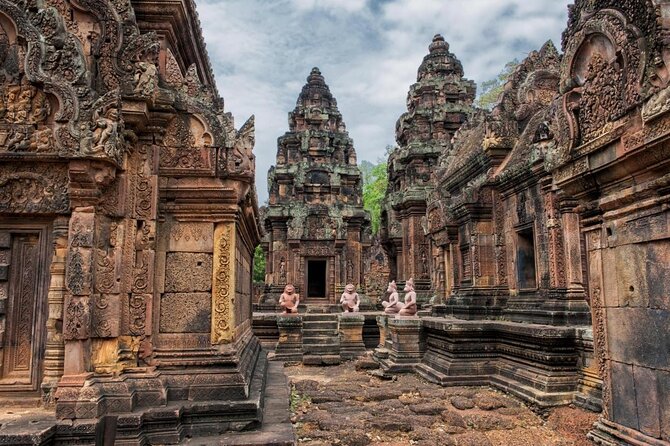
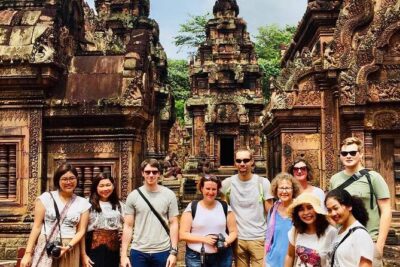
Banteay Srei is the centerpiece of the afternoon and the stop most likely to stay in your memory. Its name is often translated as Citadel of the Women, and it is known for elaborate carvings of Hindu deities. The temple is built from pink sandstone, which gives it a warmer, more delicate appearance than the larger gray stone monuments closer to Siem Reap.
You receive about two hours here, and that is the right amount of time for a careful visit. The carvings are the reason to come. Look closely at the doorways, lintels, and pediments rather than standing back only for a wide photograph. The small scale lets you study details that can be easy to miss at a huge temple.
The journey out to Banteay Srei is part of the appeal. The route passes villages, and the tour allows for stops to experience the surroundings and take photographs. The exact stops are not fixed in the information provided, so you should treat them as possible additions rather than guaranteed visits.
Banteay Srei is also the reason this tour is not simply a standard Grand Circuit loop. It sits farther out than the central Angkor sites, so adding it makes for a longer day. In return, you get one of the most distinctive temples in the region.
Plan your clothing before leaving. All visitors must cover their shoulders and thighs at the temples. A sleeveless top or short shorts could mean refusal at the entrance, which would be a poor way to lose time at the day’s most anticipated stop.
Banteay Samre offers a quieter counterpoint
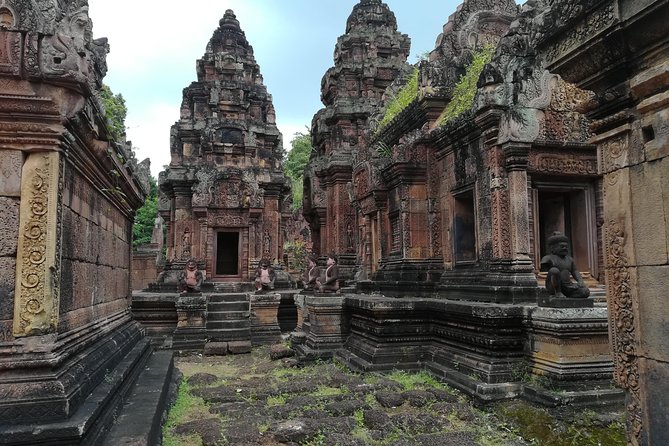
On the way back from Banteay Srei, the route stops at Banteay Samre and Pre Rup. The information assigns about one hour to Banteay Samre, though the overall schedule also gives Pre Rup its own 40-minute visit.
Banteay Samre is a useful pause after the detail-heavy carvings of Banteay Srei. Instead of focusing on a small pink sanctuary, you get another temple compound to compare with what you have already seen. The visit also helps make the long return route feel purposeful.
Because the itinerary has several sites packed into one day, ask the guide how much time is planned at each stop. The operator describes Banteay Samre as part of the afternoon route, but the exact division of that hour is not fully spelled out. That is not a serious problem, though it is worth clarifying if you have a particular interest in this temple.
Pre Rup closes with a strong silhouette
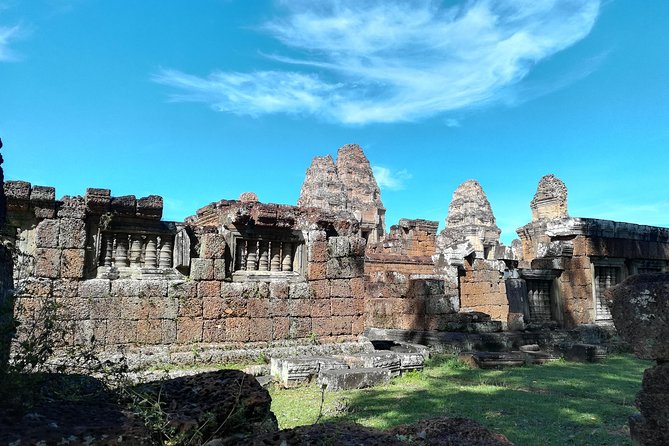
Pre Rup is a Hindu temple built in the late 10th century and dedicated to Shiva. Its 40-minute stop gives the day a clear finish and adds another example of early Khmer religious architecture.
After a day of Buddhist and Hindu sites, Pre Rup gives you a final chance to compare forms and purposes. The temple’s stepped construction makes it visually different from the flatter, gallery-based layout of some earlier stops.
Do not treat the final visit as an optional extra. It is one of the stops that gives the route historical range. If the day has felt full, your energy may be lower by this point, but the guide can help you focus on the main features without trying to inspect every stone.
What $59 really covers
The listed price is $59 per person. That sounds modest for a private, full-day temple outing, but you need to add the Angkor Pass if you do not already have one. A one-day pass costs $37 per person, making the basic combined cost $96 before lunch and drinks.
The $59 includes the English-speaking guide, transportation in an air-conditioned car, minivan, or minibus, and bottled water. It does not include the temple entrance fee, food, drinks, or accommodation.
I see the value in the private format. You are paying for a long day with your own group, not just a seat in shared transport. The guide also gives the temples more meaning, especially at Neak Pean, East Mebon, and the two different architectural periods represented across the route.
The value is less clear if you already have transport and prefer to explore independently. You may also want a more relaxed arrangement if your main goal is photography. Seven temples in one day is efficient, but it is not leisurely.
Lunch is at your own expense, with a restaurant recommended during the day. Since the tour does not set a lunch price, carry enough money for food and drinks and ask the guide about the timing before the morning gets too far along.
Guides, transport, and the shape of the day
The company identifies several people by name in its correspondence and feedback. Pheng is described as a guide with fluent English and a professional manner. Chen is also associated with detailed explanations of Khmer kings and religion, while Mai is named as a driver.
You should not assume that a particular guide will be assigned unless the operator confirms it. Still, these names give you a useful idea of the service structure: a local guide handles the temple explanations, while a driver manages the road between sites.
Air conditioning matters in Cambodia, especially on a full day with repeated walks in the sun. The available vehicle may be a car, minivan, or minibus, depending on the size of your party. Pickup is offered, and the activity is private to your group.
The itinerary is not built for visitors who need a long break after every temple. You will walk, climb at some sites, and get back into the vehicle several times. Most people can participate, but you should be ready for a physically active day.
Dress, timing, and small practical choices
Wear clothing that covers your shoulders and thighs from the start. Temple staff may refuse entry if your clothes do not meet the dress code, and a scarf may not always solve the problem. Comfortable shoes are also sensible because the day includes several temple compounds and paths.
Bring sun protection, but keep the advice simple: cover up, drink water, and listen to the guide about timing. Bottled water is included, though extra drinks are not.
The tour is booked, on average, 50 days ahead, which suggests you should reserve early if your dates are fixed. Confirmation is received at booking. You can cancel for a full refund up to 24 hours before the start time. Cancellations or changes made less than 24 hours ahead are not accepted for a refund.
Who should choose this temple tour
I would choose this tour if you have already seen the major Angkor monuments and want a second day with more variety. It also suits you if Banteay Srei is high on your list but you want to pair it with substantial temple sites rather than visit it alone.
It is a good match for couples, families, and small parties who prefer a private vehicle and guide. The group discount may also help if you are booking for several people, though the listed price is per person.
I would hesitate if you want a slow, highly focused day at only two or three temples. The route is full, and the shorter stops at Ta Som and East Mebon leave limited room for wandering.
Should you book it?
Book this tour if you want seven varied temples in one organized day, with Banteay Srei as the main prize. The private format, guide, air-conditioned transport, and water make the $59 base price reasonable, provided you remember the additional $37 Angkor Pass and lunch costs.
Skip it if you have little interest in smaller or less famous sites, or if you prefer to spend half a day at one monument. For everyone else, this is a strong way to see another side of Angkor, especially after the familiar headline temples are checked off your list.
FAQ
How long does the Grand Circuit tour last?
The experience lasts approximately 8 to 9 hours.
What temples are included?
You visit Banteay Srei, Banteay Samre, Preah Khan, Ta Som, Neak Pean, East Mebon, and Pre Rup.
Is the Angkor Pass included?
No. The one-day Angkor Pass costs $37 per person and is paid separately.
Is lunch included?
No. Lunch and drinks are not included. A restaurant will be recommended, and you pay for your own meal.
Is this a private tour?
Yes. Only your group participates in the activity.
What should I wear to the temples?
You must cover your shoulders and thighs when entering the temple complex. Visitors wearing unsuitable clothing may be refused entry.
Just added around Siem Reap
- Ultimate Sunrise to Angkor Wat, Angkor Thom and Bayon Temple★ 5.0 · 3 reviews
- Twilight Tastes of Siem Reap Include Dinner★ 5.0 · 13 reviews
- Full-Day Private Tour of Angkor Wat with Pick Up★ 5.0 · 12 reviews
- Trekking Tour at Phnom Kulen National Park from Siem Reap★ 5.0 · 3 reviews
- Siem Reap City Tour with War Museum and Killing Field★ 5.0 · 27 reviews
- Private Day Trip to Angkor Temples with Expert Guide★ 5.0 · 4 reviews
- Waterfall & River of 1000 Siva Linga- Kulen Mountain Private Tour★ 5.0 · 3 reviews
- Private Two Days Siem Reap Temples Discovery Guided Tour★ 5.0 · 7 reviews
Banteay Srei Temple Tours, compared.
Full-Day Banteay Srei & 4 Temples – Grand Tours Join-in Tour
Read our review →
Siem Reap Tour: Angkor Wat Sunrise, Bayon, Ta Prohm, Banteay Srei
Read our review →
2-Day Angkor Wat With Small, Big Circuit and Banteay Srei Tour
Read our review →
3-Days Discovery Of Angkor: Waterfalls,Floating Village and Banteay Srei temple
Read our review →
Banteay Srei, Kulen Waterfall & Beng Mealea Exploration
Read our review →
Kulen Waterfall, Banteay Srei, and Beng Mealea Tour
Read our review →Browse the lists this tour appears in