
Reviewed · BANTEAY SREI TEMPLE TOURS
3-Days Discovery Of Angkor: Waterfalls,Floating Village and Banteay Srei temple
Angkor Wat is only one part of this three-day outing. You’ll also walk among the giant faces of Bayon, climb toward Phnom Kulen’s waterfall, study the fine carvings at Banteay Srei, and see homes raised above the changing waters of Tonle Sap. It is a big program, but the private vehicle lets you set the pace.
I like the variety and the way the days are arranged: a demanding temple day, a cooler change of scene at Kulen and Tonle Sap, then a sunrise followed by quieter outer temples. I also like the small comforts, including hotel pickup, air-conditioning, cold water, and cool towels.
The main caution is that the advertised price does not cover several major costs. You pay separately for the Angkor pass, Phnom Kulen National Park, the Kulen Mountain pass, the Tonle Sap boat, meals, and drinks. Day one is also long and hot, while day three begins at 4:40 in the morning.
Key points before you book
- Private touring with your own guide and driver: Your group travels by air-conditioned car or minivan rather than following a large coach.
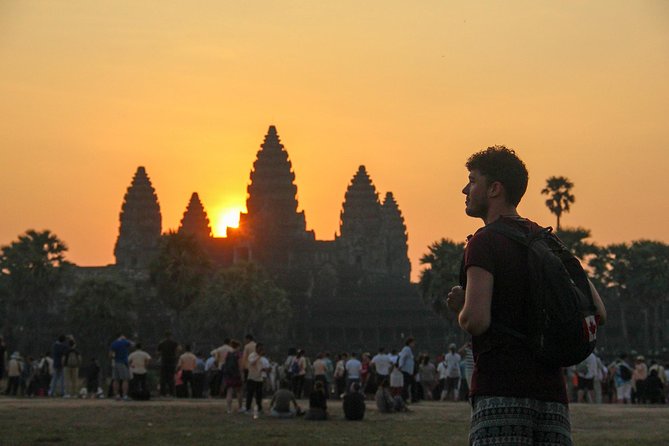
- Two different Angkor light shows: Day one offers sunset at Phnom Bakheng when conditions and energy allow, while day three begins with sunrise at Angkor Wat.
- A full day beyond the main temples: Phnom Kulen, Kbal Spean’s riverbed carvings, Banteay Srei, and Kampong Phluk add variety.
- Strong guide service: Guides including Sam, Seila, Samath, and Saroun are praised for clear temple explanations, flexible timing, and help with photographs.
- Extra fees matter: The stated $183.08 price per person is not the final cost because park fees, boat fare, food, and temple admission are separate.
- Good preparation makes a difference: Wear clothing covering shoulders and knees, carry sun protection and mosquito spray, and bring sturdy walking shoes.
What the three days are really like
This is a private tour for your group, with hotel pickup and return each day. That matters in Siem Reap because the best temple hours are early, the roads to Kulen are long, and a private driver gives you a place to cool down between walks.
The supplied vehicle is air-conditioned, and cold water and cool towels are included. Those are modest extras, but after climbing temple steps in tropical heat, they feel very useful. Several guides and drivers are singled out for punctual pickups, safe driving, photography help, and attention to older family members.
You should also understand the pace. This is not a relaxed three-day stay with one temple each morning. You cover a large amount of ground, walk on uneven surfaces, and spend long stretches outside. The reward is a broad look at Siem Reap, from royal temple cities to waterfalls and a lake village.
More Banteay Srei tours in Siem Reap:
- Full-Day Banteay Srei & 4 Temples – Grand Tours Join-in Tour
★ 5.0 · 1,155 reviews - Siem Reap Tour: Angkor Wat Sunrise, Bayon, Ta Prohm, Banteay Srei
★ 5.0 · 931 reviews - 2-Day Angkor Wat With Small, Big Circuit and Banteay Srei Tour
★ 5.0 · 545 reviews
Day one: Bayon faces and the long road through Angkor Thom
Pickup is scheduled for 8:00 in the morning. Before entering the archaeological park, you stop to buy the required Angkor pass. The pass is not included, and the supplied details do not state its price, so check the current cost when planning your budget.
The first stop is the South Gate of Angkor Thom. The approach gives you an early sense of the scale of the old Khmer capital, with a broad entrance and monumental sculpture. Fifteen minutes is enough for photographs and an introduction, but you’ll want to save your energy for the temples inside.
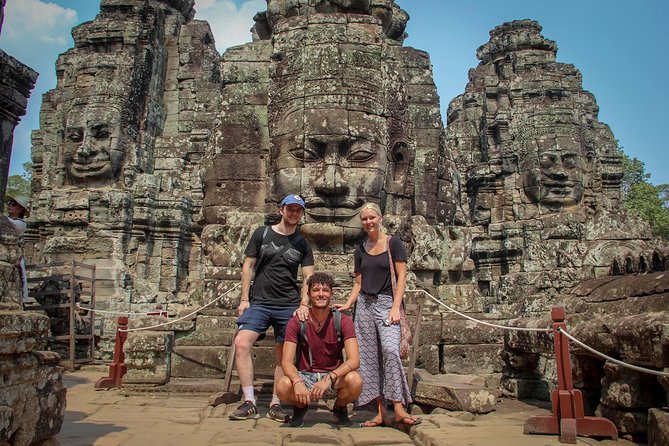
Bayon is the day’s first major stop. Its famous towers carry enormous carved faces, and the temple’s tight passages and galleries reward a guide who can explain what you are seeing. You have about 45 minutes here, which gives you a useful introduction without turning the first morning into a single-site marathon.
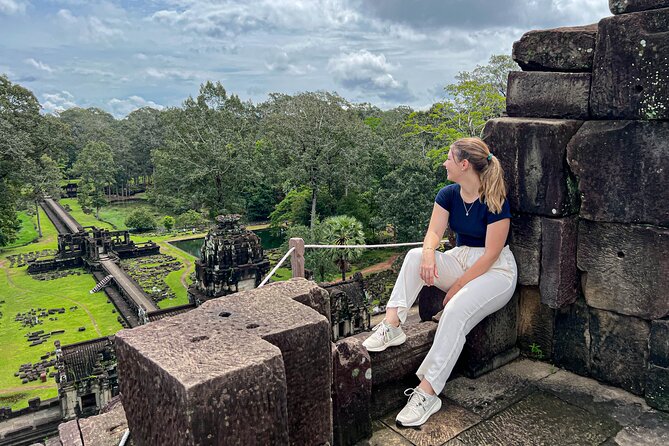
Next comes Baphuon, a tall temple mountain with steep levels and a different feel from Bayon. You have about 35 minutes. Be ready for steps and exposed sun, and follow your guide’s advice about where to pause.
The Terrace of the Elephants and Terrace of the Leper King are shorter stops, each listed at about 15 minutes. These are not places where you spend hours climbing. They work well as part of the larger Angkor Thom visit, especially if you enjoy carved walls, royal symbolism, and the remains of a ceremonial center.
Lunch takes place at a local restaurant inside Angkor Park and lasts about 45 minutes to an hour. Food and drinks are your responsibility, and vegetarian choices may require extra attention. If you have dietary needs, tell the guide early rather than waiting until you are hungry.
Angkor Wat after lunch and sunset at Phnom Bakheng
After lunch, you visit Angkor Wat for about 90 minutes. That is enough time for a guided overview of the galleries, towers, courtyards, and main visual details, though you should not expect to examine every corner of the enormous complex.
Angkor Wat is best approached as both a religious building and a carefully planned statement of power. Your guide can help connect the carvings and layout to Khmer Hindu and Buddhist traditions, rather than leaving you with a string of dates and names. Guides such as Sam and Seila are praised for explaining Cambodian history during drives, then allowing time to look around without constant narration.
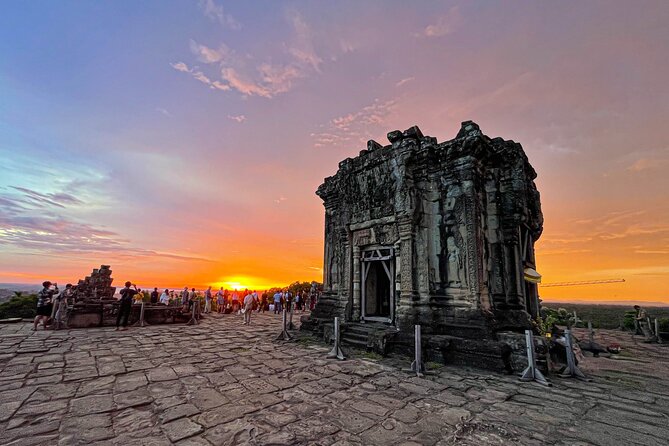
The final stop is Phnom Bakheng, reached by a climb that normally begins around 4:00 in the afternoon. The visit can last about two hours, depending on timing, weather, and the group’s energy. If you are already worn out from Angkor Wat, you may prefer to skip it, especially since the sunset plan is conditional.
This is one of the day’s practical tradeoffs. Phnom Bakheng offers a hilltop sunset setting, but it requires another uphill walk after a full day in the heat. If sunset matters to you, conserve energy earlier and wear shoes with a firm grip.
Day two: Kulen waterfalls, ancient carvings, and Tonle Sap
The second day begins at 8:00 in the morning and changes the mood completely. Phnom Kulen National Park takes about three hours, so expect a substantial drive as well as time at the site.
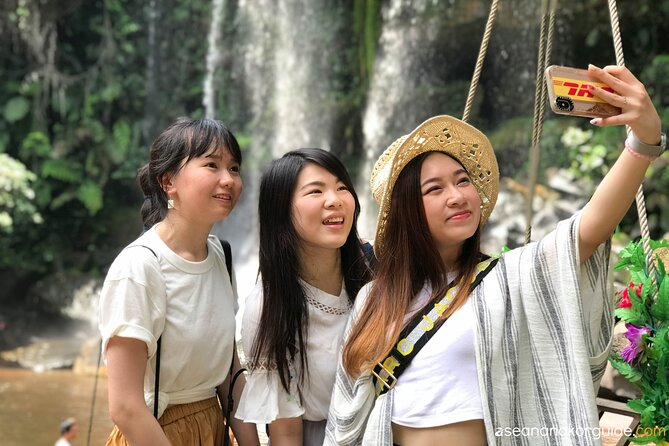
The waterfall is the main outdoor attraction, and swimming is allowed. Water levels are low from March through July, so the experience depends heavily on the season. During the dry months, do not picture a powerful cascade. It may still be a pleasant break, but the water can be less impressive than expected.
The same park also includes Kbal Spean, known for lingas and other carvings cut into the riverbed. These details are easy to miss without explanation, and a guide helps you understand why the carvings were placed in the watercourse. Wear comfortable shoes because this portion involves walking rather than simply stepping off the vehicle.
Admission costs are separate. The information provided lists $20 per person for Phnom Kulen National Park and another $20 per person for the Kulen Mountain pass. Treat these as part of the real cost of day two.
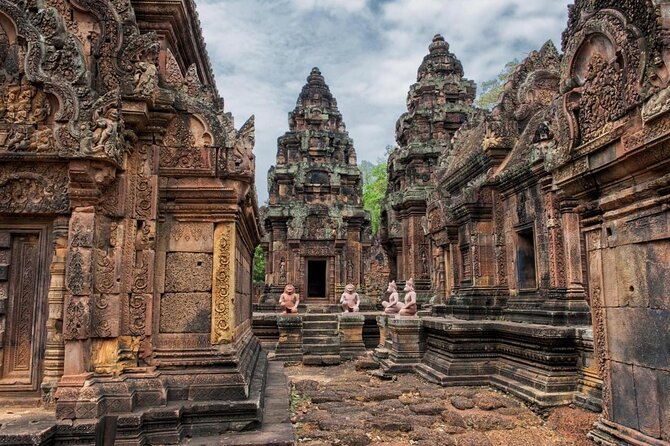
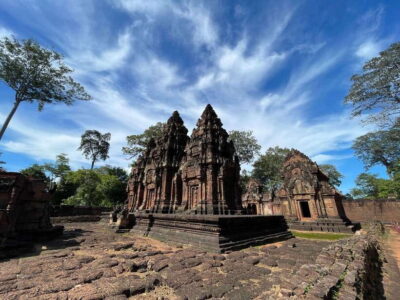
Banteay Srei follows Kulen. This 10th-century temple is smaller than Angkor Wat but famous for unusually fine stone carving and its dedication to Shiva. The listed visit is about 45 minutes, which is enough to appreciate the details while keeping the long day moving.
Banteay Srei is one of the clearest reasons to choose this tour rather than a basic Angkor circuit. The temple feels distinct in scale, color, and decoration. You will not get the same vast courtyards as Angkor Wat, but you may spend more time noticing individual figures and patterns.
More Phnom Kulen waterfall trips in Siem Reap:
- Kulen Waterfall Join-in Tour (local Picnic lunch)
★ 5.0 · 2,434 reviews - Kulen Mountain: Small-Group Tour and Picnic lunch
★ 4.9 · 1,802 reviews - Siem Reap: Kulen Mountain, Beng Mealea and Tonle Sap Tour
★ 5.0 · 1,483 reviews - Phnom Kulen Waterfall & the Sacred 1000 Lingas (with Lunch)
★ 4.8 · 974 reviews
Kampong Phluk and the changing waters of Tonle Sap
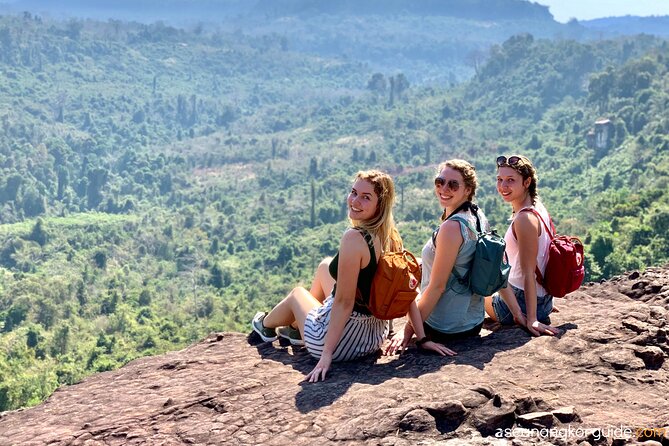
The final stop on day two is Kampong Phluk, a flooded village connected with Tonle Sap, Southeast Asia’s largest freshwater lake. A private boat ride takes about an hour, and the boat fee is listed separately at $15 per person.
The village is best understood through its relationship with water. Homes and daily life are shaped by seasonal changes, and the boat gives you a view that is quite different from the stone temples. You walk around the village area and then continue on the water, so this is not just a quick photo stop from the roadside.
This part also needs realistic expectations. The lake visit is not another ancient monument, and the appearance of the village can vary with water levels and weather. It is valuable because it shows present-day life around Siem Reap, but the boat cost is an extra charge and should not surprise you.
Day two is gentler than day one in terms of temple climbing, but it involves more driving. The long road to Kulen and the separate boat ride make this a full day. Still, the change from carved stone to forest, water, and village life helps prevent the three-day program from feeling like one temple after another.
Day three: sunrise at Angkor Wat and the quieter temples
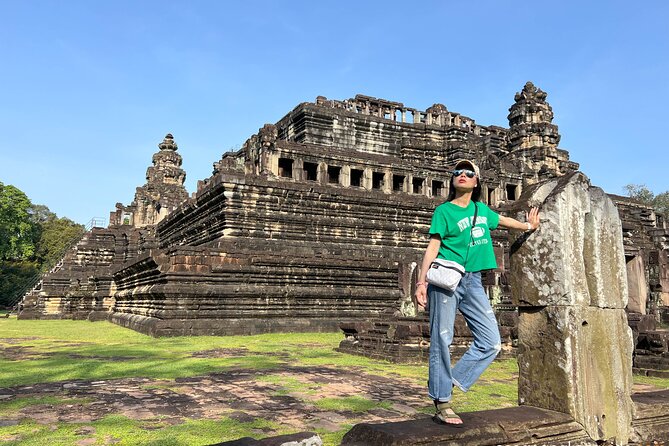
Your pickup is scheduled for 4:40 in the morning. Breakfast is included on this day only, not on all three days, so plan ahead for the first two mornings. The early departure is the price of seeing Angkor Wat at sunrise and getting a head start before the heat builds.
You have about an hour at Angkor Wat for the sunrise visit. The exact view depends on weather and your position around the reflecting pools, so keep expectations flexible. Guides who know the grounds can suggest photo locations, and Samath in particular is praised for helping with photographs and timing.
After sunrise, the tour moves to Ta Prohm. This is the temple associated with the film Tomb Raider, but its appeal goes well beyond the movie connection. Trees and stone are intertwined in a way that gives the complex a more enclosed, atmospheric feel than the open spaces around Angkor Wat.
The listed time is about an hour. You will walk through courtyards, galleries, and partially collapsed areas, so good shoes matter. Ta Prohm can attract plenty of attention, but the private format gives your guide some room to adjust the route and timing.
Pre Rup comes next, with about 35 minutes. This pyramid temple was built for King Rajendravarman and dedicated to Shiva. Its strong stepped form gives you another view of Angkorian temple design, particularly after the softer, tree-covered appearance of Ta Prohm.
Ta Som is a smaller temple, also built under Jayavarman VII. About 35 minutes gives you time to appreciate its compact layout and carved details without making the stop feel rushed. It is a useful contrast to the larger monuments.
Neak Pean receives about 20 minutes. Built on an artificial island, it has a very different setting from the land-based temple mountains. The approach and water around the central structure are part of the experience, so listen to the explanation before focusing only on the main shrine.
The final stop is Preah Khan, with about an hour. Built for Jayavarman VII in honor of his father, it is large enough to reward slow walking and close attention. By this point, you have seen enough different temple types to make comparisons: grand ceremonial planning at Angkor Wat, faces at Bayon, roots at Ta Prohm, and long corridors at Preah Khan.
Guides, drivers, and the value of a private vehicle
The guide makes a major difference here because the tour includes many sites with complicated names, changing religious uses, and overlapping royal periods. Guides named Sam, Seila, Samath, Saroun, and Sarakei receive especially warm praise for clear explanations, patience, flexibility, and photography advice.
You are not guaranteed a particular guide, so do not book solely around one name. Still, the pattern is clear: the operator places real importance on guide service, and the private format allows the guide to adjust explanations and walking speed to your group.
The driver is just as important. Drivers including Tha, Leap, Sophat, Kim, Samady, and May are praised for punctual pickups, safe driving, cold towels, cold water, umbrellas, and even power-bank help when a phone battery runs out. Those details matter on long, hot days.
Private transport also lets you make reasonable changes in pace. A family with older relatives can take longer rests, while a group focused on photographs can spend more time at a favorite temple. The program remains packed, but it is not the rigid experience of a large bus tour.
Price, extra charges, and overall value
The advertised price is $183.08 per person. For three days of private transport, an English-speaking guide, hotel pickup and return, air-conditioning, water, cool towels, and breakfast on day three, that can be good value, particularly for a small group sharing the service.
You must budget beyond that headline figure. Known additional charges include:
- $15 per person for the Tonle Sap private boat
- $20 per person for Phnom Kulen National Park
- $20 per person for the Kulen Mountain pass
- Angkor admission, with the current price not stated here
- Lunches, other food, and soft drinks
The listed extra fees alone total $55 per person, before the Angkor pass and meals. That puts the known minimum at $238.08 per person, but the final amount will be higher once the Angkor ticket and food are added.
For value, compare the price with what you would pay for separate transport, guiding, and day trips. The strongest case for booking is convenience and coverage. The weakest point is that the headline amount can make the tour look more all-inclusive than it is.
What to pack and how to handle the heat
Wear light clothing that covers your shoulders and knees inside the temple areas. Loose, long clothing is respectful and can also protect you from the sun, while comfortable shoes are essential for uneven paths, steps, and the walking at Kbal Spean.
Bring sunscreen, mosquito spray, and water. The tour supplies cool water, but you should still carry what you need between stops. A hat, sunglasses, and a small bag for your phone are sensible additions.
Build in patience for the weather. The schedule includes exposed stone, long drives, early starts, and a possible sunset climb. The private format helps, but it cannot remove the heat or the physical demands of Angkor.
Who should book this three-day program?
I would choose this tour if you want the main Angkor temples plus two major side trips without arranging separate cars and guides. It suits first-time visitors who want context, families who value door-to-door transport, and photographers who want help finding good angles and quieter timing.
It is also a strong fit if you want more than temples. Kulen adds swimming and riverbed carvings, Banteay Srei adds fine sculpture, and Kampong Phluk offers a look at life around Tonle Sap.
I would hesitate if you dislike early mornings, long drives, walking in heat, or extra charges paid on the way. A slower temple holiday would be more comfortable, and day one may feel repetitive if you have little interest in architecture or history.
Should you book it?
Book this tour if your goal is to see a great deal of Siem Reap in three well-planned days, with a private guide and driver handling the logistics. The best features are the mix of Angkor highlights and outer sights, the sunrise and sunset options, and the personal service from guides and drivers.
Before paying, confirm the current Angkor admission cost, the exact pickup times, the guide assignment, the boat arrangement, and the breakfast detail. If you accept the long hours and budget for the extra fees, this is a practical way to cover the region without being confined to the main temple circuit.
FAQ
Is this a private tour?
Yes. Only your group participates, with private transport by air-conditioned car or minivan, a professional English-speaking guide, and a driver.
Is hotel pickup and drop-off included?
Yes. Pickup and return to your hotel are included on all three days.
Is breakfast included every day?
No. Breakfast is included on day three only. Food and soft drinks on the other days are not included.
What extra fees should I expect?
The listed extra charges are $15 per person for the Tonle Sap boat, $20 per person for Phnom Kulen National Park, and $20 per person for the Kulen Mountain pass. Angkor admission, meals, and soft drinks are also separate.
Can I swim at the Kulen waterfall?
Yes, swimming is allowed. Water levels are lower from March through July, so the waterfall may have less water during that period.
What should I wear at the temples?
Wear clothing that covers your shoulders and knees. Lightweight, loose clothing and comfortable shoes are recommended, and entry to some areas may be refused if clothing is considered immodest.
More multi-day trips from Siem Reap
- Siem Reap: Angkor Wat 2-Day Tour with Sunrise and Sunset
★ 4.9 · 4,429 reviews - Angkor 2-Day Sunset & Sunrise Small-Group Tour
★ 5.0 · 2,567 reviews - 2 Days Exclusive Temple Highlights with Sunset and Sunrise Tour
★ 5.0 · 1,157 reviews - Siem Reap: Angkor Sunrise 1- or 2-Day Guided Temples Tour
★ 4.9 · 1,132 reviews
More Tonle Sap floating village trips in Siem Reap
- From Siem Reap: Kampong Phluk Floating Village Tour by Boat
★ 4.9 · 6,979 reviews - Sunset tour of Kampong Phluk stilts home village on the Tonle Sap
★ 5.0 · 4,865 reviews - Kompong Phluk Floating Village Half-Day Tour ( Morning / Sunset )
★ 5.0 · 1,494 reviews - Tonle Sap Lake & Kampong Phluk Village Half-Day Tour
★ 5.0 · 1,045 reviews
Just added around Siem Reap
- Ultimate Sunrise to Angkor Wat, Angkor Thom and Bayon Temple★ 5.0 · 3 reviews
- Full-Day Private Tour of Angkor Wat with Pick Up★ 5.0 · 12 reviews
- Trekking Tour at Phnom Kulen National Park from Siem Reap★ 5.0 · 3 reviews
- Twilight Tastes of Siem Reap Include Dinner★ 5.0 · 13 reviews
- Siem Reap City Tour with War Museum and Killing Field★ 5.0 · 27 reviews
- Private Day Trip to Angkor Temples with Expert Guide★ 5.0 · 4 reviews
- Waterfall & River of 1000 Siva Linga- Kulen Mountain Private Tour★ 5.0 · 3 reviews
- Private Two Days Siem Reap Temples Discovery Guided Tour★ 5.0 · 7 reviews
Banteay Srei Temple Tours, compared.
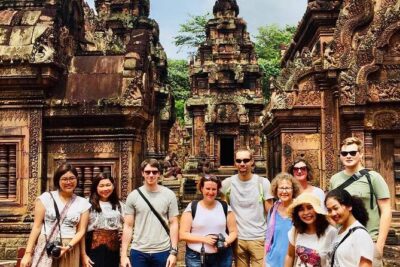
Full-Day Banteay Srei & 4 Temples – Grand Tours Join-in Tour
Read our review →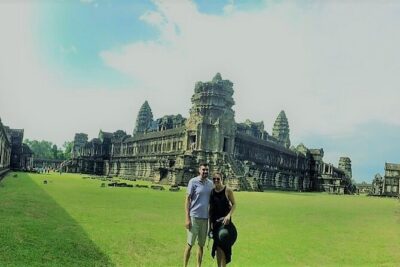
Siem Reap Tour: Angkor Wat Sunrise, Bayon, Ta Prohm, Banteay Srei
Read our review →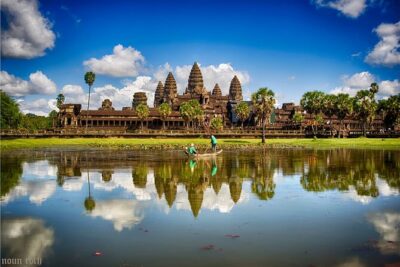
2-Day Angkor Wat With Small, Big Circuit and Banteay Srei Tour
Read our review →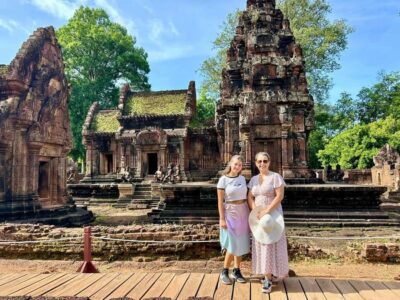
Banteay Srei, Kulen Waterfall & Beng Mealea Exploration
Read our review →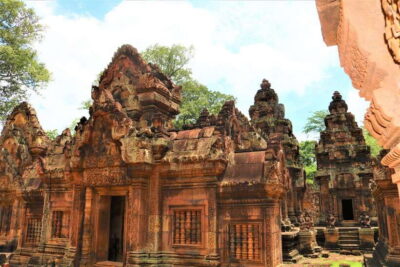
Kulen Waterfall, Banteay Srei, and Beng Mealea Tour
Read our review →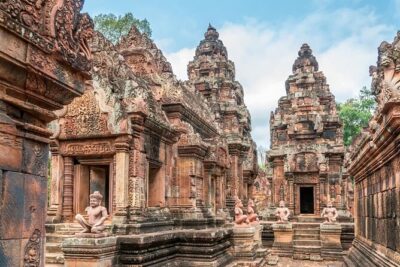
Banteay Srei and Grand Circuit Heritage Tour from Siem Reap
Read our review →Browse the lists this tour appears in