
Reviewed · ANGKOR WAT TOURS
Highlight of Angkor Complex 2 Days Private Tour
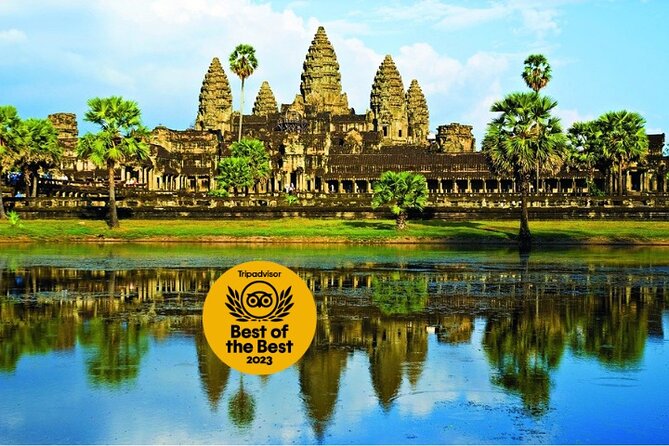
Angkor is best understood slowly, and this two-day private tour gives you time for the famous temples and the quieter corners most people skip. You’ll pass through Angkor Thom, study Bayon’s giant faces, walk among the trees at Ta Prohm, and finish with far-flung temples such as Banteay Srei and Banteay Prei.
I like the mix of headline sights and lesser-known ruins. I also like having your own guide and vehicle, since the schedule can be adjusted to your group. The main drawback is pace: the first day packs in about eight hours of listed temple stops, and the Angkor Pass, meals, and tips cost extra.
Key points to know before booking
- A private Angkor circuit: Only your group takes part, with hotel pickup, a private vehicle, and an English-speaking licensed guide.
- The major temples are covered: Angkor Wat, Bayon, Ta Prohm, Angkor Thom, Preah Khan, and Banteay Srei all appear in the two-day plan.
- Quiet ruins add character: Ta Nei and Banteay Prei are less visited and give the tour more variety than a standard highlights route.
- The schedule is full: Day one includes roughly 8 hours and 20 minutes of listed sightseeing, before driving and breaks.
- Costs are partly separate: The Angkor Pass is not included, and lunch typically costs $3 to $10 per dish.
- Good guide service matters: Mr. Sara is one named guide praised for clear explanations, punctuality, comfort, and flexibility.
Why a private two-day Angkor tour works well
The Angkor Archaeological Park is too large for a single morning. Its temples are spread across a wide area, and each one has a different purpose and mood. A private tour lets you move between them without waiting for a large group or following a fixed bus schedule.
The listed price is $149.46 per person. That is a fair starting value if you want a guide, private transfers, hotel pickup and drop-off, drinking water, and two full days of sightseeing. You still need to budget for the Angkor Pass, food, and gratuities, so compare the total cost rather than treating the advertised price as all-inclusive.
You get an English-speaking licensed guide, while the experience is also offered in several languages. That matters at Angkor. The stones are impressive on their own, but the layout, royal symbolism, religious changes, and carved scenes make more sense when someone explains what you are looking at.
A private format is especially useful if your group has different walking speeds or wants to pause at a particular temple. The guide can also help with small changes. One account describes a requested stop at the land mine museum being added, along with praise for Mr. Sara and the driver for being on time and checking that the group was comfortable.
More multi-day trips from Siem Reap:
- Siem Reap: Angkor Wat 2-Day Tour with Sunrise and Sunset
★ 4.9 · 4,429 reviews - Angkor 2-Day Sunset & Sunrise Small-Group Tour
★ 5.0 · 2,567 reviews - 2 Days Exclusive Temple Highlights with Sunset and Sunrise Tour
★ 5.0 · 1,157 reviews
Day one: Angkor Thom, Ta Prohm, and Angkor Wat
Angkor Thom South Gate, 25 minutes
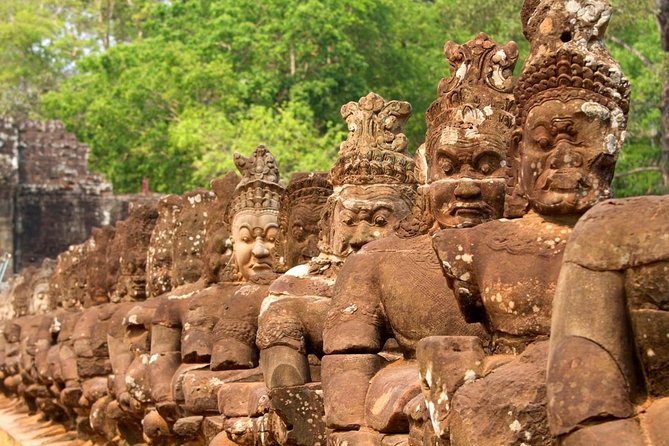
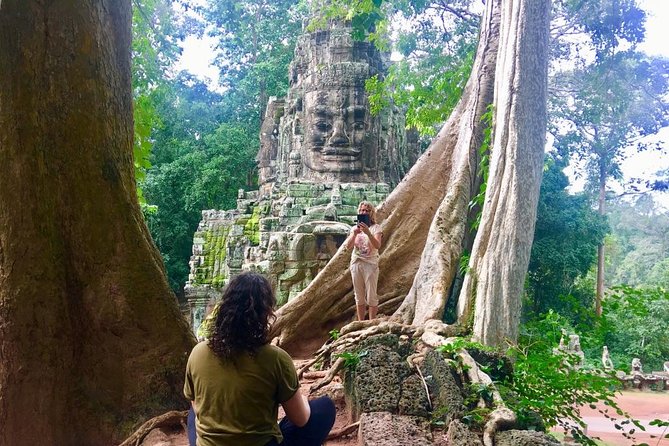
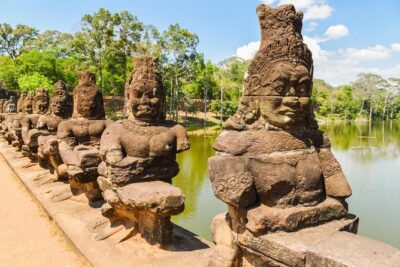
The South Gate is the grand entrance to Angkor Thom and one of the easiest places to grasp the scale of the old city. A restored causeway leads toward a gate topped by a tower, with rows of stone figures lining the approach.
The gate is popular because many of the carved heads remain in place. Your stop is fairly short, so use it to look closely at the figures and the broad approach road before moving inside.
The Angkor Pass is not included. Your guide assists with buying it at the entrance to the park before the sightseeing begins.
Bayon Temple, 1 hour
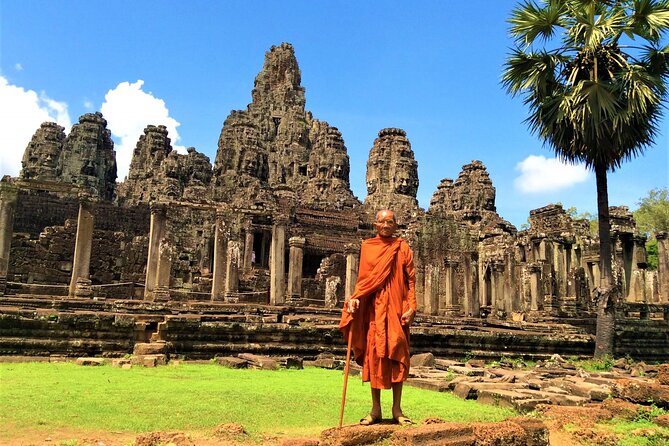
Bayon is one of Angkor’s most memorable temples. Its towers carry enormous carved faces, and the structure feels more crowded and mysterious than the open galleries of Angkor Wat.
The basic plan and earliest building phase are not fully certain, but its location at the center of Angkor Thom points to its importance as a royal temple. Give yourself time to study the faces from different angles, since the expressions change with the light and your position.
An hour is useful here, although the uneven stones and narrow passages can slow you down. Stay near your guide at the busiest points, and wear shoes with a firm sole.
More Angkor Wat tours in Siem Reap:
- Angkor Wat Sunrise or Sunset Tour with Guide from Siem Reap
★ 5.0 · 12,109 reviews - Siem Reap: Angkor Wat: Small-Group Sunrise or Sunset Tour
★ 5.0 · 9,444 reviews - Siem Reap: Full-Day Angkor Wat Guided Tour with Sunset
★ 4.9 · 3,803 reviews - Angkor Wat Sunrise tour with Small – Group and Guide tours
★ 5.0 · 3,655 reviews
Angkor Thom, 30 minutes
Angkor Thom is not just one temple. It was a walled royal city, and this stop helps you understand how Bayon, the palace area, terraces, gates, and ceremonial spaces fit together.
The scale can be hard to take in from the ground. Your guide can help turn the wide roads and scattered monuments into a readable plan. This is also a good point to ask questions about Jayavarman VII, the king linked to many of the structures on this route.
Baphuon Temple, 45 minutes
Baphuon rises on a long sandstone base with five levels. Unlike many Khmer temples, its tiers are close to the same size rather than shrinking sharply as they rise.
The approach gives you a sense of height and symmetry, but climbing can be demanding in heat. Take your time on the steps and keep water with you. The tour provides drinking water, which is welcome during a long temple day.
Phimeanakas, 30 minutes
Phimeanakas sits near the center of the area once enclosed by the Royal Palace. It is more restrained than Bayon or Angkor Wat, but its position gives it importance.
The temple was likely crowned with a golden pinnacle, according to an old description. Today, you mainly see the stone remains and the raised form. This stop works best as part of the wider royal complex, rather than as a single dramatic monument.
Terrace of the Elephants, 45 minutes
The Terrace of the Elephants is a long ceremonial platform decorated with elephants and other carved figures. It once formed part of the public face of the royal city, where processions and formal displays could be seen.
The carvings reward a slow walk along the wall. Because the terrace is open and exposed, this can be a hot stop. A hat, covered shoulders, and water will make the visit easier.
Terrace of the Leper King, 30 minutes
The Terrace of the Leper King continues the grand style associated with Jayavarman VII. Its inner and outer walls contain dramatic bas-reliefs, with figures packed into the stone.
The terrace is easy to underestimate from outside. Make sure you look into the enclosed passage, where the carvings are often more interesting than the broad exterior wall.
Ta Prohm, 1 hour 30 minutes
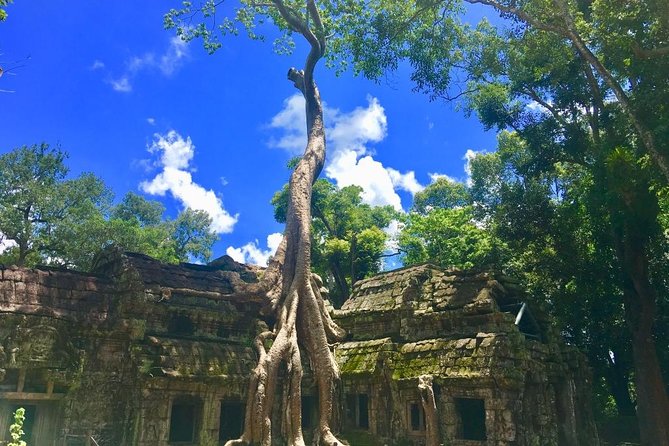
Ta Prohm is the temple most closely associated with trees. Roots press over walls and doorways, giving the site a powerful sense of a ruin being reclaimed by the forest.
It has been left largely untouched, apart from clearing visitor paths and strengthening unstable areas. That balance makes Ta Prohm special. You see both the old structure and the work needed to keep it safe.
An hour and a half gives you room to look beyond the best-known tree-covered doorway. The temple has broken galleries, narrow corridors, and uneven ground, so expect a slower walk than the timetable suggests.
Angkor Wat, 3 hours
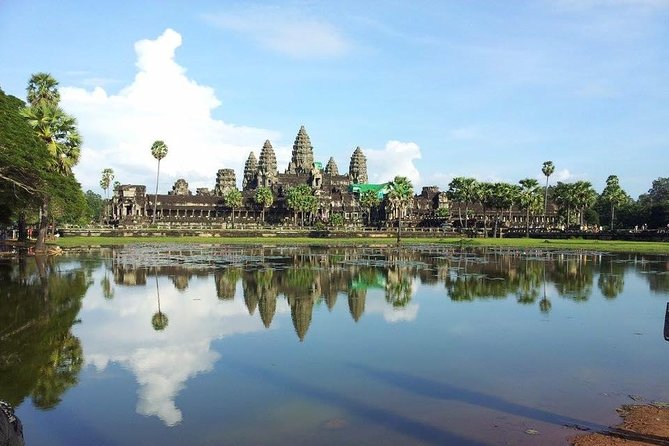
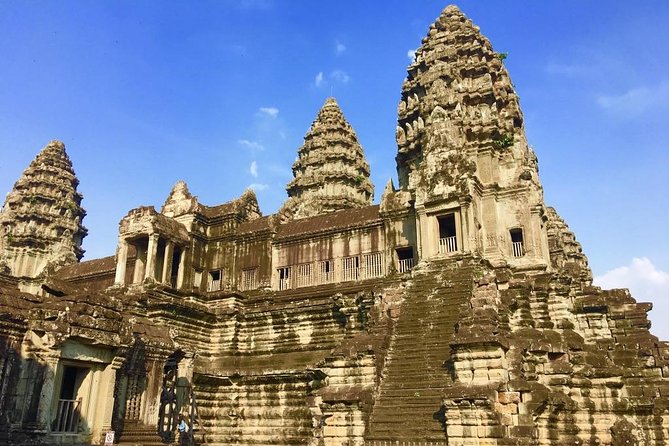
Angkor Wat is the largest and best-preserved monument in the Angkor group. Its strength comes from proportion and order: long galleries, towers, courtyards, reliefs, and a carefully balanced central design.
Three hours is appropriate. You can approach across the causeway, examine the outer galleries, and spend time with the carved scenes instead of rushing through for a photograph. Your guide can explain the temple’s religious setting and the meaning behind the reliefs.
This is also the longest stop of the day, and it follows several other major monuments. If you are tired, tell your guide. A private tour gives you more room to adjust the pace, though the full itinerary remains demanding.
Dress is important at the temples. Wear a shirt that covers your shoulders, plus trousers or knee-length pants or skirts. These are active religious sites, not simply old stones, and respectful clothing is required.
Ta Nei Temple, 45 minutes
Ta Nei is a small temple set deeper in the Cambodian jungle, about 200 meters west of the East Baray. It is harder to find and receives fewer visitors than the major monuments.
This is exactly the sort of stop that improves the tour. After Angkor Wat, Ta Nei feels quiet and modest. Its value comes from atmosphere and contrast rather than size.
The location also means you should not expect the same polished access or broad views found at the main monuments. That is part of the appeal, but it makes a guide and private vehicle particularly useful.
Day two: Banteay Srei and the Grand Circuit
Banteay Srei, 1 hour 20 minutes
Banteay Srei is smaller than Angkor Wat, but its carvings are remarkably detailed. The temple is often singled out for the quality of its pinkish sandstone decoration and its fine scenes from Hindu mythology.
Plan to look closely rather than simply walk around the outside. Small figures, floral designs, and carefully cut lintels reward attention. The longer stop gives your guide time to point out details that are easy to miss.
Banteay Srei is also farther from the main Angkor cluster, so the drive adds to the day. The private vehicle makes this outlying visit practical without forcing your group to arrange separate transport.
Banteay Samre, 45 minutes
Banteay Samre is one of the more complete temple complexes in the area. It was restored using anastylosis, a method that reassembles original architectural pieces where possible.
The temple has a strong, enclosed feel, with galleries and towers that make it easy to imagine as a working religious complex. Maintenance has not always kept pace with the restoration, so some sections may look weathered.
This is a good follow-up to Banteay Srei because the two temples offer different experiences. Banteay Srei is prized for delicate carving, while Banteay Samre gives you a broader sense of structure and layout.
Pre Rup, 50 minutes
Pre Rup is a bold, balanced temple with a strong vertical form. Its design is related to East Mebon, though it was built later.
The upper levels offer a clear sense of how Khmer architects used height, symmetry, and repeated towers. Steps can be steep, and the stone surface may be uneven, so use care rather than treating this as a quick photo stop.
Eastern Mebon, 30 minutes
Eastern Mebon was once set in the middle of a large reservoir, though the water is gone today. Stone elephants, some about two meters high, occupy the corners of the lower levels.
The sculptures give this temple an immediate personality. Look for the elephants first, then study the religious scenes and towers. Thirty minutes is enough for a focused visit, especially after the larger monuments earlier in the trip.
Neak Pean, 45 minutes
Neak Pean is different from the other temples because water is central to its design. A large square man-made pond, about 70 meters on each side, surrounds smaller pools and the central sanctuary.
The approach and setting make this a refreshing change from climbing towers. The stop is more about layout, water, and symbolism than about grand walls. Depending on conditions, you might find the walk to the temple more important than the small central structure itself.
Preah Khan, 1 hour
Preah Khan was built in the second half of the 12th century by Jayavarman VII and dedicated to his father. It is a large, layered complex with long corridors, courtyards, carvings, and partially restored sections.
I like Preah Khan because it rewards exploration without needing the scale of Angkor Wat. You can see how the temple unfolds from one space to another, with trees and collapsed walls adding to the sense of age.
An hour is enough to see the principal areas, though you may want longer if you enjoy architectural details. Keep your bearings, since the complex can feel maze-like.
Banteay Prei, 45 minutes
Banteay Prei is a minor temple near Prasat Prei and one of the least essential stops on the route. It is best suited to people who have a specific interest in Angkor architecture or who want time away from the main crowds.
That does not make it pointless. Its quieter setting helps you compare a smaller site with the major royal temples. Still, if your group is tiring, this is one place where a private itinerary gives you a useful choice: spend the full time exploring or ask for a shorter visit.
Preah Dak village and steamed toddy palm cake, 30 minutes
The final stop takes you to Preah Dak, a local market and village area known for souvenirs, arts, and steamed toddy palm cake. This adds a small local food and shopping element after two days of temple stonework.
Keep expectations practical. It is not another major monument, and the stop is brief. It works as a gentle finish, giving you a chance to see a different part of daily life and pick up a simple snack or souvenir.
Transport, meals, and the real cost
Hotel pickup and drop-off are included, as are private transfers in a comfortable vehicle. You need to provide the hotel name for pickup. Water and cool fresh tissues are supplied throughout the trip, a small detail that matters in Cambodia’s heat.
Meals are not included. Lunch is available at local restaurants, with vegetarian and non-vegetarian choices. Menu prices are listed at about $3 to $10 per dish, so your food budget depends on what you order.
Tips for the guide and driver are also separate. The largest extra cost is the Angkor Pass, which covers the temples in the park. Your guide helps you buy it at the entrance before sightseeing begins.
The tour is commonly booked about 45 days ahead, which suggests planning early if your dates are fixed. Confirmation arrives at booking, and free cancellation is available up to 24 hours before the start time. Changes or cancellations inside that window are not accepted.
Who should book this private tour
This tour suits first-time visitors who want the major temples explained properly but also want quieter stops such as Ta Nei and Banteay Prei. It is also a good match for families or small groups who value their own vehicle and a flexible pace.
You should be comfortable with long days, heat, uneven stones, and repeated climbing. The first day is especially full, with Angkor Wat arriving after many other temples. If you prefer slow mornings and long café breaks, this schedule may feel too packed.
The tour is offered in several languages, and most people can participate. Respectful clothing is required at the religious sites, so pack covered shoulders and bottoms that reach at least the knee.
Should you book it?
Book this tour if you want two serious days at Angkor, a private guide, and a route that reaches beyond the standard three-temple circuit. The strongest feature is the combination of clear coverage and variety: royal city monuments, giant carved faces, tree-covered ruins, delicate stonework, reservoirs, jungle temples, and a village stop.
Before booking, add the Angkor Pass, two days of meals, and tips to the $149.46 price. If you can handle the full pace, the value is good. If you want a relaxed temple holiday, ask about trimming the least important stops, especially Banteay Prei, and use the private format to shape the days around your energy.
FAQ
Is this a private tour?
Yes. Only your group takes part, and private transfers are provided in a comfortable vehicle.
Is hotel pickup included?
Yes. Hotel pickup and drop-off are included. You need to provide your hotel name for pickup arrangements.
Is the Angkor Pass included in the price?
No. The entrance fee is separate. The guide assists you with purchasing the Angkor Pass at the entrance to Angkor Park.
Are meals included?
No. Lunch is available at local restaurants, with vegetarian and non-vegetarian options. Dishes generally cost $3 to $10.
Is a tour guide included?
Yes. A professional English-speaking licensed guide is included. The experience is also offered in a range of languages.
What should I wear to the temples?
Wear a shirt that covers your shoulders. Trousers or knee-length pants or skirts are permitted.
Can I cancel for a full refund?
Yes, if you cancel at least 24 hours before the experience start time. Cancellations or changes made less than 24 hours in advance are not accepted.
Just added around Siem Reap
- Ultimate Sunrise to Angkor Wat, Angkor Thom and Bayon Temple★ 5.0 · 3 reviews
- Full-Day Private Tour of Angkor Wat with Pick Up★ 5.0 · 12 reviews
- Trekking Tour at Phnom Kulen National Park from Siem Reap★ 5.0 · 3 reviews
- Twilight Tastes of Siem Reap Include Dinner★ 5.0 · 13 reviews
- Siem Reap City Tour with War Museum and Killing Field★ 5.0 · 27 reviews
- Private Day Trip to Angkor Temples with Expert Guide★ 5.0 · 4 reviews
- Waterfall & River of 1000 Siva Linga- Kulen Mountain Private Tour★ 5.0 · 3 reviews
- Ultimate Siem Reap Food Tour by Tuk Tuk – 20 Tastings, 8 Stops★ 5.0 · 13 reviews
Angkor Wat Tours, compared.
Angkor Wat Sunrise or Sunset Tour with Guide from Siem Reap
Read our review →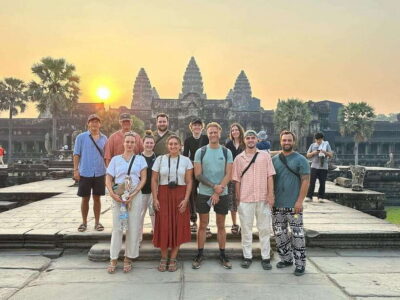
Angkor Wat: Small-Group Sunrise or Sunset Tour
Read our review →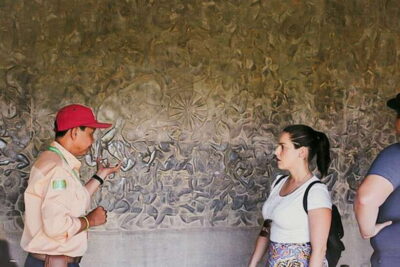
Angkor Wat 2-Day Tour with Sunrise and Sunset
Read our review →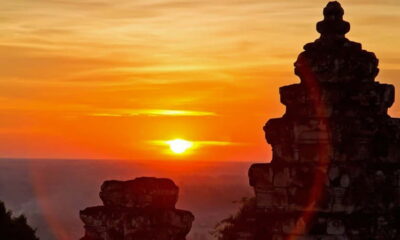
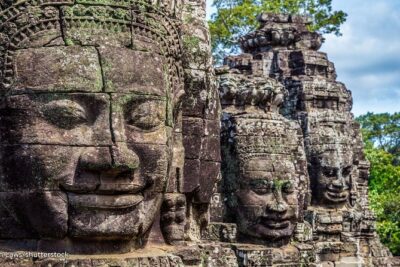
Angkor Wat Sunrise tour with Small – Group and Guide tours
Read our review →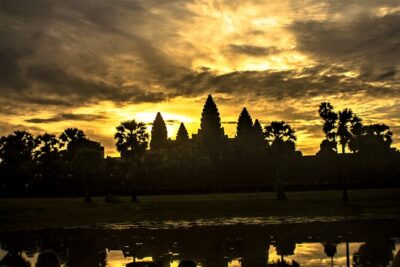
Angkor Wat Highlights and Sunrise Guided Tour from Siem Reap
Read our review →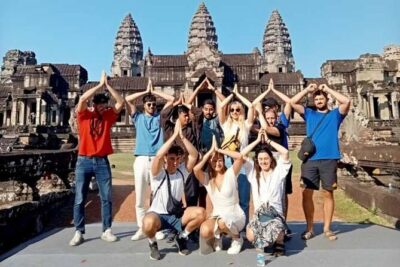
Angkor Wat Sunset Small Group Tour with Lunch Included
Read our review →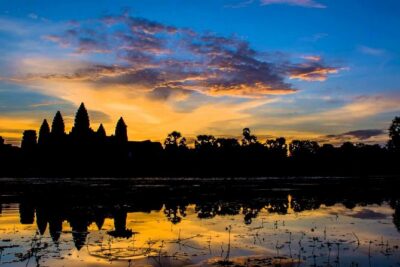
Full-Day Angkor Wat Sunrise Private Tour with Guide from Siem Reap
Read our review →Browse the lists this tour appears in