
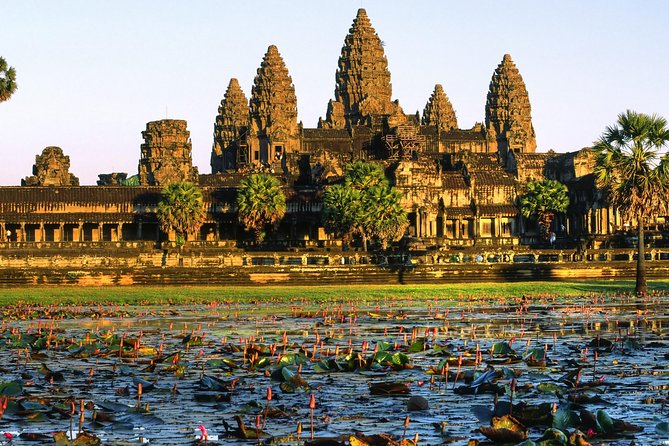
Reviewed · PHNOM PENH TRIPS FROM SIEM REAP
4-Day Tour from Siem Reap to Phnom Penh
Angkor Wat is only one part of this four-day Cambodian journey. You’ll also see floating-life country at Tonlé Sap, watch the sun drop over the Mekong, and face the painful record of the Khmer Rouge in Phnom Penh. The route gives you Cambodia’s sacred, royal, artistic, and modern sides in one compact trip.
I like the small group size, capped at nine, and the practical setup: airport pickup, three hotel nights, breakfast, air-conditioned transport, and local guides are handled for you. I also like the range, from Artisans D’Angkor and ancient temples to Tuol Sleng and the Killing Fields. The drawback is a busy schedule, with long touring days and some important costs, especially the Angkor temple pass, left outside the price.
Key points to know before booking
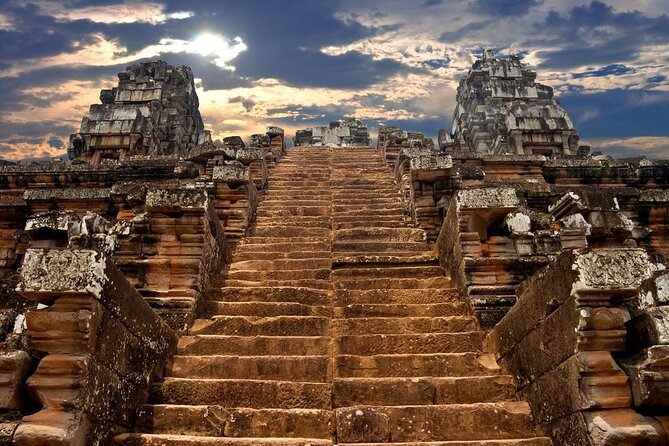
- Angkor Wat comes with a full temple day: Angkor Thom, Bayon, Ta Prohm, Ta Keo, and Angkor Wat are all packed into Day 2.
- Tonlé Sap and the Mekong show two different sides of Cambodian life: one is a lake outing near Siem Reap, the other a sunset cruise from Phnom Penh.
- The Phnom Penh visits are emotionally demanding: Tuol Sleng and the Killing Fields require quiet attention, not a quick photo stop.
- The group is genuinely small: bookings can include up to seven people, and the total tour group is limited to nine.
- Guiding is a major part of the value: English-speaking local guides lead the visits, with Samnang and Nhoek singled out for especially helpful service.
- Budget for the Angkor pass: sightseeing fees are included except for admission to the Angkor temples.
A four-day route that connects Cambodia’s great contrasts
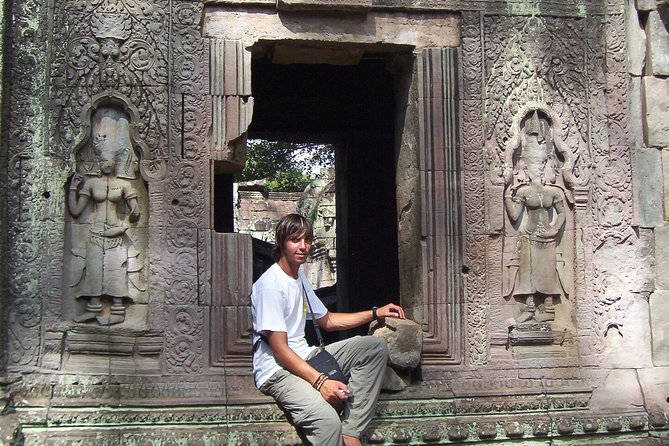
This tour works because it links two cities with very different personalities. Siem Reap is your base for the Khmer temples and Tonlé Sap. Phnom Penh shifts the focus to the Mekong, royal Cambodia, and the country’s difficult twentieth-century past.
The price is $396.93 per person. That is a fair package price if you value convenience. You receive three nights of twin-share accommodation, three breakfasts, lunch, airport pickup, an air-conditioned minivan, local English-speaking guides, sightseeing fees, and the transfer between Siem Reap and Phnom Penh.
Still, read the inclusions closely. The tour information refers to flights in the overview, but the listed inclusions specify airport transfers rather than air tickets. Do not assume a flight is included unless the operator confirms it directly. You also pay separately for the Angkor Temple Pass, food and drinks not listed as included, a single supplement, and any optional Apsara dinner.
The tour normally starts at 8:00 a.m., though the first day begins with your arrival at Siem Reap Airport. The group limit helps keep transfers and temple visits manageable. A minimum of two people is required for the four-star or five-star hotel option, and accommodation may range from three to five stars depending on the selection.
More Phnom Penh trips from Siem Reap:
- Siem Reap to Phnom Penh by Private Car or Minivan
★ 5.0 · 189 reviews - From Siem Reap: Battambang Day Trip Return or to Phnom Penh
★ 4.9 · 73 reviews - Taxi Siem Reap to Phnom Penh-English Speaking Driver
★ 5.0 · 62 reviews
Day 1: Tonlé Sap and Cambodian craft in Siem Reap
Your first contact is a guide greeting you at Siem Reap Airport, followed by a hotel transfer and check-in. That simple airport pickup matters after a flight. You do not need to bargain for a taxi or work out the first ride in an unfamiliar city.
The afternoon turns toward Tonlé Sap Lake. The lake is Cambodia’s great seasonal freshwater body, connected to the Tonlé Sap River, and its water level changes dramatically through the year. The visit gives you a look beyond temple walls, with the lake and its communities providing a useful introduction to daily life around Siem Reap.
The listed lake visit is brief, around 30 minutes, so keep your expectations sensible. This is an orientation stop rather than a full day on the water. Conditions and the appearance of the lake can vary with the season, and the schedule does not promise a long private cruise.
You then visit Artisans D’Angkor. This is a worthwhile stop for anyone who wants to understand Cambodian craft rather than simply shop for souvenirs. The center supports traditional Khmer handicrafts and presents the making of items connected with local artistic practice.
I like the order of this day. You settle into the hotel, see an important natural setting, and then encounter living craft before the major temple day. The catch is timing: if your arrival is delayed, the first afternoon could feel compressed. An optional Apsara dinner may be available, but it costs extra.
Day 2: Angkor Thom, Ta Prohm, and the scale of Angkor Wat
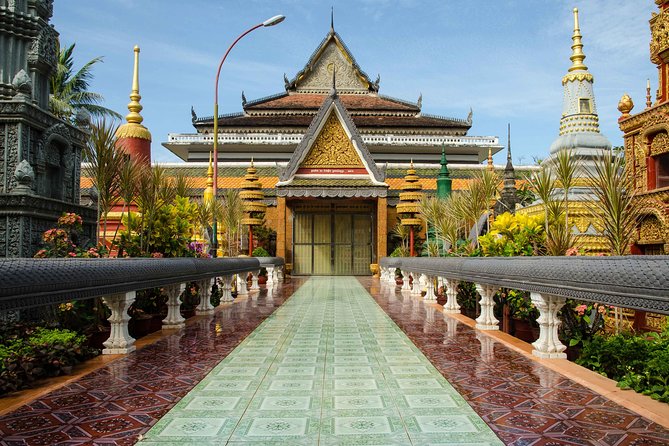
Day 2 begins after breakfast at about 8:00 a.m. It is the tour’s busiest and most important day, and you should expect heat, walking, uneven temple surfaces, and a full schedule.
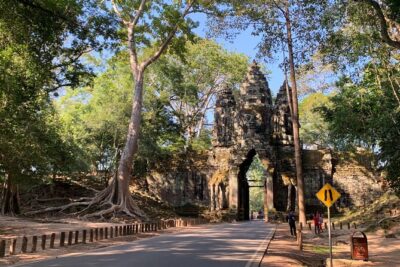
The route starts at the south gate of Angkor Thom, the last major capital of the Khmer Empire. Angkor Thom is not one isolated temple. It is a large historic city area, and your visit includes several key monuments within it.
Bayon is the visual star, with its carved faces looking out from the temple towers. Baphuon follows, along with the Terrace of the Elephants, the Terrace of the Leper King, and Phimeanakas. Each stop adds another piece to the old capital, from royal ceremony to religious architecture.
Your guide matters here. Without context, Angkor Thom can become a parade of stones and names. A good guide helps you see how the monuments fit together and points out details you would likely miss while moving through a crowded site.
Ta Prohm brings a different mood. Trees and roots have become closely associated with the temple’s appearance, and the site feels less ordered than Angkor Wat or the formal terraces of Angkor Thom. It is also one of the most popular stops, so the small group and efficient guiding help you make better use of the visit.
Ta Keo is a shorter stop, listed at about 30 minutes. This temple-mountain is especially useful as a contrast to the more decorated sites. Its strong sandstone structure and steep form make the idea of a temple as a symbolic mountain easy to grasp.
Then comes Angkor Wat, the largest religious monument in the world. The listed visit is about an hour, which is enough for a guided overview but not enough to inspect every gallery and carving at a slow pace. If Angkor Wat is your main reason for booking, understand that this is a broad four-day route, not a dedicated multi-day temple study.
The Angkor admission pass is not included. That is the most important extra cost to plan for, and you should confirm the current pass price before departure. Other sightseeing fees are included, which keeps the package easier to manage once the temple pass is settled.
Day 3: The move to Phnom Penh and a sunset on two rivers
After breakfast, you transfer from Siem Reap to Phnom Penh. The listed transfer takes about four hours, followed by hotel check-in and an afternoon Mekong outing.
This is the day when the tour shifts from temples to the capital. The transfer saves you the trouble of arranging a separate connection between the two cities, but it also means that much of the morning is spent on the road. You will want a reasonable departure and arrival plan if you are adding independent sightseeing before or after the tour.
The Mekong cruise lasts about two hours and includes views along the Mekong and Tonlé Sap rivers. It is a gentler part of the itinerary after the temple day and road transfer. The shared sunset cruise is included, along with the boat trip itself.
I like this pairing because the rivers are not treated as decoration. They help explain why Phnom Penh developed where it did and give you a slower way to see the capital. The cruise is also one of the few moments on the schedule without a long list of monuments to cover.
Hotel standards can range from three to five stars, depending on what you select. Since the accommodation category affects both comfort and price, check the exact hotel before booking if room quality or location matters to you. Twin-sharing is included, while a single supplement applies if you want your own room.
More multi-day trips from Siem Reap:
- Siem Reap: Angkor Wat 2-Day Tour with Sunrise and Sunset
★ 4.9 · 4,429 reviews - Angkor 2-Day Sunset & Sunrise Small-Group Tour
★ 5.0 · 2,567 reviews - 2 Days Exclusive Temple Highlights with Sunset and Sunrise Tour
★ 5.0 · 1,157 reviews - Siem Reap: Angkor Sunrise 1- or 2-Day Guided Temples Tour
★ 4.9 · 1,132 reviews
Day 4: Tuol Sleng, the Killing Fields, and the royal compound
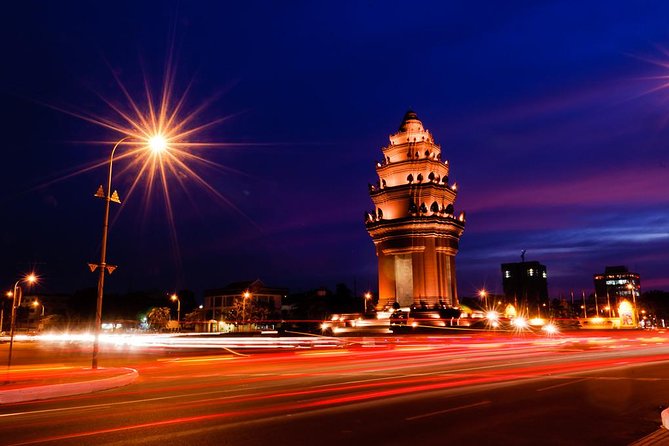
The final morning is the most serious part of the tour. You visit the Killing Fields, Tuol Sleng Genocide Museum, the Russian Market, the Royal Palace, and the Silver Pagoda before your airport transfer.
The Killing Fields visit is listed at about 45 minutes. The site records the mass killings and burials carried out under the Khmer Rouge. This is not a casual sightseeing stop. Give yourself time to listen, reflect, and let the guide explain the setting without rushing from one display to the next.
Tuol Sleng, also called S-21, was formerly a secondary school used as a security prison. The museum documents the Cambodian genocide through the buildings and evidence left behind. The visit can be difficult, but it is essential for understanding modern Cambodia and the weight behind many conversations about the country.
The short scheduled time at both sites is a concern. Forty-five minutes can provide a basic introduction, but you may want more time than the itinerary allows. If these museums are central to your interests, ask how the timing is handled and whether the schedule can be adjusted.
The route then becomes lighter in tone at the Russian Market, followed by the Royal Palace and Silver Pagoda. The Royal Palace remains the residence of Cambodia’s king, while the Silver Pagoda is known officially as Wat Ubaosoth Ratanaram, or Wat Preah Keo Morakot.
The Silver Pagoda sits within the royal compound and gives the day a religious and ceremonial finish. Clothing rules may be enforced at royal and religious sites, so modest dress is a sensible choice. The final airport transfer is included, but keep your departure time in mind. A late schedule or traffic delay could make the last day feel tight.
What the guides and group size add
A small group changes the feel of a multi-stop tour. With a maximum of nine people, it should be easier to hear the guide, keep departures organized, and move through the temples without the drag of a large coach group.
The guiding is also a strong part of the package. Samnang and Nhoek have been praised for helping with both Siem Reap and Phnom Penh, not simply pointing out buildings and sending you on. That kind of local support is useful when the tour changes cities and the subject shifts from ancient temples to genocide museums.
There is one practical warning. Communication between the main tour company and regional guides has not always been perfectly clear. Some guests have experienced confusion over arrangements, even when the local guides performed well. I would save your hotel names, pickup times, guide contact details, and included services before arrival. If something changes, confirm it directly with the local guide.
Is $396.93 good value?
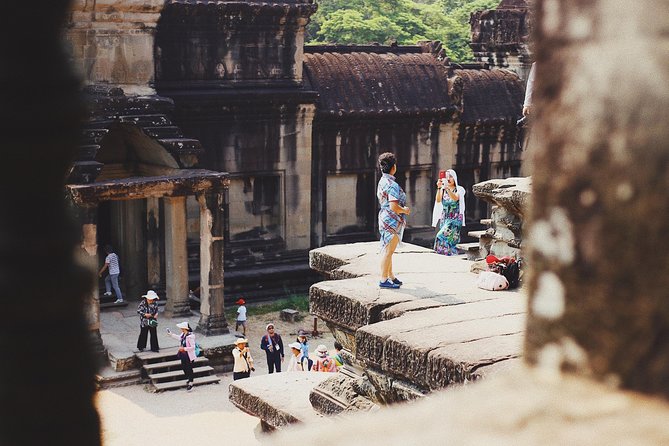
For four days, the package covers a lot: airport pickup, three nights of hotels, breakfast each morning, lunch, transportation, guides, the Mekong cruise, and most sightseeing fees. If you are building the same route yourself, the convenience of having the city transfer and daily logistics arranged may justify the price.
The value depends on your hotel choice and what you want from the schedule. A three-star room and a five-star room are not the same deal, so compare the accommodation category before paying. The price also does not cover every meal, drinks, the Angkor pass, a single room, or possibly the flight between cities if one is required.
The tour is best for someone who wants a structured first visit and prefers not to arrange Cambodian transport independently. It is less suitable if you want long, quiet temple visits, flexible museum hours, or several free afternoons.
Who should book this Cambodia itinerary?
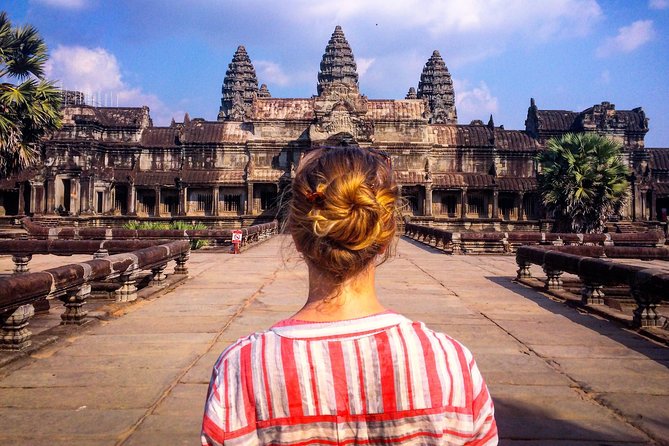
I would recommend it to first-time visitors who have four days and want the major Siem Reap and Phnom Penh sights in one booking. Couples, small friend groups, and independent visitors who like a guide but do not want a large coach will find the format appealing.
It also suits people who want more than Angkor Wat. Tonlé Sap, Artisans D’Angkor, the Mekong, the Royal Palace, Tuol Sleng, and the Killing Fields create a much broader picture of Cambodia.
I would hesitate if you dislike early starts, road transfers, emotionally difficult museums, or fixed schedules. I would also hesitate if Angkor is your only priority. For that kind of trip, extra time in Siem Reap would give you more room to explore.
Cancellation is free up to 24 hours before the local start time. Inside that window, changes and refunds are not accepted, and the minimum group requirement can affect confirmation.
Final call: a useful first look, with a demanding pace
Book this tour if you want Cambodia’s biggest cultural stops arranged in a compact four-day route, with local guides and transfers taking care of the hard parts. The best features are the small group, the range of places covered, and the strong local support associated with guides such as Samnang and Nhoek.
Skip it if you want a slow temple holiday or detailed time at the genocide museums. Before booking, confirm the hotel category, whether any flight is actually included, the Angkor pass cost, and the exact timing of the final airport transfer. With those points clear, this is a practical way to connect Siem Reap and Phnom Penh without losing the country’s most important stories.
FAQ
How long is the tour?
The experience lasts approximately four days and includes three nights of accommodation.
Where does the tour begin?
It begins in Siem Reap, with airport pickup offered at Siem Reap Airport. The listed start time is 8:00 a.m.
What accommodation is included?
Three nights of twin-share accommodation are included. Hotel options are described as three to five stars, depending on the selection.
Is the Angkor Temple Pass included?
No. The Angkor Temple Pass is specifically excluded, while other sightseeing fees are included.
How large is the group?
A booking can include up to seven people, and the overall tour has a maximum of nine travelers.
Are meals included?
Three breakfasts and lunch are included. Other food and drinks are not included unless specifically stated.
What is the cancellation policy?
You can cancel at least 24 hours before the experience start time for a full refund. Cancellations or changes made within 24 hours are not accepted for a refund.
Just added around Siem Reap
- Ultimate Sunrise to Angkor Wat, Angkor Thom and Bayon Temple★ 5.0 · 3 reviews
- Full-Day Private Tour of Angkor Wat with Pick Up★ 5.0 · 12 reviews
- Trekking Tour at Phnom Kulen National Park from Siem Reap★ 5.0 · 3 reviews
- Twilight Tastes of Siem Reap Include Dinner★ 5.0 · 13 reviews
- Siem Reap City Tour with War Museum and Killing Field★ 5.0 · 27 reviews
- Private Day Trip to Angkor Temples with Expert Guide★ 5.0 · 4 reviews
- Waterfall & River of 1000 Siva Linga- Kulen Mountain Private Tour★ 5.0 · 3 reviews
- Private Two Days Siem Reap Temples Discovery Guided Tour★ 5.0 · 7 reviews
Phnom Penh Trips from Siem Reap, compared.
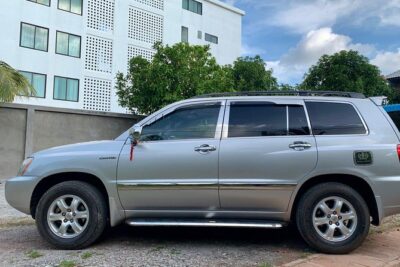
Siem Reap to Phnom Penh by Private Car or Minivan
Read our review →
Taxi Siem Reap to Phnom Penh-English Speaking Driver
Read our review →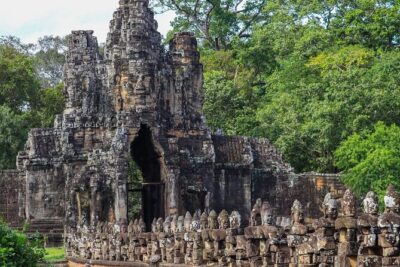
Private Taxi Siem Reap to Phnom Penh, Reliable Driver, Transfer
Read our review →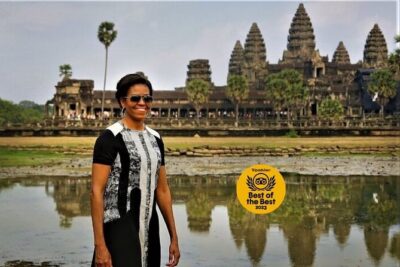
Cambodia Highlight 6 Days Tour from Siem Reap to Phnom Penh
Read our review →

An Unforgettable Road Trip from Phnom Penh to Siem Reap
Read our review →
Best Driver Taxi From Siem Reap To Phnom Penh – English Speaking
Read our review →Browse the lists this tour appears in