
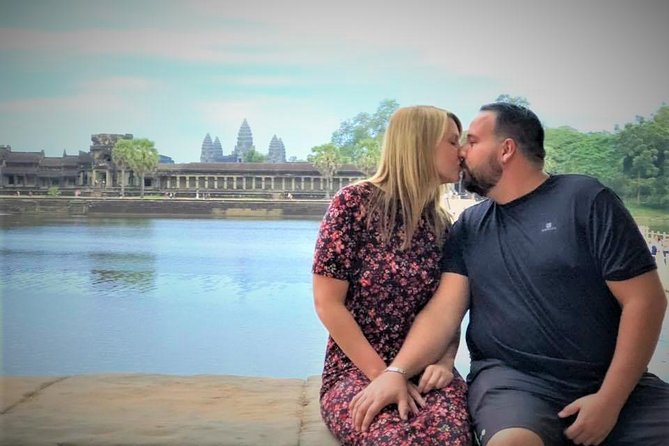
Reviewed · ANGKOR WAT SUNRISE TOURS
2 Days Exclusive Temple Highlights with Sunset and Sunrise Tour
Angkor Wat at sunrise is the hook, but this two-day tour earns its keep by adding smaller, moodier temples that many first-time visitors miss. You start with Pre Rup and Banteay Srei, then move through Neak Pean and Preah Khan before ending the first day with sunset. Day two begins in the dark at Angkor Wat, followed by Ta Prohm, Ta Nei, and Angkor Thom.
I like the well-planned temple mix and the steady supply of bottled water and cold towels in the air-conditioned vehicle. Guides such as Pal Saruon, Chhay, Sokpee, and Sak have been praised for clear explanations, good timing, and help with photos. The main drawback is pace: two days cover a lot, and the temple pass, meals, and drinks add substantially to the $49 tour price.
Key points to know before booking
- Sunrise at Angkor Wat: You leave before dawn and enter from the quieter eastern side, so bring a torch.
- Banteay Srei is worth the drive: Its small scale and fine sandstone carvings provide a sharp contrast to Angkor Wat.
- The route includes quieter ruins: Neak Pean, Preah Khan, and Ta Nei add variety beyond the famous postcard sites.
- Comfort matters in the heat: An air-conditioned vehicle, bottled water, and cold towels make long temple days easier.
- The sunset depends on your option: Small groups visit Phnom Bakheng, while the private option includes a rice-field sunset at Baitang.
- Budget for the temple pass: A 2 to 3 day pass costs $62 per person and is paid directly at the site.
Why this two-day Angkor route works
Siem Reap has enough temples to fill several days, but many people have only a short stay. This route gives you the main sights without spending both days at Angkor Wat and Angkor Thom alone.
The order also makes sense. Day one is built around the outer and northern temples, with sunset at the end. Day two saves Angkor Wat for the first light, then moves through Ta Prohm and Angkor Thom. You get the grand ceremonial spaces, detailed carvings, jungle ruins, Buddhist monuments, and smaller stops in one package.
That variety matters. Angkor Wat can feel almost too large to take in at first. A smaller temple such as Banteay Srei helps you notice the carving work. Preah Khan shows how stone corridors, trees, and collapse interact. Ta Nei gives you a quieter ruin after the crowds and scale of Ta Prohm.
The tour is priced at $49 per person, but that is not the full cost. Add the $62 temple pass and you are at $111 before food and drinks. For a first visit, that can still be fair value because transport, a guide, hotel transfers when selected, bottled water, and cold towels are included.
Check the booking option carefully. The information describes both small-group and private arrangements. Private tours give your party its own vehicle and more control over the pace, while the small-group option is linked with sunset at Phnom Bakheng. The exact vehicle and sunset plan should be clear before you pay.
More multi-day trips from Siem Reap:
- Siem Reap: Angkor Wat 2-Day Tour with Sunrise and Sunset
★ 4.9 · 4,429 reviews - Angkor 2-Day Sunset & Sunrise Small-Group Tour
★ 5.0 · 2,567 reviews - Siem Reap: Angkor Sunrise 1- or 2-Day Guided Temples Tour
★ 4.9 · 1,132 reviews
Day one begins with Pre Rup and Banteay Srei
Pre Rup is a strong opening stop. Built as a state temple by King Rajendravarman in 961 or early 962, it is a temple mountain made from brick, laterite, and sandstone. Its stacked form helps you understand the basic shape of Khmer temple architecture before you meet the larger monuments.
You spend about an hour here. That is enough to walk around, listen to the guide’s explanation, and take in the broad view from the upper levels where access is permitted. The stone can be hot, so an early start and good shoes help.
Banteay Srei is the visual change-up. It is smaller than the major Angkor temples, but its sandstone carvings are unusually fine and well preserved. You can spend around two hours here, which gives you time to look closely rather than simply take a quick photograph and leave.
The nickname Lady Temple is often used for Banteay Srei, and it is easy to see why the site has such a strong reputation for decorative work. The smaller scale makes the reliefs easier to study. I would pay attention to the doorways, lintels, and figures rather than viewing the temple only as a stop between larger monuments.
The tradeoff is the drive. Banteay Srei sits farther from the central Angkor group, so part of the day is spent on the road. Still, if you have only two days, this is one of the better uses of that time.
Neak Pean and Preah Khan bring a different mood
Neak Pean is reached across a walkway toward an artificial island. The temple is Buddhist and surrounded by water, giving it a setting unlike the hilltop and enclosure temples earlier in the day.
Plan on about an hour here. The stop is more about the approach, water, and unusual layout than about entering a huge series of chambers. In dry conditions, the setting can feel spare and open. Your guide can help explain how the island and temple fit into the wider religious design of Angkor.
Preah Khan follows with about two hours. This is one of the most atmospheric places on the route, a long, ruined complex where tree roots and crumbling stone share the frame. It has enough passages and courtyards to reward a slower walk.
You should not expect Preah Khan to look neat or restored. That is part of its appeal, but it also means uneven ground and confusing turns. Listen for the meeting point before you wander too far. Comfortable walking shoes are not just a polite suggestion here.
The guide makes a real difference at both sites. A good explanation can connect the carved stone, religious use, and later decay. Guides named Pal, Chhay, Sokpee, and Saruon Pal have been praised for giving historical context while leaving time for independent exploring. Guide assignments can vary, but the operator uses English-speaking guides.
Choose your first sunset carefully
The final stop on day one depends on the option you book. The small-group version includes sunset at Phnom Bakheng, while the private option describes a quieter sunset among rice fields at Baitang in Siem Reap.
Phnom Bakheng is the classic temple sunset choice. It gives you a high viewpoint and a chance to watch the light change over the area. The drawback is that it is a popular stop, and sunset access can involve waiting and walking uphill. Your guide’s timing matters here.
The Baitang option is less about a famous monument and more about a simple countryside pause. You can sit among rice fields, have a cold drink, and enjoy a light local snack. This may suit you better if you prefer an unhurried rural setting to a crowded viewpoint.
Do not assume you will receive both sunset experiences. The supplied details tie them to different tour types. Confirm the exact option, because the sunset choice changes the feel of the first day.
More sunset temple tours in Siem Reap:
- Angkor Wat Sunrise or Sunset Tour with Guide from Siem Reap
★ 5.0 · 12,109 reviews - Siem Reap: Angkor Wat: Small-Group Sunrise or Sunset Tour
★ 5.0 · 9,444 reviews - Angkor Wat Sunset Small Group Tour with Lunch Included
★ 5.0 · 3,059 reviews - Siem Reap: Angkor Wat Sunrise or Sunset Guided Tour
★ 4.9 · 2,123 reviews
Angkor Wat sunrise requires an early start
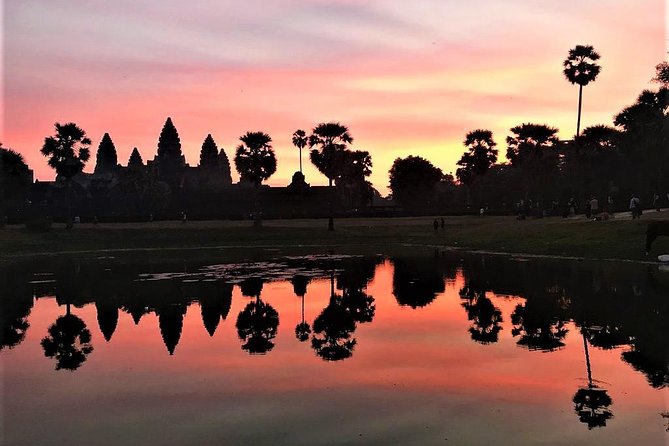
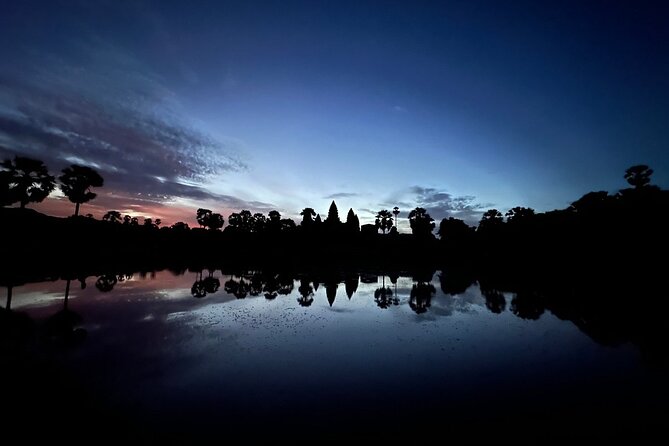
Day two begins before dawn. You enter Angkor Wat in darkness from the eastern side, which is described as less visited, and walk through cloistered corridors before the sunrise portion of the morning.
Bring a torch. This is specifically advised, and a phone light may not be ideal if you need both hands for walking or photography. Wear shoes with a secure grip, and keep your shoulders and knees covered from the beginning.
Sunrise is the emotional center of the tour, but it is not a quiet private event. Angkor Wat is one of the most famous sunrise sites in Southeast Asia. Your guide can help position you and then lead you into the temple, where the real reward is seeing the monument from inside rather than leaving after the reflection photograph.
The scheduled visit lasts about three hours. That gives you time for the exterior view, the galleries, the central areas open to visitors, and the guide’s explanation. You will also need patience. The pre-dawn departure, darkness, waiting, and walking make this a demanding start to the second day.
The benefit of doing Angkor Wat on day two is simple: you finish the trip with the site most people come to see. One person specifically chose this order so the two-day visit would end with Angkor Wat, rather than seeing it on the first morning. If that matters to you, this itinerary has a useful advantage.
Ta Prohm delivers the famous jungle setting
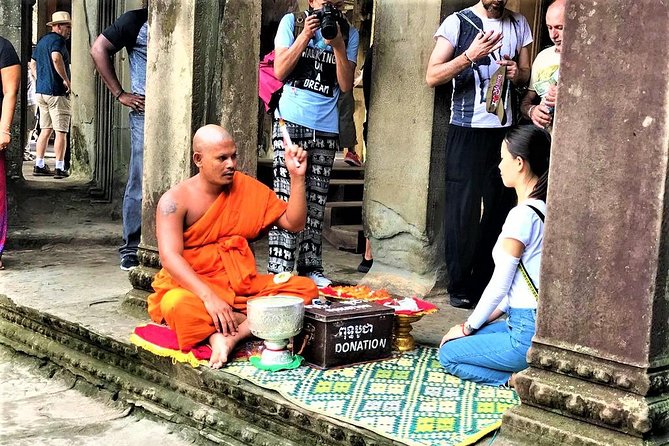
After Angkor Wat, the route continues to Ta Prohm for about two hours. This is the temple associated with giant tree roots, broken galleries, and the Tomb Raider setting.
Ta Prohm is not only a photo stop. It shows what happens when a major stone complex is left to weather, collapse, and vegetation. The trees are part of the visual drama, but they also make paths uneven and some spaces narrow.
The site can be tiring after the pre-dawn start. Take water with you and use the vehicle breaks wisely. The operator provides bottled water throughout the day, and cold towels are distributed at intervals according to several tour experiences. Those small comforts matter once the heat builds.
Your guide can also help you avoid treating Ta Prohm as a single famous doorway. There are several courtyards and corridors, and a thoughtful explanation gives the place more meaning than a quick walk to the best-known tree.
Ta Nei offers a quieter temple stop
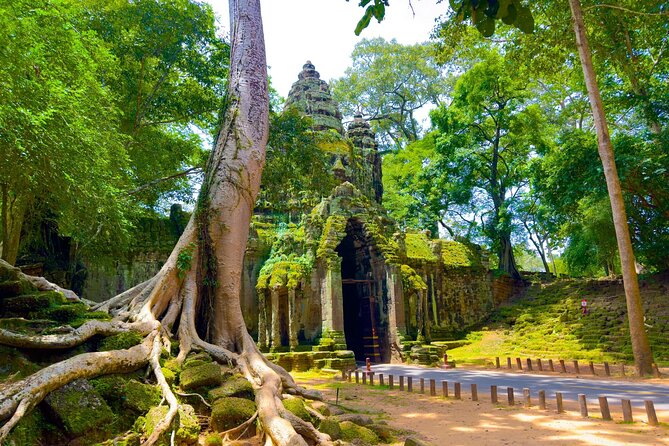
Ta Nei is a late 12th-century stone temple located within Angkor. The visit lasts about an hour and provides a welcome change after the heavy traffic of Angkor Wat and Ta Prohm.
This is the kind of stop that makes the route feel broader than a greatest-hits bus ride. It is smaller, less polished, and useful for seeing another side of the Angkor complex. You might find the setting more relaxed, although the supplied details do not promise a particular crowd level on your date.
The one concern is energy. By this point, you have already been walking since before sunrise. If you want to appreciate Ta Nei, save some attention for it rather than treating the stop as a compulsory extra.
Angkor Thom and the South Gate close the circuit
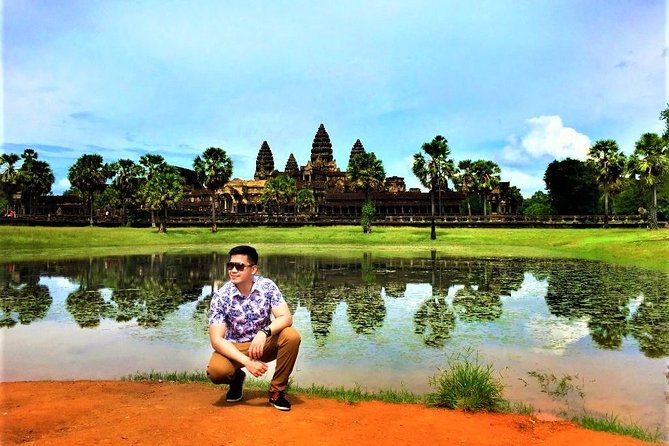
Angkor Thom was the Khmer Empire’s capital, and the tour allows about an hour and a half for the main area. The itinerary also passes the Terrace of the Elephants and the Terrace of the Leper King.
The scale is the point here. After the focused carving at Banteay Srei and the enclosed corridors of Preah Khan, Angkor Thom gives you a sense of a planned royal city. Your guide can help connect the gates, walls, terraces, and Bayon area so the site does not feel like a collection of unrelated stones.
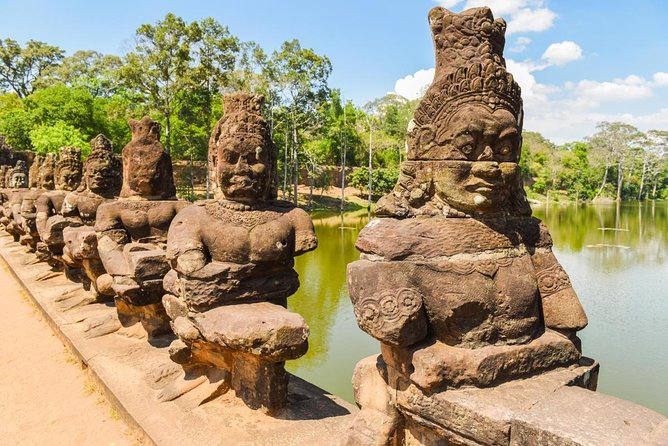
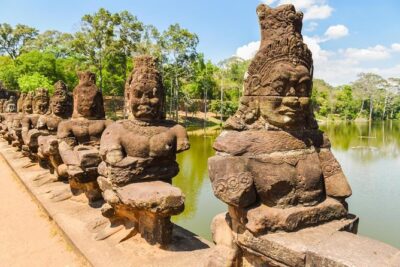
The South Gate receives a separate 30-minute stop. It is a strong visual finish, with the approach, sculptures, and monumental entrance giving you one last look at the power and ambition behind the Angkor complex.
The day is packed, but the timing appears designed to keep you moving without rushing every temple. Several guide-led experiences have been praised for balancing explanation with time to explore alone. One four-star assessment gave the tour credit for staying on schedule and avoiding major crowds, while noting that the pre-explanations sometimes created a feeling of missing something. That is a fair warning: the guide may talk before you enter, then move you along to protect the overall schedule.
Transport, meals, dress, and group size
The main transport is an air-conditioned vehicle. That is important in Siem Reap, where two temple days mean repeated walks in heat, dust, and open sun. Hotel pickup and drop-off are included if you select that option, and several booking experiences describe punctual transfers.
Water and cold towels are included. Food is not. You choose and pay for meals and drinks, and the tour may stop at local restaurants or coffee shops. One practical criticism concerns the assigned breakfast and lunch venues, which were considered more expensive and less appealing than similar places in town. If food value matters to you, ask about the stop or plan your expectations around convenience rather than bargain prices.
Dress rules are strict. Both men and women must cover shoulders and knees, and a scarf used only to cover the shoulders may not be accepted. Wear clothing that meets the rule from the start. Refusal at a temple entrance is possible if you arrive in unsuitable clothes.
Children must be accompanied by an adult. Most people can take part, but you should be ready for extensive walking, stairs or uneven surfaces, early mornings, and hot conditions.
The tour can run as a small group or as a private activity, depending on the option. Small groups let you meet other people and can cost less. Private travel gives you more control and is better for families, photographers, or anyone who wants to pause longer at a favorite temple.
What the $49 price really buys
At first glance, $49 for two days looks like an easy decision. The price becomes more realistic once you add the $62 temple pass, bringing the basic total to $111 per person before meals.
That still may be good value if you want a guide and transport. Hiring separate transport for two long temple days, arranging sunrise timing, and finding the less prominent sites on your own can take planning. The tour also removes the need to negotiate each transfer and keeps your route organized.
The price is less attractive if you already have a driver, know the Angkor complex well, or want to spend most of a day at only one temple. This is a sightseeing plan with a lot of ground to cover, not a slow archaeological study.
The pass is paid directly at the site, and admission is not included in the tour price. Build that extra charge into your budget before booking.
Who should book this Angkor tour?
I would choose this tour for a first visit to Siem Reap, especially if you have only two days for Angkor. It gives you Angkor Wat, Ta Prohm, Angkor Thom, Banteay Srei, Preah Khan, Neak Pean, Pre Rup, and Ta Nei, plus a sunrise and sunset plan.
It also suits you if you value explanation. Guides such as Chhay, Pal, Sokpee, Sak, and Vantha have been praised for temple knowledge, Cambodian culture, patience, photo help, and careful time management. The guide quality may vary by assignment, but the operator’s strongest pattern is clear: you are booking a guided history and culture experience, not just a ride between ruins.
Families can benefit from the air-conditioned vehicle and regular water, though the pre-dawn start and long walking days may test younger children. Private groups are the better choice if your party needs flexible breaks.
I would hesitate if you dislike early mornings, cannot walk comfortably for long periods, or want low-cost meals included. I would also compare the private and small-group options closely, since the sunset setting, vehicle arrangement, and pace can differ.
Final verdict: a strong first look at Angkor
This is a well-shaped two-day introduction for someone who wants the famous temples without skipping the smaller stops that give Angkor its range. The best parts are the sunrise entry at Angkor Wat, the finely carved Banteay Srei, the atmospheric Preah Khan, and the practical comfort of air conditioning, water, and cold towels.
The compromises are real: the temple pass nearly exceeds the tour price, meals are extra, the days are demanding, and the sunset plan depends on the option you select. Still, if you want an English-speaking guide, organized transport, and a route that ends with Angkor Wat after sunrise, I would book it after confirming the group type, sunset location, pickup choice, and total cost.
FAQ
Is the Angkor temple pass included in the $49 price?
No. A 2 to 3 day temple pass costs $62 per person and is paid directly at the site.
Does the tour include hotel pickup and drop-off?
Hotel transfers are included if you select the pickup option when booking.
Is transport air-conditioned?
Yes. The tour uses an air-conditioned vehicle, with bottled water and cool towels provided.
Is sunrise at Angkor Wat included?
Yes. Day two begins with a pre-dawn visit to Angkor Wat for sunrise. You should bring a torch because the route begins in darkness.
Where does the sunset take place?
The small-group option includes sunset at Phnom Bakheng. The private option includes a rice-field sunset at Baitang in Siem Reap. Confirm the exact arrangement for your selected option.
Are meals and drinks included?
No. Food and drinks are not included, though they are available for purchase during the tour. Bottled water is provided.
What should I wear at the temples?
Your shoulders and knees must be covered. This rule applies to men and women, and a scarf used only to cover the shoulders may not be accepted. Comfortable walking shoes are recommended.
More sunrise tours in Siem Reap
- Angkor Wat Sunrise tour with Small – Group and Guide tours
★ 5.0 · 3,655 reviews - Angkor Wat Highlights and Sunrise Guided Tour from Siem Reap
★ 5.0 · 3,213 reviews - Full-Day Angkor Wat Sunrise Private Tour with Guide from Siem Reap
★ 5.0 · 2,920 reviews - Angkor Wat Sunrise & 3 Main Temples with Breakfast – Small Group
★ 5.0 · 2,857 reviews
Just added around Siem Reap
- Ultimate Sunrise to Angkor Wat, Angkor Thom and Bayon Temple★ 5.0 · 3 reviews
- Full-Day Private Tour of Angkor Wat with Pick Up★ 5.0 · 12 reviews
- Trekking Tour at Phnom Kulen National Park from Siem Reap★ 5.0 · 3 reviews
- Twilight Tastes of Siem Reap Include Dinner★ 5.0 · 13 reviews
- Siem Reap City Tour with War Museum and Killing Field★ 5.0 · 27 reviews
- Private Day Trip to Angkor Temples with Expert Guide★ 5.0 · 4 reviews
- Waterfall & River of 1000 Siva Linga- Kulen Mountain Private Tour★ 5.0 · 3 reviews
- Private Two Days Siem Reap Temples Discovery Guided Tour★ 5.0 · 7 reviews
Angkor Wat Sunrise Tours, compared.
Angkor Wat Sunrise or Sunset Tour with Guide from Siem Reap
Read our review →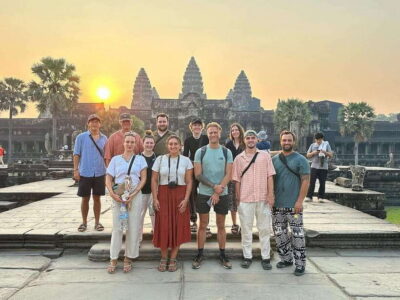
Angkor Wat: Small-Group Sunrise or Sunset Tour
Read our review →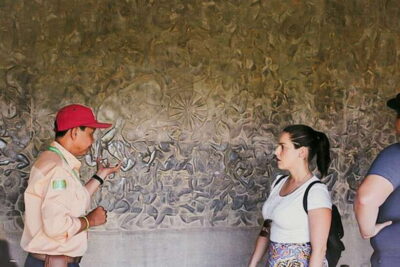
Angkor Wat 2-Day Tour with Sunrise and Sunset
Read our review →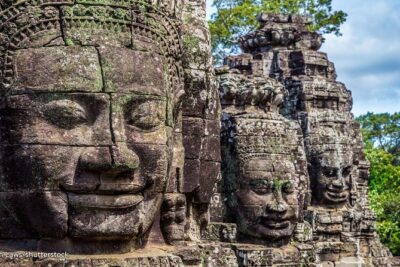
Angkor Wat Sunrise tour with Small – Group and Guide tours
Read our review →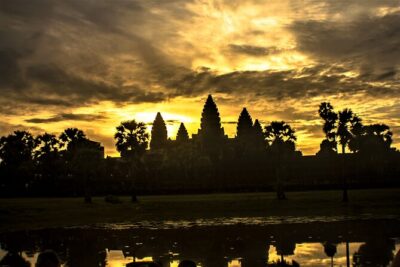
Angkor Wat Highlights and Sunrise Guided Tour from Siem Reap
Read our review →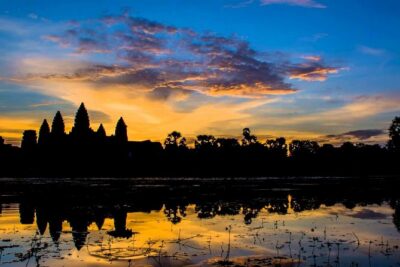
Full-Day Angkor Wat Sunrise Private Tour with Guide from Siem Reap
Read our review →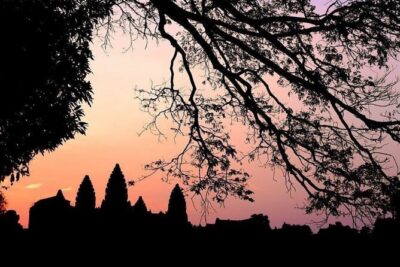
Angkor Wat Sunrise & 3 Main Temples with Breakfast – Small Group
Read our review →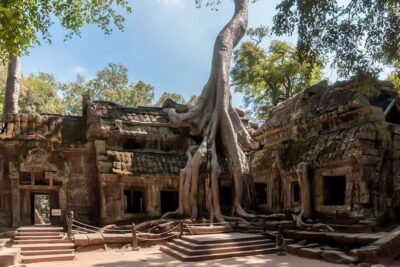
Angkor Wat Sunrise and Full-Day Sightseeing Tour
Read our review →Browse the lists this tour appears in