
Reviewed · ANGKOR WAT TOURS
2-Day Angkor Wat & Tonle Sap Tour
Angkor Wat at sunrise is the headline, but this tour gives you much more: sunset from Phnom Bakheng, the stone faces of Bayon, tree-covered Ta Prohm, pink sandstone at Banteay Srei, and a boat ride through Tonle Sap villages. I like the private format, which lets you move at your own pace, and the chance to combine Cambodia’s famous temples with daily life on the lake. The catch is a very early start, long days, and an Angkor pass that is not included.
I also like that the tour covers both the major sights and smaller stops such as Baphuon, the Terrace of the Leper King, Banteay Samre, and a floating cafe. Guide Mr. Seng has earned particular praise for explaining Cambodian history and mythology clearly and adjusting the pace to suit his group. Still, this is not a relaxed temple holiday. You will need moderate fitness, patience with crowds at Phnom Bakheng, and room in your budget for passes and meals.
Key points to know before booking
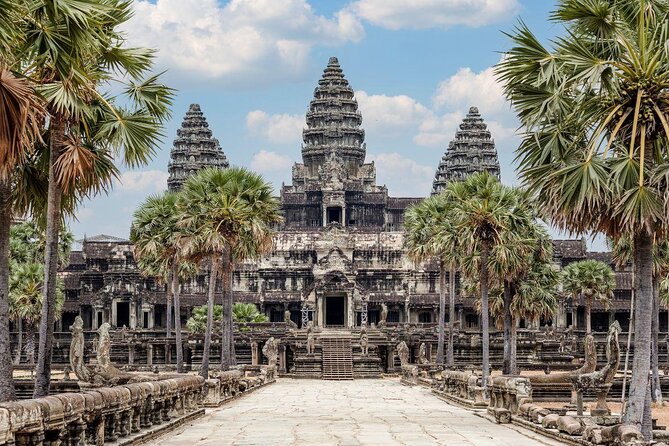
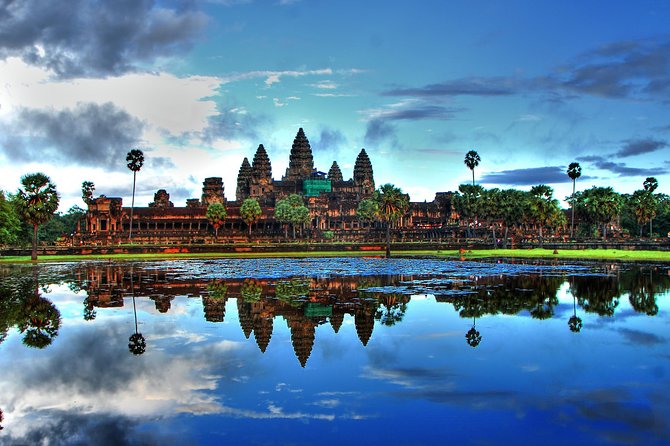
- Sunset and sunrise are built in: You visit Phnom Bakheng on the first day and return to Angkor Wat around 5 a.m. on the second.
- A private vehicle keeps the schedule flexible: Only your group of up to three people takes part, with hotel pickup and air-conditioned transport.
- The temple route covers major and lesser-known stops: Bayon, Baphuon, Ta Prohm, Angkor Wat, Banteay Samre, and Banteay Srei all appear.
- Tonle Sap adds a different side of Cambodia: The boat trip visits stilted and floating villages around the Kompong Pluk area, with a stop at an island pagoda and floating cafe.
- Your Angkor pass is extra: Temple admission is not part of the $250.26 group price, and meals are also separate.
- The schedule suits active sightseers: Expect early mornings, several hours on foot, heat, waiting at popular viewpoints, and long drives between sites.
Two days that connect temples and lake life
This tour works because it joins two very different Siem Reap experiences. Day one focuses on the central Angkor circuit and ends with sunset. Day two starts before dawn, returns to the temples beyond the main circuit, then shifts to Tonle Sap Lake.
That variety matters. You are not spending two full days moving from one stone monument to the next. You get imperial gates, carved faces, jungle-covered ruins, pink sandstone, village life, and open water. The trade-off is pace. The itinerary is full, and the best moments require you to get up early or wait your turn.
The price is $250.26 per group of up to three people. For a couple or small family, that is a useful value because it covers private transport, a guide, hotel pickup and drop-off, the motorized boat, bottled water, and cold towels. Split between three people, the cost is more attractive still. You must add the two-day Angkor temple pass, meals, soft drinks, and alcohol.
More Tonle Sap floating village trips in Siem Reap:
- From Siem Reap: Kampong Phluk Floating Village Tour by Boat
★ 4.9 · 6,979 reviews - Sunset tour of Kampong Phluk stilts home village on the Tonle Sap
★ 5.0 · 4,865 reviews - Kompong Phluk Floating Village Half-Day Tour ( Morning / Sunset )
★ 5.0 · 1,494 reviews
Angkor Thom and the faces of Bayon
The first major stop is Angkor Thom, the walled royal city that contains several important monuments. You spend about two hours here, beginning at Bayon.
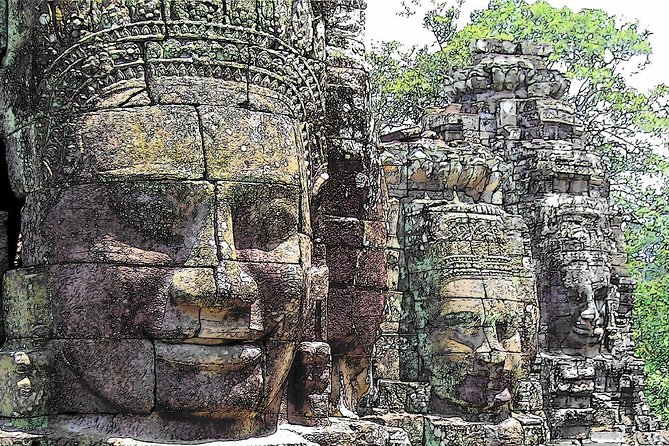
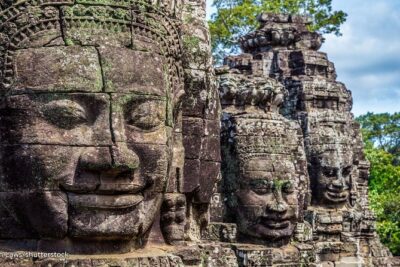
Bayon is famous for its large stone faces, which look out from towers in several directions. A good guide can help you notice the temple’s layout and the carvings around the lower levels instead of treating it as a quick photo stop. Mr. Seng is specifically praised for explaining both historical and mythological details, so this is one place where a guide’s interpretation can add real value.
Angkor Thom is also a useful first introduction to the scale of the complex. You are not simply visiting one temple. You are moving through a former city with gates, terraces, shrines, and ceremonial spaces. Wear shoes suitable for uneven ground, since the tour involves walking between and around old stone structures.
Nearby, Baphuon gets about 30 minutes. It is a shorter visit, but worth keeping because it shows a different style from Bayon. The quick stop also gives you a change of pace before the terraces.
Terraces, carvings, and Ta Prohm’s famous roots
The Terrace of the Elephants and the Terrace of the Leper King are also within Angkor Thom. Together, they take about 30 minutes on the schedule.
The terraces are best understood as ceremonial viewing platforms, with detailed carvings along their walls. You may find this stop less immediately dramatic than Bayon or Ta Prohm, but it helps you understand how the royal center was arranged. It is also a chance to see carved stone in a more open setting rather than inside a dark or crowded temple.
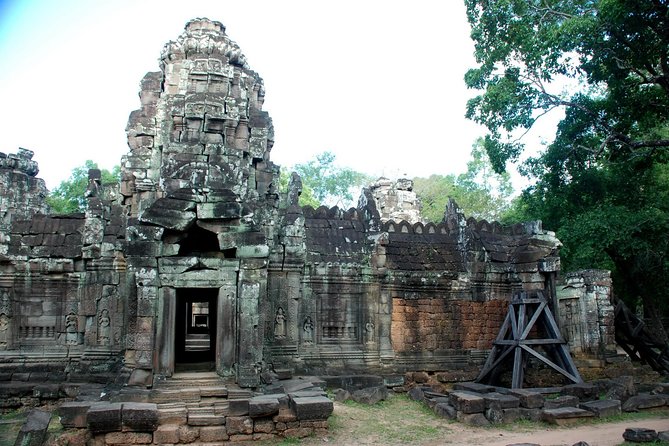
Next comes Ta Prohm, with about an hour to explore. This is the temple associated with massive tree roots growing over and through the ruins, and its appearance helped make it famous through the Tomb Raider film. The trees are not simply decoration. They show the long struggle between the forest and the built remains, while also creating some of the most memorable views in Angkor.
Ta Prohm can feel tight in places, so do not expect to wander at complete freedom during the busiest periods. A private guide helps because you can ask for more time at the areas that interest you, rather than following a large group on a fixed march.
Three hours at Angkor Wat
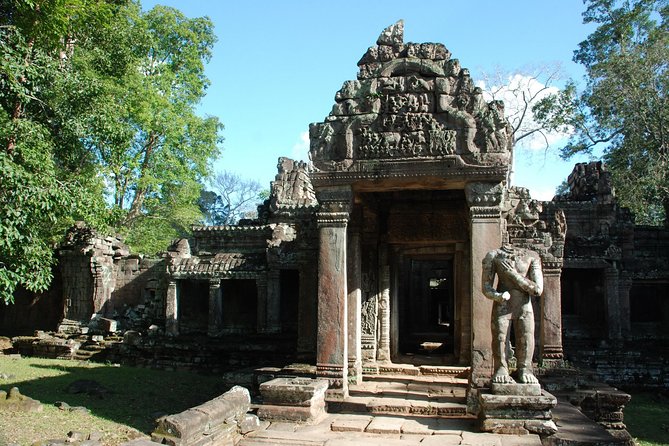
After lunch at a nearby restaurant, the tour gives Angkor Wat roughly three hours. That is enough time for a serious first visit, though not enough to see every carved panel and corridor at leisure.
Angkor Wat rewards a slow approach. Start by taking in the scale of the outer setting, then pay attention to the galleries, towers, reliefs, and long lines of carved scenes. The temple is both a religious monument and an architectural statement, so the best visit combines the grand view with small details.
This is also where your energy may begin to drop. The first day includes several stops before Angkor Wat, and the afternoon heat can make three hours feel long. Use the private transport as a place to rest between sites, drink the supplied water, and keep your expectations sensible. You do not have to inspect every corner to have a worthwhile visit.
Meals are not included. You can eat at a nearby restaurant after the morning temples, but the cost is yours. If your hotel breakfast is included in your room rate, the second morning’s plan allows you to return there after sunrise.
More multi-day trips from Siem Reap:
- Siem Reap: Angkor Wat 2-Day Tour with Sunrise and Sunset
★ 4.9 · 4,429 reviews - Angkor 2-Day Sunset & Sunrise Small-Group Tour
★ 5.0 · 2,567 reviews - 2 Days Exclusive Temple Highlights with Sunset and Sunrise Tour
★ 5.0 · 1,157 reviews - Siem Reap: Angkor Sunrise 1- or 2-Day Guided Temples Tour
★ 4.9 · 1,132 reviews
Phnom Bakheng sunset and the crowd at the top
The first day ends at Phnom Bakheng, where you wait for sunset. The scheduled visit lasts about two hours because access to the summit is restricted and only a limited number of people can be there at one time.
This is the least predictable part of the tour. You need to arrive early, then wait. The summit can draw a large crowd, and there is no guarantee that the weather will produce a clear sunset. Still, the timing gives you a chance to see the Angkor area from above in the softer evening light.
I would treat Phnom Bakheng as a bonus rather than the sole reason to book. The crowd and waiting may frustrate you, especially after a full day. Yet the combination of ancient stone, sunset, and the knowledge that the site has strict summit limits makes it a memorable end to day one.
Sunrise at Angkor Wat begins before dawn
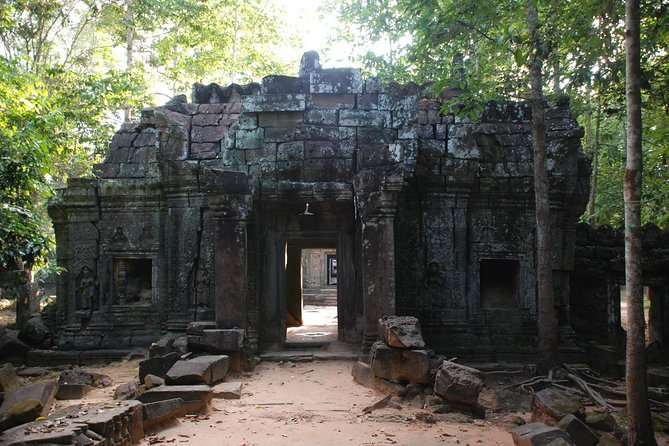
Day two starts at 5 a.m. or earlier. You go straight to Angkor Wat to wait for sunrise.
This is the tour’s most demanding start, but also one of its most appealing features. You are there for the changing light over the temple, with the familiar towers forming the central view. Weather matters, and the sky may not produce perfect color. Even so, the early visit gives you a different atmosphere from the previous afternoon and lets you see Angkor Wat at a quieter hour than later in the day.
After about an hour, you return to the hotel for breakfast if it is included in your room rate. You can also stop at a restaurant instead. This return trip is practical, not wasted time. You have been awake since before dawn, and a proper break helps you manage the rest of the day.
The schedule allows about 90 minutes for this breakfast return. If you are booking your hotel separately, check whether breakfast begins early enough. The tour information makes clear that breakfast is assumed to be part of your room rate, not part of the tour price.
Banteay Samre and the road beyond the main circuit
After breakfast, the route heads toward Pre Rup and Banteay Samre. The schedule lists about three hours for this portion, including a stop at Pre Rup, a visit to Banteay Samre, and a short stop related to palm sugar production or the landmine museum.
Pre Rup gives you another type of temple setting, with broad brick structures and a more open feel than the enclosed galleries of Angkor Wat. Banteay Samre is especially useful for anyone who wants to see a temple away from the most famous central stops. Its detailed stonework and more distant location make the drive worthwhile, though the road time means you should expect a slower rhythm.
The possible palm sugar or landmine museum stop adds local context, but the exact choice may depend on the day and your interest. Ask your guide early if you have a preference. This is one advantage of a private tour: you can make your priorities clear rather than accept a group decision.
Banteay Srei and the pink sandstone details
Banteay Srei comes after a long drive and receives about two hours. It is often called the pink ladies temple because of its pink sandstone and fine carvings.
The smaller scale changes the feel of the visit. Instead of being overwhelmed by enormous towers, you can focus on delicate ornament and carefully cut figures. Banteay Srei is a strong contrast with Angkor Wat, where size and broad spatial design dominate.
The long drive is the main drawback. After an early start and several temple visits, you may feel tired before reaching it. I still think it earns its place for anyone interested in sculpture and detail. Keep some water for the ride, use the air-conditioned vehicle as a break, and avoid treating every stop as a race.
Tonle Sap and Kompong Pluk by motorized boat
After lunch, the tour leaves the temples for Tonle Sap Lake and the Kompong Pluk area. The boat trip lasts about three hours and takes you around villages with houses on stilts and floating homes.
This is an important change of subject. Instead of looking at the remains of a royal center, you see communities shaped by changing water levels and life beside the lake. The elevated homes and floating structures make it clear how people adapt their daily routines to the water.
The tour also includes a floating cafe and a stop at an island pagoda. These breaks give the boat ride more shape than a simple cruise. You can pause, look around, and see a part of Siem Reap that a temple-only schedule would miss.
The motorized boat fee is included, along with the land transport, bottled water, and cold towels. Meals and drinks beyond the supplied water are not included. Because the lake portion follows a long temple day, it may feel restful for some people and tiring for others. The private vehicle and flexible guide help, but this remains a full two-day program.
What the private format changes
Only your own group takes part, with a maximum of three people. That matters most at the difficult points in the schedule: the breakfast return after sunrise, the long drive to Banteay Srei, and the decision about how much time to spend at each temple.
You can ask for more explanation at Bayon, move on sooner from a crowded stop, or discuss the palm sugar and museum options. The guide can also adjust the pace when possible. One couple had their second day extended after missing the first day because of a flight, which suggests some practical flexibility, though you should not assume every change will be possible.
Mr. Seng is the guide name most closely associated with this experience. His role is not only to point out monuments. He explains Cambodian history and mythology, answers questions, and helps you explore at your own speed. That combination is especially useful at Angkor, where the scale can overwhelm you without context.
Fitness, timing, and what to pack
You should have moderate physical fitness. The tour includes walking around temple grounds, uneven surfaces, early mornings, heat, and long days in and out of the vehicle.
Bring practical clothing that works for temple visits, comfortable walking shoes, sun protection, and enough personal water for the day. The tour supplies cold bottled water and cold towels, but meals are your responsibility. A small bag is easier than heavy luggage when moving through temple areas.
The first day begins around 8:30 a.m. according to the meeting information, while the second day begins at 5 a.m. or earlier. Confirm the exact pickup details when booking, especially if your hotel is outside central Siem Reap.
The tour is booked, on average, about nine days ahead. That is useful planning information if you want the private format and the sunrise and sunset schedule, though availability can change.
Who gets the best value from this tour
I would choose this tour if you have two days in Siem Reap and want a broad first look without arranging several separate drivers, guides, and a lake trip. It suits couples, small families, and friends who value privacy and want to divide the $250.26 cost between two or three people.
It is also a good fit if you want more than the standard Angkor Wat visit. The inclusion of Banteay Srei, Banteay Samre, Pre Rup, Phnom Bakheng, and Tonle Sap gives you a wider sense of the region.
I would hesitate if you want slow temple photography, long unplanned breaks, or quiet mornings. The sunrise and sunset commitments shape the whole schedule, and the Angkor pass, food, and drinks increase the final cost. The lake visit also adds several hours after an already demanding day.
Should you book the 2-Day Angkor Wat and Tonle Sap Tour?
Book it if your priority is variety, private transport, and a guide who can explain what you are seeing. The strongest parts are the carefully linked sunrise and sunset visits, the range of temples, and the Tonle Sap boat ride. Mr. Seng’s clear explanations and willingness to adjust the pace add value for anyone who wants context rather than a quick photo tour.
Skip it if you prefer a slow, temple-by-temple plan or cannot handle a 5 a.m. start. For most active first-time visitors to Siem Reap, though, the tour offers a sensible way to cover the region in two full days. Just budget for the Angkor pass and meals, and treat Phnom Bakheng’s sunset as weather and crowd dependent.
FAQ
Is the Angkor temple pass included?
No. The two-day Angkor pass is not included in the tour price and must be purchased separately.
Is hotel pickup included?
Yes. Hotel pickup and drop-off are included, along with private transportation in an air-conditioned vehicle.
How many people can join the private tour?
The price covers a private group of up to three people. Only your group takes part in the activity.
What time does the tour begin?
The meeting information gives an 8:30 a.m. start time, but day two begins at 5 a.m. or earlier for the Angkor Wat sunrise. Confirm the exact pickup time when booking.
Is the Tonle Sap boat trip included?
Yes. The fee for the motorized boat is included. The tour visits the Kompong Pluk area, stilted and floating villages, a floating cafe, and an island pagoda.
Are meals included?
No. Meals, soft drinks, and alcohol are not included. After sunrise, you can return to your hotel for breakfast if breakfast is included in your room rate, or stop at a restaurant.
What should I expect physically?
You should have a moderate fitness level. The two days include temple walking, uneven ground, long sightseeing days, early starts, and travel between distant locations.
Can I cancel for a full refund?
Yes, if you cancel at least 24 hours before the experience start time. Cancellations or changes made less than 24 hours beforehand are not refunded.
More Angkor Wat tours in Siem Reap
- Angkor Wat Sunrise or Sunset Tour with Guide from Siem Reap
★ 5.0 · 12,109 reviews - Siem Reap: Angkor Wat: Small-Group Sunrise or Sunset Tour
★ 5.0 · 9,444 reviews - Siem Reap: Full-Day Angkor Wat Guided Tour with Sunset
★ 4.9 · 3,803 reviews - Angkor Wat Sunrise tour with Small – Group and Guide tours
★ 5.0 · 3,655 reviews
Just added around Siem Reap
- Ultimate Sunrise to Angkor Wat, Angkor Thom and Bayon Temple★ 5.0 · 3 reviews
- Full-Day Private Tour of Angkor Wat with Pick Up★ 5.0 · 12 reviews
- Trekking Tour at Phnom Kulen National Park from Siem Reap★ 5.0 · 3 reviews
- Twilight Tastes of Siem Reap Include Dinner★ 5.0 · 13 reviews
- Siem Reap City Tour with War Museum and Killing Field★ 5.0 · 27 reviews
- Private Day Trip to Angkor Temples with Expert Guide★ 5.0 · 4 reviews
- Waterfall & River of 1000 Siva Linga- Kulen Mountain Private Tour★ 5.0 · 3 reviews
- Private Two Days Siem Reap Temples Discovery Guided Tour★ 5.0 · 7 reviews
Angkor Wat Tours, compared.
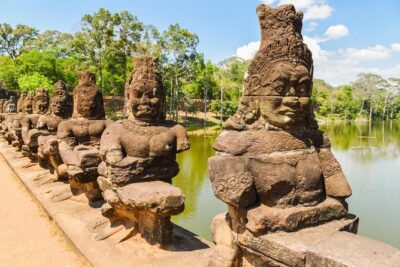
Angkor Wat Sunrise or Sunset Tour with Guide from Siem Reap
Read our review →
Angkor Wat: Small-Group Sunrise or Sunset Tour
Read our review →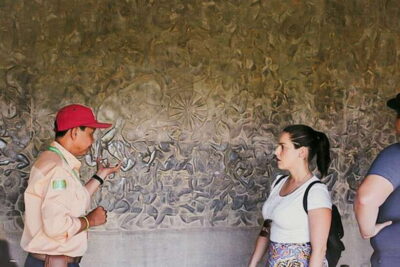
Angkor Wat 2-Day Tour with Sunrise and Sunset
Read our review →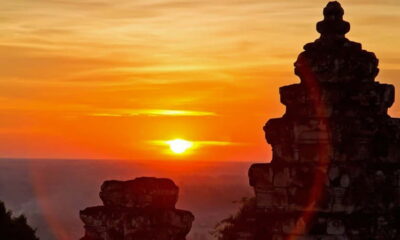
Angkor Wat Sunrise tour with Small – Group and Guide tours
Read our review →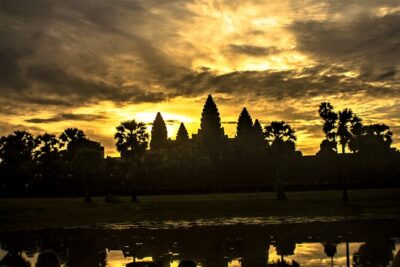
Angkor Wat Highlights and Sunrise Guided Tour from Siem Reap
Read our review →
Angkor Wat Sunset Small Group Tour with Lunch Included
Read our review →
Full-Day Angkor Wat Sunrise Private Tour with Guide from Siem Reap
Read our review →Browse the lists this tour appears in