
Reviewed · ANGKOR WAT TOURS
2-Day Angkor Wat Tour
Angkor Wat is only the beginning here. This two-day tour gives you the great temple hits, but it also takes you to quieter ruins, a pink-sandstone temple far north of the main circuit, and Tonle Sap’s floating village. Sunrise at Angkor Wat and the carved faces of Bayon are the headline moments.
I like the private air-conditioned vehicle, especially after several hours on dusty temple roads. I also like having a licensed guide to explain Khmer religion, architecture, and daily life rather than leaving you to guess what every collapsed wall once meant. The main drawback is cost: the advertised $164 price does not include the $62 Angkor Pass, $20 Tonle Sap boat ticket, meals, or soft drinks.
Key points to know before you book
- Two days cover the major Angkor circuit: You see Angkor Thom, Bayon, Baphuon, Angkor Wat, Ta Prohm, Preah Khan, and several smaller temples.
- Sunrise requires an early start: You should be ready around 4:40 am on the second morning.
- A licensed English-speaking guide is included: Guides such as Sinan and David have explained Khmer culture, religious traditions, and temple history in clear detail.
- The vehicle is private and air-conditioned: Only your group takes part, with hotel pickup and drop-off.
- The real price is higher than $164: Add $62 for the two-day Angkor Pass and $20 for the Tonle Sap boat, plus food and drinks.
- Tonle Sap adds a local-life component: The final stop includes Kampong Phluk floating village and a private boat cruise, but the boat ticket is extra.
Why two days works better than one
Angkor Archaeological Park is too large for a quick temple checklist. A one-day visit can give you Angkor Wat and Bayon, but it often leaves little time for the smaller ruins that explain how the Khmer royal center functioned.
This tour divides the experience sensibly. Day one centers on Angkor Thom and Angkor Wat. Day two begins with sunrise, then moves through tree-covered ruins, reservoirs, smaller temples, Banteay Srei, and Tonle Sap.
You spend much of the day in the vehicle, but that is part of the bargain. The park covers a wide area, and private transport keeps you from worrying about directions or arranging a new ride at every stop. Bottled water and cool towels are supplied during the excursion, a small comfort that matters in Cambodia’s heat.
The published schedule gives an 8:00 am hotel pickup on the first day, while the meeting information lists 8:30 am. Confirm your exact pickup time before the tour. The second morning is much earlier, with a suggested 4:40 am departure for sunrise.
More multi-day trips from Siem Reap:
- Siem Reap: Angkor Wat 2-Day Tour with Sunrise and Sunset
★ 4.9 · 4,429 reviews - Angkor 2-Day Sunset & Sunrise Small-Group Tour
★ 5.0 · 2,567 reviews - 2 Days Exclusive Temple Highlights with Sunset and Sunrise Tour
★ 5.0 · 1,157 reviews
Day one: Angkor Thom and the faces of Bayon
Your first morning begins with hotel pickup in a private car or minivan. You then stop to purchase the two-day Angkor Pass, which costs $62 per person and is not included in the tour price.
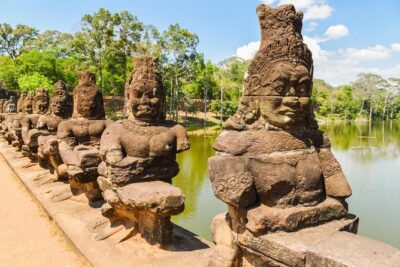
Angkor Thom was a major royal city within the Khmer Empire. The south gate provides your first striking view of the complex. A bridge lined with carved figures leads toward the gate, where the scale of the entrance gives you a quick sense of the engineering and symbolism used throughout Angkor.
The stop itself is brief, listed at about three minutes, but your guide can provide the setting before you move inside. This is one place where a guide helps you notice more than the stone towers and weathered faces.
Bayon Temple and its carved faces
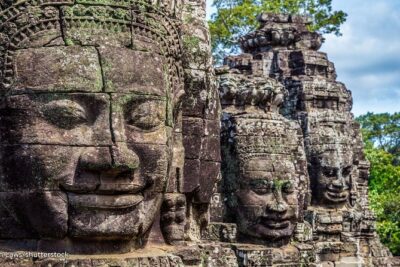
Bayon receives about two hours, and that is the right amount of time for a temple that rewards slow looking. Its towers carry enormous carved faces, often associated with the ruler Jayavarman VII and the Buddhist values of compassion and calm.
The temple can feel confusing at first. Galleries overlap, stairways rise suddenly, and the central towers seem to appear and disappear as you walk. Your guide should help you follow the structure and explain what the reliefs show.
Guides who have led this tour, including Sinan and David, have focused on Khmer religious traditions and their influences. That background gives Bayon more meaning. Instead of seeing a collection of mysterious faces, you can connect the sculpture to the beliefs and political power of the period.
Bayon involves uneven stone surfaces and stairs. The tour asks for moderate physical fitness, so wear practical shoes and expect some climbing.
Phimeanakas, Baphuon, and the Terrace of the Elephants
After Bayon, the route continues to Phimeanakas for about 30 minutes. This temple is smaller and less visually overwhelming, but it helps you understand the royal center within Angkor Thom.
Baphuon receives another 30 minutes. Its long raised approach is one of its most memorable features, and the temple’s height gives you a different view across the surrounding area. Some sections require care underfoot, especially if you are tired from the morning.
The Terrace of the Elephants takes about 30 minutes. Its carvings once formed part of a ceremonial viewing area. Look for elephants and other figures along the long stone frontage. Your guide can explain how this terrace related to royal ceremonies and public display.
These three stops are not as famous as Angkor Wat, but they make day one feel like more than a famous-temple photo tour. They also break up the larger sites with shorter visits.
More Angkor Wat tours in Siem Reap:
- Angkor Wat Sunrise or Sunset Tour with Guide from Siem Reap
★ 5.0 · 12,109 reviews - Siem Reap: Angkor Wat: Small-Group Sunrise or Sunset Tour
★ 5.0 · 9,444 reviews - Siem Reap: Full-Day Angkor Wat Guided Tour with Sunset
★ 4.9 · 3,803 reviews - Angkor Wat Sunrise tour with Small – Group and Guide tours
★ 5.0 · 3,655 reviews
Angkor Wat after lunch
Lunch takes place at a local Khmer-style restaurant inside Angkor Park. Food and soft drinks are not included, so budget separately. The schedule does not promise a set menu, which gives you less certainty about cost but allows for a local meal rather than a packaged lunch.
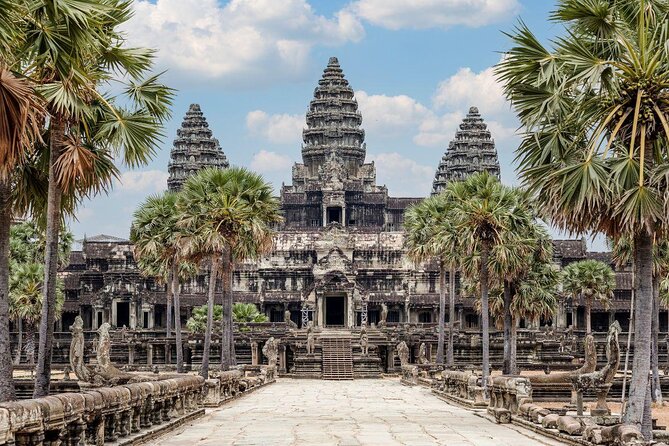
After lunch, you spend about two hours at Angkor Wat. Built as a Hindu temple and later used as a Buddhist religious site, it is the largest and best-preserved temple in the complex. Its towers, galleries, bas-reliefs, and long approach make it the day’s biggest architectural experience.
Two hours lets you see the main areas, but you should not expect every corner of Angkor Wat. The temple is enormous, and the combination of heat, stairs, and crowds can slow your pace. Listen closely when your guide explains the reliefs, since the carved scenes are not simply decoration. They reflect religious stories, royal ideals, and the power of the Khmer state.
The first day is full. You begin in the morning and spend most of the day outside, so the included water and cool towels are useful rather than decorative extras.
Day two: Angkor Wat at sunrise

The second day starts before dawn. If breakfast is included at your hotel, you can ask the staff to pack it for you. You should be ready around 4:40 am.
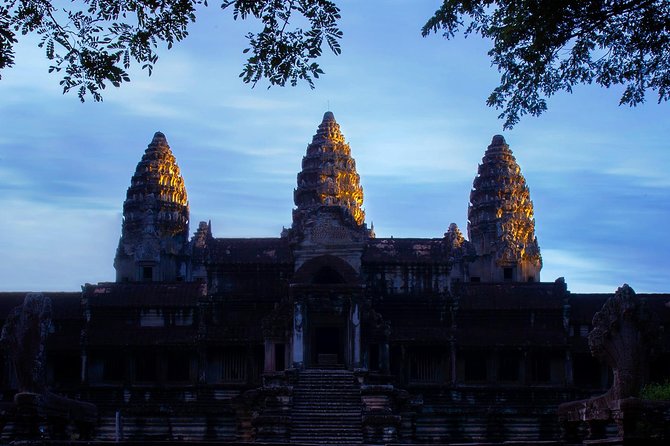
Sunrise at Angkor Wat is a popular experience, and the timing means you need to accept an early alarm and a long day afterward. The reward is the chance to see the temple’s outline change as the sky brightens. Weather affects the result, so the tour’s weather policy allows a different date or full refund if poor weather causes cancellation.
After the sunrise visit, you return to the day’s temple route. The listed stop lasts about two hours, giving you time to see Angkor Wat in a different light than on the previous afternoon.
The early start is not ideal for everyone. If you value sleep more than dawn photography, this may be the hardest part of the tour. For most first-time visitors, though, it is a useful second look at a monument too important to rush once.
Ta Prohm and the power of the ruins
Ta Prohm receives about two hours and is one of the most atmospheric stops on the route. Trees grow through and around the stone structures, creating the familiar image of roots, walls, and shadow.
The appeal is visual, but the site also shows the difficulty of preserving ancient buildings. Nature and architecture are closely linked here, though paths and fragile areas must be treated with care.
Ta Prohm can be one of the busiest stops, and the narrow passages may slow your movement. A private guide helps you focus on the temple rather than simply following the crowd. Your guide can also point out carvings and explain how the site relates to the wider Angkor complex.
Neak Pean, Preah Khan, and Ta Som
Neak Pean is a compact temple reached during a 45-minute visit. Its design is linked to water and healing, and the approach gives the stop a different feel from the towering stone temples. It is a shorter visit, but it adds variety to the day.
Preah Khan receives about an hour. It was a large religious and educational center, and its corridors, courtyards, and carved stonework reward patient exploration. Compared with Angkor Wat, the ruins feel less formal and more spread out.
Ta Som takes about 30 minutes. It is smaller, but its tree-covered entrance gives you another look at the way vegetation and old stone interact. This short stop works well after the larger temples because you can see its main features without spending another two hours on your feet.
These sites also show why a two-day plan has value. You are not only visiting the monuments everyone recognizes. You are seeing different temple layouts and different stages of preservation.
Eastern Mebon and Banteay Srei
Eastern Mebon takes about 30 minutes. It once occupied an island in a large reservoir, and its elevated position and elephant imagery help explain the role of water management in Angkor’s royal planning.
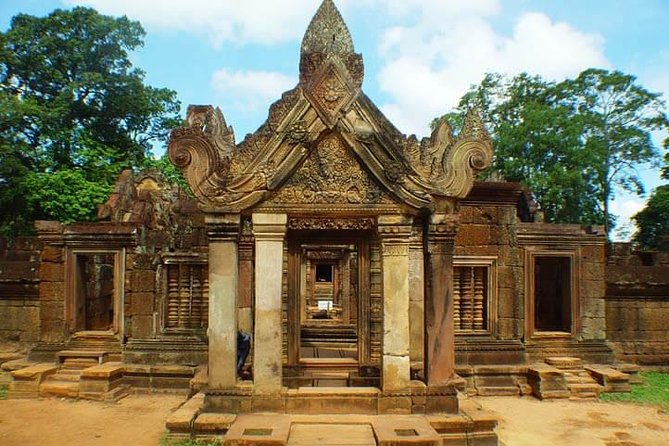
The route then heads farther north to Banteay Srei, often called the Lady Temple. The visit is listed at only two minutes, which appears unusually short compared with the temple’s distance from the central park and its artistic importance. Confirm how much actual time your guide plans to allow here.
Banteay Srei is known for its delicate carvings and pink sandstone. Its smaller scale makes it feel different from Angkor Wat and Bayon. The detail is the point: look closely at the lintels, pediments, and carved figures rather than expecting another vast complex.
Because Banteay Srei is farther away, this stop adds driving time. That may be tiring, but it also gives you a break from the densest temple zone. If fine stone carving interests you, the extra distance is worthwhile.
Tonle Sap and Kampong Phluk at day’s end
The final part of the tour takes you to Kampong Phluk floating village on Tonle Sap, Southeast Asia’s largest freshwater lake. You learn about local lifestyles and take a private boat cruise, with sunset as the planned finish.
The Tonle Sap ticket and boat ride cost $20 per person and are not included. Add that amount before comparing this tour with other Angkor packages. The visit also depends on conditions at the lake, so you should think of it as a change of pace after two long temple days rather than a third temple stop.
Kampong Phluk adds a human and environmental side to the trip. After seeing monuments built by kings and religious communities, you get a chance to see how people live around a major lake. The sunset cruise gives the day a calm ending, though the very short listed duration suggests you should confirm the exact time on the water.
What the $164 price really covers
At $164 per person, the tour includes a licensed English-speaking guide, private air-conditioned transportation, hotel pickup and drop-off, unlimited bottled water, and cool towels.
The required extras are significant:
- Two-day Angkor Pass: $62 per person
- Tonle Sap ticket and boat ride: $20 per person
- Food and soft drinks: not included
That brings the known cost to at least $246 per person before meals and drinks. This is not a budget temple outing. It is a private, guide-led package designed to remove much of the daily planning.
The value improves if you want a dedicated vehicle, a full two-day route, and help understanding the religious traditions behind the carvings. It is less attractive if you are comfortable arranging your own transport or visiting only the central temples.
A group discount may be available, but the amount is not specified. Ask about it if you are booking for several people.
The guide and driver matter here
A temple tour rises or falls on the people leading it. Sinan has explained Khmer culture, food, and history while answering detailed questions. David has focused on religious traditions and their influence. Those are useful strengths for a site where architecture and belief are tightly connected.
Driver Thy has been described as experienced and safe. That matters because the itinerary covers long days, early starts, and several separate areas of the park. You want a driver who handles the route calmly while your guide handles the interpretation.
The exact guide is not guaranteed in the information provided, so treat these names as examples rather than promises. Either way, you should ask questions. A private tour gives you more room to set the pace and request explanations than a large coach trip.
Who should book this two-day tour?
I would choose this experience if you want to see the major Angkor temples without arranging several separate rides. It suits first-time visitors who want context, families or couples who value a private vehicle, and anyone who prefers a full route over a short highlight visit.
It also suits you if Tonle Sap interests you. Many temple plans stop after Angkor Wat, while this one adds Kampong Phluk and a boat ride.
I would hesitate if you dislike early mornings, hot outdoor days, long drives, or uneven stone paths. I would also compare prices carefully if you need to keep the total cost low, since the pass, boat ride, meals, and drinks add at least $82 to the advertised price.
The cancellation terms are flexible up to 24 hours before the start time, with a full refund. Inside 24 hours, cancellations and changes are not accepted. Confirmation is usually provided at booking, though bookings made within two days of departure may take up to 48 hours to confirm.
Should you book it?
Book this tour if you want a private, guide-led introduction to Angkor that includes both the famous temples and less familiar corners of the park. The strongest reasons are the two-day pacing, the air-conditioned vehicle, the early Angkor Wat sunrise, and the chance to learn about Khmer religion and culture from a guide such as Sinan or David.
Skip it if you want a low-cost, flexible temple visit or if you would rather explore at your own speed. Before paying, confirm the first-day pickup time, the exact guide, the time allowed at Banteay Srei, and the full cost of the Angkor Pass and Tonle Sap boat.
FAQ
What is included in the $164 tour price?
The price includes a licensed English-speaking guide, private air-conditioned transportation, hotel pickup and drop-off, unlimited bottled water, and cool towels.
Is the Angkor Pass included?
No. The two-day Angkor Pass costs $62 per person and must be purchased separately.
Is the Tonle Sap boat ride included?
No. The Tonle Sap ticket and boat ride cost $20 per person and are paid separately.
What time does the tour start?
The first day is listed with pickup at 8:00 am, while the meeting information gives an 8:30 am start. Confirm your exact pickup time before departure.
What time does the sunrise visit begin?
You should be ready around 4:40 am on the second morning for the sunrise visit at Angkor Wat.
Are meals included?
No. Food and soft drinks are not included. Lunch on the first day is at a local Khmer-style restaurant in Angkor Park.
Is this a private tour?
Yes. Only your group takes part, and transportation is provided by private car or minivan.
How physically demanding is the tour?
A moderate level of physical fitness is recommended. Expect walking, uneven surfaces, and some temple stairs.
Can I cancel for a full refund?
Yes, if you cancel at least 24 hours before the experience start time. Cancellations or changes within 24 hours are not refunded or accepted. If poor weather causes the tour to be canceled, you are offered another date or a full refund.
Just added around Siem Reap
- Ultimate Sunrise to Angkor Wat, Angkor Thom and Bayon Temple★ 5.0 · 3 reviews
- Full-Day Private Tour of Angkor Wat with Pick Up★ 5.0 · 12 reviews
- Trekking Tour at Phnom Kulen National Park from Siem Reap★ 5.0 · 3 reviews
- Twilight Tastes of Siem Reap Include Dinner★ 5.0 · 13 reviews
- Siem Reap City Tour with War Museum and Killing Field★ 5.0 · 27 reviews
- Private Day Trip to Angkor Temples with Expert Guide★ 5.0 · 4 reviews
- Waterfall & River of 1000 Siva Linga- Kulen Mountain Private Tour★ 5.0 · 3 reviews
- Private Two Days Siem Reap Temples Discovery Guided Tour★ 5.0 · 7 reviews
Angkor Wat Tours, compared.
Angkor Wat Sunrise or Sunset Tour with Guide from Siem Reap
Read our review →
Angkor Wat: Small-Group Sunrise or Sunset Tour
Read our review →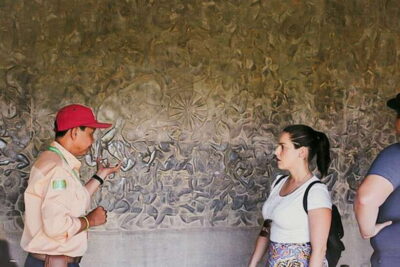
Angkor Wat 2-Day Tour with Sunrise and Sunset
Read our review →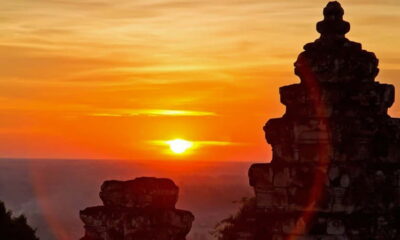
Angkor Wat Sunrise tour with Small – Group and Guide tours
Read our review →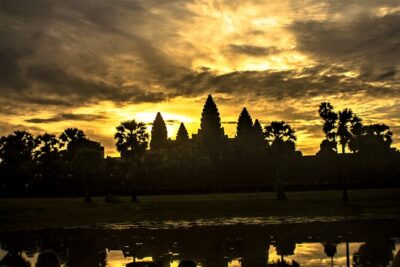
Angkor Wat Highlights and Sunrise Guided Tour from Siem Reap
Read our review →
Angkor Wat Sunset Small Group Tour with Lunch Included
Read our review →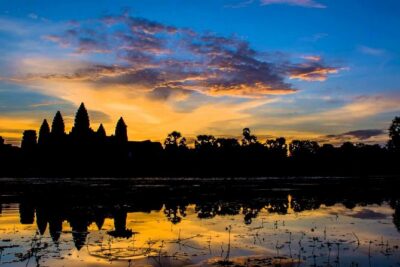
Full-Day Angkor Wat Sunrise Private Tour with Guide from Siem Reap
Read our review →Browse the lists this tour appears in