
Reviewed · SIEM REAP COUNTRYSIDE AND VILLAGE TOURS
Siem Reap: Khmer Water Blessing by Monk and Lotus Farm Visit
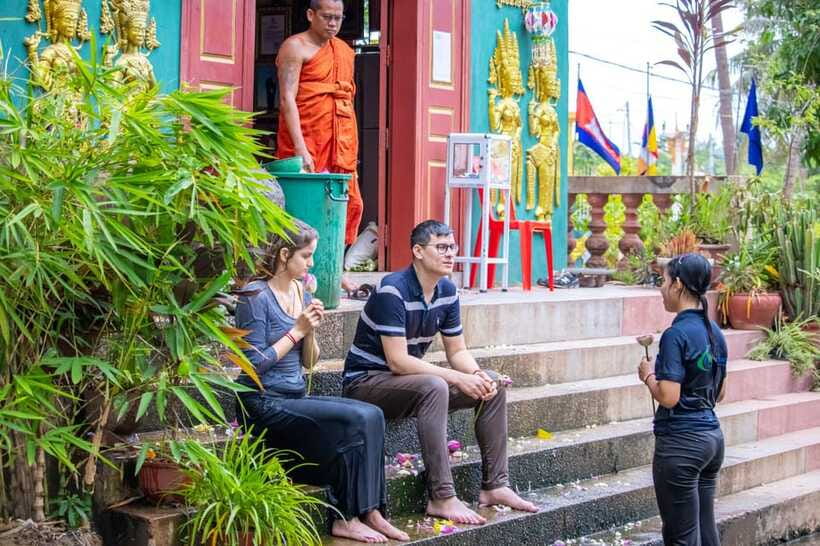
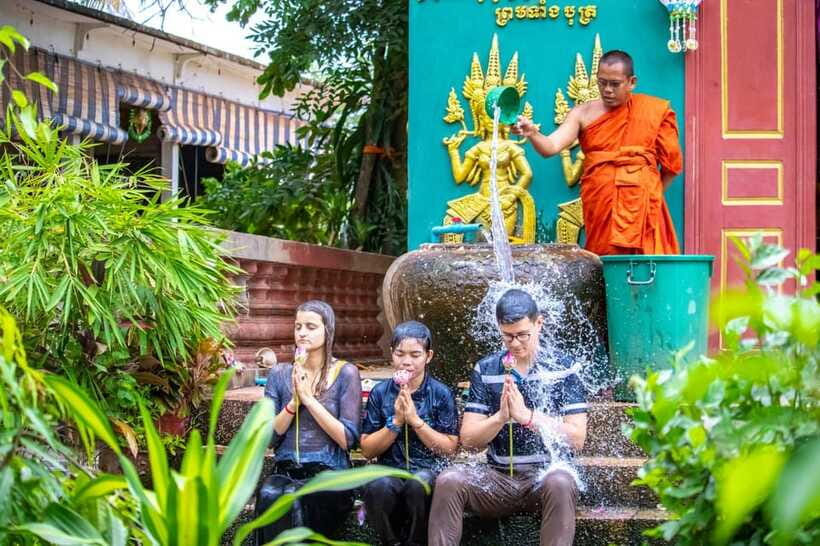
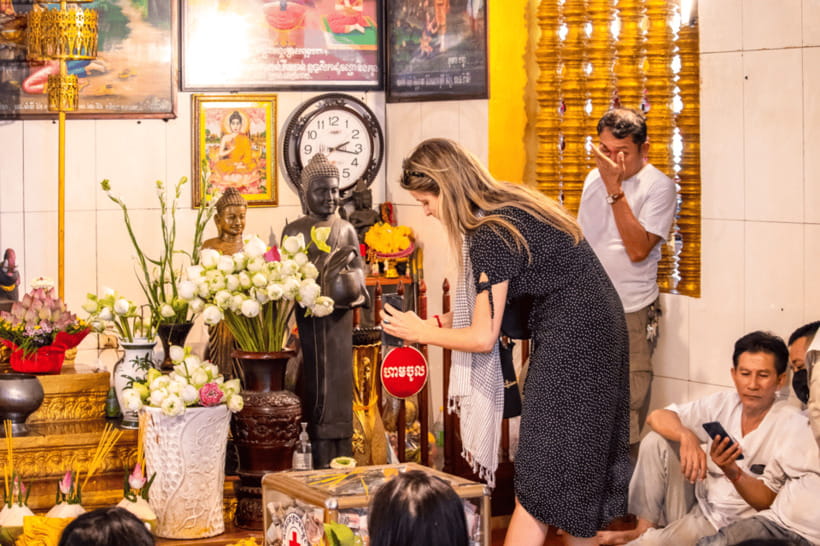
The most memorable part of this Siem Reap outing is the traditional water blessing at a local pagoda. A monk blesses you with sacred water, and you receive a red ritual bracelet. It is not a quick photo stop. You learn what the ceremony means, how the temple works, and why lotus flowers matter before taking part.
I like the easy mix of local life and spiritual practice. The fried banana snack gives you a taste of everyday Siem Reap, while the lotus farm connects what you see on the road with a working rural business. I also like that guides such as Sarath and Hong are praised for clear English and warm, helpful conversation.
The main thing to plan for is simple: you will get completely wet. Bring a towel, spare clothes, and cash for personal expenses. The tour is also not suitable for wheelchair users, and four hours can feel short if you want a long visit at every stop.
Key things to know before booking
- The monk blessing is a full-water ceremony: You will need to change afterward, not just wipe off a few splashes.
- The lotus visit is hands-on: You can pick flowers to use in the temple offering and learn how they are collected.
- The tour begins at a royal shrine: Preah Ang Chek Preah Ang Chorm gives useful spiritual context before the pagoda visit.
- Local food is part of the route: Try fried banana and sweet potato from a long-running Siem Reap snack business.
- Tuk tuk transport is included: Hotel pickup and return are provided within Siem Reap City.
- The $55 price covers the main pieces: Guide, transport, snacks, cold water, temple offering, donations, and lotus farm entry are included.
Starting at Preah Ang Chek Preah Ang Chorm Shrine
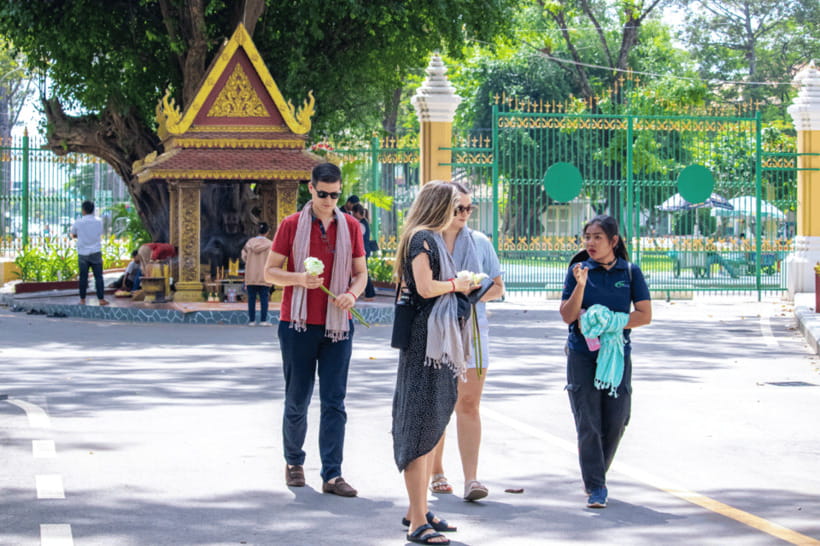
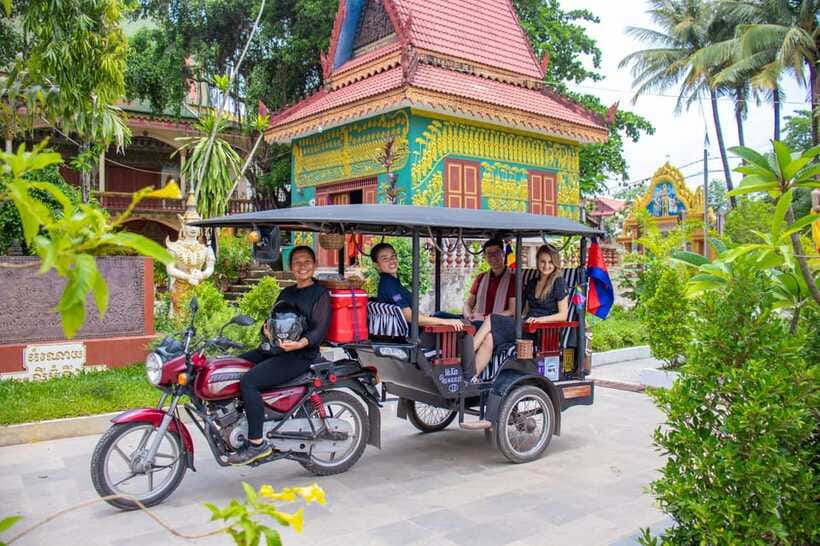
Your guide picks you up from your hotel or another address in Siem Reap City, then takes you by remork, the Cambodian tuk tuk used for local transport. The first stop is Preah Ang Chek Preah Ang Chorm Shrine beside the Royal Residence.
This is a useful beginning because it shows you that Cambodian religious life is not limited to large temple monuments. The shrine is regarded as one of the most sacred places in Siem Reap, and people come here for spiritual help and protection. You get about 30 minutes with a guide, enough time to look around and ask questions without turning the visit into a long formal temple tour.
I like this stop because it puts the later blessing into context. You are not simply being taken to a pagoda to receive water. You first see how sacred places fit into daily life in Siem Reap and Cambodia.
Dress respectfully for the shrine and the pagoda. Comfortable clothing is recommended, but avoid treating the stops like a beach outing. Sunglasses can help during the tuk tuk ride, and you should carry a little cash for anything not included in the tour.
More monk blessings and temple ceremonies in Siem Reap:
- Siem Reap: 1-Hour Cambodian Buddhist Water Blessing
★ 4.9 · 68 reviews - Monk Blessing Ceremony in Siem Reap
★ 5.0 · 24 reviews - Private Guided Angkor Wat Tour by Lady Tuk Tuk with Monk Blessing
★ 5.0 · 19 reviews
A sweet stop for fried banana and local conversation
Before heading toward the lotus-growing area, the route includes a stop with a well-known fried banana business in Siem Reap town. The vendor has reportedly been open for more than 20 years, giving this snack stop a stronger local connection than a standard refreshment break.
You can try fried banana and sweet potato as the first snack of the morning or afternoon. It is a small detail, but it helps the tour feel connected to ordinary food culture rather than built only around formal sights.
The stop also gives your guide a chance to explain local habits and businesses. Guides including Sarath and Hong have been praised for keeping conversation open and explaining Cambodian life in clear English. If you are curious, ask about the ingredients, how the snack is prepared, or how small food businesses serve the local community.
Do not expect a full meal here. Think of it as a taste and a short pause. If you need a substantial breakfast or lunch, eat before the tour or plan another meal afterward.
Seeing how lotus flowers move from field to offering
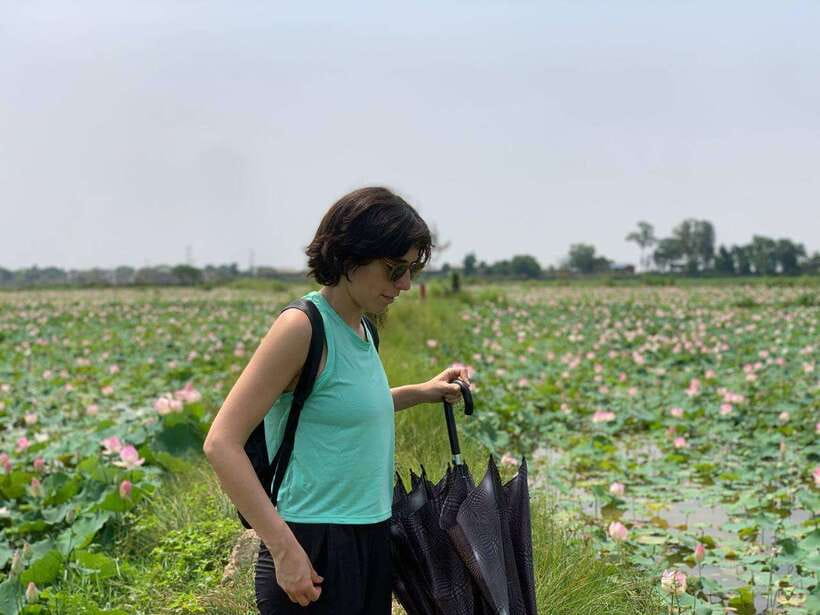
The lotus portion takes you toward Tonle Sap Lake, where lotus ponds appear along the road. At the Lotus Silk Farm and Shop, you spend about 30 minutes walking and learning about the farming and harvesting process.
This is one of the more interesting parts of the experience because the flowers are not just scenery. Your guide explains how lotus plants are grown and collected, and you can pick flowers to prepare for the offering at the pagoda. That simple act gives you a direct link between the countryside and the ceremony later in the afternoon.
The view is likely to be more open and rural than the town center, with lotus fields visible beside the road. The tour information does not promise a long farm visit, so keep your expectations in line with the timing. You get a short introduction rather than a full agricultural workshop.
The reference to a lotus silk farm also suggests that the site has a connection to local craft or silk production, but the main activity described here is the lotus visit and flower collection. If textile making is especially important to you, ask your guide what you will see on the day.
I like this stop because it gives the blessing a physical preparation. You are not handed a flower by a shop and told it is sacred. You see the flowers growing, learn how they are harvested, and carry them to the temple yourself.
Learning the layout and purpose of Wat Po Banteaychey
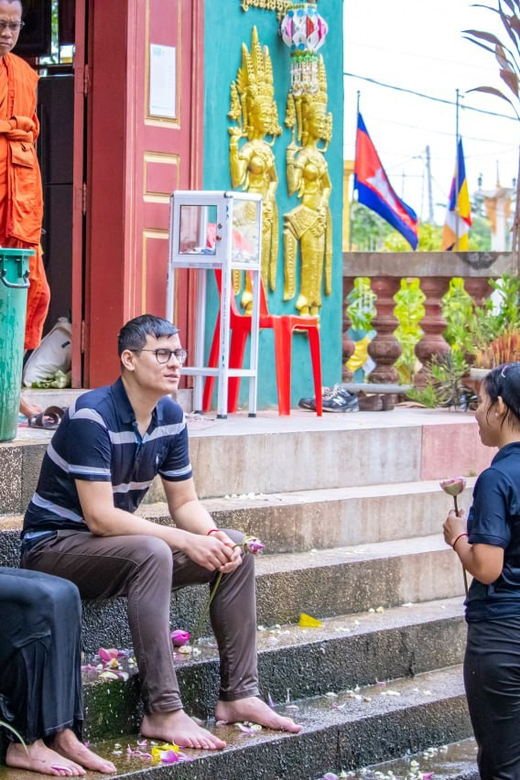
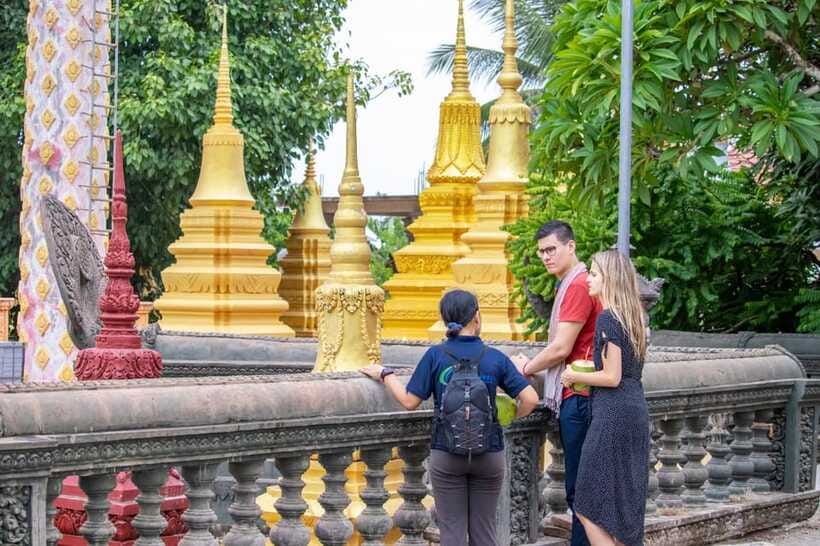
The final major stop is Wat Po Banteaychey, a local pagoda where the water blessing takes place. You receive a guided introduction to Buddhist beliefs, the role of a temple, and the activities that take place on the grounds before the ceremony begins.
This explanation matters. Cambodian pagodas are not simply monuments for visitors. They are places connected with monks, prayer, offerings, ceremonies, and community life. Your guide helps you understand what you are seeing so you can move through the grounds with more confidence and respect.
The scheduled visit lasts about an hour, including the blessing and time to walk around afterward. That is enough for a focused introduction, though it is not a long temple study session. You can ask questions throughout, and the guide remains available after the ceremony while you explore the pagoda area.
The temple visit is also where practical planning becomes important. You should wear clothing that is comfortable and respectful for a Buddhist religious site. Keep your camera ready for the surrounding area, but follow your guide’s instructions about photographing monks, ceremonies, and other people.
More countryside and village tours in Siem Reap:
- From Siem Reap: Kampong Phluk Floating Village Tour by Boat
★ 4.9 · 6,979 reviews - Kampong Phluk Floating Village Tour by Boat
★ 5.0 · 1,020 reviews - Siem Reap Countryside Bike Tour / E-Bike or Tuk Tuk
★ 5.0 · 935 reviews - Siem Reap: Tonle Sap, Kampong Phluk & Floating Village Tour
★ 4.4 · 397 reviews
What happens during the monk water blessing
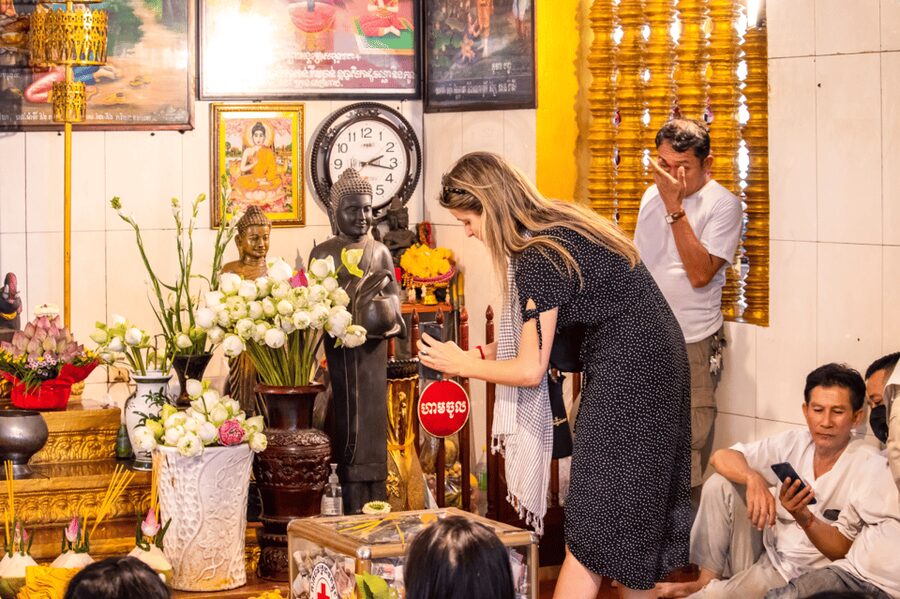
The water blessing is the central experience. After learning about the temple and Buddhist practice, you take part in a ceremony led by a monk. Sacred water is used as part of the blessing, and you receive a red ritual bracelet.
This is not a dry, symbolic sprinkling. The instructions are clear that you will get completely wet. You should bring:
- A towel
- A full change of clothes
- Comfortable clothing that is easy to change out of
- A bag for wet items
The ceremony may feel unfamiliar if you have not taken part in a Cambodian blessing before. That is exactly why the guide’s introduction is useful. You can ask what to do, when to sit or stand, and how to accept the blessing respectfully rather than guessing in the moment.
The red bracelet is a small but meaningful reminder of the ceremony. It is not the main reason to book the tour, but it gives you something physical to take away after the water dries.
Afterward, you change clothes and walk around the pagoda. This is a good time to ask the questions that come up during the ritual. Several guides, including Sarath and Hong, are noted for being attentive and willing to explain details, and the format leaves room for conversation rather than rushing you straight back to town.
What the guide adds to the experience
The quality of this outing depends heavily on the guide. The route itself is pleasant, but the meaning comes from the explanations between stops.
An English-speaking guide explains the royal shrine, local food, lotus farming, Buddhist beliefs, temple structure, and the blessing. Guides named Sarath and Hong have been particularly praised for clear English, helpful answers, and a friendly manner. You should still understand that guide assignment can vary, so those names are examples rather than a guarantee.
A good guide also helps with small cultural matters. You may not know how to behave near the shrine, how to prepare the lotus flowers, or what to do during the blessing. Having someone explain these things prevents the usual awkwardness that comes with entering an unfamiliar religious setting.
The experience appears especially well suited to people who enjoy asking questions. If you want a silent sightseeing loop with little conversation, this may feel more interactive than you prefer. If you want to understand local customs, the guide is one of the main reasons the $55 cost can make sense.
Is $55 a fair price?
At $55 per person, this is not the cheapest way to spend four hours in Siem Reap. It is also more than a simple tuk tuk ride to a pagoda. The value comes from the combination of transport, a guide, snacks, the lotus farm, the monk’s offering and donations, and the planned ceremony.
You are paying for a structured experience rather than arranging each piece yourself. The included remork transport removes the need to negotiate separate rides. The tour also handles the offering and temple donation, so you do not have to work out the proper amount or find the lotus flowers independently.
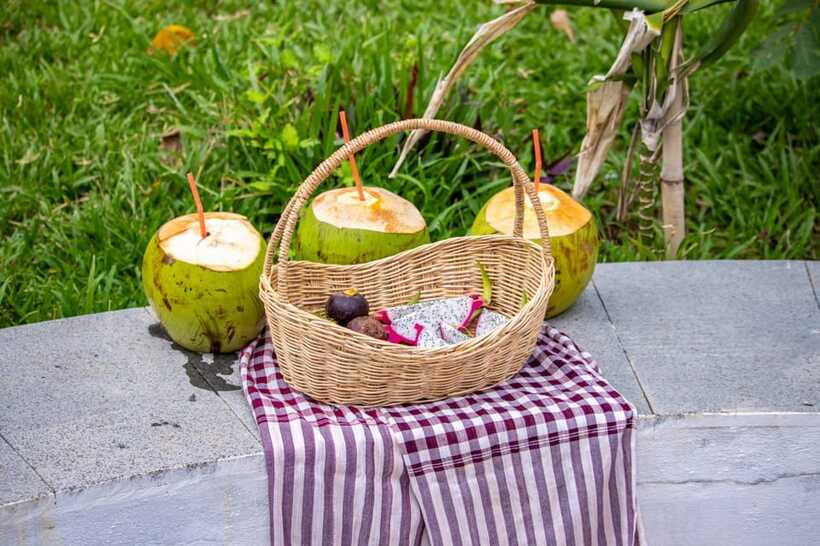
Cold water and local snacks are included, as is the lotus farm entrance fee. Personal expenses are not included, so carry cash for anything extra. The price makes the most sense if you value interpretation and organization, not simply transport.
There is also a human element to consider. A direct booking with a local operator may sometimes cost less, but this experience is sold with organized pickup, an English-speaking guide, and a defined route. If keeping costs as low as possible is your main goal, you may prefer arranging a tuk tuk and pagoda visit on your own. You would then lose much of the explanation and ceremony planning that gives this outing its purpose.
Getting around by remork tuk tuk
The remork is part of the experience, not just a way to fill the gap between stops. You ride through Siem Reap and toward the Tonle Sap area, with lotus fields visible along the road.
The open-air vehicle lets you see more of the surroundings than a closed car, but it also exposes you to sun, dust, and weather. Sunglasses are useful, and comfortable clothes will make the ride easier. The supplied information does not specify group size, so ask when booking if the space or seating arrangement matters to you.
Hotel pickup and return are included for locations in Siem Reap City. You need to provide your hotel name and exact address. At the end, you can return to your hotel or go to the city center if that suits your plans.
The route is listed as four hours, including pickup, travel, visits, changing clothes, and the return ride. Keep the rest of your schedule flexible. The tour is not described as suitable for wheelchair users, and the mix of tuk tuk transport, walking, farm ground, and temple access may be difficult for anyone with limited mobility.
Who will enjoy this experience most?
I would choose this tour if you want something personal and local rather than another large monument visit. It suits you especially well if you are interested in:
- Cambodian Buddhist practice
- Small local food businesses
- Lotus farming and rural scenery
- Guided cultural conversation
- A hands-on ritual rather than passive sightseeing
- A short half-day outing with hotel pickup
It can work well early in a Siem Reap stay because it gives you cultural background before you visit other temples. It also works as a change of pace after several hours among major archaeological sites.
You may want to skip it if you dislike getting wet, have no access to spare clothes, or prefer a strictly secular itinerary. The ceremony is the reason to book, so there is little point in choosing this tour if you plan to avoid the blessing.
Families and couples should also think about the clothing change. The information provided does not describe changing facilities in detail, so bring a practical towel and a secure bag for damp clothes. Children or adults who are uncomfortable with a monk-led ritual may find the experience less enjoyable.
Booking, cancellation, and practical planning
The activity costs $55 per person and lasts four hours. Starting times vary, so you need to check availability for your date. Pickup is included from hotels or other addresses in Siem Reap City.
You can reserve now and pay later, which is useful when your temple schedule may change. Cancellation is free up to 24 hours in advance for a full refund.
Bring sunglasses, a camera, comfortable clothes, cash, a towel, and a complete change of clothes. Pets are not allowed. The tour is offered in English with a live guide.
Before you leave your hotel, wear something you can move in and pack your dry clothes where they will stay protected from the water ceremony. That one bit of planning will make the final pagoda visit much more comfortable.
Should you book the Siem Reap water blessing tour?
Book it if you want a thoughtful four-hour experience built around local practice rather than a standard sightseeing loop. The strongest parts are the clear cultural explanation, the lotus flowers prepared for the offering, the local snack stop, and the chance to receive a monk’s blessing in a real pagoda setting.
I would be less keen if you are seeking a bargain transfer, a long lotus farm visit, or a completely dry afternoon. At $55, the value depends on your interest in the guide and ceremony. For you, the best fit is someone who wants to understand what is happening, not simply collect another photograph.
FAQ
How long does the Siem Reap water blessing tour last?
The experience lasts four hours, including hotel pickup, the visits, the water blessing, and the return to your hotel or the city center.
Is hotel pickup included?
Yes. Pickup is included from your hotel or another location in Siem Reap City. You need to provide the hotel name and exact address.
Will I get wet during the monk blessing?
Yes. You will get completely wet during the water blessing, so bring a towel and a full change of clothes.
What is included in the $55 price?
The price includes an English-speaking local guide, remork tuk tuk transportation, cold water, local snacks, the monk’s offering and donations, and the lotus farm entrance fee.
Is the tour suitable for wheelchair users?
No. The experience is not suitable for wheelchair users.
Can I cancel the booking for a refund?
Yes. You can cancel up to 24 hours in advance for a full refund.
Just added around Siem Reap
- Ultimate Sunrise to Angkor Wat, Angkor Thom and Bayon Temple★ 5.0 · 3 reviews
- Full-Day Private Tour of Angkor Wat with Pick Up★ 5.0 · 12 reviews
- Trekking Tour at Phnom Kulen National Park from Siem Reap★ 5.0 · 3 reviews
- Twilight Tastes of Siem Reap Include Dinner★ 5.0 · 13 reviews
- Siem Reap City Tour with War Museum and Killing Field★ 5.0 · 27 reviews
- Private Day Trip to Angkor Temples with Expert Guide★ 5.0 · 4 reviews
- Waterfall & River of 1000 Siva Linga- Kulen Mountain Private Tour★ 5.0 · 3 reviews
- Private Two Days Siem Reap Temples Discovery Guided Tour★ 5.0 · 7 reviews
Siem Reap Countryside and Village Tours, compared.
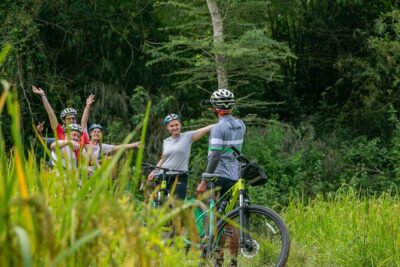
Siem Reap Countryside Bike Tour / E-Bike or Tuk Tuk
Read our review →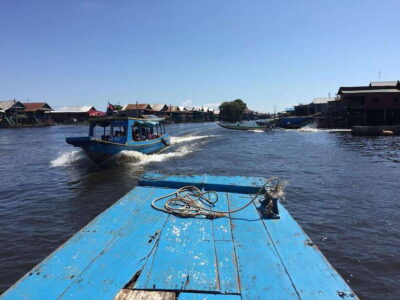
Tonle Sap, Kampong Phluk & Floating Village Tour
Read our review →
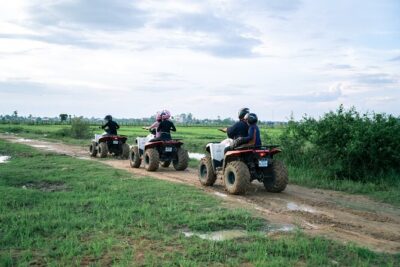
Siem Reap Lotus Silk Farm Discovery tour & Lake experience
Read our review →Browse the lists this tour appears in