Reviewed · ANGKOR WAT TOURS
Siem Reap: Angkor Wat Tour with French-Speaking Guide
Angkor is not one temple. It is a vast stone city, and this tour gives you a practical way to make sense of it. You’ll see the smiling towers of Bayon, the tree-wrapped ruins of Ta Prohm, and the grand approach to Angkor Wat, with a French-speaking guide explaining what you are looking at instead of leaving you to guess.
I like the choice of a one-day or two-day plan, and I like the small touches that matter in Cambodia’s heat: cold water and chilled towels throughout the day. The main drawback is that the entrance pass and lunch cost extra, and the one-day route packs a lot into a single hot day.
Key points to know before booking
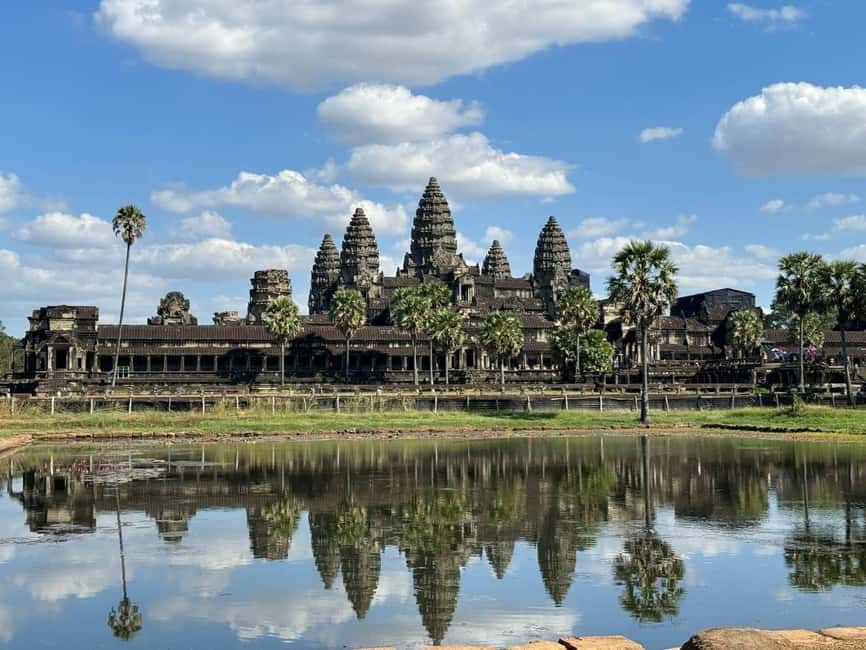
- Choose your pace: The one-day tour covers Angkor’s essential temples, while the two-day option adds the Grand Circuit and Banteay Srei.
- French guidance: Guides including Mey, Alex, Piset, Kamal, Kanal, and Philrom have led tours praised for clear French, humor, and strong cultural knowledge.
- Transport changes with group size: One or two people generally ride in a tuk-tuk, while larger groups use an air-conditioned van or bus.
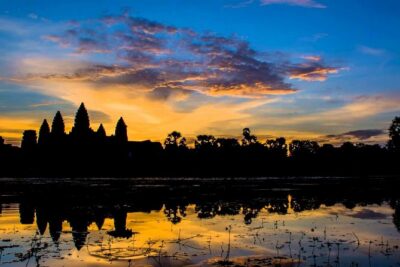
- Sunrise starts early: Select the sunrise option for a 5:00 AM pickup and plan to bring breakfast from your hotel.
- The ticket is extra: The Angkor pass costs $37 for one day or $62 for two to three days.
- Dress for temple rules: You need clothing covering your shoulders and knees, especially at Angkor Wat.
Why this Angkor tour works well
Angkor can feel confusing at first. Roads loop through forest, temple names blur together, and the scale is hard to grasp from a map. A guide gives the ruins a story and a sequence, so your day becomes more than a string of photo stops.
This experience is especially useful if you want French-language commentary. Guides such as Piset, Alex, Mey, Kamal, Kanal, and Philrom have been praised for speaking clearly, explaining Cambodian culture, and keeping the mood light during long walks. Names and guides depend on availability, but the French-language focus is central to the tour.
You can book a private outing or join a small group. The private option makes the most sense for families, couples, or anyone who wants more control over pace and temple time. A shared tour can lower the cost and still gives you hotel pickup, transport, and a live guide.
The headline price is $50 per person, but budget for the Angkor pass and lunch. The $37 one-day ticket brings the real cost above the advertised tour price, while the $62 pass covers two to three days. That remains fair for hotel transfers, transport, and a dedicated French-speaking guide, but it is not an all-inclusive price.
More Angkor Wat tours in Siem Reap:
- Angkor Wat Sunrise or Sunset Tour with Guide from Siem Reap
★ 5.0 · 12,109 reviews - Siem Reap: Angkor Wat: Small-Group Sunrise or Sunset Tour
★ 5.0 · 9,444 reviews - Siem Reap: Angkor Wat 2-Day Tour with Sunrise and Sunset
★ 4.9 · 4,429 reviews
Starting in Siem Reap at 8:30 AM
For the regular schedule, your guide picks you up from your hotel lobby between 8:30 and 9:00 AM. You then go to the ticket booth to buy your pass, unless you have purchased it online in advance.
The tour says you can skip the ticket line, but the entrance ticket itself is still your responsibility. Give the operator your hotel name or address and a contact number when booking. This matters because hotel pickup is included, but the precise meeting point depends on the information you provide.
The regular one-day tour finishes around 5:00 PM. That gives you a full day among the temples, though you should expect heat, walking, stairs, and repeated time outside. Comfortable shoes, sunscreen, sunglasses, a hat, and insect repellent are sensible basics.
For sunrise, pickup is at 5:00 AM and the tour finishes around noon. Bring breakfast from your hotel. The early start trades sleep for cooler air and the chance to see Angkor Wat before the main daytime heat.
Ta Prohm and the appeal of ruins reclaimed by trees
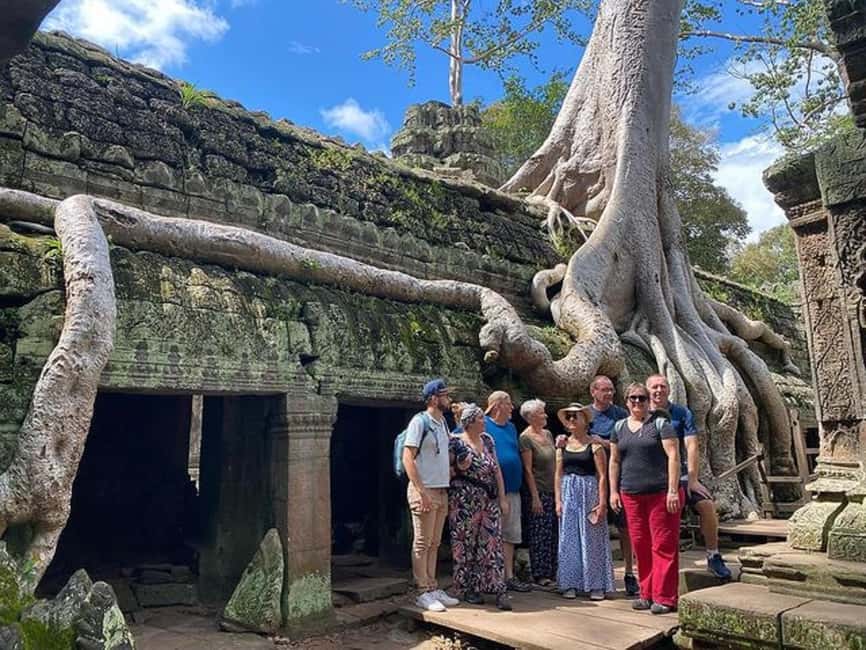
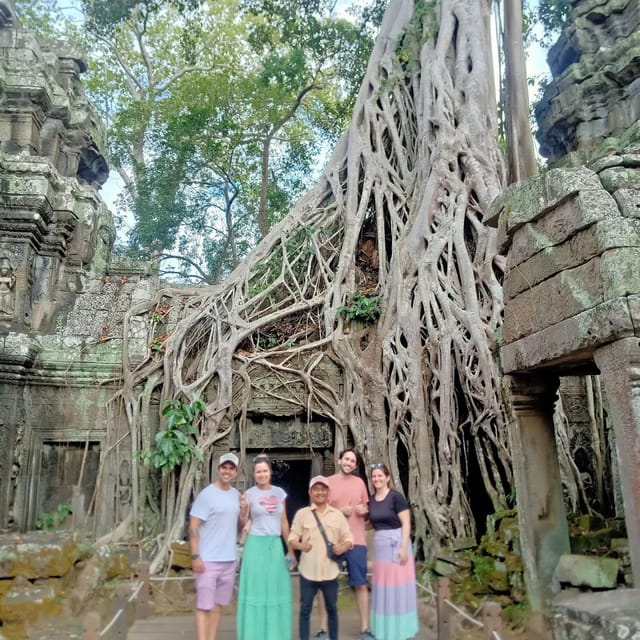
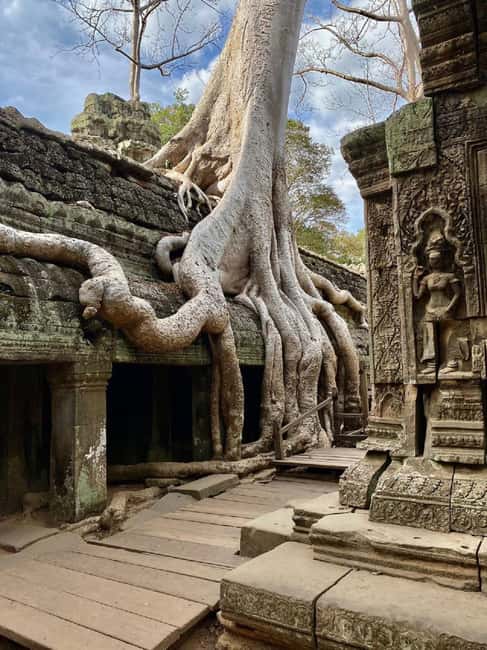
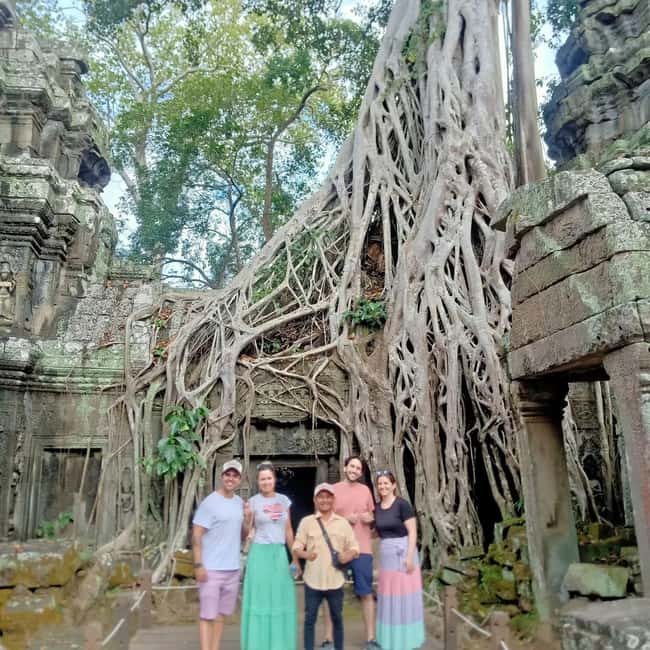
Ta Prohm is one of the most atmospheric stops on the one-day route. Massive tree roots push across walls and doorways, making the temple look partly built and partly returned to the forest.
Your guide helps explain how the temple fits into the wider Angkor story. Without context, it is easy to focus only on the dramatic roots. With guidance, you can pay attention to the layout, carvings, stonework, and the way nature has changed the site over time.
Expect about an hour here. That is enough to see the key areas, but Ta Prohm can feel crowded and uneven underfoot. Wear shoes with a good grip, and do not expect every corner to be quiet or easy to photograph.
Angkor Thom through the South and Victory Gates
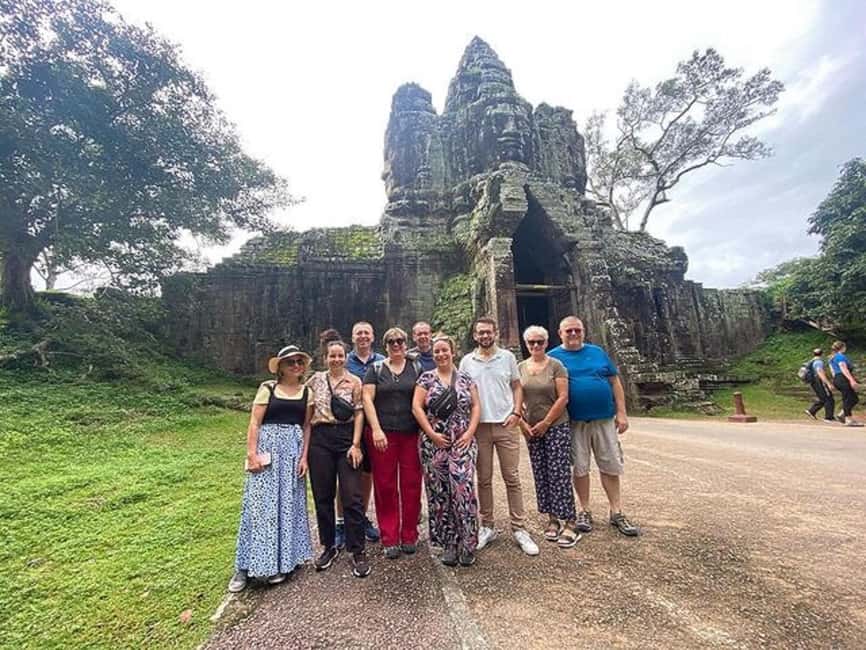
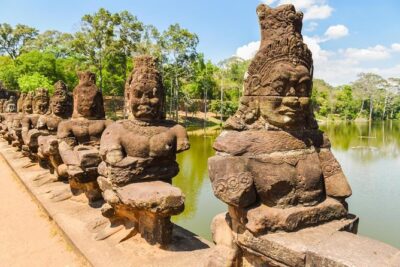
The route continues to Angkor Thom, the former royal city. The South Gate is a strong introduction, with giant stone faces lining the entrance and a bridge leading into the ancient city.
A brief stop at Victory Gate gives you time for photographs before the longer visit inside Angkor Thom. The photo stop lasts about 15 minutes, so use it efficiently. Have your camera ready rather than searching through your bag after getting out of the vehicle.
Angkor Thom is not a single monument. It is a large enclosed area containing several important structures. The guided visit lasts about two and a half hours, making this the longest part of the one-day schedule.
That time includes the Terrace of the Elephants, Baphuon, and Bayon. You will walk between sites and listen to explanations along the way. This arrangement helps you understand the city as a royal center rather than treating each temple as an isolated stop.
More guided tours in Siem Reap:
- Siem Reap: Full-Day Angkor Wat Guided Tour with Sunset
★ 4.9 · 3,803 reviews - Angkor Wat Sunrise tour with Small – Group and Guide tours
★ 5.0 · 3,655 reviews - Angkor Wat Highlights and Sunrise Guided Tour from Siem Reap
★ 5.0 · 3,213 reviews - Full-Day Angkor Wat Sunrise Private Tour with Guide from Siem Reap
★ 5.0 · 2,920 reviews
The Terrace of the Elephants and Baphuon
The Terrace of the Elephants is a carved platform linked to royal ceremonies and public life. It is a shorter stop, around 15 minutes, but it helps show how Angkor Thom functioned beyond its temples.
Baphuon receives roughly 45 minutes. Its long approach and elevated design give it a different feel from Bayon’s crowded towers. You may need to manage steps and uneven surfaces, so anyone with limited mobility should think carefully before booking. The tour is not suitable for wheelchair users.
These stops reward a guide who can connect architecture to the power of the Khmer court. The French commentary is useful here because there is a lot to take in, yet not every important detail is obvious from the stonework alone.
Bayon’s smiling faces
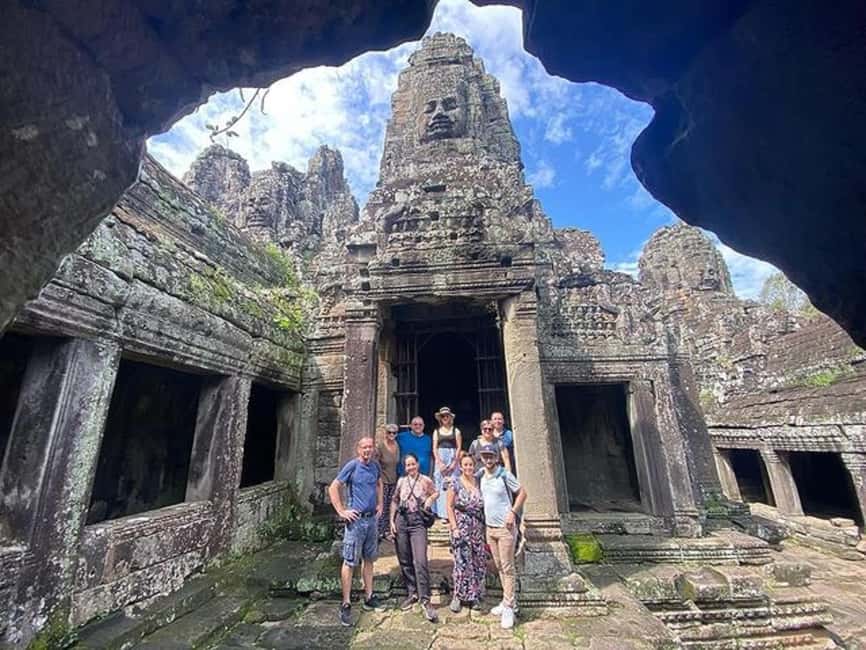
Bayon is the emotional center of Angkor Thom for many people. Its towers carry serene carved faces, and the close corridors make the temple feel more intimate than the wide approach to Angkor Wat.
The visit lasts about 45 minutes. That is enough for a guided look at the main towers and carvings, but you will not have unlimited time to wander. If Bayon is the site you most want to study, the private option may help you keep the pace comfortable.
A good guide can point out the difference between the famous faces and the smaller scenes carved into the walls. You will get more from the temple if you slow down and look at both the grand towers and the everyday details in the reliefs.
Lunch near the monuments
Lunch is not included. The group stops at a nearby local restaurant for about an hour, giving you a break from the sun before Angkor Wat.
This is a practical pause, not a food-focused part of the experience. One important caution is price and quality: the restaurant choice may be more expensive than expected and not especially strong. If food matters to you, ask your guide about the available choice before ordering, and keep your expectations modest.
The break still has value. Angkor days involve heat and walking, and an hour seated with food and water can make the final temple much more enjoyable.
Angkor Wat, the grand finale
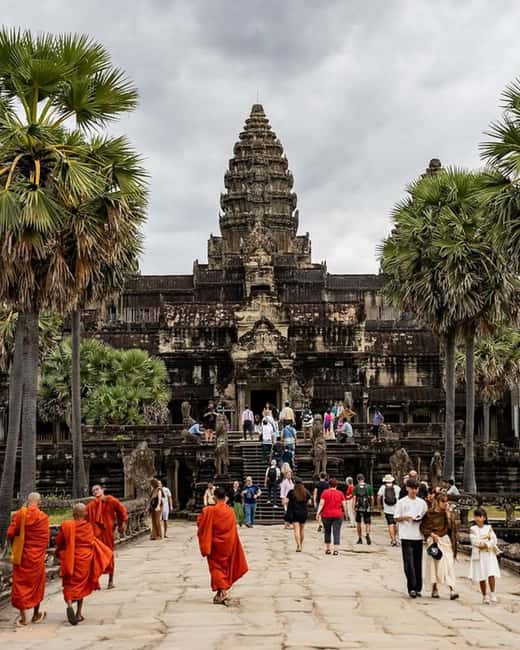
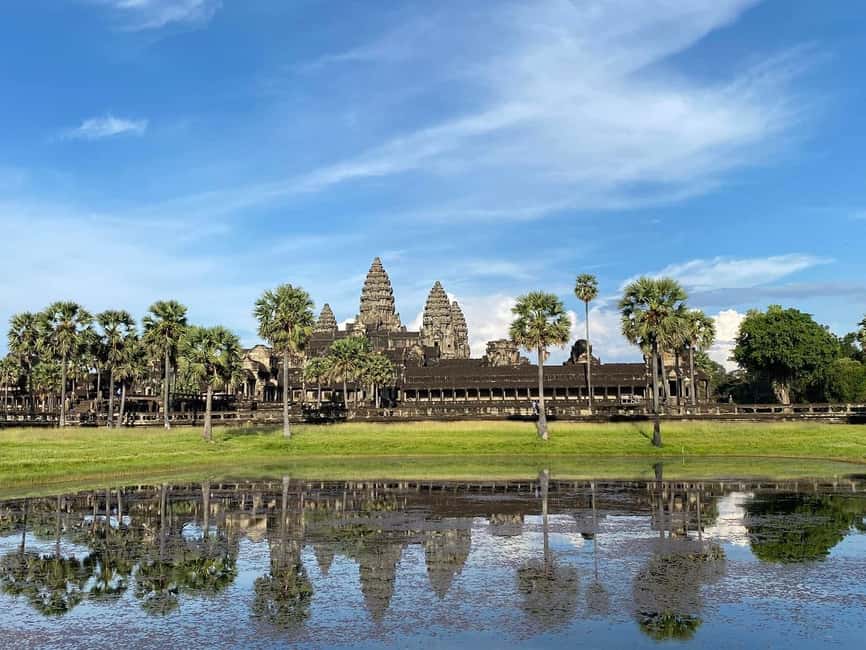
The afternoon visit to Angkor Wat lasts about two hours. Its long entrance, galleries, towers, carvings, and religious symbolism need explanation, especially if this is your first visit to Cambodia.
I like placing Angkor Wat after the smaller and more enclosed temples. By then, you have seen the Khmer style in several forms, so the scale of Angkor Wat makes more sense. Your guide can also explain how the monument’s design reflects its religious purpose and how its art fits into the wider Angkor period.
Two hours gives you a useful overview, but it is not enough for every corridor and detail. The site is enormous. If you want slow photography, extended time in the galleries, or a very unhurried visit, the private two-day option is a better match.
Dress rules are firm. Wear pants or a skirt covering the knees and a shirt covering the shoulders. Short skirts, shorts, tank tops, and revealing clothing are not allowed. A scarf may help at some temples, but Angkor Wat requires proper coverage, so dress correctly from the start.
The two-day route adds room to breathe
The two-day plan repeats the one-day Small Circuit on Day 1, then uses Day 2 for the Grand Circuit and Banteay Srei. This is the better choice if you dislike rushing or want more than the three headline temples.
Day 2 normally finishes around 4:00 PM. If you select sunrise for that day, the start is at 5:00 AM and the day finishes around noon. Check the selected option carefully, since the sunrise timing changes the shape of the day.
Transport also differs slightly for a private two-day booking. One or two people use a tuk-tuk on Day 1 and a car on Day 2. Groups of three or more use an air-conditioned van or bus. That extra comfort is welcome during longer transfers.
Preah Khan, Neak Pean, and Ta Som
Preah Khan begins the Grand Circuit. It is a large former monastic complex with long corridors, carvings, and shaded passages. The scale makes it a good first stop on Day 2, when you have more time to explore without squeezing every major site into one schedule.
Neak Pean is smaller and has a different setting, surrounded by pools. It gives you a quieter change of rhythm after Preah Khan, though the amount you see can depend on access and water conditions.
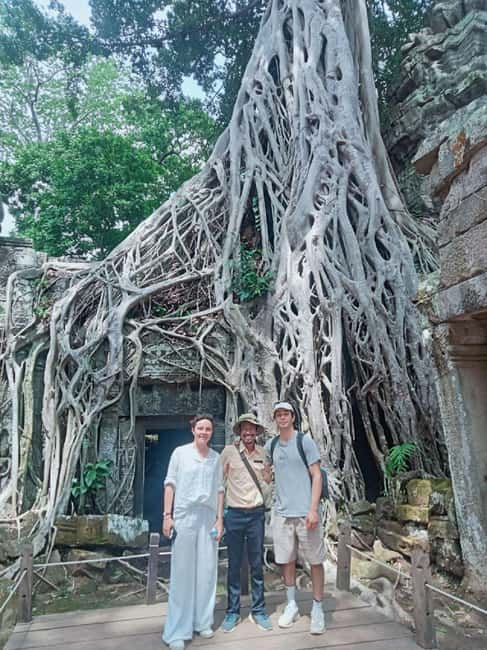
Ta Som is known for its tree-covered gate. Like Ta Prohm, it shows the meeting of stone and vegetation, but on a smaller scale. It is a worthwhile stop for photography and a reminder that Angkor’s appeal comes from many different moods, not only the largest monuments.
East Mebon and Pre Rup
East Mebon once stood on an island in a large reservoir. Its position helps explain the engineering and water management behind Angkor, where reservoirs were closely tied to the city’s growth.
Pre Rup is a mountain-style temple with broad views over the Cambodian countryside. The climb and exposed stone can feel demanding in the heat, but the structure rewards a closer look at its layered design.
These temples make the two-day tour feel less like a checklist. You spend more time seeing how Angkor’s religious buildings, reservoirs, roads, and royal centers related to one another.
Banteay Srei and its fine pink sandstone
Banteay Srei is the final major stop and one of the strongest reasons to choose two days. The Citadel of Women is smaller than Angkor Wat, but its pink sandstone carvings are unusually detailed.
The temple gives you a different visual experience from the huge monuments. Look closely at the carved figures, doorways, and decorative work. This is the kind of place where a French-speaking guide adds real value, since the finest details are easy to miss when you are simply moving from one major ruin to the next.
Banteay Srei also makes Day 2 feel complete. You finish with careful craftsmanship after spending the morning among larger complexes and reservoirs.
Tuk-tuk or air-conditioned van?
For one or two people on a shared tour, transport is generally by tuk-tuk. On a private one-day tour, one or two people can also use a tuk-tuk, with a car available as an option at checkout.
Tuk-tuks offer open-air views and a classic Siem Reap feel, but the heat and dust can be tiring over a full day. If you prefer a cooler ride, choose the car option when available.
Groups of three to six use an air-conditioned van on the shared tour. Private groups of three or more use an air-conditioned van or bus. The cooling matters, especially after walking across exposed stone.
Cold drinking water and cold towels are provided during visits. That may sound minor before you arrive, but in temperatures around 35 degrees Celsius, a chilled towel can be the difference between feeling refreshed and feeling worn out. The transport crew also coordinates stops so you do not waste much time waiting between temples.
Who should book this experience?
I would recommend this tour to French-speaking visitors who want historical context without arranging every transfer themselves. It also suits first-time Angkor visitors who want the major temples in a sensible order.
Families can benefit from the private option. Children under 12 join free on private tours, although a passport must be shown as proof and the child does not need an entrance ticket.
Choose the one-day plan if your time in Siem Reap is limited and you want Angkor Wat, Bayon, Ta Prohm, and Angkor Thom. Choose two days if you want Banteay Srei, prefer shorter daily pressure, or enjoy looking closely at carvings.
The tour is not suitable for wheelchair users or people over 95. It also demands plenty of walking, sun protection, and clothing that follows temple rules.
Should you book it?
Book this tour if French-language guiding, hotel pickup, and a clear temple plan matter more to you than complete freedom. The strongest value comes from the guide’s explanations, the efficient transport, and the water and chilled towels that keep the day manageable.
I would choose the two-day private option for the best balance of comfort and time, especially if Banteay Srei interests you. Choose the one-day route for the essential sights, but budget for the $37 pass, lunch, and a long day in the heat.
The price is not the lowest way to see Angkor, but the combination of French guidance, transport, and practical support makes it a reasonable choice for the right kind of visitor.
FAQ
Is the Angkor entrance ticket included?
No. You pay separately for the Angkor Archaeological Park pass. The price is $37 per person for one day or $62 per person for two to three days.
How much does the tour cost?
The listed tour price is $50 per person. Lunch and the Angkor entrance pass are additional costs.
What time does hotel pickup take place?
Regular pickup is between 8:30 and 9:00 AM. You must provide your hotel name or address and a contact number when booking.
Is a sunrise option available?
Yes. The sunrise option begins with pickup at 5:00 AM and finishes around noon. Bring breakfast from your hotel.
Which temples are visited on the one-day tour?
The one-day route includes Ta Prohm, Angkor Thom, the Terrace of the Elephants, Baphuon, Bayon, and Angkor Wat, with a stop at Victory Gate.
What does the two-day tour add?
The second day includes Preah Khan, Neak Pean, Ta Som, East Mebon, Pre Rup, and Banteay Srei.
Is lunch included?
No. Lunch is taken at a nearby restaurant and must be paid for separately.
What language does the guide speak?
The live guide speaks French.
What transport is used?
One or two people generally travel by tuk-tuk. Larger groups use an air-conditioned van or bus. A car can be selected for some private-tour options.
Can children join for free?
Children under 12 can join free on a private tour. A passport must be shown as proof, and children under 12 do not need an Angkor entrance ticket.
Just added around Siem Reap
- Ultimate Sunrise to Angkor Wat, Angkor Thom and Bayon Temple★ 5.0 · 3 reviews
- Full-Day Private Tour of Angkor Wat with Pick Up★ 5.0 · 12 reviews
- Trekking Tour at Phnom Kulen National Park from Siem Reap★ 5.0 · 3 reviews
- Twilight Tastes of Siem Reap Include Dinner★ 5.0 · 13 reviews
- Siem Reap City Tour with War Museum and Killing Field★ 5.0 · 27 reviews
- Private Day Trip to Angkor Temples with Expert Guide★ 5.0 · 4 reviews
- Waterfall & River of 1000 Siva Linga- Kulen Mountain Private Tour★ 5.0 · 3 reviews
- Private Two Days Siem Reap Temples Discovery Guided Tour★ 5.0 · 7 reviews
Angkor Wat Tours, compared.
Angkor Wat Sunrise or Sunset Tour with Guide from Siem Reap
Read our review →
Angkor Wat: Small-Group Sunrise or Sunset Tour
Read our review →
Angkor Wat 2-Day Tour with Sunrise and Sunset
Read our review →
Angkor Wat Sunrise tour with Small – Group and Guide tours
Read our review →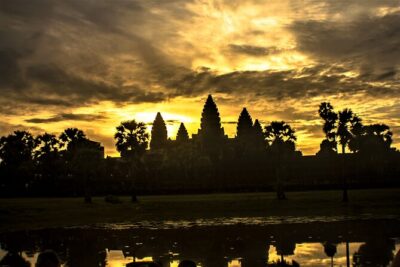
Angkor Wat Highlights and Sunrise Guided Tour from Siem Reap
Read our review →
Angkor Wat Sunset Small Group Tour with Lunch Included
Read our review →