
Reviewed · ANGKOR WAT TOURS
Siem Reap: Angkor Wat 2day Big and Small Circuit Guided Tour
Angkor Wat is only the headline. This two-day temple tour also takes you through quiet reservoirs, jungle-wrapped ruins, smiling stone faces, and pyramid temples that help explain how the Khmer Empire worked. The early start is part of the deal: day one begins around sunset, and day two begins before sunrise.
I like the mix of famous and lesser-known sites, especially Ta Prohm and Bayon alongside Neak Pean, Ta Som, and Banteay Kdei. I also like the practical setup: hotel pickup, an air-conditioned van, cool water, and rest breaks. The main drawback is that the $39 price does not include the Angkor temple pass or food, and the walking, stairs, heat, and very early start are not suited to everyone.
Key points to know before booking
- Sunrise at Angkor Wat: Arrive early for the temple’s famous morning view, then explore while the air is cooler.
- Two very different temple loops: Day one covers the Grand Circuit area, while day two focuses on Angkor Wat, Angkor Thom, Ta Prohm, and nearby sites.
- Guides Sayon and Sam: English-speaking guides explain temple design, Khmer culture, and the meaning of the carvings.
- Ta Som’s tree-covered gate: This smaller temple offers one of the tour’s most memorable ruin-and-nature scenes.
- $39 is a transport and guiding price: You still need to buy the temple pass and pay for meals.
- Not an easygoing outing: Expect walking, uneven ground, stairs, heat, and a pre-dawn start.
Two days that show Angkor beyond the postcard
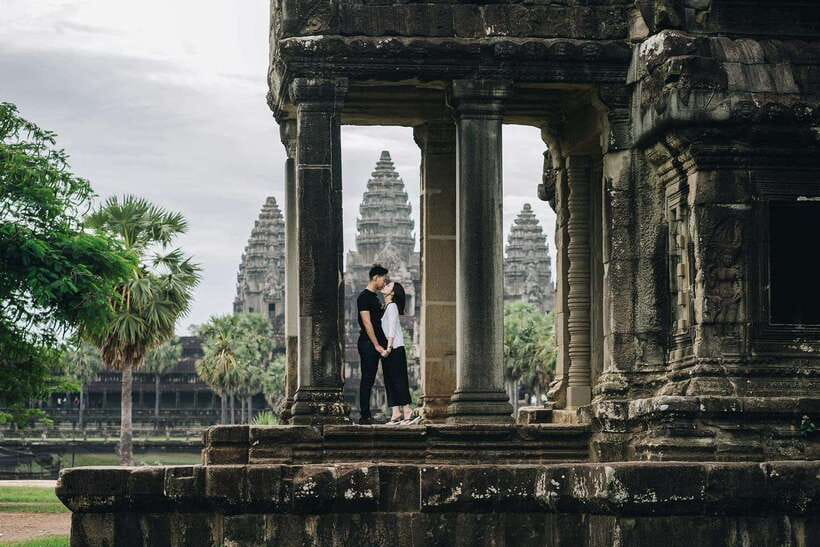
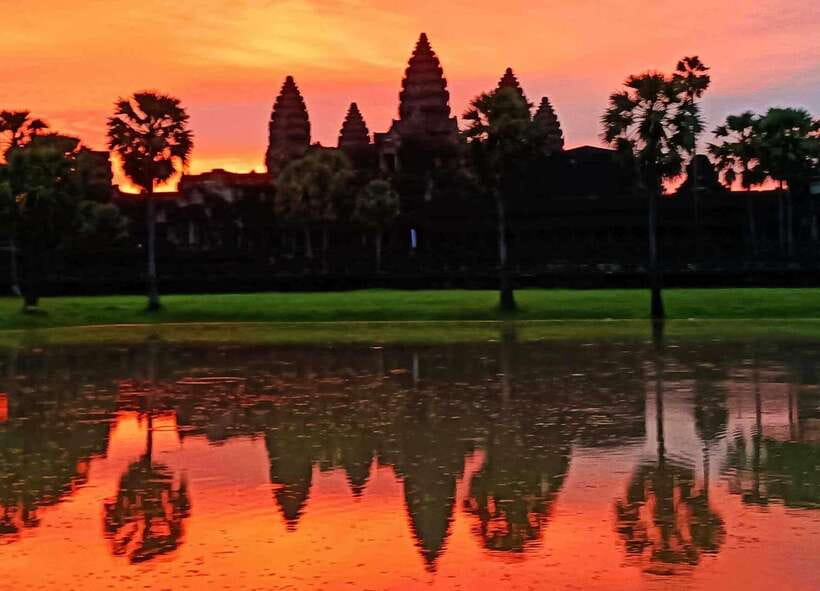
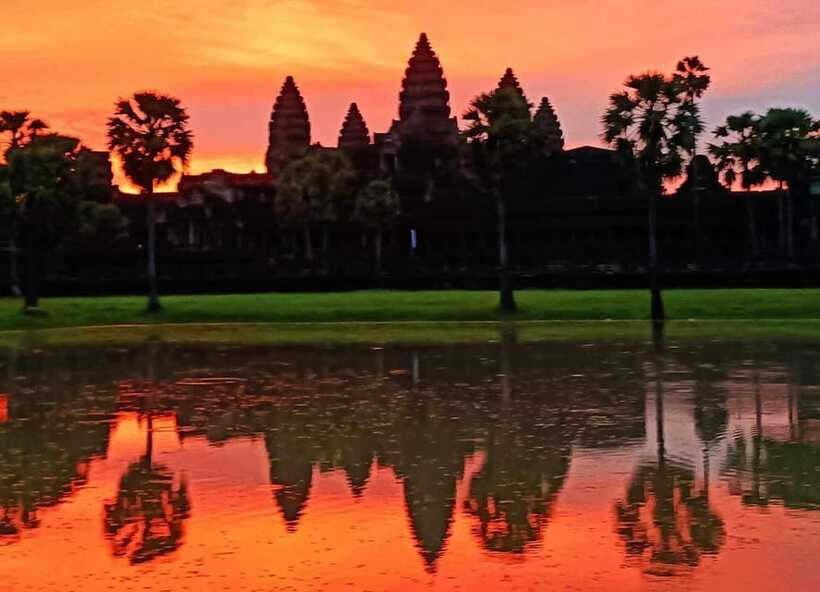
Many people come to Siem Reap for one famous photograph: Angkor Wat reflected in water beneath a pink sky. You can get that moment here, but the real strength of this experience is the wider view of the Angkor complex.
The temples were not built as isolated monuments. They formed part of a large religious and political center, linked by roads, reservoirs, gates, and carefully planned buildings. Moving from the grand towers of Angkor Wat to the smaller ruins on the circuit helps you see the range of Khmer architecture.
This tour also gives you two useful kinds of temple time. Sunset and late-day light can make the stone feel warm and dramatic. Sunrise brings cooler air and a different mood, though it requires getting up very early and sharing the famous view with other people at the site.
The English-speaking guide matters here. Sayon and Sam are named as guides associated with the experience, and both are praised for explaining temple history and cultural context with energy and care. That makes a difference at Angkor, where a pile of carved stone can otherwise become a blur by the fourth or fifth stop.
More small and grand circuit tours in Siem Reap:
- 2-Day Angkor Wat With Small, Big Circuit and Banteay Srei Tour
★ 5.0 · 545 reviews - Full-Day ‘Big Tour’ with Sunset at Phnom Bakheng
★ 5.0 · 341 reviews - Private sunrise ‘small tour’ of Angkor Wat with car or van & Guide
★ 5.0 · 179 reviews
Day one: sunset, reservoirs, and the Grand Circuit
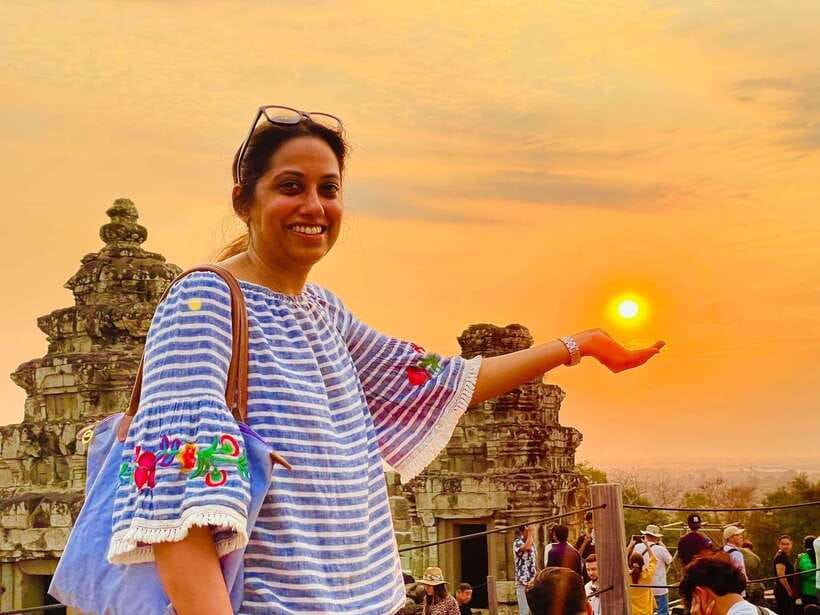
The first day begins at sunset, with pickup from your hotel in Siem Reap. The exact pickup time follows the time selected when you book, so check it carefully. You travel by air-conditioned van, a welcome break from Cambodia’s heat and from the dust and bumps that can build up during a full temple day.
The route includes several temples on what is commonly called the Grand Circuit. These sites are less famous than Angkor Wat, but they help fill in the story. You get more space to look closely, more varied designs, and a better sense of how water and religion shaped the Angkor complex.
Preah Khan and the scale of a royal temple
Preah Khan is described as the largest temple on this loop. It was built by King Bayon for his father, giving the site a personal link to royal family life as well as a religious purpose.
Large temple compounds can be confusing without some guidance. A good explanation helps you notice the long corridors, layers of enclosure, carved figures, and the way the site was planned around movement toward the central sanctuary.
Preah Khan is not a quick stop for a single photo. You will walk through a substantial complex, and the uneven stone surfaces require steady shoes. If you enjoy old walls, carved doorways, and the feeling of a place being gradually reclaimed by nature, this is one of the stronger stops on day one.
Neak Pean and the healing waters
Neak Pean sits on an island and is linked to water used for bathing and health during the Angkor period. The temple itself is smaller than Preah Khan, but its setting and purpose make it different from the standard mountain temple or enclosed sanctuary.
This stop gives your guide a chance to explain the practical role of water in Angkor society. Reservoirs were not just decorative features. They supported daily life, farming, ceremony, and ideas about healing.
Do not expect a vast temple complex here. Neak Pean is better understood as a carefully planned water setting than as a place with towering galleries. That change of pace is useful during a long day.
More multi-day trips from Siem Reap:
- Siem Reap: Angkor Wat 2-Day Tour with Sunrise and Sunset
★ 4.9 · 4,429 reviews - Angkor 2-Day Sunset & Sunrise Small-Group Tour
★ 5.0 · 2,567 reviews - 2 Days Exclusive Temple Highlights with Sunset and Sunrise Tour
★ 5.0 · 1,157 reviews - Siem Reap: Angkor Sunrise 1- or 2-Day Guided Temples Tour
★ 4.9 · 1,132 reviews
Ta Som and the famous tree over the gate
Ta Som has a distinctive tree growing over its east gate. It is one of those scenes where architecture and nature seem to have negotiated their own arrangement over many years.
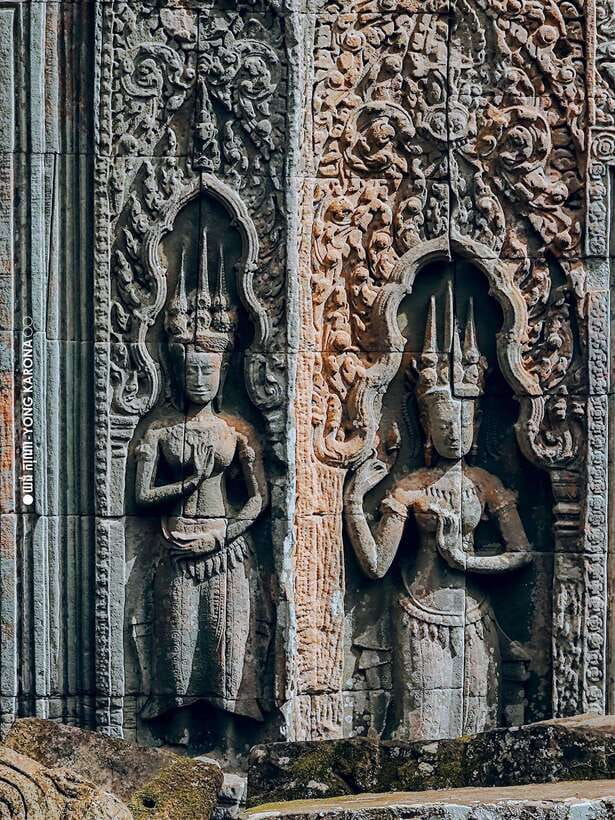
The temple was built for the king’s sister and includes many sculptures of dancers with long hair. Look for these details instead of rushing straight to the tree. They give the site a more human scale and make it feel different from the grand royal monuments.
Ta Som is a good example of why the smaller temples deserve time. You still get strong carvings and memorable architecture, but the experience is less about one huge view and more about noticing details.
East Mebon, once surrounded by water
East Mebon was built for the ancestors and originally sat in the middle of a reservoir. It dates as early as the 10th century, placing it among the older structures on the route.
Today, the most important thing to understand is the lost water setting. The temple’s position once communicated power, engineering skill, and religious meaning. Without that context, the site can look like another pyramid with towers. With it, the plan becomes easier to read.
The temple is also a useful stop for comparing earlier Khmer construction with the later buildings you see on day two. Angkor was not created all at once. Its architecture changed as rulers, religious ideas, and building methods changed.
Pre-Rup and the full-moon meditation chamber
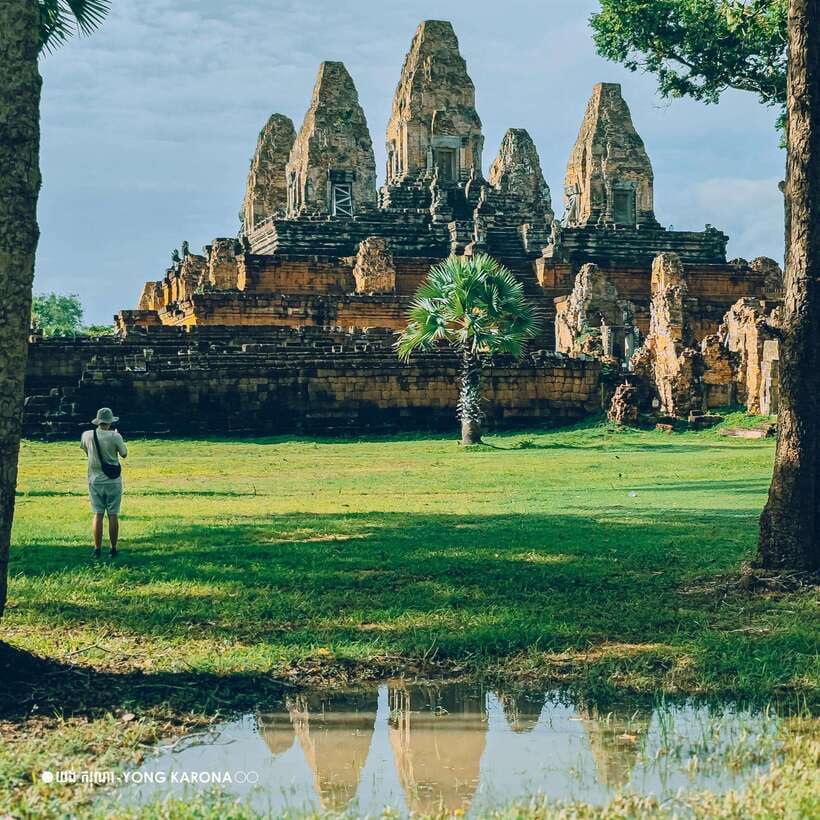
Pre-Rup was built by a king for himself. Its tall brick and stone form is sometimes mistaken for a crematorium because one structure resembles a coffin.
The more useful explanation is that this stone structure was used by Hindus to meditate during the full moon. That detail gives the temple a more specific religious purpose and helps you avoid reducing every unusual stone feature to a burial site.
Pre-Rup involves steps and elevated levels, so you should expect a physical climb. The reward is a stronger view across the surrounding area and a chance to see how a temple’s height could shape both ceremony and visual impact.
Phnom Bakheng and the day’s light
Phnom Bakheng sits on a hill, and its 33 towers represent the heavens. The temple’s design reflects the idea that life on earth should be lived while also looking toward a higher spiritual order.
Because it is on a hill, this stop may feel more demanding than the flat temple paths. The exact sunset arrangement can depend on timing and site conditions, so treat the late-day visit as a scheduled view rather than a guarantee of a perfect sky.
The climb is worth considering before you book. If uneven paths and hills are difficult for you, the physical side of this tour may be a real limitation.
Day two: sunrise at Angkor Wat
Day two begins before dawn. You travel to Angkor Wat and wait for the light to change over the temple. This is the tour’s signature moment, but it is also the part that asks the most from you.
Bring a hat and sunscreen for later, but remember that the morning begins in darkness and can feel very different from the heat that follows. Comfortable shoes are essential. A camera is useful, though the site rules prohibit flash photography.
Sunrise does not last long. The sky changes, the towers take shape, and then the attention shifts from the view to the temple itself. I like that this tour does not stop with the photograph. After sunrise, you use the cooler morning hours to explore the galleries and surrounding sections.
Angkor Wat was built as a monumental religious complex and remains Cambodia’s best-known temple. Its scale can be hard to grasp from the entrance. The long approach, towers, galleries, carvings, and layered courtyards make more sense when your guide explains how the complex was planned.
The morning is also the best time for serious looking. Heat can make later temple visits tiring, and early light brings out details in the stone. You will still encounter other people at this popular site, so do not expect solitude at sunrise.
Angkor Thom and the faces of Bayon
After Angkor Wat, the tour continues to Angkor Thom, including the South Gate and Bayon temple.
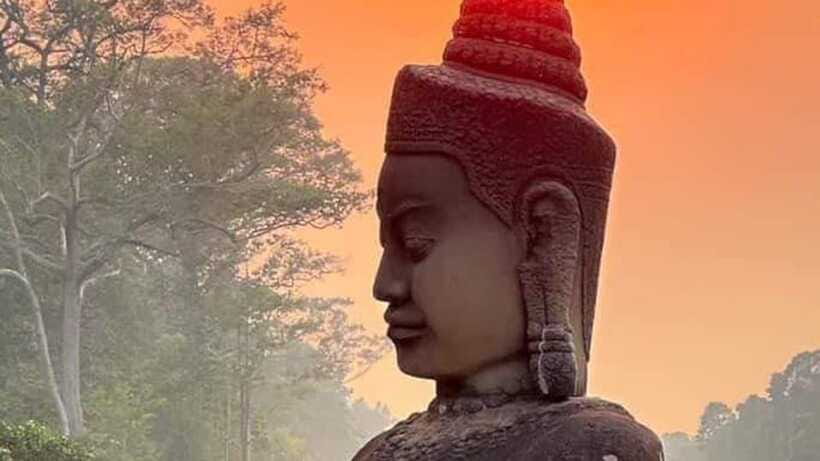
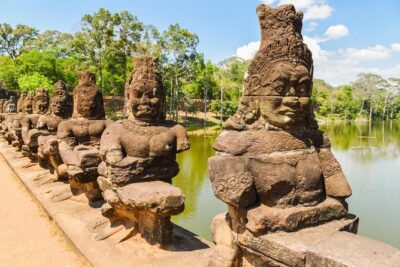
The South Gate is known for its bridge lined with statues of gods. This approach creates a strong entrance to the ancient city, with the figures appearing to pull or hold a great serpent. It is one of the clearest places to see how Khmer builders joined religious symbolism with urban design.
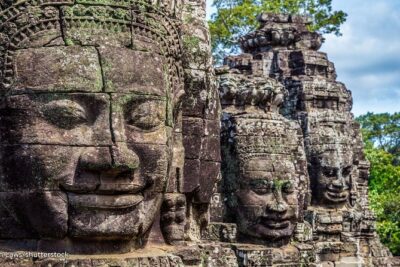
Bayon is famous for its large smiling stone faces. These faces appear on towers and look out in different directions, giving the temple a watchful, almost personal character.
Bayon can be hard to read on your own because its towers, passages, and carvings create a tight maze of stone. Your guide can point out the faces, explain the religious setting, and help separate royal imagery from everyday scenes carved into the walls.
This is an important contrast with Angkor Wat. Angkor Wat feels broad, ordered, and monumental. Bayon feels closer, stranger, and more inward. Seeing both on the same day gives you a better sense of the range of Khmer temple design.
Ta Prohm and the power of the jungle temple
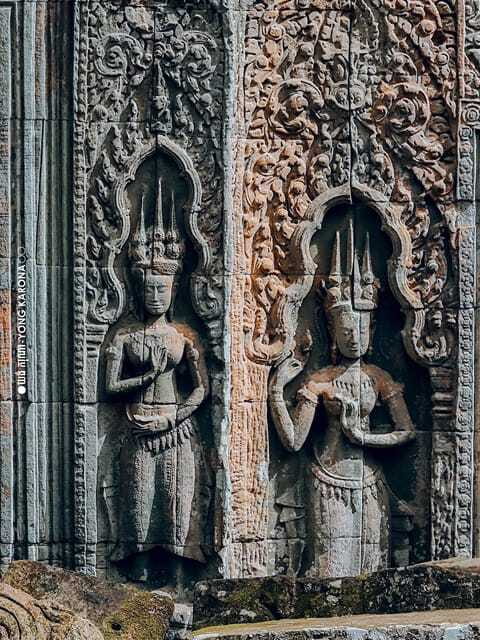
Ta Prohm is the temple most closely linked with the movie Tomb Raider. Its popularity is easy to understand. Trees grow over walls and gateways, roots twist around stone, and the whole place suggests a long struggle between construction and forest.
The movie connection brings crowds, but Ta Prohm is not only a film location. It is a serious temple complex with carved figures, corridors, and a strong sense of age. Look beyond the most photographed doorway and pay attention to how the trees have affected the structure.
This stop is especially good for you if you want photographs with a dramatic sense of place. It is less good if you want a quiet, empty ruin. The famous areas can be busy, and footing may be uneven.
A guide also helps you distinguish what you are seeing. Some growth is part of the temple’s current appearance, while other sections have been cleared or stabilized. That balance between preservation and nature is part of the appeal.
Banteay Kdei and Ta Keo
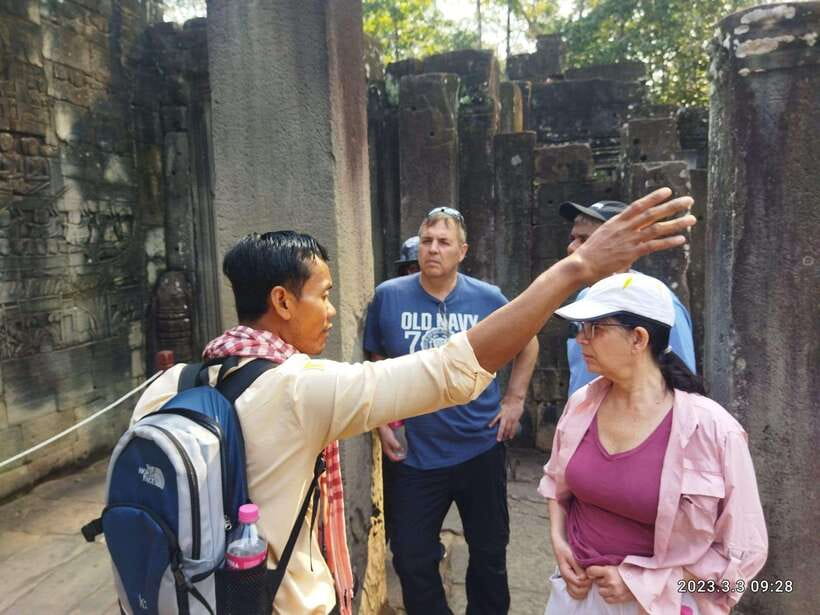
Banteay Kdei is a Buddhist temple that is largely unrestored and still used by monks. Its condition gives you a less polished view of the Angkor complex. You can see worn stone, incomplete sections, and the marks of time rather than a fully repaired monument.
I value stops like this because they make Angkor feel less like a row of perfect photo sites. You get a clearer sense of how much work remains and how religious use can continue around ancient structures.
Ta Keo offers a different experience. This 10th-century mountain temple requires you to walk up steep levels between the ancient stone and the modern paths used to reach it. The climb is part of the visit, not an optional extra.
Take your time on the steps. Good shoes and a steady pace matter more here than fashionable clothes. If you have mobility limits, this stop may be uncomfortable or impossible, which is one reason the experience is not suitable for wheelchair users or people with mobility impairments.
What the $39 price really covers
At $39 per person, the tour offers strong value if you want transport, guiding, and a structured way to see major and smaller temples over two days. Hotel pickup and drop-off remove the need to arrange separate transport, while the air-conditioned van gives you a practical place to rest between sites.
The price includes:
- English-speaking guided touring
- Air-conditioned van transportation
- Hotel pickup and drop-off
- Sunset and sunrise viewing
- Rest breaks
- Cool water and a wipe towel
- Local tax
The temple entrance fee is not included. You must buy the pass separately online through Angkor Enterprise or at the ticket office. Food is also extra, so plan your budget around more than the advertised tour price.
This is still a good deal for someone who wants a guide and transport without paying for an expensive private luxury package. The value drops if you already have a car, driver, and strong knowledge of the temples. In that case, the main reason to book is the guide’s explanations and the convenience of having the two days arranged.
Private and small-group options are available. A private tour should give you more control over pace, while a small group can keep the cost lower. The information provided does not specify group sizes or different prices, so confirm those details before paying.
How to prepare for the walking and heat
You need comfortable shoes. The temples involve uneven surfaces, long walks, stairs, and, at Ta Keo and Pre-Rup, elevated levels. Sandals may be fine for some people, but secure footwear is the safer choice.
Bring a hat, sunscreen, water, and a camera. The tour supplies cool water and a wipe towel, but you should still carry what you need for the full day. Sun protection matters most after the early morning, when the heat builds.
Wear clothing suitable for walking and respectful temple visits. The temples are cultural and religious places, not just photo backdrops. Avoid littering, do not use flash photography, and treat the carvings and buildings with care.
The schedule also calls for stamina. Day one begins around sunset, while day two starts early for sunrise and continues through several temple visits. Rest breaks help, but this is not a slow, resort-style outing.
Children under 12 are not considered suitable for this experience. It is also not suitable for wheelchair users or people with mobility impairments. Those limits are worth taking seriously because the route includes steps, uneven ground, and long periods on foot.
What makes the guiding important
Angkor rewards curiosity, but it can overwhelm you. After several temples, towers and carved doorways may begin to blend together. A guide gives you a framework for understanding what changed from one ruler to the next and why water, ancestors, Hindu beliefs, and Buddhism appear so often.
Sayon is praised for bringing strong knowledge of the temples, the city, and Cambodia, along with a positive spirit. Sam is also praised for explaining the history and setting clearly. Since guides can vary, you should confirm who will lead your particular departure if a named guide matters to you.
The best use of your guide is not simply asking for directions to the next photo. Ask why a temple was built, what a carving represents, and how a reservoir affected the site. Those questions can turn a long day of ruins into a clearer picture of Khmer society.
Who should book this two-day temple tour
I would choose this experience if you want to see the main Angkor sites but also want smaller temples included. It suits first-time visitors who prefer a planned route, hotel transport, and explanations in English.
It also works well if you want sunrise at Angkor Wat without arranging transport before dawn yourself. The supplied water, towel, air-conditioning, and rest breaks are simple touches, but they matter during two demanding days.
I would hesitate if you dislike early mornings, long walks, steep steps, or warm weather. I would also compare the total cost carefully if you need to buy temple passes and several meals on top of the $39 price.
FAQ
Does the tour include the Angkor temple entrance fee?
No. The temple pass must be purchased separately online through Angkor Enterprise or at the ticket office.
Are meals included?
No. Food is not included in the tour price.
Is hotel pickup and drop-off included?
Yes. Pickup and drop-off at your hotel are included, and the pickup time follows the time selected when you book.
Is transportation air-conditioned?
Yes. Transportation is provided by an air-conditioned van.
Is the tour conducted in English?
Yes. The live tour guide language is English.
Does the tour include both sunset and sunrise?
Yes. The two-day experience includes sunset and sunrise viewing, with sunrise at Angkor Wat on day two.
Is the tour suitable for wheelchair users or children under 12?
No. The experience is not suitable for wheelchair users, people with mobility impairments, or children under 12.
Should you book it?
Book this tour if you want a practical, low-cost way to cover Angkor Wat, Angkor Thom, Ta Prohm, and a strong selection of quieter temples over two days. The combination of guides such as Sayon or Sam, air-conditioned transport, hotel pickup, and included water makes the $39 base price appealing.
Go in with clear expectations: the temple pass and meals cost extra, sunrise means an early start, and the walking is real. If you can handle those points, this tour gives you more than the standard Angkor Wat photograph. It connects the famous monuments with the smaller, stranger, and more revealing places around them.
More Angkor Wat tours in Siem Reap
- Angkor Wat Sunrise or Sunset Tour with Guide from Siem Reap
★ 5.0 · 12,109 reviews - Siem Reap: Angkor Wat: Small-Group Sunrise or Sunset Tour
★ 5.0 · 9,444 reviews - Siem Reap: Full-Day Angkor Wat Guided Tour with Sunset
★ 4.9 · 3,803 reviews - Angkor Wat Sunrise tour with Small – Group and Guide tours
★ 5.0 · 3,655 reviews
Just added around Siem Reap
- Ultimate Sunrise to Angkor Wat, Angkor Thom and Bayon Temple★ 5.0 · 3 reviews
- Full-Day Private Tour of Angkor Wat with Pick Up★ 5.0 · 12 reviews
- Trekking Tour at Phnom Kulen National Park from Siem Reap★ 5.0 · 3 reviews
- Twilight Tastes of Siem Reap Include Dinner★ 5.0 · 13 reviews
- Siem Reap City Tour with War Museum and Killing Field★ 5.0 · 27 reviews
- Private Day Trip to Angkor Temples with Expert Guide★ 5.0 · 4 reviews
- Waterfall & River of 1000 Siva Linga- Kulen Mountain Private Tour★ 5.0 · 3 reviews
- Private Two Days Siem Reap Temples Discovery Guided Tour★ 5.0 · 7 reviews
Angkor Wat Tours, compared.
Angkor Wat Sunrise or Sunset Tour with Guide from Siem Reap
Read our review →
Angkor Wat: Small-Group Sunrise or Sunset Tour
Read our review →
Angkor Wat 2-Day Tour with Sunrise and Sunset
Read our review →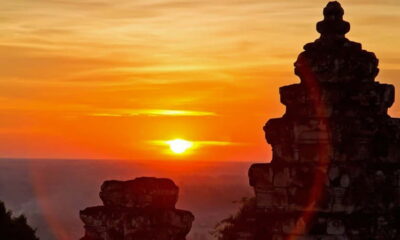
Angkor Wat Sunrise tour with Small – Group and Guide tours
Read our review →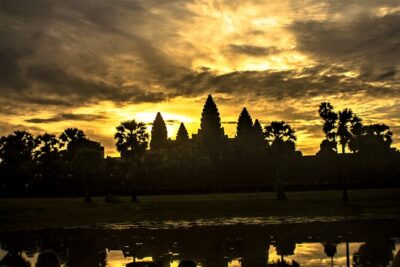
Angkor Wat Highlights and Sunrise Guided Tour from Siem Reap
Read our review →
Angkor Wat Sunset Small Group Tour with Lunch Included
Read our review →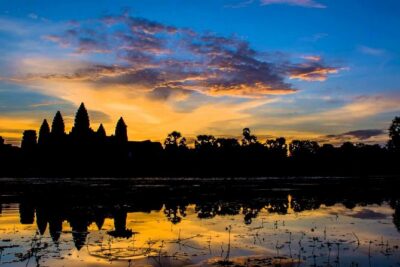
Full-Day Angkor Wat Sunrise Private Tour with Guide from Siem Reap
Read our review →Browse the lists this tour appears in