
Reviewed · BATTAMBANG DAY TRIPS FROM SIEM REAP
Cambodia 7 Days Tour from Siem Reap to Battambang and Phnom Penh
Angkor Wat is only the beginning of this seven-day private journey through Cambodia. You move from Siem Reap’s temple zone to Tonle Sap, Battambang, old royal capitals, and Phnom Penh, with a guide and driver handling the long road connections.
I like the route’s variety, especially the contrast between huge Angkor monuments and smaller places such as Banteay Chhmar, Battambang’s old streets, and the bamboo train. I also like that the price includes hotels, six breakfasts, transport, water, guides, and admission fees. The drawback is the pace: Day 2 and Day 6 pack in a lot, and long hours on the road leave little room for unscheduled wandering.
Key points before you book
- Angkor in one very full day: Angkor Thom, Bayon, Ta Prohm, Angkor Wat, and Phnom Bakheng are all included on Day 2.
- Private transport from start to finish: Only your group takes part, with an English-speaking guide and driver.
- Cambodia beyond Siem Reap: The route adds Tonle Sap, Battambang, Udong, and Phnom Penh rather than stopping at the temples.
- Strong guide reports: Guides named Sara, Art, Vany, Meng, and Chany receive particular praise for clear explanations, calm service, and local insight.
- Hotels across three price levels: You can be placed in a three-, four-, or five-star option, with double or twin accommodation included.
- A serious final chapter: Tuol Sleng and Choeung Ek provide essential context on the Khmer Rouge period, but they make Day 6 emotionally demanding.
What this seven-day Cambodia route really covers
This is a point-to-point trip, not a relaxed stay in one city. You begin at Siem Reap Angkor International Airport and finish at Techo International Airport near Phnom Penh, passing through some of Cambodia’s most important cultural and historical sites.
The route works well if you want an organized first visit and do not want to arrange several private transfers yourself. You get a local guide, a private vehicle, hotel accommodation, breakfasts, admission fees, and drinking water. Tips for the guide and driver are extra.
The tour is listed at $1,025.05 per person. That is not a budget backpacker price, but it covers six nights, private transport over a long route, a guide, entrance fees, and several full sightseeing days. Your value depends heavily on the hotel category and how much you value having one person manage the schedule.
The accommodation choices are given by category rather than as one guaranteed hotel. In Siem Reap, the options include Royal Crown Hotel & Spa, Regency Angkor Hotel, and Angkor Paradise Hotel. In Battambang, you may stay at Classy Hotel & Spa, Cambana La Riviere Hotel, or Maisons Wat Kor. In Phnom Penh, the choices include Mahasakor Inn Phnom Penh, Sun & Moon Urban Hotel, and Sun & Moon Riverside.
A single room costs an additional 40 percent of the total tour price per person. If you are traveling alone, check that supplement before paying. The listed price is based on double or twin accommodation.
More Battambang day trips from Siem Reap:
- Battambang Full Day Tour from Siem Reap – Bamboo Train, Killing Cave & Sunset
★ 5.0 · 101 reviews - From Siem Reap: Battambang Day Trip Return or to Phnom Penh
★ 4.9 · 73 reviews - Full Day From Siem Reap – Bamboo Train, Killing Cave & Sunset
★ 5.0 · 57 reviews
Arrival in Siem Reap and the first night
Your guide and driver meet you at Siem Reap Angkor International Airport and transfer you into Siem Reap City. The arrival transfer is scheduled for about two hours, including an introduction to the city and its culture.
There is no sightseeing pressure on this first day, which is sensible after a flight. Use the evening to rest, eat, and prepare for the early and lengthy temple day ahead. Since the airport transfer is included, you do not need to negotiate transport immediately after landing.
Your exact hotel depends on the category arranged for your booking. The listed properties are in or near the city, and the tour describes them as three-, four-, or five-star choices. Ask which hotel level you are receiving if that point is not clear at booking.
Angkor Thom and the great temples on Day 2
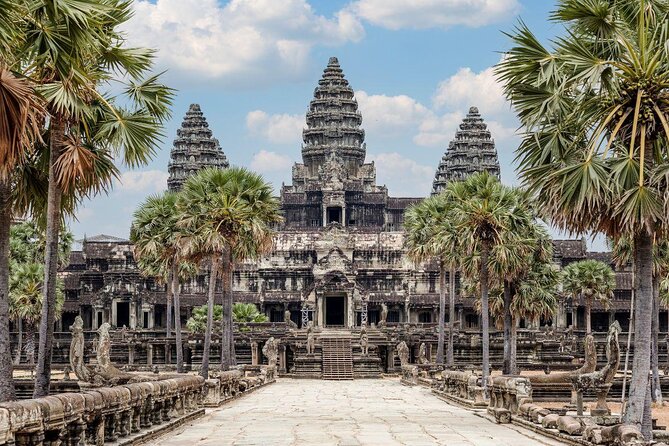
Day 2 is the tour’s grand visual centerpiece, but it is also the hardest day physically. You visit Angkor Thom’s South Gate, Bayon, Baphuon, Phimeanakas, the Terrace of the Elephants, the Terrace of the Leper King, Ta Prohm, Angkor Wat, and Phnom Bakheng.
The South Gate gives you a striking introduction to Angkor Thom. At Bayon, the famous carved faces make the temple feel personal and watchful. Your guide’s interpretation matters here because the layout, royal symbolism, and changing construction phases can be difficult to understand from the stones alone.
Baphuon is built on a long sandstone base with several levels, while Phimeanakas sits near the former royal palace area. The Terraces of the Elephants and the Leper King are shorter stops, but their carved walls help explain how Angkor served both as a capital and as a stage for royal ceremonies.
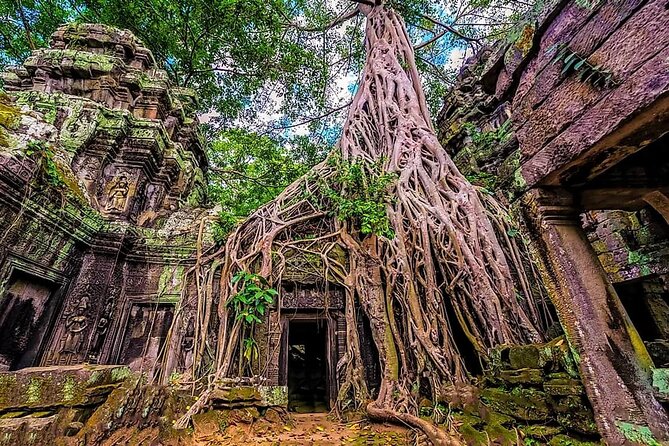
Ta Prohm receives about two hours. Its trees and partly preserved structures create the most atmospheric stop of the day, though the roots and fallen stone also show how hard it is to preserve a large temple complex. The site is not simply an untouched ruin. Paths have been cleared and structures strengthened so you can move through it safely.
Angkor Wat follows with another two hours. This is the largest and best-preserved monument in the Angkor group, and it rewards a slow look at its proportions, galleries, reliefs, and towers. Two hours is useful, but it will not cover every corridor in detail. If Angkor Wat is your main reason for coming to Cambodia, tell your guide where you want to spend extra time.
The day ends at Phnom Bakheng, an old temple mountain dedicated to Shiva and built on a hill. The elevated setting gives it a different feel from the flat temple compounds, though the schedule may not guarantee the kind of sunset visit some people expect. Treat it as a final temple stop, not a promised sunset event.
The order and timing may change, so bring water, wear shoes suited to uneven stone, and expect heat. You will see a great deal, but this is not the day for a leisurely lunch or long browsing in town.
Tonle Sap, Kampong Phluk, and Siem Reap’s Khmer traditions
Day 3 shifts from stone monuments to water and living culture. At Tonle Sap Lake, you learn about the huge freshwater system that supports fishing communities and carp production. The lake is central to Cambodian life, not just a scenic stop.
Kampong Phluk Floating Village includes about three hours. The village is associated with a mangrove forest and the changing water environment around Tonle Sap. Conditions on the lake can affect what you see, so keep your expectations flexible. This is a place to observe daily life and the relationship between homes, boats, trees, and water rather than expect a polished attraction.
Back in Siem Reap, Artisans Angkor offers a look at Cambodian craft training and the revival of traditional Khmer skills. The organization also creates work opportunities for young people in rural areas. This stop has more value when you take time to understand the making process instead of treating it as a quick shopping visit.
Wat Bo is one of Siem Reap’s older pagodas and contains 19th-century wall paintings. The paintings include scenes connected to Cambodian life and history, giving you a different visual record from the carved stone of Angkor.
The Royal Residence is a short stop. It is the King’s official residence when he visits Siem Reap, so access and viewing are more limited than at a museum. Still, its location helps round out your sense of modern Siem Reap beyond the temple park.
More Phnom Penh trips from Siem Reap:
- Siem Reap to Phnom Penh by Private Car or Minivan
★ 5.0 · 189 reviews - Taxi Siem Reap to Phnom Penh-English Speaking Driver
★ 5.0 · 62 reviews - Private Taxi Siem Reap to Phnom Penh, Reliable Driver, Transfer
★ 5.0 · 45 reviews - Cambodia Highlight 6 Days Tour from Siem Reap to Phnom Penh
★ 5.0 · 40 reviews
Battambang by bamboo train and sunset bat flight
Day 4 takes you to Battambang, Cambodia’s second-largest city. The town is noted for colonial buildings and traditional wooden houses, including houses more than a century old. This is a useful change of pace after Angkor’s monumental scale.
The bamboo train, or norry, is the day’s most unusual ride. It is a simple platform used on railway tracks, and the experience lasts about two hours. Expect something basic and memorable rather than luxurious. The appeal is the unusual transport and the rural setting, but the ride may feel less authentic to anyone expecting a regular public service.
Battambang Central Market gives you time among local stalls and everyday commerce. The schedule describes a long market visit, so confirm the exact timing with your guide, especially if you prefer more time for the city’s older streets or cafés.
At the White Elephant Pagoda, also called Wat Tahm-rai-saw, you see an important local religious and architectural site. The Cambodia Peace Gallery then adds a thoughtful modern perspective. Its focus is recovery and Cambodian participation in peace work, which helps keep the country’s story from being reduced to war and tragedy.
Ek Phnom Pagoda sits north of Battambang. The partly collapsed 11th-century temple is smaller and more atmospheric than Angkor Wat, with remains of a laterite wall and an ancient reservoir. You can appreciate it without the scale and crowds associated with the main Angkor sites.
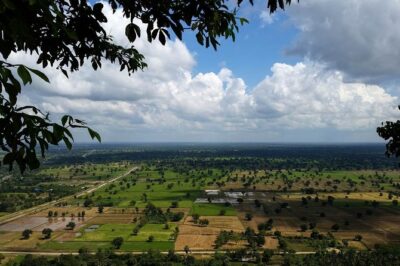
Phnom Sampeau is a roughly 100-meter-high mountain whose shape is compared with a ship. The stop includes about two hours, enough to explore the site and learn about its importance. The day ends at the Battambang bat caves, where millions of bats may stream from the caves around sunset.
The bat flight is one of the tour’s strongest nature moments, but timing matters. Sunset, weather, and the animals themselves control the show. The schedule also includes the Ta Dumbong Kro Aung statue, connected with the legend of the black stick and the origin of Battambang’s name.
From Battambang to Udong and Phnom Penh
Day 5 is mainly a transfer day, taking you from Battambang toward Phnom Penh. A short stop in Pursat is listed as an itinerary briefing rather than a major sightseeing visit, so do not expect a full tour of the town.
Udong Mountain was the royal capital from the 17th to the 19th centuries. Its two mounds are connected by a ridge, and the site gives you a look at Cambodia before Phnom Penh became the permanent capital. The hour allotted here should let you see the main area, though the mountain setting may involve steps and uneven ground.
The itinerary also includes a meditation center whose main purpose is teaching Vipassana meditation. You can walk through the grounds and enter the main temple. This is a quieter stop after the road journey, but the location is identified by map code rather than a clear name, so ask your operator for the exact site before departure.
The trip then continues to Phnom Penh for the night. Private transport is especially useful here because the route links several places that are not close together. You spend less time arranging buses and more time seeing the sites, but you should still expect road hours and a full day.
Phnom Penh’s royal center and difficult history
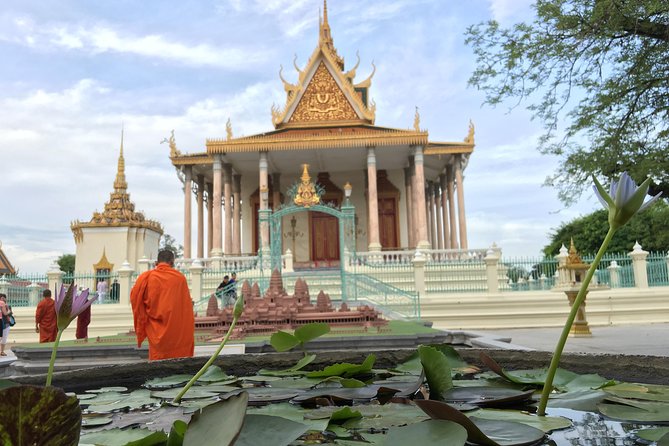
Day 6 is another packed day, mixing royal landmarks with the darkest chapter of modern Cambodia. The morning includes the Cheung Ek killing field, followed by the Royal Palace, Silver Pagoda, Wat Phnom, the Independence Monument, the memorial to King Father Norodom Sihanouk, Wat Ounalom, Tuol Sleng Genocide Museum, Choeung Ek Genocidal Center, and Central Market.
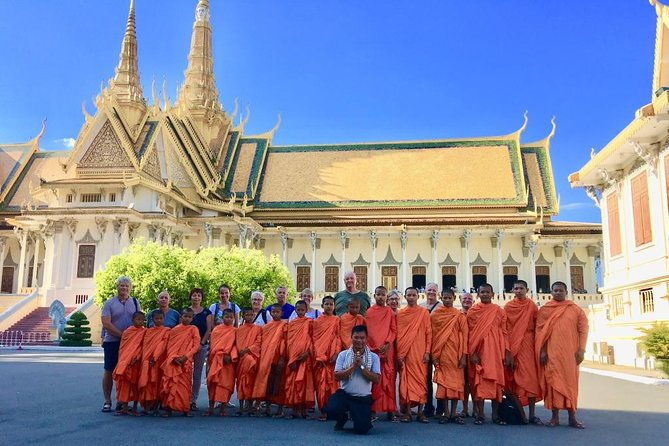
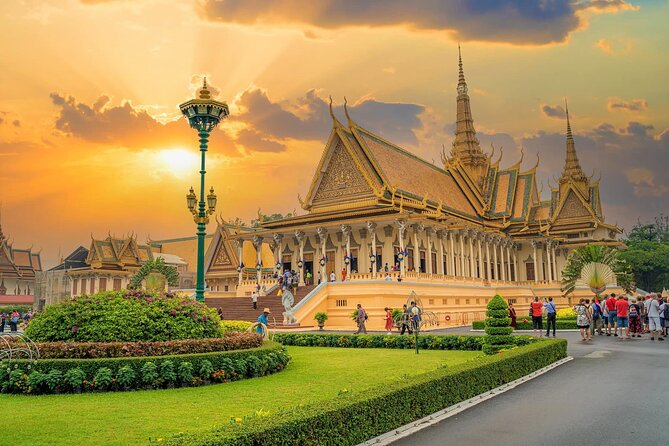
The Royal Palace and Silver Pagoda provide the ceremonial side of Phnom Penh. The palace complex dates from the late 19th century, while the Silver Pagoda sits in a garden beside it. Dress respectfully for these religious and royal sites, and expect some areas to have viewing limits.
Wat Phnom rises on a tree-covered hill and is tied to the legend of the city’s founding. The Independence Monument recalls Cambodia’s independence from France in 1953. The Norodom Sihanouk memorial adds a modern royal landmark, while Wat Ounalom connects the city to its Buddhist institutions.
The Khmer Rouge sites require a different frame of mind. Tuol Sleng was once a secondary school used as Security Prison 21. Choeung Ek, about 17 kilometers south of Phnom Penh, was an orchard and mass grave site used between 1975 and 1979.
You should not treat these stops as ordinary sightseeing. They are difficult, quiet places that require time and attention. The combined schedule is valuable because it connects Cambodia’s temples, monarchy, independence, and genocide, but Day 6 can be emotionally heavy as well as physically long.
Central Market closes the day with a very different scene. Its 1937 domed building contains many stalls arranged along broad interior passages. It is a practical place to browse local goods, but do not assume every item is priced at the first figure offered.
One useful shopping caution comes from the tour’s own customer experience. If you buy a long traditional Cambodian tro, or guitar, shipping it home can be difficult because it may not fit in checked luggage or hand luggage. You might need to send it as a parcel, so ask about packing and postage before buying.
The guides and the private-tour advantage
The guide is one of the most important parts of this experience. The published guide names include Sara, Vany, Meng, and Chany, while Art is identified as a careful and highly reliable driver. Your assigned team may be different, but the service model is clear: one guide explains the sites while a private driver manages the road travel.
Sara is praised for temple and cultural explanations, and Vany is described as fluent in English, calm, flexible, and good with families. Meng is noted for a patient, discreet manner, while Chany helped a solo participant feel comfortable. These details matter because the itinerary contains many temples that can blur together without clear storytelling.
A private tour also gives you some room to adjust the pace. You can ask for more time at Angkor Wat, move through a market faster, or pause for questions. Still, the route is tightly planned, so flexibility does not mean you can remove a major transfer without affecting the rest of the week.
Is $1,025.05 a fair price?
I see the price as reasonable for travelers who want a managed private circuit rather than a self-planned trip. Six hotel nights, daily breakfasts, private transport, an English-speaking guide, entrance fees, and drinking water cover many expenses that can otherwise add up quickly.
The price is less attractive if you want to choose your own guesthouses, eat independently at every stop, or spend several days in one place. The tour includes breakfast only, so lunch and dinner remain your responsibility. Tips for the guide and driver are also not included.
Group discounts are offered, but the amount is not specified. Since the tour is private, splitting the cost among two or more people may improve the value. Ask for the final hotel category, room arrangement, and group discount before booking.
The tour has a published rating of 4.9 from 15 ratings, with 93 percent recommending it. The praise centers on organization, friendly service, careful driving, and clear explanations. That matches what the itinerary promises, but the busy schedule remains the main tradeoff.
Who should book this Cambodia tour?
I would choose this route for a first visit when you want Cambodia’s major temple, royal, rural, and modern-history sites in one week. It suits couples, families, and small private groups who prefer a guide and vehicle rather than moving between cities alone.
It is also a good fit if Angkor Wat is important but you do not want the trip to end in Siem Reap. Battambang and Phnom Penh add texture, while Tonle Sap and Udong show parts of Cambodia that a temple-only holiday misses.
I would hesitate if you need slow mornings, long meals, or several free afternoons. The second and sixth days are particularly full, and the road trip from Battambang to Phnom Penh takes up much of Day 5. The genocide sites may also be too difficult for some people, though their inclusion gives the itinerary needed historical balance.
FAQ
Where does the tour start and end?
The tour starts with pickup at Siem Reap Angkor International Airport in Siem Reap and ends with transfer to Techo International Airport near Phnom Penh.
How long is the experience?
The tour lasts approximately seven days and includes six nights of accommodation.
Is this a private tour?
Yes. Only your group participates, with private transport and an English-speaking guide.
What accommodation is included?
Accommodation is based on double or twin rooms. Siem Reap, Battambang, and Phnom Penh each offer three-, four-, or five-star hotel options.
Is breakfast included?
Yes. Six breakfasts are included, one for each night of the tour.
Are entrance fees included?
Yes. The tour includes admission fees for the listed attractions.
Is a single room available?
Yes. A single room is available for an additional charge of 40 percent of the total tour price per person.
Are guide and driver tips included?
No. Tipping for the guide and driver is not included.
Should you book it?
Book this tour if you want a well-organized private route that covers Angkor Wat, Tonle Sap, Battambang, Udong, Phnom Penh, and Cambodia’s Khmer Rouge sites without arranging each transfer yourself. The strong points are the range of places, included admissions, private vehicle, and guide support.
Before paying, confirm your hotel category, the identity of your guide, the exact meditation-center stop, and how much free time you will have at Angkor Wat. If you accept the busy schedule and the difficult history on Day 6, this is a practical way to see far more of Cambodia than a standard Siem Reap stay.
More multi-day trips from Siem Reap
- Siem Reap: Angkor Wat 2-Day Tour with Sunrise and Sunset
★ 4.9 · 4,429 reviews - Angkor 2-Day Sunset & Sunrise Small-Group Tour
★ 5.0 · 2,567 reviews - 2 Days Exclusive Temple Highlights with Sunset and Sunrise Tour
★ 5.0 · 1,157 reviews - Siem Reap: Angkor Sunrise 1- or 2-Day Guided Temples Tour
★ 4.9 · 1,132 reviews
Just added around Siem Reap
- Ultimate Sunrise to Angkor Wat, Angkor Thom and Bayon Temple★ 5.0 · 3 reviews
- Full-Day Private Tour of Angkor Wat with Pick Up★ 5.0 · 12 reviews
- Trekking Tour at Phnom Kulen National Park from Siem Reap★ 5.0 · 3 reviews
- Twilight Tastes of Siem Reap Include Dinner★ 5.0 · 13 reviews
- Siem Reap City Tour with War Museum and Killing Field★ 5.0 · 27 reviews
- Private Day Trip to Angkor Temples with Expert Guide★ 5.0 · 4 reviews
- Waterfall & River of 1000 Siva Linga- Kulen Mountain Private Tour★ 5.0 · 3 reviews
- Private Two Days Siem Reap Temples Discovery Guided Tour★ 5.0 · 7 reviews
Battambang Day Trips from Siem Reap, compared.
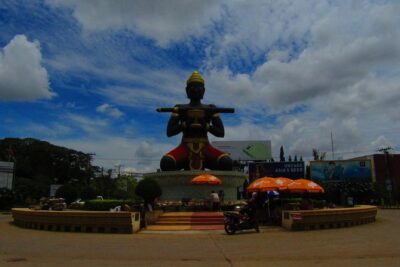
Battambang Full Day Tour from Siem Reap – Bamboo Train, Killing Cave & Sunset
Read our review →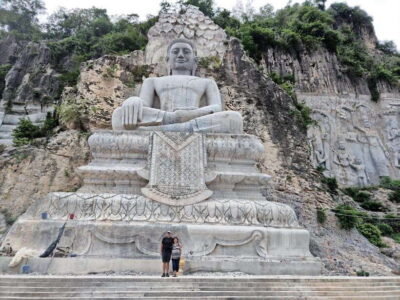
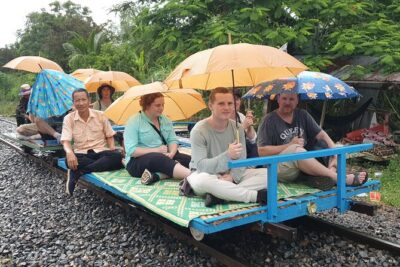
Full Day From Siem Reap – Bamboo Train, Killing Cave & Sunset
Read our review →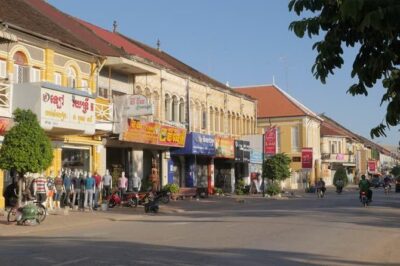
Battambang Day Trip from Siem Reap-Bamboo Train, Bats Cave
Read our review →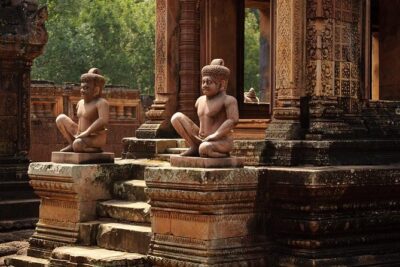
Siem Reap to Battambang Private Guided Tour (Day Trip)
Read our review →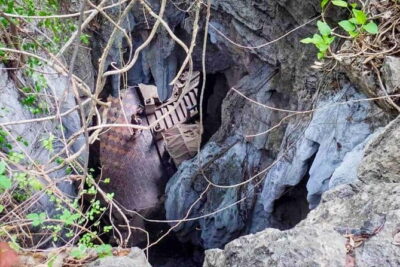
Full Day Tour from Siem Reap – Bamboo Train, Killing Cave & Sunset
Read our review →
Scenic Boat Journey from Siem Reap to Battambang
Read our review →Browse the lists this tour appears in