
Reviewed · ANGKOR WAT TOURS
3-Day Tour of Siem Reap, Angkor Temples & Phnom Kulen Waterfall
Angkor Wat is only the beginning here. Over three full days, you move from the grand temple at the center of the Khmer world to jungle ruins, a sacred mountain, a waterfall, and the floating communities of Tonle Sap. Guide Hok leads the private outing, with time to explain the carvings, kings, beliefs, and daily life behind the stone.
I like the private format, since your group can ask questions and adjust the pace more easily than on a large bus. I also like the wide range: sunrise and sunset at Angkor, remote Beng Mealea, and Phnom Kulen give you far more than the standard temple loop. The main drawback is cost planning. At $250 per person, you still pay separately for accommodation, Angkor admission, and the Phnom Kulen ticket.
Key points to know before booking
- Sunrise and sunset are built in: You visit Angkor Wat at about 4:30 a.m. on Day 2 and Phnom Bakheng on the first evening.
- Hok is the named guide: His approach combines clear historical explanations with humor and a friendly manner.
- The route reaches well beyond Angkor Wat: Banteay Srei, Preah Khan, Ta Som, Neak Pean, and Banteay Samre fill out Day 2.
- Day 3 changes the mood: Phnom Kulen Waterfall, Beng Mealea, and Tonle Sap bring nature and village life into the plan.
- Your hotel is not bundled: You choose and pay for your own lodging in Siem Reap.
- The price includes useful basics: Private air-conditioned transport, an English-speaking guide, two lunches, drinks, cool water, and towels are included.
Why three days works well around Siem Reap
A one-day Angkor visit can show you the famous sights, but it often leaves out the quieter corners and the wider story. This plan uses the first two days for the Angkor zone, then takes you farther afield on Day 3.
That pacing has a clear advantage. You can see the major monuments without treating each one as a quick photo stop, and the private setup gives you someone to explain why the sites differ. Angkor Wat is a vast religious monument. Bayon is crowded with stone faces. Ta Prohm is known for trees and fallen masonry. Banteay Srei is smaller and more delicate. The contrast matters.
The schedule is still demanding. Day 2 begins at 4:30 a.m., and Day 1 includes an evening sunset visit after a full day among temples. You should be comfortable with walking, steps, heat, and long periods outdoors. The information provided says most people can take part, but it does not promise that every path or temple area will suit every mobility level.
The private vehicle is another practical benefit. You travel in an air-conditioned car, and the included water and towels are welcome in Cambodia’s heat. Since only your group takes part, you are not tied to the needs of a large coach party.
More Phnom Kulen waterfall trips in Siem Reap:
- Kulen Waterfall Join-in Tour (local Picnic lunch)
★ 5.0 · 2,434 reviews - Kulen Mountain: Small-Group Tour and Picnic lunch
★ 4.9 · 1,802 reviews - Siem Reap: Kulen Mountain, Beng Mealea and Tonle Sap Tour
★ 5.0 · 1,483 reviews
Day 1: Angkor Wat, royal capitals, and a jungle temple
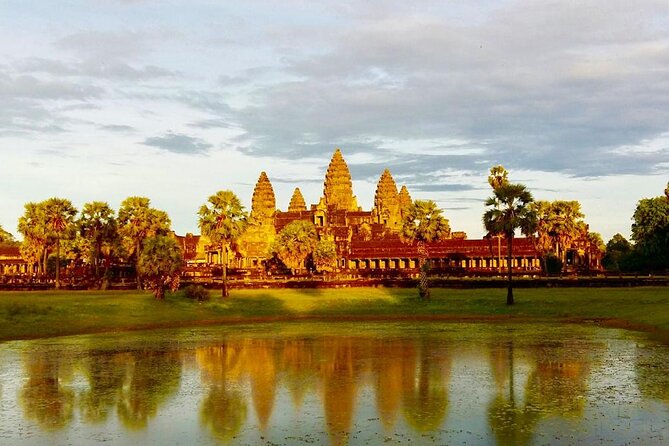
Pickup is scheduled for 8:00 a.m. from your hotel. The morning starts at Angkor Wat, where you have about two hours to explore the best-known temple in Cambodia. The visit also includes local villages and the forest around the monument, giving you a look beyond the main entrance and postcard views.
Angkor Wat was built as a major Hindu temple and later became an important Buddhist site. Its galleries, towers, bas-reliefs, and long approaches reward a slow pace. Two hours gives you a useful first visit, although you should not expect to see every detail of the complex.
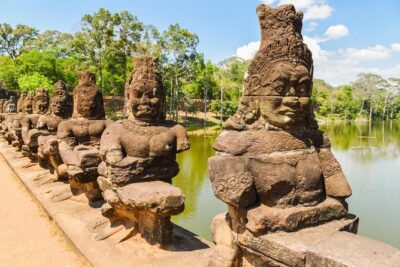
From there, the route moves to Angkor Thom, the great fortified capital associated with the Khmer Empire. The planned stop is about 30 minutes, enough to see the city gates and understand the scale of the old capital before moving inward.
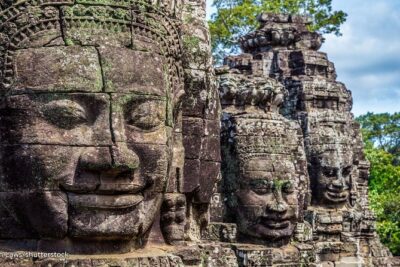
Bayon sits at the center of Angkor Thom and receives about an hour. Its famous stone faces give the temple a very different feeling from Angkor Wat. The faces are linked with Lokesvara, a Mahayana Buddhist figure, and the temple was built under King Jayavarman VII. This is one of the places where a guide adds real value, since the carvings and religious ideas are easier to follow with explanation.
Next comes Baphuon, an impressive pyramid temple built under King Udayadityavarman II and dedicated to Shiva. The planned visit lasts 45 minutes. You will see a monument tied to an earlier Hindu phase of Khmer building, a useful counterpoint to Bayon’s Buddhist setting.
The Terrace of the Elephants receives about 30 minutes. It was connected with royal ceremonies and the palace area, and its carved elephant imagery gives the terrace its name. The stop is short, but its position helps you picture how the royal center was arranged.
Ta Prohm is the afternoon favorite for many people. The one-hour stop takes you to the jungle temple made famous by Tomb Raider. Its appeal is not only the film connection. Stone walls, galleries, and tree roots create a powerful sense of a monument being reclaimed by the forest. Expect this to be one of the more crowded stops, but the temple is large enough to offer changing views.
The day continues to Pre Rup, a brick temple built in 961 under King Rajendravarman II and dedicated to Shiva. The stop lasts about 30 minutes. Its warm brick tones and high form make it especially suited to late-day light, though the schedule should not be treated as a guarantee of a particular view.
The final stop is Phnom Bakheng, planned for about an hour and intended for sunset. This is a popular sunset point, so the experience can feel much busier than the quieter temple stops. Still, the elevated setting gives you a broad view over the Angkor area, and ending here creates a strong close to the first day.
Day 2: Sunrise, fine carvings, and the smaller temples
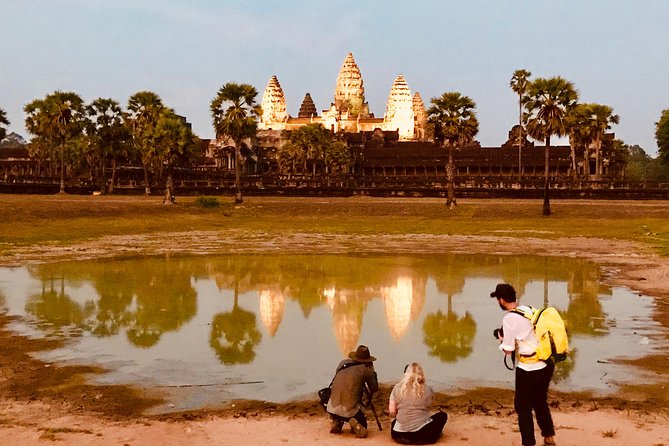
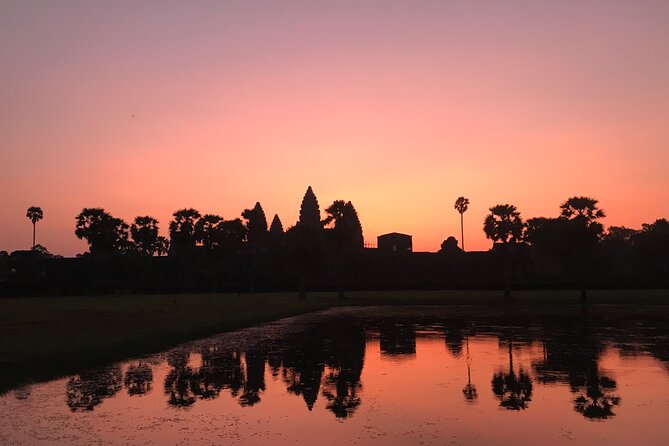
The alarm comes early. Pickup is planned for 4:30 a.m. so you can reach Angkor Wat for sunrise. The sunrise visit lasts about 90 minutes. This is one of the tour’s strongest features, but it is also the least forgiving part of the schedule. You will need to sleep early, and the morning will begin before most of Siem Reap is awake.
Sunrise adds a different mood to Angkor Wat, with the towers framed by changing light. Your exact view depends on conditions and positioning, so treat it as a special chance rather than a guaranteed perfect photograph.
After Angkor Wat, the route heads north to Banteay Srei, about 37 kilometers from Angkor Wat. The temple is built from pink sandstone and is known for small-scale carvings with remarkable detail. The name means Lady Temple. The one-hour stop is well chosen because this temple feels more intimate than the giant monuments visited on Day 1.
Banteay Srei also takes time to reach, so this part of the day includes more road travel. That is a fair trade if you want to see the finest decorative work in the Angkor region rather than only the largest structures.
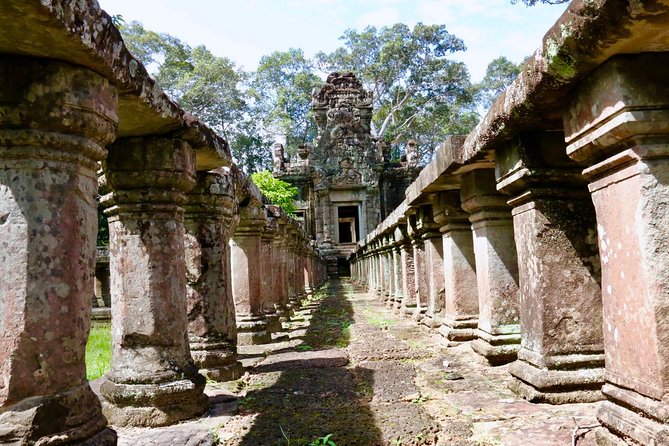
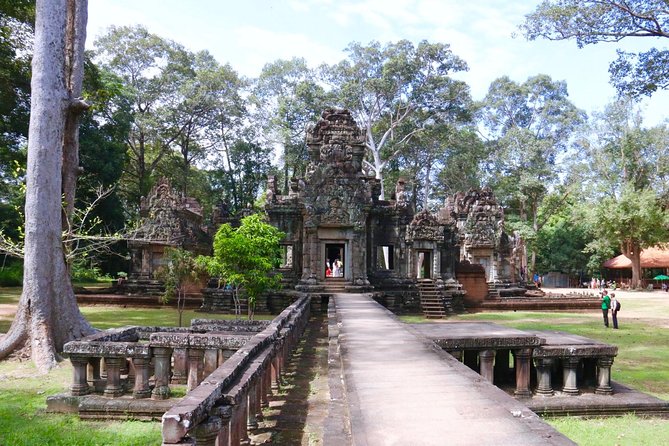
Preah Khan follows, with about an hour to explore. Known as the Holy Sword Temple, it is one of the larger complexes in the area and contains fine Khmer carvings. It was connected with the reign of Jayavarman VII. Its size can feel confusing without a guide, so Hok’s explanations are particularly useful here.
Ta Som is a smaller stop of about 30 minutes. This Mahayana Buddhist temple is associated with Jayavarman VII and his family. Its more compact scale gives you a break from the large complexes, while its stonework and vegetation keep the jungle-temple mood going.
Neak Pean also receives 30 minutes. The temple sits in the center of a former water complex and is surrounded by water. Its name refers to entwined serpents. The site was designed with healing in mind according to ancient beliefs, making it different from a conventional temple enclosure.
The final stop is Banteay Samre, a well-preserved temple built under Suryavarman II. You have about half an hour here. Its stone details and quieter position make it a useful final stop after the larger, more famous monuments.
Day 2 covers a lot of ground. You get the drama of sunrise, the delicate work at Banteay Srei, and several less familiar temples. The tradeoff is fatigue. If you prefer a slow holiday, ask Hok in advance if the pace can be adjusted, since this is a private outing.
Day 3: Phnom Kulen Waterfall and Cambodia beyond the temples
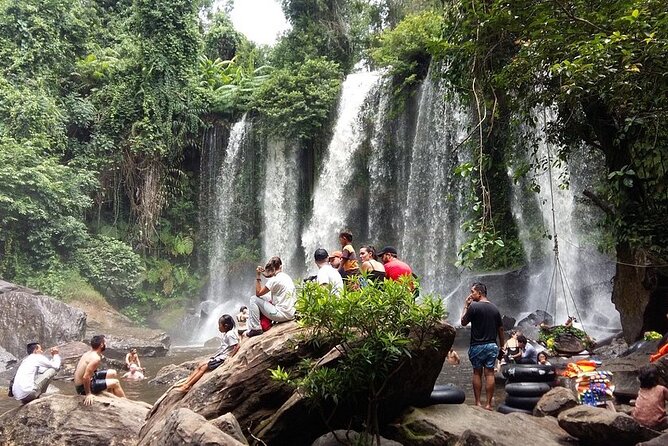
Day 3 changes the focus from royal monuments to sacred nature and present-day life. The first stop is Phnom Kulen National Park, scheduled for about two hours.
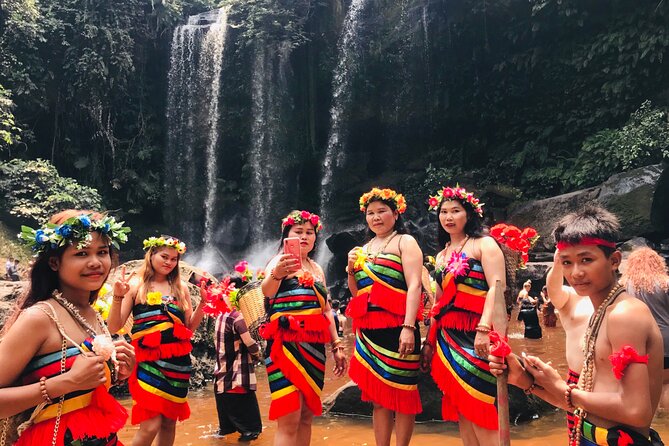
Phnom Kulen is regarded as a sacred mountain and includes several points of interest: a waterfall, a reclining Buddha, a river carved with thousands of lingas, Srah Damrei, and Bat Cave. The supplied schedule does not give separate times for each attraction, so you should think of this as an introduction to the park rather than a guarantee of a long visit at every site.
The waterfall is the main reason many people welcome this day. It offers a break from stone corridors and exposed temple grounds. The sacred river and reclining Buddha add cultural context, showing how religious importance continues beyond the Angkor monuments.
Next comes Prasat Beng Mealea, about 66 kilometers northeast of Siem Reap, with roughly an hour to explore. This remote jungle temple is known for collapsed stone, vegetation, and a less polished feel than the main Angkor sites. If Ta Prohm gives you a controlled glimpse of nature among ruins, Beng Mealea offers a more rugged version.
The final stop is Tonle Sap Lake, the largest freshwater lake in Southeast Asia, with about an hour planned. The tour description includes a floating village visit, while the stop itself is listed as Tonle Sap Lake. You should confirm the exact village and boat arrangements when booking, but the goal is clear: to see a lake-based way of life that is far removed from the temple circuit.
Tonle Sap gives the three-day plan a useful human dimension. After two days focused on kings, gods, architecture, and old capitals, you see communities linked to one of Cambodia’s major waterways. The experience depends more on the day’s conditions and the specific village visit than on monumental ruins, so keep your expectations flexible.
More multi-day trips from Siem Reap:
- Siem Reap: Angkor Wat 2-Day Tour with Sunrise and Sunset
★ 4.9 · 4,429 reviews - Angkor 2-Day Sunset & Sunrise Small-Group Tour
★ 5.0 · 2,567 reviews - 2 Days Exclusive Temple Highlights with Sunset and Sunrise Tour
★ 5.0 · 1,157 reviews - Siem Reap: Angkor Sunrise 1- or 2-Day Guided Temples Tour
★ 4.9 · 1,132 reviews
What the $250 price really covers
At $250 per person, this is not a budget temple transfer. It is priced as a private three-day service with an English-speaking guide, private group participation, air-conditioned transport, two lunches, drinks, cool water, and towels.
The value is strongest if you want a guide who can stay with your group, explain the sites in depth, and help organize a wide route without joining strangers. Past feedback gives Hok particular credit for clear storytelling, humor, patience, and attention to the group’s needs. He is described as passionate about the temples, serious when explaining important points, and friendly during long drives.
The price looks less attractive if you compare it only with a basic car-and-driver service. You must add the Angkor temple ticket, Phnom Kulen admission, and your own hotel. Meals are limited to two lunches, so other food costs are also yours.
Ask for the full ticket breakdown before paying. The exclusions are important, especially for a three-day Angkor plan. Accommodation is deliberately left out, which can be useful if you have already chosen a hotel or want to match the tour with your own budget.
Who will get the most from this private tour
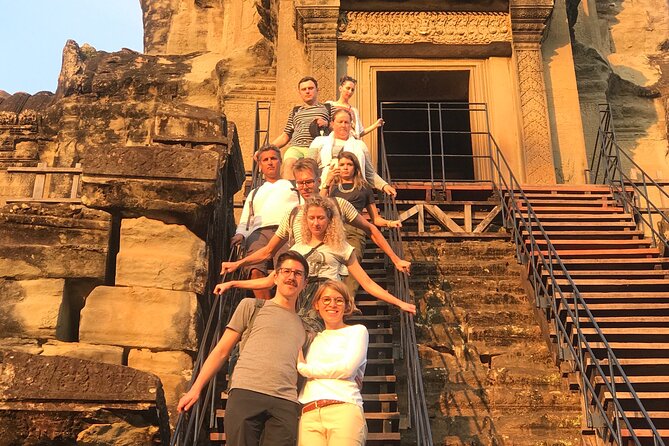
I would choose this plan if you want the major Angkor sights but also care about context, variety, and flexibility. It suits couples, families, and small groups who would rather have one guide and one vehicle than follow a fixed large-group schedule.
It is also a good fit if you have three days in Siem Reap and want more than Angkor Wat. Banteay Srei, Beng Mealea, Phnom Kulen, and Tonle Sap make the program feel much broader than a standard temple package.
You may want a shorter or slower plan if sunrise sounds miserable, if you dislike long drives, or if you prefer to spend most of your time at just two or three temples. Day 1 and Day 2 are full, and Day 3 combines a national park, a remote temple, and a lake visit.
Hok’s style should suit you if you like a guide who tells stories rather than simply pointing out buildings. His humor and clear delivery come through strongly in the available feedback, while his attention to safety and group needs is a practical plus for first-time visitors to Siem Reap.
Useful planning details before you reserve
Pickup is offered from your hotel, with the first morning scheduled for 8:00 a.m. and the sunrise morning scheduled for 4:30 a.m. Because your accommodation is not included, choose a Siem Reap hotel that can work with those pickup times.
The tour is private, and only your group participates. Group discounts are available, so the per-person value may improve if you are booking with family or friends.
Confirmation is provided at booking. Public transportation is nearby, although the experience itself uses an air-conditioned vehicle. Most people can participate, but the schedule includes temple walking and may include uneven surfaces and steps.
Cancellation is generous only if you act early: you can receive a full refund by canceling at least three full days before the local start time. Changes or cancellations inside that window are not accepted for a refund.
Should you book this three-day plan?
Book it if you want a wide Cambodia introduction in one private package, especially if you value a guide who can connect architecture, religion, rulers, and local life. The combination of Angkor Wat, lesser-known temples, Phnom Kulen, Beng Mealea, and Tonle Sap is the real strength.
Skip it if you want a low-cost tour with all admissions and lodging included, or if you prefer unhurried mornings. Before booking, confirm the current Angkor and Phnom Kulen fees, the exact Tonle Sap village arrangement, and how the private schedule can be adjusted. For the right group, $250 buys much more than transport: it buys three carefully connected days and a guide who helps make sense of an enormous collection of sites.
FAQ
Is accommodation included?
No. You choose and pay for your own hotel accommodation in Siem Reap.
Are Angkor temple tickets included?
No. Admission to the Angkor temples is not included in the tour price.
Is the Phnom Kulen ticket included?
No. The Phnom Kulen National Park ticket is an additional cost.
Is this a private tour?
Yes. Only your group participates in the activity.
What transport is provided?
The tour includes an air-conditioned vehicle and hotel pickup.
Is an English-speaking guide included?
Yes. An English-speaking guide is included, and the named guide connected with this experience is Hok.
Are meals included?
Two lunches and drinks are included. Other meals are not specified as included.
What time does the sunrise visit begin?
Pickup for the sunrise visit is scheduled for 4:30 a.m. on Day 2.
More Angkor Wat tours in Siem Reap
- Angkor Wat Sunrise or Sunset Tour with Guide from Siem Reap
★ 5.0 · 12,109 reviews - Siem Reap: Angkor Wat: Small-Group Sunrise or Sunset Tour
★ 5.0 · 9,444 reviews - Siem Reap: Full-Day Angkor Wat Guided Tour with Sunset
★ 4.9 · 3,803 reviews - Angkor Wat Sunrise tour with Small – Group and Guide tours
★ 5.0 · 3,655 reviews
Just added around Siem Reap
- Ultimate Sunrise to Angkor Wat, Angkor Thom and Bayon Temple★ 5.0 · 3 reviews
- Full-Day Private Tour of Angkor Wat with Pick Up★ 5.0 · 12 reviews
- Trekking Tour at Phnom Kulen National Park from Siem Reap★ 5.0 · 3 reviews
- Twilight Tastes of Siem Reap Include Dinner★ 5.0 · 13 reviews
- Siem Reap City Tour with War Museum and Killing Field★ 5.0 · 27 reviews
- Private Day Trip to Angkor Temples with Expert Guide★ 5.0 · 4 reviews
- Waterfall & River of 1000 Siva Linga- Kulen Mountain Private Tour★ 5.0 · 3 reviews
- Private Two Days Siem Reap Temples Discovery Guided Tour★ 5.0 · 7 reviews
Angkor Wat Tours, compared.
Angkor Wat Sunrise or Sunset Tour with Guide from Siem Reap
Read our review →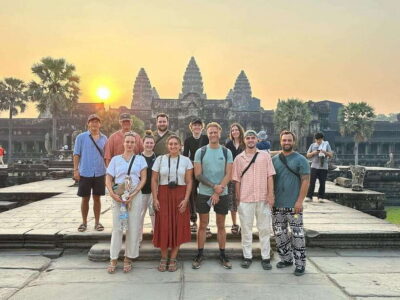
Angkor Wat: Small-Group Sunrise or Sunset Tour
Read our review →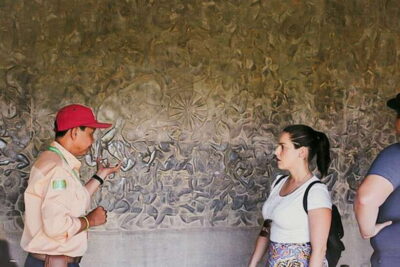
Angkor Wat 2-Day Tour with Sunrise and Sunset
Read our review →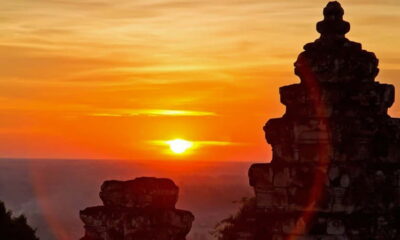
Angkor Wat Sunrise tour with Small – Group and Guide tours
Read our review →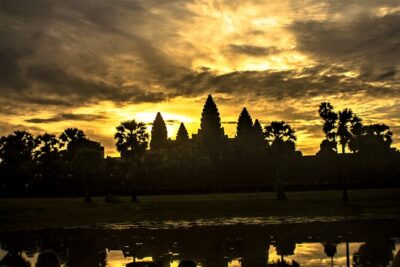
Angkor Wat Highlights and Sunrise Guided Tour from Siem Reap
Read our review →
Angkor Wat Sunset Small Group Tour with Lunch Included
Read our review →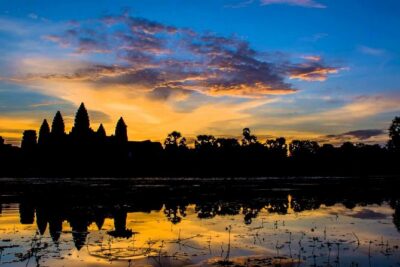
Full-Day Angkor Wat Sunrise Private Tour with Guide from Siem Reap
Read our review →Browse the lists this tour appears in