
Reviewed · CAMBODIAN COOKING CLASSES IN SIEM REAP
Cambodian Cooking Class from Siem Reap
The best part of this Siem Reap cooking class is that it starts before you reach the stove. You ride a tuk tuk into the countryside, visit a local market, and learn how herbs, vegetables, fish, spices, and other ingredients fit into everyday Khmer cooking. Depending on the day’s arrangement, you may also visit a local family’s home, kitchen, and garden.
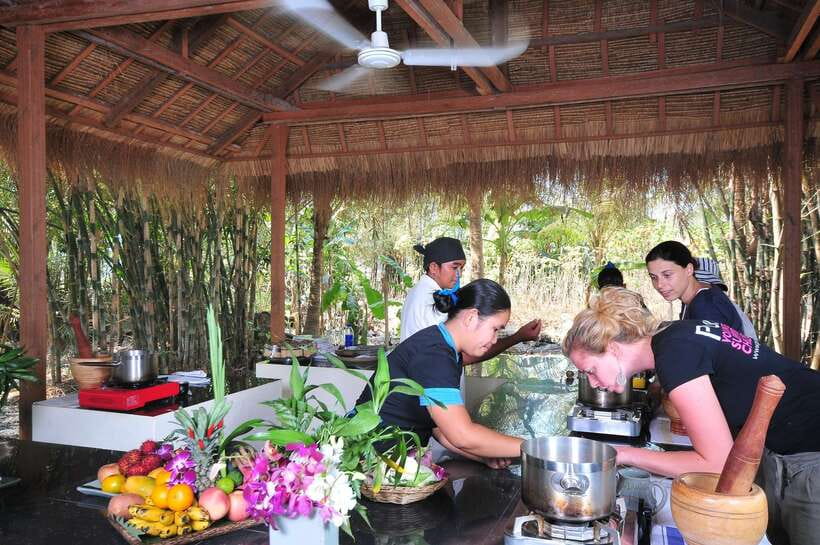
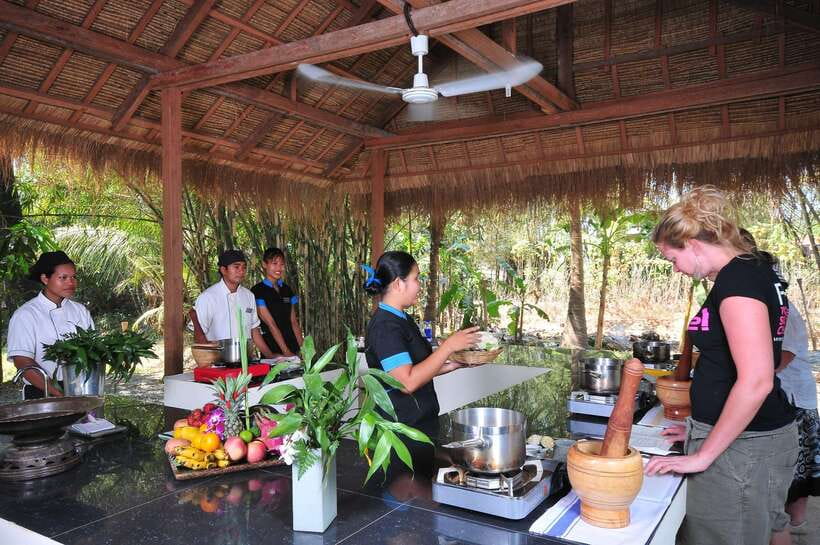
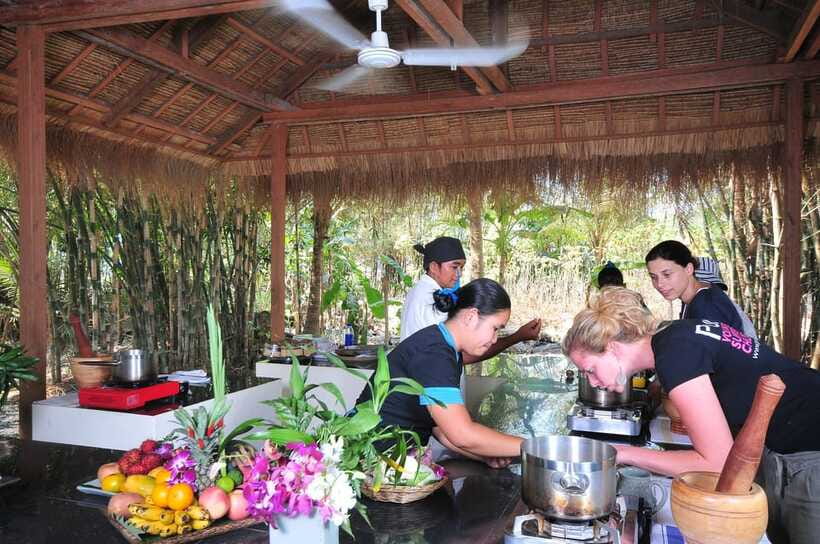
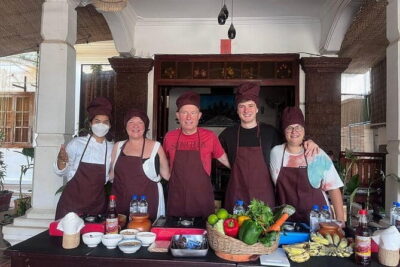
I like the small groups, capped at six, and the fact that everyone gets an individual cooking station. I also like the setting: an open wooden pavilion beside a pond, where you eat the meal you have just prepared. The one drawback is the outdoor format. It can feel hot, and the short village walk is easier with a hat and comfortable shoes.
Key points to know before booking
- The class begins with local ingredients: A market visit helps you recognize the herbs and produce used in the dishes.
- You cook every dish yourself: Each participant has a station, equipment, and hands-on guidance from the chef.
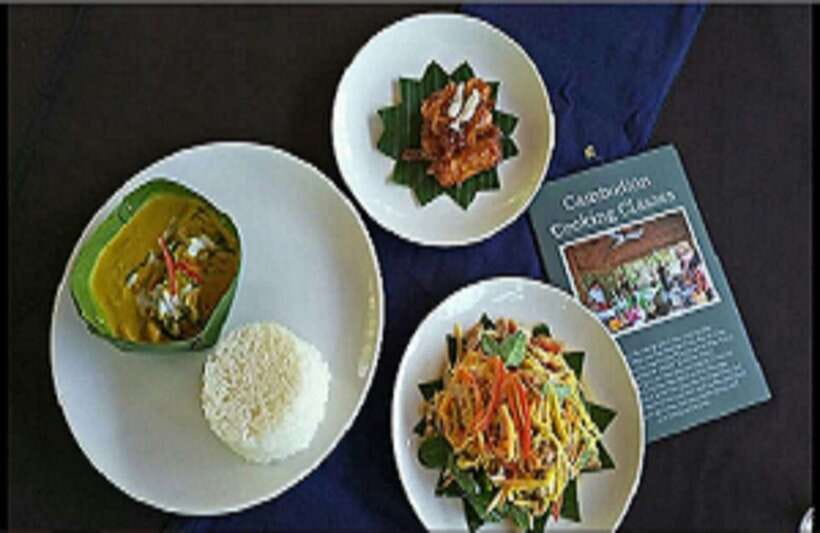
- The menu changes by time of day: Morning classes feature mango salad, fish amok, and sticky rice balls. Afternoon classes offer fish on sugar cane, Cambodian curry, and Khmer brandy snaps.
- The group stays small: A maximum of six people makes it easier to ask questions and get help.
- The rural setting adds real context: You see a Khmer home, kitchen, garden, or village life rather than staying inside a city restaurant.
- The meal is included: After cooking, your dishes are served with a beer, soft drink, or bottled water.
Why this cooking class feels different from a city lesson
Many cooking classes teach you a few recipes and send you home. This one puts the ingredients into context first. You leave central Siem Reap by tuk tuk and head toward a rural village, where the pace is quieter and the cooking feels connected to daily life.
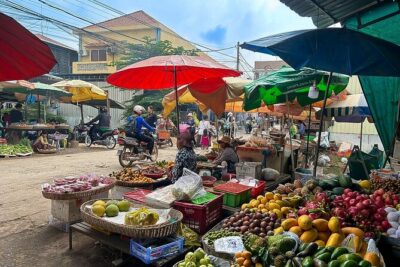
The market visit is especially useful. Guides such as Sophia Lauren explain the produce, leaves, herbs, and spices, and may point out ingredients you would probably walk past on your own. You get to smell and handle unfamiliar items, and you may sample local treats along the way.
This matters because Cambodian food can look simple on the plate while relying on carefully balanced seasoning. The class helps you see how the flavors are built, rather than treating Khmer food as just another curry.
The experience also includes contact with a local family. You may visit a home, kitchen, or vegetable garden and see how food preparation works outside a restaurant. That stop is brief, but it gives the class a human scale. You are not only learning a recipe. You are seeing where some of the ingredients come from and how cooking fits into village life.
More Cambodian Cooking Classes in Siem Reap
- Khmer Cooking Class at a Local’s Home in Krong Siem Reap
★ 5.0 · 2,731 reviews - Siem Reap: Khmer Cooking Class at a Local’s Home
★ 5.0 · 1,108 reviews - Award-Winning Cooking Class Experience with Professional Teacher
★ 5.0 · 745 reviews
The tuk tuk ride from Siem Reap
Hotel pickup is included, with transport by tuk tuk to the class and a return to the centrally located tour office afterward. The ride is part of the experience, not just a transfer. It takes you away from the city streets and onto the back roads leading toward the village.
One practical note: the exact pickup arrangement described for the class ends with your return to the tour office, rather than necessarily a direct ride back to your hotel. Confirm the meeting and return details when you book if you need to connect with another activity.
The tuk tuk is open to the air, which suits the short trip and gives you a closer look at the surroundings. It also means you should prepare for sun, dust, and heat. A hat and comfortable clothing make sense, especially for the village walk.
The market visit and village walk
The morning format commonly begins at a local market, where your guide introduces the ingredients for the meal. This is one of the most useful parts for a first-time visitor because the explanations are practical. You learn which leaves are used for fragrance, which vegetables appear in home kitchens, and how local cooks choose ingredients.
The guides are praised for clear English and patient explanations. Sophia Lauren is one name associated with the experience, and other guides have also been described as friendly and attentive. The teaching is not aimed at professional cooks, so you do not need special skills.
The walk through the village adds another layer. You may see household gardens and learn about plants that are grown close to home. A visit to a family’s house can include the kitchen and food-preparation area, giving you a glimpse of the tools and routines behind Cambodian meals.
This is not a long sightseeing walk. Think of it as a short cultural introduction before the class. The surface may be uneven, and the heat can build quickly, so comfortable footwear and a hat are sensible. If you prefer air-conditioned sightseeing, this outdoor stop may feel demanding.
Cooking at the pavilion beside the pond
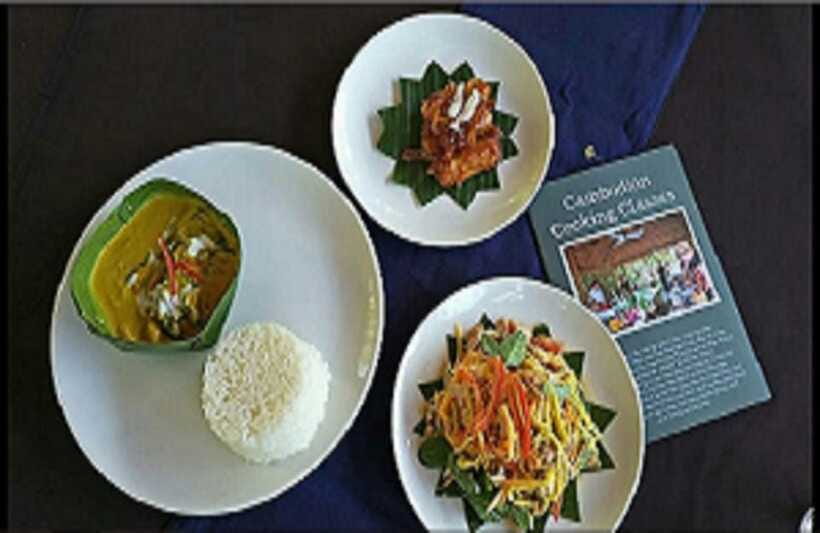
After the market and village visit, you move to the cooking area, usually an outdoor pavilion overlooking a pond. The setting is calm and attractive without feeling formal. The open-air design also keeps the class connected to the countryside, though it offers less relief from heat than an indoor kitchen.
Each person gets a separate cooking station and equipment. The chef demonstrates the preparation, then guides you through the work step by step. You chop, mix, season, cook, and adjust under supervision rather than watching someone else do all the work.
That hands-on format is important. You learn the texture of a curry paste, the order in which ingredients go into the pan, and the small adjustments that can change a dish. The chefs are patient, and they explain substitutions for ingredients that may be hard to find at home.
The class is also suitable for beginners. You do not need to know how to make curry paste or have experience with Cambodian food. The instructions are designed to be followed at the station, and the small group gives the chef time to help when you need it.
A different sort of day out around Siem Reap:
- Angkor Wat Sunrise or Sunset Tour with Guide from Siem Reap
★ 5.0 · 12,109 reviews - Siem Reap: Angkor Wat: Small-Group Sunrise or Sunset Tour
★ 5.0 · 9,444 reviews - From Siem Reap: Kampong Phluk Floating Village Tour by Boat
★ 4.9 · 6,979 reviews - Sunset tour of Kampong Phluk stilts home village on the Tonle Sap
★ 5.0 · 4,865 reviews
Morning menu: fish amok and tropical flavors
The morning menu focuses on three dishes:
- Cambodian mango salad
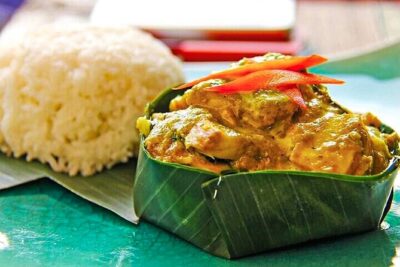
- Fish amok
- Sticky rice balls with palm sugar and grated young coconut
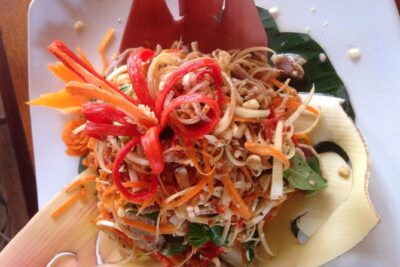
Mango salad is a fresh opening course, built around light ingredients and tropical flavor. It is a good introduction to the balance used in Cambodian food, where sour, sweet, salty, fragrant, and fresh elements work together.
Fish amok is the class’s signature dish. Amok is a smooth Cambodian curry, often made with fish, chicken, or tofu, and it can be cooked in a young coconut. It is fragrant rather than aggressively hot. If you associate Southeast Asian curry only with the heat of Thai food, this is a useful correction. Cambodian food uses spices, but it does not usually rely on the same level of chili heat.
The dessert, sticky rice balls with palm sugar and young coconut, gives the meal a sweet finish. It is also simple enough to recreate at home, especially after you receive the recipe booklet.
The morning menu is a good choice if fish amok is high on your must-try list. It also offers a pleasing spread of fresh salad, savory curry, and dessert.
Afternoon menu: fish on sugar cane and Cambodian curry
The afternoon menu includes:
- Prahet Chien, minced fish on sugar cane
- Cambodian curry
- Nom Tong Noun, Khmer brandy snaps
Prahet Chien gives you a different way to work with fish. The mixture is shaped around sugar cane, adding aroma and a distinctive presentation. The Cambodian curry then provides the main lesson in local spice blends.
Cambodian curry is generally fragrant and layered rather than fiercely hot. The chef explains how the ingredients create flavor without depending on heavy chili heat. This makes the afternoon menu a good fit if you want to understand Khmer seasoning or prefer food with warmth but not a strong burn.
Nom Tong Noun, described as Khmer brandy snaps, supplies the sweet course. The menu has a nice progression, but it is worth checking the current menu and any dietary needs when booking, since dishes and substitutions may vary.
Eating what you cook
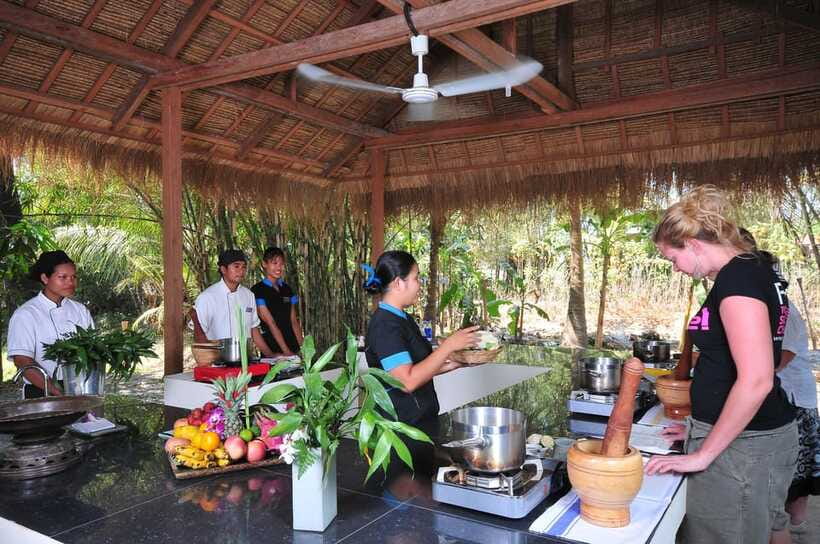
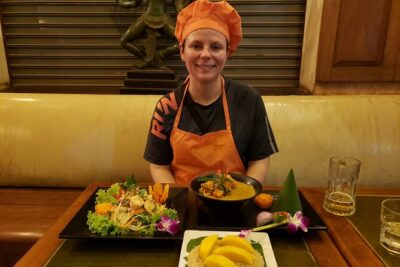
Once the cooking is finished, you sit at the pavilion and your dishes are served one by one. This is more comfortable than eating while standing at the stove, and it gives you time to compare the finished dishes.
Your meal includes a complimentary beer, soft drink, or bottled water. One older booking record reported confusion about a beer charge, so it is sensible to confirm what is included when you arrive. The current details specify one included drink.
The meal can be generous. Some participants have received containers for leftovers, particularly when a class has only one or a few people. That is not something to count on, but it shows that you may finish with more food than you expect.
Eating your own work is also the best test of the class. You can see how the ingredients come together, and you leave with a better sense of what to repeat at home. The recipe book includes the dishes from the class and additional Cambodian recipes, giving the value some staying power after the trip.
Guides, chefs, and the small-group advantage
The staff are a major part of the experience. Guides including Sophia Lauren have been praised for clear explanations, humor, and close attention to each participant. Local chefs such as Prey, whose name also appears as Prayer in some accounts, lead the cooking and help with technique.
Because the maximum group size is six, the class feels more like a lesson than a demonstration. You can ask about ingredients, request help with chopping or seasoning, and get advice about substitutions for your own kitchen.
Solo participants may find the class particularly rewarding. If only one or two people book a time slot, you can receive a great deal of individual attention. Couples and small groups also benefit because everyone gets to cook rather than taking turns around one shared counter.
The age limit is worth noting. Children must be over 12 for the regular class. Private family classes can be arranged on request, and past arrangements have accommodated younger children, but you should contact the operator before assuming a child can join the standard session.
Dietary needs and food preferences
Dietary requirements can be accommodated, but you should give advance notice. Past arrangements have included alternatives for people with restrictions, and the chef can explain possible substitutions.
The menu may include fish, meat, tofu, coconut, sugar, and other ingredients, depending on the session. Do not wait until you are standing at the market to mention a serious allergy. Send the information ahead of time so the guide and chef can plan safely.
If you simply dislike spicy food, you are likely to find the class manageable. Cambodian food uses plenty of aromatic spices, but it is generally milder than the food of some neighboring countries. You can also ask the chef about adjusting heat and seasoning.
Is the $32 price good value?
At $32 per person, the cost covers more than a meal. You receive tuk tuk transport, a market and village introduction, an English-speaking guide and chef, a full hands-on class, several dishes, a drink, lunch, and a recipe book.
The strongest value comes from the small group and the amount of personal instruction. A cheaper class with a large crowd might give you a recipe, but not the same chance to work at your own station or ask detailed questions.
The rural setting adds value too, especially if most of your Siem Reap plans focus on temples and city restaurants. This is a half-day activity that gives you a different view of the province without requiring a full-day excursion.
It is less appealing if you want a purely food-focused lesson with no walking, market visit, or tuk tuk ride. You are paying partly for the cultural setting and local contact, so those parts should matter to you.
Who should book this experience?
I would recommend it to first-time visitors who want a practical introduction to Khmer food. It suits couples, solo visitors, small groups, and anyone who likes bringing home a skill rather than only taking photographs.
It is also a good break from temple touring. After several hours of ruins, stonework, and guided sightseeing, cooking beside a pond gives your day a slower rhythm.
Families should check the age rule before booking. Children over 12 can join the standard class, while private arrangements may work better for younger children.
You should think twice if heat bothers you, if you dislike open-air kitchens, or if you want a polished restaurant-style setting. The class is clean and well organized, but it is still rural and outdoors.
Booking is flexible, with cancellation allowed up to 24 hours before the activity for a full refund, and reserve-now-pay-later availability. Starting times vary, so check the schedule that fits your plans.
Should you book the Cambodian cooking class from Siem Reap?
Yes, if you want more than a recipe demonstration. The market visit, village stop, tuk tuk ride, and family connection give the food a useful setting, while the six-person limit keeps the cooking personal.
Choose the morning session if fish amok is your priority. Pick the afternoon if you want Cambodian curry and fish on sugar cane. Wear a hat, bring comfortable shoes, state dietary needs in advance, and arrive ready for a warm outdoor class.
At $32, it is a strong half-day choice for anyone who wants to eat Cambodian food, understand it, and make some of it again at home.
FAQ
How long does the Cambodian cooking class last?
The activity lasts 3.5 hours, including transport, the village and market experience, cooking, and the meal.
How much does the class cost?
The listed price is $32 per person.
How many people can join the class?
Groups are capped at a maximum of six participants.
Is hotel pickup included?
Tuk tuk pickup from your hotel to the cooking venue is included. The stated return transport goes to the centrally located tour office.
What language is the class taught in?
The live guide and cooking instruction are in English.
Do I need cooking experience?
No. The class is hands-on but designed for beginners, with guidance from the chef at each cooking station.
What do you cook in the morning class?
The morning menu includes Cambodian mango salad, fish amok, and sticky rice balls with palm sugar and grated young coconut.
What do you cook in the afternoon class?
The afternoon menu includes Prahet Chien, minced fish on sugar cane, Cambodian curry, and Nom Tong Noun, Khmer brandy snaps.
Is food and drink included?
Lunch is included, meaning you eat the dishes you prepare. One beer, soft drink, or bottled water is also included.
Can dietary requirements be accommodated?
Dietary requirements can be accommodated, but you should provide the details in advance so suitable substitutions can be arranged.
Can children join the class?
Children over 12 can join the regular class. Private classes for families can be arranged on request.
What should I bring?
A hat and comfortable footwear are recommended for the village walk and outdoor setting.
Can I cancel the booking?
You can cancel up to 24 hours in advance for a full refund. Reserve-now-pay-later booking is also available.
More craft workshops and tastings in Siem Reap
- Siem Reap: Cambodian Pottery Class
★ 4.9 · 339 reviews - Cambodian Village Cooking Class
★ 5.0 · 265 reviews - Siem Reap Cooking Class
★ 5.0 · 170 reviews - Cambodian Pottery Class in Siem Reap
★ 4.5 · 157 reviews
Just added around Siem Reap
- Ultimate Sunrise to Angkor Wat, Angkor Thom and Bayon Temple★ 5.0 · 3 reviews
- Full-Day Private Tour of Angkor Wat with Pick Up★ 5.0 · 12 reviews
- Trekking Tour at Phnom Kulen National Park from Siem Reap★ 5.0 · 3 reviews
- Twilight Tastes of Siem Reap Include Dinner★ 5.0 · 13 reviews
- Siem Reap City Tour with War Museum and Killing Field★ 5.0 · 27 reviews
- Private Day Trip to Angkor Temples with Expert Guide★ 5.0 · 4 reviews
- Waterfall & River of 1000 Siva Linga- Kulen Mountain Private Tour★ 5.0 · 3 reviews
- Private Two Days Siem Reap Temples Discovery Guided Tour★ 5.0 · 7 reviews
Cambodian Cooking Classes in Siem Reap, compared.
Khmer Cooking Class at a Local’s Home in Krong Siem Reap
Read our review →
Award-Winning Cooking Class Experience with Professional Teacher
Read our review →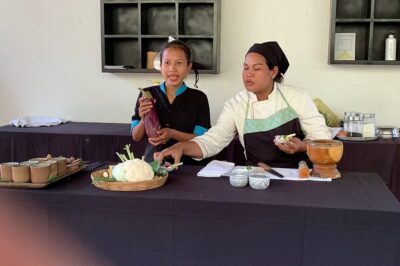
3-Hour Siem Reap Guided Cooking Class and Market with Pick up
Read our review →Browse the lists this tour appears in