
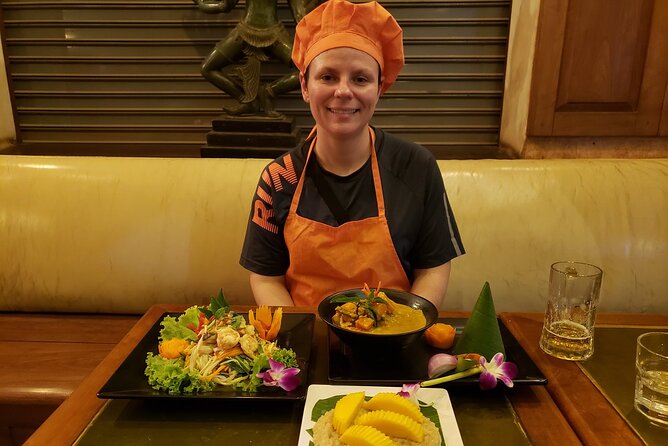
Reviewed · CAMBODIAN COOKING CLASSES IN SIEM REAP
Award-Winning Cooking Class Experience with Professional Teacher
The best part of this Siem Reap experience happens before you sit down to eat. You visit a nearby market, learn what the produce and spices are used for, then return to Paper Tiger to cook a Khmer meal with a professional teacher. I especially like the hands-on preparation and the chance to choose dishes, rather than simply watching a chef work.
I also like the generous format: about three hours, a market walk, cooking, and lunch or dinner for $22. Teachers including Sopheap, Sinuon, and Channy receive repeated praise for patience and clear instruction. The main consideration is heat. The cooking area is open to the outside and uses an open flame, so afternoons can feel very hot, and you should bring extra water.
Key points to know before booking
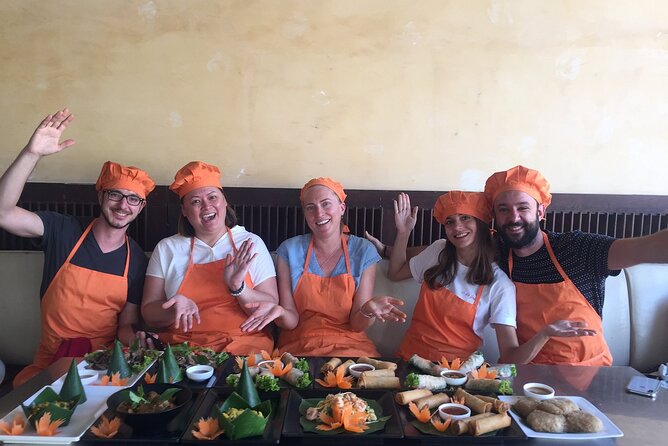
- Market first, cooking second: You begin at a historic market near Paper Tiger, looking at local produce, meats, herbs, and spices.
- Choose your own dishes: Depending on the session, you may select a starter and main course, with meat, fish, and vegetarian choices available.
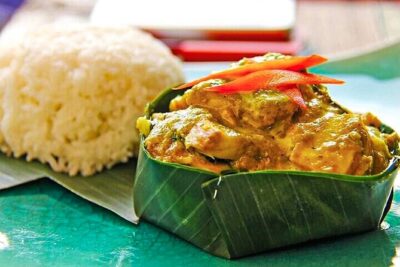
- Classic Khmer recipes: Expect dishes such as fish amok, chicken curry, beef loc lac, green mango salad, and flambéed bananas.
- A real meal, not a tasting: Your cooking becomes lunch or dinner, and portions may be large enough to leave leftovers.
- Small-group format: The maximum is 20 people, though some sessions have only two participants or even a single booking.
- Good for families: The stated age range is 8 to 70, making this a practical food activity for mixed-age groups.
Why this Siem Reap cooking class works
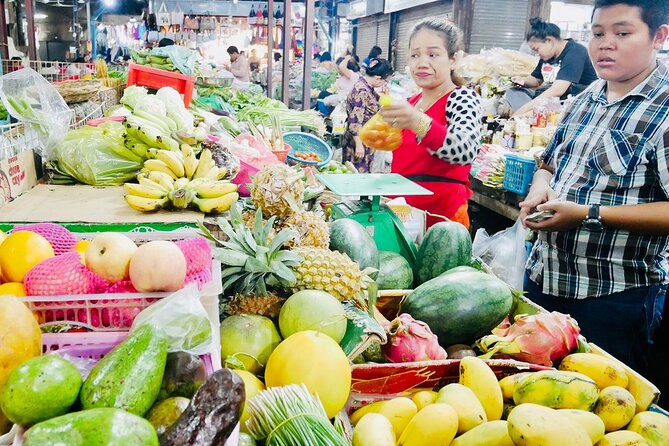
Siem Reap has no shortage of places to eat Khmer food. A cooking class earns its place in your schedule by showing you how the food is built. Here, you do not just taste amok or lok lak and move on. You handle the vegetables, chop the herbs, prepare seasoning, and learn how several ingredients fit together.
That matters because Khmer food can be subtle. Coconut, lemongrass, fish sauce, herbs, pepper, curry paste, and fresh vegetables all play different roles. A teacher can explain what each ingredient does while you are holding it in your hands. You leave with a better chance of recognizing these flavors at a Cambodian restaurant, and you receive digital recipes for cooking them at home.
The class has operated at Paper Tiger since 2001, giving it a long record in Siem Reap. It meets in the middle of Pub Street, so you can reach it without arranging private transport. The listed meeting point is 59 Street 08, near the Pub Street area, and the activity finishes back there.
More Cambodian Cooking Classes in Siem Reap
- Khmer Cooking Class at a Local’s Home in Krong Siem Reap
★ 5.0 · 2,731 reviews - Siem Reap: Khmer Cooking Class at a Local’s Home
★ 5.0 · 1,108 reviews - Cambodian Village Cooking Class
★ 5.0 · 265 reviews
The market walk sets the tone
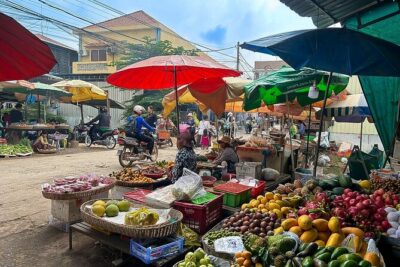
The first stop is a nearby historic market. This is not just a quick detour before the cooking begins. It gives you a useful introduction to the raw materials behind Khmer food.
You can expect to look at fresh produce, meats, herbs, spices, and other market goods. One class may point out dragon fruit or Thai basil. Another may focus on ingredients used in curry paste or salad. The precise selection depends on the dishes chosen and the teacher, but the purpose is clear: you learn what Cambodians buy and how those products reach the kitchen.
I like this part because it adds local context without making the class feel like a lecture. You can ask why an ingredient is used, how it is prepared, or what might replace it at home. Channy, Sinuon, and Sopheap are each described as engaging market guides, with Sinuon in particular praised for explaining local products and Channy for responding well to questions.
Keep your expectations sensible. This is a short market visit connected to a cooking lesson, not a full food tour. One less favorable experience found the market walk rushed and not very interactive. The quality may depend on your teacher and the size of your group, so ask questions rather than simply following along.
Choosing dishes at Paper Tiger
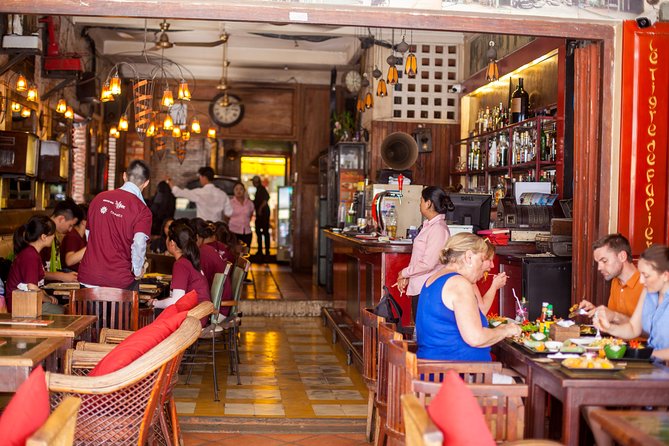
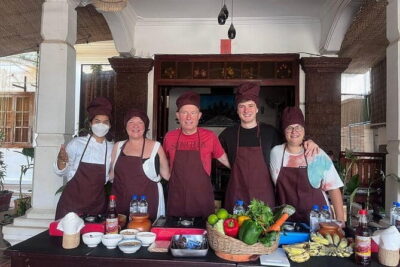
Back at Paper Tiger, you prepare a meal under the direction of the teacher. The exact menu can vary, but the class commonly includes a starter, a main dish, and dessert.
Possible dishes include:
- Fish amok
- Chicken curry
- Beef loc lac
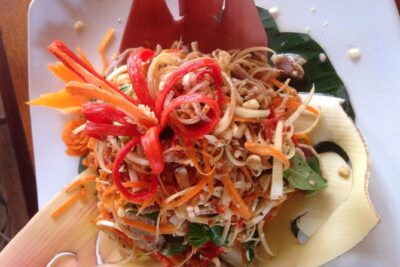
- Green mango salad
- Other Khmer starters and mains
- Flambéed bananas for dessert
Several sessions allow each person to choose a starter and a main course. That is a major advantage for couples or small groups, since you can select different dishes and learn more than one recipe. Vegetarian choices are available, and meat and fish options are offered as well.
If you are cooking with friends, it makes sense to split your choices. One person might choose fish amok while another prepares beef loc lac. You then see how the methods and seasonings differ, and you can share the finished food at the table.
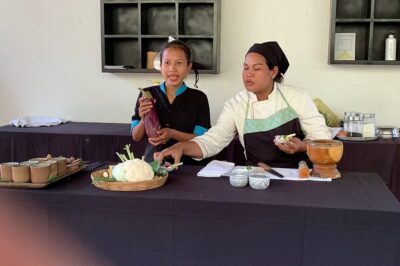
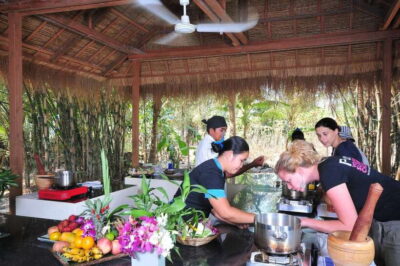
The class is practical. You chop vegetables, prepare spices and seasoning, make amok paste, and cook your dish with guidance. The teacher demonstrates the technique, then lets you try it. This is useful for beginners because you are not expected to know how to balance Khmer flavors before you arrive.
Sopheap is repeatedly singled out for patience, good humor, and clear instruction. Sinuon is praised for giving careful demonstrations and coaching participants as they work. Channy is noted for adapting her teaching to each person, including a child who needed extra help. Those details suggest that the lesson is designed for participation, not for showing off the chef’s own skills.
The meal is the reward
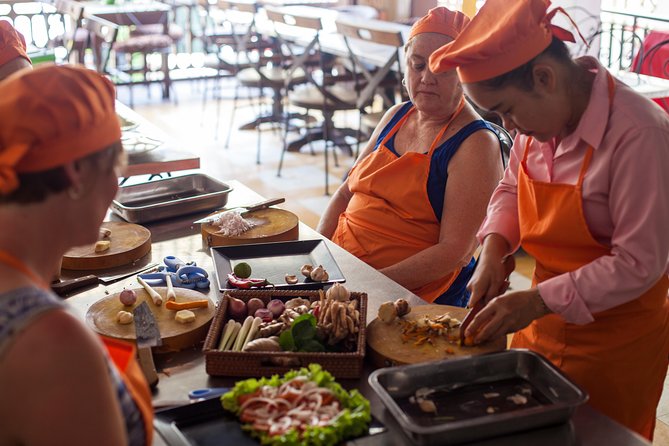
After cooking, you sit down to eat what you made. This simple finish is one of the strongest parts of the experience. You are not handed a small sample and sent away. The class produces a full lunch or dinner, often with sizeable portions.
Some people report having enough food for leftovers, especially when the group is small. That makes the $22 price look particularly strong. You receive instruction, a market visit, a three-course meal, and recipes in one three-hour activity.
The food is also a useful check on what you have learned. If your curry tastes balanced or your amok has the right texture, you can connect the result to the preparation steps. If something is too salty or not fragrant enough, the teacher can explain what happened while the meal is still in front of you.
Dessert is often flambéed banana, which adds a bit of theatre to the final course. It is also a good choice for children and anyone who has already eaten plenty of spicy food during a trip. The meal includes meat, fish, and vegetarian possibilities, but you should state your needs when booking or at the start of class rather than assume every menu is identical.
A different sort of day out around Siem Reap:
- Angkor Wat Sunrise or Sunset Tour with Guide from Siem Reap
★ 5.0 · 12,109 reviews - Siem Reap: Angkor Wat: Small-Group Sunrise or Sunset Tour
★ 5.0 · 9,444 reviews - From Siem Reap: Kampong Phluk Floating Village Tour by Boat
★ 4.9 · 6,979 reviews - Sunset tour of Kampong Phluk stilts home village on the Tonle Sap
★ 5.0 · 4,865 reviews
Teacher quality makes the difference
The strongest part of this experience is the teaching. Names that come up often include Sopheap, Sinuon, Channy, and Jenny, though your instructor may be someone else.
Sopheap is described as highly skilled, patient, and especially good with children. Sinuon is praised for humor, clear instructions, flexibility, and careful market explanations. Channy is noted for enthusiasm and for adjusting the amount of help each person receives. These qualities matter more than fancy equipment. A cooking class succeeds when you are allowed to try, make small mistakes, and understand how to fix them.
The class can also work well as a first activity after arriving in Siem Reap. Food gives you an easy introduction to local life, and the market helps you get your bearings without committing to a full day of sightseeing. It can also be a pleasant afternoon plan when you want a break from temple touring.
Still, the experience is not perfectly uniform. One participant reported a rushed private lesson, poor cleanliness, questionable kitchen practices, an unexpected charge for bottled water, and recipes that did not match the dishes prepared. That account is sharply different from the many highly positive experiences, but it raises sensible questions.
I would bring water, ask what is included, and confirm the recipes before leaving if they matter to you. It is also fair to look over the cooking area and speak up if you have a concern about utensils, ingredients, or food handling. The open-air kitchen can be hot, particularly when cooking over a flame in temperatures above 35 degrees Celsius.
Group size and the private-class question
The maximum group size is 20, which is small enough for a proper class but large enough to feel social. In practice, some sessions have only a couple of people, and some group bookings end up as a private lesson when nobody else joins.
A small group has clear benefits. You get more time at the chopping board, more direct help, and a better chance to ask about ingredients. It also lets two people choose different menus without feeling rushed.
A larger group may bring more energy and make the meal more social, but you could have less individual attention. Since the stated maximum is 20 rather than a guaranteed class size, do not book expecting a private experience. If a quiet, personal lesson matters to you, contact the provider before reserving.
The age range is 8 to 70. That makes this a good family option, especially because children can take part in chopping and mixing under supervision. Younger participants may need help with knives and hot pans, and the open flame deserves care. The class is also suitable for couples, solo food lovers, and friends looking for an activity beyond temple visits.
Is $22 good value?
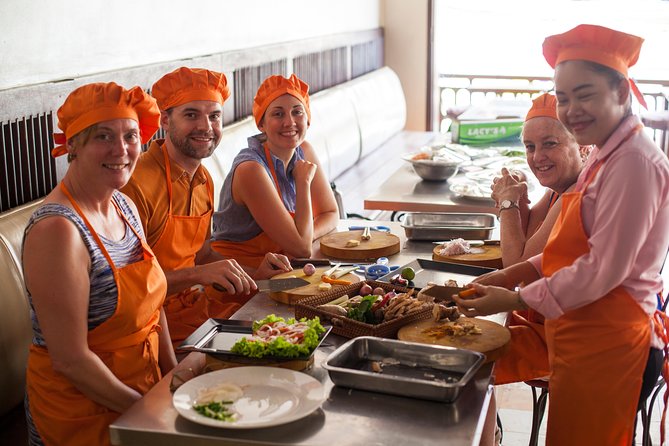
At $22 per person, the value is strong if you take part fully. The price covers the professional cooking class, lunch or dinner, and the historic market tour. You also receive digital recipes, which extend the value beyond your time in Cambodia.
Compare it with the cost of a meal alone and the class makes sense for many people. You eat several dishes, learn cooking methods, and gain a better understanding of Khmer ingredients. The portions can be large, though that depends on the menu and group size.
The price does not include private transportation. That is not a major drawback because the meeting point is near Pub Street and public transportation is available nearby. Still, check your route in advance, especially if you are staying outside central Siem Reap.
Drinks should be clarified. One account describes being charged separately for water, while the included items list does not mention beverages. Bring your own water or ask before ordering one. This is a small cost, but clear pricing is part of a good experience.
Group discounts are available, which may improve the value for families or larger parties. The activity can be cancelled for a full refund up to 24 hours before the start time. Changes or cancellations inside that window are not accepted for a refund.
What to bring and how to prepare
Wear comfortable clothing that you do not mind wearing in a warm kitchen. The cooking area may be open to the outside and can become hot around the flame, so light clothing and extra drinking water are sensible.
Arrive ready to participate. You may chop, mix, pound, season, and cook, so this is not the place to sit back and watch. If you have food restrictions, prefer vegetarian dishes, or want to avoid certain ingredients, mention them early.
I would also keep your phone handy for notes and photos, but do not rely only on memory. The digital recipe book is meant to help you recreate the dishes later. Before you leave, compare the recipe names with the food you actually prepared so you know which instructions belong to which dish.
The start time affects the feel of the class. A morning session becomes lunch, while an afternoon session leads into dinner. Several people particularly enjoyed late afternoon classes, but the open-air setting may feel warmer then. Choose the time that fits your heat tolerance and sightseeing plans.
Who should book this experience?
You should consider this class if you want more than a restaurant meal and like learning by doing. It is especially well suited to:
- First-time visitors who want an easy introduction to Khmer food
- Couples who want to prepare different dishes and share them
- Families with children aged 8 and older
- Vegetarians who want a choice beyond a fixed meat menu
- People who collect recipes from their trips
- Anyone needing a relaxed activity between temple visits
It may not suit you if you dislike heat, open-fire cooking, market environments, or hands-on food preparation. It is also not the best fit if you need a tightly standardized menu or professional kitchen conditions. Ask questions before booking if hygiene standards, drink inclusion, or exact recipes are especially important to you.
Should you book the Paper Tiger class?
Yes, I would book it if your goal is an affordable, active introduction to Khmer cooking. The combination of market visit, teacher-led preparation, large meal, and take-home recipes offers more substance than a simple food tasting. The repeated praise for Sopheap, Sinuon, and Channy also points to strong teaching when you are paired with one of them.
Book with practical expectations. The kitchen may be hot, the group size can vary, and water may cost extra. Bring a drink, confirm dietary needs, and ask how the menu works when you arrive. If you are comfortable with those conditions, $22 buys a generous three-hour experience and a meal you helped create.
FAQ
How long does the cooking class last?
The experience lasts approximately three hours, including the market visit, cooking lesson, and lunch or dinner.
Where does the activity begin?
It begins at 9V33+XWF, 59 Street 08, Krong Siem Reap, near the middle of Pub Street. The activity ends back at the meeting point.
What food can I learn to cook?
Possible dishes include fish amok, chicken curry, beef loc lac, green mango salad, and flambéed bananas. The exact choices can vary, and participants may be able to select their own starter and main course.
Are vegetarian options available?
Yes. Vegetarian dishes are available, along with meat and fish options.
Is transportation included?
No. Private transportation is not included. The meeting point is near public transportation and central Pub Street.
What is the cancellation policy?
You can cancel up to 24 hours before the start time for a full refund. Cancellations or changes made less than 24 hours in advance are not accepted for a refund.
More craft workshops and tastings in Siem Reap
- Siem Reap: Cambodian Pottery Class
★ 4.9 · 339 reviews - Cambodian Cooking Class from Siem Reap
★ 4.9 · 190 reviews - Siem Reap Cooking Class
★ 5.0 · 170 reviews - Cambodian Pottery Class in Siem Reap
★ 4.5 · 157 reviews
Just added around Siem Reap
- Ultimate Sunrise to Angkor Wat, Angkor Thom and Bayon Temple★ 5.0 · 3 reviews
- Full-Day Private Tour of Angkor Wat with Pick Up★ 5.0 · 12 reviews
- Trekking Tour at Phnom Kulen National Park from Siem Reap★ 5.0 · 3 reviews
- Twilight Tastes of Siem Reap Include Dinner★ 5.0 · 13 reviews
- Waterfall & River of 1000 Siva Linga- Kulen Mountain Private Tour★ 5.0 · 3 reviews
- Siem Reap City Tour with War Museum and Killing Field★ 5.0 · 27 reviews
- Private Day Trip to Angkor Temples with Expert Guide★ 5.0 · 4 reviews
- Private Two Days Siem Reap Temples Discovery Guided Tour★ 5.0 · 7 reviews
Cambodian Cooking Classes in Siem Reap, compared.
Khmer Cooking Class at a Local’s Home in Krong Siem Reap
Read our review →
3-Hour Siem Reap Guided Cooking Class and Market with Pick up
Read our review →Browse the lists this tour appears in