
Reviewed · ANGKOR WAT TOURS
One Day Private Guide Tour of Angkor Thom, Bayon, Ta Phrom & Angkor Wat
Angkor’s grandest sights fit into one long, well-planned day here, from the giant stone faces of Bayon to the tree-wrapped courtyards of Ta Prohm and the broad galleries of Angkor Wat. The private format lets you ask questions, set a comfortable pace, and make better use of the cooler morning hours.
I like two things right away: your English-speaking guide adds meaning to ruins that can otherwise blur together, and the day splits the walking into a morning visit and a later Angkor Wat visit. The guide and driver also help with temple order, photo spots, and the crowds.
The drawback is the length. Nine hours in Cambodia’s heat, with several temple walks and stairs, can leave you tired. Lunch is on your own, and the $146.67 price per person is a serious spend if you are traveling alone or as a couple.
Key points at a glance
- Angkor Thom in one morning: See the South Gate, Bayon, Baphuon, Phimeanakas, the Royal Enclosure, and both royal terraces.
- Private guide and vehicle: You travel with your own group in an air-conditioned vehicle, rather than following a large tour party.
- Ta Prohm gets two full hours: This leaves time to study its galleries, courtyards, towers, and tree-covered stonework.
- Angkor Wat comes late in the day: The three-hour visit is timed for the afternoon and sunset period.
- The $37 park ticket is included: Transportation, guide, taxes, service charges, and two bottles of water per person are also covered.
- Strong guide service matters here: Sim is praised for temple knowledge, local life, photo advice, and finding quieter times and places.
Why this private Angkor day works
This is a greatest-hits tour, but it is not a shallow one. You cover the main monuments of the Angkor Archaeological Park while also seeing several smaller sites that explain how Angkor Thom functioned as a royal capital.
The private setup is the key advantage. You meet your guide and driver at 8:00 a.m., then move between sites in a modern air-conditioned vehicle. That matters in Siem Reap, where the heat can turn a pleasant stone walk into hard work by midday. You can ask for explanations, pause for photographs, or spend less time at a stop that does not hold your interest.
The tour is also well ordered. Angkor Thom fills the morning, Ta Prohm receives a generous two hours, and Angkor Wat comes after a lunch break in the later afternoon. A guide can explain the figures and stories before you reach the main temple, rather than leaving you to guess at every carving.
If Sim is assigned to your group, you may benefit from his experience with the temples, Cambodian daily life, local markets, photography points, and quieter times. The guide’s name is not guaranteed in the tour details, so confirm it after booking rather than assuming Sim will lead your visit.
More Angkor Thom and Bayon tours in Siem Reap:
- Siem Reap Tour: Angkor Wat Sunrise, Bayon, Ta Prohm, Banteay Srei
★ 5.0 · 931 reviews - Angkor Wat Private Driver Tours to Angkor Wat Sunrise, Angkor Thom & Ta Prohm
★ 5.0 · 98 reviews - Angkor Wat Sunrise and Angkor Thom Sunset Tour
★ 5.0 · 89 reviews
Entering Angkor Thom through the South Gate
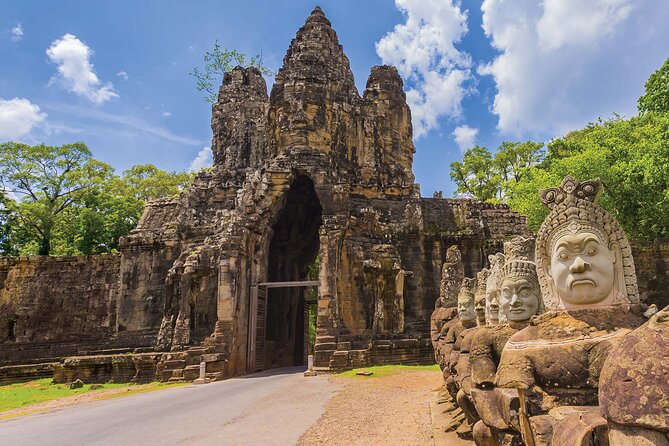
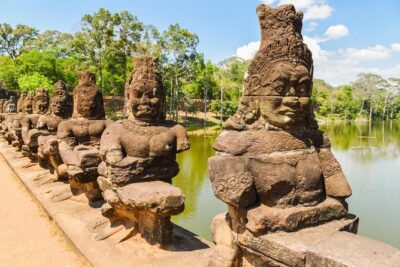
The first major stop is Angkor Thom South Gate, where a broad approach leads toward the fortified capital. Allow about 45 minutes here.
The gate is famous for its monumental figures connected with the churning of the ocean of milk. Rows of figures line the causeway, giving you an immediate sense of the scale and symbolism of Khmer architecture. This is not simply a doorway. It sets up the political and religious world you will see inside.
Angkor Thom was the center of a huge city around 1200. The complex was occupied after conflict with the Chams, and its walls, gates, temples, and royal spaces reflect the importance of the capital. Your guide can help connect the gate to the city beyond it, so you understand that the temples were part of a working urban center, not isolated monuments.
The South Gate can be busy and bright. Your guide’s advice about where to stand for photographs is useful here, especially because the approach can become crowded. Keep your first look brief but attentive, then move inside for the main monuments.
Bayon and its many stone faces
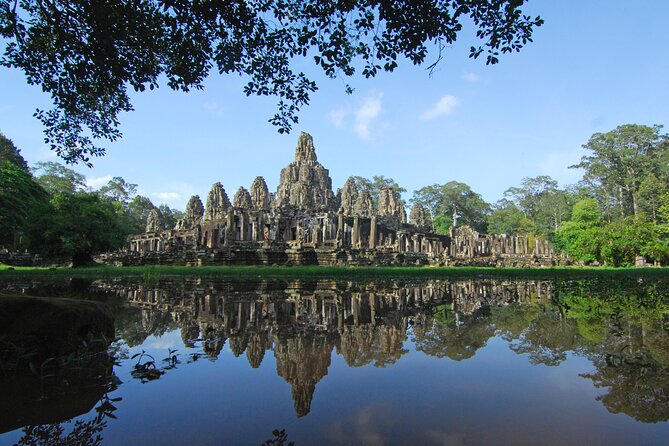
At the center of Angkor Thom, Bayon is the day’s first major temple encounter. Plan on about an hour.
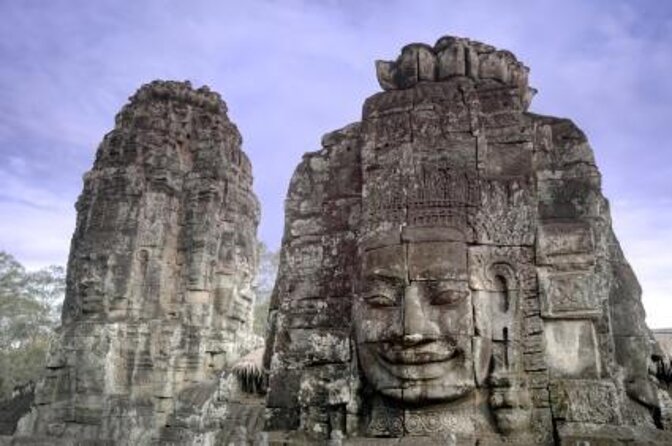
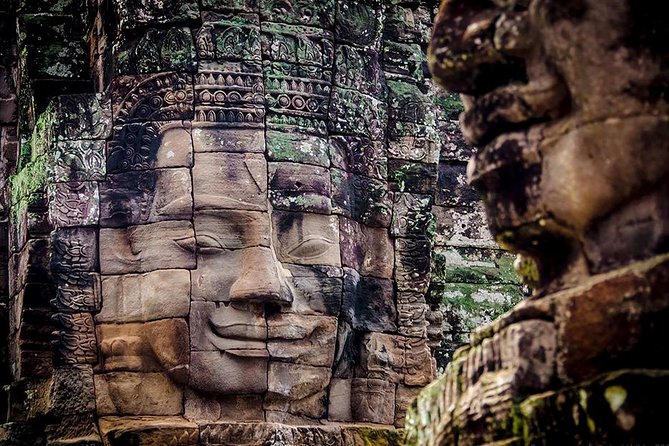
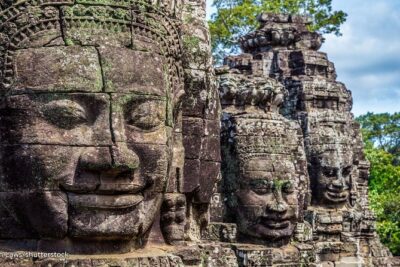
Bayon feels different from Angkor Wat. Its towers press close together, and the maze of passageways makes the temple seem almost alive as you walk through it. More than 200 large faces appear on its towers, traditionally associated with Avalokitesvara, a compassionate Buddhist figure. The calm expressions are unforgettable, but the real pleasure comes from seeing how the faces appear and disappear as you change position.
This is a place where a guide earns the fee. Without context, you may notice only the famous faces. With help, you can look for the bas-reliefs, understand the temple’s central role in Angkor Thom, and see how the layout differs from a conventional Hindu temple.
Bayon is also a good test of your walking shoes. The stone surfaces are uneven, the passages can feel tight, and some sections require care. Stay close enough to hear your guide, but do not rush past the outer carvings. The temple rewards slow looking more than quick photographs.
Baphuon, Phimeanakas, and the royal center
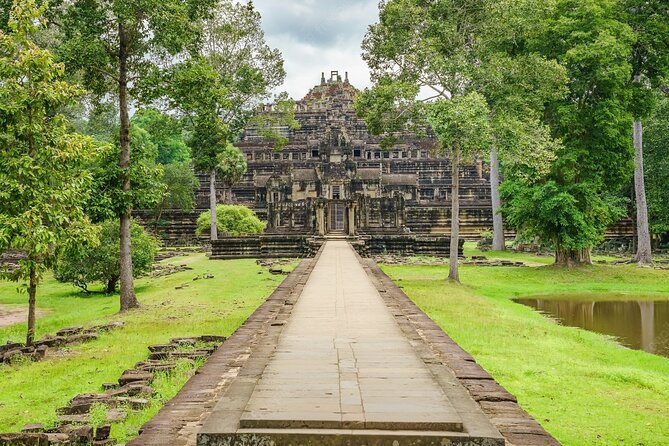
Baphuon is next, with about 30 minutes set aside. This three-tiered temple mountain was built in the mid-11th century as a state temple for Udayadityavarman II. Its form rises above the surrounding area, and its restoration has been a major effort.
The short visit gives you a useful look at an earlier architectural style before you continue through the royal center. Baphuon can feel more open and less visually crowded than Bayon, but its scale still takes time to grasp. If stairs or uneven stone are difficult for you, tell your guide early so the pace can be adjusted.
The route also includes Phimeanakas, another 30-minute stop. This Hindu temple was built in the Khleang style near the end of the 10th century under Rajendravarman and completed under Suryavarman I. It is more restrained than Bayon, which makes it a good contrast.
You will also pass through the Royal Enclosure. The remains do not have the same instantly recognizable image as Bayon or Ta Prohm, but this area helps you picture Angkor Thom as a royal compound. I like having these smaller stops in the schedule because they prevent the day from becoming a parade of only famous photographs.
More Angkor Wat tours in Siem Reap:
- Angkor Wat Sunrise or Sunset Tour with Guide from Siem Reap
★ 5.0 · 12,109 reviews - Siem Reap: Angkor Wat: Small-Group Sunrise or Sunset Tour
★ 5.0 · 9,444 reviews - Siem Reap: Angkor Wat 2-Day Tour with Sunrise and Sunset
★ 4.9 · 4,429 reviews - Siem Reap: Full-Day Angkor Wat Guided Tour with Sunset
★ 4.9 · 3,803 reviews
The Elephants Terrace and Leper King Terrace
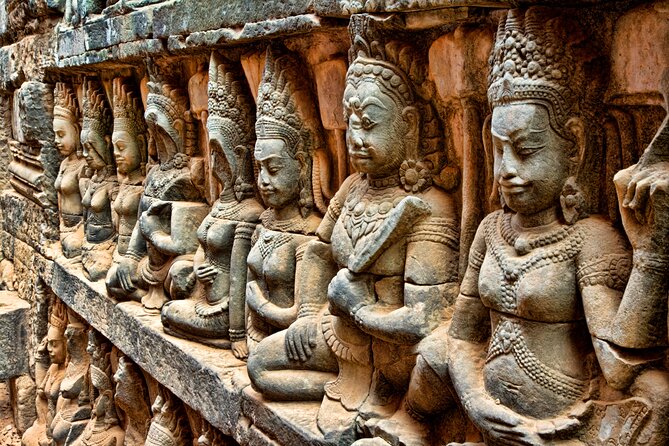
The Terrace of the Elephants receives about 30 minutes. Jayavarman VII used it as a viewing platform for returning armies, and its name comes from the elephant carvings along the terrace wall.
This is an easy place to understand power in physical form. The long platform faces the former royal area, and the decoration reinforces the king’s connection with ceremony, military success, and public display. Ask your guide to point out the details rather than simply walking the length of the terrace.
The Terrace of the Leper King follows, also for about 30 minutes. It occupies the northwest corner of Angkor Thom’s Royal Square and was built in the Bayon style under Jayavarman VII.
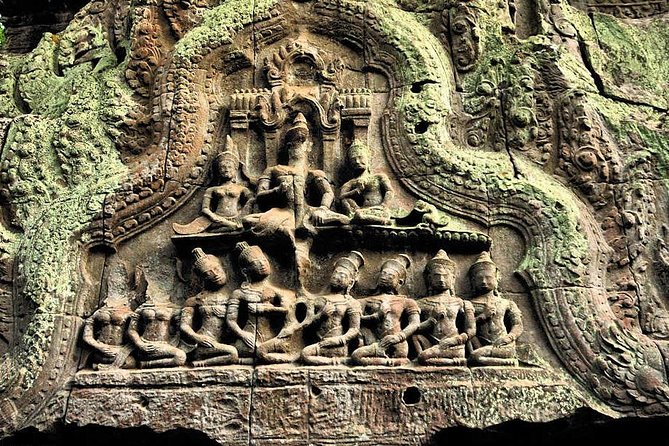
Its modern name comes from a statue and later interpretations, not from a simple explanation of the original purpose. The enclosed carvings are the real attraction. Look closely at the layers of figures and the way the narrow passage changes what you can see.
By this stage, the morning includes several stops with similar gray stone tones. That is one reason private guiding helps. Your guide can separate the sites by date, function, religion, and ruler instead of giving you one long stream of temple names.
Two hours at Ta Prohm
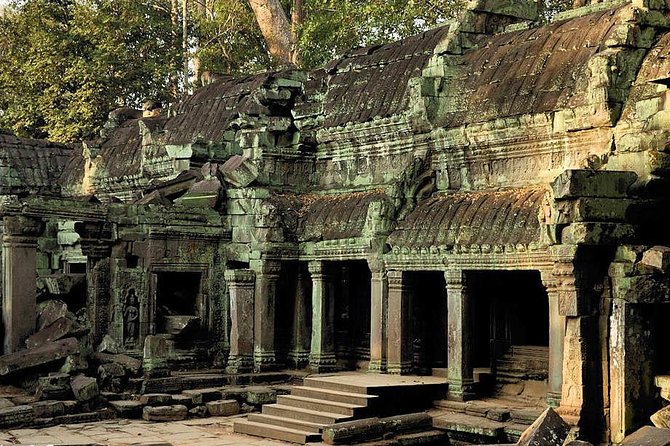
Ta Prohm is given two hours, and that is a sensible choice. Built in 1186 by Jayavarman VII as a monastery for his mother, it is one of Angkor’s most atmospheric monuments.
Its dark gray sandstone, enclosed courtyards, fallen blocks, and tree roots create a very different mood from the formal openness of Angkor Wat. The trees are not a decoration added for visitors. They are part of the site’s long story of abandonment, growth, restoration, and careful preservation.
The temple can be confusing at first. Doorways lead into other doorways, corridors turn sharply, and the same towers can look different from each side. Two hours gives you enough time to follow the route without treating every corner as a quick stop.
Ta Prohm is also one of the busiest monuments in the park. The private format cannot remove the crowds, but your guide may help you approach the most photographed areas at a better moment. The practical benefit is not only a better picture. It is a chance to pause without blocking the narrow paths.
Wear shoes with a firm grip, carry water, and save some energy for Angkor Wat. The temple is atmospheric, but the broken stone and uneven ground can be tiring. The tour provides two bottles of mineral water per person during sightseeing and transfers, which is helpful but not a substitute for planning your own hydration.
Angkor Wat in the afternoon and near sunset
After lunch, the final major visit is Angkor Wat, with about three hours allocated. Lunch is not included, so you pay for your own meal and drinks during the break.
Angkor Wat was built as the funeral temple of King Suryavarman II. Its scale is immense, but the most rewarding parts are often the details: galleries of carved scenes, long bas-reliefs, towers rising above the central sanctuary, and carefully balanced courtyards.
A three-hour visit gives you time to take in the approach, outer galleries, central areas, and views across the temple grounds. The late-afternoon timing can soften the light and make the stone easier to study than it is under the harsh midday sun. The plan also avoids placing every major temple in the hottest part of the day.
Do not expect the site to be quiet simply because the visit is later. Angkor Wat is the park’s best-known monument, and the sunset period can be busy. Your guide’s advice about where to stand and when to move can make the experience calmer, but no private tour can guarantee an empty terrace.
The temple is large enough that you may feel rushed if you want to study every carving. I would tell the guide what matters most to you at the start: architecture, religious stories, photography, or the broad history of the Khmer kings. That helps turn three hours into a focused visit rather than a race through every corridor.
What the $146.67 price covers
At $146.67 per person, this is not a bargain-priced temple transfer. Its value depends on how much you want interpretation, private transport, and a carefully managed day.
The price includes the one-day Angkor Archaeological Park admission fee, listed at $37. It also includes a professional licensed English-speaking guide, a private air-conditioned vehicle, two bottles of water per person, taxes, and service charges. Those inclusions remove several costs that can otherwise appear separately.
The private format is most attractive for a small group. A couple pays more per person than a larger party, but you receive a guide focused only on your group. Group discounts may also be available, so check the current price for your party size before booking.
Lunch, meal drinks, and personal, travel, and health insurance are not included. Bring money for lunch and do not treat the listed price as the full cost of your day.
Who should book this tour
I would choose this tour if you have one full day for Angkor and want the major sites explained rather than simply photographed. It suits first-time visitors, small groups, families who want private pacing, and anyone who values an air-conditioned vehicle between long walks.
It is especially useful if you want help with photographs and crowd timing. The strongest praise connected with this experience centers on guides who explain the temples clearly, speak fluent English, understand local life, and know better times and places for photographs. Sim is specifically praised for these strengths, along with taking a group to local markets during several days in Siem Reap, though that extra market visit is not part of this stated itinerary.
The tour is less suitable if you prefer a slow, single-temple visit or dislike early starts and long days. The schedule covers a lot of ground. You will see more by accepting a brisk pace and using the private arrangement to adjust priorities.
Confirmation arrives at booking, most people can participate, and only your group joins the activity. Free cancellation is available up to 24 hours before the local start time. Changes or cancellations inside that window are not accepted for a refund.
Should you book it?
Book this tour if you want a full first look at Angkor with a guide who can explain the difference between a royal terrace, a temple mountain, a Buddhist monument, and a working capital. The included ticket and private vehicle make the price easier to justify for a small group, especially in the heat.
Skip it if you are mainly seeking the lowest-cost way to reach Angkor or if you want to explore at your own pace. For most first visits, though, the combination of Bayon, Ta Prohm, Angkor Thom’s royal sites, and a long Angkor Wat visit gives you a strong and practical introduction to Cambodia’s great temple complex.
FAQ
What time does the tour start?
The tour starts at 8:00 a.m.
How long does the experience last?
The tour lasts approximately nine hours.
Is Angkor Wat admission included?
Yes. The one-day Angkor Archaeological Park ticket, listed at $37, is included in the tour price.
Is transportation private?
Yes. The tour includes private transportation in a modern air-conditioned vehicle, and only your group participates.
Is lunch included?
No. Lunch and drinks during meals are at your own expense.
Can I cancel for a full refund?
Yes, if you cancel at least 24 hours before the local start time. Cancellations or changes made less than 24 hours before the experience are not eligible for a refund.
Just added around Siem Reap
- Ultimate Sunrise to Angkor Wat, Angkor Thom and Bayon Temple★ 5.0 · 3 reviews
- Full-Day Private Tour of Angkor Wat with Pick Up★ 5.0 · 12 reviews
- Trekking Tour at Phnom Kulen National Park from Siem Reap★ 5.0 · 3 reviews
- Twilight Tastes of Siem Reap Include Dinner★ 5.0 · 13 reviews
- Private Day Trip to Angkor Temples with Expert Guide★ 5.0 · 4 reviews
- Waterfall & River of 1000 Siva Linga- Kulen Mountain Private Tour★ 5.0 · 3 reviews
- Siem Reap City Tour with War Museum and Killing Field★ 5.0 · 27 reviews
- Private Two Days Siem Reap Temples Discovery Guided Tour★ 5.0 · 7 reviews
Angkor Wat Tours, compared.
Angkor Wat Sunrise or Sunset Tour with Guide from Siem Reap
Read our review →
Angkor Wat: Small-Group Sunrise or Sunset Tour
Read our review →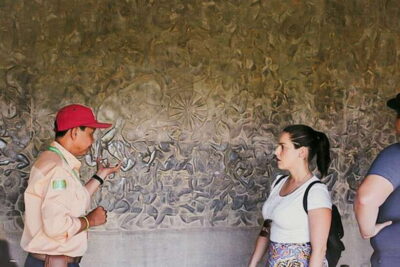
Angkor Wat 2-Day Tour with Sunrise and Sunset
Read our review →
Angkor Wat Sunrise tour with Small – Group and Guide tours
Read our review →
Angkor Wat Highlights and Sunrise Guided Tour from Siem Reap
Read our review →
Angkor Wat Sunset Small Group Tour with Lunch Included
Read our review →
Full-Day Angkor Wat Sunrise Private Tour with Guide from Siem Reap
Read our review →Browse the lists this tour appears in