
Reviewed · ANGKOR WAT TOURS
Angkor Wat 2 Days and a Half Temples & Tonle Sap-Small Group Tour
The best part of this three-day Siem Reap tour is its range. You get Angkor Wat at sunrise, the finely carved Banteay Srei, jungle-wrapped Ta Prohm, and a boat ride through Kampong Phluk on Tonle Sap. It gives you both Cambodia’s great monuments and a look at daily life beyond the temple circuit.
I like the balance between famous sights and quieter ones such as Preah Khan and Neak Pean. I also like the practical setup: hotel pickup, an air-conditioned vehicle, bottled water, and an English-speaking guide. Sak leads the tour and Mao drives, and the group is limited to 15 people.
The main drawback is cost beyond the advertised $79. Your temple pass is extra at $62 per person, and meals are not included. The pre-dawn start for Angkor Wat also means this is an active schedule, not a lazy holiday.
Key points at a glance
- Angkor Wat at sunrise: Enter before dawn and see the temple as morning light reaches its towers.
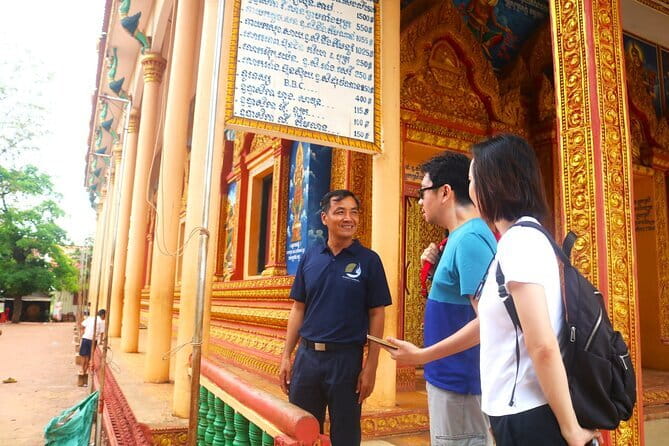
- Banteay Srei’s detailed carvings: Spend two hours at the small sandstone temple often prized for its fine relief work.
- A useful mix of temples: Pre Rup, Neak Pean, Preah Khan, Ta Prohm, Angkor Thom, and Bayon each offer a different setting.
- Tonle Sap by boat: Spend about four hours reaching Kampong Phluk and its three floating fishing villages.
- Small-group format: The vehicle carries no more than 15 people, with hotel pickup and drop-off included.
- Good guide and driver pairing: Sak provides the temple and cultural context, while Mao handles the driving.
Why this tour works for a first visit to Siem Reap
If you have only a few days in Siem Reap, planning Angkor on your own can become a puzzle of temple names, distances, ticket rules, and early starts. This tour gives you a clear route across two and a half days, then adds Tonle Sap for a change of pace.
You will see the main icons, but the schedule does not stop with Angkor Wat and Bayon. Pre Rup gives you a strong opening view of Khmer temple design. Banteay Srei brings close-up stone carving. Neak Pean changes the mood with water and an artificial island. Preah Khan offers atmospheric ruins and tree roots.
That variety matters. Angkor is not one single monument. It is a large collection of temples built for different religious and royal purposes, and each one rewards a different kind of attention. A good guide can help you notice that difference instead of letting the day blur into one long series of stones.
Sak is the guide named for this experience, and his English and command of Cambodian culture are specifically highlighted. That matters most at sites such as Bayon and Angkor Wat, where the carvings can look impressive but confusing without some explanation. Mao is the driver, and the air-conditioned vehicle gives you welcome relief between stops.
The tour is capped at 15 people. That is not a private tour, but it is small enough to be more manageable than a large coach group. Hotel pickup and drop-off also remove some of the daily transport hassle.
More Tonle Sap floating village trips in Siem Reap:
- From Siem Reap: Kampong Phluk Floating Village Tour by Boat
★ 4.9 · 6,979 reviews - Sunset tour of Kampong Phluk stilts home village on the Tonle Sap
★ 5.0 · 4,865 reviews - Kompong Phluk Floating Village Half-Day Tour ( Morning / Sunset )
★ 5.0 · 1,494 reviews
Day one: Pre Rup, Banteay Srei, and the quieter eastern temples
The first day begins at 8:00 a.m. and heads beyond Angkor Thom. Your first stop is Pre Rup, a Hindu temple built as a state temple from brick, laterite, and sandstone.
Pre Rup has a strong, stepped design and gives you an early look at the mountain-temple form used across the Angkor period. You have about an hour here, enough to inspect the structure without racing through it. Because the temple pass is not included, you will need to arrange that payment directly at the site.
The star of this day is Banteay Srei. The drive takes you farther from the main temple cluster, but the extra distance is worthwhile if you care about carving. This smaller sandstone temple is known for its carefully cut reliefs, and you have about two hours to look closely rather than simply take a quick photograph.
Banteay Srei is a good reminder that size does not decide a temple’s impact. The details here are the point. Look for the fine patterns and figures carved into the pinkish sandstone, and take your time around the walls and doorways. The stop should suit you if you enjoy craft and close observation more than grand scale.
The tradeoff is travel time. Because Banteay Srei lies outside the main Angkor Thom area, part of the day is spent on the road. The air-conditioned vehicle helps, and the route gives you a glimpse of the countryside beyond the central temple zone, but this is not the most compact itinerary.
Neak Pean offers a change in setting. The temple sits on an artificial island, surrounded by water and reached as part of a wider complex. You have about an hour here. After the towering stairways and carved walls of earlier stops, the water setting gives the afternoon a calmer rhythm.
The day ends at Preah Khan, a ruined temple with crumbling stonework and tree roots. This is one of the more atmospheric stops on the route, especially if you like places where age and vegetation are both part of the view. The one-hour visit is enough for a focused walk, though you may wish for more time if you prefer slow photography.
A sunset experience is included in the tour, but the supplied details do not name the exact viewing point. Confirm the timing and location with Sak when the day begins. That small check is useful because sunset plans can depend on temple access and the day’s driving schedule.
Day two: Angkor Wat before dawn, then the Bayon faces
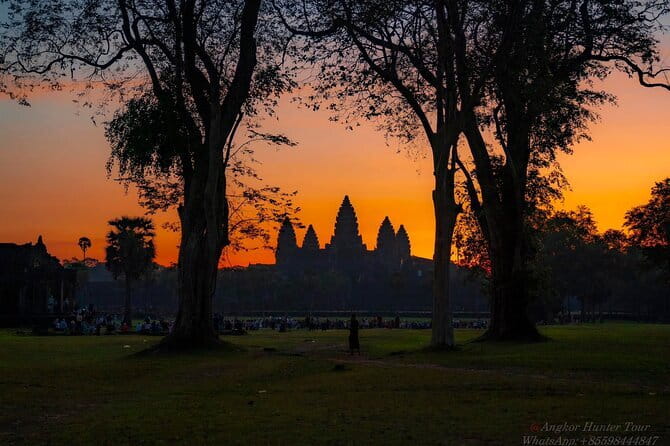
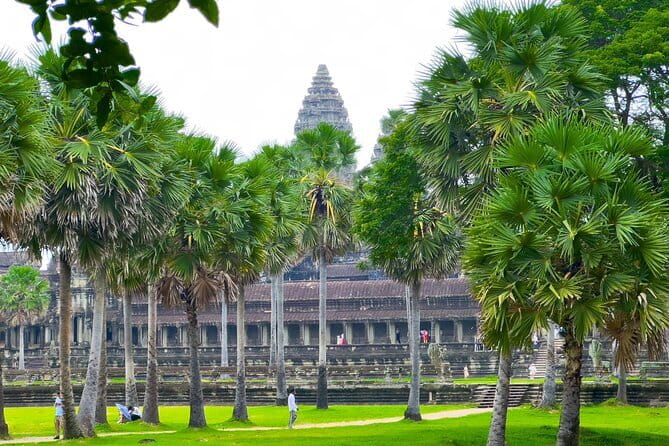
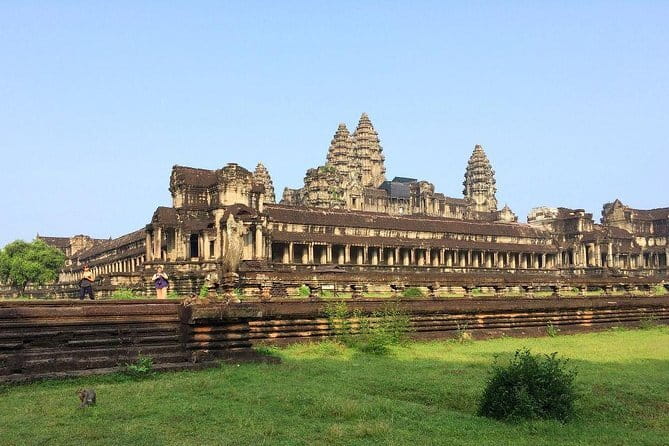
Day two is the hardest morning and probably the most memorable. You leave your hotel before dawn to watch sunrise at Angkor Wat. The plan calls for entering in darkness with a torch and approaching through the less-visited eastern side before the main light arrives.
This is a smart way to see Angkor Wat. You first experience the temple as a silhouette and a series of shadowed corridors, then watch its towers and galleries take shape. The three-hour visit gives you time for more than a quick sunrise stop.
You should prepare for the early start. The tour includes bottled water and a cool towel, but breakfast is not included. After Angkor Wat, you stop at a Khmer local restaurant for breakfast and a short rest. You choose and pay for your meal, so carry some spending money.
The sunrise comes with a practical compromise: crowds are possible at the popular viewing areas, and the early hour can be tiring. Still, the chance to see the temple change from darkness to daylight is a strong reason to choose this tour over a standard late-morning visit.
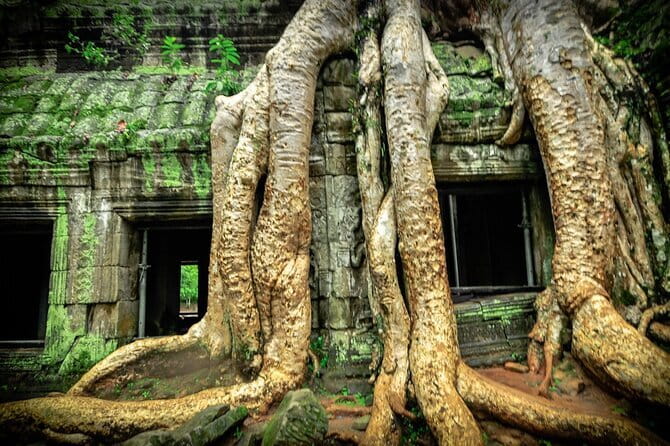
After the break, you visit Ta Prohm for about an hour. This is the jungle-enveloped temple made famous by its mix of stone ruins and large tree roots. It is one of the easiest Angkor sites to recognize, but it deserves more than a quick photo stop.
Ta Prohm works best when you pay attention to the way the temple has been overtaken by vegetation. The roots and broken galleries create a moody setting, while the surviving carvings show how much of the original structure remains. Since the visit lasts one hour, follow Sak’s route and avoid getting stuck at the first dramatic doorway.
The morning continues at the eastern gate of Angkor Thom. The stop is brief, about 20 minutes, so think of it as an introduction to the walled city rather than a full exploration. It helps place the next visit, Bayon, within the larger Angkor Thom complex.
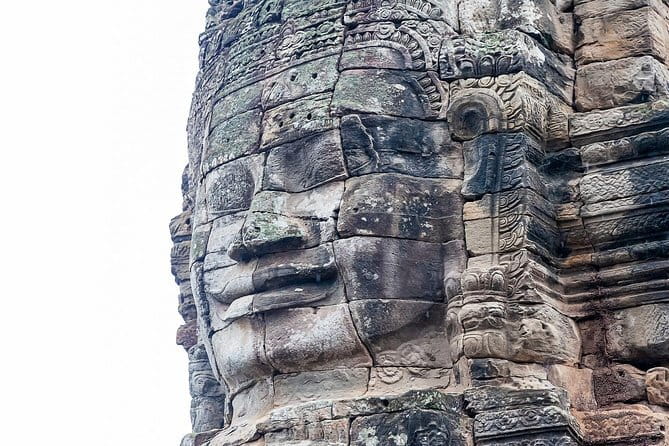
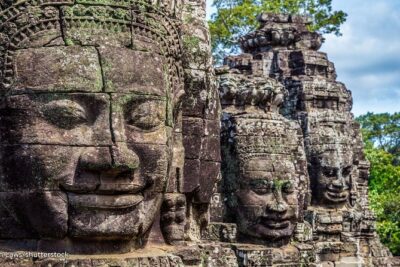
Bayon is the day’s final temple and gets about an hour. Its central towers carry more than 200 enormous carved faces, creating one of Angkor’s most unusual sights. From a distance, the temple can look like a pile of stone towers. Inside, the faces appear from different angles and levels, making the visit far more rewarding with guidance.
This is where Sak’s temple knowledge should be most useful. Bayon’s layout can feel confusing, and the carvings reward explanation. Ask him about the faces, the temple’s Buddhist character, and how Bayon differs from the Hindu temples visited on the first day.
The second day covers a lot before lunch. You should expect walking, uneven temple surfaces, heat, and an early alarm. In return, you get the tour’s strongest concentration of major Angkor sights.
Day three: Kampong Phluk and life on Tonle Sap
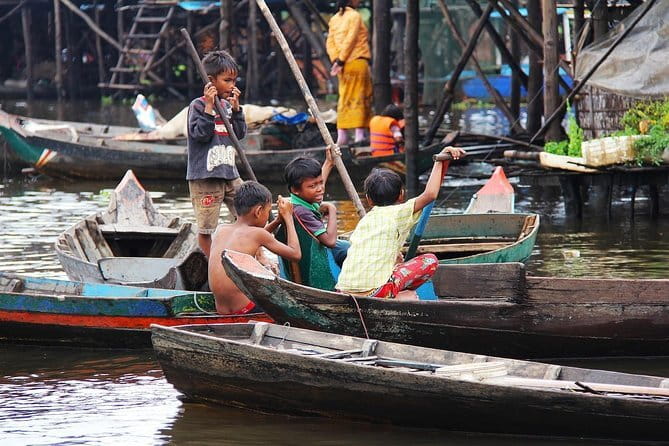
The final day leaves the temples behind and heads through the countryside toward Tonle Sap Lake. The destination is Kampong Phluk, a group of three fishing villages, reached by boat.
The boat trip takes about four hours, including the journey to the villages and the time on the water. This makes the third day feel different from the first two. Instead of studying stone carvings and temple plans, you see a water-based way of life connected to one of the world’s largest freshwater lakes.
The Tonle Sap visit is included in the tour price, including the entrance fee and boat cruise. That is useful because it avoids one more payment on the day. The boat ride also gives you a slower morning after two demanding temple days.
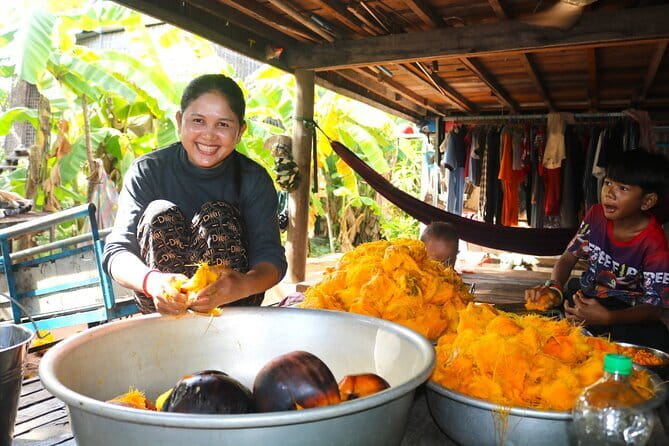
Kampong Phluk is not simply a scenic add-on. It connects Siem Reap’s famous monuments with present-day Cambodia. Fishing villages, boats, and the changing relationship between land and water help you see a part of local life that temple visits cannot provide.
The details supplied do not promise a specific boat type, meal, or village activity beyond the cruise. Keep your expectations focused on the boat journey and village setting rather than a staged cultural show. The countryside drive is part of the experience too, giving you a look beyond the central tourist area.
More multi-day trips from Siem Reap:
- Siem Reap: Angkor Wat 2-Day Tour with Sunrise and Sunset
★ 4.9 · 4,429 reviews - Angkor 2-Day Sunset & Sunrise Small-Group Tour
★ 5.0 · 2,567 reviews - 2 Days Exclusive Temple Highlights with Sunset and Sunrise Tour
★ 5.0 · 1,157 reviews - Siem Reap: Angkor Sunrise 1- or 2-Day Guided Temples Tour
★ 4.9 · 1,132 reviews
What the $79 price really covers
At $79 per person, the tour price is appealing for three days of transport, guiding, sunrise and sunset experiences, and a Tonle Sap cruise. You also receive hotel pickup and drop-off, an air-conditioned vehicle, bottled water, a cool towel, and the English-speaking guide.
The important catch is the temple pass. It costs $62 per person and is paid directly to the site. Add that to the tour price and your basic cost reaches $141 before meals.
That total can still be fair if you want a planned route and a guide who explains what you are seeing. A private car and private guide would normally offer more flexibility, but this small-group option keeps the cost lower. The value is strongest if you use the included transport and commentary instead of treating the tour as simple taxi service.
Meals are extra, including breakfast after the sunrise visit. Plan for food costs across the three days, and remember that the itinerary includes an early morning when you may want something to eat before leaving your hotel.
A Cambodia Phare circus ticket in Seat C is also included during the dry season. The schedule details do not specify which evening it takes place, so confirm that with the operator. It adds a cultural performance to a tour already built around temples and local life.
Who should book this Angkor Wat tour
I would choose this tour if you are visiting Siem Reap for the first time and want the major Angkor sights arranged in a sensible order. It suits you especially well if you value explanation, do not want to negotiate daily transport, and like the idea of adding Tonle Sap without arranging a separate excursion.
It also fits couples, friends, and families who can handle early starts and several hours of walking. The group limit of 15 keeps the experience more personal than a large bus outing, while the air-conditioned vehicle gives you a break between temples.
You may want another option if you want to set your own pace at every temple. The schedule is full, and Banteay Srei requires a longer drive. It may also be a poor match if sunrise alarms, warm weather, and uneven temple paths sound unpleasant.
Sak and Mao are worth noting when you book. Sak is the named guide, with strong English and detailed temple and cultural knowledge, while Mao drives. That guide-driver pairing is one of the practical strengths of the experience.
My booking advice
Book this tour if you want a broad first look at Siem Reap rather than a narrow Angkor Wat visit. You will see the essential temples, several less obvious sites, sunrise, a sunset experience, and Tonle Sap in one organized plan.
Before paying, budget for the $62 temple pass, meals, and any extras. Also confirm the sunset location and the timing of the Phare circus ticket. If those costs and the pre-dawn start suit you, the tour offers a well-rounded route with useful guiding and a manageable group size.
Free cancellation is available when you cancel at least 24 hours before the start time. Changes or cancellations inside that window are not accepted for a refund.
FAQ
How long does the tour last?
The experience lasts approximately three days, described as two and a half days of temple visits and Tonle Sap sightseeing.
Is hotel pickup included?
Yes. Hotel pickup and drop-off are included, with the listed start time at 8:00 a.m. The Angkor Wat sunrise visit requires a pre-dawn departure.
Is the Angkor temple pass included?
No. The temple pass must be paid directly to the site and costs $62 per person.
Is the Tonle Sap boat ride included?
Yes. The Tonle Sap entrance fee and boat cruise to Kampong Phluk are included.
Are meals included?
No. Meals are not included, though breakfast is planned at a Khmer local restaurant after the Angkor Wat sunrise visit.
How large is the tour group?
The tour has a maximum of 15 people.
More Angkor Wat tours in Siem Reap
- Angkor Wat Sunrise or Sunset Tour with Guide from Siem Reap
★ 5.0 · 12,109 reviews - Siem Reap: Angkor Wat: Small-Group Sunrise or Sunset Tour
★ 5.0 · 9,444 reviews - Siem Reap: Full-Day Angkor Wat Guided Tour with Sunset
★ 4.9 · 3,803 reviews - Angkor Wat Sunrise tour with Small – Group and Guide tours
★ 5.0 · 3,655 reviews
Just added around Siem Reap
- Ultimate Sunrise to Angkor Wat, Angkor Thom and Bayon Temple★ 5.0 · 3 reviews
- Full-Day Private Tour of Angkor Wat with Pick Up★ 5.0 · 12 reviews
- Trekking Tour at Phnom Kulen National Park from Siem Reap★ 5.0 · 3 reviews
- Twilight Tastes of Siem Reap Include Dinner★ 5.0 · 13 reviews
- Siem Reap City Tour with War Museum and Killing Field★ 5.0 · 27 reviews
- Private Day Trip to Angkor Temples with Expert Guide★ 5.0 · 4 reviews
- Waterfall & River of 1000 Siva Linga- Kulen Mountain Private Tour★ 5.0 · 3 reviews
- Private Two Days Siem Reap Temples Discovery Guided Tour★ 5.0 · 7 reviews
Angkor Wat Tours, compared.
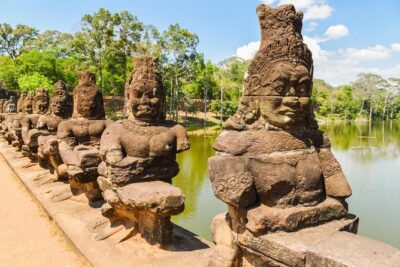
Angkor Wat Sunrise or Sunset Tour with Guide from Siem Reap
Read our review →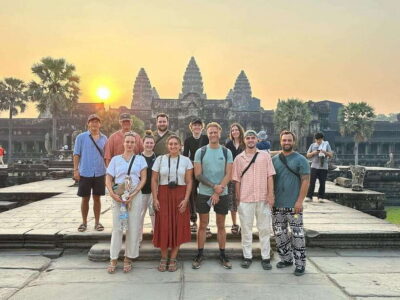
Angkor Wat: Small-Group Sunrise or Sunset Tour
Read our review →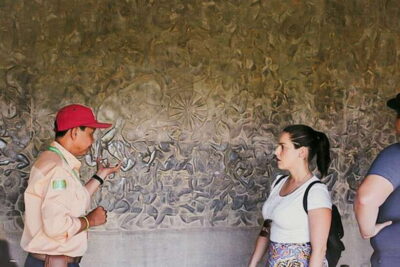
Angkor Wat 2-Day Tour with Sunrise and Sunset
Read our review →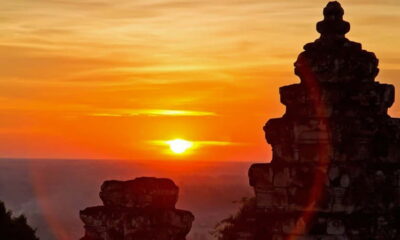
Angkor Wat Sunrise tour with Small – Group and Guide tours
Read our review →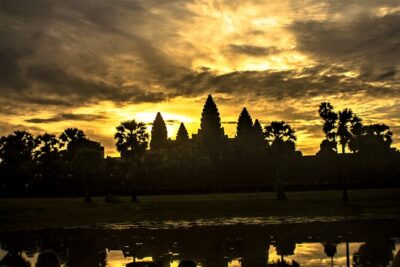
Angkor Wat Highlights and Sunrise Guided Tour from Siem Reap
Read our review →
Angkor Wat Sunset Small Group Tour with Lunch Included
Read our review →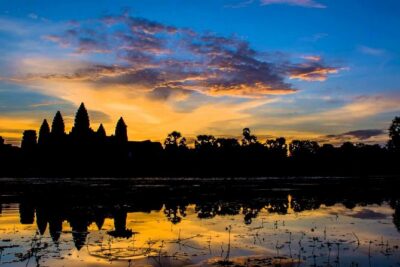
Full-Day Angkor Wat Sunrise Private Tour with Guide from Siem Reap
Read our review →Browse the lists this tour appears in