
Reviewed · BENG MEALEA TEMPLE TOURS
4-Day All Major Temples & Kulen mountain & Koh Ker & Beng Mealea
Angkor Wat is only the beginning here. This four-day private tour reaches the famous temples, quiet jungle ruins, a waterfall at Phnom Kulen, and the remote pyramid of Koh Ker. I like the mix of major sights and less-visited places, and I like having a dedicated guide to explain what you are looking at instead of simply being dropped at the entrance.
I also like the private air-conditioned vehicle, especially on the long drives to Kulen and Koh Ker. Guides including Vanna and Sam have been praised for their history knowledge, humor, and care, while driver Pat has handled the demanding road days well. The main drawback is the pace: early starts, long distances, steep temple steps, heat, and several hours on the road make this a serious sightseeing trip, not a gentle holiday.
Key points at a glance
- Angkor Wat gets two appearances: You visit the temple complex on the first day and return for a 5:00am sunrise start on Day 3.
- Phnom Kulen adds a change of pace: See the River of a Thousand Lingas and swim at a waterfall after a long drive from Siem Reap.
- Koh Ker is the farthest outing: The former Khmer capital lies more than 150 kilometers northeast of Siem Reap.
- Beng Mealea brings the jungle atmosphere: Its collapsed stone corridors and tree growth feel very different from restored Angkor sites.
- Your transport is private: The price includes an air-conditioned vehicle, driver, licensed English-speaking guide, water, towels, parking, and road tolls.
- Tickets are extra: Budget $72 for the Angkor and other temple pass, $20 for Phnom Kulen, and $15 for Koh Ker, plus lunches.
Why this four-day route is different
Many Siem Reap tours stay inside the main Angkor circuit. This one covers that essential ground, then pushes outward into rural Cambodia. You see the famous faces of Bayon and the tree roots of Ta Prohm, but you also reach Ta Nei, Kulen, Koh Ker, and Beng Mealea, places that give you a wider sense of the Khmer world.
I especially like the balance between grand monuments and smaller stops. Angkor Wat can feel almost too important to take in at once. A quiet temple such as Ta Nei gives you room to slow down. Beng Mealea shows what a large temple looks like when nature and time have had more influence than restoration.
The private format matters. You are not tied to a large group’s every pause, and your guide can explain carvings, royal stories, and religious ideas as you move between sites. The schedule is still set out in advance, but a private vehicle makes the long days more manageable.
The tradeoff is simple: this is a lot of Cambodia in four days. The itinerary includes many stops, some of them brief. If you prefer one or two temples per day with long café breaks, this will feel rushed. If you want to make the most of a short Siem Reap stay, the packed plan has real value.
More Koh Ker tours in Siem Reap:
- Koh Ker Temple Group & Beng Mealea Full-Day Join-in Tour
★ 5.0 · 710 reviews - From Siem Reap: Koh Ker and Beng Mealea Temples Tour
★ 4.9 · 293 reviews - Preah Vihear: Full-Day Preah Vihear and Koh Ker Temple Tour
★ 4.9 · 263 reviews
Day 1: Angkor Wat, Ta Prohm, and the royal city
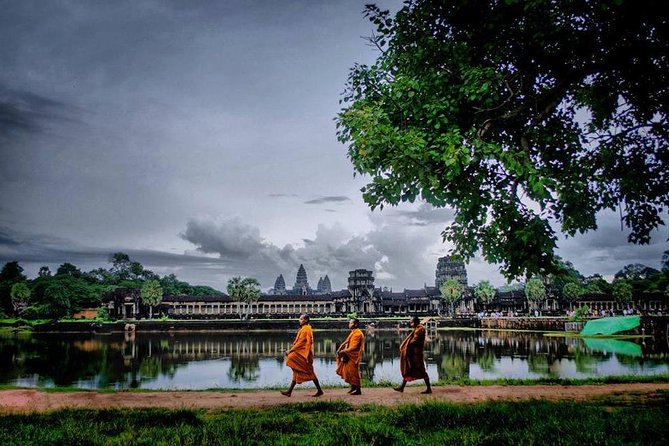
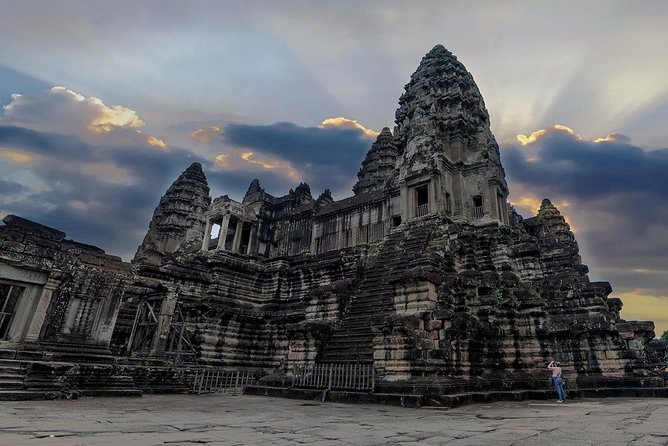
The first pickup is at 8:00am from your hotel or guest house. You stop to buy the temple pass before entering the Angkor area, and Angkor Wat receives roughly two and a half hours. That is enough time to see the major galleries and central features with a guide, though the temple is large enough to reward a return visit.
Angkor Wat was built as a Hindu temple and later used as a Buddhist site. Your guide can help you read the layout, bas-reliefs, towers, and changing religious symbols. Without that context, it is easy to spend the whole visit taking photographs and miss the ideas built into the stone.
Ta Prohm follows, with about two hours. This is the temple most associated with giant tree roots pushing over walls and galleries. The trees are not merely decoration. They show the constant tension between preservation and the natural world, a theme you will see again at Beng Mealea.
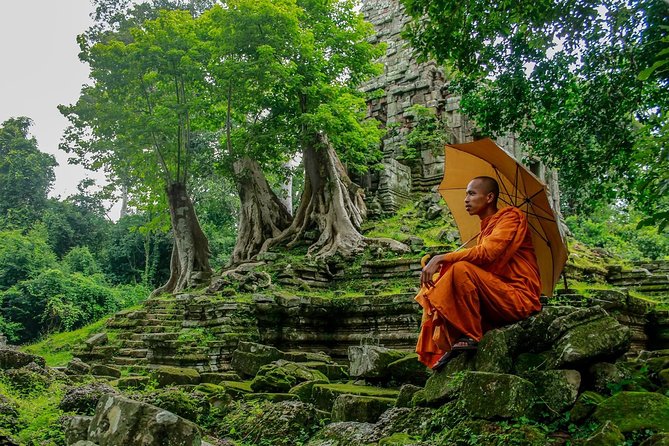
Ta Nei is a smart addition. It is smaller, less restored, and surrounded by trees, making it a quieter counterpoint to Ta Prohm. I would use this stop to ask your guide questions and look closely at the unfinished or weathered stone rather than racing after another grand photograph.
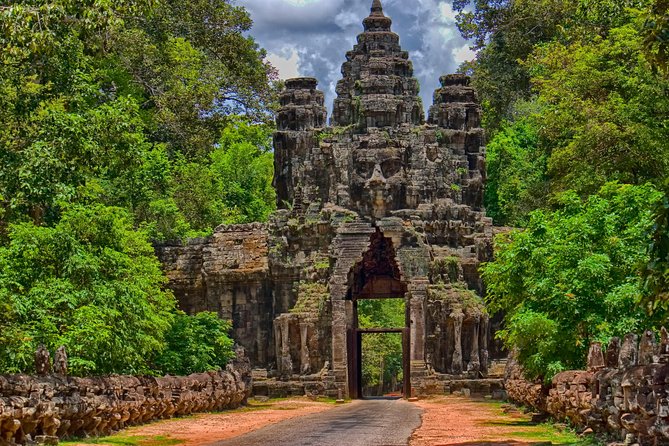
The route then enters Angkor Thom through the Victory Gate. The listed stop is short, mainly for photographs, before you continue to Bayon. Bayon is the emotional center of the day for many people, with towers carved with large faces linked to the bodhisattva Avalokitesvara. The itinerary describes 49 towers and 196 faces, though the exact count can depend on how the towers are counted and preserved.
After Bayon, you walk through the former royal city to Baphuon, Phimeanakas, and the terraces. Baphuon began as an 11th-century Hindu temple, while the large reclining Buddha at its rear was added in the 16th century. Phimeanakas is a smaller pyramid temple associated with the old royal enclosure.
The Terrace of the Elephants and Terrace of the Leper King are short stops, but they help explain how Angkor Thom functioned as a royal center. Elephants appear in the carvings, and the platforms served ceremonial and viewing purposes. You will not need a long visit at each, but together they round out the city’s story.
The day can finish at Phnom Bakheng for sunset. This requires climbing the hill and, because visitor numbers are limited, waiting may be part of the plan. You can skip the sunset if you do not want to spend time waiting. That flexibility is useful after a full day on your feet.
Day 2: Phnom Kulen, Banteay Srei, and rural temples
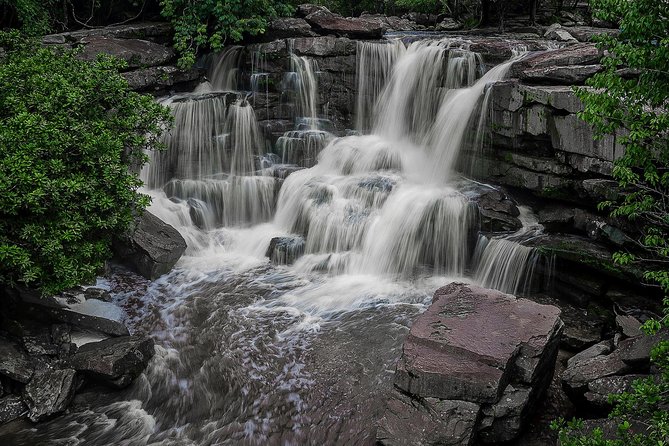
Day 2 reaches Phnom Kulen National Park, more than 60 kilometers from Angkor Park. The drive takes time, but the setting changes from temple circuit to forested mountain area. The main feature is the River of a Thousand Lingas, a riverbed carved with lingas associated with Shiva and Hindu religious practice.
Kulen is not simply another temple stop. It adds water, rock, and a chance to swim at a waterfall. After the first day’s long walk through monuments, this is a welcome change. Bring suitable clothing for swimming, since the tour specifically includes time at the waterfall.
The five-hour Kulen portion makes this the longest stop of the day, and the road distance is worth considering. You will spend much of the day away from central Siem Reap, so this outing suits you if you want a broader view of Cambodia rather than only the famous Angkor monuments.
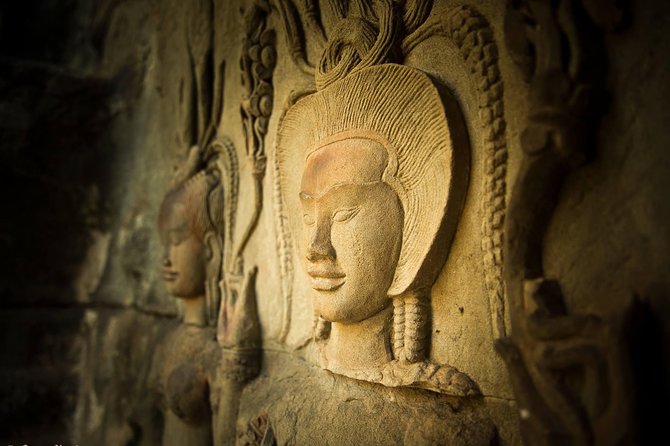
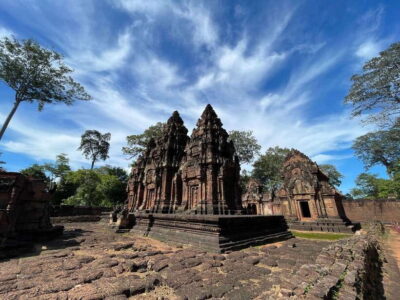
Banteay Srei follows. Built from pink sandstone in the 10th century, it is known for fine carvings and a smaller scale than Angkor Wat. The details are the point here. Give yourself time to look at doorways, figures, and decorative bands rather than treating it as a quick photo stop.
Banteay Samre receives about 45 minutes. Its design is often compared with Angkor Wat, but it feels more compact and enclosed. Pre Rup finishes the temple portion of the day, with a half-hour visit to this 10th-century temple mountain associated with Hindu worship and funeral traditions.
The day includes several different kinds of sites: sacred river carvings, a waterfall, delicate sandstone work, a larger walled temple, and a brick-and-stone temple mountain. That variety is one of the route’s strengths. The drawback is the amount of driving, so expect a long day even though the listed stops are carefully timed.
Day 3: Sunrise and the temples of the eastern circuit
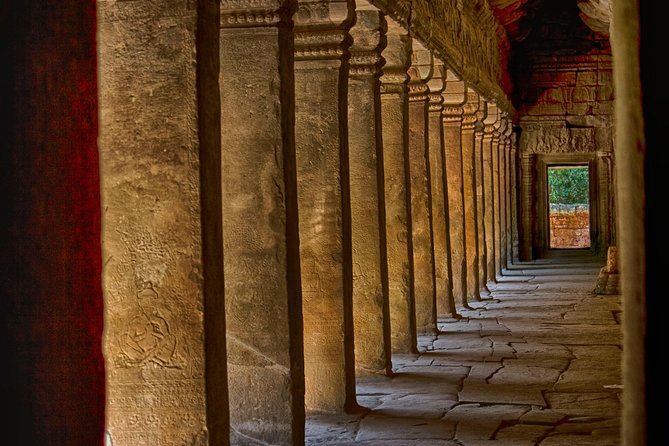
The third day begins at 5:00am for sunrise at Angkor Wat. Early starts are not for everyone, but seeing the temple before the heat builds gives you a cooler and quieter beginning. Sunrise conditions can change, so treat the early departure as a chance to see Angkor in a different mood rather than a guarantee of a perfect sky.
After breakfast, you return to the temples for Preah Khan. This large Buddhist complex was built by King Jayavarman VII and dedicated to his father. Its corridors, courtyards, and carved details take about an hour, and the scale helps you understand how much activity once filled the Angkor area.
Neak Pean is a small island temple set in the middle of a former reservoir. The water-centered design makes it different from the pyramid temples and long galleries elsewhere on the route. Ta Som follows, a smaller Buddhist temple on the eastern side of Neak Pean. Its modest scale makes a half-hour visit feel appropriate.
Eastern Mebon is larger and more imposing, rising in three levels with five towers and elephant statues at the corners. The elephants are a useful detail to seek out, especially after your guide has explained the temple’s design and purpose.
The afternoon continues to the Roluos group, where you see the early Khmer temples of Lolei, Preah Ko, and Bakong. Lolei is a small 9th-century Hindu temple. Preah Ko was the first temple built in Hariharalaya, an earlier Khmer capital. Bakong is the largest of the three and an important early sandstone temple mountain.
This sequence gives you a useful sense of development. You move from earlier Roluos monuments to later and more elaborate Angkor structures. I would pay close attention to how the building styles change, rather than judging each temple only by size.
The schedule includes lunch at a restaurant along the route, with food listed at about $5 per person depending on the menu. Lunch is not included, so keep cash available and remember that your guide can help with the timing, but not with the bill.
More Beng Mealea jungle temple tours in Siem Reap:
- Siem Reap: Kulen Mountain, Beng Mealea and Tonle Sap Tour
★ 5.0 · 1,483 reviews - Kulen Mountain with Beng Mealea and Tonle Sap Small Group Tour
★ 5.0 · 780 reviews - Banteay Srei, Kulen Waterfall & Beng Mealea Exploration
★ 5.0 · 185 reviews - Siem Reap: Kulen Waterfall, Banteay Srei, and Beng Mealea Tour
★ 5.0 · 148 reviews
Day 4: Koh Ker and the overgrown ruins of Beng Mealea
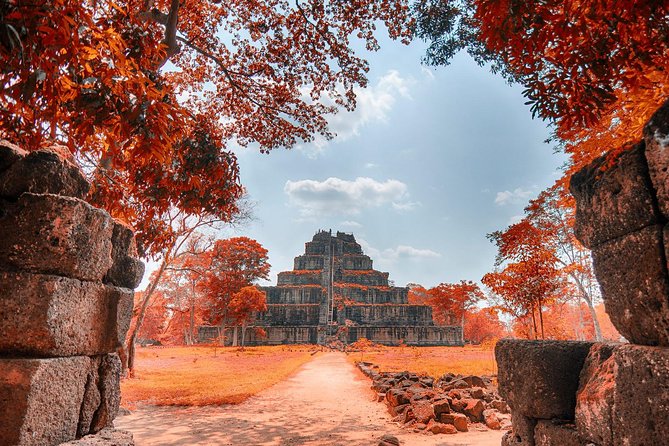
Day 4 is the hardest road day. Koh Ker lies more than 150 kilometers northeast of Siem Reap and served briefly as the Khmer capital between 928 and 944. The journey is a major part of the experience, so I would choose this day only if remote ruins matter to you.
Koh Ker gives you a different chapter of Khmer history. The group includes several temples, with about four hours allocated to the site. The short period when Koh Ker served as the capital makes it especially interesting, and the distance helps explain why it feels removed from the main Angkor circuit.
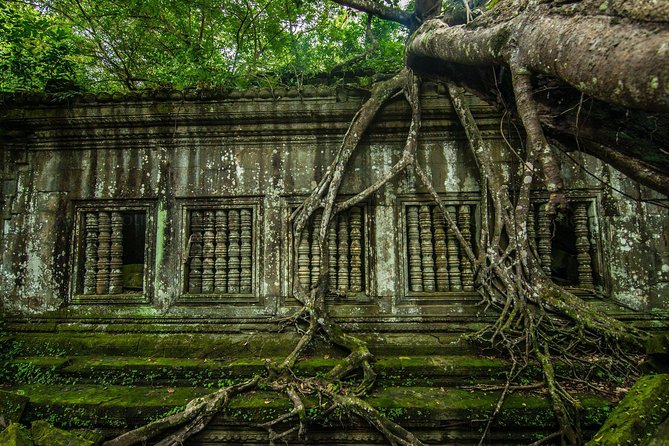
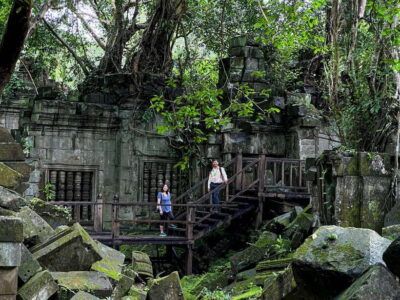
After Koh Ker, you visit Beng Mealea for about an hour and a half. This is one of the most atmospheric stops on the route, with collapsed stone, jungle growth, and a floor plan often compared with Angkor Wat. The appeal is not polished presentation. You are looking at a huge temple where broken galleries and vegetation remain central to the experience.
Beng Mealea can be physically awkward in places because the ruins are not presented like a tidy museum. Watch your footing and allow time to look beyond the first dramatic pile of stones. The temple is worth visiting for its sense of discovery, but it may not suit you if you need smooth paths and a slow, effortless walk.
The itinerary then lists Lolei, Preah Ko, and Bakong again, with shorter visits. Since those Roluos temples already appear on Day 3, confirm the exact plan with your guide before departure. The repeated listing may mean a return route, an itinerary variation, or a scheduling detail. Either way, the core value of Day 4 is Koh Ker and Beng Mealea.
What the $389.25 price really covers
The advertised price is $389.25 per person. It includes a private air-conditioned vehicle with driver, a licensed English-speaking guide, hotel pickup and return, drinking water, wet towels, parking fees, and road tolls.
The listed admission costs are extra:
- Angkor and other temple pass: $72 per person
- Phnom Kulen: $20 per person
- Koh Ker: $15 per person
- Lunches: about $5 per person, depending on the menu
That adds $107 in stated admission fees, bringing the known total to $496.25 per person before meals. Group discounts are offered, but no discount amount is given, so ask about the final price if you are booking for several people.
For a private four-day schedule with long-distance transport, the value is strongest if you plan to visit most of these sites anyway. You are paying for the vehicle, driver, guide, and planning as much as for the sightseeing itself. A cheaper short tour may cover Angkor Wat and Bayon, but it will not provide the same reach into Kulen and Koh Ker.
Who will enjoy it most
I would recommend this tour to you if you want a full Khmer temple program and prefer having one guide across several days. It is also a good fit for families or small groups who value a private vehicle and can share the cost.
It suits people who enjoy early mornings, rural drives, archaeology, and imperfect ruins. The guide can connect the temples to the Khmer Empire, while the driver handles the road between sites. Guides named Vanna and Sam have been praised for explaining history clearly and adding humor, and Pat has been praised as a careful driver on the long routes.
I would be more cautious if you dislike heat, stairs, long drives, or strict sightseeing days. Phnom Kulen is more than 60 kilometers from Angkor Park, and Koh Ker is more than 150 kilometers from Siem Reap. Those distances are not minor details. They are central to the shape of the trip.
The tour is described as suitable for most people, but no specific mobility information is provided. Ask the provider about current walking conditions if you have mobility concerns.
Should you book this Siem Reap temple tour?
Book it if you want the major Angkor sights plus the places that require more planning to reach. The strongest features are the private transport, the continuity of an English-speaking guide, the waterfall break at Kulen, and the remote feel of Koh Ker and Beng Mealea.
Choose a shorter Angkor tour instead if this is your first exposure to temple sightseeing and you prefer a slower pace. Four days of ruins can be thrilling, but it can also blur together if you do not enjoy history and long walks.
For the right person, this is a strong value at $389.25 before admissions and meals. Just budget for the extra tickets, prepare for the 5:00am sunrise morning and the long Koh Ker drive, and confirm the repeated Roluos stops on Day 4 before you set out.
FAQ
How long is the tour?
The experience lasts approximately four days, with pickup and return to your hotel or guest house.
Is this a private tour?
Yes. Only your group participates in the activity.
What type of transport is included?
A private air-conditioned vehicle with a driver is included.
Is an English-speaking guide included?
Yes. The tour includes a licensed English-speaking guide.
Are hotel pickups provided?
Yes. Pickup begins at your hotel or guest house, and the tour ends with drop-off at your hotel.
Are temple admission fees included?
No. Admission fees are paid separately. The stated costs are $72 for the Angkor and other temple pass, $20 for Phnom Kulen, and $15 for Koh Ker.
Does the tour include meals?
No. Lunches are not included. The listed estimate is about $5 per person, depending on the menu.
What time does the sunrise day begin?
The guide plans to meet you at 5:00am for the Angkor Wat sunrise visit on Day 3.
Can I skip the Phnom Bakheng sunset stop?
Yes. The schedule notes that you can skip the sunset if you do not want to wait for the limited visitor access.
What is included besides transport and guiding?
The tour includes cool drinking water, wet towels, parking fees, road tolls, hotel pickup, and hotel drop-off.
Can I cancel for a full refund?
You can cancel at least 24 hours before the experience start time for a full refund. Cancellations or changes made less than 24 hours in advance are not accepted for a refund.
More multi-day trips from Siem Reap
- Siem Reap: Angkor Wat 2-Day Tour with Sunrise and Sunset
★ 4.9 · 4,429 reviews - Angkor 2-Day Sunset & Sunrise Small-Group Tour
★ 5.0 · 2,567 reviews - 2 Days Exclusive Temple Highlights with Sunset and Sunrise Tour
★ 5.0 · 1,157 reviews - Siem Reap: Angkor Sunrise 1- or 2-Day Guided Temples Tour
★ 4.9 · 1,132 reviews
More Phnom Kulen waterfall trips in Siem Reap
- Kulen Waterfall Join-in Tour (local Picnic lunch)
★ 5.0 · 2,434 reviews - Kulen Mountain: Small-Group Tour and Picnic lunch
★ 4.9 · 1,802 reviews - Phnom Kulen Waterfall & the Sacred 1000 Lingas (with Lunch)
★ 4.8 · 974 reviews - Guided Small-Group Tour in Kulen Mountain Park Waterfall
★ 5.0 · 480 reviews
Just added around Siem Reap
- Ultimate Sunrise to Angkor Wat, Angkor Thom and Bayon Temple★ 5.0 · 3 reviews
- Full-Day Private Tour of Angkor Wat with Pick Up★ 5.0 · 12 reviews
- Trekking Tour at Phnom Kulen National Park from Siem Reap★ 5.0 · 3 reviews
- Twilight Tastes of Siem Reap Include Dinner★ 5.0 · 13 reviews
- Siem Reap City Tour with War Museum and Killing Field★ 5.0 · 27 reviews
- Private Day Trip to Angkor Temples with Expert Guide★ 5.0 · 4 reviews
- Waterfall & River of 1000 Siva Linga- Kulen Mountain Private Tour★ 5.0 · 3 reviews
- Angkor Wat Experience Temple Pass and Siem Reap Food Tour★ 5.0 · 13 reviews
Beng Mealea Temple Tours, compared.
Kulen Mountain, Beng Mealea and Tonle Sap Tour
Read our review →
Kulen Mountain with Beng Mealea and Tonle Sap Small Group Tour
Read our review →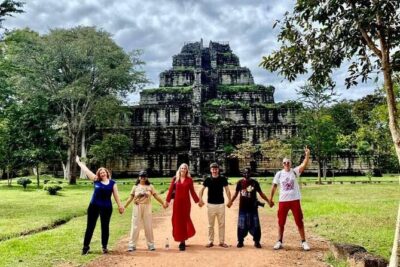
Koh Ker Temple Group & Beng Mealea Full-Day Join-in Tour
Read our review →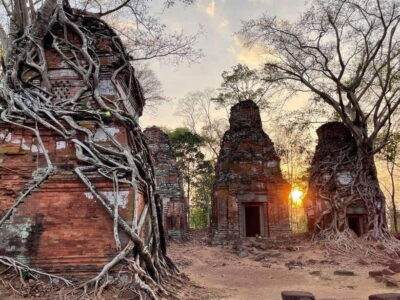
Banteay Srei, Kulen Waterfall & Beng Mealea Exploration
Read our review →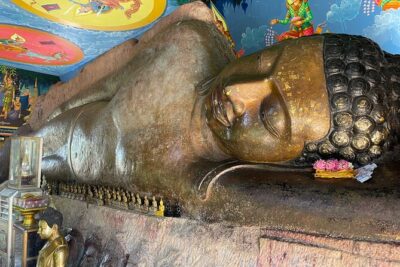
Kulen Waterfall, Banteay Srei, and Beng Mealea Tour
Read our review →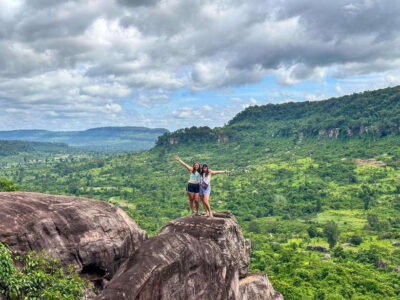
Banteay Srei, Beng Mealea and Kulen Mountain with Picnic
Read our review →
Private Beng Mealea and Floating Village Tour with Sunset
Read our review →Browse the lists this tour appears in