
Reviewed · ANGKOR WAT SUNRISE TOURS
2 Days Angkor temples with Sunrise & Sunset
Angkor is best seen with a plan, and this two-day private tour gives you one: tree-covered Ta Prohm, the massive gates of Angkor Thom, the fine pink carvings at Banteay Srei, and sunrise at Angkor Wat. The pace is brisk, but you cover a remarkable sweep of the ancient Khmer capital.
I like the private format, since your guide can adjust the day to your interests, and I like the air-conditioned transport and cold water, which matter in Cambodia’s heat. The drawback is the packed schedule: if you prefer long, quiet temple visits, 15 stops in two days may feel rushed.
At a glance: five things that matter
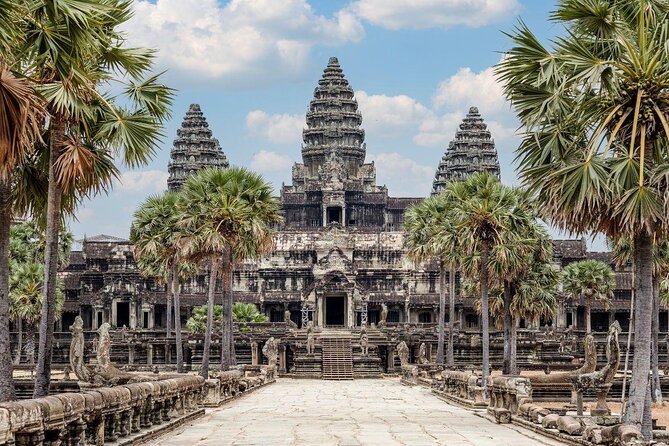
- Sunrise at Angkor Wat: The second day begins around 4:30 or 5:00 a.m., depending on the season.
- Banteay Srei adds something different: Its small scale and detailed pink sandstone carvings contrast with Angkor Wat’s huge galleries.
- The tour is private: Your group travels alone, with an English-speaking guide and an air-conditioned car, minivan, or minibus.
- The Angkor pass costs extra: Budget $62 per person for the required three-day pass, making the basic trip about $177 before meals.
- Sunset plans can change: The experience includes sunset at South Gate of Angkor Thom or Phnom Bakheng, so confirm the exact choice and timing.
- The route is ambitious: You see the major names plus quieter temples, but some visits last only 20 or 30 minutes.
Why this two-day route works
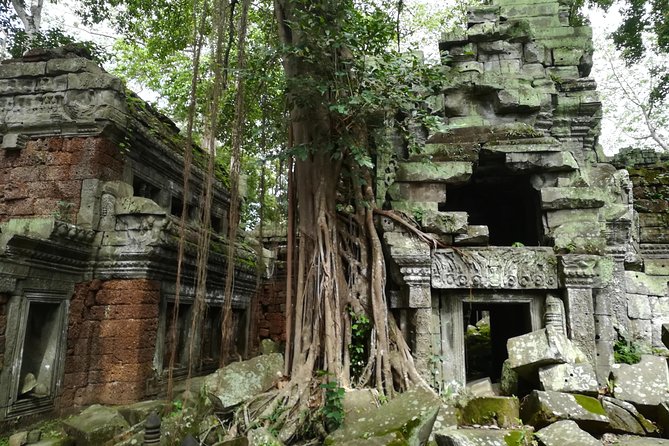
This experience is built for a short stay in Siem Reap. In two days, you see the best-known temples, several lesser-known sites, and both sunrise and sunset. That saves you from arranging separate rides or trying to guess which temples belong together.
The private setup is especially useful. The operator has guides such as Bunpheng, who is described as punctual, adaptable, good with photographs, and able to explain Cambodian history and culture. You are not tied to a large group’s pace, so your guide can spend more time at a favorite temple or move on when the heat becomes tiring.
Still, this is not a slow, reflective tour. Day 1 includes five temple areas and sunset. Day 2 starts before dawn and continues through eight more stops. You will see a lot, but you should expect a sightseeing marathon rather than two leisurely mornings.
More multi-day trips from Siem Reap:
- Siem Reap: Angkor Wat 2-Day Tour with Sunrise and Sunset
★ 4.9 · 4,429 reviews - Angkor 2-Day Sunset & Sunrise Small-Group Tour
★ 5.0 · 2,567 reviews - 2 Days Exclusive Temple Highlights with Sunset and Sunrise Tour
★ 5.0 · 1,157 reviews
Day one: brick towers, jungle roots, and Angkor Thom
Prasat Kravan, a small start with unusual brick carvings
Prasat Kravan is a compact 10th-century temple made of five reddish brick towers on a raised terrace. Its original Sanskrit name is unknown, while Prasat Kravan is the modern Khmer name.
The stop lasts about 20 minutes. That is enough to see the layout and notice the brickwork, but not enough for a long visit. It works well as an opening stop because the temple is much smaller than what follows, giving you an early look at the range of Khmer architecture.
Admission is not included, and the Angkor pass is required for each visitor.
Banteay Kdei, a quieter Buddhist complex
Banteay Kdei means Citadel of Chambers. Built in the late 12th or early 13th century under King Jayavarman VII, it was a Buddhist temple with a maze-like plan and many enclosed passages.
Allow about 40 minutes. The name gives you a useful clue: this is a temple of halls, doorways, and chambers rather than one single dramatic tower. It can feel more atmospheric than monumental, especially beside larger royal complexes.
The uneven stone and multiple passages call for sensible shoes. Admission is not included.
More sunrise tours in Siem Reap:
- Angkor Wat Sunrise or Sunset Tour with Guide from Siem Reap
★ 5.0 · 12,109 reviews - Siem Reap: Angkor Wat: Small-Group Sunrise or Sunset Tour
★ 5.0 · 9,444 reviews - Angkor Wat Sunrise tour with Small – Group and Guide tours
★ 5.0 · 3,655 reviews - Angkor Wat Highlights and Sunrise Guided Tour from Siem Reap
★ 5.0 · 3,213 reviews
Ta Prohm, the tour’s most cinematic stop
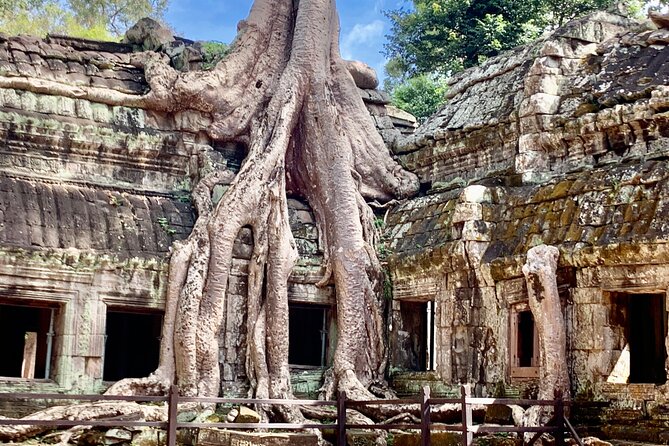
Ta Prohm is the temple most associated with tree roots curling over ancient stone. Built in the Bayon style in the late 12th and early 13th centuries, it began as a Buddhist monastery and university under Jayavarman VII.
The one-hour visit gives you time to see the famous root-covered sections and look beyond the most photographed corners. The temple’s power comes from the tension between architecture and forest. Roots press over walls, doorways frame broken galleries, and the whole site feels less controlled than Angkor Wat.
This is also one of the busiest stops on the route. Your private guide can help you understand what you are seeing, but the schedule cannot guarantee solitude. Admission is not included.
Ta Keo, an unfinished mountain of stone
Ta Keo was begun around 975 as the state temple of Jayavarman V. It was never completed, which gives the site a different character from temples covered in finished carvings.
You spend about 30 minutes here. The unfinished surfaces make the construction process easier to imagine, while the stepped design shows how Khmer temple mountains were meant to rise above the surrounding area. If climbing is difficult, ask your guide about the route before setting off, since the temple’s form includes steep sections.
Admission is not included.
Angkor Thom, a city rather than one temple
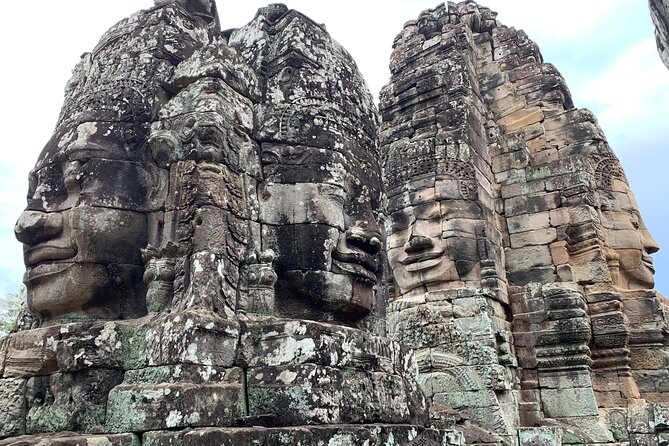
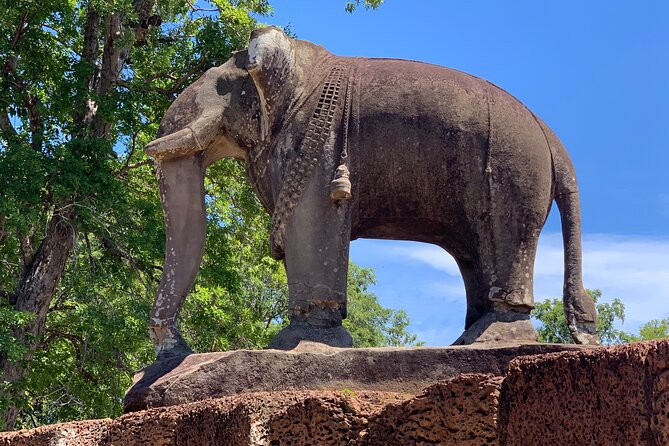
Angkor Thom was the ancient capital of the Khmer Empire, and two hours are assigned here. That longer visit is necessary because Angkor Thom contains several major sights: the South Gate, Bayon, the Royal Palace area, the Terrace of the Elephants, and the Terrace of the Leper King.
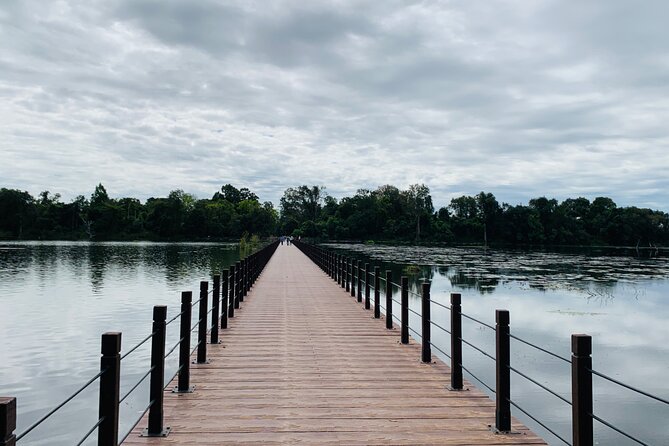
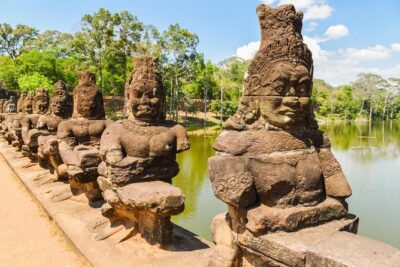
The South Gate gives you one of Angkor’s most memorable entrances, with a bridge lined by sculpted figures. Bayon is known for its large serene faces carved into towers. The terraces are more open and ceremonial, offering a useful change after the narrow corridors of Ta Prohm and Banteay Kdei.
Do not treat Angkor Thom as a single quick photo stop. It is a broad royal center, and the two-hour block is one of the more valuable parts of the first day. Admission is not included.
Phnom Bakheng, a sunset finish with a practical warning
Phnom Bakheng is a temple mountain dedicated to Shiva, built by King Yasovarman near the end of the ninth century. Phnom means hill or mountain, and the temple sits above the surrounding area.
The planned visit lasts about 40 minutes. The tour description also allows sunset at the South Gate of Angkor Thom, so your exact sunset location may depend on conditions, timing, and the operator’s plan. Confirm this before the day begins.
Sunset stops can be tiring after a full day of temples. Bring water, wear clothing that covers your shoulders and thighs, and expect the final stop to be popular. If you prefer more time at the temples instead of waiting for sunset, tell your guide early.
Day two: sunrise, pink sandstone, and quieter temples
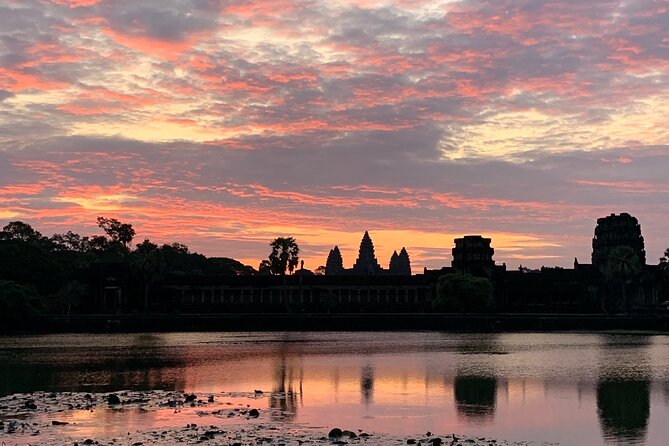
Angkor Wat at sunrise and afterward
The second day starts around 4:30 or 5:00 a.m., depending on the season. The early departure is the price of seeing sunrise at Angkor Wat, so arrange your evening with that wake-up call in mind.
After sunrise, you spend about three hours at Angkor Wat itself. That is the right amount of time for a first visit because the complex is vast. You can move from the reflecting pools and central towers to the long galleries and detailed bas-reliefs without treating the temple as a quick stop.
Angkor Wat is the largest religious monument in the world, and its scale can be hard to grasp until you walk through it. The surrounding moat, long approach, galleries, and towers unfold in stages. Your guide is useful here, especially for explaining the temple’s Hindu origins, later Buddhist use, and the scenes carved into the walls.
The morning start also helps with heat, but sunrise is not guaranteed to produce dramatic colors. Go for the experience of seeing the temple change as daylight arrives, not only for a perfect photograph.
Pre Rup and the East Mebon mix-up
The schedule names Pre Rup at one point, but the description refers to East Mebon. East Mebon appears again later as a separate stop. This is worth clarifying with Angkor Doors before departure, because Pre Rup and East Mebon are different temples.
Pre Rup is a 10th-century temple mountain with a strong brick form and broad upper levels. East Mebon is another 10th-century example of early Khmer architecture, built on what was once an island in a reservoir. Both fit naturally into a grand circuit of eastern temples, but you should confirm which one is intended in the first slot.
Banteay Srei, the finest detail of the trip
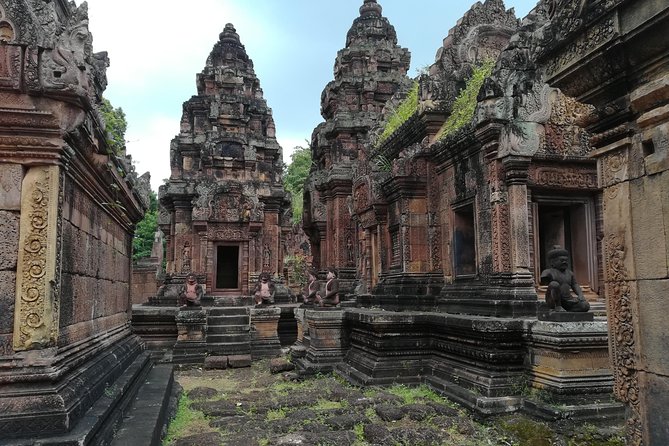
Banteay Srei means Citadel of the Women. It is smaller than Angkor Wat and was built from pink sandstone, but its delicate carvings make it one of the most distinctive temples in the area.
You have about an hour here. Look closely at the lintels, pediments, guardians, and floral patterns. The scale allows you to appreciate details that can get lost in Angkor Wat’s vast galleries. The claim that women carved the temple is part of its popular story, but the more useful point is the exceptional precision of the stonework.
Banteay Srei is farther from the central temple group, so the stop adds driving time. That is a fair trade if you care about sculpture and want more than the famous central monuments. The supplied details list admission here as free, while also stating that every visitor needs a three-day Angkor pass. Confirm how the pass applies when booking.
Banteay Samre, a compact Hindu temple
Banteay Samre was built in the early 12th century under Suryavarman II and Yasovarman II and dedicated to Vishnu. It is often compared with a smaller Angkor Wat because of its layout and Hindu design.
The visit lasts about 40 minutes. After Banteay Srei’s fine pink carvings, Banteay Samre gives you a more enclosed, fortress-like experience. It is a useful comparison stop: you can see how different temple designs express similar religious and royal ideas.
Admission is not included.
East Mebon, an early Khmer example
East Mebon is listed as a 20-minute stop and is described as a good example of 10th-century Khmer architecture. It once stood on an island in a large reservoir, so its original setting was closely tied to water management as well as religion.
The short visit suits the temple’s compact scale. You will not have time for a lengthy architectural study, but your guide can point out the major features and explain how the reservoir shaped the site.
Admission is not included.
Ta Som, a modest temple with a strong mood
Ta Som was built by Jayavarman VII in the late 12th century and dedicated to Lokesvara Buddha. The planned visit is about 20 minutes.
Ta Som is smaller than Ta Prohm, but that is part of its appeal. You can see the same broad period and Buddhist connection in a less grand setting. The short stop makes it best for a quick walk and a few close looks at the stonework, not for a long exploration.
Admission is not included.
Neak Pean, a temple on an artificial island
Neak Pean means Entwined Serpents. This 12th-century Buddhist temple was built by Jayavarman VII on a man-made island in a man-made lake.
The route gives you about 30 minutes here. The approach and water setting make Neak Pean different from the temple mountains and enclosed galleries elsewhere. You are seeing a religious site designed as part of a larger water complex, not simply another towered monument.
Admission is not included.
Preah Khan, a fitting final temple
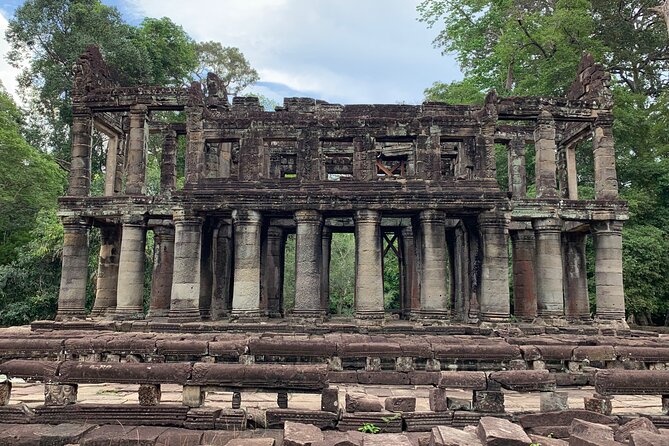
Preah Khan translates as Royal Sword. Built in the 12th century by Jayavarman VII and dedicated to his late father, it lies about one kilometer north of Angkor Thom.
The 50-minute visit is long enough to appreciate its scale without adding another exhausting two-hour stop. Preah Khan has long corridors, courtyards, and a layered plan that rewards moving slowly where the schedule allows. It is a strong final temple because it brings together the route’s main themes: Buddhism, royal power, stone galleries, and a complex relationship with the surrounding forest.
Admission is not included.
What the $115 price really covers
The tour costs $115 per person, but the required three-day Angkor pass adds $62 per person. That puts the known temple-and-tour cost at about $177 each before food and drinks.
For that amount, you receive an English-speaking guide, transportation in an air-conditioned car, minivan, or minibus, and cold bottled water. Accommodation and meals are not included. The private format improves the value if you are traveling with family or friends, since the vehicle and guide serve only your group.
The price is less attractive for a solo visitor focused only on Angkor Wat and Ta Prohm. It makes more sense if you want Banteay Srei, the eastern temples, sunrise, sunset, and a guide who can adjust the pace.
Clothing, timing, and comfort
Temple dress rules are strict. You must cover your thighs and shoulders, or you may be refused entry. Pack light, breathable clothing that meets those rules from the first pickup through the final temple.
The published start time is 9:00 a.m., but the sunrise departure is around 4:30 or 5:00 a.m. This appears to refer to different tour timing, so confirm your actual pickup time before the first day. The same applies to the sunset location and the Pre Rup or East Mebon sequence.
Free cancellation is available until 24 hours before the experience starts. Changes or cancellations inside that period are not accepted for a refund.
Who should book this experience
I would choose this tour if you have only two days in Siem Reap and want the major temples plus several less familiar sites. It also suits couples, families, and small private groups who value an adjustable schedule and do not want to share a vehicle.
It is less suitable if you dislike early mornings, want long breaks, or prefer to study one temple in depth. The route is physically demanding mainly because of the heat, walking, stairs, and early start, even though most people can participate.
Should you book it?
Book this tour if your priority is coverage. You will see Angkor Wat at sunrise, Ta Prohm, Angkor Thom, Banteay Srei, Preah Khan, and a useful set of smaller temples in only two days.
Before paying, confirm four points: your real pickup time, the sunset location, whether Pre Rup is included or replaced by East Mebon, and how the Angkor pass applies at Banteay Srei. If those details are clear, the private guide, air-conditioned transport, and broad temple route make this a practical choice for a short Siem Reap stay.
FAQ
How long is the Angkor temple tour?
The experience lasts approximately two days.
Is the tour private?
Yes. Only your group participates in the activity.
What transportation is provided?
Transportation is provided in an air-conditioned car, minivan, or minibus.
Is an English-speaking guide included?
Yes. An English-speaking tour guide is included. The operator has guides such as Bunpheng.
Is the Angkor entrance pass included?
No. A three-day Angkor pass is listed separately at $62 per person.
How early does the sunrise day begin?
The sunrise departure begins around 4:30 or 5:00 a.m., depending on the season.
Is food included?
No. Food and drinks are not included, although cold drinking water is provided.
Is accommodation included?
No. Accommodation is not included.
What should I wear to the temples?
You must cover your thighs and shoulders. Visitors who do not meet the dress code may be refused entry.
Can I cancel for a full refund?
Yes, if you cancel at least 24 hours before the experience start time. Cancellations or changes made less than 24 hours in advance are not accepted for a refund.
More Angkor Wat tours in Siem Reap
- Siem Reap: Full-Day Angkor Wat Guided Tour with Sunset
★ 4.9 · 3,803 reviews - Angkor Wat Sunset Small Group Tour with Lunch Included
★ 5.0 · 3,059 reviews - Full-Day Angkor Wat Sunrise Private Tour with Guide from Siem Reap
★ 5.0 · 2,920 reviews - Angkor Wat Sunrise & 3 Main Temples with Breakfast – Small Group
★ 5.0 · 2,857 reviews
Just added around Siem Reap
- Ultimate Sunrise to Angkor Wat, Angkor Thom and Bayon Temple★ 5.0 · 3 reviews
- Full-Day Private Tour of Angkor Wat with Pick Up★ 5.0 · 12 reviews
- Trekking Tour at Phnom Kulen National Park from Siem Reap★ 5.0 · 3 reviews
- Twilight Tastes of Siem Reap Include Dinner★ 5.0 · 13 reviews
- Waterfall & River of 1000 Siva Linga- Kulen Mountain Private Tour★ 5.0 · 3 reviews
- Siem Reap City Tour with War Museum and Killing Field★ 5.0 · 27 reviews
- Private Day Trip to Angkor Temples with Expert Guide★ 5.0 · 4 reviews
- Private Two Days Siem Reap Temples Discovery Guided Tour★ 5.0 · 7 reviews
Angkor Wat Sunrise Tours, compared.
Angkor Wat Sunrise or Sunset Tour with Guide from Siem Reap
Read our review →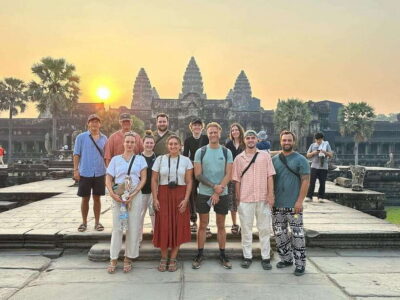
Angkor Wat: Small-Group Sunrise or Sunset Tour
Read our review →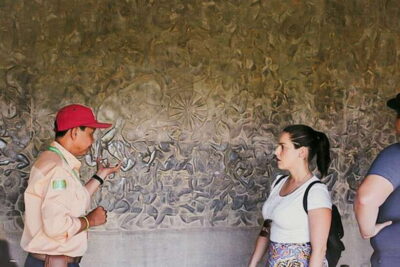
Angkor Wat 2-Day Tour with Sunrise and Sunset
Read our review →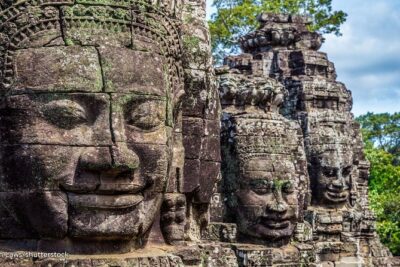
Angkor Wat Sunrise tour with Small – Group and Guide tours
Read our review →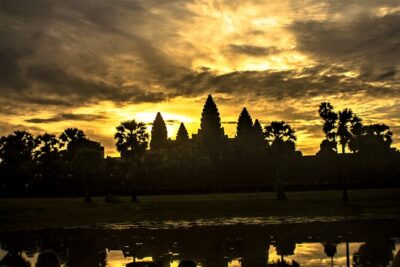
Angkor Wat Highlights and Sunrise Guided Tour from Siem Reap
Read our review →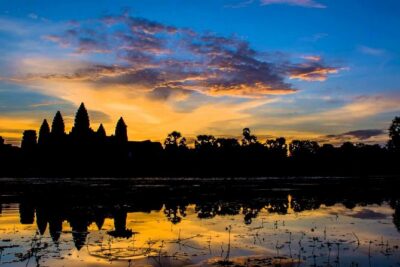
Full-Day Angkor Wat Sunrise Private Tour with Guide from Siem Reap
Read our review →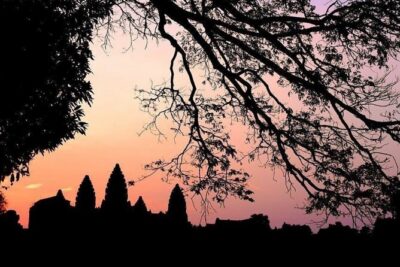
Angkor Wat Sunrise & 3 Main Temples with Breakfast – Small Group
Read our review →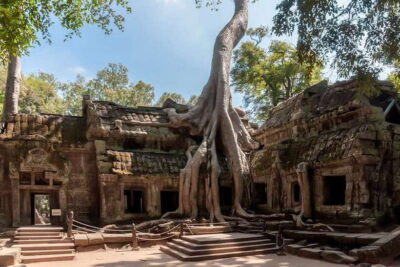
Angkor Wat Sunrise and Full-Day Sightseeing Tour
Read our review →Browse the lists this tour appears in