Reviewed · GUIDED
Siem Reap Angkor Private Tour Guide in English and Spanish
The most useful feature here is the private guide with archaeological field experience. Son has worked with the Greater Angkor Project from the University of Sydney, researching Angkor’s decline, dams, canals, and temples lost in the jungle. That gives this early start more purpose than simply racing from one famous ruin to the next.
I like the choice of English or Spanish, especially since Son’s Spanish is described as excellent and clear. I also like the private format, cold water, and direct pickup from central Siem Reap. The main drawback is cost control: the $65 price does not include the temple pass, meals, or optional tickets, and the 5am start is not for anyone who prefers a slow morning.
Key points to know before booking
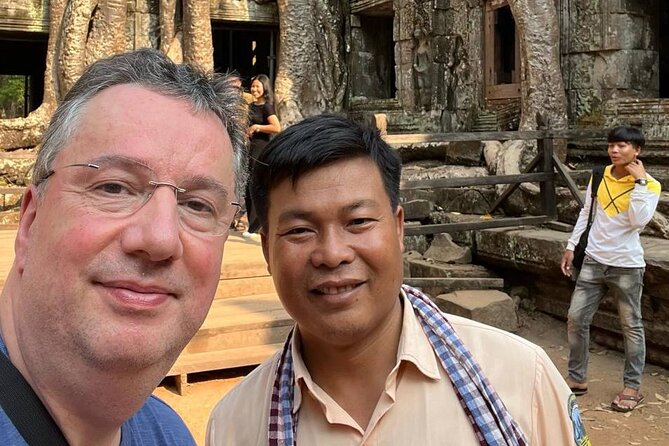
- Son brings research experience: His work with the Greater Angkor Project included study of Angkor’s dams, canals, lost temples, and decline.
- Spanish guidance is available: Son can explain the temples and Cambodian culture in Spanish, as well as English.
- The day starts at 5am: Pickup begins at Hard Rock Cafe Angkor on King’s Road near the Old Market Bridge.
- Four major stops fill five to seven hours: Angkor Wat, Bayon, the ancient Angkor city area, and Ta Prohm make this a full temple day.
- The $65 price is not the final cost: A one-day temple pass costs $37, while a three-day pass costs $50.
- You travel privately: Transportation and cold water are included, and only your group joins the activity.
Why a private Angkor guide can change the day

Angkor is not one temple. It is a huge sacred and urban complex spread across the area north of Siem Reap. Without context, you can admire carved towers and tree roots, take photographs, and still miss how the pieces fit together.
That is where this tour’s guide-led format matters. Son’s background includes research into the water system that supported Angkor. Dams and canals were not minor engineering details. They were part of the system that allowed a large population to live around the temples for generations. A guide who can explain those links helps you see Angkor as a city, not just a collection of dramatic ruins.
I also value the fact that the experience is private. You do not have to follow a large group at someone else’s pace or wait while a guide repeats the same explanation to several dozen people. Your group can ask about temple design, Cambodian culture, the city’s decline, or the meaning of a particular carving.
The format suits people who want explanation rather than a simple ride between photo stops. It is also a practical choice for couples, families, or friends who want a guide in Spanish. Son’s Spanish is specifically praised for handling questions about both the temples and Cambodian culture, which is important when you want more than memorized dates.
More private tours in Siem Reap:
- Full-Day Angkor Wat Sunrise Private Tour with Guide from Siem Reap
★ 5.0 · 2,920 reviews - Siem Reap: Angkor Wat Private Tuk-Tuk Tour
★ 4.9 · 2,222 reviews - Angkor Wat Private Day Tour from Siem Reap
★ 5.0 · 834 reviews
A 5am start at Hard Rock Cafe Angkor
The meeting point is Hard Rock Cafe Angkor on King’s Road Angkor, Street 7 Makara, near the Old Market Bridge in central Siem Reap. The activity starts at 5am and ends back at the same meeting point.
That early departure is a serious part of the plan, not a small scheduling note. It allows you to begin before the day becomes long and hot. It also gives the tour enough time to spend about three hours at Angkor Wat before moving to the next major sites.
You should arrange your morning around the start time. The information provided confirms pickup is offered, but the listed starting point remains Hard Rock Cafe Angkor. If you are staying elsewhere, check the pickup details when booking rather than assuming a hotel pickup is automatic.
Private transportation is included, along with cold water. Meals are not included, so plan for food outside the tour or confirm how your timing will work with your guide. The activity is listed at five to seven hours, though the stop times add up to about seven hours.
Angkor Wat, three hours with Cambodia’s great showpiece
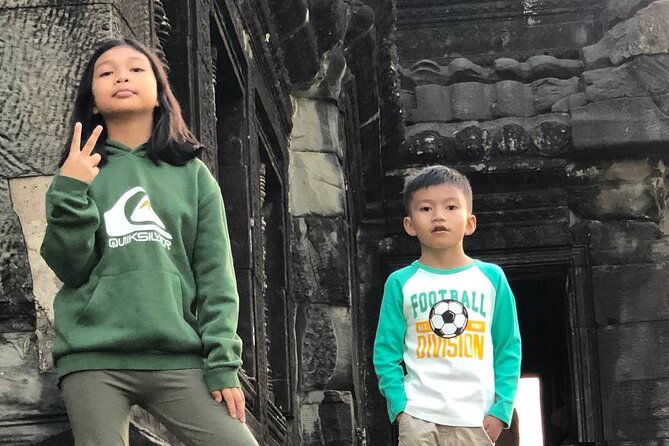
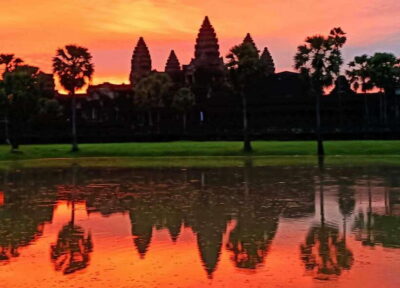
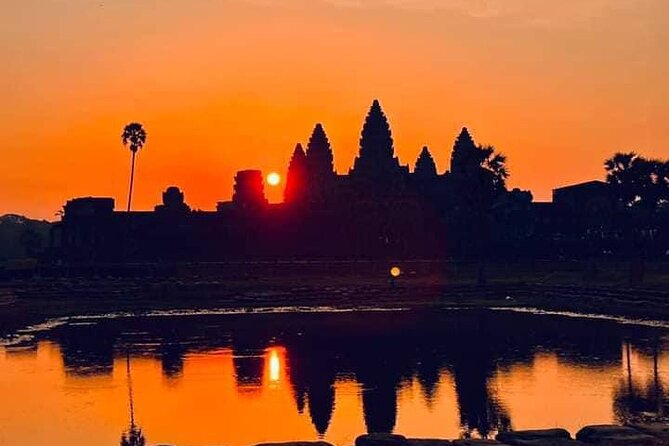
The first major stop is Angkor Wat, about 6 kilometers north of Siem Reap. Its scale is the first thing you notice. A wide moat surrounds the temple, and the approach across the roughly 700-meter bridge gives you time to take in the full design before reaching the central buildings.
The three-hour visit is the longest stop, and that is sensible. Angkor Wat is too large for a quick photograph and a short walk. You can use the time to understand the relationship between the moat, the bridge, the galleries, and the towers instead of treating the site as a single viewpoint.
I like that the guide’s background can add context here. Angkor Wat is often presented as an isolated masterpiece, but it was part of a much larger civilization. Questions about construction, water, religious purpose, and the city around the temple are more worthwhile than collecting a few disconnected facts.
The drawback is that three hours at one temple requires stamina. You will be walking and standing around a large complex, so this is not a light sightseeing stop. The tour information does not specify a meal break or rest schedule, so use the included water and discuss pacing with Son if your group needs it.
Admission is not included. The stated one-day temple pass costs $37, while a three-day pass costs $50. For a single day, the temple ticket adds a substantial amount to the $65 tour price, so your effective total is at least $102 per person before meals or tips.
Bayon’s 54 towers and the famous stone faces
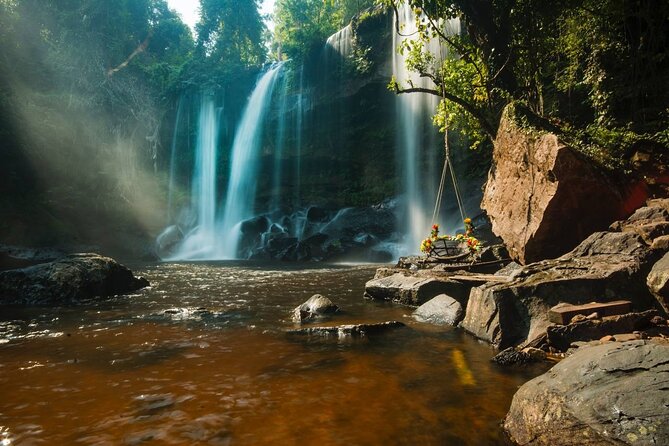
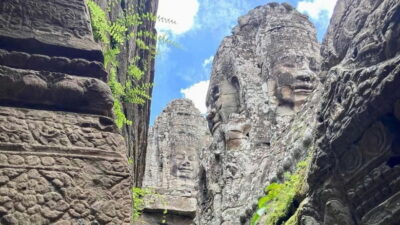
Bayon Temple receives about one hour. It is known for its smiling stone faces and its three levels, with 54 towers rising above the temple.
This is a very different experience from Angkor Wat. Angkor Wat gives you long approaches, broad lines, and a sense of monumental order. Bayon feels more concentrated and intricate, with faces appearing from different angles as you move through the structure.
The hour is enough for a focused visit, but it is not generous if you want to inspect every carved surface. This is a good place to ask Son about the temple’s layout and the meaning of the faces rather than trying to make sense of every tower alone.
Bayon also helps explain why a private guide can be worth paying for. The site is visually confusing, and its many levels can blur together. A clear explanation can turn a maze of stone into a place with purpose and design.
The stop is part of the private vehicle route, and no separate admission is included. Your temple pass covers the main temple visits, but it must be purchased separately from the tour.
More guided tours in Siem Reap:
- Angkor Wat Sunrise or Sunset Tour with Guide from Siem Reap
★ 5.0 · 12,109 reviews - Siem Reap: Full-Day Angkor Wat Guided Tour with Sunset
★ 4.9 · 3,803 reviews - Angkor Wat Sunrise tour with Small – Group and Guide tours
★ 5.0 · 3,655 reviews - Angkor Wat Highlights and Sunrise Guided Tour from Siem Reap
★ 5.0 · 3,213 reviews
The ancient Angkor city and the scale of a lost capital
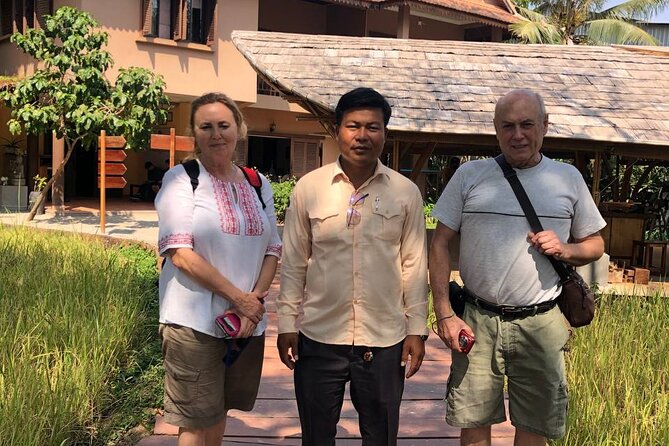
The third listed stop describes the ancient city that supported around 1 million people over many generations. The city dates from the 9th to the 14th century and later became covered by jungle after its decline.
This section is important because it shifts your attention away from individual temples. The temples are the most visible remains, but the ancient city explains the human scale behind them. You are not only looking at sacred monuments. You are considering a former urban center that depended on water management, roads, buildings, and long-term settlement.
The provided timing allows about two hours here. That is enough for Son to connect the major monuments with the wider Angkor system. His research experience with dams and canals is especially relevant at this point, since those systems help explain how such a large population could live in the area.
The wording of the stop description focuses on the ancient city rather than naming one separate monument. That means you should think of these two hours as a broader Angkor experience, not as another single temple visit. If you want to know exactly which sections you will see within this stop, ask before departure.
This part may appeal most to you if you enjoy archaeology and old cities. If your only goal is the most famous photographs, you may find the broader historical explanation less immediate than Angkor Wat or Ta Prohm. I would still keep it in the day, since it gives the temples a human and environmental setting.
Ta Prohm, where roots have taken over the ruins
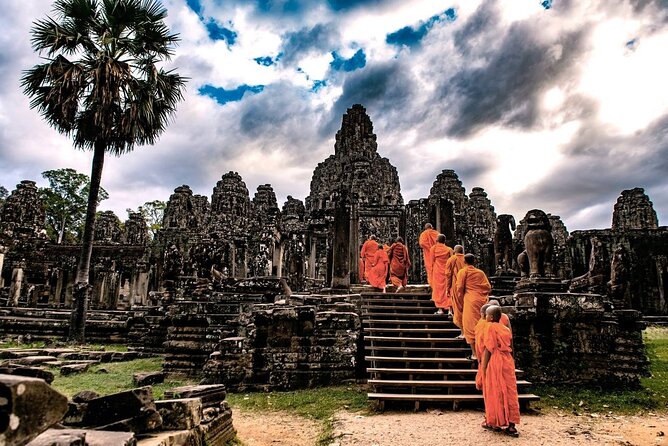
Ta Prohm is scheduled for about one hour. It is presented as an example of how the temple looked when Angkor was rediscovered in the 19th century, with vegetation, large trees, and giant roots growing through the stone.
This is the most instantly theatrical stop. Tree roots pressing into temple walls make Ta Prohm easy to remember, but the site is more than a backdrop for photographs. It shows how the jungle can hide, damage, and frame architecture at the same time.
One hour gives you a compact look at the temple. You can focus on the main tree-covered sections and ask about the restoration choices involved in preserving a ruin where vegetation is part of its identity.
Ta Prohm also provides a useful contrast with Angkor Wat. At Angkor Wat, the design feels controlled and monumental. At Ta Prohm, nature appears to have taken control. Seeing both in one day makes the difference clear without needing a long explanation.
The stop may feel short if you want to linger over every corridor. Still, after several hours at Angkor Wat and the ancient city, a focused hour keeps the day from becoming even more demanding. Your guide can help you decide where to spend your limited time.
What the $65 price really covers
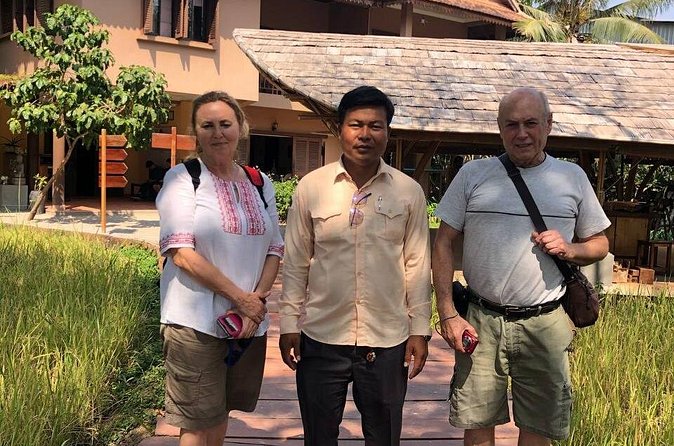
The advertised price is $65 per person. That includes private transportation, cold water, and a private guide. It does not include temple admission, food, tips, the optional $20 boat ticket, or the $15 entrance fee for Angkor National Museum.
The temple pass changes the calculation. Add the one-day pass and the basic total becomes $102 per person. Add the three-day pass instead and the total becomes $115. That may seem high beside a simple transport service, but this experience is priced around private guiding, not just getting you from Siem Reap to the ruins.
The value depends on what you want. If you only need a vehicle and plan to read about Angkor independently, the price may not suit your budget. If you want a private English or Spanish guide who can explain archaeology, water systems, the ancient city, and Cambodian culture, the cost becomes easier to justify.
The three-day pass costs only $13 more than the one-day pass, according to the provided prices. If you plan to revisit Angkor on another day, that pass may offer better value. The tour itself lasts only one day, so the pass decision depends on your wider Siem Reap plans.
No meal is included. Tips are also separate. The boat and museum fees are listed as additional possibilities, though they are not part of the four main stops described here.
English or Spanish, with room for real questions
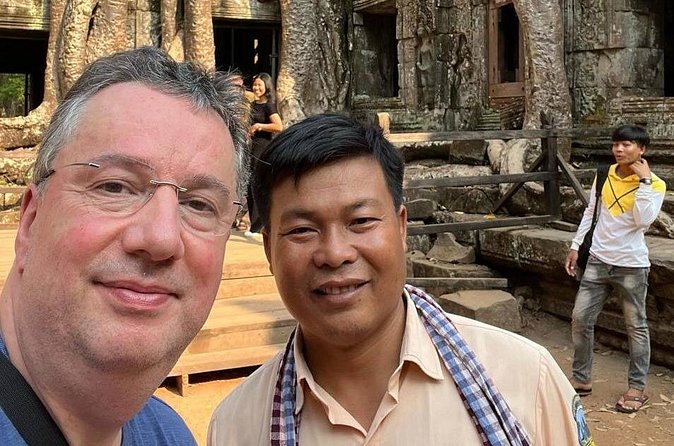
The tour is offered in English and Spanish. The strongest detail about the guide is his name, Son, and his Spanish ability. The Spanish description praises his clear command of the language and his willingness to answer questions about both temples and Cambodian culture.
That matters because language is not only about translating facts. A good explanation needs to handle follow-up questions, comparisons, and small points of confusion. If Spanish is your preferred language, this option gives you a way to discuss Angkor without reducing the experience to a few translated labels.
The guide’s research background is another practical advantage. He participated in the Greater Angkor Project at the University of Sydney, which studied the decline of Angkor civilization. His work included archaeological research on dams, canals, and temples found in the jungle.
You should still tell Son what interests you. The day includes architecture, archaeology, water systems, religious sites, and cultural history. A private tour gives you a better chance to shape the conversation than a fixed group outing.
Who will get the most from this tour
I would choose this experience if you want a full first look at the main Angkor sights and prefer having one guide for the day. It is especially suitable for:
- Couples and families who want private transportation
- Spanish-speaking visitors who want detailed explanations
- People interested in archaeology and the decline of Angkor
- First-time visitors who want the main temples in one day
- Small groups that value their own pace and questions
The early start is best for people prepared to begin at 5am. The length also suits those who want a substantial temple day rather than a short outing.
I would think twice if you dislike early mornings, have difficulty with several hours of walking, or want a low-cost visit with only transport. The tour includes no meal, and admission costs are extra, so the final amount is higher than the headline price.
Practical details that affect your decision
Confirmation is provided at booking. The activity is near public transportation, though private transportation is included for the tour itself. The experience is private, so only your group participates.
Most people can take part, according to the provided information. No specific accessibility details are supplied, so you should ask the provider about mobility needs before booking if that is important for your group.
Free cancellation is available when you cancel at least 24 hours before the local start time. Cancellations or changes made less than 24 hours before the 5am start are not accepted for a refund.
Should you book this Angkor tour?
Book it if you want more than temple photographs. The strongest reason is the combination of a private vehicle, a Spanish or English-speaking guide, and Son’s experience with archaeological research on Angkor’s water systems and decline.
The $65 fee is reasonable for private guiding, but remember to add at least $37 for the one-day temple pass. Ask about pickup details, the exact ancient city sections included, and how your group will handle meals before the morning begins.
If those points fit your plans, this is a useful way to see Angkor with context, flexibility, and a guide who can connect the famous towers to the larger city that once supported them.
FAQ
What time does the tour start?
The tour starts at 5am.
Where does the tour meet?
The listed meeting point is Hard Rock Cafe Angkor on King’s Road Angkor, Street 7 Makara, near the Old Market Bridge in Siem Reap.
How long does the experience last?
The tour lasts approximately five to seven hours.
Is temple admission included?
No. The one-day temple pass is listed at $37, and the three-day pass is listed at $50.
Is the tour private?
Yes. Only your group participates, and private transportation and a private guide are included.
Is the tour available in Spanish?
Yes. The tour is offered in English and Spanish. The guide, Son, speaks Spanish and can discuss the temples and Cambodian culture in that language.
Just added around Siem Reap
- Ultimate Sunrise to Angkor Wat, Angkor Thom and Bayon Temple★ 5.0 · 3 reviews
- Twilight Tastes of Siem Reap Include Dinner★ 5.0 · 13 reviews
- Full-Day Private Tour of Angkor Wat with Pick Up★ 5.0 · 12 reviews
- Trekking Tour at Phnom Kulen National Park from Siem Reap★ 5.0 · 3 reviews
- Siem Reap City Tour with War Museum and Killing Field★ 5.0 · 27 reviews
- Private Day Trip to Angkor Temples with Expert Guide★ 5.0 · 4 reviews
- Waterfall & River of 1000 Siva Linga- Kulen Mountain Private Tour★ 5.0 · 3 reviews
- Private Two Days Siem Reap Temples Discovery Guided Tour★ 5.0 · 7 reviews
Guided, compared.
Angkor Wat Sunrise or Sunset Tour with Guide from Siem Reap
Read our review →
Angkor Wat Sunrise tour with Small – Group and Guide tours
Read our review →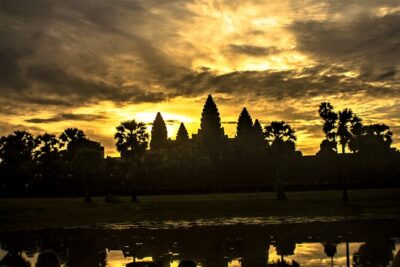
Angkor Wat Highlights and Sunrise Guided Tour from Siem Reap
Read our review →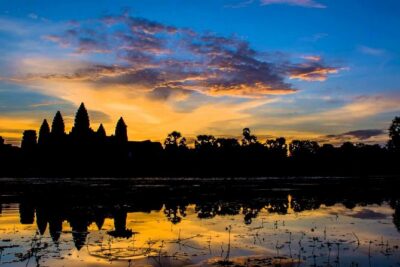
Full-Day Angkor Wat Sunrise Private Tour with Guide from Siem Reap
Read our review →