Reviewed · FULL-DAY
Siem Reap: Angkor Full-Day Group Tour with Japanese Guide
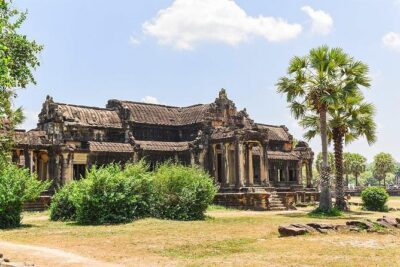
Angkor is easier to understand when someone explains the faces, carvings, and old ceremonies in front of you. I especially like the Japanese-speaking guidance and the chance to adjust the pace on a private tour. Guide Chun is praised for clear explanations, gentle humor, careful photography, and patience with older family members.
I also like the choice between a tuk-tuk for one or two people and an air-conditioned van for larger groups. The main drawback is the long day: Angkor Wat, Angkor Thom, and Ta Prohm can feel rushed in eight hours, especially in the heat. If you want Banteay Srei and Beng Mealea, choose two days.
Key points to know before booking
- Chun and Bun are named Japanese-speaking guides: Chun is noted for fluent explanations, photo help, flexible pacing, and small touches of humor. Bun is praised for detailed temple commentary.
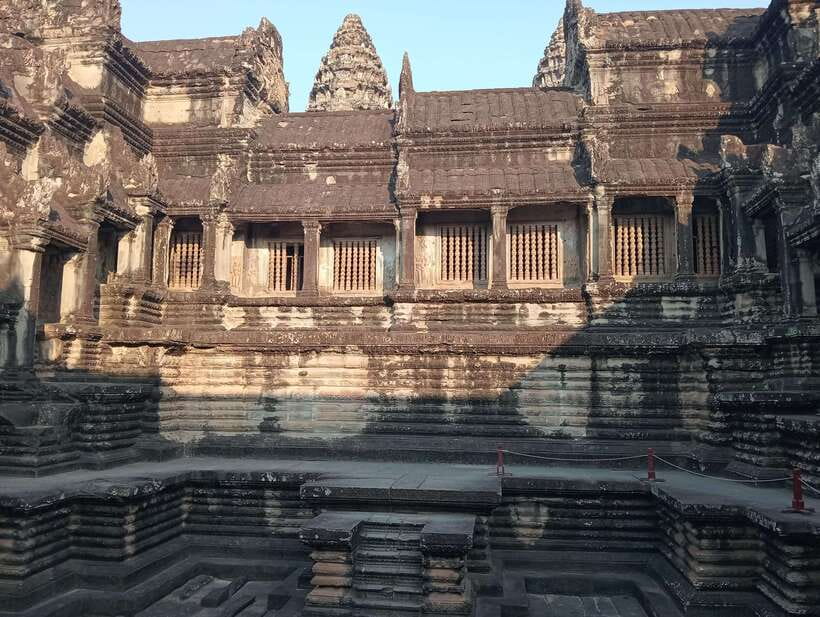
- The one-day route covers Angkor’s essential trio: Bayon, Ta Prohm, and Angkor Wat, along with Angkor Thom’s terraces and gates.
- A sunrise option changes the day completely: You leave around 4:30 to 5:00 AM and finish around noon, so bring breakfast from your hotel.
- The two-day option reaches the outer temples: Banteay Srei, Beng Mealea, Pre Rup, and Bakong add carvings, countryside, and a more adventurous feel.
- The temple pass costs extra: Budget $37 for one day or $62 for a two or three-day pass, on top of the tour price.
- Private tours offer the most flexibility: The guide can adjust walking speed, temple order, photo stops, and breaks to suit your group.
Why a Japanese guide can change your Angkor visit
Angkor is not simply a collection of old stone buildings. The carvings, temple layouts, royal platforms, and enormous faces make much more sense when you know what you are looking at.
A Japanese-speaking guide gives you that explanation without the strain of translating every detail in your head. The guide can point out religious symbols, stories in the carvings, and the purpose of each building while you are standing beside it. That matters most at Bayon, where the towers and faces can seem confusing without some context.
The strongest praise centers on Chun. He speaks Japanese fluently, explains the temple background in an easy-to-follow way, and uses light jokes, including Japanese wordplay. He also knows good places and angles for photographs. If you are traveling alone, that photo help is useful because you can leave with more than temple walls and distant selfies.
Bun is another named guide connected with the experience. His strength is careful, detailed explanation. If cultural context is a major reason for booking a guided tour, the Japanese-language service is the main value here, not simply the ride between temples.
More full-day trips in Siem Reap:
- Siem Reap: Full-Day Angkor Wat Guided Tour with Sunset
★ 4.9 · 3,803 reviews - Full-Day Angkor Wat Sunrise Private Tour with Guide from Siem Reap
★ 5.0 · 2,920 reviews - Siem Reap: Angkor Wat Sunrise and Full-Day Sightseeing Tour
★ 4.9 · 2,828 reviews
The one-day route: Angkor’s essential sights
The standard tour begins with hotel pickup between 8:30 and 9:00 AM. You return around 4:30 to 5:00 PM, with about eight hours devoted to the park, transport, temple visits, and a lunch break.
The exact order can be adjusted on a private tour. The listed route includes Ta Prohm, Angkor Thom’s Victory Gate, the Elephant Terrace, Baphuon, Bayon, Srah Srang, and Angkor Wat. The longer description places Angkor Thom and Ta Prohm in the morning, followed by Angkor Wat in the afternoon. Either way, expect a full day with several walking stops.
Ta Prohm and the appeal of ruins under trees
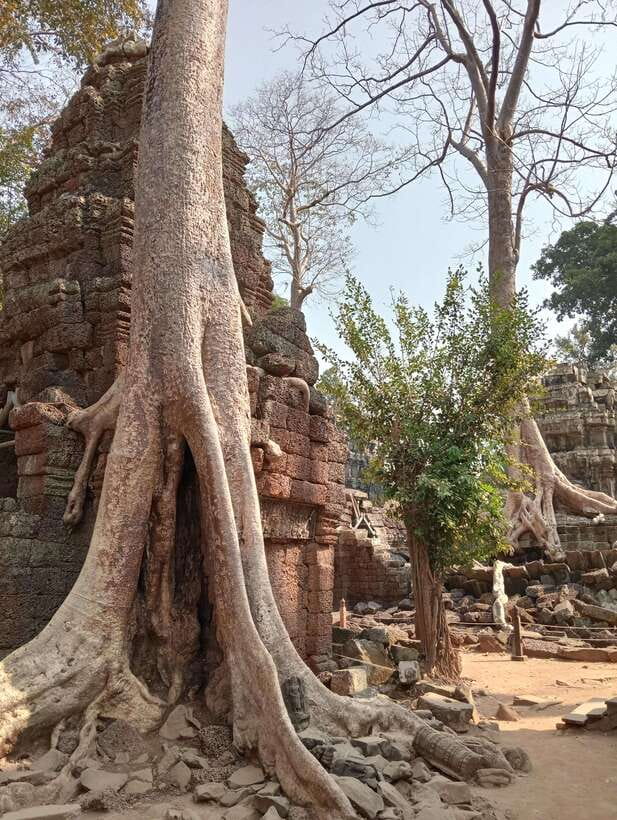
Ta Prohm is the temple most likely to feel familiar, thanks to its appearance in Tomb Raider. Its appeal is not just cinematic. Large tree roots run over walls and galleries, while collapsed stone gives the place a rough, partly reclaimed appearance.
Your guide can help you see where the original temple plan survives beneath the damage. This is also one of the more photogenic stops, but it can feel crowded at popular viewpoints. Take your time with the carved doorways and root-covered walls rather than rushing from one famous photo spot to the next.
Victory Gate and Angkor Thom
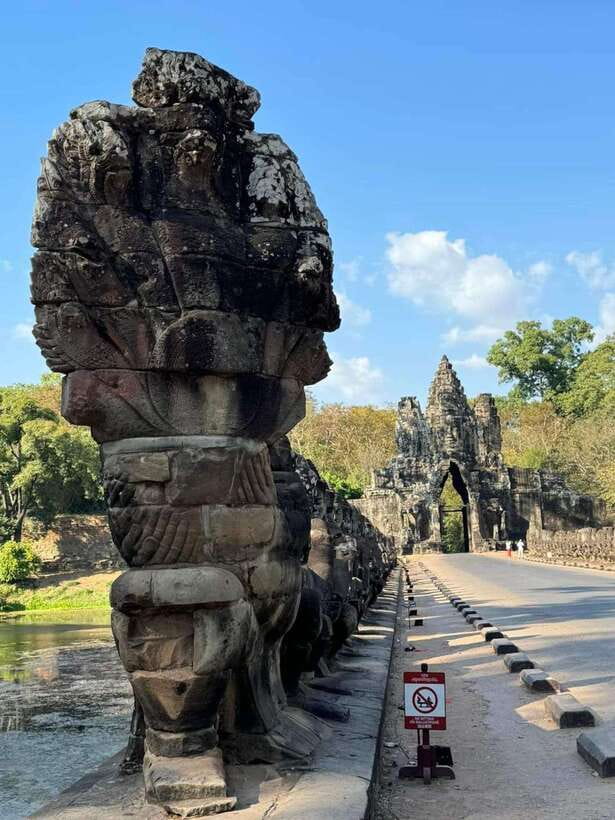
The Victory Gate is a short photo stop, listed at about 10 minutes. It is not a long visit, but it helps you understand Angkor Thom as a planned royal city rather than a single temple.
The South Gate is also described as an entry point, with large stone figures and serene faces welcoming you into the former city. Your route may use the South Gate, Victory Gate, or both depending on the day’s timing. The private option is useful if you want to pause for photographs instead of treating the gate as a quick drive-by.
More guided tours in Siem Reap:
- Angkor Wat Sunrise or Sunset Tour with Guide from Siem Reap
★ 5.0 · 12,109 reviews - Angkor Wat Sunrise tour with Small – Group and Guide tours
★ 5.0 · 3,655 reviews - Angkor Wat Highlights and Sunrise Guided Tour from Siem Reap
★ 5.0 · 3,213 reviews - Siem Reap: Angkor Wat Sunrise or Sunset Guided Tour
★ 4.9 · 2,123 reviews
The Elephant Terrace and Terrace of the Leper King
The Elephant Terrace takes around 30 minutes. This long platform was used for royal ceremonies and processions, and its name comes from the elephant carvings along the structure.
Nearby, the Terrace of the Leper King has detailed carvings and a more mysterious purpose. It is linked with Yama, the god of death. These terraces are easy to overlook if you only focus on enclosed temple buildings, but they show how Angkor functioned as a royal center with public ceremony and display.
Baphuon, a restored pyramid temple
Baphuon takes about 30 minutes. Its high form gives you a different view from the lower galleries and terraces, although the climb and uneven stone may be tiring in hot weather.
The temple has been restored, so it offers a useful contrast with Ta Prohm. At Ta Prohm, trees and collapsed galleries dominate the experience. At Baphuon, the shape of the monument and its elevated position are easier to appreciate. Wear shoes with a firm grip and do not treat this as a flat walking tour.
Bayon and its famous faces
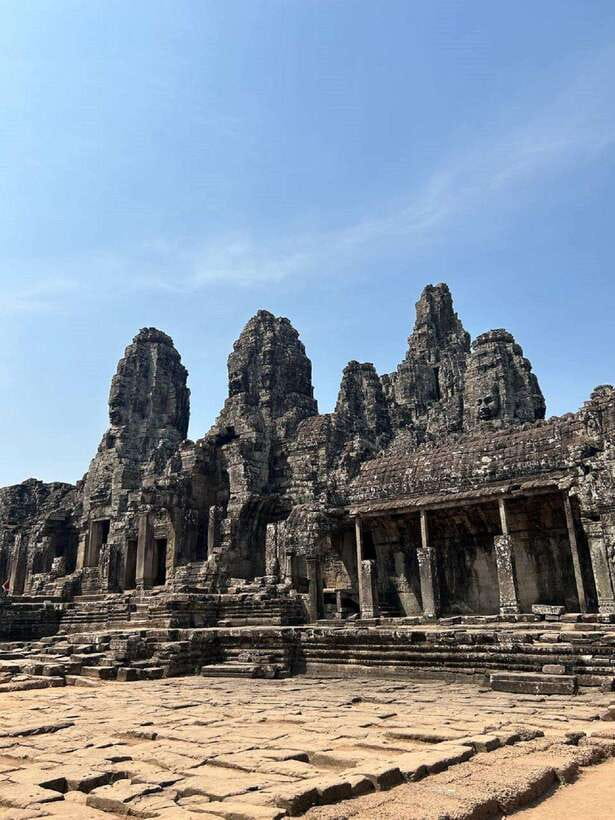
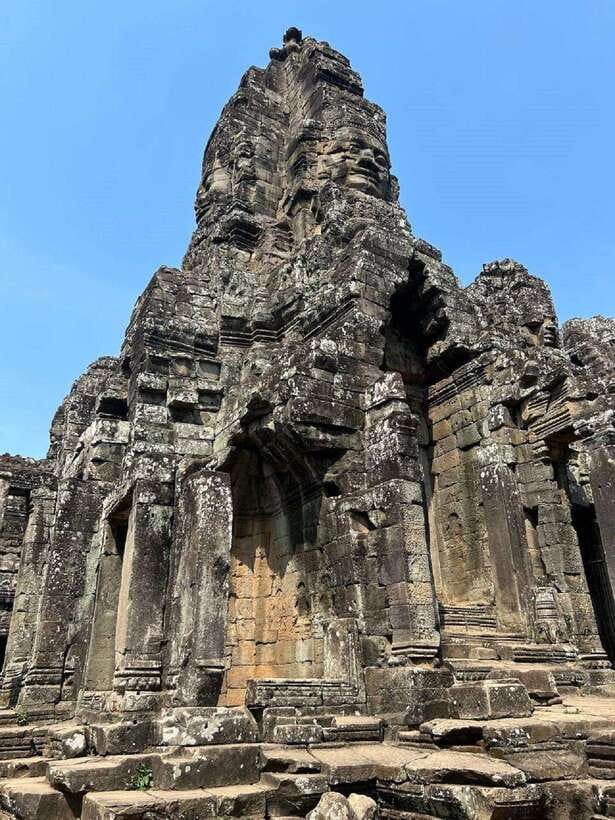
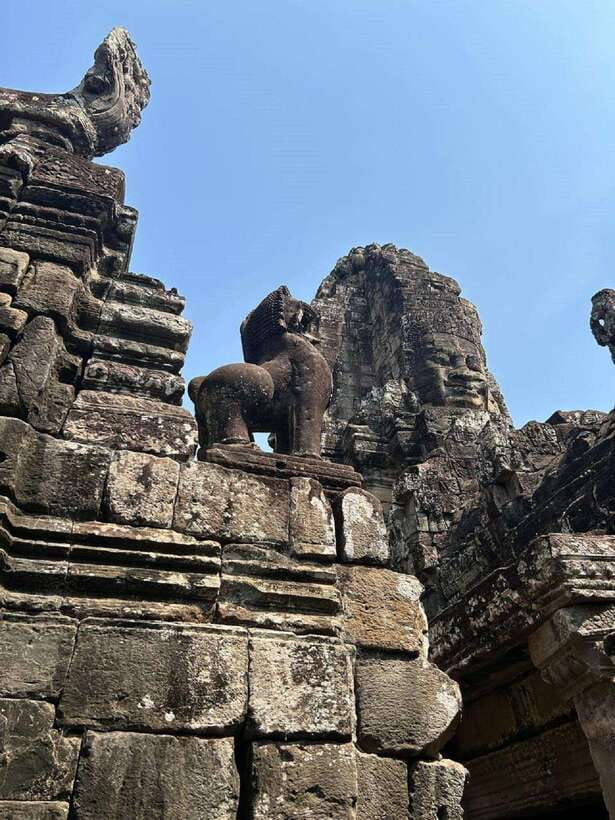
Bayon receives about 45 minutes, though a private group may be able to adjust this. Its 54 towers are described as carrying 216 serene faces of Avalokitesvara, making it one of Angkor’s most distinctive sights.
The faces are best appreciated from several angles. Up close, the towers can make the temple feel maze-like. From farther away, the repeated faces create a strong sense of order. This is exactly the sort of place where a guide adds value, since the symbolism and layout are not always obvious at first glance.
Srah Srang and lunch
Srah Srang is scheduled as a one-hour break and lunch stop. Lunch is not included, so carry cash and expect to pay separately for your Cambodian meal.
This break matters. The one-day route includes extensive walking, and you will be in the sun for much of it. A proper pause at midday can make the afternoon at Angkor Wat more enjoyable. If you are on a private tour, you can discuss the timing with your guide, though the overall day still needs to fit the park schedule.
Angkor Wat, the major finish
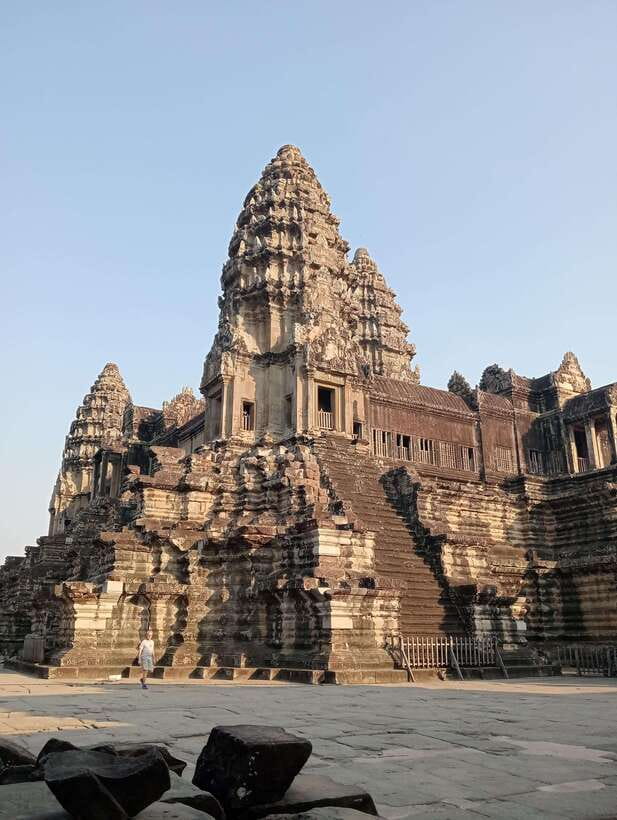
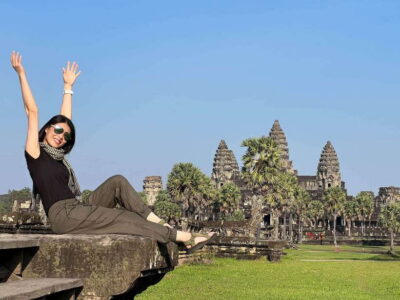
The tour allows about two hours at Angkor Wat, the world’s largest religious monument. This is enough for a meaningful visit, but not enough to inspect every gallery and carving in detail.
You will have time to understand the temple’s design, see its major art, and hear about its religious symbolism. Angkor Wat is large enough that the walk from one section to another takes time, so comfortable shoes are essential.
Ending here works well. After seeing smaller temples and the dense stone faces of Bayon, Angkor Wat gives you a grander sense of scale. It can also be the most tiring stop, since it comes after a full day. If you want to study it slowly, consider the sunrise option or the two-day format rather than trying to add extra stops to the standard schedule.
Sunrise: beautiful light, early alarm
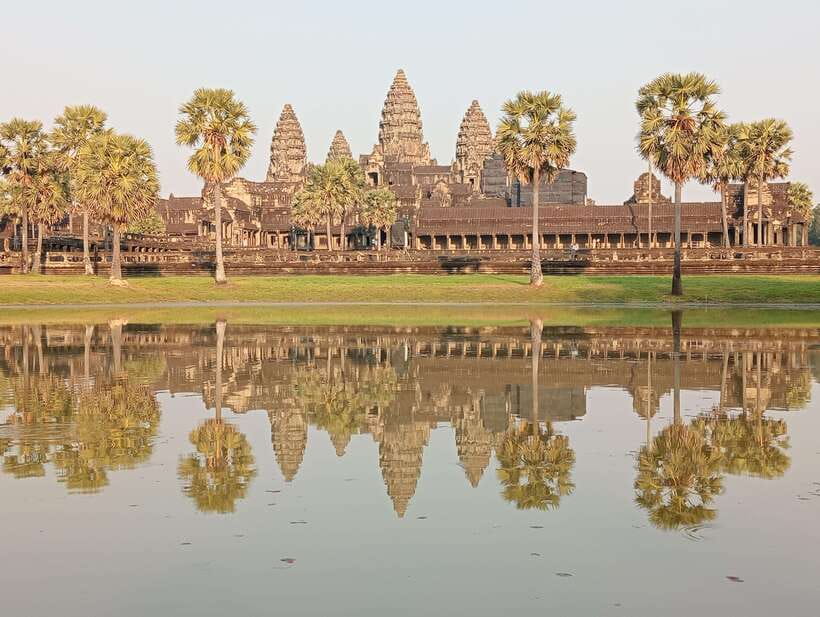
The sunrise version begins with pickup between 4:30 and 5:00 AM and finishes around noon. Bring breakfast from your hotel, as breakfast is not provided.
The reward is the early view of Angkor Wat and the morning colors around the temple. The guide can take you to a suitable sunrise point, which is helpful if you do not know the grounds. One person specifically found the sunrise viewpoint guidance useful, while another appreciated having the route adjusted around weather.
The tradeoff is simple: you lose the relaxed start and still need to walk for several hours. If you choose this option, rest the night before and bring water, a hat, and insect repellent. Cold drinking water and cold towels are supplied during the visits, which is welcome once the morning warms up.
The sunrise option is especially good for photographers and for anyone with only one day in Siem Reap. It is less suitable if you dislike early starts or want a leisurely breakfast before sightseeing.
The two-day plan: more temples, less rushing
The two-day option costs more time and requires the Angkor pass for two or three days, listed at $62 per person. It adds several temples outside the basic circuit and spreads the sightseeing over a more manageable schedule.
Day two begins with another sunrise at Angkor Wat, with pickup around 5:00 AM. After breakfast, the route heads toward Pre Rup and Banteay Srei before continuing to Beng Mealea and Bakong. The day ends around 2:30 to 3:00 PM, followed by the drive back to your hotel.
Pre Rup and eastern Khmer architecture
Pre Rup is a 10th-century pyramid temple built from warm brick and laterite. Its high terraces provide views and give you a clear example of the eastern temple style.
This is a worthwhile first stop on day two because it feels different from Angkor Wat and Bayon. The pyramid shape is easy to read, and the brick tones look especially attractive in early light. The upper levels may be tiring, so take care on the steps.
Banteay Srei and fine pink sandstone
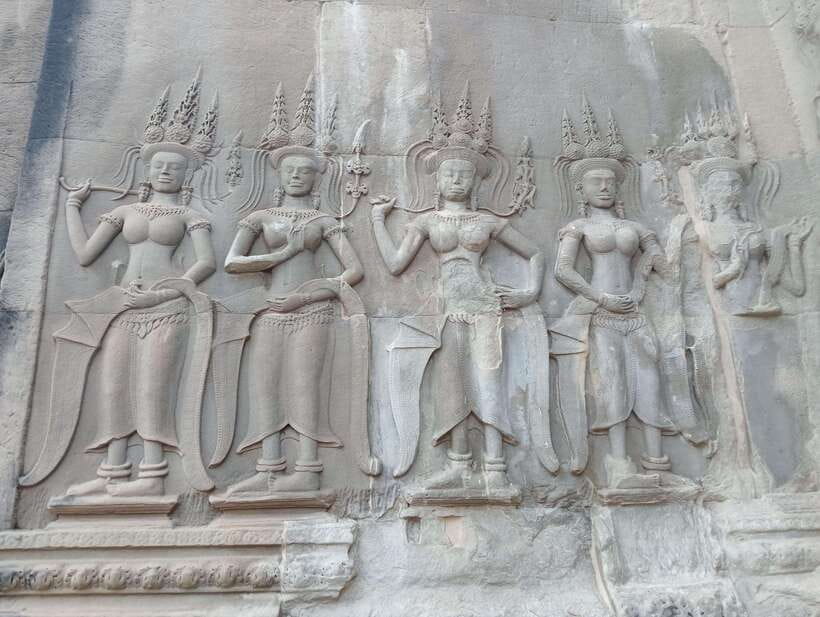
Banteay Srei is known for pink sandstone and unusually detailed carvings. It is often called the Citadel of Women, and it is regarded as one of the finest examples of Khmer craftsmanship.
The temple is smaller than Angkor Wat, but the carving detail makes it a major stop. You can get closer to the ornament and notice patterns that would be easy to miss on a larger monument. It is also farther from the central Angkor group, which is one reason it fits better into a second day.
Beng Mealea and a more adventurous feel
Beng Mealea is a large temple with collapsed galleries, scattered stone blocks, and tree roots spreading through the ruins. It feels less orderly than the main Angkor temples and gives you a stronger sense of a site being reclaimed by nature.
This is the most adventurous stop in the two-day program. Uneven ground and fallen stones mean you should expect a more demanding walk than at a polished city attraction. If you prefer dramatic ruins and photography to perfectly preserved architecture, Beng Mealea is a strong reason to upgrade.
Bakong, an early Khmer pyramid
Bakong is described as the first grand stone pyramid temple of the Khmer Empire. It provides useful context for how Khmer temple forms developed before the later monuments became so large and complex.
By the time you reach Bakong, you will have seen a wide range of styles, from pink sandstone carving to tangled ruins. The stop rounds out the second day without adding a late finish, since the return drive begins around 2:30 to 3:00 PM.
Transport, group size, and comfort
For one or two people on a shared tour, transport is by tuk-tuk. In a private one-day tour, you can select a car at checkout. Groups of three to six use an air-conditioned van, while larger groups may use a van or bus.
A tuk-tuk gives you open-air views and a stronger sense of the road between temples, but it offers less protection from heat and rain. An air-conditioned vehicle is the better choice if you are sensitive to weather, traveling with children, or carrying camera equipment.
The private format has another advantage beyond comfort. It gives you room to request a slower walking pace, change the order of stops, or pause during bad weather. Chun adjusted timing for a couple when rain arrived and helped older parents walk more slowly. That kind of flexibility is worth paying for if your group has different fitness levels.
Hotel pickup is included. Give the hotel name when booking and wait in the lobby about 15 minutes before the stated pickup time.
Price, tickets, and what the tour is worth
The advertised price is $50 per person, but the Angkor Archaeological Park ticket is separate. Add $37 for a one-day pass or $62 for a two or three-day pass. Lunch is also extra, as are tips and anything not listed as included.
That makes the real cost higher than the headline price, but the value is still reasonable if you want a Japanese-speaking guide and organized transport. You are paying for the guide’s interpretation, hotel pickup, temple transfers, cold water, cold towels, and the time saved by not planning the route yourself.
The value is strongest for first-time visitors, Japanese-speaking families, solo visitors who want help with photographs, and anyone who prefers a set plan. Independent visitors can spend less by arranging transport separately, but they will need to handle the route, timing, temple explanations, and ticket arrangements on their own.
Children under 12 join free on a private tour. They do not need an Angkor ticket, but you must show a passport as proof of age.
What to wear and carry
Angkor is an active walking visit, not a ride-and-look tour. Bring comfortable shoes, a hat, camera, insect repellent, and cash for lunch and other personal spending.
Temple clothing rules are enforced. Shorts, short skirts, sleeveless shirts, tank tops, and other revealing clothing are not allowed. A scarf may cover knees and shoulders at some temples, but trousers or a knee-covering skirt and a shirt that covers the shoulders are the safer choice for the full route.
The tour is not suitable for wheelchair users, babies under one year, or people over 95. That does not mean older adults cannot enjoy it. The pace can be adapted on private tours, but uneven stones, stairs, heat, and long walks remain part of the experience.
Should you book this Angkor tour?
Book it if you want Japanese-language explanations, hotel pickup, and a guide who can help with photos and pacing. Chun is a particularly strong choice for families, couples, older parents, and solo visitors who want patient guidance and a few well-timed jokes along the way.
Choose the one-day version if Angkor Wat, Bayon, and Ta Prohm are your priorities and your schedule is tight. Add sunrise if early light matters to you. Choose two days if you want Banteay Srei’s carvings and Beng Mealea’s rough, atmospheric ruins without forcing every major sight into one long day.
Skip it if you prefer complete independence, do not need a Japanese-speaking guide, or want to keep costs as low as possible. For most first visits, though, the combination of cultural explanation, practical transport, and flexible private pacing makes this a sensible way to meet Angkor.
FAQ
What temples are included in the one-day tour?
The one-day program includes Ta Prohm, Angkor Thom, the Victory Gate, the Elephant Terrace, the Terrace of the Leper King, Baphuon, Bayon, and Angkor Wat. It also includes a break around Srah Srang.
Does the tour include the Angkor entrance ticket?
No. The Angkor Archaeological Park pass must be purchased separately. The listed prices are $37 per person for one day and $62 per person for two or three days.
Is lunch included?
No. Lunch is not included, so you should bring cash to pay for a Cambodian meal at a nearby restaurant.
What time does the sunrise option start?
Pickup for the sunrise option is between 4:30 and 5:00 AM. The one-day sunrise tour finishes around noon. Bring breakfast from your hotel.
What type of vehicle is used?
Shared tours for one or two people use a tuk-tuk, while groups of three to six use an air-conditioned van. Private tours can use a tuk-tuk, car, van, or bus according to group size and the selected option.
Can children join the tour for free?
Children under 12 can join free of charge on a private tour. They do not need an Angkor ticket, but a passport must be shown as proof of age.
Just added around Siem Reap
- Ultimate Sunrise to Angkor Wat, Angkor Thom and Bayon Temple★ 5.0 · 3 reviews
- Full-Day Private Tour of Angkor Wat with Pick Up★ 5.0 · 12 reviews
- Trekking Tour at Phnom Kulen National Park from Siem Reap★ 5.0 · 3 reviews
- Twilight Tastes of Siem Reap Include Dinner★ 5.0 · 13 reviews
- Siem Reap City Tour with War Museum and Killing Field★ 5.0 · 27 reviews
- Private Day Trip to Angkor Temples with Expert Guide★ 5.0 · 4 reviews
- Waterfall & River of 1000 Siva Linga- Kulen Mountain Private Tour★ 5.0 · 3 reviews
- Ultimate Siem Reap Food Tour by Tuk Tuk – 20 Tastings, 8 Stops★ 5.0 · 13 reviews
Full-Day, compared.
Full-Day Angkor Wat Sunrise Private Tour with Guide from Siem Reap
Read our review →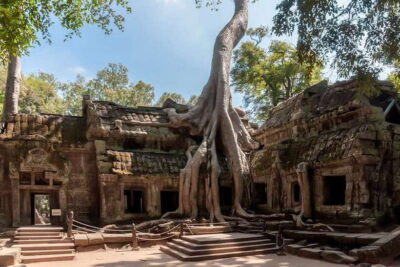
Angkor Wat Sunrise and Full-Day Sightseeing Tour
Read our review →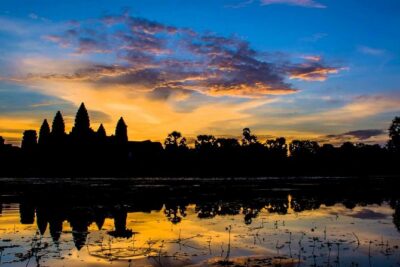
Full Day Angkor Wat Temple Experience with Sunset
Read our review →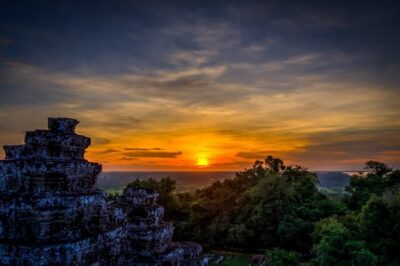
Angkor Wat full Day ‘Small Group with sunset & Tour Guide
Read our review →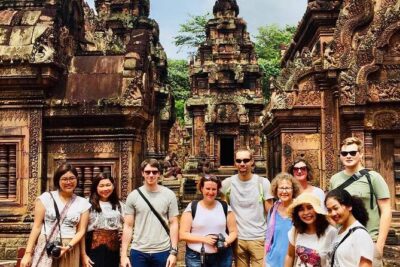
Full-Day Banteay Srei & 4 Temples – Grand Tours Join-in Tour
Read our review →