
Reviewed · ANGKOR THOM AND BAYON TEMPLE TOURS
Preah Khan, Ta Prohm, Bayon Off Beaten Track
The appeal here is simple: you get three major Angkor temples without being tied to a large bus group. I like the private format, which lets your group of up to three set the pace, and I like the focus on Preah Khan, Ta Prohm, and Bayon, three very different temples linked to King Jayavarman VII. Guide Panha is also associated with this service and is praised for arranging temple days around what guests want to see.
The main catch is timing. The tour begins at 9:00 am, so it does not promise the cooler dawn hours or the quietest possible visit. You also pay the Angkor entrance fee separately, buy your own lunch, and spend roughly five hours at the temples, with the rest of the eight-hour day used for driving and breaks.
Key points to know before booking
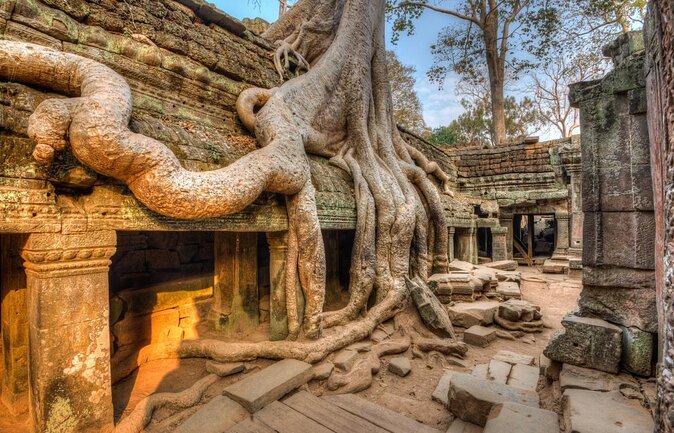
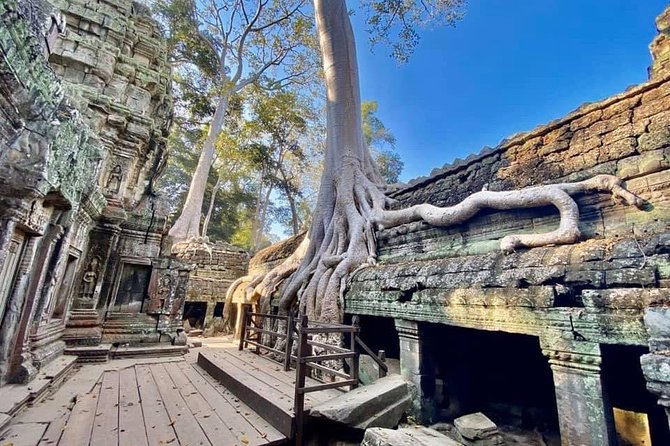
- Three temples, three distinct moods: Preah Khan feels spacious and layered, Ta Prohm is famous for its tree-covered ruins, and Bayon is known for its serene stone faces.
- Private group of up to three: You are not sharing the vehicle or guide with a large tour party.
- Panha is the named guide associated with the service: His work is praised for flexibility, local advice, airport help, and temple planning.
- The tour starts at 9:00 am: That is easier than a sunrise departure, but it may not deliver the coolest or quietest temple visit.
- Entrance fees and lunch are extra: Bottled water, a driver, and a licensed guide are included.
- Eight hours gives you breathing room: The listed temple visits total about five hours, leaving time for transport, pauses, and a relaxed pace.
Why this three-temple route works
Angkor is not one monument. It is a huge area filled with temples from different periods, and a good day depends on choosing places that feel different from one another. This route does that well.
Preah Khan gives you long corridors, courtyards, carved stone, and a sense of how a large religious complex was organized. Ta Prohm supplies the famous jungle imagery, with trees growing through and around the ruins. Bayon then brings you into the center of Angkor Thom, where the temple’s carved faces create a more concentrated and mysterious experience.
I like that the route is built around temples from the reign of Jayavarman VII, one of the most important Khmer rulers. Preah Khan was built in the 12th century to honor his father. Ta Prohm was originally called Rajavihara and was built in the late 12th and early 13th centuries. Bayon served as Jayavarman VII’s state temple and reflects his Mahayana Buddhist faith.
That shared connection gives the day a clear theme. You are not simply ticking off three famous stops. You are seeing how one king expressed power, family devotion, religion, and public identity in stone.
The phrase off beaten track needs a little care. Ta Prohm and Bayon are well-known Angkor sights, so neither is a secret. The off-beaten-track advantage comes from the private arrangement, the smaller group, and the chance to avoid the fixed rhythm of a large coach. Your guide can also help shape the day rather than simply moving everyone from one stop to the next.
More Ta Prohm tours in Siem Reap:
- Siem Reap Tour: Angkor Wat Sunrise, Bayon, Ta Prohm, Banteay Srei
★ 5.0 · 931 reviews - Angkor Wat Private Driver Tours to Angkor Wat Sunrise, Angkor Thom & Ta Prohm
★ 5.0 · 98 reviews - Private Temples Guided Tour (Angkor Wat, Ta Prom & Angkor Thom)
★ 5.0 · 75 reviews
Preah Khan, the spacious first stop
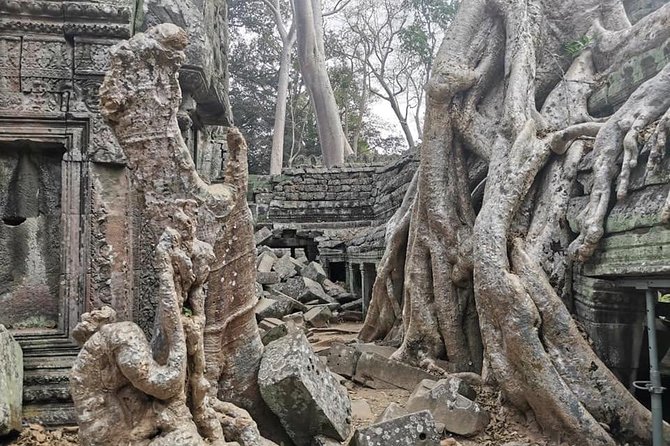
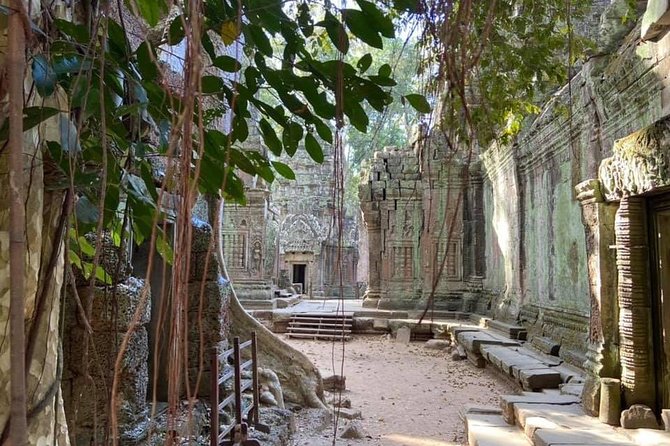
Preah Khan means Royal Sword. The temple lies northeast of Angkor Thom and west of the Jayatataka baray, or reservoir. It was built in the 12th century for Jayavarman VII in honor of his father.
Allow about two hours here. That is a sensible amount of time because Preah Khan rewards slow walking. You can look closely at the carved doorways, move through its long passages, and notice how the site changes from broad open areas to tighter interior corridors.
I especially like Preah Khan as an opening stop because it gives you room to get used to Angkor’s scale. The complex can feel less compressed than a single central sanctuary, and its layout helps you understand that these temples were not just pretty stone buildings. They were working religious and ceremonial centers with multiple courtyards and connecting spaces.
Your guide matters here. Without context, it is easy to see only broken walls and attractive carvings. With a licensed guide, you can ask what the temple was built for, how it relates to Jayavarman VII, and which details deserve your attention. The supplied information does not promise a fixed lecture or a particular script, so use the private setting to ask questions rather than simply following along.
Two hours may feel long if you prefer quick photo stops. If you enjoy architectural details, it may feel just right. Wear shoes suited to uneven ground and expect a moderate amount of walking, since the experience requires a moderate level of physical fitness.
Ta Prohm and the trees everyone remembers
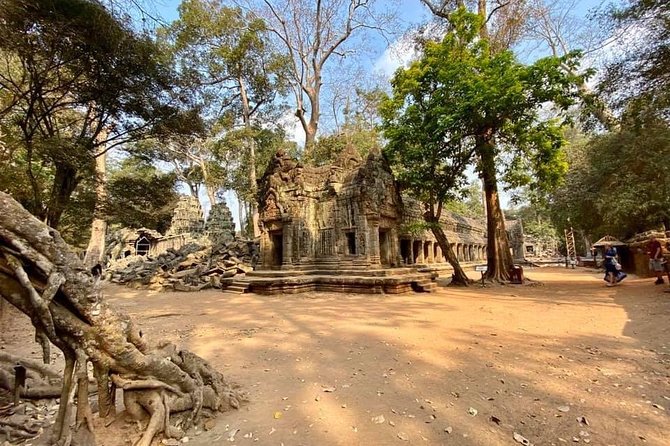
Ta Prohm is the most instantly recognizable stop on the route. Its modern name refers to the ancestor of Brahma, and its original name was Rajavihara. Built mainly in the Bayon style in the late 12th and early 13th centuries, the temple is closely linked with the period of Jayavarman VII.
You have about two hours here. That gives you time to see more than the most photographed tree-covered sections. Look for the relationship between the surviving walls, galleries, doorways, and the large trees that have grown around the stone. The attraction is not simply that nature has taken over. It is the tension between careful Khmer construction and the forces that have altered the site over time.
I would not treat Ta Prohm as a ten-minute photo stop. The famous views are worth seeing, but the experience is better when you also pay attention to the temple’s plan and carvings. A guide can help you separate the truly notable features from the parts that simply look dramatic in a photograph.
This is also the stop most likely to feel busy, even on a private tour. A private guide and vehicle do not give you exclusive access to the monument. They do give you more control over how long you stay and how you move through it.
The 9:00 am start is a practical compromise. You avoid the punishingly early departure associated with some sunrise outings, but you may encounter more people and stronger heat than you would at dawn. The tour description emphasizes avoiding crowds and visiting at a good time, yet exact crowd levels depend on the day. If quiet photography is your top goal, ask before booking if an earlier start is possible.
Bayon, faces at the heart of Angkor Thom
The final temple is Bayon, also called Prasad Bayon. It was built in the late 12th or early 13th century as the state temple of Jayavarman VII and is particularly known for its richly carved stone faces.
The planned visit lasts about one hour. That is shorter than the stops at Preah Khan and Ta Prohm, but it can work because Bayon’s central character is easier to grasp quickly. You move through a more concentrated maze of towers and galleries, with the famous faces appearing from different angles as you walk.
I find Bayon most rewarding when you pause instead of trying to count every face. The expressions can seem calm, watchful, or remote depending on the light and your position. Your guide can explain the temple’s Buddhist connection and place it within Jayavarman VII’s wider building program.
One hour is enough for an introduction, but not for every carving and corridor. If Bayon is the temple you most want to study, tell Panha or your guide at the start of the day. The value of a private tour is the ability to express that preference. The published schedule is an approximate plan, not a promise that every minute must be spent in one exact spot.
Because Bayon is in Angkor Thom, this stop also gives you a sense of the larger royal center around it. The itinerary does not include a separate tour of every Angkor Thom feature, so do not book this outing expecting an all-day exploration of the entire city. It is focused on the three named temples.
More Angkor Thom and Bayon tours in Siem Reap:
- Angkor Wat Sunrise and Angkor Thom Sunset Tour
★ 5.0 · 89 reviews - One Full Day Private tour of Angkor Wat, Ta Prohm, Angkor Thom & Banteay Srie
★ 5.0 · 64 reviews - Siem Reap Private Day Tour: Angkor Wat Sunrise, Bayon & Ta Prohm
★ 5.0 · 48 reviews - Angkor Wat & Bayon: the Smiling Temple
★ 5.0 · 47 reviews
What the private format changes
The tour costs $159 per group of up to three, rather than $159 per person. For three people, that works out to $53 each before entrance fees and lunch. For two people, it becomes $79.50 each, and a solo guest pays the full group price.
That pricing can be good value if you are traveling as a couple or small family and want a licensed guide plus private transport for a full day. It is less attractive for one person, especially since the Angkor ticket is not included. Compare the total cost with a shared outing before booking.
The private format has practical value beyond comfort. You can ask to slow down at a carving, spend less time at a stop that does not interest you, or discuss other temples with the guide. Past work associated with Panha includes helping people choose temples, adjusting schedules, meeting guests at the airport, and giving advice about restaurants and nightlife in Siem Reap. Those details suggest a service that may be useful beyond the formal temple explanation, although airport transfers are not listed as part of this particular tour.
A private vehicle also keeps the day simple. Pickup is offered, and the tour begins at Prince Angkor Hotel & Spa on Sivutha Boulevard in Siem Reap. The activity ends back at the meeting point. If you are staying elsewhere, confirm the pickup arrangement when booking rather than assuming every hotel is covered.
Panha, flexibility, and the guide question
Panha is the named guide connected with the experience, and the strongest praise centers on his personal service. He is described as punctual, trustworthy, friendly, flexible, and helpful with local planning. One account specifically describes an air-conditioned van and a guide who asked what the group wanted to see and returned them to the hotel on time.
Those details matter because temple days can become tiring. A guide who watches the clock, explains the route clearly, and listens to your preferences can make the difference between a thoughtful visit and a rushed circuit.
You should still confirm who will lead your booking. The tour includes a licensed tour guide and driver, but the supplied details do not guarantee that Panha personally conducts every departure. If his local knowledge is a major reason you are interested, ask at the time of booking.
The driver is also important. You will spend part of the eight-hour day on the road between Siem Reap and the temple area, and between the three sites. Bottled water is included, which is useful in Cambodia’s heat, but lunch is not. Bring money for food and do not assume refreshments beyond the included water.
Timing, effort, and what to bring
The scheduled start is 9:00 am, with a total duration of about eight hours. The three temple visits add up to roughly five hours: two hours at Preah Khan, two at Ta Prohm, and one at Bayon. The remaining time allows for driving, pickup, pauses, and the natural delays of a temple day.
You should expect moderate physical activity. The information provided does not give a step count or describe every surface, so I would plan for walking over uneven temple ground, moving through passages, and standing for explanations. Comfortable footwear is more important than stylish footwear here.
Keep your plan light. A phone or camera, sun protection, water, and a little cash for lunch are practical. The tour provides bottled water, but one bottle may not meet your needs for a full day in the heat.
The later start suits you if you want a calmer morning and do not want to leave your hotel before sunrise. It may not suit you if your priority is the coolest air, softest light, or the smallest possible crowds. The tour is designed to help you avoid large tourist groups, but that should not be read as a guarantee of empty temples.
Entrance fees and the real cost of the day
Temple admission is not included. This is the most important extra cost to plan for, and the supplied information does not state the current ticket price. Check the official Angkor ticket arrangements before departure so you know what to budget.
Lunch is also excluded. That gives you freedom to choose what and where you eat, but it means the final price is not limited to the $159 tour fee. Add the admission cost and a meal when comparing this option with other Angkor tours.
For three people, the group rate makes the arrangement easier to justify. You receive a private tour, a driver, a licensed guide, pickup, and bottled water for a full day. For a couple, it remains reasonable if personal attention and schedule control matter. For a solo guest, a shared tour may offer better financial value unless privacy is your main concern.
Free cancellation is available if you cancel at least 24 hours before the start time. Cancellations or changes made less than 24 hours before the 9:00 am departure are not accepted for a refund, and the cut-off follows local time.
Who will get the most from this outing
I would recommend this tour to a couple, small family, or group of friends who want the main Jayavarman VII temples without joining a large party. It also suits first-time visitors who want explanations rather than simply a driver dropping them at each gate.
It is a good match if you care about:
- A private group of no more than three
- A licensed guide and dedicated driver
- A manageable route through three major temples
- Flexibility around pace and questions
- Local help from a guide connected with Siem Reap
- Returning to the starting meeting point after the day
I would think twice if you want a sunrise departure, a full Angkor Wat visit, lunch included, or a tour built around every major temple in the complex. Angkor Wat itself is not listed among the three stops. The route has a clear focus, and that focus is part of its strength.
Should you book Preah Khan, Ta Prohm, and Bayon?
Book it if you want a focused, private Angkor day with a strong connection to Jayavarman VII’s era. Preah Khan, Ta Prohm, and Bayon give you three different experiences, and the group price can be fair when split between two or three people.
Before paying, confirm the pickup location, the guide assigned to your date, the current entrance fee, and whether a different start time is possible. If you are comfortable paying for lunch and admission separately, and you value the freedom to ask questions or adjust the pace, this is a practical way to see three of Siem Reap’s most memorable temples.
FAQ
How long does the tour last?
The tour lasts approximately eight hours and starts at 9:00 am.
Which temples are included?
The tour visits Preah Khan, Ta Prohm, and Bayon Temple.
Is the tour private?
Yes. It is a private activity for your group, with a maximum of three people.
Are entrance fees included?
No. Temple entrance fees are not included in the tour price.
Is lunch included?
No. Lunch is not included. Bottled water is provided.
Where does the tour start and finish?
Pickup is offered, with the listed starting point at Prince Angkor Hotel & Spa on Sivutha Boulevard in Siem Reap. The activity ends back at the meeting point.
More small and grand circuit tours in Siem Reap
- 2-Day Angkor Wat With Small, Big Circuit and Banteay Srei Tour
★ 5.0 · 545 reviews - Full-Day ‘Big Tour’ with Sunset at Phnom Bakheng
★ 5.0 · 341 reviews - Private sunrise ‘small tour’ of Angkor Wat with car or van & Guide
★ 5.0 · 179 reviews - Siem Reap: Banteay Srei and Grand Circuit Heritage Tour
★ 4.9 · 163 reviews
Just added around Siem Reap
- Ultimate Sunrise to Angkor Wat, Angkor Thom and Bayon Temple★ 5.0 · 3 reviews
- Full-Day Private Tour of Angkor Wat with Pick Up★ 5.0 · 12 reviews
- Trekking Tour at Phnom Kulen National Park from Siem Reap★ 5.0 · 3 reviews
- Twilight Tastes of Siem Reap Include Dinner★ 5.0 · 13 reviews
- Siem Reap City Tour with War Museum and Killing Field★ 5.0 · 27 reviews
- Private Day Trip to Angkor Temples with Expert Guide★ 5.0 · 4 reviews
- Waterfall & River of 1000 Siva Linga- Kulen Mountain Private Tour★ 5.0 · 3 reviews
- Private Two Days Siem Reap Temples Discovery Guided Tour★ 5.0 · 7 reviews
Angkor Thom and Bayon Temple Tours, compared.
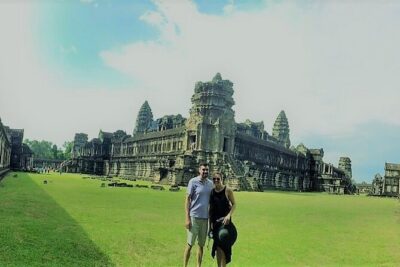
Siem Reap Tour: Angkor Wat Sunrise, Bayon, Ta Prohm, Banteay Srei
Read our review →
Angkor Wat Private Driver Tours to Angkor Wat Sunrise, Angkor Thom & Ta Prohm
Read our review →
Private Temples Guided Tour (Angkor Wat, Ta Prom & Angkor Thom)
Read our review →
One Full Day Private tour of Angkor Wat, Ta Prohm, Angkor Thom & Banteay Srie
Read our review →
Siem Reap Private Day Tour: Angkor Wat Sunrise, Bayon & Ta Prohm
Read our review →
Unveiling Angkor Wat Sunrise, Bayon, Ta Prohm In Small Group Tour
Read our review →Browse the lists this tour appears in