
Reviewed · TONLE SAP FLOATING VILLAGE TOURS
Kulen Mountain Tour with Kampong Phluk Floating Village
The most interesting part of this $49 tour is the way it links two very different sides of Cambodia in one long day: Phnom Kulen, the mountain tied to the early Khmer Empire, and Kampong Phluk, a community shaped by the rise and fall of Tonle Sap. In between, you pass rice fields, palm trees, village homes, and small local businesses.
I like the picnic beside Kulen waterfall, where local food and seasonal fruit turn lunch into part of the experience. I also like the practical care built into the day, including cold water, cool towels, air-conditioned transport, and guides such as Seila, Sam, Dara, and August who explain Cambodian life as well as the sights. The drawback is simple: 11 hours is a full day, with several walks, a long road journey, and extra cash payments for the two admission passes.
Key points at a glance
- Phum Preah Dak: Watch palm cake and palm sugar being made in a traditional village setting.
- Phnom Kulen history: Visit Poeng Ta Kho cliff, the 1,000 Shiva Lingas, Wat Preah Ang Thom, and the reclining Buddha.
- Waterfall picnic: Eat grilled chicken, rice, spring rolls, fruit, and other local food, with a vegetarian meal available if requested ahead.
- Kampong Phluk by boat: See floating homes, tall stilt houses, schools, a monastery, and flooded forest.
- Sunset on Tonle Sap: Finish on Asia’s largest lake as the light fades.
- Small-group format: The tour is limited to 12 people, with private options also available.
Why this day works beyond the Angkor temples
Many people come to Siem Reap for Angkor Wat and the surrounding temples. This tour gives you a different Cambodia. You spend time in rural villages, on a forested mountain, beside a waterfall, and on a huge inland lake where daily life depends on water levels.
That variety is the main reason to book it. You are not spending 11 hours looking at one type of monument. The day moves from palm farming to sacred river carvings, from a mountain temple to a floating village. It can feel busy, but the changing scenery keeps the day moving.
The schedule also gives you useful cultural context. The early morning drive passes rice paddies and traditional homes, while the guide explains local customs, religious beliefs, and ordinary Cambodian life. Guides named in recent bookings include Seila, Sam, Dara, August, Mony, Sa, Jan, and Makara. The exact guide depends on the departure date, but the experience is designed around an English-speaking local guide rather than a silent transfer between stops.
The strongest practical feature is the level of support. The driver provides bottled water and cool towels after walks and stops. That matters in Cambodia, especially on a long day with heat, uneven ground, and time outside the vehicle.
More Phnom Kulen waterfall trips in Siem Reap:
- Kulen Waterfall Join-in Tour (local Picnic lunch)
★ 5.0 · 2,434 reviews - Kulen Mountain: Small-Group Tour and Picnic lunch
★ 4.9 · 1,802 reviews - Siem Reap: Kulen Mountain, Beng Mealea and Tonle Sap Tour
★ 5.0 · 1,483 reviews
The palm village stop at Phum Preah Dak
Your pickup is scheduled between 8:00 and 8:30 in the morning. You should wait in your hotel lobby about 10 minutes early, since the guide will look for you with a sign showing your last name.
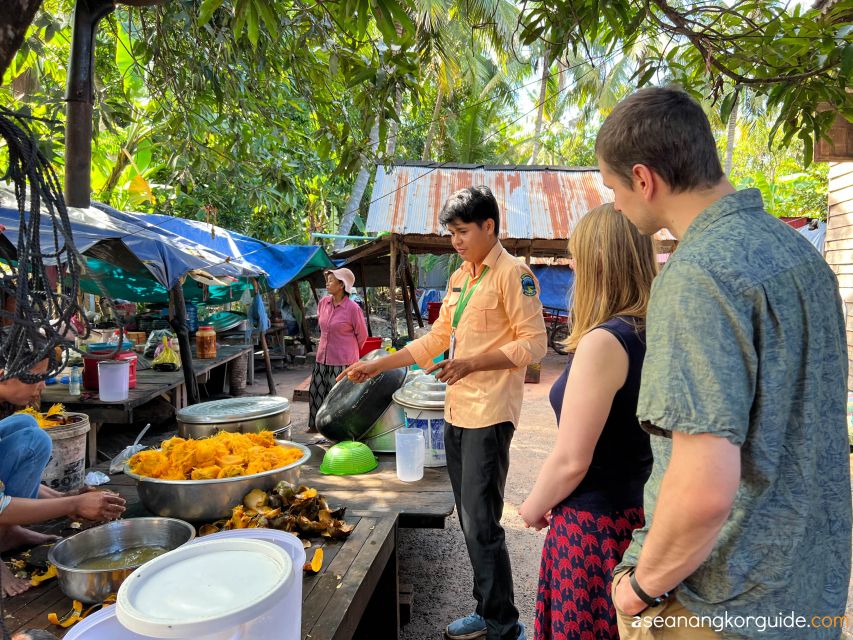
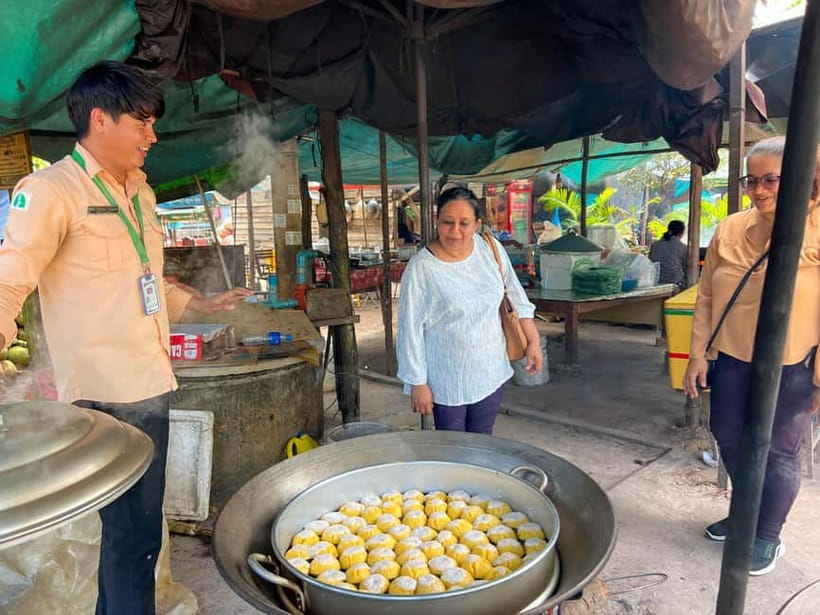
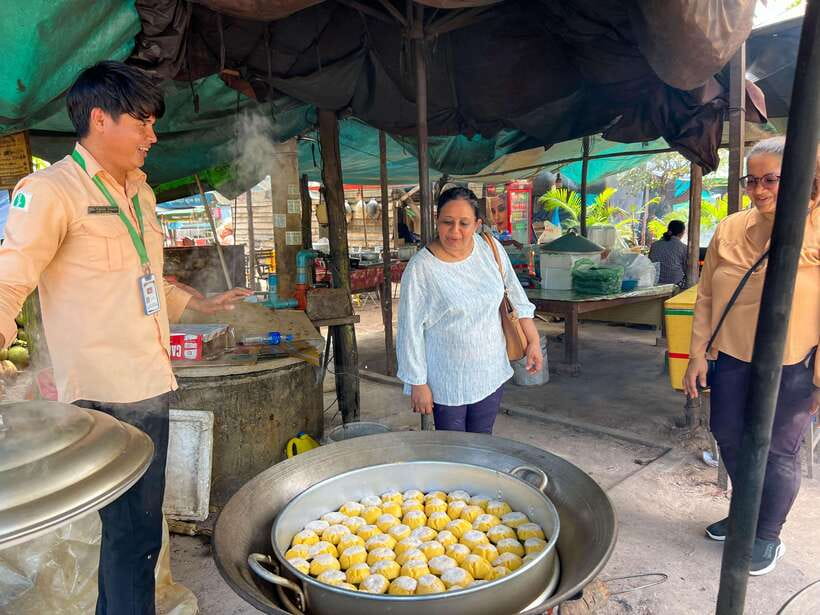
The first stop is Phum Preah Dak, described as one of the more authentic villages on the route. You will see how local people make palm cake and palm sugar, with a chance to taste palm cake. This is a small stop, about 20 minutes, but it gives the day a useful start.
Sugar palms are closely linked to rural Cambodian life, and the stop shows food production in a direct, hands-on way. You may also see villagers carrying out normal daily work rather than a staged temple performance. Some departures have included a local bakery or food-making stop, so the exact presentation may vary.
Do not expect a long workshop or a large museum. The value is in seeing a local product being made and understanding what the countryside produces before you head into the mountain. It is also a good chance to buy or sample something small, though soft drinks and personal purchases are not included.
The road to Phnom Kulen
After the village visit, the air-conditioned vehicle continues toward Phnom Kulen. The drive takes roughly an hour, followed by several hours of touring within the national park. You will pass rice fields, palm trees, rural roads, and traditional dwellings.
The vehicle is important here. Phnom Kulen is well beyond central Siem Reap, and the route would be tiring without air conditioning and a driver handling the roads. The tour uses a minivan or bus, and the group size is limited to 12 people for the small-group option.
This is not a quick side trip. The mountain section includes walking, steps, viewpoints, temple grounds, and time near water. Wear shoes that can handle an uneven path, and bring sunscreen, a hat, insect repellent, sunglasses, and a towel. You can bring a swimming suit if you want to bathe at the waterfall.
Poeng Ta Kho and the mountain views
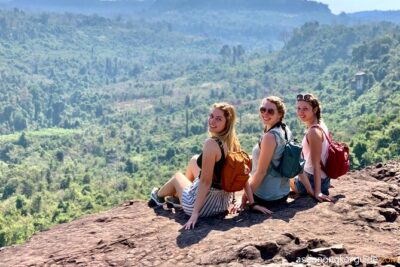
Poeng Ta Kho, also called Amazing Cliff, is one of the first major stops on Phnom Kulen. The visit includes about 20 minutes of walking, followed by time at the viewpoint.
This stop is about open views and rock formations rather than temple ruins. You get a chance to look across the Cambodian countryside from higher ground, which helps explain the mountain’s position above the surrounding plains. It is one of the best places for photographs, and several guides also help take pictures for their groups.
The path and the heat are the main considerations. You should not treat this as a flat sightseeing stop. Keep water with you and follow the guide’s pace, especially if you are visiting during a hot part of the year.
More Tonle Sap floating village trips in Siem Reap:
- From Siem Reap: Kampong Phluk Floating Village Tour by Boat
★ 4.9 · 6,979 reviews - Sunset tour of Kampong Phluk stilts home village on the Tonle Sap
★ 5.0 · 4,865 reviews - Kompong Phluk Floating Village Half-Day Tour ( Morning / Sunset )
★ 5.0 · 1,494 reviews - Tonle Sap Lake & Kampong Phluk Village Half-Day Tour
★ 5.0 · 1,045 reviews
The 1,000 Shiva Lingas in the river
The river of 1,000 Shiva Lingas is one of the most distinctive historical stops. The carvings were made in the riverbed in 802 AD, and the river was given religious importance through these sacred symbols.
Your guide can explain how the carvings connect the river, Hindu worship, and the Khmer capital that later developed at Angkor. The water level can affect what you see. At some times of year, the carvings may be partly underwater, while lower water can make the patterns easier to view.
Plan on about 30 minutes here. The stop is not about a grand building. It is about details in the riverbed, religious meaning, and the way water was given a sacred role. Pay attention to the guide’s explanation, since the carvings are easier to appreciate when you understand what they represent.
Wat Preah Ang Thom and the reclining Buddha
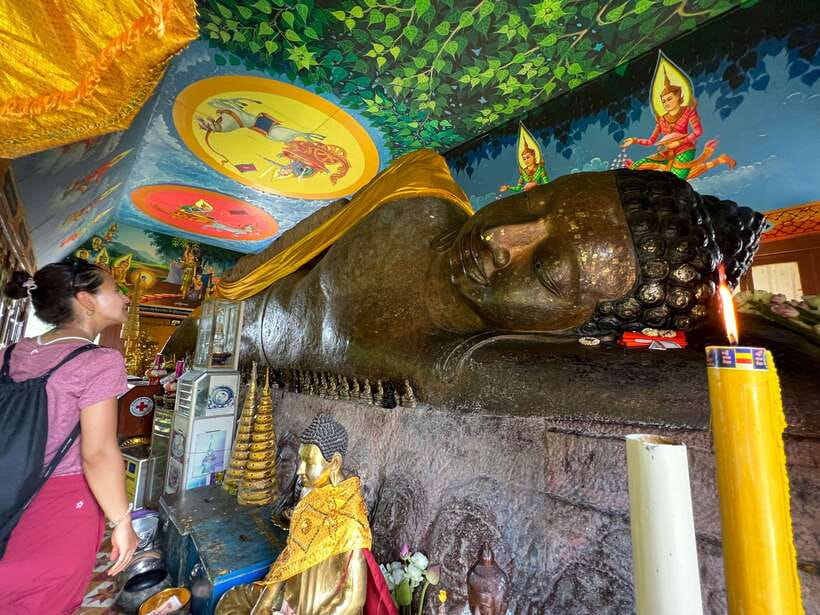
The next stop is Wat Preah Ang Thom, a Buddhist temple area on the mountain. The visit takes about 45 minutes and includes walking.
The main attraction is the large reclining Buddha sculpture, described as a 16th-century image. You will also see the temple setting and have time to observe local religious practice. Dress respectfully even though the tour does not list a formal dress code. Covering shoulders and knees is a sensible choice for a Buddhist temple.
This stop adds a later Buddhist layer to a day that has already included older Hindu carvings. Your guide can help connect the different beliefs and periods without turning the visit into a dry history lecture. Some guides, including Seila and Sam, have been praised for mixing clear explanations with humor and stories about Cambodian life.
As with the other mountain stops, expect some walking. People over 70 and children under 10 are not considered suitable for this tour, and the full schedule is not a good match if you need a slow, low-effort day.
A waterfall picnic with local food
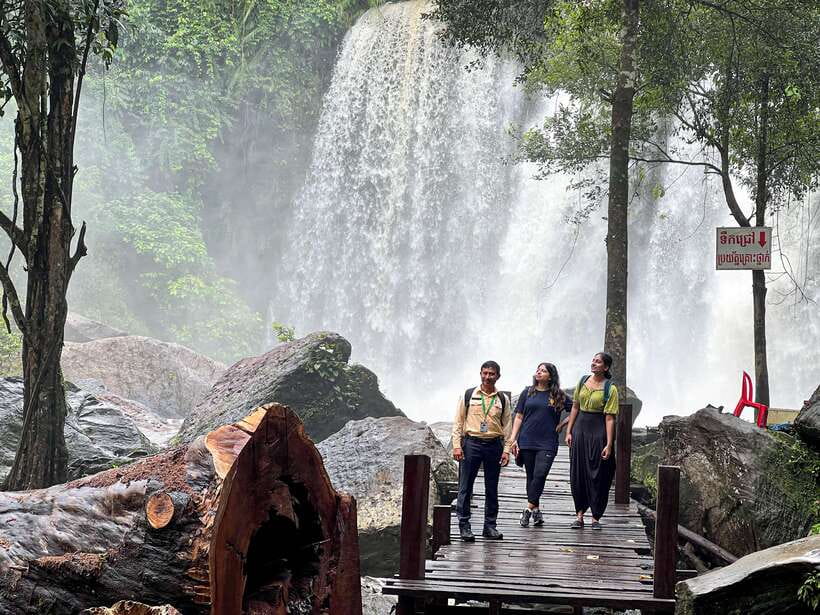
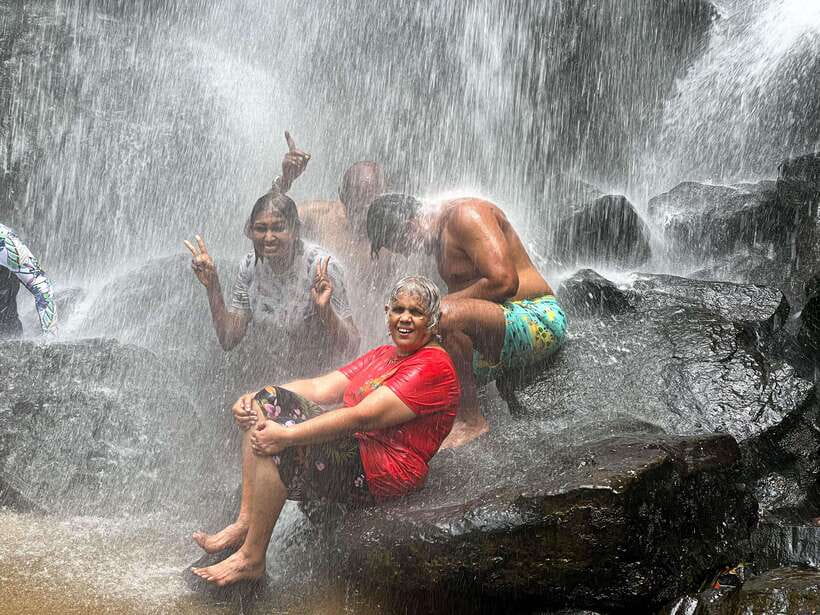
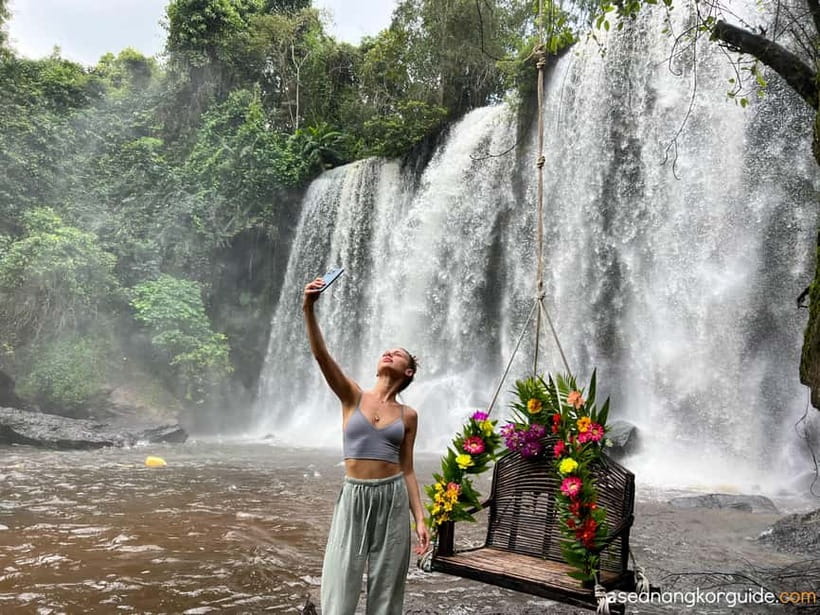
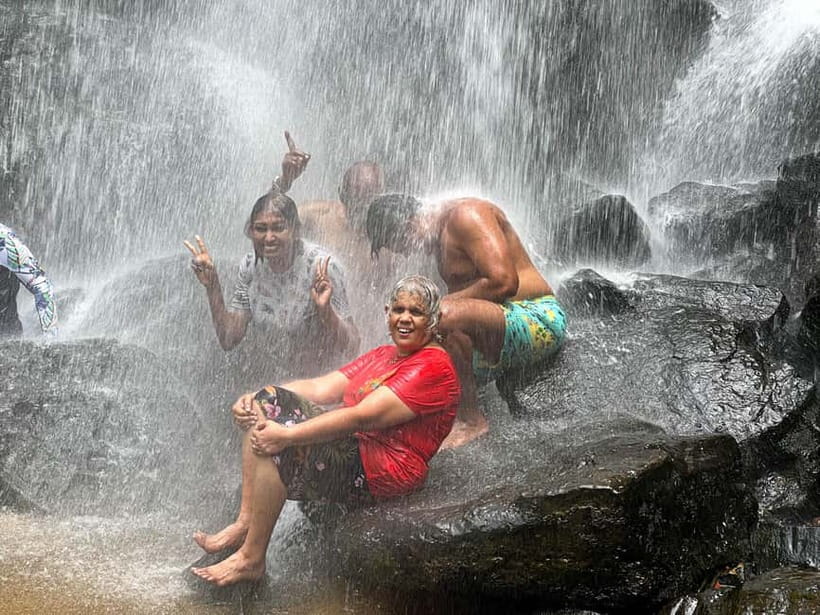
The Kulen waterfall is the day’s main rest stop. You get roughly an hour and a half for the waterfall, lunch, and free time.
The picnic usually includes grilled chicken, rice, spring rolls, seasonal fruit, and other local food. Vegetarian meals are available if you request one in advance. The food is served near the waterfall, often under a tent, and the setting makes this more than a routine boxed lunch.
You may swim or bathe in the water, so bring a towel or swimming suit. Conditions can change with the season. A waterfall may be forceful at one point and calmer farther downstream, so listen to local advice and do not assume every section is suitable for swimming.
This is also where the tour’s physical pace eases. After the cliff, riverbed, and temple walks, you can sit down, eat, and cool off. The driver’s cold water and towels are especially welcome here. If you do not want to swim, the picnic and forest setting still make the stop worthwhile.
The long transfer to Kampong Phluk
After the mountain, expect about an hour and a half in the vehicle before reaching Kampong Phluk. This is the least active part of the day, but it is also why breakfast matters. Eat before pickup, since the first proper meal comes later at the waterfall.
The road transfer divides the day into two clear halves. Phnom Kulen is about sacred sites, mountain scenery, and swimming. Kampong Phluk is about homes, transport, fishing-related life, and the changing water of Tonle Sap.
You may feel tired by this point. That is normal. The tour packs a lot into one day, and the second half is not a short add-on. The air-conditioned vehicle, water, and cool towels make the transfer easier, but I would not schedule another major activity that evening.
Kampong Phluk by local boat
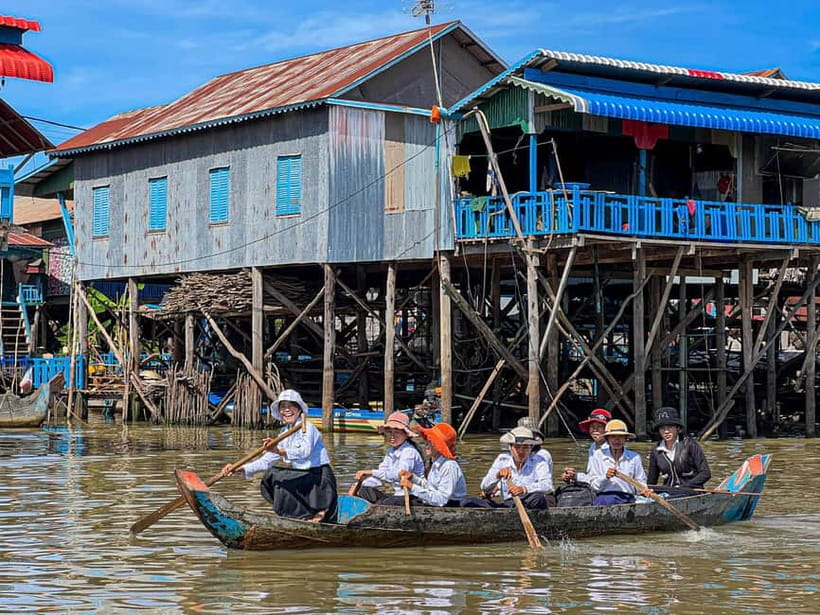
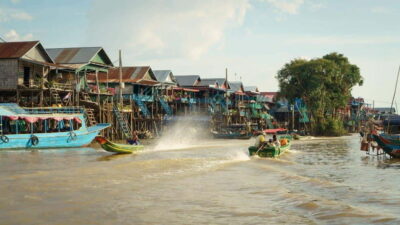
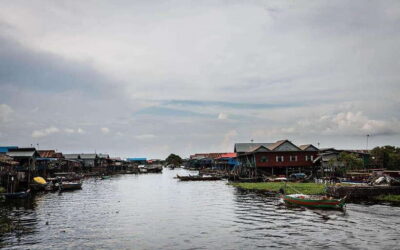
At Kampong Phluk, you board a local boat for about 90 minutes. The village is home to around 3,000 people and includes floating houses, tall stilt houses, schools, and a Buddhist monastery built on an artificial island.
The tall houses are designed around the seasonal changes of Tonle Sap. During high water, boats become the main way to move through the community. During lower water, the relationship between homes and the lake looks very different. Your guide can explain how the village adjusts to these changes.
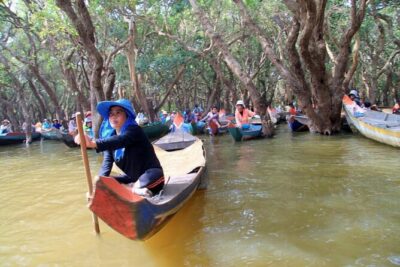
The boat ride may include the flooded mangrove forest, where tree trunks and branches rise from the water. Water levels affect the appearance of this section. In the wet season, the boat may move among treetops and through flooded areas. In drier conditions, the route can look more open.
The monastery and school provide a reminder that Kampong Phluk is a living community, not just a photo stop. You should be respectful around residents, children, homes, and religious sites. The experience is most useful when you look beyond the unusual architecture and notice how people work, study, travel, and worship in a water-based setting.
The Tonle Sap pass and shared boat cost $15 per person and are not included in the tour price. This fee is paid locally in cash, so keep US dollars with you.
Sunset on Tonle Sap
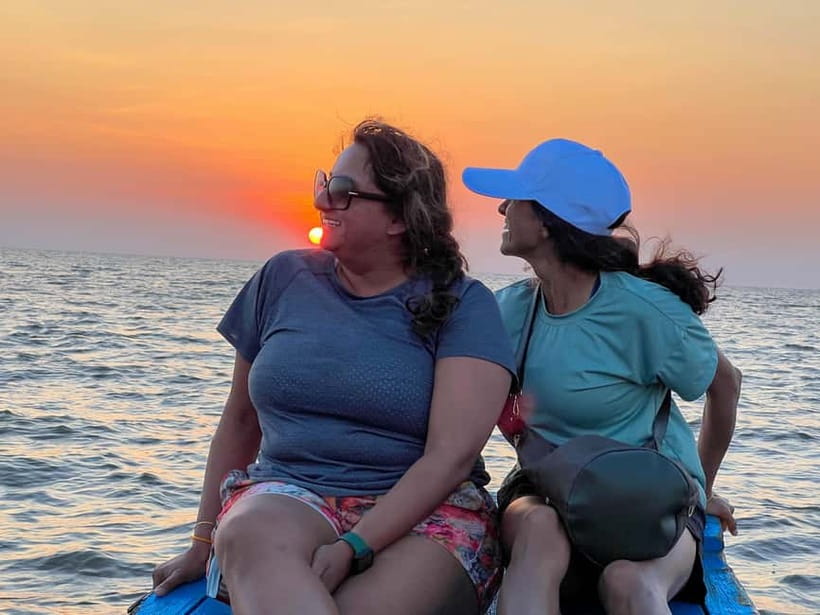
The boat continues onto Tonle Sap, Asia’s largest lake, for about 30 minutes of sunset viewing. This is a calm finish after a full day of walking and road travel.
The lake can feel vast and open, especially after the narrower village waterways. Sunset timing depends on the season and the day’s schedule, so think of this as a likely highlight rather than a guaranteed cloud-free show. Even when the sky is not dramatic, the open water gives you a quiet final view of the region.
You then return to Siem Reap by van, with arrival expected around 7:00 in the evening. Pickup and drop-off are available in Siem Reap Province and Krong Siem Reap.
What the $49 price really covers
The advertised cost is $49 per person, but you should budget another $35 for the required admission charges: $20 for the Kulen Mountain pass and $15 for the Tonle Sap pass and shared boat. That brings the known total to about $84 per person, not including soft drinks or personal purchases.
At that total, the tour offers solid value if you want both destinations in one day. It includes hotel pickup and drop-off, air-conditioned transport, an English-speaking guide, lunch, seasonal fruit, palm cake tasting, bottled water, and cool towels.
The value is weaker if you only want a relaxed waterfall visit or a short floating-village trip. You are paying for distance, guiding, transport, food, and the chance to combine sites that would otherwise require separate arrangements. The small-group limit of 12 helps keep the cost reasonable while allowing more contact with the guide. Private options are also available if you want more control over the pace.
Admission tickets are paid on the spot in cash, and only US dollars are accepted. Plan for that before leaving your hotel.
Who should book this experience?
I would choose this tour if you want a full picture of the Siem Reap area beyond Angkor. It suits active adults who enjoy variety, local food, mountain walks, swimming, boats, and cultural explanation in one day.
It is especially useful early in a Siem Reap stay if you want to understand the countryside before spending more time at the temples. It also works well as a complement to Angkor because Phnom Kulen and Kampong Phluk offer different settings and stories.
I would skip it if you dislike early starts, long road transfers, heat, uneven walking, or tightly scheduled days. Children under 10 are not suitable for the small-group option, and the tour is not recommended for people over 70. Large bags and baby strollers are not allowed.
Free cancellation is available up to 24 hours before departure, and you can reserve now and pay later. Those terms give you some flexibility, but the physical demands and extra cash fees still deserve attention before booking.
Should you book the Kulen Mountain and Kampong Phluk tour?
Book it if you want one well-supported day that combines ancient sacred sites, rural Cambodia, a waterfall picnic, and Tonle Sap life. The most praised parts are the guides, the safe and attentive drivers, cold water and towels, the local lunch, and the sunset boat ride.
The day is long and full. You will not have much spare time at each stop, and the mountain roads take patience. But if you arrive with breakfast in you, sensible shoes, sun protection, swimming gear, and enough US dollars, this is a strong choice for seeing far more than the usual temple circuit.
FAQ
How long does the tour last?
The tour lasts about 11 hours. Pickup is scheduled between 8:00 and 8:30 in the morning, with return to Siem Reap expected around 7:00 in the evening.
Where does pickup take place?
Pickup is available in Siem Reap Province and Krong Siem Reap. Wait in your hotel lobby about 10 minutes before the scheduled pickup time.
Is hotel transportation included?
Yes. Hotel pickup and drop-off are included, along with air-conditioned minivan or bus transportation.
What admission fees are extra?
The Kulen Mountain pass costs $20 per person. The Tonle Sap pass and shared boat cost $15 per person. These admission payments are not included and must be paid locally in cash, in US dollars.
Is lunch included?
Yes. A picnic lunch is included, along with seasonal fruit and palm cake tasting. A vegetarian option is available if requested in advance.
Can I swim at Kulen waterfall?
Yes, you can bring a swimming suit or towel if you want to bathe at the waterfall. Water conditions can vary, so follow the guide’s advice about suitable areas.
What language is the tour conducted in?
The tour is conducted in English with a live English-speaking guide.
How large is the group?
The small-group tour is limited to 12 participants. Private options are also available.
Is the tour suitable for children and older adults?
Children under 10 and people over 70 are not considered suitable for this experience. The day includes walking, heat, a long road journey, and several different stops.
Just added around Siem Reap
- Ultimate Sunrise to Angkor Wat, Angkor Thom and Bayon Temple★ 5.0 · 3 reviews
- Full-Day Private Tour of Angkor Wat with Pick Up★ 5.0 · 12 reviews
- Trekking Tour at Phnom Kulen National Park from Siem Reap★ 5.0 · 3 reviews
- Twilight Tastes of Siem Reap Include Dinner★ 5.0 · 13 reviews
- Siem Reap City Tour with War Museum and Killing Field★ 5.0 · 27 reviews
- Private Day Trip to Angkor Temples with Expert Guide★ 5.0 · 4 reviews
- Waterfall & River of 1000 Siva Linga- Kulen Mountain Private Tour★ 5.0 · 3 reviews
- Private Two Days Siem Reap Temples Discovery Guided Tour★ 5.0 · 7 reviews
Tonle Sap Floating Village Tours, compared.
Sunset tour of Kampong Phluk stilts home village on the Tonle Sap
Read our review →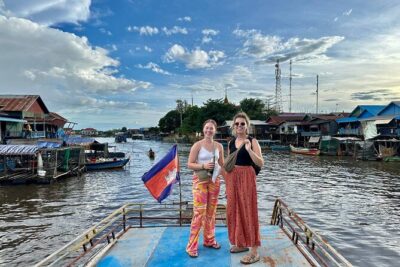
Kompong Phluk Floating Village Half-Day Tour ( Morning / Sunset )
Read our review →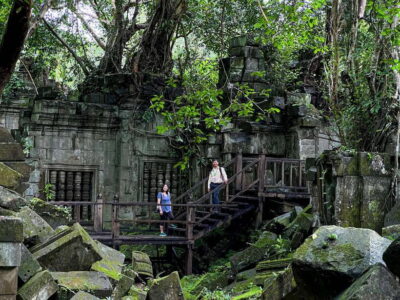
Kulen Mountain, Beng Mealea and Tonle Sap Tour
Read our review →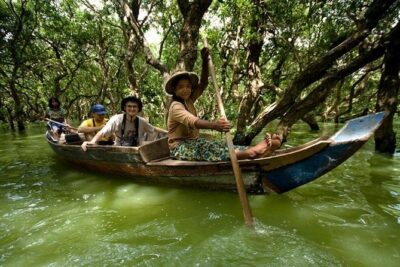
Tonle Sap Lake & Kampong Phluk Village Half-Day Tour
Read our review →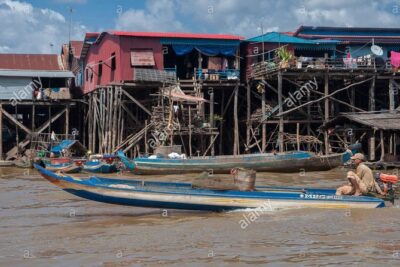
Kulen Mountain with Beng Mealea and Tonle Sap Small Group Tour
Read our review →Browse the lists this tour appears in