
Reviewed · SIEM REAP CITY AND WALKING TOURS
Siem Reap: City Walking Tour
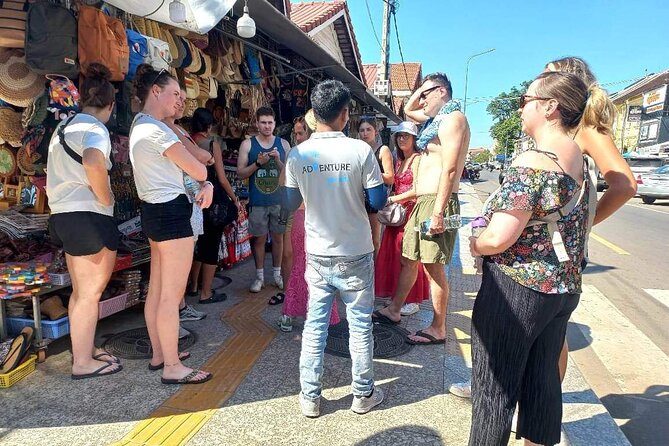
Siem Reap’s best introduction may be on foot, not in a tuk-tuk. This two-hour walk connects the Royal Gardens, colonial streets, a major pagoda, local markets, and Pub Street, giving you both the tourist center and the everyday town around it. I like the way the route mixes grand sights with ordinary details, such as local food, road-crossing habits, houses, religion, and how people use public spaces. I also like the small-group limit of 10, which gives you a fair chance to ask questions.
The price is just $6 per person, a remarkable value if you want orientation before visiting Angkor. The main drawback is the heat: even a gentle walk can feel tiring, and you must walk to the meeting point rather than receive hotel pickup. Wear light clothes, bring sun protection, and arrive ready to remove your shoes at the pagoda.
Key points to know before you book
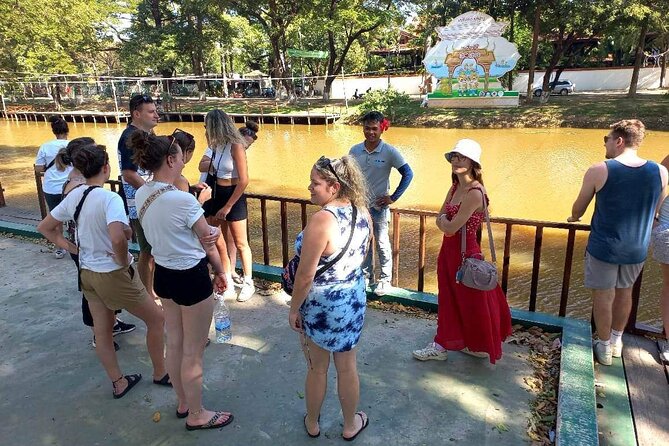
- Royal setting: Start near the Royal Residence, Royal Gardens, and the central river area.
- Local neighborhood: Walk through Kandal Village, where boutique shops and coffee houses occupy old colonial buildings.
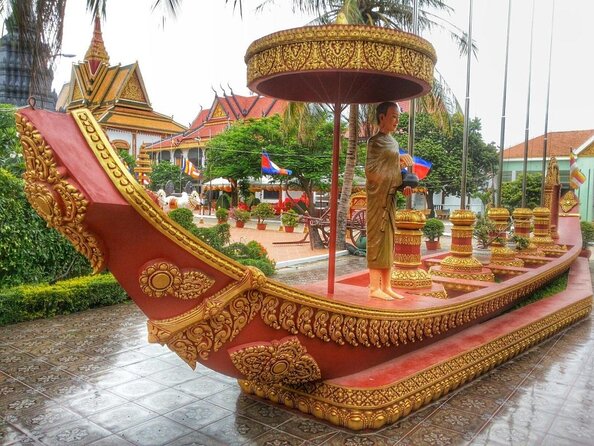
- Buddhist insight: Visit Wat Preah Prom Rat, Siem Reap’s largest pagoda, including its reclining Buddha.
- Market life: See Psar Chas, or Old Market, with clothing, souvenirs, produce, and food stalls.
- Nightlife advice: Visit Pub Street in daylight and get practical tips for returning after dark.
- Flexible small group: The tour is capped at 10 people, with English and Cambodian-speaking guides.
Why this walk works well on your first day
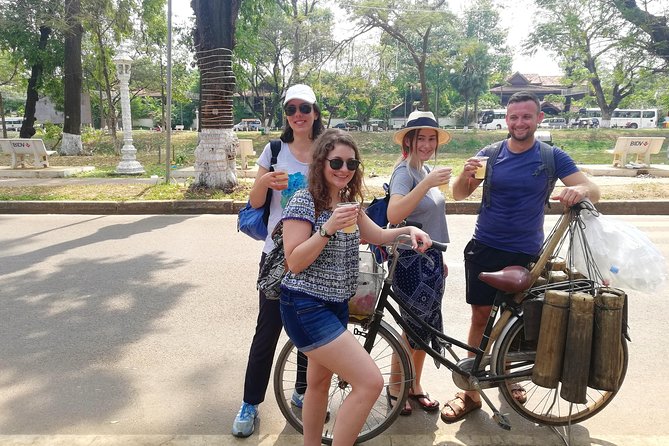
Siem Reap can feel easy to understand at first. The streets around the Old Market, river, Pub Street, and Wat Bo Road are close together, and many visitors simply wander between them. Yet a guide helps you notice what you would otherwise pass without a second glance.
I like this tour as a first-day activity because it gives you a mental map. You see where the market sits, how the Royal Gardens relate to the central streets, where the pagoda is, and how Kandal Village differs from the busier tourist lanes. Later, when you return by tuk-tuk or on foot, the center feels less like a collection of disconnected stops.
The route also gives you useful cultural background before a temple-heavy visit to Angkor. You learn how Buddhism fits into daily Cambodian life, how to behave inside a pagoda, and what you are looking at when you encounter monks, shrines, or Buddha images elsewhere.
The guide makes a major difference. Guides called Tea, Tee, Ti, T, Sai, Ty, Chek, and others have led recent departures, so the name will vary. The strongest guides have been clear in English, funny without turning the tour into a performance, and willing to answer questions about family life, food, religion, and Cambodia today.
More city and walking tours in Siem Reap:
- Siem Reap: Angkor Wat Sunrise and Full-Day Sightseeing Tour
★ 4.9 · 2,828 reviews - Siem Reap City Walking Tour
★ 4.5 · 114 reviews - Siem Reap City Hidden Gems (Private Guided Tour)
★ 5.0 · 105 reviews
The Royal Gardens and Residence
The walk begins near the Royal Gardens and Royal Residence, an attractive way to introduce Siem Reap’s civic center. The gardens provide open space and a calmer start before the route moves into streets filled with shops, traffic, and market activity.
You should understand that this is a city walk, not a palace admission tour. The experience focuses on taking in the Royal Residence, seeing the gardens, and hearing about the place from outside and around its grounds. That makes this stop more of an orientation and cultural introduction than a grand interior visit.
The gardens are also useful for seeing local life. Depending on the time and pace of the group, you might notice people using central public spaces for exercise, socializing, or other daily routines. One guide showed a group local activities such as foot badminton and dancing near the Royal Palace area, which offered a more revealing picture of Siem Reap than a formal monument alone.
This part of the route is especially good for first-time visitors who want context. You begin with Cambodia’s public and royal setting, then move toward neighborhoods where daily commerce takes over.
Kandal Village and the colonial back streets
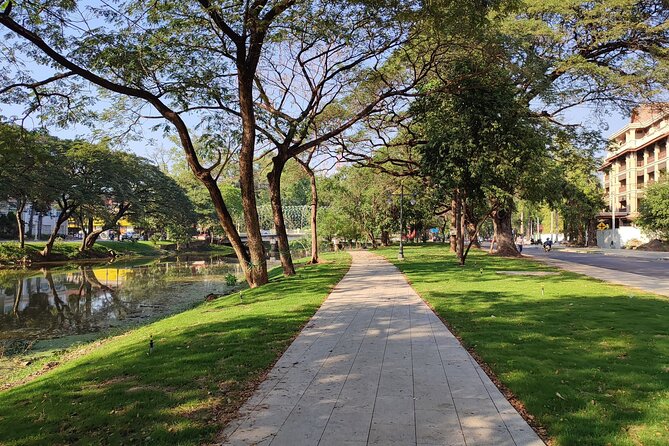
From the Royal area, the walk heads through quieter central streets toward Kandal Village. This neighborhood is known for boutique stores, coffee houses, and older colonial architecture. It is a useful contrast to the souvenir-heavy market streets.
I like Kandal Village because it shows how Siem Reap has changed without losing every trace of its older town. You get a look at smaller businesses and renovated buildings rather than only large attractions. The guide can point out architectural details and explain how the center has developed around tourism.
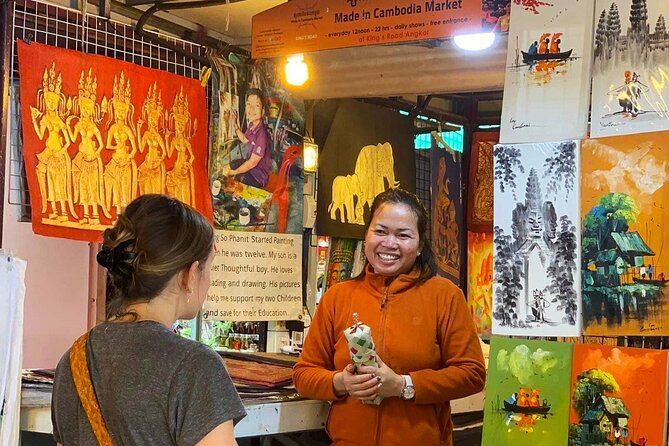
This is also a good place to ask for practical advice. You can ask your guide where to find coffee, what kinds of locally made goods are worth considering, or which streets are pleasant for a later walk. Some departures have included a Made in Cambodia market or a local craft center, with handmade products connected to local and disabled artists. The exact stop may depend on the guide and the day, so treat that as a possible addition rather than a fixed promise.
Do not expect a long shopping session here. Two hours goes quickly, and the purpose is to understand the neighborhood rather than browse every store. If a shop catches your eye, note its location and return later.
Wat Preah Prom Rat and the reclining Buddha
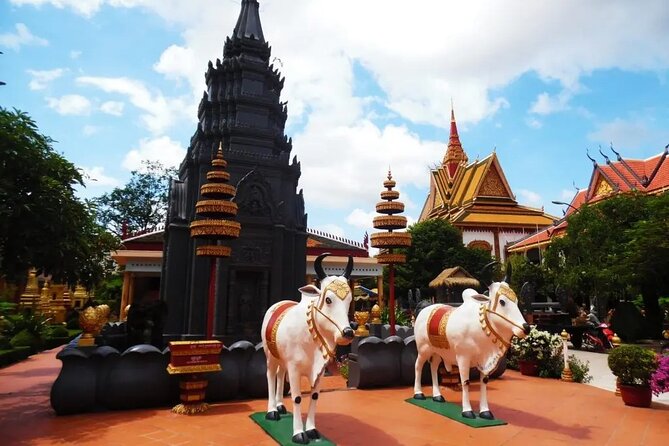
The religious heart of the walk is Wat Preah Prom Rat, described as the largest pagoda in Siem Reap. This is more than a quick photo stop. Your guide explains how a pagoda functions and how Buddhist practice fits into Cambodian life.
The reclining Buddha is the visual highlight. It gives you a memorable focus, but the value of the visit comes from the explanation around it. A guide can help you understand the meaning of the images, customs, and spaces that might otherwise blur together, especially if this is your first time in Cambodia.
Several guides have also explained the life of Buddha, the role of monks, and the connection between the temple and the local community. At some departures, visitors heard monks praying or saw the pagoda as both a religious site and a learning center. These details help you see the building as a living place, not simply a decorated stop on a sightseeing route.
You must remove your shoes when entering a pagoda. Wear shoes that come off easily, and do not treat this as a minor detail. In hot weather, the pavement and temple grounds can be hard on bare feet, so comfortable footwear remains important even though you will take it off indoors.
The pagoda stop also calls for respectful clothing and behavior. The supplied information does not set out a formal dress code, but sun protection and comfortable clothes are sensible for the walk. Your guide can provide the local instructions at the entrance.
A different sort of day out around Siem Reap:
- Angkor Wat Sunrise or Sunset Tour with Guide from Siem Reap
★ 5.0 · 12,109 reviews - Siem Reap: Angkor Wat: Small-Group Sunrise or Sunset Tour
★ 5.0 · 9,444 reviews - From Siem Reap: Kampong Phluk Floating Village Tour by Boat
★ 4.9 · 6,979 reviews - Sunset tour of Kampong Phluk stilts home village on the Tonle Sap
★ 5.0 · 4,865 reviews
Psar Chas, the Old Market
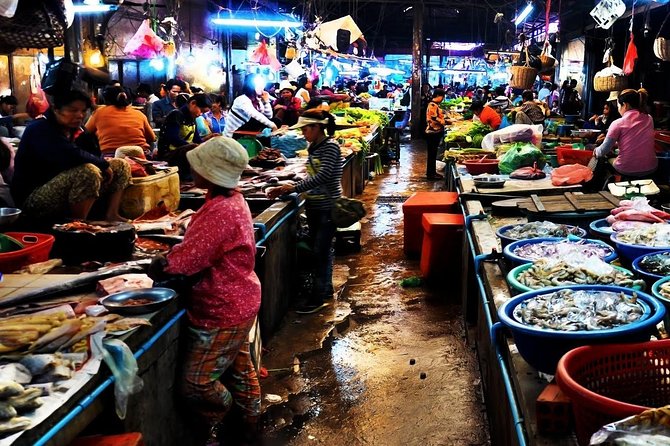
Psar Chas, or Old Market, brings you into the commercial center of Siem Reap. It serves many purposes at once, with clothing, souvenirs, fresh produce, and food stalls packed into one central market area.
This is where the tour moves furthest from formal sightseeing. You may see the products people buy for ordinary use alongside goods aimed at visitors. A good guide can explain local fruits, fish, and other foods, as well as how ingredients are prepared. That kind of information is far more useful than being told simply to look around.
The market can also help you shop with more sense. You learn what kinds of products are common, where the souvenir activity is concentrated, and what you might want to come back for later. Since food and personal purchases are not included, bring your own spending money if you want to sample something or shop.
The drawback is that markets can feel crowded and warm. The group may need to pause at the edge rather than move together through every narrow section. Keep your belongings close, follow the guide’s meeting instructions, and do not expect the guide to wait while you make a long purchase.
Pub Street in daylight
Pub Street is usually associated with evening meals, drinks, and nightlife, but seeing it during the day gives you a different view. The street is easier to understand when it is not at its loudest, and your guide can explain where to return later.
This practical advice is one of the tour’s strongest features. You can ask about the general feel of the area, how to plan an evening, and which surrounding streets are useful for food or drinks. The tour does not include food or beverages, and it does not continue into a night out, so you remain free to choose your own place afterward.
One useful way to use this stop is to mark the spots you want to revisit. The guide may finish near a central area, leaving you close to restaurants, markets, or the evening activity around Pub Street. Some people have continued directly to a meal after the walk, while others have returned to their hotel before going out later.
Pub Street is also a reminder that Siem Reap serves two different audiences. It is a nightlife center for visitors, but it sits within a town where people work, shop, worship, and live ordinary lives. The earlier stops keep the tour from becoming only a look at the entertainment zone.
What you learn beyond the landmarks
The best part of this experience is not a long list of monuments. It is the small information that helps you read the town.
Guides have explained Cambodian cuisine, local homes, road-crossing habits, religion, family stories, and everyday life. Those subjects may sound modest, but they give you a better sense of place than memorizing dates alone. You begin to understand why a pagoda matters, how a market serves local people, and why certain streets have become popular with visitors.
The quality depends on the individual guide. Names such as Sai, Tea, Tee, Ty, Chek, and Ti appear often among the departures, but you cannot select one from the information provided. The positive pattern is clear: guides are expected to speak English or Cambodian, and many have been praised for clear English, humor, personal stories, and pride in their heritage.
I would use the walk as a conversation, not a lecture. Ask what you are seeing, where locals shop, how a religious custom works, and which places are worth returning to. A small group makes that easier, especially if you are traveling alone.
Timing, walking effort, and what to bring
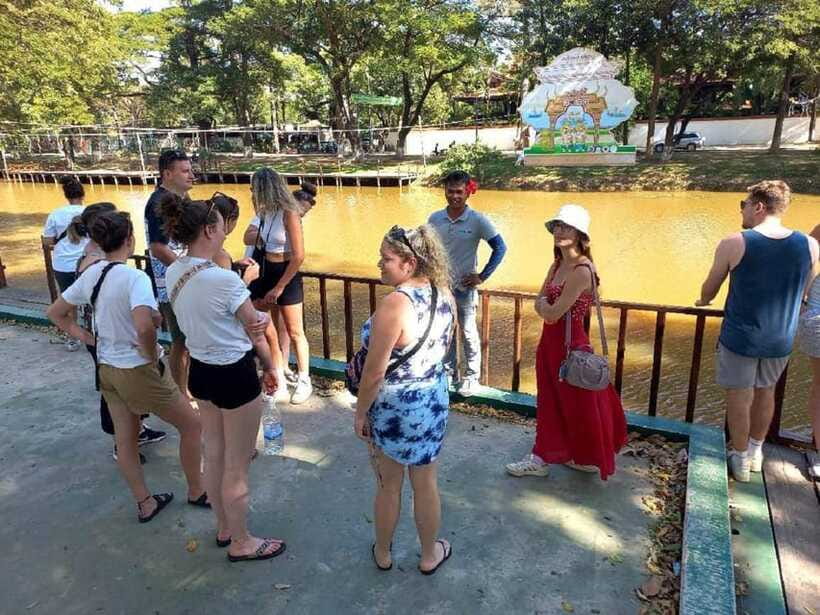
The advertised duration is two hours, though a guide may run longer if the group wants to continue at an unhurried pace. One departure lasted about three hours because the guide took time rather than rushing the stops. Do not count on that extra time if you have another booking afterward.
The pace is generally easy, but the route is still a continuous walk. One person described it as comfortable even in strong heat, while another suggested allowing extra time to reach the starting point. This is not a hotel pickup tour, so you must meet outside Damnak Supermarket at the corner of Wat Bo Road and 7 Makara Street, also known as High School Road, five minutes before the start.
Bring:
- Comfortable walking shoes
- A hat
- Sunglasses
- Sunscreen
- Water for the walk
- Small cash for food or personal purchases
Food and drinks are not included. Personal expenses are also your responsibility. The tour operates in a hot climate, so a morning departure may suit you better if that option is available. Check the start times before booking.
The $6 price and who gets the most from it
At $6, this is excellent value if you want a local introduction rather than private transport. You receive a live guide, a compact route through several key parts of central Siem Reap, and the chance to ask questions. A private guide would cost far more, while exploring alone gives you less cultural context.
The price is especially strong for solo visitors. A small group gives you company without the cost of a private tour, and the route helps you locate places you can revisit independently.
It also suits couples, first-time visitors, and anyone arriving before an Angkor-focused schedule. The walk does not replace a temple tour, a floating village excursion, or a food tour. Instead, it fills the gap between those larger activities by explaining the town where you sleep and eat.
You may want to skip it if you dislike walking in heat, already know central Siem Reap well, or have only a very short stop and need every hour for major temple visits. You should also avoid booking it too close to another fixed activity, since some guides naturally take extra time when the group is engaged.
Should you book this Siem Reap walking tour?
I would book it near the start of a Siem Reap stay, ideally before you spend much time in the markets or around Pub Street. The Royal Gardens, Kandal Village, Wat Preah Prom Rat, Old Market, and Pub Street form a useful introduction to the town, while the guide’s comments add the local context you will not get from a map.
Book it if you want orientation, culture, and strong value in a short format. Pack sun protection, meet at Damnak Supermarket on time, and keep your afternoon flexible in case the walk runs beyond two hours.
Skip it only if you want a purely historical tour, a private vehicle, or an air-conditioned experience. For most first-time visitors, $6 is a small cost for getting your bearings and learning how to make better use of the rest of your stay.
FAQ
How long does the Siem Reap walking tour last?
The advertised duration is two hours. A guide may take longer if the group prefers a slower pace and more time for questions.
How much does the tour cost?
The price is $6 per person.
Where does the tour meet?
Meet outside Damnak Supermarket at the corner of Wat Bo Road and 7 Makara Street, also known as High School Road.
How early should I arrive?
You should arrive five minutes before the scheduled start time.
Is hotel pickup included?
No. Hotel pickup is not included, so you must make your own way to the meeting point.
What languages are available?
The live tour is offered in English and Cambodian.
How large is the group?
The tour is a small-group experience limited to 10 participants.
What places are visited?
The route includes the Royal Residence and Royal Gardens, Kandal Village, Wat Preah Prom Rat, Psar Chas or Old Market, and Pub Street.
Do I need to remove my shoes?
Yes. You must remove your shoes when entering the pagoda.
Are food and drinks included?
No. Food, drinks, and personal expenses are not included.
What should I bring?
Bring comfortable shoes, a hat, sunglasses, and sunscreen. These are useful because the tour takes place outdoors and involves walking.
Can I cancel the booking?
You can cancel up to 24 hours in advance for a full refund. A reserve-now, pay-later option is also available.
Just added around Siem Reap
- Ultimate Sunrise to Angkor Wat, Angkor Thom and Bayon Temple★ 5.0 · 3 reviews
- Full-Day Private Tour of Angkor Wat with Pick Up★ 5.0 · 12 reviews
- Trekking Tour at Phnom Kulen National Park from Siem Reap★ 5.0 · 3 reviews
- Twilight Tastes of Siem Reap Include Dinner★ 5.0 · 13 reviews
- Private Day Trip to Angkor Temples with Expert Guide★ 5.0 · 4 reviews
- Waterfall & River of 1000 Siva Linga- Kulen Mountain Private Tour★ 5.0 · 3 reviews
- Siem Reap City Tour with War Museum and Killing Field★ 5.0 · 27 reviews
- Private Two Days Siem Reap Temples Discovery Guided Tour★ 5.0 · 7 reviews
Siem Reap City and Walking Tours, compared.
Angkor Wat Sunrise and Full-Day Sightseeing Tour
Read our review →
Siem Reap City Hidden Gems (Private Guided Tour)
Read our review →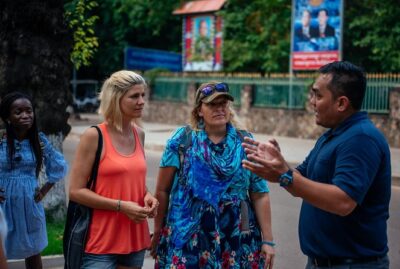
Highlights & Hidden Gems With Locals: Best of Siem Reap Private Tour
Read our review →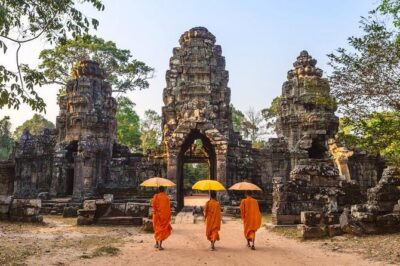
Best of Siem Reap 3-Day Private Tour to Angkor Wat & Tonle Sap
Read our review →
A Day Angkor Wat Sunrise Tour, Ta Prohm & Hidden Gems Beng Mealea
Read our review →
Siem Reap City Tour with War Museum and Killing Field
Read our review →
Private Guided Tour of Siem Reap Highlights & Hidden Gems
Read our review →Browse the lists this tour appears in