
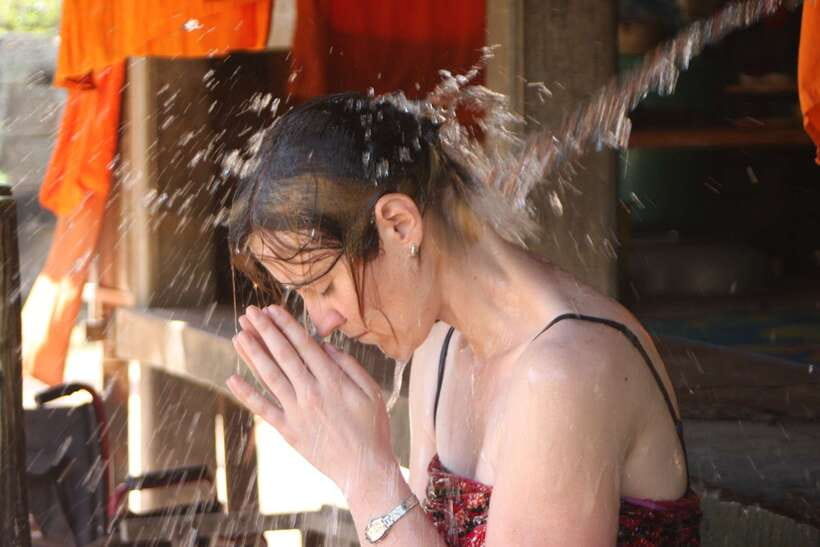
Reviewed · MONK BLESSINGS AND BUDDHIST CEREMONIES
Siem Reap: 1-Hour Cambodian Buddhist Water Blessing
At Wat Arang Pagoda, south of Siem Reap, a monk chants over you while water is sprinkled or poured over your head. It is a living Cambodian custom, not a staged temple show, and the ceremony offers a welcome change from another round of ancient stones. The full blessing can leave you completely soaked, so come ready for a practical, hands-on ritual.
I like the personal guidance, especially when guides such as Sokha or Lee explain the Buddhist customs, help you follow the proper etiquette, and take photos during the ceremony. I also like the market stop, where you see where local people buy food and daily goods rather than spending the whole outing inside a tourist district.
The main drawback is that the exact blessing option may not always feel clear before the ceremony begins. The longer ritual is powerful and memorable, but it costs you dry clothes and can make the chanting hard to hear while water hits your head.
Key points to know
- Two blessing styles: Choose a light sprinkling with chanting, or a longer ritual in which blessed water is poured over your head.
- Wat Arang Pagoda: Visit a working countryside pagoda south of Siem Reap, with time to learn about monks, Buddhism, and the grounds.
- Practical guide support: English-speaking guides including Sokha and Lee explain the ritual, translate questions, and can take photos.
- Bring a change of clothes: A sarong is supplied for the full blessing, but extra underwear and a towel can make the experience easier.
- Market visit included: Add a local market stop to see ordinary Cambodian shopping and food stalls.
- Good value at $37: The price covers hotel pickup, tuk-tuk transport, guide, pagoda donation, sarong, and the market stop.
Why this short ceremony feels different from temple sightseeing
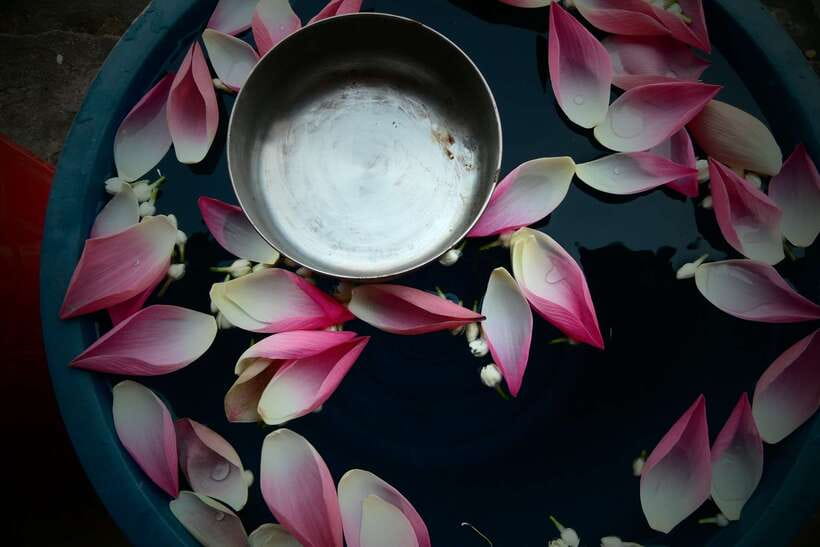
Siem Reap is famous for Angkor, but its most meaningful moments are not always found among the grand ruins. At Wat Arang, you take part in a practice that belongs to everyday Cambodian spiritual life. A monk chants for good luck, safe travel, and long life, then uses water as part of the blessing.
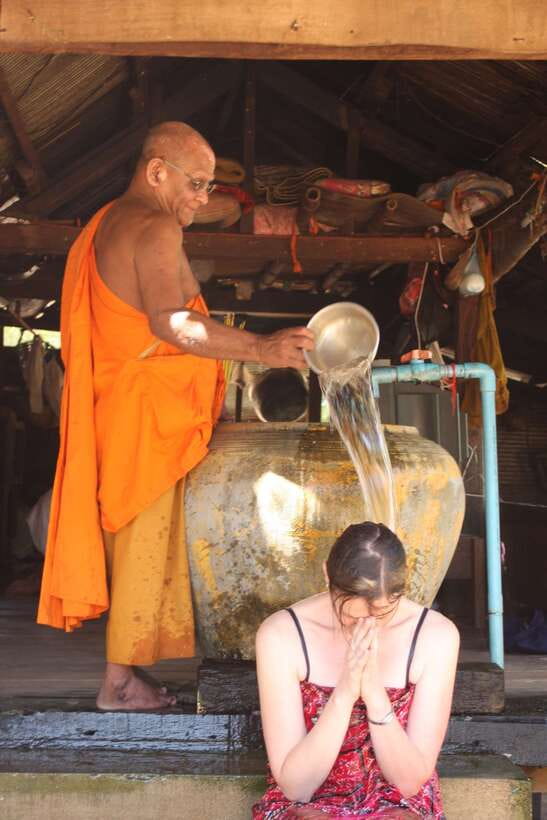
You can select the shorter form, with chanting and a gentle sprinkling of water. The other form is longer and more dramatic. You change into a sarong, sit on steps, and receive vessels of blessed water poured over your head while the monk continues chanting.
I would choose the ritual based on your mood and clothing for the day. The light blessing is easier if you have a busy schedule or do not want to change. The full ceremony is the better pick if you want a strong sensory experience and do not mind getting wet.
The ceremony is presented as open to people of any faith. Its meaning connects with Buddhist practice and Cambodian spiritual traditions, but you are not required to adopt a belief system or make a religious commitment. You are asked to behave respectfully and follow the guide’s instructions.
More monk blessings and temple ceremonies in Siem Reap:
- Monk Blessing Ceremony in Siem Reap
★ 5.0 · 24 reviews - Private Guided Angkor Wat Tour by Lady Tuk Tuk with Monk Blessing
★ 5.0 · 19 reviews - Siem Reap: Khmer Water Blessing by Monk and Lotus Farm Visit
★ 5.0 · 15 reviews
The tuk-tuk ride south from Siem Reap
Your driver picks you up at your hotel at the time shown on your booking. The pagoda is in the countryside south of Siem Reap, and the ride by tuk-tuk takes roughly 15 minutes according to the usual route described for the outing.
The tuk-tuk is part of the appeal. You are not sealed inside a coach, and the short ride helps shift the mood from city sightseeing to a quieter local setting. Exact road conditions and travel time can vary, so do not schedule the experience too tightly against another paid activity.
An English-speaking guide joins you and explains what will happen before you reach the monk. This preparation matters. The ritual is simple once you understand it, but the customs, sitting position, offering, and clothing change may not be obvious if you arrive without help.
Guides named Sokha and Lee have been especially useful for this kind of visit. Sokha has explained Buddhism, the pagoda, and the ceremony in detail, while Lee has been praised for calm instructions, friendly conversation, and taking photos during the blessing. Your assigned guide may differ, but the experience depends heavily on this person’s ability to explain the setting clearly.
A local market before or around the pagoda visit
The included market visit gives this two-hour outing more substance than a quick religious photo stop. You pass through a market used by local people, with ordinary goods such as meat, fish, vegetables, and gold. It is a useful look at daily life, and your guide can explain what you are seeing.
This part is not a polished food tour. You should expect a working market rather than a carefully arranged cultural display. That is precisely why it works. You see the practical side of Cambodian life before or after entering the pagoda grounds.
Keep your expectations sensible. The market stop is an added part of the itinerary, not the main attraction, and the available time may depend on traffic and the ceremony. Still, I value it because it gives context. The pagoda is not an isolated monument. It serves a living community.
Entering Wat Arang Pagoda
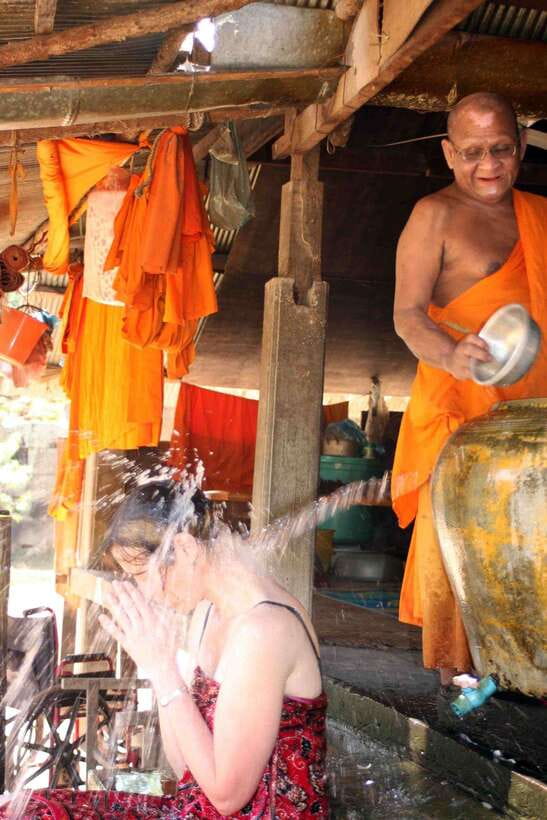
At Wat Arang, your guide walks you around the grounds and explains how the monastery functions. The visit can include discussion of Buddhist beliefs, Cambodian culture, the role of monks, and the work done at the pagoda for older people, sick people, and those needing shelter or assistance.
One particularly meaningful detail is the donation included in your price. Food supplies are given to the monk, and the pagoda can use such support to help people who rely on the monastery. You are not simply paying for a performance. Part of the cost supports the place where the ceremony takes place.
Before the blessing, you may make an offering supplied as part of the visit. Your guide will explain the correct protocol. That assistance is valuable because small gestures, clothing choices, and body language matter in a religious setting.
Take a moment to look around before the ceremony starts. Several people have found the pagoda tour as worthwhile as the blessing itself because it explains monastic life rather than only showing you a religious building. If you have already spent days at Angkor, this working temple can give you a different kind of cultural experience.
More short experiences in Siem Reap:
- Unlimited Drinks! Pre-Game Session – 1 Hour
★ 4.5 · 7 reviews
Choosing between the light and full water blessings
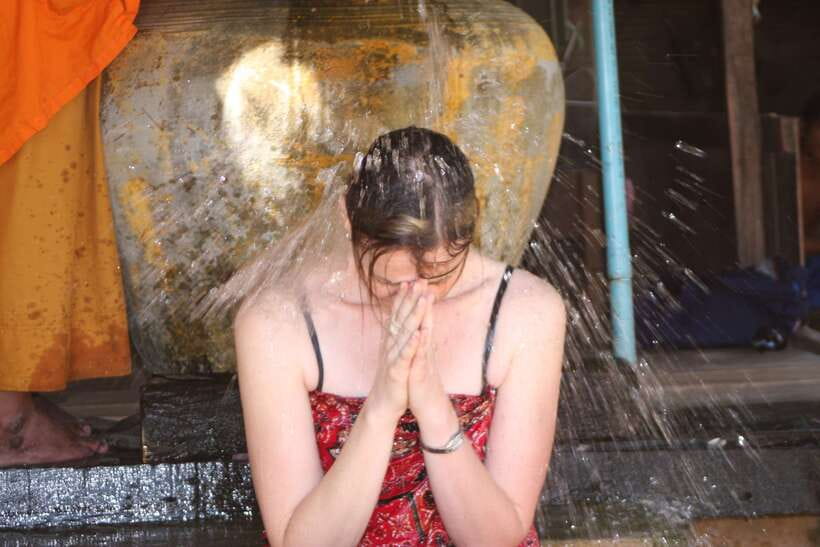
The shorter blessing begins with chanting. The monk wishes you good luck, safe travel, and a long life while lightly sprinkling you with water. It is the better choice if you want the ritual without changing clothes or carrying damp clothing afterward.
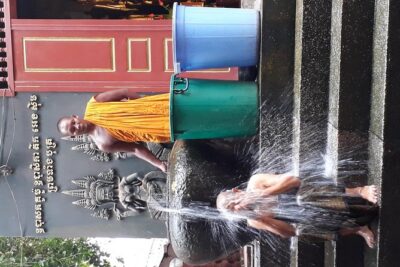
The full blessing uses larger amounts of water. You receive a sarong to protect your clothes, then sit on steps while vessels of blessed water are poured over your head. A towel is provided, but I would still carry another if you have long or thick hair.
One useful tip is to bring extra underwear. The supplied sarong helps keep your main clothing dry, but the full ritual can be thorough. Wear clothes that are easy to change and avoid making this your final activity before an important dinner or airport transfer.
The water can feel refreshing on a hot day, but the experience is not only about cooling off. The chanting, repeated movements, and close presence of the monk create a more intimate ceremony than a quick blessing at a large tourist temple.
A practical limitation is sound. When the water is being poured, it can be difficult to hear the chanting. If the spoken words matter most to you, ask your guide to explain the meaning before and after the ritual. If the physical act and atmosphere matter more, the noise is less of a concern.
What the guide adds to the ritual
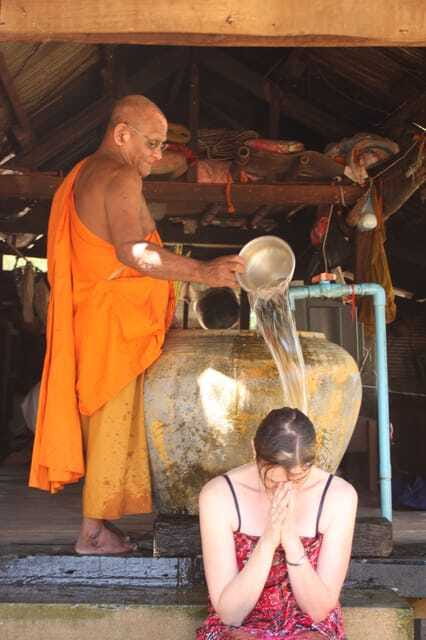
Your guide is not there only to provide transport. The best part of the service is the explanation before the monk begins. You learn where to sit, what to do with your hands, how to receive the blessing, and when to change into the sarong.
A good guide also gives you room to ask questions. Guides have explained Buddhist ideas, Cambodian history, animist traditions, and the daily life of monks during the walk around the pagoda. Some guides have also translated the monk’s comments afterward.
Sokha has been noted for explaining the process carefully and translating conversations with the monk. Lee has been praised for his polite manner and for helping solo participants by taking plenty of photos. That last detail matters. You cannot take your own phone pictures while water is being poured over you, so hand your phone to the guide if you want a record of the ceremony.
The photo help is a practical bonus, not a guarantee of a professional photo session. You should tell the guide what you want captured, especially if you are traveling alone. It is also wise to keep your phone protected around the wet portion of the ritual.
A two-hour outing with a one-hour blessing
The advertised duration is two hours, while the blessing itself takes about an hour as part of the wider visit. The total time includes hotel pickup, the tuk-tuk ride, market visit, pagoda walk, preparation, ceremony, and time to dry and change.
The actual blessing may feel shorter than the entire outing. One account describes the ceremony as only several minutes for two people, while others describe a longer experience lasting around an hour and a half from beginning to end. The timing likely depends on the selected ritual, questions, walking around the pagoda, and transport.
Plan on giving the experience a comfortable two-hour window. Do not book it immediately before a timed temple entry or a bus departure. The pickup is included, which makes the outing easy to add to a Siem Reap schedule, but flexibility is still sensible.
The tour is wheelchair accessible according to the activity details. Since the ceremony involves sitting on steps for the longer blessing, you should confirm your specific needs when booking so the guide can explain the available arrangements.
Is $37 a fair price?
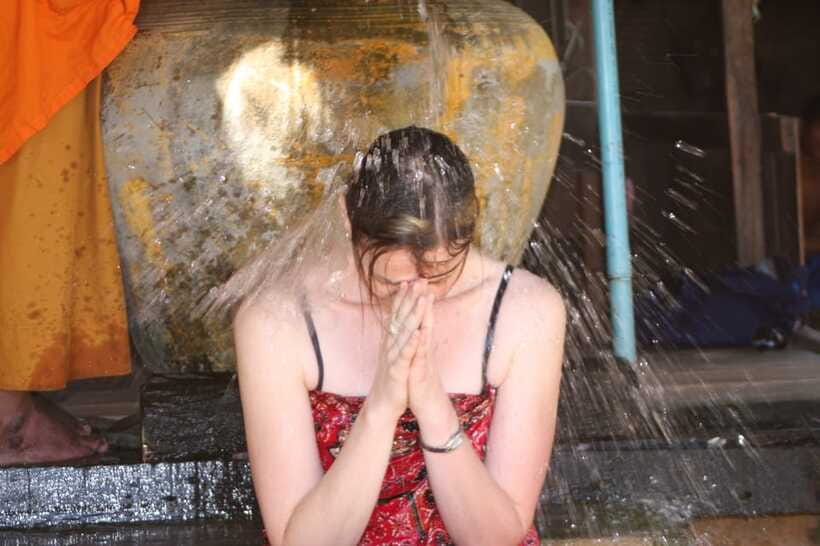
At $37 per person, the value comes from the package rather than the ceremony alone. You receive hotel pickup, tuk-tuk transport, an English-speaking guide, the pagoda donation, a sarong, and the market visit.
If you only want a few minutes of water blessing, the price may feel high. A donation and a brief local ceremony would cost less if arranged independently, though arranging it respectfully and communicating clearly can be difficult without local help.
I think the cost makes more sense for a first visit to Cambodia. You are paying for interpretation, transport, cultural context, clothing support, and a donation to the pagoda. The guide also helps prevent the common problem of arriving at a religious site without understanding what to do.
The experience is especially good value for solo visitors. A solo participant would otherwise have to arrange transport and find someone to take photos during the ceremony. Couples may also appreciate having the guide handle the practical details while both people take part.
What to pack for the water blessing
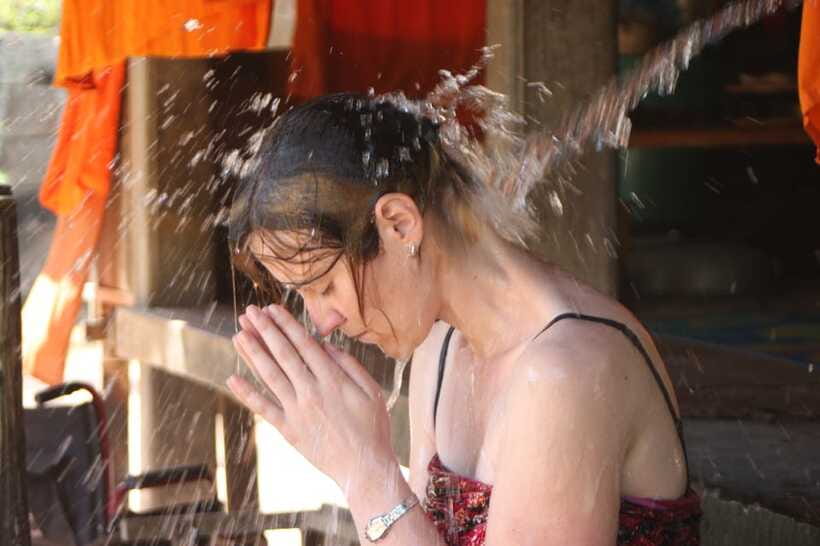
Pack lightly, but prepare for water. Your guide and pagoda supply the main items, including the sarong and a towel, yet a few personal extras will improve the visit.
- Extra underwear for the full water ritual
- A second towel, particularly if you have long hair
- Clothes that are easy to remove and put back on
- A phone or camera if you want the guide to take photos
- Personal money for anything you may choose to buy at the market
Wear respectful clothing for the pagoda. The supplied sarong is intended to protect your clothes during the full blessing, not to replace sensible temple attire for the entire visit.
Do not treat the water as a casual splash attraction. Listen to the guide, follow the monk’s instructions, and let the ceremony happen at its own pace. A little preparation helps you stay present instead of worrying about wet clothes.
Who should book this experience?
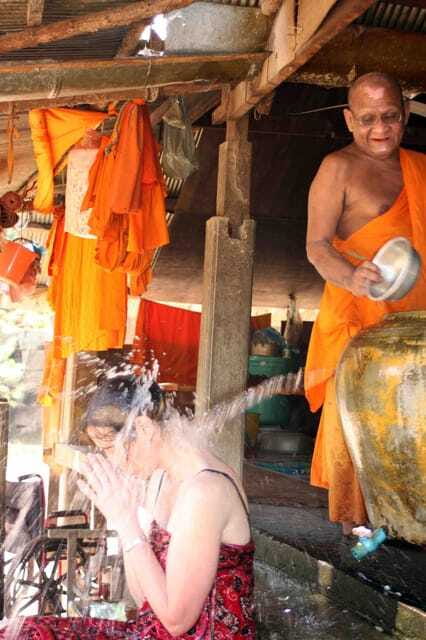
I recommend it to you if you want contact with present-day Cambodian culture and have an open mind about spiritual customs. It suits people who want more than temple architecture, especially after several days of Angkor ruins.
It is also a good match for solo visitors, couples, and anyone curious about Buddhist practice. The guide’s explanations make it approachable even if you know little about Buddhism. The market stop adds a grounded look at local life, and the pagoda donation gives the outing a useful social purpose.
You may want to skip it if you dislike religious ceremonies, do not want to change clothes, or expect a long formal lesson in Buddhist philosophy. The ritual is personal and physical, not a museum lecture. The chanting may be hard to hear during the full water pouring, and the market visit is brief.
Book the light blessing if you want a calm cultural stop that fits easily into a busy day. Choose the full ritual if you want the most memorable version and are happy to get wet. With free cancellation up to 24 hours in advance and the option to reserve now and pay later, the booking terms also give you some room to adjust your plans.
Should you book the Wat Arang blessing?
Book this if you want to meet Cambodia through a living custom rather than another monument. The combination of a local market, working pagoda, monk-led blessing, guide interpretation, and donation offers more context than a quick photo stop.
My practical advice is simple: ask which blessing you will receive, bring extra underwear and a towel, and leave enough time for the full two-hour outing. At $37, it is not the cheapest short activity in Siem Reap, but it is a reasonable price for a guided and supported cultural experience.
FAQ
Where does the Buddhist water blessing take place?
The ceremony takes place at Wat Arang Pagoda in the countryside south of Siem Reap Province.
How long does the activity last?
The complete activity lasts about two hours. The water blessing itself is described as a one-hour experience within the wider visit.
What types of blessing can I choose from?
You can choose a shorter blessing with chanting and light sprinkling, or a longer ritual in which blessed water is poured over your head.
Will I get wet?
You will get wet during the longer blessing. A sarong is provided so your main clothing can remain dry, and a towel is supplied afterward.
Should I bring extra clothing?
Extra underwear is recommended for the full blessing. An additional towel may also help, especially if you have long hair.
Is transportation included?
Yes. A tuk-tuk transfer and hotel pickup are included. The driver picks you up at the time shown on your booking.
Is an English-speaking guide included?
Yes. The activity includes a live English-speaking guide. Guides such as Sokha and Lee have explained the ceremony, Buddhism, the pagoda, and local customs.
Is the market visit included?
Yes. The experience includes a visit to a local market where you can see goods such as meat, fish, vegetables, and gold.
How much does the experience cost?
The listed price is $37 per person. It includes the guide, tuk-tuk transfer, sarong, donation to the pagoda, and market visit, but not personal expenses.
Can I cancel or pay later?
You can cancel up to 24 hours in advance for a full refund. You can also reserve your place and pay later, according to the booking terms.
Just added around Siem Reap
- Ultimate Sunrise to Angkor Wat, Angkor Thom and Bayon Temple★ 5.0 · 3 reviews
- Full-Day Private Tour of Angkor Wat with Pick Up★ 5.0 · 12 reviews
- Trekking Tour at Phnom Kulen National Park from Siem Reap★ 5.0 · 3 reviews
- Twilight Tastes of Siem Reap Include Dinner★ 5.0 · 13 reviews
- Waterfall & River of 1000 Siva Linga- Kulen Mountain Private Tour★ 5.0 · 3 reviews
- Siem Reap City Tour with War Museum and Killing Field★ 5.0 · 27 reviews
- Private Day Trip to Angkor Temples with Expert Guide★ 5.0 · 4 reviews
- Private Two Days Siem Reap Temples Discovery Guided Tour★ 5.0 · 7 reviews
Monk Blessings and Buddhist Ceremonies, compared.
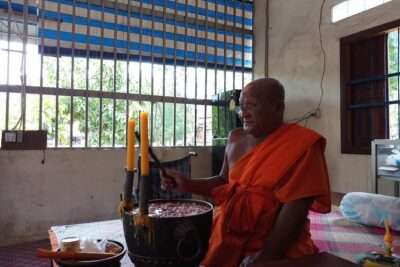
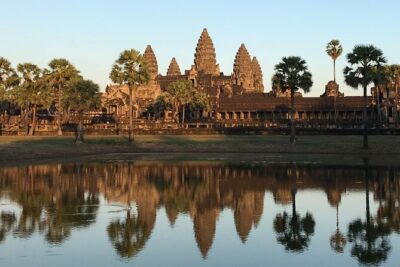
Private Guided Angkor Wat Tour by Lady Tuk Tuk with Monk Blessing
Read our review →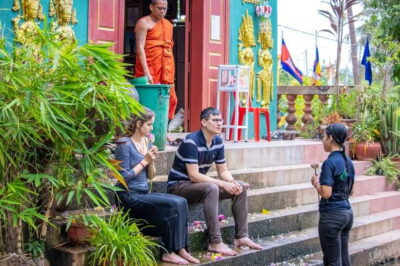
Khmer Water Blessing by Monk and Lotus Farm Visit
Read our review →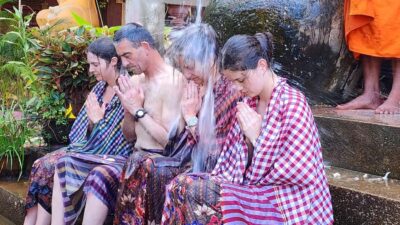
Siem Reap Cambodian Buddhist Water Blessing and Local Market
Read our review →Siem Reap Cambodian Buddhist Water Blessing and Local Market
Read our review →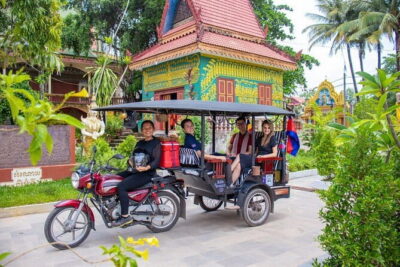
Traditional Khmer Water Blessing by Monk and Lotus Farm Visit
Read our review →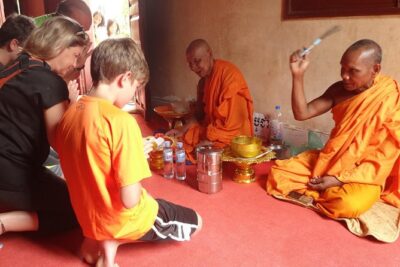
Buddhist Water Blessing and Real Life Experience with Local
Read our review →Browse the lists this tour appears in