
Reviewed · PHNOM KULEN WATERFALL TOURS
Kullen Waterfall Park with Small Group included entrance fee
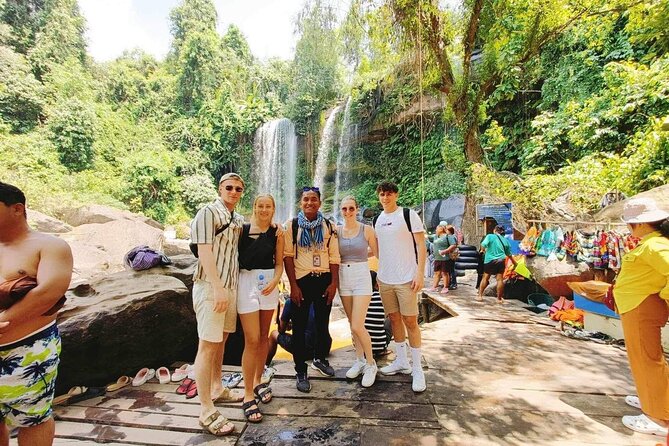
Phnom Kulen gives you a very different day from the temple circuit around Siem Reap. You trade crowded temple paths for forest roads, a sacred riverbed carved with 1,000 Lingas, and a waterfall where the water carries religious meaning. The day also brings you close to rural Cambodian life through palm sugar making and a visit to Preah Ang Thom’s large reclining Buddha.
I like two things in particular: the small group of no more than 13 people, and the way the tour joins nature, religion, recent history, and village traditions in one outing. Guides such as Chout and Makara are praised for explaining the sites, helping with photos, and keeping the day friendly and well organized.
The main caution is timing. This is sold as an eight-hour day, but the amount of time you spend at the waterfall and the 1,000 Lingas can depend on water levels, weather, and the pace of the group. In dry conditions, the Lingas may be hard to see, and swimming may not be possible.
The day at a glance
- A sacred riverbed from about 800 AD: Walk beside carvings of Lingas cut into the bedrock of the river.
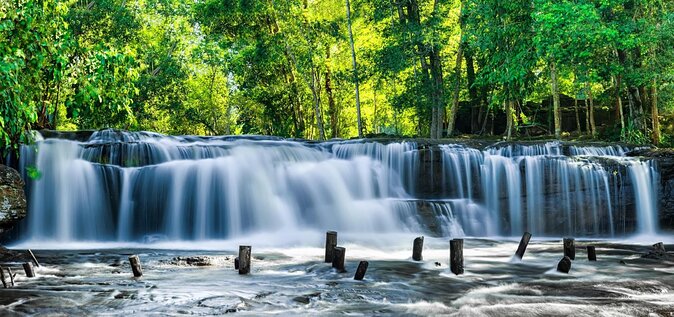
- A refreshing stop at Kulen Waterfall: You may have time for a swim, though water conditions change during the year.
- A large reclining Buddha at Preah Ang Thom: Visit one of Cambodia’s important Buddhist sites on Phnom Kulen.
- A practical look at rural life: See how palm sugar is traditionally made and sample local roadside treats if you choose to buy them.
- A thoughtful final stop: The Landmine Museum, founded by former child soldier Aki Ra, adds modern Cambodian history to the day.
- Useful inclusions: The $20 park entrance fee, air-conditioned transport, cold water, wet towels, guide, and pickup are covered.
Why Phnom Kulen makes a good break from Siem Reap
For many people, Siem Reap means Angkor Wat, Bayon, and long hours among stone temples. Phnom Kulen offers a change of pace. The park lies on an isolated chain of mountain plateaux south of the Dângrêk Mountains, and reaching it means leaving the city behind for forest, hillside roads, and rural scenery.
I like this outing because it does not treat the waterfall as the only point of the day. You get a better sense of why Phnom Kulen matters to Cambodia. The carved riverbed connects the area to the Khmer period, Preah Ang Thom shows its continuing religious importance, and the Landmine Museum brings the country’s more recent past into view.
The tour costs $45 per person. That price includes the $20 national park entrance fee, so the transport, guide, and other included services account for the rest. For an eight-hour outing in an air-conditioned vehicle, with pickup and drop-off included, the price is reasonable if you want several stops handled in one day rather than arranging separate transport.
Food is not included. Bring money for lunch and for anything you want to buy at roadside stalls. The Landmine Museum also has a separate entrance fee, listed as $3, so allow a little extra if you plan to go inside.
More Phnom Kulen waterfall trips in Siem Reap:
- Kulen Waterfall Join-in Tour (local Picnic lunch)
★ 5.0 · 2,434 reviews - Kulen Mountain: Small-Group Tour and Picnic lunch
★ 4.9 · 1,802 reviews - Siem Reap: Kulen Mountain, Beng Mealea and Tonle Sap Tour
★ 5.0 · 1,483 reviews
Leaving Siem Reap at 8:30 in the morning
The organized day begins at 8:30 am. The stated meeting point is Siem Reap Pub Hostel behind the Angkor Night Market, though pickup and drop-off are included, so confirm your pickup details when booking.
An air-conditioned minivan is important here. Phnom Kulen can be hot, and the tour includes walking as well as time outside at the waterfall and pagoda. Cold water and wet towels are provided, a simple touch that matters after a warm walk or a swim.
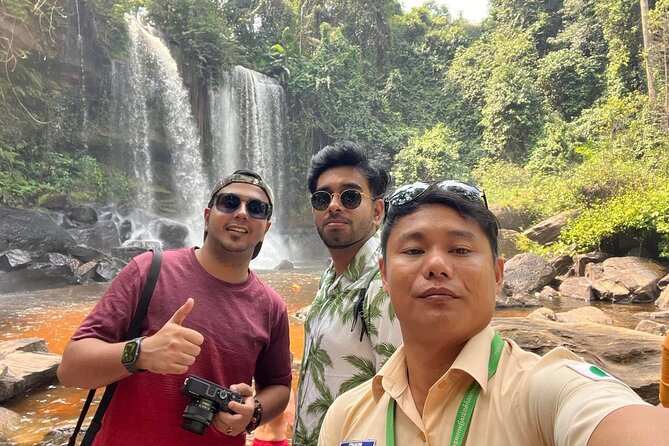
The group can include up to 13 people. That is not a private tour, but it is small enough for a guide to answer questions and help with photos. Chout, Pheap, Caout, and Makara are among the guides named in the tour information and feedback. The strongest praise goes to their friendliness, historical explanations, and willingness to take pictures.
One useful detail: the driver may keep the vehicle cool and ready while you are at a stop. That makes a difference on a long, warm day. The tour returns to the starting point.
Phnom Kulen National Park and the stone quarry
The first park stop takes about an hour and 15 minutes, including the climb into Phnom Kulen National Park. Along the way, the group stops at a quarry where people cut stone.
This is a useful addition because it shows the physical work behind Cambodia’s stone monuments. You are not only looking at finished carvings in a temple. You also get a glimpse of how stone has been taken from the mountain and used in building and sculpture.
The park itself is the setting for the rest of the day. Expect a mix of road travel, walks, religious sites, and time near running water. The outing is not designed as a demanding mountain hike, but you should still wear shoes suitable for uneven ground and bring protection from the sun.
The 1,000 Lingas along the river
The 1,000 Lingas are the cultural centerpiece of the tour. These carvings were made in the riverbed around 800 AD. A walk beside the water reveals Lingas in different sizes, along with other details cut into the bedrock.
A Linga is a Hindu symbol associated with Shiva. Here, the carvings were placed in the river itself, linking the water to religious belief. That helps explain why the waterfall and streams of Phnom Kulen are still treated as sacred by many people.
The walk takes about two hours, so this is not a quick photo stop. A guide can point out the carvings and explain what you are seeing, which is especially useful when water or shadow makes the details hard to spot. The river walk is also one of the quieter parts of the day, with a calm forest setting around the old stonework.
Water level is the key issue. One guide recommendation points to January through March as a good period for stronger waterfalls and clearer views of the Lingas. At other times, heavy water flow can obscure the carvings, while dry conditions can reduce the drama of the stream. One poor-weather experience included no visible Lingas and no swimming, so keep your expectations flexible.
More Angkor passes and entrance tickets in Siem Reap:
- Angkor Wat Admission Ticket
★ 5.0 · 227 reviews - Full Day Pass Angkor Wildlife and Aquarium – Siem Reap
★ 5.0 · 138 reviews - Siem Reap: Angkor Wat Admission Ticket
★ 4.7 · 106 reviews - Phnom Kulen National Park Admission Ticket
★ 4.7 · 30 reviews
Preah Ang Thom and the reclining Buddha
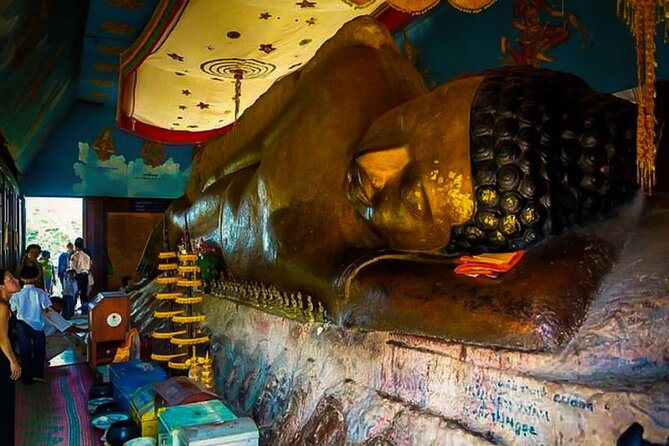
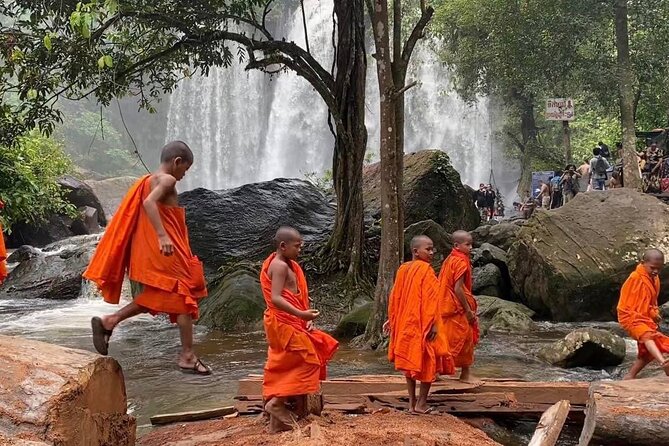
The next stop is Preah Ang Thom pagoda, located near the Lingas on Phnom Kulen. The site is known for a large reclining Buddha statue, described as the largest in Cambodia.
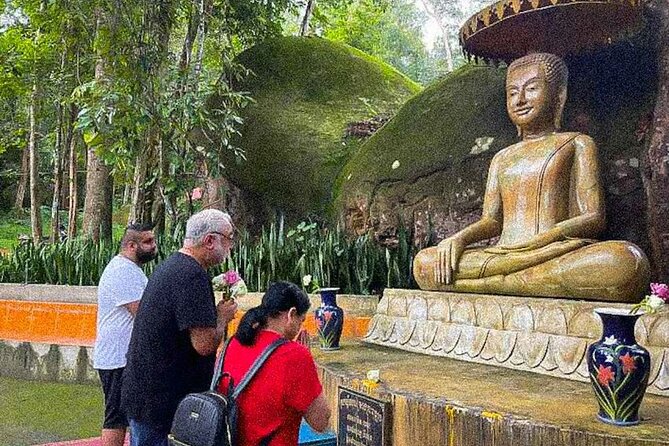
You spend about two hours here, and the stop is more than a quick temple visit. Preah Ang Thom remains an active religious place, so dress with respect and follow local customs. A blessing from a nun outside the pagoda is possible, but it should be understood as part of the local religious setting, not a guaranteed feature of every departure.
This is also where the tour’s cultural focus comes through most clearly. The 1,000 Lingas reflect an older Hindu period, while the reclining Buddha shows the importance of Buddhism in Cambodia today. Seeing both sites on the same mountain gives you a useful sense of how religious traditions have shaped the area over time.
Your guide can also help with photos, something repeatedly praised about Chout and Makara. Still, keep the camera secondary at the pagoda. You will get more from the stop if you allow time to observe the place rather than treating it only as a backdrop.
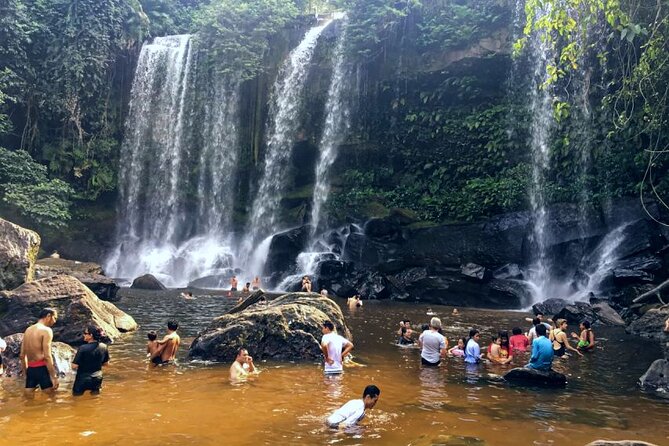
Kulen Waterfall and the question of swimming
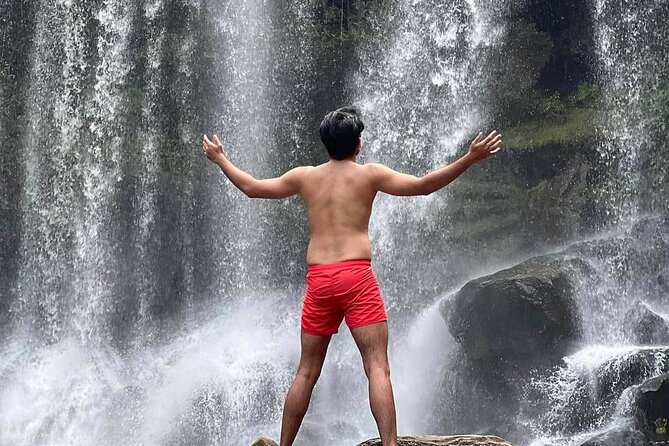
The waterfall stop lasts about two hours. This is the part of the day many people look forward to most, especially after the morning walk.
Kulen Waterfall is linked to the sacred water of Shiva and the Linga carvings upstream. The water is not simply presented as a scenic swimming hole. It carries religious meaning, and the tour explains how water has long supported life in the region, including rice growing, cooking, and other daily needs.
Swimming may be possible, depending on the conditions. Bring a swimsuit and a change of clothes if you want to get in, but do not assume the water will always be suitable. In one reported outing, swimming was not possible because of the conditions. The waterfall is at its most impressive when water is flowing strongly, and January through March was specifically recommended for good flow and clearer Lingas.
Even if you cannot swim, the stop still gives you time to relax beside the water. You might find local food for sale nearby, including grilled bananas. Since lunch is not included, this is a good point to ask your guide about food options and carry some cash.
Palm sugar and a taste of rural Cambodia
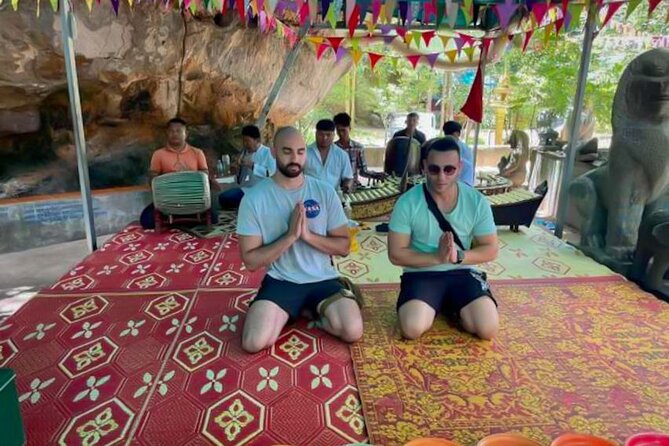
Before the Landmine Museum, the tour includes about an hour at a local palm sugar-making activity. This is one of the more distinctive parts of the day because it connects the scenery to everyday work.
You can see traditional methods used to make palm sugar, and the guides may also explain local products such as honey and medicines. This is not a large museum or a staged cultural show. It is a short look at a village craft and the way local resources become food and household goods.
Roadside vendors may offer palm sugar or grilled bananas. Buying something is optional, but it can be a simple way to support local sellers and try a Cambodian snack. Keep in mind that the tour does not include meals, so this stop should not be treated as a full lunch.
The Landmine Museum and Aki Ra’s story
The final major stop is the Cambodian Landmine Museum, founded by Aki Ra, a former child soldier. The museum focuses on landmines and their continuing effect on Cambodia.
This stop gives the day a more serious close. After ancient religious monuments and a waterfall, you confront a modern issue that has shaped Cambodian lives long after the country’s conflicts ended. It is a valuable addition if you want more than scenery and photographs.
The museum fee is not included. The stated price is $3. The tour information describes the stop as optional, so you can decide if it fits your interests and remaining time. One point to clarify before departure is the exact fee and whether the group will enter, since the entrance charge is separate from the tour price.
Allow about 45 minutes for the museum itself. The time is enough for an introduction without turning the day into a full museum visit. If you prefer ancient sites and nature only, you may choose to skip it. If you want a fuller understanding of Cambodia, I would make room for it.
What the $45 price really covers
The strongest value comes from the combination of entry fees and logistics. The $20 park fee is included, as are all stated taxes, an English-speaking guide, an air-conditioned minivan, pickup and drop-off, cold water, and a wet towel.
That matters because Phnom Kulen is not a simple walk from central Siem Reap. You are paying for transport to several separated stops, a guide who explains the religious and historic context, and a full day arranged around the mountain roads.
The value is less convincing if you only want a quick waterfall visit. One person felt the experience was closer to a half-day tour presented as a full day, especially when the Lingas were hidden and swimming was unavailable. Your satisfaction will depend heavily on water conditions and how much time the group spends at each stop.
The group size also affects value. With a maximum of 13, you get a more personal experience than a large coach outing, though you should not expect the flexibility of a private car. If your group is the only booking that day, the schedule may feel especially easygoing, but that cannot be guaranteed.
Who should book this Phnom Kulen tour
I would recommend this experience if you want to combine nature, Cambodian religion, rural life, and recent history in one day. It suits people who have already seen some of Siem Reap’s major temples and want a change from carved galleries and city traffic.
It is also a good choice if you value explanation. The ancient river carvings can be easy to miss without context, and the pagoda means more when you understand its place in local religious life. Guides such as Chout and Makara are praised for adding that context while also helping with photos.
Families and most reasonably mobile visitors can participate, since the activity states that most people can take part. Still, expect walking, outdoor heat, and uneven ground. If you need a highly flexible schedule, have limited mobility, or mainly want a guaranteed swim, a private arrangement may suit you better.
Book it if you can accept changing water conditions and want a broad day outside Siem Reap. I would choose the tour in the recommended January to March period when possible, while remembering that seasonal conditions can still vary.
The tour has a 4.9 rating from 105 ratings and is recommended by 98 percent of customers, which matches its strongest qualities: friendly guides, clean and comfortable transport, useful explanations, and a good mix of stops. The practical drawbacks are clear too: food costs extra, the museum fee is separate, and the waterfall and Lingas are not guaranteed to look the same on every departure.
FAQ
How long does the Phnom Kulen tour last?
The tour lasts approximately eight hours and begins at 8:30 am. It ends back at the stated meeting point in Siem Reap.
Is hotel pickup included?
Yes. Pickup and drop-off are included, although the stated meeting point is Siem Reap Pub Hostel behind the Angkor Night Market. Confirm the pickup arrangement when booking.
Is the Phnom Kulen entrance fee included?
Yes. The park entrance fee, listed as $20, is included in the tour price.
How many people can join the tour?
The tour has a maximum group size of 13 people.
Is food included?
No. Food is not included, so you should bring money for lunch and any snacks or roadside food you want to buy.
Can I swim at Kulen Waterfall?
Swimming may be possible, but it depends on water and site conditions. One reported departure did not allow swimming, so bring a change of clothes only if you are comfortable with that uncertainty.
Is the Landmine Museum entrance included?
No. The Landmine Museum is optional and has a separate entrance fee listed as $3.
What is included besides park entry?
The tour includes an air-conditioned vehicle, an air-conditioned minivan, all stated taxes and fees, an English-speaking guide, cold water, a wet towel, and pickup and drop-off.
Can most people participate in this activity?
Yes. The activity states that most people can participate. It includes walking at the 1,000 Lingas and outdoor time at the pagoda and waterfall, so you should be comfortable with those conditions.
Just added around Siem Reap
- Ultimate Sunrise to Angkor Wat, Angkor Thom and Bayon Temple★ 5.0 · 3 reviews
- Full-Day Private Tour of Angkor Wat with Pick Up★ 5.0 · 12 reviews
- Trekking Tour at Phnom Kulen National Park from Siem Reap★ 5.0 · 3 reviews
- Twilight Tastes of Siem Reap Include Dinner★ 5.0 · 13 reviews
- Siem Reap City Tour with War Museum and Killing Field★ 5.0 · 27 reviews
- Private Day Trip to Angkor Temples with Expert Guide★ 5.0 · 4 reviews
- Waterfall & River of 1000 Siva Linga- Kulen Mountain Private Tour★ 5.0 · 3 reviews
- Private Two Days Siem Reap Temples Discovery Guided Tour★ 5.0 · 7 reviews
Phnom Kulen Waterfall Tours, compared.
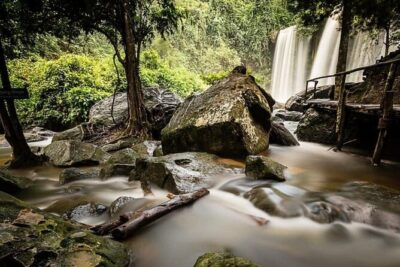
Kulen Waterfall Join-in Tour (local Picnic lunch)
Read our review →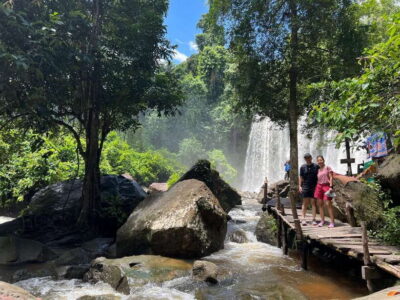
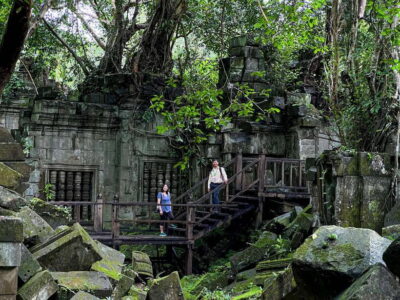
Kulen Mountain, Beng Mealea and Tonle Sap Tour
Read our review →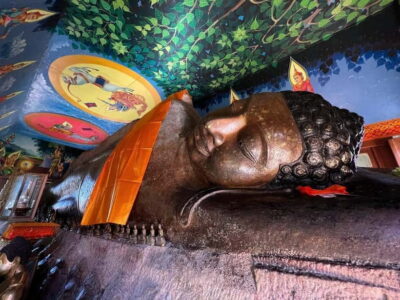
Phnom Kulen Waterfall & the Sacred 1000 Lingas (with Lunch)
Read our review →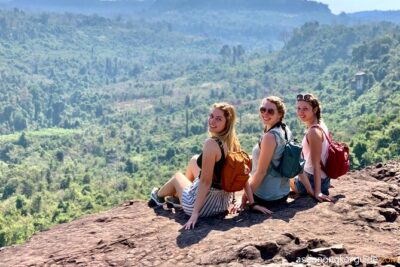
Kulen Mountain with Beng Mealea and Tonle Sap Small Group Tour
Read our review →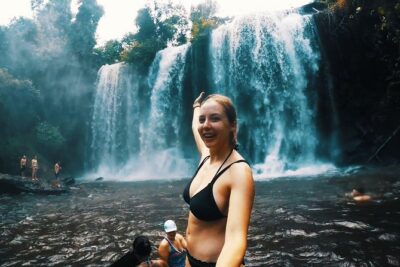
Guided Small-Group Tour in Kulen Mountain Park Waterfall
Read our review →
Kulen Mountain Waterfall Tour with Picnic Lunch from Siem Reap
Read our review →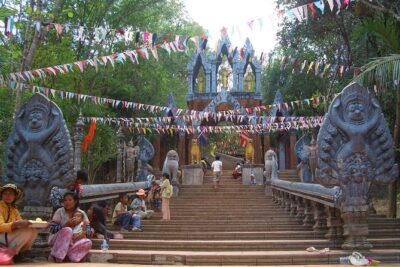
Kulen Waterfall & 1000 Linga River Small-Group Tours
Read our review →Browse the lists this tour appears in