
Reviewed · TONLE SAP FLOATING VILLAGE TOURS
Kompong Phluk Village Tonle Sap Lake Half-Day Tour From Siem Reap
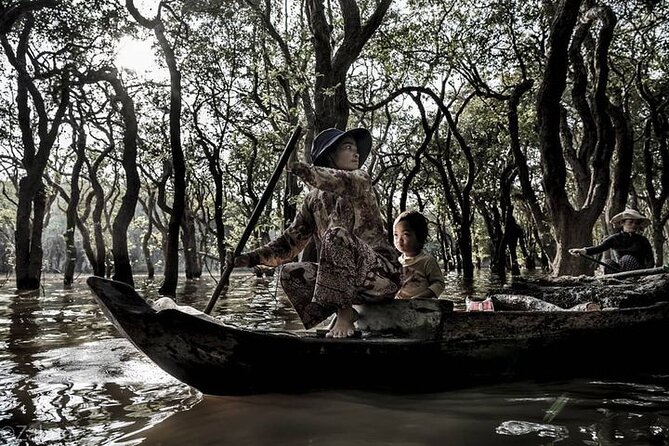
Kompong Phluk is not simply a boat ride. It is a close look at a village built around water, where homes stand on tall stilts and the view changes sharply with the seasons. After the flooded forest, your boat reaches Tonle Sap Lake, a huge inland waterway that seems to run to the horizon.
I like the small-group format, with a maximum of 16 people, and I like that the guide and driver come from the village. Hotel pickup, transport, boats, water, fruit, lunch, and entry fees are included, so the $49 price is easier to judge from the full package rather than the boat ride alone.
The main caution is that the experience can vary with water levels and guide quality. Some days offer a long, scenic outing; others feel much shorter, especially in the dry season. Access to the boats may also involve uneven gangplanks and steep banks.
What makes this half-day tour worth considering
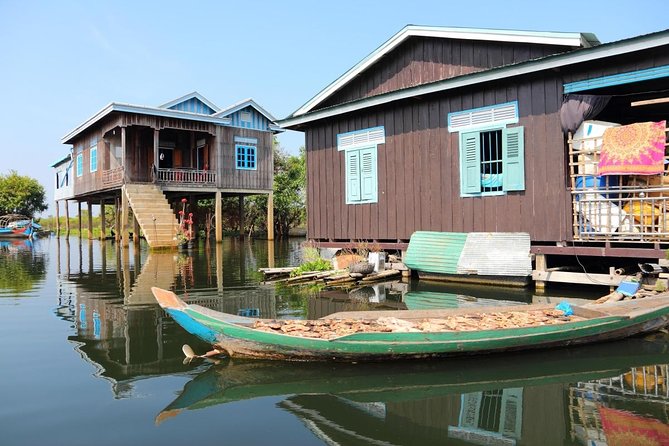
- Kompong Phluk changes with the water: Houses, river channels, and boat routes look different when Tonle Sap rises or falls.
- The flooded forest is a highlight: A rowboat or small boat can take you through trees standing in seasonal water.
- Your guide may be local: Guides named Va, Sapon, and Pitesh have led this experience, with local knowledge adding useful context.
- The village has striking architecture: Homes rise roughly 12 meters above ground to cope with water levels that can shift from about half a meter to more than 10 meters.
- The price covers the practical pieces: Hotel transport, boats, checkpoint fees, water, fruit, and a light lunch are included.
- The outing is weather and season dependent: Low water can mean mud, delays, or a shorter lake visit, while higher water makes the village and forest more dramatic.
Leaving Siem Reap for Kompong Phluk
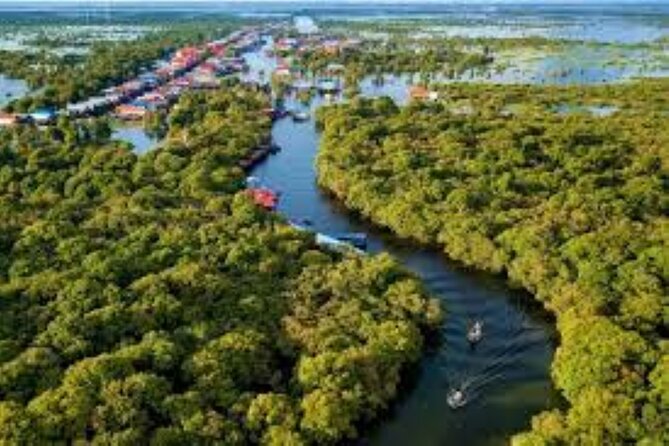
The tour begins with pickup at your Siem Reap hotel by air-conditioned car or tuk tuk. The drive takes you out of the city and into rural Cambodia, which is part of the appeal. You trade temple crowds and paved streets for rice paddies, small roads, village homes, and open country.
The stated duration is about four hours and 30 minutes, although the time on the water may feel shorter or longer depending on the season and the day’s pace. One account described the active tour as roughly three hours. That does not necessarily mean the whole booking lasts only three hours, since driving, boarding, and stops use part of the half-day, but you should not expect a full-day excursion.
The vehicle matters here. The tour includes shared transport and can use a tuk tuk, so tell the operator if you need a particular seating arrangement. One guide was praised for stopping so people could change seats and stay comfortable. That sort of small courtesy matters on a rural outing where roads may be dusty.
A visit to a local market may be included before the village. You may be offered pieces of fruit and two Cambodian sweets or cakes. This is a pleasant way to begin, but do not confuse the market stop with a major food tour. It is a brief local introduction, not the main event.
More Tonle Sap floating village trips in Siem Reap:
- From Siem Reap: Kampong Phluk Floating Village Tour by Boat
★ 4.9 · 6,979 reviews - Sunset tour of Kampong Phluk stilts home village on the Tonle Sap
★ 5.0 · 4,865 reviews - Kompong Phluk Floating Village Half-Day Tour ( Morning / Sunset )
★ 5.0 · 1,494 reviews
Seeing Kompong Phluk’s homes on stilts
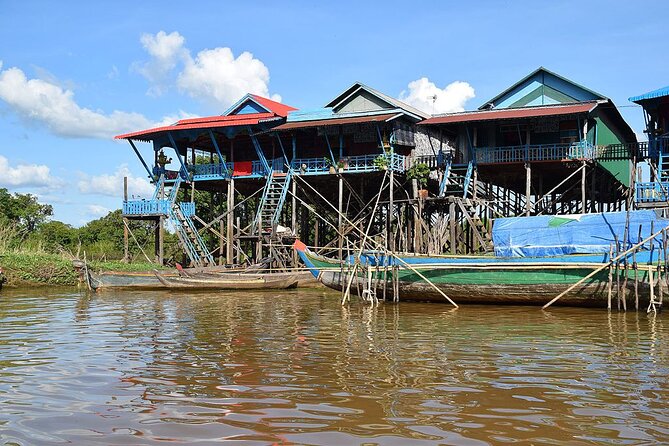
Kompong Phluk is built to handle a remarkable change in water level. During the wet season, the lake and river rise high around the homes. In the dry season, the water pulls back and reveals more of the supporting structure, muddy banks, and roads beneath the raised houses.
The village homes stand on stilts said to reach about 12 meters. That height gives the community room to live through a cycle in which water levels can range from around half a meter to more than 10 meters. You are not just looking at unusual houses. You are seeing architecture shaped by the Tonle Sap system.
The local guide and driver are both from the village, which can give the visit a stronger sense of place. Guides have included Va, Sapon, and Pitesh, though you should not assume you will receive a particular person. A good guide can explain how the village, fishing, farming, schools, and river traffic fit together.
The experience is most valuable when you pay attention to ordinary details. Look at how homes are reached, how boats are tied, and how daily work follows the water. This is not a polished historical site with signs at every turn. The guide’s explanations make a major difference.
One stop is near a monks’ training school. The large pergola, with artwork across its walls and ceiling, is a worthwhile detail that can be missed if you focus only on the boats. Schools, homes, and religious buildings show that Kompong Phluk is a working community, not a stage set made for sightseeing.
You may also see people selling snacks or small local goods. This is where the visit can feel uncomfortable. Some outings place too much pressure on visitors to buy items, and prices can be high. Bring small notes if you want to buy something, but remember that you are not required to purchase anything.
The flooded forest and smaller boats
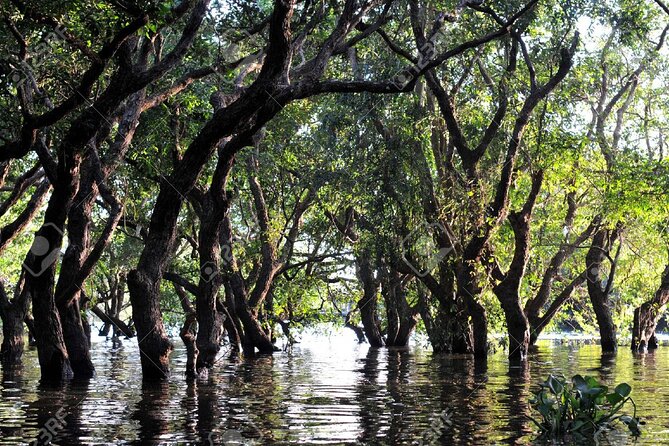
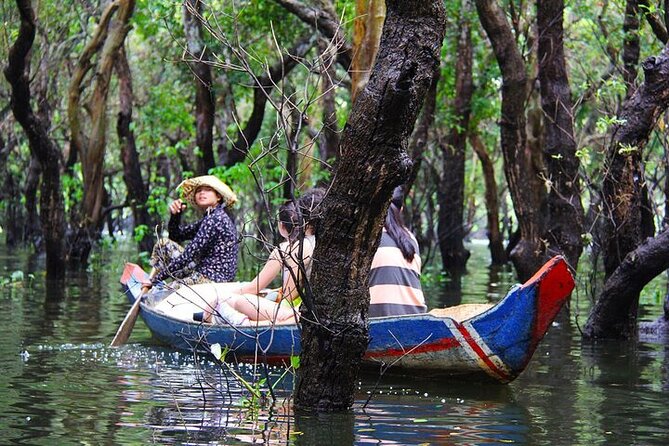
The flooded forest is one of the most appealing parts of the trip. Depending on the season, you may move among trees rooted in water, with the boat following narrow channels rather than open lake. The mood is quieter here, and the forest gives you a better sense of the seasonal flood cycle than the broad lake alone.
Some versions of the outing use small rowboats and operators, while the main transport uses flat-bottomed boats. The flat bottom is designed for changing water conditions and lets the boat operate at different times of year. That does not mean every ride will be smooth. In very low water, boats may move slowly, scrape mud, or become temporarily stuck.
One account described a kayak paddle through the flooded forest as the best part of the day. The supplied details do not promise a kayak for every departure, so treat that as a possible variation rather than a guaranteed feature. The included boat arrangements and rowboats are the safer expectation.
The forest is a good place to keep your camera ready, but protect it from spray and sudden movement. You may find the nicest photographs come from the contrast between thin tree trunks, open water, and distant houses rather than from a single famous viewpoint.
Reaching Tonle Sap Lake
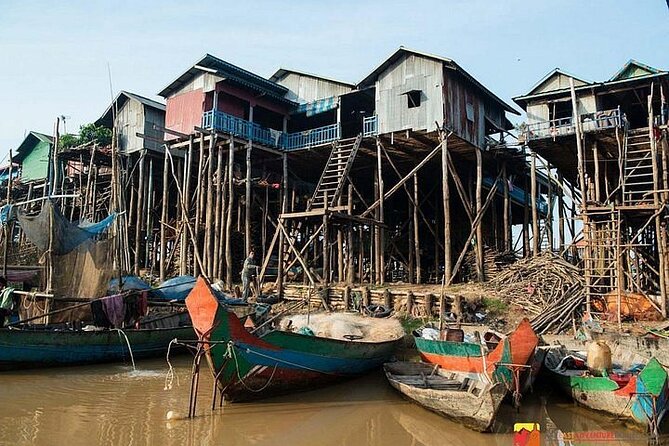
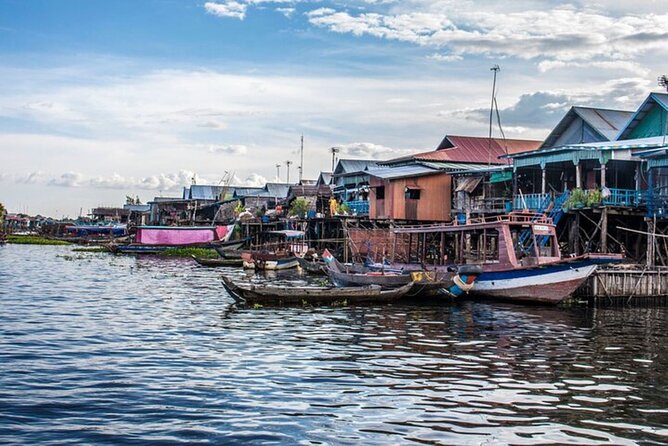
After the forest, the boat follows the Kompong Phluk river toward Tonle Sap itself. The waterway can feel like a river in one season and part of a floating settlement in another. Floating markets, fish farms, rice paddies, and boats may appear along the route, although the exact view depends heavily on water levels and local activity.
Tonle Sap is enormous. From this area, it can stretch beyond the eye, and the lake is more than 200 kilometers long and over 40 kilometers wide at this point. The scale can be surprising after the narrow channels of the flooded forest. You may begin the ride surrounded by homes and trees, then suddenly find yourself on open water with no clear edge in sight.
Do not expect a long open-lake cruise every time. The lake portion has been short on some departures, especially when the water was low. If your main goal is a broad Tonle Sap panorama, ask about current conditions before booking or confirm what portion of the four-and-a-half-hour schedule is normally spent on the lake.
The best way to approach this part is as a chance to understand the water system, not as a guaranteed sunset cruise or wildlife trip. There is no promise of a particular market, animal, or floating village arrangement. The route changes because the lake changes.
More half-day trips in Siem Reap:
- Tonle Sap Lake & Kampong Phluk Village Half-Day Tour
★ 5.0 · 1,045 reviews - Siem Reap: Kompong Phluk Floating Village Half-Day Tour
★ 4.8 · 966 reviews - Angkor Sunrise Half-Day Tour with Private Vehicles & Tour Guide
★ 5.0 · 247 reviews - Kompong Phluk Floating Village Private Half-Day Tour
★ 5.0 · 173 reviews
Guides can make or break the day
The strongest version of this tour has a friendly local guide who explains what you are seeing without rushing you. Guides have been praised for explaining village life, lake conditions, local history, and everyday work. Pitesh, Va, and Sapon are names associated with particularly positive guiding experiences, but assignments can change.
The weaker version is quiet and poorly explained. Some departures have had guides who offered little information, arrived late, or seemed detached from the group. Since the village itself has no single spectacular monument, interpretation matters. Without it, you may spend much of the time looking at houses and water without understanding why they are there.
You can improve the experience by asking direct questions. Ask how the village changes between wet and dry seasons, how people reach school, what happens to the fishing areas, and where the waterline sits at different times of year. A local guide should be able to make those details clear.
The company describes the group as small, with no more than 16 people. That is a useful size for a village boat trip. It is easier to hear a guide and easier to board than with a large coach group, though the actual feel will depend on the number booked that day.
What is included for $49
At $49 per person, this is not the cheapest way to reach a Tonle Sap village if you arrange every piece yourself. A tuk tuk driver and separate boat booking may cost less, particularly if you are comfortable handling the route and fees on your own.
The package earns part of its price through convenience. You receive hotel pickup and drop-off, air-conditioned transport or a tuk tuk, the main boats and rowboats, operators, checkpoint fees, taxes, water, fruit, and a light lunch. You do not need to negotiate each stage at the village.
A professional guide is another part of the value. When the guide is active and clear, you are paying for context as well as transport. The village can look like a collection of tall houses from the boat, but an explanation of seasonal water levels turns it into a lesson in how a community adapts to its environment.
The value drops if the lake visit is very short, the guide says little, or the boat is in poor condition. Some departures have raised concerns about old boats taking on water, engine trouble, and passengers having to bail water. This does not describe every outing, but it is a fair reason to ask about current boat arrangements before you commit.
Timing, weather, and practical comfort
The tour operates in all weather, so dress for heat, rain, spray, and dust. Lightweight clothing, sun protection, and shoes that can handle wet or uneven surfaces are sensible. Keep your phone and camera in a waterproof pouch.
Boarding is not always easy. Accounts describe uneven, rickety gangplanks and steep banks when getting out of the boat. The official guidance says most people can participate, but the physical access may be difficult if you have trouble with balance, climbing, or uneven ground.
Children must be accompanied by an adult. The tour is described as family-friendly, but parents should keep a close eye on children near open water and while boarding. The small-group setting helps, though it does not remove the normal risks of boats and riverbanks.
Season matters more than the calendar suggests. In the dry season, the lake may be low and the route can expose mud or make the ride less impressive. In the wet season, the water may surround more of the village and make the flooded forest more striking. The tradeoff is that rain can make transport and boarding less comfortable.
Who should book this outing
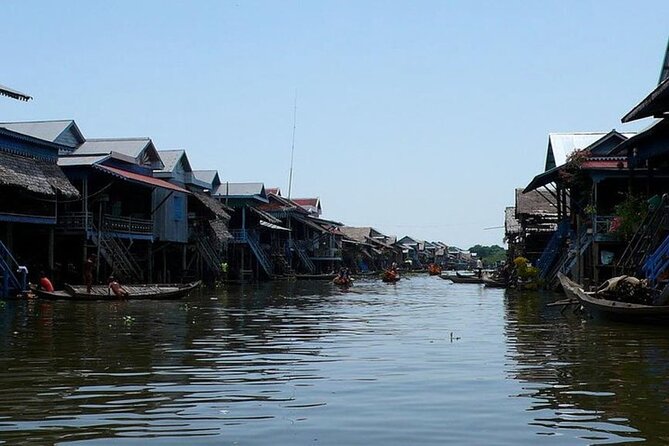
I would choose this tour if you want to see rural Cambodia beyond Siem Reap and you value having transport, boats, and a guide arranged together. It suits families, first-time visitors, and anyone who wants a half-day trip without planning each step.
It is also a good fit if you care about how people live with seasonal water. The stilted homes, changing channels, fishing areas, and flooded forest offer more substance than a simple scenic boat trip.
I would hesitate if you want a carefully timed nature cruise, polished facilities, or a guaranteed long stay on the open lake. You should also think twice if you dislike sales pressure or are uncomfortable with basic boats and uneven boarding points.
The tour is best approached with flexible expectations. Kompong Phluk is a real working village, and its appearance depends on water, weather, maintenance, and the guide assigned that day. That unpredictability is part of its character, but it can also create a disappointing outing if you expect the same views shown in promotional photographs.
Should you book the Kompong Phluk tour?
Book it if you want a practical, guided introduction to Tonle Sap and are willing to accept seasonal changes. The most rewarding parts are the tall stilted homes, the flooded forest, the huge shift from river to open lake, and the chance to hear from someone connected to the village.
Before paying, confirm the current water level, the expected time on the lake, the boarding conditions, and whether the day includes the smaller forest boat. If the operator can give clear answers, the $49 package is reasonable for a half-day with transport and fees included.
Skip it if your priority is a guaranteed floating market, a long cruise, or a highly polished attraction. For everyone else, especially visitors with limited time in Siem Reap, this can be a useful and memorable look at Cambodia’s water-based rural life.
FAQ
How long does the Kompong Phluk tour last?
The advertised duration is approximately four hours and 30 minutes, or about five hours. The time spent actively touring the village and lake may be shorter on some departures.
Is hotel pickup included?
Yes. Free hotel pickup and drop-off in Siem Reap are included.
How much does the tour cost?
The listed price is $49 per person.
What type of transport is used from Siem Reap?
Transport is provided by an air-conditioned car or tuk tuk.
Are boat rides included?
Yes. The price includes the boats, rowboats, and boat operators. The boats are described as special flat-bottomed vessels for changing water conditions.
Is food included?
Yes. The tour includes free snacks, fruit, a light lunch, and water.
How many people can join the tour?
The maximum group size is 16 people.
Is the tour suitable for children?
Yes, it is described as family-friendly, but children must be accompanied by an adult.
Can the tour operate in bad weather?
Yes. It operates in all weather conditions, so you should dress appropriately for rain, heat, and wet conditions.
Can I cancel for a full refund?
You can cancel at least 24 hours before the local start time for a full refund. Cancellations or changes made less than 24 hours in advance are not accepted for a refund.
Just added around Siem Reap
- Ultimate Sunrise to Angkor Wat, Angkor Thom and Bayon Temple★ 5.0 · 3 reviews
- Full-Day Private Tour of Angkor Wat with Pick Up★ 5.0 · 12 reviews
- Trekking Tour at Phnom Kulen National Park from Siem Reap★ 5.0 · 3 reviews
- Twilight Tastes of Siem Reap Include Dinner★ 5.0 · 13 reviews
- Siem Reap City Tour with War Museum and Killing Field★ 5.0 · 27 reviews
- Private Day Trip to Angkor Temples with Expert Guide★ 5.0 · 4 reviews
- Waterfall & River of 1000 Siva Linga- Kulen Mountain Private Tour★ 5.0 · 3 reviews
- Private Two Days Siem Reap Temples Discovery Guided Tour★ 5.0 · 7 reviews
Tonle Sap Floating Village Tours, compared.
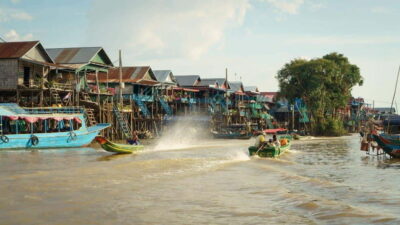
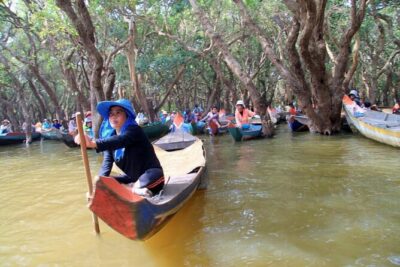
Sunset tour of Kampong Phluk stilts home village on the Tonle Sap
Read our review →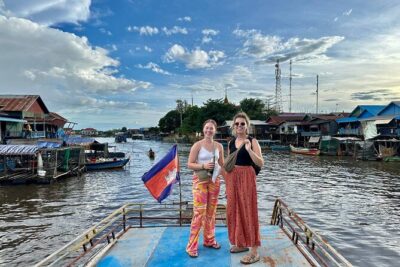
Kompong Phluk Floating Village Half-Day Tour ( Morning / Sunset )
Read our review →
Kulen Mountain, Beng Mealea and Tonle Sap Tour
Read our review →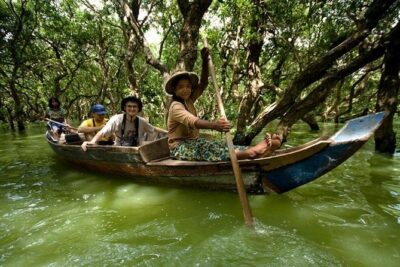
Tonle Sap Lake & Kampong Phluk Village Half-Day Tour
Read our review →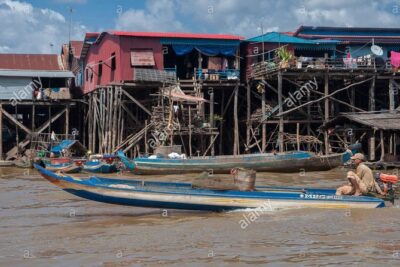
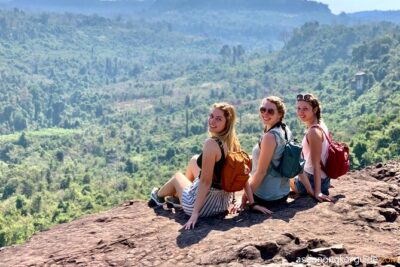
Kulen Mountain with Beng Mealea and Tonle Sap Small Group Tour
Read our review →Browse the lists this tour appears in