
Reviewed · KOH KER TEMPLE TOURS
Koh Ker & Preah Vihear
The best thing about this two-day trip is the sharp change of scene after Siem Reap. You leave the familiar temple circuit behind and pass through rural Cambodia, hill country, and quiet ruins where the setting feels far removed from the city. Koh Ker and Preah Vihear give you two very different Khmer sites: one an isolated pyramid city, the other a temple high on the Dangrek mountain range.
I like the small maximum of two people and the chance to travel with guide Ry Vanra, who is praised for clear English, good humor, patience, and careful planning. I also like that the trip includes ordinary village life, not only carved stone. The main drawback is the pace: long road journeys, basic arrangements, separate entrance fees, and a moderate level of walking make this better for curious, active visitors than for anyone seeking an easy temple day.
Key points to know before booking
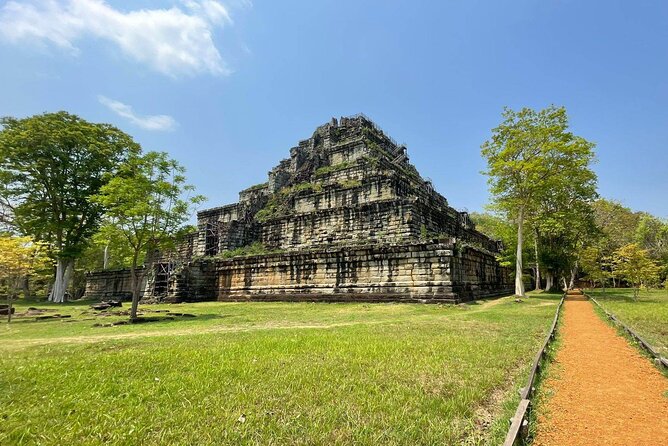
- Koh Ker feels like an expedition: Climb toward the seven-tiered Prang pyramid and explore an ancient Khmer capital surrounded by forest and open countryside.
- Preah Vihear brings the big views: The temple sits on the Dangrek range near the Thai border, giving the second day a very different character.
- This is a rural Cambodia trip: You see villages, roads, farms, and daily life between the major ruins.
- Vanra is the main strength: He serves as guide and organizer, while past trip details also identify Mr. Buny as a careful driver.
- The price is only part of the cost: The $100 fee covers transport, guide service, and cold water, but not entry tickets, meals, lodging, tips, or other expenses.
- Expect a private-style format: The group is limited to two people, with an 8:30 am start and free cancellation up to 24 hours before departure.
Why this trip feels different from Angkor
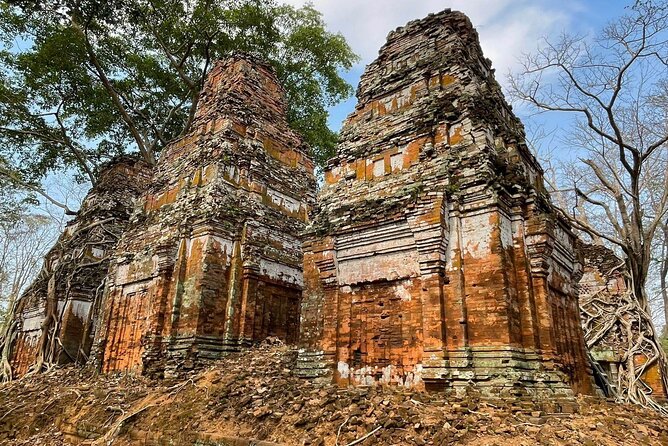
Most temple outings from Siem Reap keep you close to the famous Angkor complex. This journey takes you much farther out, where roads pass through rural communities and the ground rises into Cambodia’s northern hill country. That change matters. You are not simply adding more temples to a checklist. You are seeing how the country looks away from Siem Reap’s hotel district and main tourist routes.
The two-day format gives the sites room to breathe, although it also means considerable time in the vehicle. Vanra’s role is important here. The supplied trip details identify him as the guide, and his work is praised for careful timing, good English, humor, and historical explanation. One account also names Mr. Buny as the driver and notes that he drove safely without looking at his phone. That kind of attention matters on long Cambodian roads.
The group limit of two people is another real advantage. You can ask questions, adjust the rhythm of a stop, and avoid being folded into a large coach group. It is especially useful if you want to talk about Cambodian history, local life, or the Khmer Rouge period at Ta Mok House.
More Preah Vihear tours in Siem Reap:
- Preah Vihear: Full-Day Preah Vihear and Koh Ker Temple Tour
★ 4.9 · 263 reviews - Full-Day Preah Vihear, Koh Ker and Beng Mealea Private Tour
★ 4.4 · 101 reviews - Preah Vihear temple – Koh Ker & Other temple with Small Group
★ 5.0 · 96 reviews
Day one: Koh Ker and an older Khmer capital
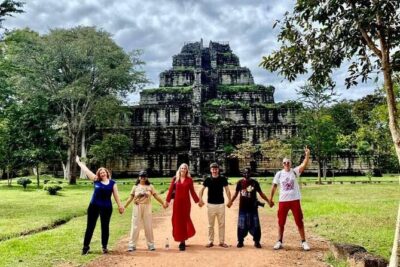
Koh Ker is the main event of the first day. The site was built between AD 928 and 944 and served as one of the Khmer Empire’s capitals. It was once home to more than 10,000 people, a useful reminder that this was not merely a lonely monument in the trees. It was a working royal city.
The central structure is the seven-tiered Prang pyramid. Its tall, stepped form looks quite different from the broad galleries and towers at Angkor Wat. The setting helps create the feeling of discovery: the pyramid rises from a more remote area, with open space and vegetation around the ruins.
Allow roughly six hours for this stop. That time is not just for one photograph beside the pyramid. Koh Ker includes a wider group of ancient remains, and the long visit gives you time to take in the scale of the old city. You should expect walking over uneven ground and some effort around the pyramid area, so sensible shoes and a moderate fitness level are important.
There is a practical catch. The admission ticket is not included in the $100 tour price. Ask Vanra about the current entry cost when you book, and keep extra cash available for site fees and personal expenses. The supplied information does not give a ticket price, so it would be misleading to treat the advertised tour rate as the full cost.
Beng Mealea, where nature presses into the stone
The next stop is Beng Mealea, about an hour. Built in the early 12th century under King Suryavarman II, the temple is known for its ruined condition and plant growth around the structure. Broken blocks, collapsed sections, and vegetation give it a rougher appearance than the more orderly monuments at Angkor.
I like Beng Mealea as a counterpoint to Koh Ker. Koh Ker gives you an imposing pyramid and the feeling of an old capital. Beng Mealea gives you a closer look at a temple being reclaimed by its surroundings. It is a shorter stop, but it can be visually striking because the disorder is part of the experience.
Do not expect the same level of polished presentation found at Cambodia’s best-known sites. That is the point, but it also means you need to watch your footing and accept that some areas may be difficult to enter. The admission ticket is separate here as well.
Peung Kom Nuo and the Kulen hills
Peung Kom Nuo is planned as a one-hour stop in the Kulen mountain area. The site is described as a lesser-known place in the hills, so it adds another change of pace after the larger ruins.
The value of this stop is its setting and its relative quiet. You get another look at the countryside rather than moving from one grand temple to the next. Because the information supplied gives few details about the ruins themselves, you should treat Peung Kom Nuo as a scenic, exploratory stop rather than booking the trip mainly for a famous architectural monument.
That uncertainty is worth noting. If you want a tour built around the most celebrated temples and extensive formal interpretation, this may feel like a minor addition. If you like less familiar places and the idea of seeing how rural Cambodia connects with the old temple zones, it fits the trip well.
More Koh Ker tours in Siem Reap:
- Koh Ker Temple Group & Beng Mealea Full-Day Join-in Tour
★ 5.0 · 710 reviews - From Siem Reap: Koh Ker and Beng Mealea Temples Tour
★ 4.9 · 293 reviews - 4-Day Excursion of Angkor, Koh Ker, Beng Mealea, Tonle Sap and Waterfalls
★ 5.0 · 87 reviews - Siem Reap: Koh Ker, Beng Mealea, & Banteay Srei Join-in Tour
★ 5.0 · 48 reviews
Day two: Preah Vihear on the Dangrek range
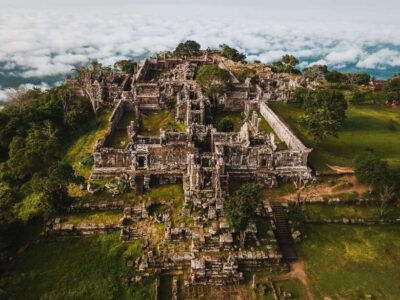
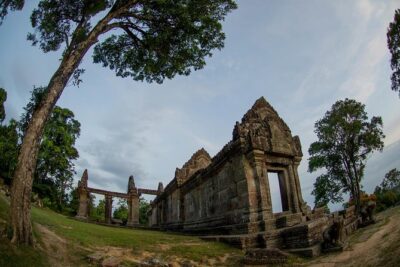
Preah Vihear is the strongest reason to choose the second day. This ancient Hindu temple was built during the Khmer Empire on top of the Dangrek mountain range, close to the Cambodia and Thailand border. Its high position gives the temple a character unlike the forest ruins around Siem Reap.
The visit lasts about three hours. You should expect walking and some uphill or uneven sections, given the mountain setting. The reward is the combination of architecture and distance: the temple is not only a place to study carvings and stonework, but also a point from which the surrounding countryside opens out below.
Preah Vihear also carries a more complicated modern setting because of its location near the border. The supplied information does not promise a particular border procedure or viewpoint beyond the temple visit, so do not book this as a border-crossing trip. You are going to the Cambodian monument on the mountain.
This is another place where a good guide can make a real difference. Vanra’s history knowledge and patient approach are useful when a site needs context rather than a quick list of dates. His ability to answer questions in English is also a practical benefit for a two-person tour.
Ta Mok House and Cambodia’s difficult recent past
The final listed stop is Ta Mok House, with about 30 minutes set aside. Ta Mok was a senior Khmer Rouge leader from 1975 to 1979. This brief visit adds a modern historical layer to a trip otherwise centered on ancient temples.
The stop is important because Cambodia is not only a story of kings, monuments, and carved stone. The Khmer Rouge period remains part of the country’s recent past, and a place connected with Ta Mok gives you a chance to consider that period while traveling through the countryside.
Thirty minutes is not enough for a full study of the era, and the supplied information does not promise a museum-style presentation or a detailed memorial program. Think of it as a concise historical stop, not the main focus of the tour. If you want extensive Khmer Rouge history, you will need a separate visit elsewhere.
What the $100 price really covers
At $100 per person, the tour offers a reasonable package for a two-day trip if you value private transport and a guide. The fee includes transportation, a tour guide, and cold water. With a group capped at two people, the cost is easier to understand than a standard large-group excursion: you are paying for a focused trip rather than a seat on a crowded bus.
Still, the advertised rate is not an all-in price. You must pay separately for:
- Entrance fees
- Food
- Accommodation
- Tips
- Other personal expenses
The missing accommodation is the biggest point to settle before booking. The trip lasts two days, but the supplied details do not state where you sleep or whether lodging is arranged for you. Ask Vanra directly about the overnight plan, the town used, and the cost. Do the same for meal stops and current temple admission fees.
That extra planning does not make the tour poor value. It simply means you need to calculate the real total before comparing it with other two-day packages. Transport over long distances, a guide, and a very small group can make $100 attractive, but only after you add the costs not covered.
The guide and driver matter on long road days
A two-day trip to distant temples rises or falls on the people handling the road and the schedule. Vanra receives strong praise for being punctual, polite, funny, patient, and easy to talk with. He is also described as someone who can adapt the plan and help with more than the basic sightseeing.
That flexibility is useful because long journeys rarely feel identical from one day to the next. You may want a rest break, more time at a ruin, or a clearer explanation of a historical point. The small group size makes those requests more realistic than they would be on a fixed coach itinerary.
The driving reports are also reassuring. Mr. Buny is specifically identified as a careful driver who did not use his phone while driving. Another account describes regular rest breaks at interesting places. These details are worth emphasizing because road time is a large part of the experience, and safe, calm driving affects the whole mood of the trip.
The exact guide and driver pairing should be confirmed when you book. The experience information names Vanra as the provider and guide, while the trip details mention Mr. Buny in connection with driving. That is a useful question to ask rather than assume.
Physical demands and what to pack
The tour requires moderate physical fitness. You will spend time walking around ruins, dealing with uneven surfaces, and visiting a temple in a mountain setting. The information does not provide a precise walking distance, so you should be prepared for more than a quick roadside stop.
Bring practical basics:
- Comfortable shoes with reliable grip
- Sun protection
- Water beyond the supplied cold drinks
- A small bag for personal items
- Extra money for tickets, meals, and tips
The start time is 8:30 am. Confirm the pickup point and exact departure details after booking, since pickup is offered but the supplied information does not list every pickup location.
A mobile ticket is provided, and booking confirmation is received at the time of booking. Those details make the reservation process simple, but they do not remove the need to confirm the overnight arrangements and admission fees.
Who should book this two-day route?
I would choose this tour if you have already seen some of Siem Reap’s main temples and want a broader view of Cambodia. It suits you if you enjoy long drives, less familiar ruins, rural scenery, and conversations about history. The two-person limit is especially appealing for couples, friends, or a parent and adult child who want a private rhythm.
It also suits people who prefer a guide with personality. Vanra is described as friendly, funny, respectful, and experienced, with strong English and a willingness to help beyond the basic route. That human side can make a long road trip much easier.
I would think twice if you have limited mobility, dislike rough walking surfaces, or want every cost included in advance. The route is also not ideal if your main goal is a relaxed resort break. Day one includes a six-hour Koh Ker visit, and the journey as a whole involves substantial road time.
Should you book Koh Ker and Preah Vihear?
Book it if you want Cambodia beyond the standard Angkor circuit. You will see a former Khmer capital, a broken temple wrapped in plant growth, a hill site near Kulen, a mountain temple near the Thai border, and a place linked with Cambodia’s recent past. That is a varied two-day story, not a simple temple transfer.
Before paying, confirm three things with Vanra: the accommodation, the current entrance fees, and the exact driver and guide arrangement. If those costs fit your budget and you are comfortable with moderate walking and long drives, the $100 base price offers good value for a highly personal trip. If you want a short, polished, all-inclusive outing, choose something closer to Siem Reap instead.
FAQ
Where does the tour start?
The tour starts from Siem Reap, with a listed start time of 8:30 am. Pickup is offered.
How long does the experience last?
The experience lasts approximately two days.
How many people can join the tour?
The tour has a maximum of two people.
What is included in the price?
The price includes transport, a driver, a tour guide, and cold water.
Are temple entrance fees included?
No. Entrance fees are not included and must be paid separately.
Are food and accommodation included?
No. Food and accommodation are not included in the tour price.
Which places are visited on day one?
Day one includes Koh Ker Temple, Prasat Beng Mealea, and Peung Kom Nuo.
Which places are visited on day two?
Day two includes Preah Vihear Temple and Ta Mok House.
Is the tour physically demanding?
A moderate level of physical fitness is required. The route includes temple visits and a mountain site, so you should be ready for walking on uneven ground.
Can I cancel for a full refund?
Yes. You can cancel at least 24 hours before the experience start time for a full refund. Cancellations or changes made within 24 hours are not refunded or accepted.
Just added around Siem Reap
- Ultimate Sunrise to Angkor Wat, Angkor Thom and Bayon Temple★ 5.0 · 3 reviews
- Full-Day Private Tour of Angkor Wat with Pick Up★ 5.0 · 12 reviews
- Trekking Tour at Phnom Kulen National Park from Siem Reap★ 5.0 · 3 reviews
- Twilight Tastes of Siem Reap Include Dinner★ 5.0 · 13 reviews
- Siem Reap City Tour with War Museum and Killing Field★ 5.0 · 27 reviews
- Private Day Trip to Angkor Temples with Expert Guide★ 5.0 · 4 reviews
- Waterfall & River of 1000 Siva Linga- Kulen Mountain Private Tour★ 5.0 · 3 reviews
- Private Two Days Siem Reap Temples Discovery Guided Tour★ 5.0 · 7 reviews
Koh Ker Temple Tours, compared.
Koh Ker Temple Group & Beng Mealea Full-Day Join-in Tour
Read our review →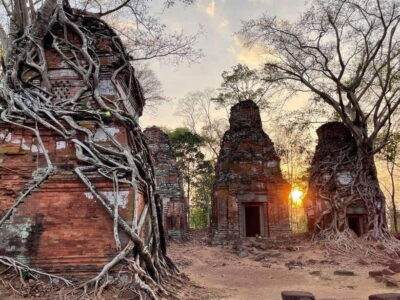
Full-Day Preah Vihear, Koh Ker and Beng Mealea Private Tour
Read our review →
Preah Vihear temple – Koh Ker & Other temple with Small Group
Read our review →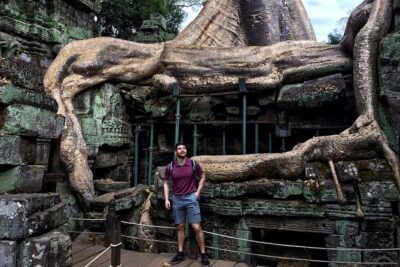
4-Day Excursion of Angkor, Koh Ker, Beng Mealea, Tonle Sap and Waterfalls
Read our review →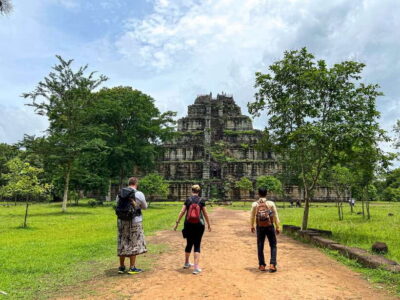
Koh Ker, Beng Mealea, & Banteay Srei Join-in Tour
Read our review →
Full Day Banteay Srei Beng Mealea and Koh Ker Small Group Tour
Read our review →Browse the lists this tour appears in